Malaysia

Investment & Market Trends

PGF Capital Hits Record RM155 Million Revenue in FY25

PULAU PINANG: PGF Capital Berhad (“PGF Capital” or the “Group”) (BURSA: 8117), Southeast Asia’s leading insulation producer, has announced a record-breaking revenue of RM155.0 million for the financial year ended 28 February 2025 (FY25), marking a 20.5% increase from RM128.6 million in FY24. The growth was predominantly driven by the Insulation and Related Products segment, which contributed 99.2% of the Group’s total revenue, underscoring its central role in PGF Capital’s performance. The Oceania market, particularly Australia, remained a key growth driver amid continued demand and supportive regulatory developments. This includes Australia’s revised building codes and the Victorian State Government’s upcoming insulation upgrade incentives under the Victorian Energy Upgrades (VEU) programme, scheduled to take effect in 2026. Profit before tax (PBT) surged to RM47.0 million in FY25—more than triple the RM15.4 million recorded in FY24—bolstered by robust insulation sales and a one-off RM19.6 million reversal of impairment loss on land held for development. Profit after tax (PAT) also saw significant improvement, rising to RM33.9 million from RM10.5 million in the previous year. Positive Outlook Anchored on Insulation and Regulatory Tailwinds   “Looking ahead, we anticipate our Insulation segment to continue its strong performance and be a key driver of earnings in the new financial year,” said Mr Fong Wern Sheng (邝汶城), Group Chief Executive Officer of PGF Capital. “The Australian market continues to present exciting prospects, especially with the upcoming VEU programme expected to boost demand further in Victoria.” Domestically, the Group expects rising momentum following the implementation of Malaysia’s Energy Efficiency and Conservation Act 2024. PGF Capital also plans to tap into new markets with its soon-to-be-certified mineral wool sandwich panels for industrial and commercial buildings. These panels, known for superior thermal performance, are currently undergoing SIRIM and BOMBA certification. Expansion and Tax Incentives to Drive Future Growth   PGF Capital’s upcoming 40,000-metric-tonne manufacturing facility in Kulim East Industrial Park, Kedah, is on track to begin commercial operations in the first half of 2026. The plant has secured a tax incentive package from the Northern Corridor Economic Region (NCER), entitling the Group to a five-plus-five-year corporate tax holiday upon achieving profitability. Despite recent U.S. tariff announcements, PGF Capital stated that its business remains unaffected as it has no direct exports to the United States. Over 70% of its exports are focused on the Oceania region, with another 20% derived from domestic sales. Diversification Through Property Development   PGF Capital is also pursuing strategic expansion in its property development segment. In December 2024, the Group’s joint venture, Nexel Development KHTP Sdn. Bhd., acquired 9.6 acres in Kulim Hi-Tech Park for a proposed mixed-use development targeted to launch in early 2026, pending regulatory approvals. Additionally, the Group’s Phase 1 project in Tanjong Malim, Perak, developed in partnership with Malvest Properties Sdn. Bhd., is in progress, aligned with the Malaysian government’s vision to transform Proton City into an Automotive High-Tech Valley. Quarterly Turnaround and Solid Financial Position   For the fourth quarter of FY25, PGF Capital posted RM33.7 million in revenue, up slightly from RM33.3 million in 4QFY24. However, PAT for the quarter rebounded sharply to RM13.9 million, compared to a RM1.8 million loss a year earlier. This was largely due to the aforementioned impairment reversal and the absence of a one-off grant reversal recorded last year. The gain was partially offset by expenses related to new banking facilities and a RM2.3 million unrealised mark-to-market loss on a cross currency swap. The Group maintained a strong balance sheet with net gearing of 0.12 times and net assets per share of RM1.41. Net operating cash flow stood at RM11.4 million for the year. Dividend and Shareholder Return   The Board of Directors has proposed a final dividend of 1.0 sen per ordinary share, subject to shareholder approval at the upcoming Annual General Meeting. Together with the 2.0 sen interim dividend already paid, the total dividend payout for FY25 amounts to 3.0 sen per share, representing a total distribution of RM5.8 million.

Investment & Market Trends

F&NHB Delivers Steady Revenue and Profit Growth in 1H FY2025

KUALA LUMPUR: Fraser & Neave Holdings Bhd (F&NHB) reported a resilient financial performance for the half-year ended 31 March 2025 (1H FY2025), navigating macroeconomic headwinds and softer trade sentiment with steady revenue and profit growth. Group Financial PerformanceFor 1H FY2025, Group revenue rose 1.4% year-on-year to RM2,723.9 million, supported by broad-based sales growth across business units and stronger export contributions in the first quarter. Group operating profit climbed 4.3% to RM434.8 million, driven by improved margins from higher revenues and lower input costs, particularly in F&B Malaysia and F&B Indochina, helping offset losses related to its dairy farm start-up. In the second quarter (Q2 FY2025), the Group recorded revenue of RM1,334.1 million, a 1.4% decline compared to the same period last year, largely due to softer festive season sales in Malaysia and inventory adjustments in Indochina. Operating profit for the quarter similarly decreased by 7.6%. Profit before tax for 1H FY2025 increased by 4.9% to RM430.1 million, while profit after tax declined 7.6% to RM310.4 million, reflecting the full utilisation of tax incentives under Thailand’s Board of Investment (BOI) scheme last year. Basic earnings per share stood at 84.5 sen compared to 91.8 sen in 1H FY2024. Reflecting its continued confidence, the Board declared an interim single-tier dividend of 30.0 sen per share, amounting to RM110.0 million, payable on 30 May 2025. Financial Highlights 1H FY2025 1H FY2024 Change Revenue (RM million) 2,723.9 2,685.3 +1.4% Operating Profit (RM million) 434.8 416.8 +4.3% Profit Before Tax (RM million) 430.1 409.9 +4.9% Profit After Tax (RM million) 310.4 335.9 -7.6% Basic Earnings Per Share (sen) 84.5 91.8 -7.3 sen Business Unit HighlightsF&B Malaysia maintained first-half revenue levels supported by volume growth in beverages, water products, and exports. However, Q2 festive season sales were softer than expected due to subdued consumer sentiment and flooding in East Malaysia. Meanwhile, F&B Indochina, which encompasses Thailand, Cambodia, and Laos, achieved a 3.4% revenue increase year-on-year in 1H FY2025, driven by intensified marketing campaigns and stronger export sales to Cambodia. However, efforts to manage inventory levels in Thailand impacted Q2 revenue. F&B Indochina continued to be a major profit contributor, registering a 4.5% rise in 1H FY2025 operating profit, while F&B Malaysia improved margins and operational efficiencies, excluding dairy farm start-up costs. Strategic Developments and InvestmentsChief Executive Officer Lim Yew Hoe highlighted significant milestones achieved at F&N AgriValley, a cornerstone of the Group’s strategy to strengthen local dairy supply. Following the arrival of over 2,500 Chilean cattle and the birth of more than 70 calves, milking operations are set to commence in June 2025 under the Magnolia brand. Additionally, the Group’s new dairy manufacturing plant in Cambodia remains on track to begin commercial operations in early 2026. The Penang beverages plant, scheduled for commissioning by August 2025, will enhance service to northern Peninsular Malaysia markets while lowering the Group’s carbon footprint. “Our performance underlines the resilience of our core businesses and validates our investments in future growth,” said Lim. “We are committed to supporting Malaysia’s food security agenda by reducing reliance on imported milk and ensuring supply of quality local fresh milk.” Corporate Social Responsibility InitiativesDuring the Ramadan and Aidilfitri periods, F&NHB deepened its community engagement efforts, partnering with organisations such as Bursa Malaysia, Mydin, Lotus’s, and the National Sports Council (MSN) to provide food aid and festive support to over 100,000 individuals. Chairman YAM Tengku Syed Badarudin Jamalullail reaffirmed F&NHB’s social commitment, noting: “At a time of economic uncertainty, it is more important than ever for businesses to lead with empathy and purpose, standing with the communities we serve.” OutlookLooking ahead, F&NHB remains cautious amid a challenging external environment characterised by global economic uncertainty, evolving regulatory dynamics, and softer consumer demand. The Group will continue to strengthen route-to-market strategies, optimise operational efficiencies, and invest strategically in long-term value creation. While investments such as the integrated dairy farm in Gemas may weigh on margins in the short term, they are expected to underpin sustainable growth over the long term. “Despite ongoing challenges, we are confident in our ability to navigate market volatility and build a stronger, future-ready F&NHB,” Lim concluded.

News

Fiuu Sets Two National Records in Malaysia

KUALA LUMPUR: Fiuu, the leading fintech platform in Southeast Asia, has achieved two national records in the Malaysia Book of Records for its performance in 2024: the Highest Payment Gateway Sales Value and the Largest Payment Gateway Transactions in a year. Processing over RM 35.6 billion (US$ 7.9 billion) in total payment volume and surpassing 500 million online transactions within Malaysia, these milestones highlight Fiuu’s pivotal role in driving the digital economy in ASEAN. These achievements reflect Fiuu’s strategic investment in developing the “digital rails” that power cashless commerce and promote financial inclusion across Southeast Asia. The company focuses on creating scalable, interoperable, and secure systems that are accessible to underserved businesses and communities. “We are honoured by the trust placed in us by our partners, merchants, and institutions,” said Eng Sheng Guan, CEO of Fiuu. “This recognition highlights the importance of our infrastructure in enabling fast-growing economies to thrive and adapt. Our efforts are directed towards supporting today’s economy while laying the foundation for future growth.” Fiuu operates across eight key Asian markets, including Malaysia, Singapore, Thailand, Indonesia, the Philippines, Vietnam, Taiwan, and Hong Kong. It simplifies domestic and cross-border payments for over 70,000 merchants across sectors such as retail, logistics, healthcare, and government services. The platform integrates over 110 payment methods and has direct acquiring partnerships with Visa and Mastercard in Malaysia, Singapore, and the Philippines. In 2024, Fiuu processed over 1.8 million transactions daily and handled more than RM 44 billion (US$ 9.8 billion) in annual transaction volume across Southeast Asia. The company saw a 208% surge in Visa and Mastercard transactions, with projections for over 300% growth in 2025. Fiuu’s cloud-based infrastructure supports features such as Buy Now Pay Later (BNPL) and Visa Instalment Solutions, and the company continues to enhance its platform with features like tokenization, IoT payments, biometric authentication, and Apple Pay. Looking ahead, Fiuu is focused on advancing cross-border capabilities, improving fraud prevention with AI, and expanding its acquiring relationships across ASEAN markets. “As the digital economy grows, Fiuu will continue to build quietly but purposefully, ensuring businesses can move forward confidently,” Eng added.

News

Curlec by Razorpay Appoints Kevin Lee as New Country Head and CEO

Kevin Lee has been appointed the new Country Head and CEO of Curlec by Razorpay, the Malaysian payment solutions company owned by India-based Razorpay. Lee brings over 18 years of experience in the payments and fintech sectors to the role, following his recent departure from GHL Systems, where he had been CEO for nearly 16 years. Lee’s leadership experience spans across ASEAN, the Middle East, and Africa, where he played a key role in developing e-payment infrastructures. As Country Head, he will focus on expanding Curlec’s digital payment solutions for businesses in Malaysia, enhancing the Curlec Payment platform, and supporting financial inclusion initiatives. Shashank Kumar, Co-Founder & Managing Director of Razorpay India, expressed confidence in Lee’s ability to drive digital payment innovation, building on Curlec’s commitment to redefining how businesses and consumers interact with payments. Lee, in his new role, highlighted the potential for innovation in Malaysia’s digital payments landscape and expressed enthusiasm for collaborating with Curlec’s team to drive growth and accessibility for businesses of all sizes. This leadership change comes after Zac Liew stepped down as CEO earlier this month, marking the end of his seven-year tenure.–FINTECH NEWS

Investment & Market Trends, News

Foreign Investment Surge on Bursa Malaysia: RM332.3 Million Inflows Recorded

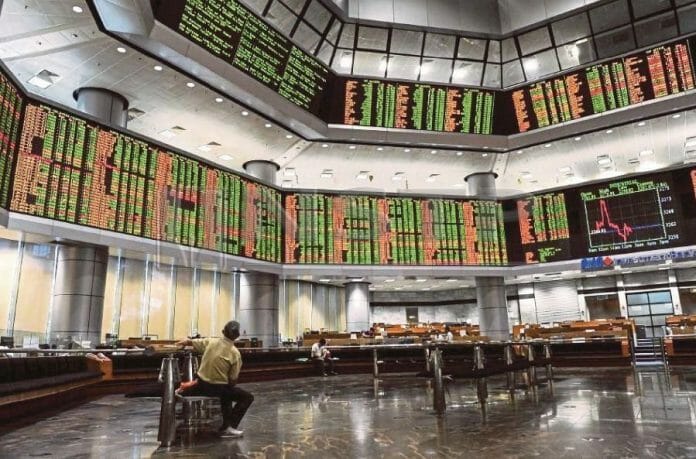
KUALA LUMPUR : Foreign investors have made a strong comeback to Bursa Malaysia, ending a 26-week selling streak with net inflows totalling RM332.3 million — the first week of positive foreign investment since Oct 24. According to MIDF Amanah Investment Bank Bhd’s latest Fund Flow Report for the week ended April 25, foreign investors were net buyers on most trading days, except for Monday and Tuesday, which recorded outflows of RM101.1 million and RM105.4 million, respectively. For the remainder of the week, inflows ranged between RM125.9 million and RM267.2 million. The financial services sector led the gains, attracting RM197.1 million in net foreign inflows, followed by telecommunications and media (RM60.8 million), and industrial products and services (RM48.8 million). Meanwhile, sectors such as energy and plantation both saw net outflows of RM16.0 million, while healthcare registered an outflow of RM13.3 million. MIDF also observed a reversal in local institutional activity, with institutions turning net sellers after 26 consecutive weeks of net buying. Outflows from local institutions stood at RM267.4 million. Local retail investors continued their net selling trend for a second straight week, recording outflows of RM64.9 million — a 2.5-fold increase compared to the previous week. In terms of trading activity, the average daily trading volume (ADTV) rose broadly across the board, except among foreign investors, whose ADTV slipped by 6.9 per cent. Local institutions and retail investors, in contrast, posted gains of 23.8 per cent and 2.2 per cent, respectively. MIDF also highlighted that Malaysia’s headline inflation rate moderated to 1.4 per cent year-on-year in March 2025, offering some relief to policymakers. The easing inflation was seen across various sectors, including accommodation, food services, utilities, and household goods. “Stable inflation, alongside firm labour market conditions — with unemployment steady at 3.1 per cent — points to a resilient domestic economy, even as external challenges begin to emerge,” MIDF said. Across the broader Asian landscape, only Malaysia, India, Taiwan, and Vietnam recorded net foreign inflows, while other regional markets faced outflows, with Thailand bearing the brunt of the selling pressure. –Bernama

Investment & Market Trends, News

MIDA Champions JS-SEZ as Gateway for Investment and Regional Supply Chain Growth

KUALA LUMPUR : Malaysia is positioning itself as Asia’s next investment and supply chain powerhouse with the development of the Johor-Singapore Special Economic Zone (JS-SEZ), led by the Malaysian Investment Development Authority (MIDA). Spearheading this initiative, MIDA is executing a strategic push to attract global investors and reshape regional trade dynamics, signalling a bold transformation of Malaysia’s economic landscape. First proposed in 2023, the JS-SEZ has rapidly gained momentum, driven by growing investor interest and deepening Malaysia-Singapore economic collaboration. The initiative marks a historic milestone in bilateral relations, as the two nations, already each other’s top trading partners within ASEAN, work together to further integrate their economies through the JS-SEZ. JS-SEZ: A Gateway to Global Supply Chains and Smart Manufacturing In an exclusive interview with Bernama, MIDA chief executive officer Datuk Wira Arham Abdul Rahman outlined the transformative potential of the JS-SEZ. “We are witnessing the creation of an economic powerhouse that merges the best capabilities of both countries. This is more than just collaboration — it is strategic integration at an unprecedented level,” he said. Datuk Wira Arham highlighted Singapore’s complementary role, with its established logistics networks and financial infrastructure, enhancing the JS-SEZ’s access to global markets through strong air connectivity and trade facilitation services. “Businesses operating within the JS-SEZ will benefit from proximity to a mature financial ecosystem, supported by institutions in both Malaysia and Singapore, facilitating seamless cross-border transactions and trade. This ecosystem is central to enabling the region’s growth,” he noted. Malaysia’s technological strength adds a crucial dimension to the partnership, with the country commanding a seven per cent share of the global semiconductor market and hosting half of the world’s top semiconductor companies. “Our semiconductor leadership underscores Malaysia’s evolution into an innovation-driven manufacturing hub,” he said. Through the JS-SEZ, businesses will be able to leverage Singapore’s global connectivity and Malaysia’s industrial depth, innovative policies, and manufacturing capabilities. “From semiconductors to specialty chemicals, we are enabling the creation of an integrated, future-ready value chain. The JS-SEZ is not merely a zone — it is a gateway to global supply chains, next-generation manufacturing, and dynamic regional collaboration,” Datuk Wira Arham added. Malaysia’s contribution includes world-class port infrastructure, a robust financial services sector, and a growing base of technology-driven enterprises. Together with Singapore, the JS-SEZ provides a seamless platform for businesses to innovate, scale, and thrive, positioning Malaysia as a key anchor in the global economy. Empowering Local Businesses for Global Integration Malaysia’s ambitions for the JS-SEZ extend beyond attracting foreign investors — they also focus on nurturing local businesses to integrate into regional and global value chains. MIDA plays a pivotal role by supporting key industries through policy alignment, infrastructure enhancement, talent development, and strategic projects such as the JS-SEZ. Programmes include: Vendor Development: Supporting local suppliers’ integration into the global semiconductor value chain through skills training and capability assessments. Supply Chain Networking: Organising events to connect local SMEs with global players, particularly in the digital infrastructure sector. Manufacturing Resilience: Assisting SMEs in adopting smart manufacturing systems, automation, and digital platforms under the Industry4WRD initiative. Talent development remains a cornerstone of this strategy. “Through our Graduate-Industry Matching Programme, we are preparing the next generation of Malaysian tech leaders. We are investing in skills for AI, semiconductor design, mechatronics, and advanced software development, ensuring Malaysia remains at the forefront of technological innovation,” Datuk Wira Arham said. Industry Leaders Eager to Tap into JS-SEZ Opportunities The JS-SEZ has already captured the attention of industry leaders keen to harness its potential as ASEAN’s next investment hub. Lionel Yeo, chief executive officer of ST Telemedia Global Data Centres Southeast Asia, praised the JS-SEZ’s potential to meet the rising demand for data centre services across the Asia-Pacific. “Our focus is on enabling businesses to grow not just locally, but globally. Johor’s strategic location and available resources make it an attractive base for expansion,” he said. Yeo also noted the dramatic growth in Malaysia’s data centre capacity — from 50 megawatts five years ago to 1.5 gigawatts today — attributing the achievement to robust government policies. He sees Johor’s available land and energy capacity as key advantages for future regional data centre expansion, reinforcing Johor and Singapore’s combined strength in meeting the growing digital infrastructure demands. Similarly, Malaysian electronics manufacturing services provider CAPE EMS Bhd sees the JS-SEZ as a launchpad to further expand into the Singaporean market. Managing director Christina Tee praised the government’s initiative, noting that the zone’s free trade benefits would further strengthen local partnerships. “We already collaborate with several Singaporean companies, and with the advantages offered by the JS-SEZ, these partnerships will undoubtedly grow stronger,” she said. –Bernama

Investment & Market Trends

Bursa Malaysia Reports RM68.4 Million Profit for Q1 2025

KUALA LUMPUR: Bursa Malaysia Berhad (Bursa Malaysia) has announced a Profit After Tax, Zakat and Minority Interest (PATAMI) of RM68.4 million for the first quarter of 2025 (1Q2025), representing an 8.8% decline from RM75.0 million in the same period last year. The decrease in PATAMI is primarily attributed to a 1.7% drop in operating revenue, which fell to RM177.7 million from RM180.7 million in 1Q2024. Bursa Malaysia’s operating expenses also increased by 6.7%, rising to RM92.9 million in 1Q2025 from RM87.1 million in 1Q2024, driven by higher technology expenses and subscription costs related to the launch of the Centralised Sustainability Intelligence (CSI) platform in June 2024. Despite these challenges, Dato’ Fad’l Mohamed, Chief Executive Officer of Bursa Malaysia, highlighted the resilience of Malaysia’s capital market. He noted that external factors—such as global market uncertainty—had weighed down performance, but the country’s strong economic fundamentals and government policies remain supportive. Notably, the exchange has seen a strong IPO pipeline, with 16 listings recorded to date, on track to meet its annual target of 60 IPOs. Market Performance Overview The Securities Market saw a decline in trading revenue, with the average daily trading value for On-Market Trades (OMT) and Direct Business Trades (DBT) dropping by 11.9% to RM2.8 billion in 1Q2025, compared to RM3.2 billion in 1Q2024. This decline was exacerbated by a reduction in the number of trading days, which were down by two days compared to the previous year. As a result, trading velocity also fell by 6 percentage points, from 39% to 33%. On a brighter note, the Derivatives Market posted a 13.7% increase in trading revenue, reaching RM28.9 million in 1Q2025, driven by a surge in Average Daily Contracts (ADC) traded for Crude Palm Oil Futures (FCPO). Additionally, the Islamic Market recorded a 23.0% increase in operating revenue, primarily due to higher trading revenue from Bursa Suq Al-Sila’ (BSAS). Looking ahead, Dato’ Fad’l Mohamed stressed that Bursa Malaysia remains committed to strengthening its market resilience through enhanced product offerings and outreach initiatives to attract broader investor participation. These efforts are designed to mitigate the impact of global uncertainties, including geopolitical tensions, monetary policy decisions, and commodity price volatility. The CEO also highlighted the exchange’s focus on sustainability, with ongoing efforts to empower listed companies to improve their sustainability disclosures via the CSI Platform, now enhanced with Artificial Intelligence (AI) capabilities. Additionally, Bursa Malaysia aims to support the country’s transition to a low-carbon economy through the expansion of initiatives like the Bursa Carbon Exchange (BCX) and Bursa Malaysia RAM Capital Sdn. Bhd. (BR Capital). Dato’ Fad’l Mohamed expressed appreciation for the outgoing Chairman, Tan Sri Abdul Wahid Omar, acknowledging his invaluable contributions over the past five years.

News

US Tariffs Will Backfire on American Economy

KUALA LUMPUR : Former prime minister Tun Dr Mahathir Mohamad has cautioned that the United States’ wide-ranging tariff measures are likely to backfire, inflicting greater harm on its own economy than on its trading partners. “We often focus on the impact these tariffs have on Malaysia and other trading partners. But the real question is, what happens to the United States?” Dr. Mahathir remarked. He further pointed out that these higher costs would likely lead to American workers demanding higher wages, which could erode their global competitiveness. “All goods in the U.S. will become more expensive, leading to higher living costs. Consequently, American workers will demand higher wages, eroding their competitiveness globally,” Dr. Mahathir explained. The former Prime Minister also highlighted the U.S.’s heavy reliance on global supply chains, particularly for critical components such as microchips, which are largely sourced from countries like South Korea, Taiwan, and Malaysia. Dr. Mahathir warned that the tariffs would increase production costs, making U.S. products less competitive on the world stage. Aviation Industry at Risk Dr. Mahathir cited the aviation sector as a prime example of how tariffs could harm the U.S. economy. He suggested that countries like Malaysia could shift their purchases from American-made Boeing aircraft to European Airbus jets in response to the higher costs caused by the tariffs. “For instance, if we choose to buy 30 Airbus planes instead of Boeing, and each Boeing aircraft costs nearly half a billion ringgit, that would translate into a significant loss for the U.S. economy,” he said. The broader aviation industry has already begun to feel the strain of tariffs, with Boeing facing rising costs and growing competition from Airbus, particularly in markets where U.S. products have historically held a dominant position. U.S. Economic Impact and Potential Reversal Dr. Mahathir also predicted that the U.S. would likely pause its tariff policy in the next few months, acknowledging that the tariffs were inflicting more damage on the U.S. economy than on its trade partners. He stated that this situation had become increasingly untenable for the U.S., as the negative consequences began to outweigh the intended benefits. Recently, the U.S. announced a 24% tariff on most Malaysian goods, along with a 10% tariff on imports from around 60 countries. However, these measures have been temporarily suspended for 90 days to facilitate further trade negotiations. Criticism of American Worldview In addition to his economic concerns, Dr. Mahathir also took aim at the American worldview. He suggested that many Americans, including the U.S. President, often perceive their country as “the world” and remain largely unaware of the complexities of global relations. This ignorance, according to Dr. Mahathir, is partly responsible for the U.S.’s frequent diplomatic conflicts with other nations. “Even the U.S. President seems unaware of the rest of the world. That’s why he ends up quarrelling with other countries,” Dr. Mahathir remarked. His comments came in the wake of a controversy involving conservative U.S. commentator Bill O’Reilly, who claimed that Malaysians could not afford to purchase Chinese products. Following a rebuttal by Malaysian Prime Minister Datuk Seri Anwar Ibrahim — in which Anwar described O’Reilly as a “colonialist” — O’Reilly stood by his comments, citing Malaysia’s per capita income of US$5,731, compared to the U.S. figure of US$42,220. Communications Minister Fahmi Fadzil, however, countered O’Reilly’s assertion, pointing to World Bank figures that show Malaysia’s GDP per capita at US$11,379 in 2023, or US$36,416 when adjusted for purchasing power parity. This firmly places Malaysia in the upper middle-income bracket, contrary to O’Reilly’s claims. Global Economic Disruption The debate surrounding U.S. tariffs and global trade dynamics has been a point of concern for economists. Many have warned that these tariffs could lead to higher consumer prices, not just in the U.S., but around the world. The cost of goods such as electronics, clothing, and food could rise, which would disproportionately affect lower-income households in the U.S. (americanprogress.org). Experts also point out that the U.S. economy’s reliance on international supply chains, especially in high-tech sectors like microchips, makes it vulnerable to disruptions caused by tariffs. Economists believe that increased production costs will negatively impact U.S. businesses’ ability to compete on the global stage, particularly in industries where innovation and efficiency are paramount (ismworld.org). As Dr. Mahathir suggested, the long-term impact of such trade policies may ultimately prompt the U.S. to reconsider its tariff strategy, especially as the negative economic effects become more apparent. –Free Malaysia Today

News, Property

IGB-REIT’s Rental Rates Climb 7.5% at Mid Valley Megamall Post-Revamp

PETALING JAYA :  IGB Real Estate Investment Trust (IGB-REIT), owner of Mid Valley Megamall and The Gardens Mall, is poised to deliver resilient occupancy rates and sustained rental growth following recent asset reconfigurations. According to CGS International (CGSI) Research, IGB-REIT maintained an impressive average occupancy rate of nearly 100% for the first quarter ended 31 March 2025 (1Q25), supported by steady footfall and growth in tenant sales. The gross monthly rental rate at Mid Valley Megamall rose from RM18.10 per sq ft in the financial year 2024 (FY24) to RM19.45 per sq ft in 1Q25, aided by the completion of the South Court reconfiguration in September 2024. The project saw the conversion of a large net lettable area (NLA) previously occupied by anchor tenant Metrojaya into multiple smaller, higher-yielding tenants. For The Gardens Mall, the gross monthly rental rate also improved, rising from RM14.94 per sq ft in FY24 to RM16.63 per sq ft in 1Q25. CGSI Research noted that IGB-REIT’s 1Q25 core net profit of RM110.6 million was in line with expectations, representing 27%–28% of both its and Bloomberg consensus full-year forecasts. Management reiterated its rental reversion guidance of mid-single digits for FY25 and expressed confidence in achieving a high renewal rate for leases expiring this year. As at 31 March 2025, 17.4% of Mid Valley Megamall’s NLA and 51.5% of The Gardens Mall’s NLA are scheduled for renewal in FY25, including several key anchor tenants. While management flagged potential softer results in the second quarter due to seasonally weaker tenant sales, it expects FY25 earnings growth to be underpinned by full-year contributions from the South Court reconfiguration, continued rental rate increases, and potential gains from gross turnover rent. CGSI Research maintained its “Hold” rating on IGB-REIT, with a target price of RM2.21. Meanwhile, Kenanga Research reported that overall tenant sales at Mid Valley Megamall and The Gardens Mall remained stable in 1Q25, even as some rival malls saw declines. Following a recent site visit, Kenanga expressed optimism that the new higher-yielding tenants occupying the reconfigured Metrojaya space would continue supporting rental and sales growth throughout FY25. Kenanga also maintained its earnings forecasts, RM2.20 target price, and “Market Perform” rating. The revitalisation of the malls saw the introduction of around 20 new tenants, including brands such as Urban Revivo and Love, Bonito in the fourth quarter of 2024. With approximately 10% of the total NLA now fully occupied by these higher-yielding tenants since November 2024, the reconfiguration is expected to be a key earnings driver in the coming year. Kenanga Research added that the potential injection of Mid Valley Southkey into IGB-REIT remains a medium-term catalyst. At the time of writing, shares of IGB-REIT were trading at RM2.29. –The Star

Investment & Market Trends, News

Notion VTec Eyes 25–30% EMS Sales Growth Despite Tariff Challenges

PETALING JAYA : Notion VTec Bhd’s sales outlook has weakened, with its key earnings segments expected to face headwinds following the introduction of reciprocal tariffs by the United States. According to Hong Leong Investment Bank Research, Notion’s main revenue contributors — electrical and electronics, hard disk drive (HDD), and automotive — account for 38.9%, 27%, and 23.9% of total sales, respectively. The imposition of tariffs is expected to dampen consumer electronics demand, further impacting the group’s performance. Notion, which derives the bulk of its electronics manufacturing services (EMS) revenue from a single anchor customer, is unlikely to be shielded from the broader slowdown. This customer remains critical to Notion’s growth strategy, with its supply chain heavily reliant on operations in South-East Asia and China. The group’s premium product offerings are particularly vulnerable to pricing pressures and potential demand disruptions under the new tariff environment. Despite these challenges, Notion remains optimistic about its motor casing venture for its key customer, projecting a 25% to 30% increase in EMS sales from this initiative. Nevertheless, the introduction of reciprocal tariffs could dampen growth prospects for the new venture. Hong Leong Investment Bank Research also warned of slower order flows from major HDD manufacturers, with enterprise demand and spending by hyperscale data centre customers likely to soften. As the United States contends with tariff-induced economic volatility and rising recessionary risks, near-term constraints on enterprise information technology investments are anticipated. –The Star

Scroll to Top

Subscribe
FREE Newsletter