Malaysia

News

Johor Proposes ASEAN Industrial Park in Johor-Singapore SEZ to Attract Strategic Investments

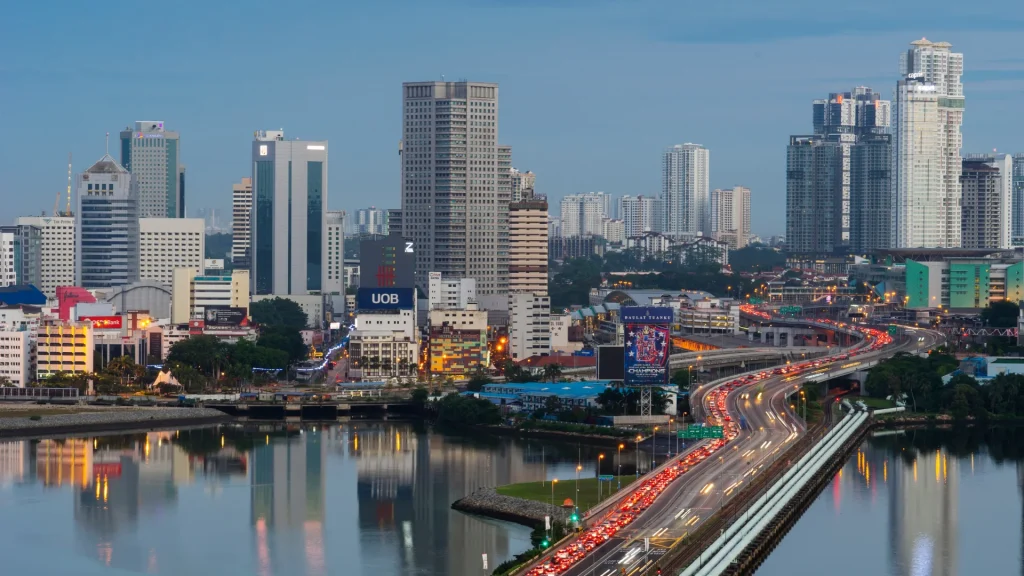
JOHOR BAHRU: The Johor state government is considering the establishment of an ASEAN industrial park within the Johor-Singapore Special Economic Zone (JS-SEZ), aimed at attracting strategic investments from ASEAN and Regional Comprehensive Economic Partnership (RCEP) member countries. Menteri Besar Onn Hafiz Ghazi outlined that the industrial park would focus on high-value sectors such as advanced manufacturing, green technology, and the digital economy. The park is envisioned to drive technology transfer, boost regional competitiveness, and diversify supply chains across ASEAN. Onn Hafiz emphasized that the industrial park would offer customised incentives to foreign investors, including tax breaks, simplified talent mobility, and temporary relaxation of fund repatriation rules, making it an attractive proposition for RCEP-related investments. “We aim to stimulate economic growth and job creation in the JS-SEZ and establish the region as a key investment destination for RCEP countries,” he stated during the JS-SEZ joint business and investment forum. The JS-SEZ has already proven to be an investment hub, with RM27.4 billion in new investments approved in the first quarter of 2025, a substantial increase compared to RM48.5 billion in 2024. Additionally, another RM23 billion worth of projects are in the pipeline for April 2025. Onn Hafiz highlighted the state government’s efforts to create an efficient and investor-friendly environment, noting the success of the Invest Malaysia Facilitation Centre-Johor (IMFC-J), launched in February 2025. The centre has significantly streamlined the investment process, enabling faster approvals for high-impact projects, with 42 such projects now under accelerated processing. “We are committed to reducing bureaucratic delays. What traditionally took 24 months from briefing to operations can now be completed in just 13 to 14 months, saving nearly 10 months of processing time. Johor is serious, responsive, and ready for investments,” he affirmed.
News, Property

IWG & PNB to launch new top-class workspaces at Malaysia’s tallest tower

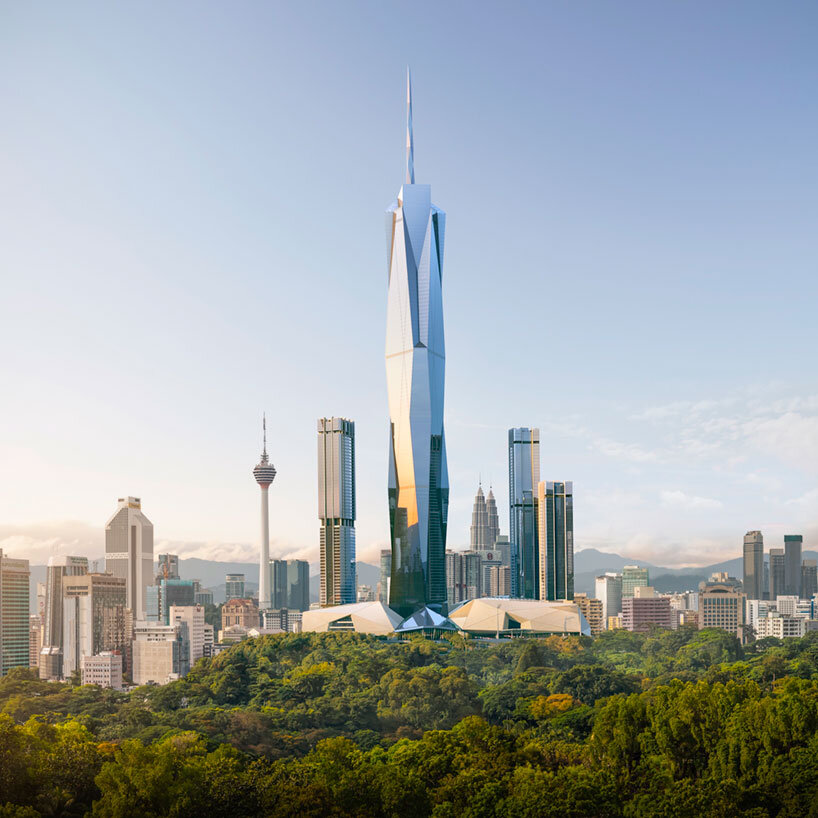
International Workplace Group (IWG) has announced the signing of a new centre under its Signature brand, located at the landmark Menara Merdeka 118. It will add to IWG’s global network of 4,000 locations spanning 120 countries, and support IWG’s future growth as it continues to cater to the rising demand for hybrid working. The new Signature centre boasts two floors of flexible work solutions, with 637 workstations, three meeting rooms, 31 coworking desks, a business lounge, and ample open space to support businesses of all sizes, with the option for large, branded and customised client areas. The premium city centre location has excellent transport accessibility, with easy access to highways, major roads and immediate access to the MRT, LRT, and expressway networks connecting users to locations like Klang Valley, Ampang, Sungai Buloh, Rawang, Shah Alam, Bangsar, Seremban and the Kuala Lumpur International Airport. Founder and Chief Executive Officer of IWG Mark Dixon said, “We are establishing a stronger presence in Malaysia with the signing of Signature at the renowned Menara Merdeka 118 in Kuala Lumpur, a prime business hub and the ideal location to drive our expansion plans. The signing of our newest Signature location comes as the demand for quality hybrid work solutions and access to a vast network of locations across Malaysia continues to rise.” Dixon added, “Our proven workplace model not only boosts employee satisfaction and productivity but also supports a more sustainable way of working. Through our continued collaboration with PNB, we are offering businesses a prestigious address in one of the world’s most sought-after locations, combining iconic locations with sophisticated flexible workspaces.” In Malaysia, IWG has 45 centres across four brands – Regus, HQ, Signature and Spaces, including four new centres announced last year, as well as four more new centres expected to open this year. In Kuala Lumpur, IWG currently has 16 operational centres throughout the city. This new centre is the fourth IWG location within PNB-owned properties, following three previous centres across Johor and Kuala Lumpur. This expansion is part of IWG’s broader network growth strategy in Malaysia, aimed at increasing accessibility to flexible work solutions for professionals and businesses. Dato’ Rick Ramli, Deputy President and Group Chief Executive of PNB, said, “We are pleased to welcome IWG’s new centre at Merdeka 118 as part of our continued efforts to support high-quality workspaces in Malaysia.” “As more Malaysian businesses and professionals seek premium office spaces tailored to their operational needs, we remain committed to facilitating greater access to diverse and high-quality work solutions. The addition of IWG’s latest centre aligns with our broader objective of supporting the evolving needs of the professional community in Malaysia,” he added. IWG’s Signature brand, known for its world-class workspaces in landmark buildings in major global hubs, offers a premium working environment with a custom design reflecting the quality and nature of the building – Signature at Merdeka 118 reflects the brand’s commitment to excellence. Standing tall at 678.9 metres, Merdeka 118 is the tallest building in Malaysia and Southeast Asia, and the second tallest building in the world, and also the first building in Malaysia to target triple green building platinum accreditations – Green Building Index (GBI), Green Real Estate (GreenRE), and has recently been certified in Leadership in Energy & Environmental Design (LEED).

News, Property

EcoWorld Up 4% on PD Industrial Park Development

KUALA LUMPUR: Share prices of Eco World Development Group Bhd (EcoWorld) rose in early trade on Monday after signing a tripartite agreement with SD Guthrie Bhd and NS Corporation to transform 483.59 hectares in Bukit Pelandok, Port Dickson, into an integrated industrial park. At 10.25am, EcoWorld advanced to 4.0 per cent or 7.0 sen to RM1.82 with 107400 units traded. In a joint statement last Friday, the parties said the collaboration sets the wheels in motion for the development of Parcel C within Malaysia Vision Valley 2.0 (MVV 2.0). The development will be via a special purpose vehicle Eco Business Park Sdn Bhd (EBP7SB). EcoWorld will have a 55 per cent stake in EBP7SB, SD Guthrie, and NS Corp, 30 per cent and 15 per cent, respectively. MIDF Amanah Investment Bank Bhd said EcoWorld’s net gearing is expected to increase marginally to 0.39 times (x) from 0.37x. It remains positive on EcoWorld as the growing business park segment will drive earnings growth. The investment bank expects the impact on EcoWorld’s balance sheet to be minimal. “Assuming EBP7SB funds the land acquisition via 30 per cent equity and 70 per cent borrowings, capital requirement for EcoWorld is estimated at RM94 million (at 55 per cent stake), which will lift net gearing marginally higher to 0.39x from 0.37x in the first quarter of it’s financial year 2025,” it said in a research note today. Meanwhile, the project will be developed over nine years with the first launch targeted by the first half of 2026, which will support EcoWorld’s new sales prospects, said MIDF Amanah. –BERNAMA

News

Malaysia Aviation Group Eyes Boeing Jets Dropped by China Amid Fleet Expansion Plans

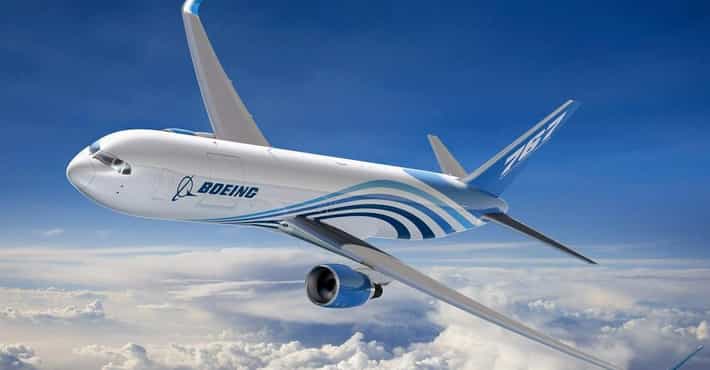
KUALA LUMPUR: Malaysia Aviation Group (MAG) is looking to fast-track its fleet expansion by securing Boeing aircraft delivery slots vacated by Chinese carriers amid escalating trade tensions between China and the United States. Group Managing Director Datuk Captain Izham Ismail confirmed ongoing discussions with Boeing, noting that the opportunity could accelerate MAG’s fleet growth, though competition for the aircraft remains fierce. “We’re speaking with Boeing to potentially take over those slots,” he said. “Everyone wants them—there’s a high demand—so we’re approaching it cautiously.” The opportunity arose following reports that China had instructed its airlines to halt deliveries from Boeing, forcing the US plane manufacturer to redirect aircraft previously intended for Chinese buyers. Any additional aircraft acquired under this arrangement would be separate from MAG’s current order of 25 aircraft under lease from Air Lease Corporation (ALC), set to be delivered between 2023 and early 2026. Izham noted that several key factors must be considered before acquiring new jets, including where the aircraft sits in the production queue and its configuration. “We need to know whether the aircraft is a green tail (unassigned) or already partially configured,” he explained. “Seat layout, lavatories, and galleys must align with our specifications.” Strategic Shift in Fleet Composition According to MAG’s Chief Strategy and Transformation Officer Bryan Foong Chee Yeong, the group is also shifting its long-term fleet strategy to better serve the Asia-Pacific region’s high-traffic routes, particularly in congested ASEAN capitals. “Currently, we operate a narrowbody Boeing 737 fleet, but by 2035, we’re looking at becoming more widebody-focused,” Foong said. “In congested airports, adding more flight frequency isn’t feasible, so we need larger aircraft to increase capacity.” MAG also plans to expand or replace its Airbus A350 fleet, with long-term planning extending to 2043. Financial Prudence and Capital Market Plans Group Chief Financial Officer Boo Hui Yee said MAG has only drawn RM1.3 billion of the RM3.6 billion capital injection pledged by sole shareholder Khazanah Nasional Bhd, with the remaining funds carefully managed to avoid unnecessary financial burden. “We’ve maintained a cash-positive position and continue to cover our operational costs,” she said. “We still have approximately RM2.3 billion in reserve. There’s no need to draw more unless required.” Izham also outlined plans to reduce MAG’s reliance on operating leases, aiming for a balanced fleet ownership model—50 per cent leased, 50 per cent owned. Currently, 80 per cent of MAG’s fleet is leased. “Leased aircraft come with costly end-of-lease conditions. Owning aircraft provides more control and reduces long-term costs,” he added. MAG’s efforts to secure vacated Boeing slots, recalibrate its fleet mix, and approach capital markets for expansion funding mark a strategic push to strengthen its regional competitiveness and financial sustainability.–BERNAMA

News

Malaysian Durian Exports to China Surge Following Xi Jinping’s Visit

SHANGHAI: Sales of Malaysian durians in China are experiencing a remarkable surge, offering a significant boost to the country’s durian industry. The increase in demand comes in the wake of Chinese President Xi Jinping’s recent visit to Malaysia, and reflects growing consumer interest in fresh, tree-ripened fruit. Between August and December 2024, Malaysia exported RM24.8 million (US$5.6 million) worth of fresh durians to China, according to the Ministry of Agriculture and Food Security. Industry experts attribute this growth to improved logistics, rising consumer preference for premium fruit, and strengthened diplomatic ties between the two nations. “Fresh durians, transported to China by air within 48 hours of harvest, are highly popular among affluent Chinese consumers,” said Guo Min, Deputy Marketing Director at Joy Wing Mau, a major fresh fruit distributor in China. “Our Malaysian partners have increased exports by 30 per cent this year, boosting our confidence in further developing the market.” Vivian Wang, Marketing Director at Dole Asia Holdings, echoed this optimism. “Fresh Malaysian durians are among the fastest-growing imported fruits in China. This trend creates substantial opportunities for growers in Malaysia.” While Thailand remains the market leader, holding 57 per cent of China’s US$6.99 billion durian market, and Vietnam accounts for 38 per cent, Malaysian durians are gaining traction. Malaysia and the Philippines together recorded US$38.2 million in durian sales to China last year. Malaysia’s appeal lies in the distinctive quality of its fruit—durians that are allowed to ripen naturally on the tree, unlike many Thai and Vietnamese varieties. This enhances flavour and aroma, making them highly desirable among discerning consumers. “The consistent supply and the premium nature of Malaysian durians set them apart,” said a representative from a food processing company. “Chinese consumers are increasingly valuing authenticity and quality.” Jiang Jianli, Logistics Director at Goodfarmer Fresh Fruit Trading, noted that demand for high-quality imports remains steady in China. “The market for fresh produce continues to grow. Health-conscious consumers are willing to pay for premium imported fruits, providing further opportunities for suppliers.” This momentum is reflected in the success of the China International Import Expo (CIIE), which has become a key platform for global agricultural and food product suppliers. In 2024, the expo recorded US$80 billion in purchase agreements—a 2 per cent increase from the previous year. More than 800 international companies from over 70 countries participated, positioning Malaysia to further expand its durian footprint in China. The surge in durian exports not only represents a win for Malaysian agriculture but also symbolises the deepening trade relationship between Malaysia and China, fuelled by diplomatic goodwill and a shared appetite for premium produce.–MALAYMAIL

News

Advancecon Appoints Alicia Chin as Group CFO Amid Growth Push

KUALA LUMPUR: Advancecon Holdings Bhd has announced the appointment of Alicia Chin Mei Yoke as its new Group Chief Financial Officer (CFO), effective immediately. Chin steps into the role following the departure of Tan Chee Keong, who left to pursue other professional opportunities. With a strong background in financial leadership and transformation, Chin brings to Advancecon a wealth of experience from her tenure at global energy technology giant Baker Hughes. Most recently serving as assistant controller and transformation leader, Chin was responsible for overseeing financial operations across two global hubs and spearheading transformation initiatives involving more than 600 team members. Her career also includes key finance-related roles at multinational conglomerate General Electric, further solidifying her credentials in managing large-scale financial operations and driving organisational change. Welcoming Chin to the leadership team, Advancecon Group CEO Datuk Phum Ang Kia said, “We are delighted to welcome Alicia to Advancecon. Her proven track record in global financial leadership, coupled with her passion for building empowered teams, is a strong fit for our Group as we accelerate our growth plans. “Alicia’s experience in leading financial transformations and driving data-driven strategies will be invaluable as we continue to strengthen our operational resilience, unlock efficiencies, and create long-term value for our stakeholders,” he added. Chin’s appointment comes at a significant juncture for Advancecon, as the construction engineering firm intensifies efforts to grow its infrastructure footprint, expand its renewable energy ventures, and enhance its governance and financial reporting practices to meet evolving stakeholder expectations.

News

Haircare Firm Sues Luxury Car Dealer Over Allegedly Defective RM500,000 Vehicle

A hair care products company and its two directors have taken legal action against the assembler and local dealer of a luxury continental car, alleging that the vehicle they purchased for over RM500,000 was defective. The plaintiffs—Beyond Natural Group Sdn Bhd, S Aruna, and G Hanulraj—claimed the car, a three-litre premium model delivered on 25 November 2022, began experiencing electronic and mechanical issues almost immediately after delivery. According to the statement of claim filed by law firm V Siva & Partners, the plaintiffs asserted that the vehicle has had persistent problems since late 2022, ultimately leading them to lose all trust and confidence in it. They also allege that the car model had been subject to a recall since March 2022, but the assembler and dealer failed to disclose this critical information at the time of purchase. The plaintiffs are relying on provisions in the Sale of Goods Act 1957 and the Consumer Protection Act 1999 to support their case. They are seeking an order from the sessions court to compel the dealer to accept the return of the car, in addition to general and aggravated damages. They are also pursuing reimbursement for several costs incurred, including RM54,246.04—the difference between the purchase price and the hire purchase loan of RM452,000—as well as future sums due under the hire-purchase agreement with Affin Bank Berhad. Other claims include RM157,600 for monthly instalments already paid, RM11,219.90 for the insurance premium, RM6,618.15 in service charges, and RM12,800 for paint protection film. Aruna and Hanulraj are additionally seeking damages for pain, suffering, stress, mental anguish, and trauma. They claim the car was sold to them based on representations that it was a luxury vehicle outfitted with premium safety and comfort features, but these assurances were not reflected in the car’s performance. On 2 December last year, the plaintiffs requested a replacement vehicle via email, but say the defendants failed to take any meaningful action despite acknowledging the message. The plaintiffs later refused to accept the car after its latest round of repairs, and on 27 December, they formally sought monetary compensation. Their lawyer, V Sivaparanjothi, confirmed that the lawsuit was filed earlier this week and that the cause papers were served to the defendants on Wednesday.–FMT

News

Federal, Johor Governments to Launch Sandbox Initiatives to Address Investor Concerns in JS-SEZ — Tengku Zafrul

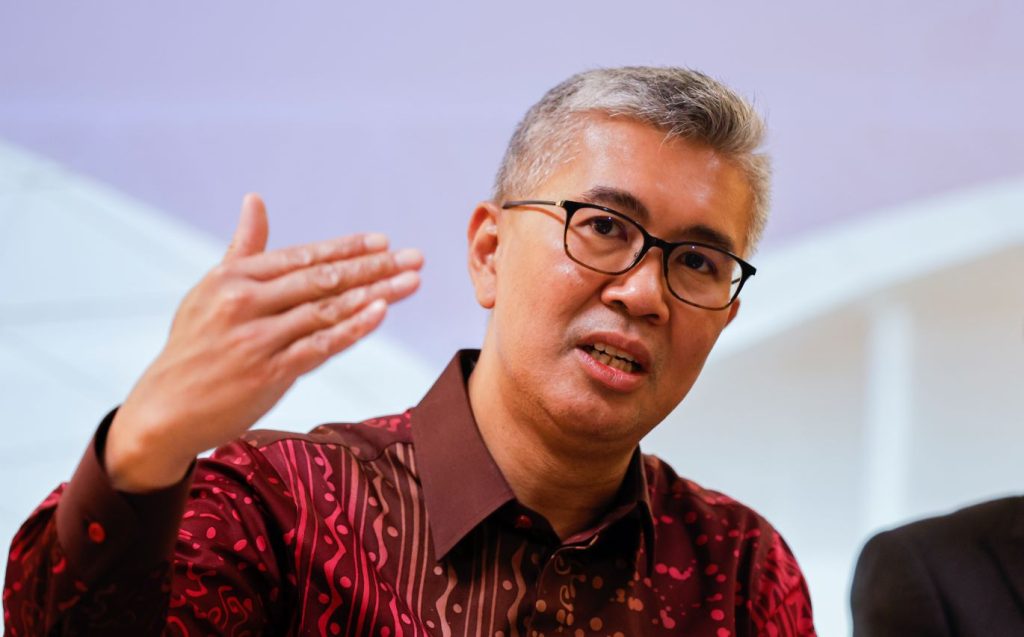
KUALA LUMPUR:  The Federal government, in collaboration with the Johor state government, is set to introduce sandbox initiatives aimed at addressing regulatory and investment challenges in the Johor-Singapore Special Economic Zone (JS-SEZ), said Investment, Trade and Industry Minister Tengku Datuk Seri Zafrul Abdul Aziz. The initiatives, which will be announced during the JS-SEZ Joint Business and Investment Forum on Monday, are designed to streamline regulatory frameworks and ensure businesses are not hampered by dual compliance obligations from both Malaysia and Singapore. “We want to streamline the regulatory framework so business operations run smoothly,” said Tengku Zafrul. “We look at all the bureaucratic hurdles.” A new working committee, to be co-chaired by Johor Menteri Besar Datuk Onn Hafiz Ghazi and Tengku Zafrul, will oversee the coordination and implementation of these initiatives. Improving Ease of Doing Business Tengku Zafrul highlighted ongoing efforts to enhance ease of doing business, such as the harmonisation of customs processes, simplification of tax structures, and faster permit approvals. He also expressed appreciation to the Ministry of Home Affairs for delegating the approval of foreign worker permits to the Malaysian Investment Development Authority (MIDA), making project initiation more efficient. “Previously, companies had to make multiple visits to Malaysia before starting a project, which often led to scrutiny from immigration. Now, MIDA can issue a single visa to streamline the process.” Johor’s Role as a Regional Leader As Malaysia chairs ASEAN this year, Johor is playing a central role in advancing regulatory harmonisation, piloting digital customs, and exploring dual certification of goods with Singapore. These initiatives align with the broader ASEAN Digital Economy Framework Agreement. Tengku Zafrul noted that while various ministries have valid concerns — from potential revenue losses to regulatory loopholes — the sandbox model provides a controlled environment to test policies before full implementation. “We understand the concerns of various ministries, which is why we propose sandbox initiatives — to address them proactively.” Streamlining Investment Facilitation He added that the Invest Malaysia Facilitation Centre Johor (IMFC-J) serves as a one-stop hub to assist investors with approvals, licences, and other regulatory needs. Between 2023 and March 2025, IMFC-J approved 537 manufacturing projects, with 84% already in implementation. To further attract investments, the JS-SEZ will offer a suite of competitive incentives, including: Special tax rates of 5%–10% for 10–15 years; Investment tax allowances of 60% on capital expenditure over 5–10 years; Stamp duty exemptions and accelerated capital allowances for renovation costs. Support for Family Offices and SMEs Tengku Zafrul also said there is strong backing from the Ministry of Finance to introduce incentives for family offices in Forest City — an area he described as having significant growth potential. Final details are expected soon. The JS-SEZ covers key economic areas including the Iskandar Development Region, Forest City, Pengerang Integrated Petroleum Complex, and Desaru, with a combined land area of 357,128 hectares. The zone is anchored by nine priority sectors: advanced manufacturing, green energy, logistics, artificial intelligence, healthcare, quantum technology, aerospace, digital services, and halal industries. Financing and Forum Highlights To further support businesses, Maybank and CIMB will introduce special financing packages for SMEs operating within the JS-SEZ. On the second day of the forum, five multinational corporations will present partnership models for SMEs, showcasing supply chain opportunities and collaborative initiatives. “We’re offering affordable rental spaces and shared facilities, and showing how global firms can work with our local SMEs,” said Tengku Zafrul. The JS-SEZ Joint Business and Investment Forum will be held from April 21 to April 22, 2025.–BERNAMA

Sarawak Premier Tan Sri Abang Johari Tun Openg
News

Strengthening National Economy Must Take Priority Over Tariff Pressures — Abang Johari

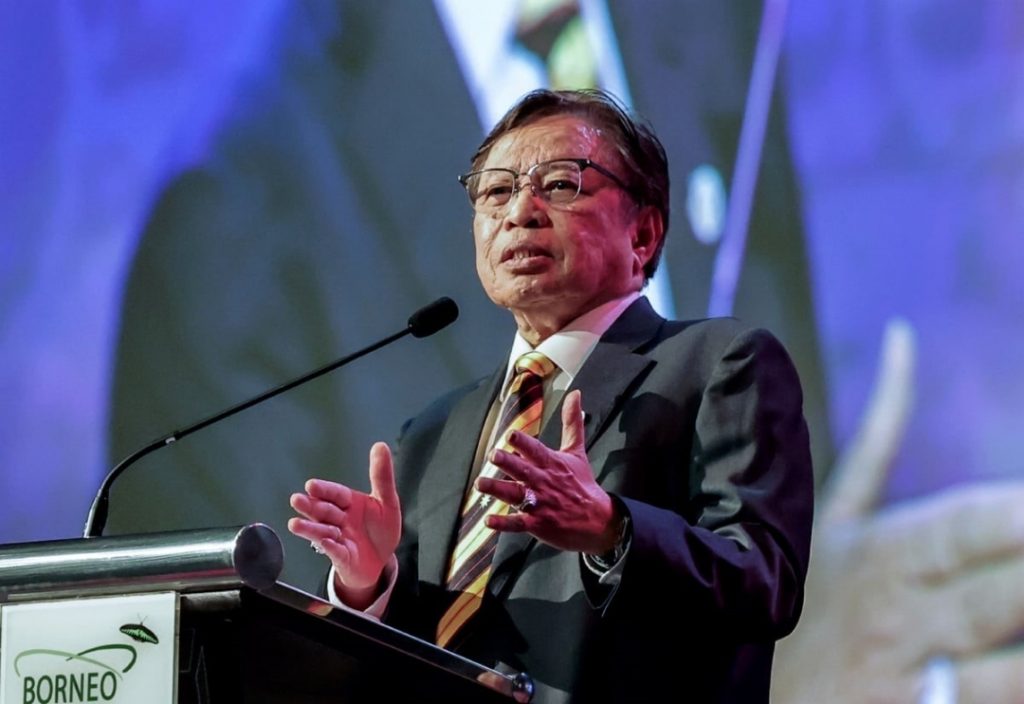
KUCHING: Malaysia should prioritise efforts to strengthen its national economy over concerns about tariff pressures from foreign governments, said Sarawak Premier Tan Sri Abang Johari Tun Openg. Speaking at the state-level Aidilfitri Madani 2025 celebration at Stadium Perpaduan on Saturday, Abang Johari stressed that political stability and sustained economic growth are far more critical to the nation’s future than retaliatory trade policies imposed by other countries. “Malaysia is politically stable at present, and our leaders have elevated the country’s standing on the world stage,” he said.“Our economy has continued to grow, even though some countries are seeking to impose certain tariffs. It’s alright, let us set tariffs aside; what matters most is the strength of our national economy.” His remarks come in light of recent tariff announcements by US President Donald Trump, who on April 3 declared a minimum 10% tariff on imports from all countries under a new reciprocal trade policy. The move has had a disproportionate impact on Asean’s Indochina members, with Cambodia, Laos, Vietnam, and Myanmar facing combined baseline and retaliatory duties of between 44% and 49%. Malaysia and Brunei were each slapped with a 24% tariff, while Indonesia and Thailand face duties of 32% and 36%, respectively. The new tariffs are currently under a 90-day suspension, except for those imposed on China, which remain in force. Despite these developments, Abang Johari reaffirmed his belief in Malaysia’s economic fundamentals and its ability to weather external challenges. He also emphasised the importance of resilient governance and unified national vision in sustaining growth. “Let us not be distracted by external pressures. Our focus must be on building a robust and competitive economy from within,” he said. The Aidilfitri celebration saw an estimated 10,000 attendees and was jointly organised by the Ministry of Energy Transition and Water Transformation, the Sarawak State Secretary’s Office, and the Performance Acceleration Coordination Unit under the Prime Minister’s Office. Prime Minister Datuk Seri Anwar Ibrahim and Deputy Prime Minister Datuk Seri Fadillah Yusof were also present at the event.

News

Anwar: Malaysia Needs Quantum Leap to Achieve Developed Nation Status

PETALING JAYA: Prime Minister Datuk Seri Anwar Ibrahim has called for a quantum leap in transformation if Malaysia is to realise its ambition of becoming a developed nation. Speaking as moderator at the fifth Malaysia Madani Scholars Forum (FIM) on Friday evening, Anwar said that incremental change will no longer suffice in today’s rapidly evolving global landscape. “Any rapid change will inevitably bring about issues — be it political or social tension — but if we ask ourselves whether we have a choice, the answer is no. If there is no choice, then brace ourselves and leap,” he said during the closing of the forum’s discussion titled “The Role of Government-Linked Investment Companies in Transforming Companies: Balancing Profit and Responsibility to Spark a Creative Nation.” Also featured at the event were Plantation and Commodities Minister Datuk Seri Johari Abdul Ghani, Khazanah Nasional managing director Datuk Amirul Feisal Wan Zahir, and Khazanah Research Institute chairman Dr Nungsari Ahmad Radhi. Higher Education Minister Datuk Seri Dr Zambry Abd Kadir was also present. Anwar emphasised that a shift in public consciousness is vital — urging Malaysians to focus on progress-oriented issues rather than being bogged down by racial and religious rhetoric. “I’m not saying race or religion are unimportant, but that narrative tires us out and holds us back. Other nations are now talking about energy and artificial intelligence (AI), yet our by-election campaigns are filled with baseless accusations and distractions.” He stressed the need for a new narrative and theoretical framework to guide Malaysia forward — one that encourages creativity, inclusiveness, and bold thinking. Anwar also addressed the importance of strategic economic positioning, pointing to the need for Malaysia to make bold and timely decisions in the national interest. This includes the possibility of joining BRICS, the economic bloc comprising Brazil, Russia, India, China, and South Africa, as a way to reduce reliance on traditional markets. Touching on Asean’s evolving role, the Prime Minister said discussions now go beyond regional centrality and peace, with increasing focus on intra-Asean trade, competitiveness, and external pressures. He cited former US President Donald Trump’s imposition of retaliatory tariffs, which spurred the European Union (EU) to re-engage on a previously stalled Free Trade Agreement (FTA) with Asean. “Asean once pleaded for an FTA with the EU, but they were dismissive. Now, with the shift in global trade dynamics, the EU wants to accelerate the process — and we must be ready to act swiftly,” he said.

Scroll to Top

Subscribe
FREE Newsletter