
Proactive Actions and Ecolab’s commitment to Water Resilience
By Greg Lukasik, SVP & CEO, Ecolab Southeast Asia

By Greg Lukasik, SVP & CEO, Ecolab Southeast Asia

SINGAPORE, MEYLAN, MONTREAL: Vertex Growth, a Singapore-based growth-stage venture capital fund, has announced a €10 million investment in Dolphin Semiconductor, a leading provider of mixed-signal semiconductor intellectual property (IP) solutions. This strategic investment will support and accelerate Dolphin Semiconductor’s expansion plans and innovation roadmap. Backed by Vertex Holdings, a subsidiary of global investment firm Temasek, Vertex Growth focuses on scaling high-potential technology companies globally. The new funding reinforces Dolphin Semiconductor’s commitment to advancing next-generation semiconductor IP technologies, especially in power management and data conversion—critical components across modern semiconductor systems. Dolphin Semiconductor is poised to scale its operations to meet rising global demand across diverse sectors, including industrial, high-performance computing, consumer electronics, automotive, and the Internet of Things (IoT). The company will use the capital to enhance its research and development efforts, expand commercial activities, and pursue consolidation opportunities to strengthen its market position. This announcement follows a previous commitment of €26 million from Jolt Capital—a private equity firm specialising in deeptech—made in November 2024. With the additional support from Vertex Growth, Dolphin Semiconductor now has a robust foundation to deepen its global presence, particularly in Asia. “We are excited to support Dolphin Semiconductor alongside our long-time collaborator Jolt Capital,” said Hock Chuan Tam, General Partner at Vertex Growth. “Dolphin has built a remarkable team and an impressive IP portfolio, including innovations in self-adaptive and battery-less power management, on-chip monitoring, and cutting-edge audio solutions such as Class-D amplifiers and ultra-low power codecs. We look forward to facilitating their expansion across Asia and contributing to the semiconductor industry’s evolution.” Laurent Monge, CEO of Dolphin Semiconductor, welcomed the investment, stating: “This partnership with Vertex Growth is a key milestone for us. Beyond funding, their strong network and strategic insights in the Asian market will significantly accelerate our global growth and market reach.” Echoing this sentiment, Pierre Garnier, Managing Partner at Jolt Capital, said: “Vertex Growth joining Dolphin Semiconductor’s journey marks a pivotal moment. As we continue to scale the business in North America and Europe, Vertex’s regional expertise and connections in Asia will be invaluable in opening new markets and unlocking long-term value.” With strong financial and strategic backing from both Jolt Capital and Vertex Growth, Dolphin Semiconductor is well-positioned to advance its technological leadership and expand its footprint in the rapidly evolving semiconductor IP landscape.

SINGAPORE: Amid rising economic uncertainty and intensifying global competition, senior executives across Asia Pacific (APAC) are sharpening their focus on digital transformation, resilient supply chains, and talent strategies to maintain competitiveness and drive sustainable growth, according to Forvis Mazars’ 2025 C-suite Barometer: Outlook 2025 – Cutting through competition. Based on insights from 1,706 global business leaders—including 171 from APAC across 15 industries—the report highlights how digital transformation continues to dominate boardroom priorities. More than one-third (35%) of APAC leaders identified technology transformation as their top strategic initiative, up one percentage point from last year. This comes as companies grapple with increasingly complex operating environments shaped by inflationary pressures, geopolitical shifts, and supply chain disruptions. Digital Agility and AI Adoption in Focus While digital transformation takes precedence, there is a growing emphasis on the transformative potential of artificial intelligence (AI). The report shows 44% of APAC executives expect generative AI to significantly impact their operations—closely mirroring global expectations. However, the region lags behind in readiness, with only 66% of APAC businesses reporting a defined technology strategy, compared to 76% globally. Kee Yin Lai, Partner, Technology, Digital & Sustainability Consulting at Forvis Mazars Singapore, said the push for digital solutions is fundamentally reshaping how APAC businesses operate. “Strategically leveraging structured data enables businesses to improve visibility, enhance decision-making, and build operational resilience. As AI matures, early adoption will be key to securing a competitive edge.” Securing Supply Chains as Expansion Plans Grow Supply chain optimisation is emerging as a business-critical priority. 36% of APAC executives cited supply chain instability as a top growth barrier—ten points above the global average. A further 28% are actively prioritising procurement and supply chain enhancement in their strategic plans, reflecting the region’s complex logistics landscape. As APAC companies accelerate international expansion—74% plan to scale operations globally within the next five years—supply chain setup remains a top operational hurdle. Establishing secure, localised networks is critical, particularly for firms entering new markets. In parallel, ESG reporting pressures have driven 44% of regional businesses to invest in responsible supply chain specialists, further underlining the long-term strategic value of robust procurement frameworks. Talent and Leadership Development Key to Long-Term Growth The report also highlights a widening talent gap, with 50% of APAC executives struggling to attract and retain skilled talent, especially in mid-level and managerial roles. This surpasses the global average of 43%, revealing a more acute talent crunch in the region. To address this, APAC businesses are investing in leadership development and flexible working models. Among those already offering hybrid work, 60% plan to adopt fully flexible arrangements, while 55% aim to reduce mandatory in-office days. Rick Chan, Managing Partner at Forvis Mazars Singapore, said, “Companies that embed flexibility and continuous learning into their culture will be better positioned to retain top talent and weather long-term challenges.” Shifting Attitudes on ESG Reporting Sustainability remains a strategic consideration, though the region has seen a notable decline in public ESG disclosures. Only 44% of companies in APAC published sustainability reports in 2025, down from 73% in 2024. However, integrated sustainability-financial reporting is on the rise, now adopted by 54% of APAC firms—a 14-point year-on-year increase. Chester Liew, Partner, Head of Risk Consulting & Sustainability, noted that while public-facing ESG reporting may be tapering, companies are embedding sustainability more deeply into financial planning. “This shift signals that businesses are moving from compliance-driven reporting to strategic ESG integration that supports long-term value creation.” Investment Outlook Reflects Caution, Not Retreat Investment sentiment has cooled slightly across the region, with only 55% of executives planning increased investments—down from 64% in 2024. Organic growth remains the most favoured growth strategy, followed by partnerships (35%) and alternative funding (20%). Despite the cautious investment outlook, APAC companies are optimistic about international growth. However, key barriers remain, including regulatory complexity, product-market fit, and localisation of supply chains. Resilience with a Cautious Optimism Looking ahead, 84% of APAC executives anticipate business growth in the next 12 months, though optimism has declined by seven points from the previous year and lags behind the global sentiment of 93%. The outlook reflects an increasingly pragmatic approach, as leaders double down on fundamentals—technology, talent, and operational agility—to navigate volatility and pursue long-term success.

SINGAPORE: Oil prices slumped to their lowest level in over four years today, marking their steepest five-day decline since March 2022, as fears of a global recession deepened amid escalating trade tensions between the United States and China. The sell-off also rippled across commodity markets, dragging down base metals and agricultural goods. The drop follows U.S. President Donald Trump’s announcement on April 2 of sharply higher tariffs on key trading partners, which has wiped nearly 20% off oil prices since. The latest round of tariffs, including a staggering 104% duty on Chinese imports, has rattled financial markets and clouded the global economic outlook. “Crude oil extended losses amid signs of escalation in the trade war,” analysts at ANZ said in a note, highlighting that copper prices have also plunged nearly 10% since the announcement of the new tariffs. The U.S. confirmed that the increased tariffs on Chinese goods will come into effect shortly after midnight, while also initiating talks with other affected trading partners. Market sentiment soured further as China announced retaliatory tariffs of 34% on all U.S. goods, effective April 10. The move severely dims hopes for a quick resolution between the world’s two largest economies. “The aggressive retaliation by China lowers the chances of a swift trade deal and raises the risk of a global economic slowdown,” said Ye Lin, Vice-President of Oil Commodity Markets at Rystad Energy. She warned that China’s projected oil demand growth of up to 100,000 barrels per day could be undermined if the trade war drags on. However, she noted that Beijing’s potential stimulus measures to boost domestic consumption may offset some of the downside. Commodities Under Pressure In China, base metal prices extended losses. Copper futures on the Shanghai Futures Exchange slid to an eight-month low, while iron ore on the Dalian Commodity Exchange dropped 3%. Benchmark copper on the London Metal Exchange declined 1%, recording its largest five-day loss since March 2020. Gold prices also edged lower as U.S. Treasury yields climbed, while nervous investors weighed the intensifying trade conflict. In the agricultural sector, Malaysian palm oil futures fell over 1%, and rubber prices sank to their lowest level in more than a year. Meanwhile, Chicago soybean futures rose for a third consecutive session, rebounding from four-month lows earlier this week, supported by rising prices in Brazil and a softer U.S. dollar.–REUTERS
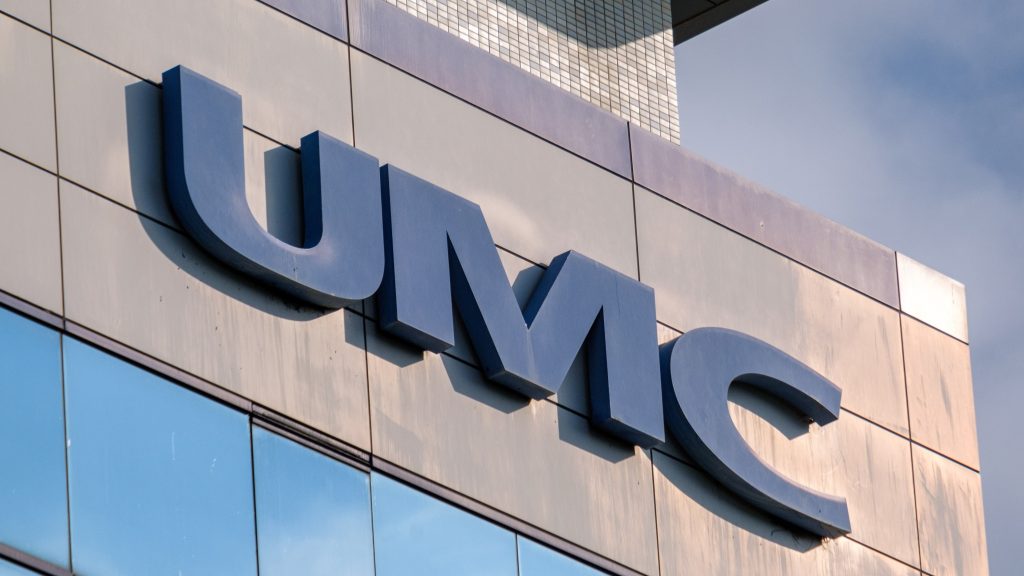
TAIPEI: United Microelectronics Corp. (UMC), Taiwan’s second-largest contract chipmaker, has inaugurated a new 22-nanometer semiconductor fabrication plant in Singapore. The facility aims to address rising demand and enhance supply chain resilience. Located in Pasir Ris Wafer Fab Park, adjacent to UMC’s existing plant, the new fab has commenced pilot production and is expected to scale up to mass production by 2026, UMC President S.C. Chien stated during the opening ceremony. UMC plans to invest up to US$5 billion in the initial phase, expanding the plant’s monthly production capacity to 30,000 wafers and generating 700 new jobs. Once fully operational, UMC’s total output in Singapore will exceed 1 million wafers annually, catering to industries ranging from smartphones and automobiles to data centers. “Singapore’s strategic position reinforces supply chain resilience for our customers,” Chien remarked. He added that the facility is equipped for 22 nm and 28 nm processes, which remain state-of-the-art for various applications. The 22 nm node, for instance, is currently the most advanced process used for display driver chips, which enhance smartphone battery life and visual performance. Meanwhile, UMC dismissed a recent Nikkei Asia report suggesting it was considering a merger with U.S.-based GlobalFoundries Inc. As of 2024, UMC held a 4.7 percent share of the global pure-play wafer foundry market, ranking fourth worldwide, according to TrendForce. In comparison, Taiwan Semiconductor Manufacturing Co. (TSMC) led the industry with a 67.1 percent market share, followed by Samsung Electronics (8.1 percent) and China’s Semiconductor Manufacturing International Corp. (5.5 percent).

SINGAPORE: Citi today announced the appointment of Damien Tan as Head of Corporate Bank for Singapore, effective May 1, 2024. In his capacity, Damien will spearhead Citi’s corporate banking endeavors in Singapore, focusing on enhancing business performance and refining strategic directions. His responsibilities encompass overseeing client relationships with top-tier local corporates, public sector entities, financial institutions, and multinational firms in the nation. Reporting to K. Balasubramanian, Head of Corporate Bank for Asia South, and Tibor Pandi, Citi Country Officer and Head of Banking for Singapore, Damien will also serve as a key member of the Singapore Management Committee. Having commenced his journey with Citi in 2003 as a Management Associate within the Corporate and Investment Bank, Damien has amassed a wealth of experience across various roles. Noteworthy among his past positions include serving as an Investment Product Manager at Citi Singapore’s offshore banking arm – International Personal Bank, and contributing to the Asia Fixed Income Syndicate Team in Hong Kong, facilitating bond issuances for Citi’s Asian clientele. With over two decades of banking experience under his belt, Damien brings to the table profound industry insights and a keen understanding of the evolving needs of local corporate clients. Prior to assuming his current role, he held the position of Head of Local Corporates for Singapore, where he steered several significant deals for Citi. His purview included managing relationships with top-tier local corporates across diverse sectors such as Real Estate, Aviation, Shipping, Industrials, Healthcare, and Agribusiness, while also driving overall business strategy, client acquisition, lending activities, product collaborations, and deal execution. K. Balasubramanian expressed confidence in Damien’s ability to leverage Citi’s global network and suite of products to meet clients’ dynamic requirements, acknowledging the pivotal role played by large corporates in driving growth across Asia and beyond. Tibor Pandi emphasized the significance of nurturing local talent within Citi, citing Damien’s journey from the Management Associate program to his current leadership role as a testament to the firm’s commitment to fostering a diverse talent pool. Damien Tan is an alumnus of the London School of Economics & Political Science, holding a Bachelor of Science in Economics (Hons).

KUALA LUMPUR: AirAsia Group Sdn Bhd (AAG) is poised to be listed on Bursa Malaysia in September, taking over the listing status of AirAsia X Bhd, said Capital A Bhd chief executive officer Tan Sri Tony Fernandes. He said AAG is a combined airline under AirAsia Aviation Group Ltd (AAAGL), consisting of AirAsia subsidiaries in Thailand, Indonesia, the Philippines and soon Cambodia together, with AirAsia Bhd (AAB) which handles operations in Malaysia. “The merger is to streamline the operation which aims to be the largest low cost carrier in Asia with the ‘One Airline’ strategy set to transform the face of global low cost travel,” he said during the exchange ceremony of a conditional share sale and purchase agreement between Capital A and AAG, today. Fernandes said he believes the move will pave the way for Capital A to exit PN17 status after the divestment of its wholly-owned subsidiaries – AAAGL and AAB. “So the first thing is to get the circular done for this transaction which I hope will be done in two weeks. Then we have to submit it to Bursa Malaysia for approval which I hope can be done quickly. “Then we have 21 days to call for an extraordinary general meeting from both companies to approve this transaction. So once that is done, we have to get the cost to approve it for capital reduction, then we can list,” he said. Post-divestment, he said Capital A will retain four core businesses, including Capital A Aviation Services, Teleport, MOVE Digital, and Capital A International. He said AirAsia Group will be optimising their profitability with an efficient fleet model, with the company upsizing the A320s model and downsizing the A330s to A321 Neo models. Capital A announced to the stock exchange yesterday it has entered into a conditional share sale and purchase agreement with AAG to dispose of its 100 per cent equity interest in AAAGL and AAB for RM6.8 billion. Capital A also announced a proposed distribution of new ordinary shares in AAG to be received as consideration shares for the proposed AAAGL disposal of about RM2.20 billion to the entitled shareholders of the group. –BERNAMA

SINGAPORE: Singapore’s early-stage technology start-ups secured $402 million (S$548 million) in funding in 2023, a 59 percent increase from the $253 million raised in 2022, according to SGInnovate, the national investment arm. The number of seed-stage deals also rose by 50 percent, from 20 in 2022 to 30 in 2023, across four key sectors: advanced manufacturing, agrifood and sustainability, and health and biomedical sciences. SGInnovate noted these figures in its report on the sector’s development in 2023, highlighting a growing interest in emerging tech investments as Singapore’s ecosystem matures. SGInnovate examined early-stage start-ups established between January 1, 2019, and December 31, 2023, defining emerging technology start-ups as those developing tangible products like devices, machinery, food, and pharmaceuticals based on physical sciences, life sciences, and engineering. Tong Hsien-Hui, SGInnovate’s executive director, remarked that these trends reflect Singapore’s evolving and dynamic emerging tech landscape, with specialized investors increasingly supporting specific industry verticals. Agrifood and sustainability emerged as leading sectors in funding and start-up incorporations, likely driven by public and private initiatives. Both sectors saw growth in funding events year-on-year, with the agrifood sector securing 13 deals in 2023 (compared to eight in 2022) and the sustainability sector closing 16 deals in 2023 (versus 12 in 2022). Despite overall increases in funding and deals, the number of start-ups incorporated in 2023 across the four sectors declined from 35 in 2022 to 25 in 2023. SGInnovate attributed this to ongoing macroeconomic uncertainties, potentially leading to deferred incorporations. Looking forward, SGInnovate anticipates increased private market investments in emerging technologies in 2024, especially with predicted rate cuts, and remains optimistic about start-ups addressing long-term challenges, supported by Singapore’s policy initiatives.

SINGAPORE – With the summer season approaching, Southeast Asia is poised for a rise in local travel, especially in the Philippines and Indonesia, where interest in domestic trips is highest. However, safety and affordability are pivotal concerns for many regional travelers. Milieu Insight, a leading survey software company in Southeast Asia, has released its latest findings on summer travel intentions among Southeast Asians. Milieu Insight’s quantitative study, drawing from its survey community, engaged 1,966 respondents from the Philippines, Thailand, Indonesia, and Malaysia. According to the report, more than 60% of respondents prioritize safety and cost when selecting domestic travel destinations, and 55% are inclined to travel domestically this year. sheds light on the summer travel plans of numerous Southeast Asians. As individuals look to explore their own countries, the key factors guiding their choices are affordability and safety,” stated Gerald Ang, Founder and CEO of Milieu Insight. “Moreover, many travelers in Asia are increasingly budget-conscious, favouring family-oriented experiences and finding value in land transportation and road trips.” Inflation is fueling the preference for budget-friendly travel options, with international travel becoming more expensive. As a result, domestic leisure travel is expected to remain robust among Southeast Asians. A majority of travellers across the region are now financially prudent, with 62% placing cost as a top priority, closely followed by 63% who emphasize the importance of secure destinations and scenic spots. This trend underscores the need for marketers to promote local destinations known for their safety. Land transport has emerged as the preferred mode of travel for domestic vacations, with 74% of respondents opting for this mode. Thai and Indonesian travellers, in particular, favour land transportation, with 88% and 76% opting for road trips to explore domestic destinations. Family-focused travel experiences, including culinary exploration and immersive touring, are gaining traction. Around 79% of Southeast Asian travellers plan to embark on adventures with their families, prioritizing quality time together and seeking out local hidden gems. While hotels remain the top choice for accommodations (preferred by 78% of respondents), alternative options like Airbnb and pool villas are gaining popularity. In Malaysia, 44% of travellers seek personalized experiences through Airbnb, while in Thailand, 47% are drawn to the luxury and exclusivity of pool villas. As Southeast Asia gears up for summer travel, there is a notable willingness among most travelers to opt for domestic destinations due to proximity and affordability. This shift reflects a pragmatic mindset amid evolving global circumstances, with safety and cost considerations taking precedence in travel planning. The study, conducted through Milieu Insight’s survey community, provides a comprehensive overview of Southeast Asian summer travel intentions, highlighting key insights and emerging travel trends. Representative of the online adult population aged 16 and above, the fieldwork for this study was conducted from 7th to 31st March 2024.
