They hang outside government buildings, line streets during national celebrations and dominate the backdrop of major corporate events. We see them so often that we rarely stop to think about where they come from.
Flags are everywhere.
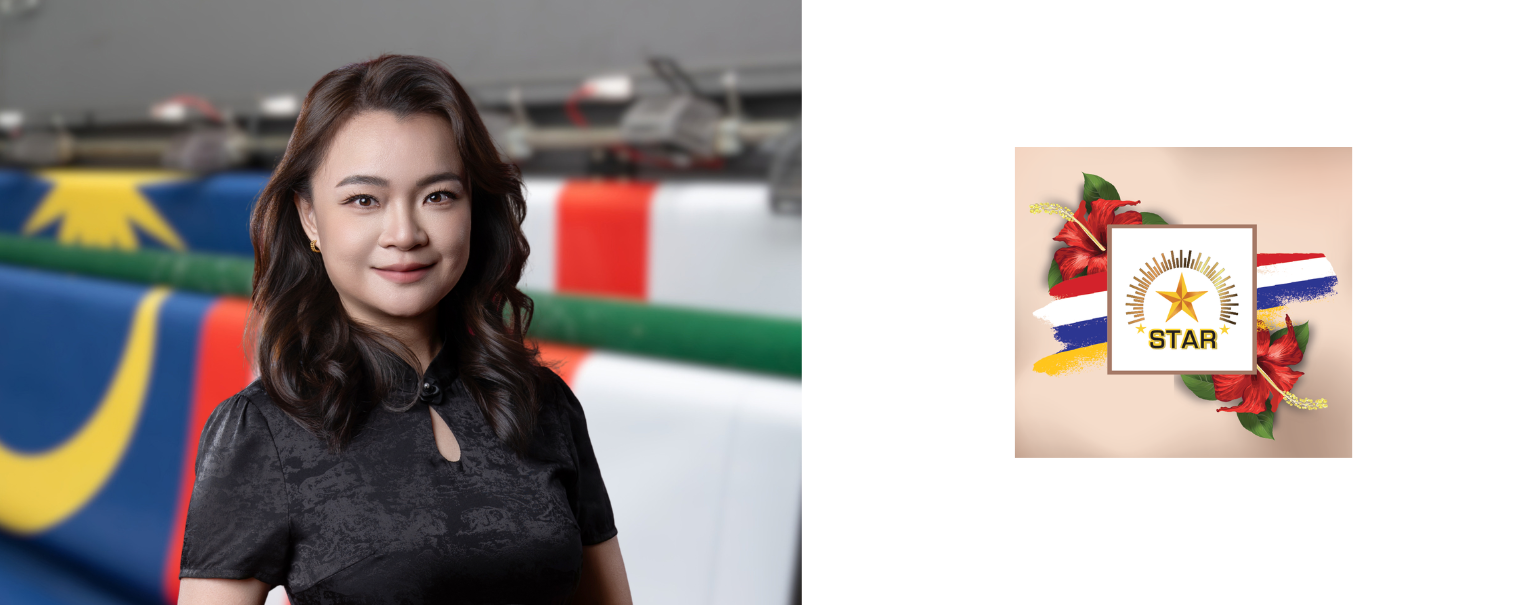
Managing Director of Star Light Flag Trading Sdn. Bhd – Annie Chia.
But behind every Jalur Gemilang flying correctly, every state flag displayed at an official function and every corporate flag carrying precisely the right colours is a business where details matter more than most people realise.
For one Malaysian visual communication and flag solutions company, those details have become its speciality.
Its business spans national and state flags, institutional flags, customised corporate designs, banners and large-format visual branding for government agencies, corporations, educational institutions, event organisers and consumers.
At first glance, it is a business about producing flags.
Look closer, and it is really a business about identity and representation.
Getting the Symbol Right
A flag is unusual because its value is rarely determined by the material alone.
What it represents matters considerably more.
A national flag carries identity and pride. An institutional flag represents authority and belonging. A corporate flag can turn an otherwise anonymous venue into a branded environment before anybody has even walked through the door.
That leaves surprisingly little room for getting things wrong.
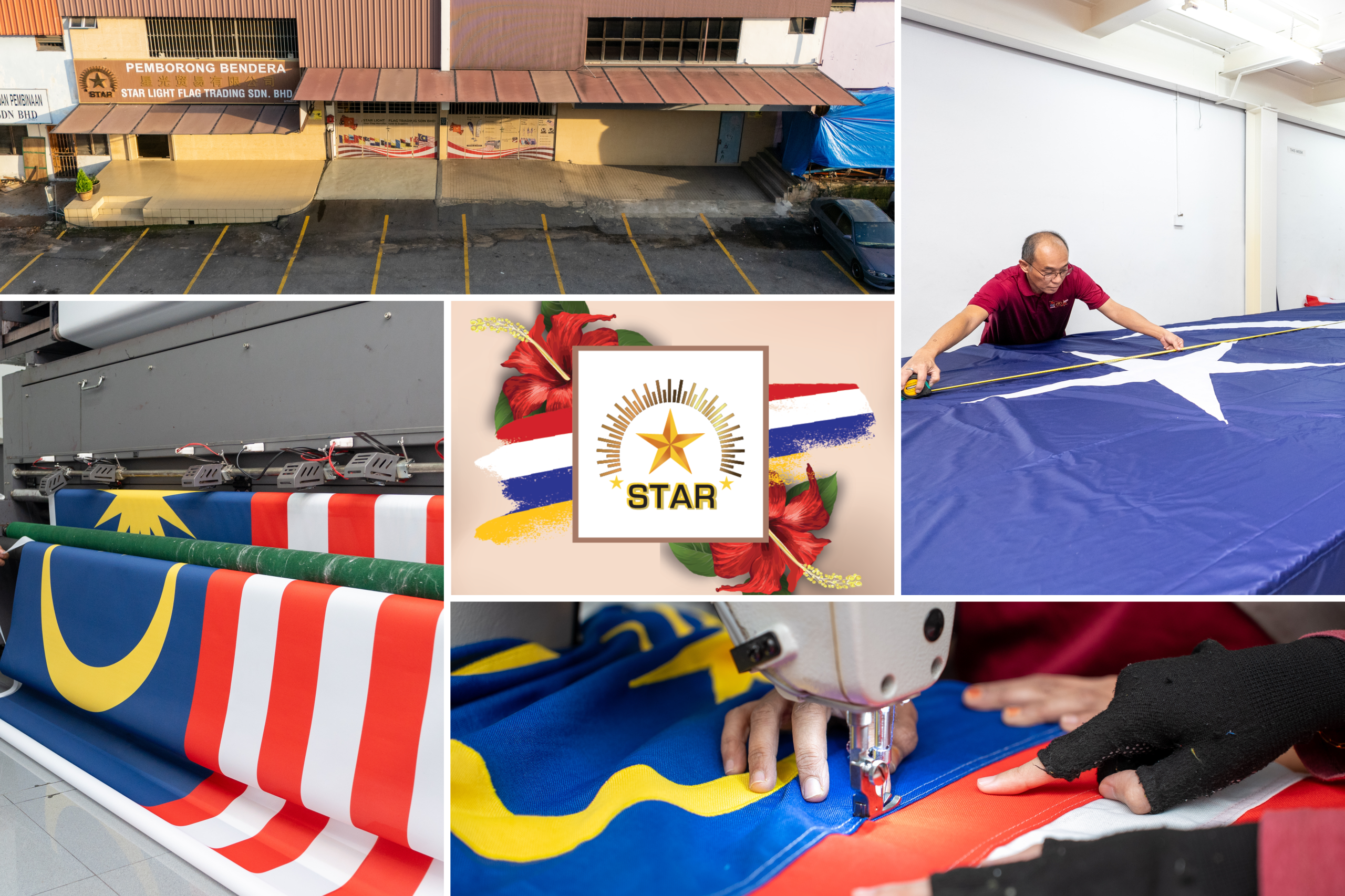
Colour needs to be consistent. Specifications matter. Materials need to suit their environment. Outdoor flags must withstand different conditions from those intended for ceremonial display, while event branding can require entirely different dimensions and finishes.
Then there is time.
An event does not wait because a supplier is running late. Neither does a national celebration or official ceremony.
The company identified this problem early. While many businesses could produce similar products, consistency in colour, durability, turnaround time and service was not always guaranteed.
That gap became an opportunity.
Its ability to handle both standardised demand — including Malaysian and state flags — and highly customised branding requirements within one operation has allowed it to serve very different types of customers without treating every order the same way.
Sometimes the requirement is thousands of standard flags. The next project might involve a bespoke corporate design needed urgently for an event.
The product changes. The expectation does not.
It has to arrive right.
A Physical Business in a Digital World
There is an interesting contradiction in the company’s growth story.
Branding has become overwhelmingly digital. Companies invest heavily in social media, websites, digital advertising and content designed to make themselves visible on screens.
Yet physical visibility has not disappeared.
Walk through a city during Merdeka month and the power of a physical symbol is obvious. Attend a major corporate event and branding occupies walls, entrances, stages and public spaces. Visit an institution and flags remain one of the clearest visual expressions of identity.
The medium may be traditional. Customer expectations are anything but.
Clients increasingly want faster turnaround, clearer communication, more customisation and seamless service. This has pushed the company beyond being purely production-focused towards becoming a broader visual branding solutions provider.
And that transition is changing the business behind the scenes.
As order volumes and project complexity increase, activities once managed directly require formal processes. Quality control must remain consistent. Teams need clearer responsibilities. Decisions have to move faster without creating mistakes.
Leadership has consequently shifted from hands-on involvement towards SOP development, delegation, performance monitoring and stronger operating systems.
It is the less glamorous side of scaling, but arguably the one that matters most.
Growth Without Losing Control
The company is equally clear that more business does not automatically mean better business.
It is deliberately avoiding uncontrolled expansion or projects that could compromise quality and responsiveness simply to increase short-term revenue.
Instead, capital and resources are being directed towards production efficiency, supplier reliability, digital presence and customer experience.
Sustainability is entering those decisions too.
Over the past 12 to 18 months, the company has introduced more environmentally friendly production materials, including eco-friendly inks for selected products, despite the higher costs involved.
For an SME, that trade-off is tangible. Higher input costs can directly affect margins.
Yet the company believes responsible growth sometimes means accepting an immediate cost for a longer-term objective.
Now it is preparing for a larger transformation.
The next ambition is to move from an execution-driven operation into a more integrated branding solutions business, supported by automation, stronger digital customer engagement, talent development and potentially broader regional reach.
That means building a company where growth is supported by systems rather than dependent on individual effort.
For a business whose products are designed to make nations, institutions and brands instantly recognisable, there is a certain symmetry to the challenge ahead.
For years, it has helped others display who they are. Now it is defining what it wants to become.