You can buy new machinery. Build a bigger factory. Replicate a recipe. But there is one part of this soy sauce business that money cannot recreate: 70 years of living culture.

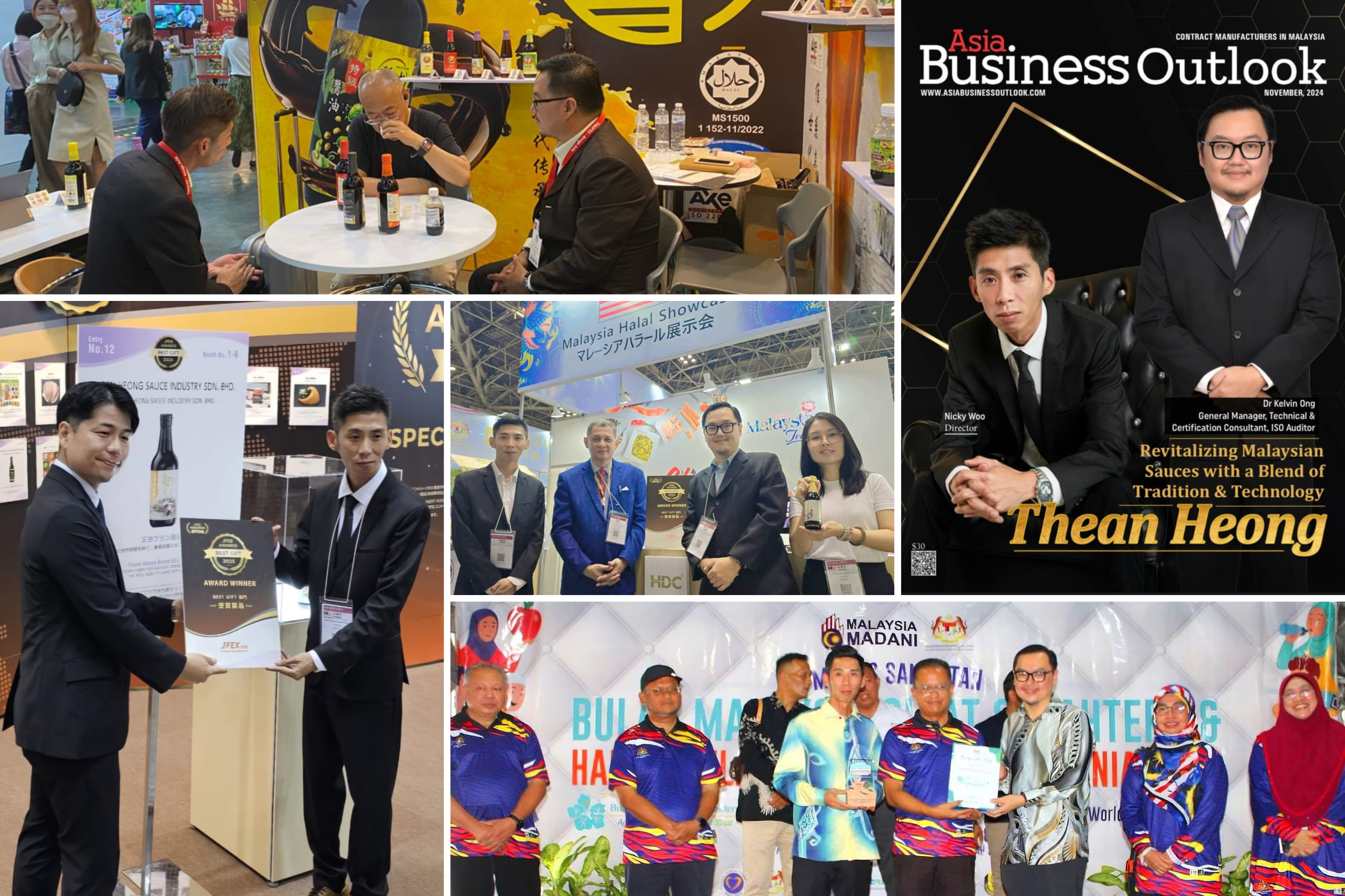
Director & General Manager of Thean Heong – Nicky Woo and Ong Poh Liang.
Inside its fermentation vats exists a microbial ecosystem cultivated over seven decades—one that has become inseparable from the flavour of every batch it produces. Combined with traditional sun-brewing and a fermentation cycle that can take six to 12 months, it represents something increasingly rare in modern food manufacturing: a process that refuses to be hurried.
For Nicky Woo and Kelvin Ong, that patience is not nostalgia. It is a competitive advantage.
Their business produces naturally brewed artisanal soy sauces and premium condiments for home cooks, high-end restaurants and food industry partners. At a time when manufacturing technology can dramatically accelerate production, the company has made a deliberate decision to protect the one ingredient it believes cannot be engineered: time.
When Faster Isn’t Better
The business traces its differentiation to a longstanding gap in the soy sauce market.
Decades ago, chemically hydrolysed alternatives offered manufacturers a faster route to production but often produced a markedly different flavour profile. Today, the conversation has moved further.
Consumers are increasingly scrutinising what goes into their food, creating demand for cleaner labels, fewer ingredients, reduced use of chemical preservatives and greater transparency around raw materials.
For the company, this has reinforced the relevance of traditional fermentation rather than diminished it.
Its approach combines longstanding brewing knowledge with modern food production standards. Technology is welcomed where it can improve safety, consistency and precision—but not when it interferes with the natural fermentation process.
The principle guiding investment is straightforward: modernise the operation without modernising away what makes the product distinctive.
A Competitive Advantage That Is Alive
Perhaps the company’s most unusual asset cannot be purchased, installed or easily replicated.
Over seven decades, its fermentation vats and production environment have developed their own microflora ecosystem, supported by proprietary koji mould strains. This hyper-localised microbial environment contributes to the distinctive flavour profile of its naturally fermented sauces.
In practical terms, the factory itself has become part of the product.
A competitor can purchase similar machinery and ingredients, but reproducing a microbial environment developed over generations is considerably more difficult.
Preserving that advantage while scaling presents its own challenges. Natural fermentation remains sensitive to agricultural inputs, outdoor conditions and ambient temperatures, meaning production involves managing variables that conventional manufacturing often attempts to eliminate.
The company has responded by bringing together two generations of expertise.
Its leadership structure has evolved from a traditional family-controlled hierarchy towards a more professionalised organisation, pairing veteran master brewers with younger food scientists. Traditional knowledge is increasingly supported by scientific measurement and data, allowing expertise accumulated over decades to be preserved while improving consistency.
Choosing Premium Over Volume
That philosophy also determines what the business will not do.
Growth is being pursued through premiumisation and expansion into international markets where consumers value artisanal food heritage. But management has no intention of entering mass-market price wars or shortening fermentation cycles simply to increase output.
Chemical accelerators that could reduce production time are deliberately off the table.
It is a strategic trade-off: accepting limitations on short-term volume to protect the characteristics on which the brand’s long-term value depends.
The same willingness to make difficult trade-offs extends to sustainability.
Over the past 14 months, the company moved away from a cheaper plastic packaging supplier and invested in a closed-loop glass bottle recycling system. Solar-powered temperature monitoring has also been introduced across its fermentation yards.
These decisions temporarily compressed margins but reduced single-use plastic waste while introducing technology into the brewing process without replacing the tradition behind it.
Taking Tradition Somewhere New
The company’s next chapter will test how successfully a product rooted in heritage can respond to a new generation of consumers.
Nicky Woo and Kelvin Ong are preparing to develop a functional wellness range encompassing certified low-sodium, organic and allergen-free soy sauces—without sacrificing the traditional umami profile at the heart of the product.
Achieving this will require stronger internal R&D capabilities and training for traditional blending teams to meet stringent international organic certification standards.
It is an intriguing direction for a brewing culture seven decades in the making.
The company is not preserving tradition by refusing to change. It is using science, technology and changing consumer expectations to give an old process new relevance.
In an industry constantly searching for ways to make food faster, its most valuable advantage may be knowing exactly what should never be rushed.