Technology was supposed to make running a business easier.
Instead, many entrepreneurs now find themselves surrounded by software—accounting platforms, dashboards, reporting systems, automation tools and increasingly, artificial intelligence. Each promises greater productivity. Each also asks users to learn another system.

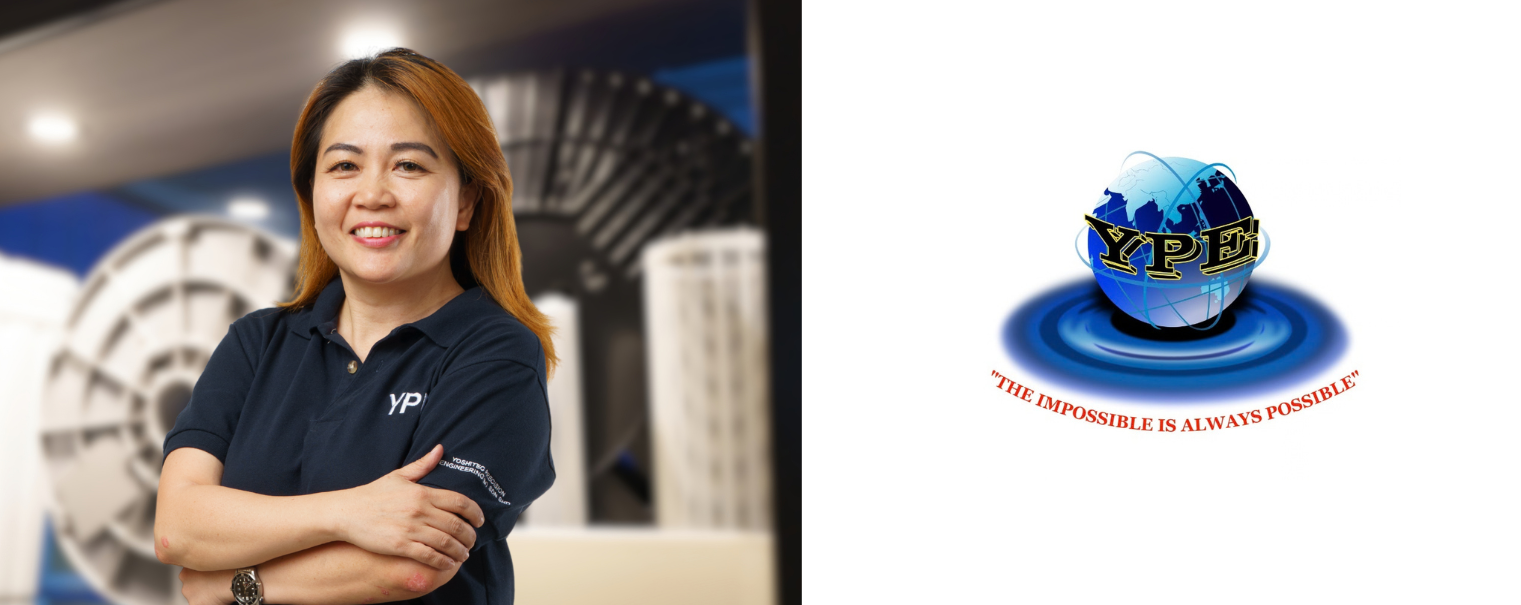
CEO of Gold-Cheers Holding (M) Sdn. Bhd – Mohamed Ayub Khan.
For large companies with dedicated teams, that may be manageable. For a small-business owner already juggling customers, employees, cash flow and compliance, technology can sometimes become another job.
Gold-Cheers Holding (M) Sdn. Bhd. sees an opportunity in that contradiction.
Rather than asking how much more technology can do, the Malaysian company is asking a different question: how much easier can it become to use?
When Accounting Becomes a Conversation
One answer is Senang Akaun AI.
Gold-Cheers developed the voice-driven accounting platform around an unusually simple proposition: instead of requiring business owners to learn how an accounting system works, why not allow them to speak to it?
Users can record transactions and manage financial information through natural conversation, with the platform designed to reduce the technical barrier traditionally associated with accounting software.
The idea says something larger about where Gold-Cheers believes business technology is heading.
For years, digital transformation largely meant convincing businesses to adapt their processes to software. Artificial intelligence potentially reverses that relationship. Systems can increasingly understand natural language and respond to the way people already communicate.
In other words, people may no longer need to learn the language of software.
Software can learn theirs.
Gold-Cheers is applying the same philosophy to SenangBrain AI, an intelligent business assistant designed to automate repetitive work and help organisations draw useful insights from their data.
The Digital Divide Has Changed
Access to technology used to be largely about whether a business could afford it.
That problem has not disappeared, but another divide has emerged: whether people can actually use the technology available to them effectively.
Gold-Cheers serves SMEs, entrepreneurs, cooperatives, government agencies, educational institutions and other organisations. Across those groups, it identified a recurring problem.
Businesses did not necessarily need more features. They needed fewer barriers.
That distinction is particularly relevant as AI adoption accelerates.
Companies everywhere are racing to add artificial intelligence to existing products. But adding AI does not automatically make software more useful. A powerful system that remains difficult to understand can simply create a more sophisticated form of frustration.
Gold-Cheers is taking the opposite approach: use AI to remove complexity.
That may prove particularly relevant across Southeast Asia, where millions of smaller enterprises represent an enormous market for digital solutions but differ significantly in resources, technical expertise and readiness.
Scaling Simplicity
The paradox is that making something simple can be technically difficult.
A platform that feels effortless to the customer still requires infrastructure, product development and systems capable of handling increasing numbers of users reliably.
Gold-Cheers is therefore thinking about scale at two levels.
The first is technological. Platforms such as Senang Akaun AI are intended to serve potentially large numbers of users without requiring resources to increase at the same rate.
The second is more human: trust.
As adoption grows, the company has to ensure that its products remain reliable, accessible and genuinely useful rather than accumulating complexity as more features are introduced.
Its growth strategy combines continued product development with ecosystem partnerships and measured operational expansion.
The company is also looking beyond Malaysia. The challenges it sees among local SMEs—financial management, productivity, digital adoption and limited technical resources—are hardly unique to one country.
That creates the possibility of taking solutions developed around Malaysian business realities into the wider Southeast Asian market.
The Next Battle in AI
Gold-Cheers ultimately wants to build more than individual software products.
Its longer-term ambition is an integrated ecosystem where businesses can manage finances, operations, reporting, compliance and decision-making through connected intelligent tools.
Getting there will require partnerships with government agencies, cooperatives, educational institutions and industry players, alongside continued investment in its technology.
But the bigger question may be whether Gold-Cheers can protect the idea that differentiated it as those products become more sophisticated.
The technology industry has traditionally competed by offering more: more features, more functionality, more processing power.
AI may change the equation.
As intelligent systems become increasingly powerful and widely available, the advantage may shift from who has the most technology to who makes that technology easiest for ordinary people to use.
The future of business software could therefore become surprisingly simple.
The smartest system in the room may be the one you barely have to think about.