Author name: admin

News

Heitech Padu Faces RM5m Lawsuit Over Contract Dispute

Heitech Padu Bhd has been hit with a RM5.05 million lawsuit by facilities management company Kayangan Cahaya Sdn Bhd over a contract dispute. Heitech Padu intends to defend the suit. In a filing with Bursa Malaysia, the company said the suit was filed at the Shah Alam High Court in relation to a building maintenance services agreement dated April 5, 2024, and related works. Heitech Padu said it disputes the claim and is reviewing the allegations with its legal advisers. The company intends to defend the suit. No further details on the claim were disclosed. The board said it is currently unable to determine the financial impact of the case and has not made any provisions, pending legal assessment and further developments. Shares of Heitech Padu closed two sen or 1.2% higher at RM1.69, giving the group a market capitalisation of RM275.44 million.
Investment & Market Trends

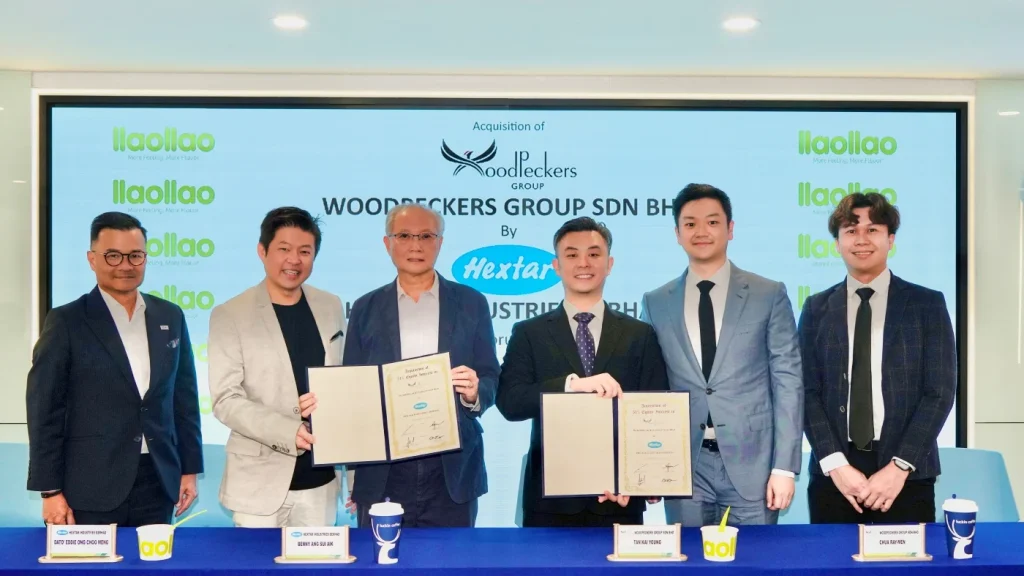
Hextar Industries Acquires 51% Stake In llaollao Malaysia For RM177.5m

Hextar Industries Bhd has entered into a share sale agreement to acquire a 51% stake in Woodpeckers Group Sdn Bhd — the master franchise holder of llaollao in Malaysia — for RM177.5 million in cash. The acquisition involves 412,122 ordinary shares, valuing Woodpeckers Group at RM348 million. The deal also includes a three-year profit guarantee of RM29 million per year. Hextar Industries Bhd has signed a share purchase agreement to acquire a 51 per cent stake in Woodpeckers Group Sdn Bhd for RM177.5 million in cash. Following the acquisition, Hextar will hold master franchise rights in Malaysia for two global brands — Luckin and llaollao — creating potential synergies through stronger operational efficiency, wider market reach and improved cost optimisation while keeping both brands independent. The move is part of Hextar’s broader strategy to diversify into the food and beverage (F&B) retail sector, alongside plans to exit its fertiliser manufacturing business. Group managing director Benny Ang described the acquisition as a key step in Hextar’s strategic transformation, combining Woodpeckers’ F&B expertise with Hextar’s financial strength to drive long-term growth in Malaysia’s F&B market.

Investment & Market Trends

CIMB Could Make RM810m Selling CIMB Niaga Stake To Meet Indonesia Rule — HLIB

CIMB Group Holdings Bhd may earn a one-off gain of RM810 million by reducing its stake in PT Bank CIMB Niaga TBK to meet Indonesia’s proposed 15% minimum free float requirement, according to Hong Leong Investment Bank (HLIB). Selling about 7.4% of its CIMB Niaga shares would help the Malaysian bank comply with regulations while boosting its capital. The proceeds could be used to support loan growth or reward shareholders with special dividends, HLIB noted. The sale would add to CIMB’s existing RM2 billion capital return plan, potentially raising FY26-27 dividend payout ratio to around 70% and yield to 6.5%. CIMB currently owns 92.4% of CIMB Niaga, which contributes roughly a quarter of the group’s pre-tax profit. HLIB expects the divestment to have minimal impact on earnings, projecting a 1.2–2% drop in FY26-27 PBT. Despite the regulatory changes and rupiah volatility, HLIB maintains a “buy” rating on CIMB with a target price of RM9.50, highlighting its dividend yield of over 6% and ongoing capital management programme. CIMB shares closed at RM8.41, down five sen or 0.59%, giving the group a market cap of RM90.68 billion.

News

Ex-GXBank CTO Fadrizul Hasani Named Chief Solutions Officer At YTL AI Labs

YTL AI Labs has named Fadrizul Hasani, Grab’s former first engineer and ex-CTO of GXBank, as its new Chief Solutions Officer. After 14 years in the Grab ecosystem, where he helped build the company into a regional platform, Fadrizul moves on from GXBank, which has appointed Nishant Sharma as its new CTO. At YTL AI Labs, he will lead the development of sovereign AI platforms and production systems tailored for Malaysia, working alongside the lab’s leadership team, including Chee Mun Foong, Benny L., Lou Yeoh, and Hann Yeoh, on projects with national-scale impact. The lab is closely linked to Malaysia’s digital banking sector through YTL’s stake in Ryt Bank, with CEO Chee Mun Foong having previously served as Ryt Bank’s Chief Product Officer. Fadrizul had previously signaled his move toward a “new chapter focused on building things that are genuinely Malaysian.”

Energy & Technology

Maybank Tests Ringgit Digital Deposits For Cross-Border Payments

Maybank has started piloting ringgit tokenised deposits for cross-border payments using a blockchain platform under Bank Negara Malaysia’s Digital Asset Innovation Hub. The trial involves energy infrastructure firm Yinson Holdings Berhad. The bank will test on-chain cross-border transactions with ringgit and other ASEAN deposit tokens on its permissioned blockchain network to evaluate technical feasibility and operational readiness for secure near real-time transactions. The project also supports the development of next-generation payment infrastructure. This move is part of Maybank’s wider digital transformation strategy, which includes expanding digital asset and tokenisation capabilities across Islamic finance, corporate banking, and wealth management. The bank is also exploring tokenised Islamic finance products such as sukuk and funds with fractional participation. Additionally, Maybank is assessing how programmable money can help SMEs by automating payments from governments and large corporates, potentially improving transparency and access to financing. President and Group CEO Dato’ Sri Khairussaleh Ramli said the initiative aims to deliver practical benefits to clients like Yinson and the broader economy while maintaining high standards of governance, security, and regulatory compliance. Yinson noted that faster settlement cycles could enhance working capital management and reduce foreign exchange and transaction costs. Maybank will continue collaborating with regulators and industry partners as it scales its tokenisation efforts.

Events

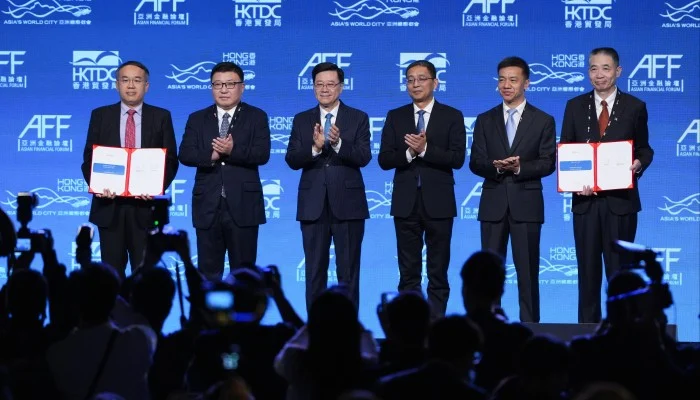
Over 4,000 Global Leaders Gather At Hong Kong’s Asian Financial Forum 2026

The 19th Asian Financial Forum (AFF) concluded on 27 January 2026, drawing over 4,000 global leaders from more than 60 countries and regions to Hong Kong. Jointly organised by the Hong Kong SAR Government and the Hong Kong Trade Development Council (HKTDC), the forum focused on the theme, “Co-Creating New Horizons Amid an Evolving Landscape.” The two-day event featured over 150 speakers, including financial institution representatives and multilateral organisation leaders. It also introduced the inaugural Global Business Summit, aimed at integrating finance with key industries to drive innovation, economic development, and Hong Kong’s continued positioning as a global financial hub. Key highlights included: Strategic Dialogue and Partnerships: Dr José Manuel Barroso, former President of the European Commission, highlighted Hong Kong’s role in regional cooperation. Dr Zhu Min of China’s Center for International Economic Exchanges emphasised opportunities from renminbi internationalisation. Cross-Border Collaboration: The Financial Services and Treasury Bureau signed a cooperation agreement with the Shanghai Gold Exchange to strengthen Hong Kong–Shanghai gold market ties. The Global Business Summit focused on helping Mainland enterprises expand internationally and on foreign investment into China. High-Growth Sectors: Panels covered AI, robotics, green energy, biomedicine, and healthcare. Leaders from JD.com, Tencent, Amgen, and Merck discussed opportunities, investment priorities, and commercialising technology in real-world industries. Deal-Making & Investment: AFF facilitated over 800 one-on-one investment meetings, connecting 280 investors with 600+ projects. Notable outcomes included a Hong Kong–Australia joint venture in plant-based food technology. Green Innovation: The FutureGreen Showcase highlighted solutions for green finance, carbon-credit management, ESG monitoring, and climate-risk assessment. AFF also conducted real-time polls showing strong optimism for the global economy and prioritisation of AI development, energy transition, and sustainable growth. The forum reinforced Hong Kong’s role as a gateway for global finance, investment, and cross-border collaboration, combining strategic dialogue, technological innovation, and sustainable development initiatives. Online platforms for continued deal-making were launched to maintain momentum in international cooperation throughout 2026.

Investment & Market Trends

CPO Futures Likely To Stay Flat Next Week During Chinese New Year

Crude palm oil (CPO) futures on Bursa Malaysia Derivatives are expected to trade sideways with a slight bearish bias next week due to the Chinese New Year holidays, as both Malaysian and Chinese markets will be closed. David Ng, a proprietary trader at Iceberg X Sdn Bhd, said the market faces pressure from high stock levels and weak demand in recent weeks. Subdued buying from key importing countries, combined with ample inventories, is likely to limit any price gains despite support from competing edible oils. He expects CPO prices to trade between RM3,950 and RM4,180 per tonne next week. Jim Teh, senior palm oil trader at Interband Group, noted that trading will slow further because many mills, factories, and international traders are on extended leave during the festive period. Stock levels in Malaysia and Indonesia remain high due to weak physical demand, though some buying is expected from Pakistan, India, the Middle East, and the EU. He predicts prices will range between RM3,700 and RM3,800 per tonne next week. On a Friday-to-Friday basis, February 2026 CPO fell RM132 to RM3,950 per tonne, March 2026 dropped RM84 to RM4,037, and April 2026 declined RM104 to RM4,050. May 2026 eased RM117 to RM4,046, June 2026 lost RM118 to RM4,040, and July 2026 fell RM115 to RM4,035. Weekly trading volume rose to 392,823 lots from 274,729 lots last week, while open interest increased to 230,392 contracts from 219,059 contracts. Meanwhile, the new physical CPO price for February South decreased RM80 to RM4,050 per tonne.

News

KAF Digital Bank Names Suzaini Mukhtar As New CEO

KAF Digital Bank Bhd has named Suzaini Mukhtar as its new chief executive officer (CEO), effective Feb 1, 2026. Suzaini, who joined the bank as deputy CEO in late 2025, takes over from the founding leadership team as KAF Digital Bank enters its next growth phase. The bank said his nearly 30 years of experience in Islamic banking across Malaysia and the UAE will support the expansion of its digital-first, Shariah-compliant offerings. His expertise spans retail, wealth, and corporate banking, with a strong focus on digitisation, product innovation, and financial inclusion. Prior to joining KAF, Suzaini led deposit, payments, and financial inclusion initiatives at Bank Simpanan Nasional, overseeing sales, state performance, remittances, digital banking adoption, and business strategy. He has also held senior positions at Standard Chartered Saadiq, Emirates Islamic Bank in Dubai, HSBC Amanah, and Hong Leong Bank, earning recognition for excellence in banking.

News

MOH: 1,000+ GP Clinics To Remain Open In Singapore During Chinese New Year

Singapore’s Ministry of Health (MOH) announced that more than 1,000 general practitioner (GP) clinics will remain open from February 16 to 18 to provide medical care during the Chinese New Year period. The public can check clinic locations and operating hours for 1,095 clinics on the GPGoWhere website and are advised to make an appointment before visiting. MOH reminded people to seek care at the right facility based on the severity of their condition: minor ailments should be treated at GP or 24-hour clinics, while serious or life-threatening emergencies—such as chest pain, breathlessness, or uncontrolled bleeding—should go directly to hospital Accident & Emergency departments. The ministry also urged residents with minor conditions to avoid calling the 995 emergency hotline so that urgent help can reach those in critical need. For guidance on which medical facility to visit, the public can contact the NurseFirst helpline, available daily from 8am to 11pm at 6262 6262.

Energy & Technology

ByteDance Expands AI Efforts As TikTok Faces Regulatory Scrutiny

Chinese tech giant ByteDance, best known for TikTok, is stepping firmly into the artificial intelligence (AI) space amid regulatory and political pressure on its video-sharing app. The company’s AI chatbot, Doubao, launched in 2023, now serves over 100 million daily users in China, placing it alongside major global AI players like OpenAI and Google. ByteDance has also released its video generator, Seedance 2.0, raising its international profile. ByteDance, which has the biggest AI team in Chinese tech, sometimes pays salaries two or three times the market average to recruit top talent, said industry headhunter Shen Wei.  CEO Liang Rubo has said ByteDance sees AI as an even more important technology than web search. Analysts note the shift reflects ByteDance’s deliberate move from social media toward an AI-focused model, driven in part by scrutiny over TikTok. TikTok has recently faced regulatory challenges abroad. The European Commission flagged the platform’s “addictive features,” threatening fines of up to six percent of ByteDance’s global revenue. In the US, concerns over data security led to the creation of a majority-American-owned joint venture to operate TikTok, with ByteDance retaining less than 20% ownership. ByteDance is heavily investing in AI infrastructure, including billions in microchips from Nvidia, while focusing on scaling Doubao’s capacity, which processes over 50 trillion text tokens daily. The company is aggressively hiring top AI talent, often offering salaries two to three times the market average, as it aims to replicate TikTok’s global success in the AI sector. However, ByteDance faces stiff competition domestically from Tencent and Alibaba and will need to navigate data privacy and geopolitical issues overseas. Industry observers note that while ByteDance has achieved strong user growth, profitability and long-term sustainability for its AI services remain key challenges moving forward.

Scroll to Top

Subscribe
FREE Newsletter