Author name: admin

Energy & Technology

Japan To Spend US$36 Billion On US Projects Under Trump-Era Agreement

Japan plans to invest US$36 billion in the United States as the first tranche of its US$550 billion commitment under the trade agreement struck with former President Donald Trump. The projects aim to strengthen supply chains, boost economic security, and foster growth in key sectors including energy, artificial intelligence (AI), and critical minerals. The largest investment is a US$33 billion natural gas plant in Ohio, led by SoftBank’s SB Energy, expected to generate 9.2 gigawatts—enough to power 7.4 million homes. Another US$2.1 billion will go to a deepwater crude export terminal in Texas, while US$600 million is allocated for a synthetic industrial diamond facility in Georgia, operated by De Beers’ Element Six. Japanese and US officials said the investments, part of a tariff-linked trade deal, are designed to deliver safe returns while expanding US industrial capacity, energy dominance, and strategic infrastructure. Most of the US$550 billion fund will be deployed as loans or loan guarantees rather than direct cash investment. The announcement comes ahead of Japanese Prime Minister Sanae Takaichi’s trip to Washington in March and reflects both countries’ focus on energy, AI, and semiconductor priorities.

Energy & Technology

India’s Yotta To Build US$2 Billion AI Hub Using Nvidia Blackwell Chips

India’s Yotta Data Services plans to build one of Asia’s largest artificial intelligence (AI) computing hubs using Nvidia’s latest Blackwell Ultra chips, in a project valued at more than US$2 billion (RM7.79 billion). The plan includes a four-year deal worth over US$1 billion, under which Nvidia will set up one of the Asia-Pacific region’s largest DGX Cloud clusters within Yotta’s facilities. The expansion comes as global tech giants like Microsoft and Amazon ramp up AI data centre investments in India, driven by growing demand for generative AI and efforts to strengthen local computing capabilities. The investment also follows tighter US export controls on advanced AI chips, which have reshaped global supply chains and encouraged deeper partnerships in markets such as India. The AI supercluster is expected to go live by August at Yotta’s data centre campus near New Delhi, with additional capacity from its Mumbai facility. Yotta is part of billionaire Niranjan Hiranandani’s real estate group and operates three data centre campuses in Mumbai, Gujarat and near New Delhi.

Investment & Market Trends

China EXIM Bank Has Over US$289 Billion In Belt And Road Loans

China’s Export-Import Bank has more than two trillion yuan (about US$289 billion) in outstanding loans tied to the Belt and Road Initiative (BRI) as of end-January, according to state broadcaster CCTV. The loans, extended to over 130 countries, mainly support trade, infrastructure, advanced manufacturing, green development and social projects. Launched by President Xi Jinping in 2013, the BRI initially aimed to link East Asia and Europe through infrastructure, and later expanded to Africa, Oceania and Latin America. While supporters say the initiative promotes development and economic growth, critics argue it increases China’s political influence and leaves some developing nations with heavy debt burdens. A recent report noted that several African countries are now repaying more debt to China than the new financing they receive. Apart from the Export-Import Bank, BRI funding also comes from the China Development Bank, Silk Road Fund and major state-owned banks.

Investment & Market Trends

Solarvest-Backed Kee Ming Targets Bigger Projects After ACE Debut

Perak-based Kee Ming Group Bhd expects to take on bigger mechanical and electrical (M&E) projects after raising RM20.32 million in net proceeds from its ACE Market listing on Feb 12. Out of the RM25.32 million raised (including listing expenses), most of the funds will be used to support future projects — mainly for working capital, project performance bonds and expanding its project team. Kee Ming focuses mainly on industrial projects and counts major contractors such as Sunway Construction and Gamuda among its clients. The company provides M&E engineering services, including electrical installations, air-conditioning and ventilation systems, fire protection systems, as well as solar panel and EV charger installations. Solarvest Holdings owns a 23.85% stake in Kee Ming, which could help the group secure larger projects, especially in areas like data centres and renewable energy. At its IPO price of 38 sen, Kee Ming has a market value of about RM123.5 million. The listing involves 66.63 million new shares, while 16.25 million existing shares are being sold by managing director Liew Kar Hoe. After the IPO, Liew’s stake will be reduced to 50.65%. The group has an unbilled order book of RM176.1 million across 64 projects, providing earnings visibility over the next two years. Several research houses are positive on Kee Ming’s prospects, citing strong earnings growth potential driven by industrial expansion, data centre investments and renewable energy demand. However, risks include reliance on subcontractors and potential cost increases in raw materials such as copper and steel, which could affect margins. Overall, the IPO is expected to strengthen Kee Ming’s financial position and support its expansion into larger-scale projects.

News

Sunway Healthcare Aims For RM16 Billion Valuation Despite Market Slump

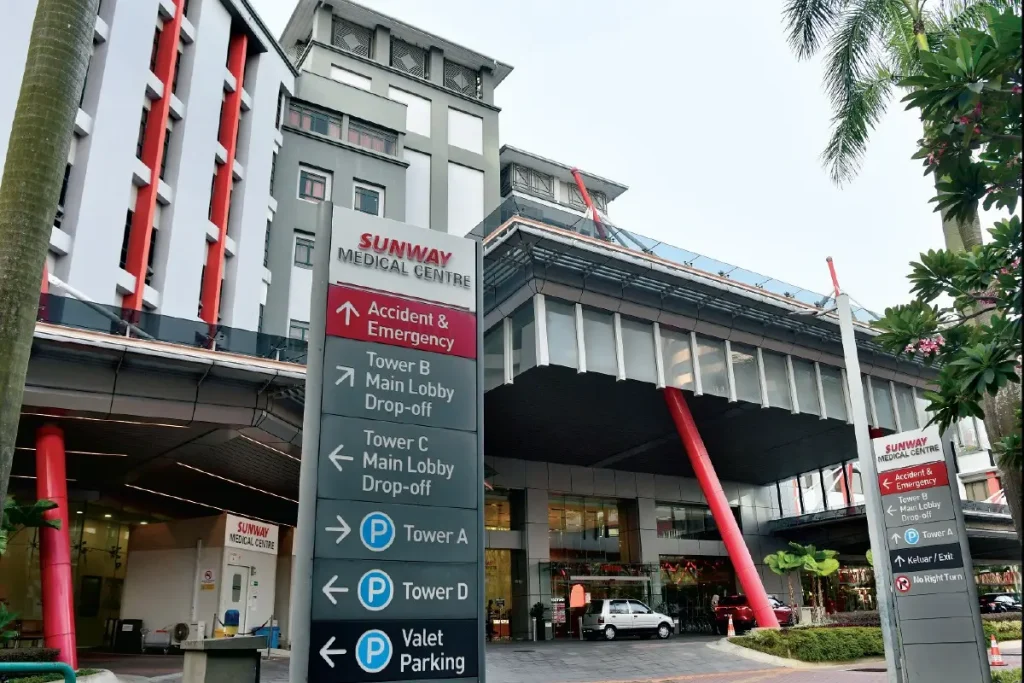
Sunway Bhd is reportedly seeking a valuation of around RM16 billion for its healthcare arm, Sunway Healthcare Holdings Bhd (SHH), ahead of its planned listing on Bursa Malaysia. Sources say the valuation is based on about 55 times projected earnings for FY2026 and nearly 40 times FY2027 earnings. The IPO, expected in March, could be the largest in recent years, surpassing listings such as 99 Speed Mart and Farm Fresh. Sunway Healthcare Holdings operates five hospitals with a combined 1,662 licensed beds, led by its flagship Sunway Medical Centre in Subang Jaya, Selangor.  SHH may be priced at up to RM1.45 per share. The company could raise approximately RM834 million from new shares, while Sunway Group may raise up to RM730 million and Greenwood Capital about RM129 million from the sale of existing shares. However, some market observers consider the valuation high, especially as other listed healthcare groups are trading at lower multiples. IHH Healthcare is trading at around 35 times forward earnings, while KPJ Healthcare is at about 32 times. The Bursa Malaysia Healthcare Index was also the worst-performing index in 2025, declining more than 34% over the past year. Despite this, promoters are banking on SHH’s size and expansion plans. SHH operates five hospitals with 1,662 licensed beds, making it the largest private hospital group in Malaysia by bed count. Its flagship is Sunway Medical Centre in Subang Jaya, with other hospitals in Cheras, Penang, Damansara and Ipoh. It also runs related services such as fertility centres, ambulatory care, home care and senior living. The group plans to open new hospitals in Seremban, Iskandar Puteri and Putrajaya, plus a fertility centre in Kota Bharu. This expansion is expected to increase total bed capacity to over 3,400 by 2032. After the IPO, Sunway — via Sunway City — will retain about 69.5% stake in SHH, while Greenwood Capital will hold 7.5%. The IPO will involve up to 1.97 billion shares, representing about 17% of the enlarged share capital. In 2024, SHH recorded a net profit of RM298.85 million on revenue of RM1.85 billion. Part of the IPO proceeds will be used to repay Islamic bonds issued under a RM5 billion sukuk programme, of which RM1.3 billion has been raised so far. The remainder will go towards listing expenses. The IPO is being managed by several investment banks, including Maybank Investment Bank and AmInvestment Bank as joint principal advisers, alongside UBS, HSBC, Jefferies and others. While SHH has a strong growth story, market sentiment and its premium valuation could pose challenges to investor demand.

Property

Chansun Estate Puts Segamat Plantation And Gelang Patah Land Up For Sale

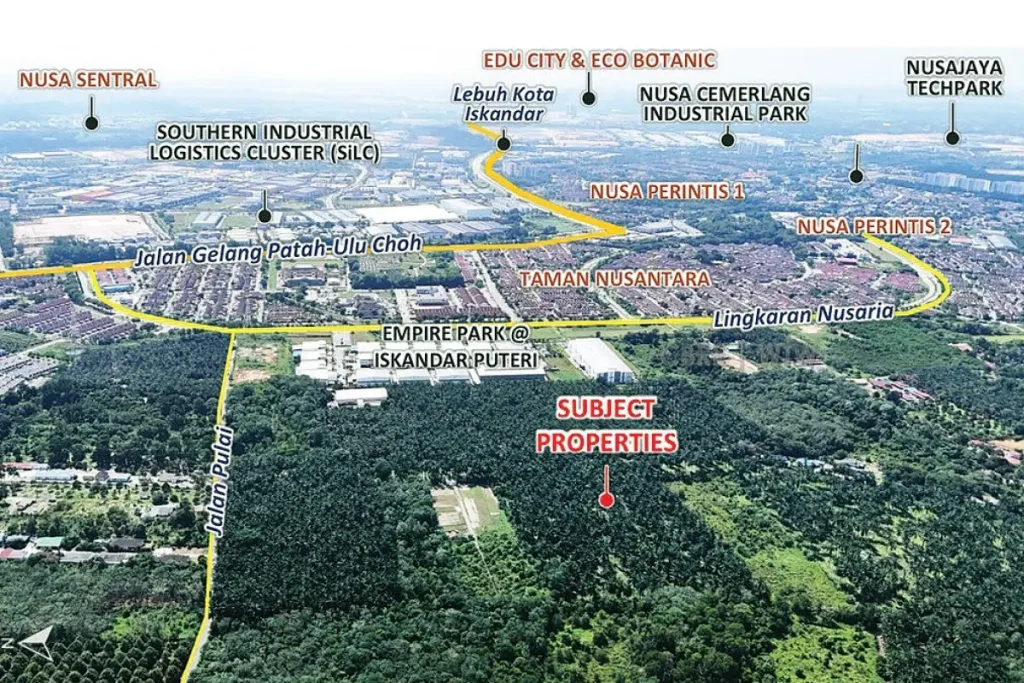
An oil palm plantation along the Segamat–Kuantan Highway in Johor has been put up for sale by tender. The freehold land, owned by Chansun Estate Sdn Bhd, spans about 1,153 acres and is split by the highway. It is located დაახლოებით 22km from Segamat town and 13km from Buloh Kasap. The indicative price of the 103.6-acre tract (foreground) in Gelang Patah said to be RM158 million. Market sources indicate the plantation is priced between RM150,000 and RM180,000 per acre, translating to a total of roughly RM173 million to RM207 million. Recent land deals in the area were reportedly around RM190,000 per acre. The agricultural land consists of prime-aged oil palm trees on generally flat to gently undulating terrain. Large estate land sales of this size are uncommon in Johor, as most plantation land is held by major players such as SD Guthrie, Johor Plantations Group, Kuala Lumpur Kepong, and Genting Plantations, which rarely dispose of such assets. However, some of these groups have monetised land by converting estates into industrial parks or township developments. Separately, several common shareholders of Chansun Estate are also offering a 103.6-acre freehold development site in Gelang Patah, Iskandar Puteri, via tender. The residential-zoned land allows for a density of up to 20 units per acre and is said to carry an indicative price of about RM35 per square foot, or around RM158 million. The Gelang Patah site is located within the Johor-Singapore Special Economic Zone (JS-SEZ) and is well connected via the Second Link Expressway and JB Parkway. Property consultants note that its proximity to industrial hubs, established residential areas, EduCity and retail centres enhances its appeal, particularly for commuters working in Singapore. Both tenders are being managed by CBRE | WTW and are scheduled to close on March 18.

Energy & Technology

Sarawak Energy Issues RFP For Five Hydropower Dams

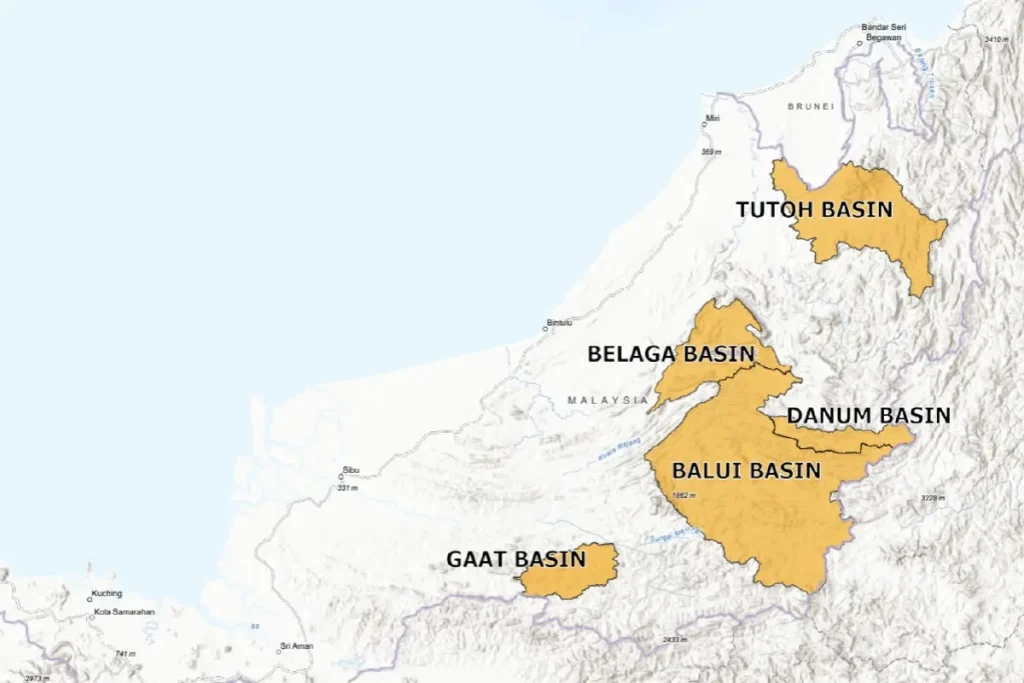
Sarawak Energy Bhd (SEB) recently held a briefing on Jan 30 for a Request for Proposal (RFP) to construct five dams in Sarawak, attracting a large turnout of local and international companies, including Gamuda Bhd, Press Metal Aluminium Holdings Bhd, and firms from Japan, China, and South Korea. The five dams, collectively called the Cascading Power Sources (CPS), will be built in the Tutoh, Belaga, Danum, Balui, and Gaat basins, some bordering Kalimantan. SEB issued the RFP on Jan 17, and the registration deadline is end-February, with RFP submissions due by end-August 2026 — giving bidders six months to prepare. The dams are targeted to begin commercial operation around 2034–2035. The CPS project aims to maximise hydropower potential by developing multiple plants within each river basin, improving efficiency and boosting renewable energy output. Total capacity will range from 50–70 MW for Gaat CPS up to 700–800 MW for Balui CPS. Winning bidders will need to prepare detailed financial models assessing project viability, including projected energy generation, costs, tariffs, financing, and incentives. Preference will be given to companies with a proven track record in hydropower or cascading projects. Contract terms and construction models — whether Build-Operate-Transfer (BOT) or Build-Lease-Transfer (BLT) — are still unspecified. Shortlisted firms will enter a joint development agreement with SEB’s unit SEB Power Sdn Bhd, followed by a power purchase agreement with state-controlled Syarikat SESCO Bhd. SEB aims to achieve 15 GW of installed capacity by 2035, supporting both local demand and exports to regional markets under initiatives like the ASEAN Power Grid. Renewable sources such as CPS, solar, and small hydro are central to this plan. Currently, SEB operates three main hydropower plants — Bakun (2,520 MW), Murum (944 MW), and Batang Ai (94 MW) — and is completing the Baleh project (1,285 MW). It also runs the 842 MW Tanjung Kidurong Combined Cycle Power Plant. SEB has been exporting small amounts of power (200 MW) to Indonesia and plans to export 1 GW to Singapore by 2032 via an undersea cable, which will be developed by a Malaysian–Singaporean consortium. Financially, SEB reported RM1.34 billion after-tax profit on RM7.3 billion revenue in FY2024, with total assets of RM43.47 billion and liabilities of RM49.05 billion. Its largest customer is the Sarawak Corridor of Renewable Energy (SCORE), whose electricity demand has grown from 880 MW in 2013 to 3,700 MW in 2025.

Lifestyle

McDonald’s Malaysia Plans 100 New Outlets With RM1 Billion Investment

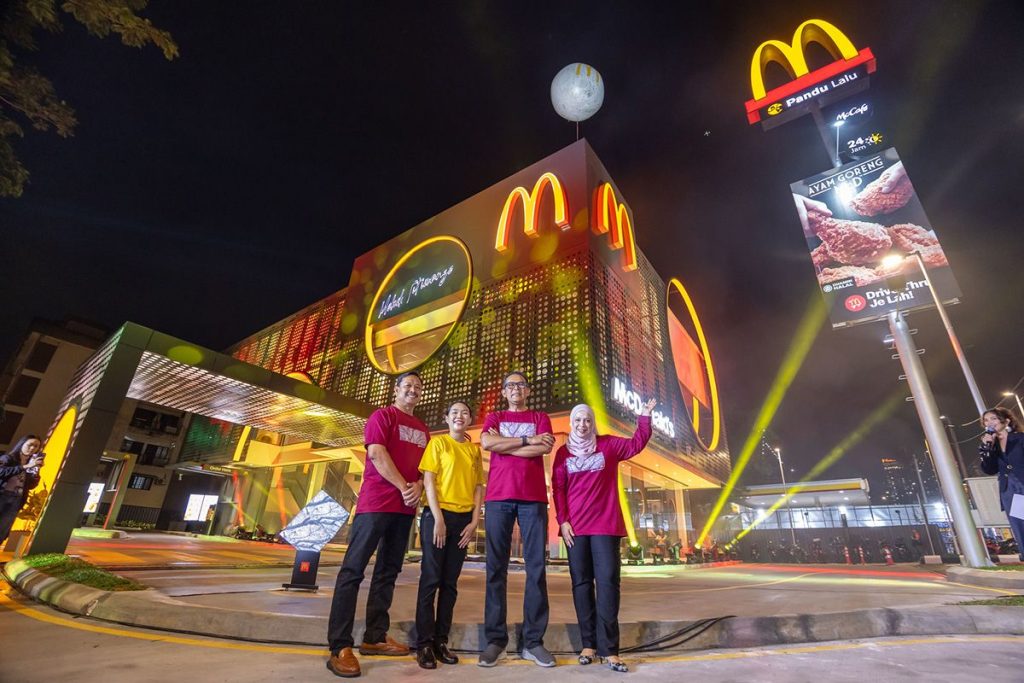
McDonald’s Malaysia, a familiar choice for urban and suburban diners, is set to expand further despite the country’s evolving food scene. More than 40 years after its first outlet opened on Jalan Bukit Bintang in 1982, the brand remains a leader in Malaysia’s quick-service restaurant (QSR) sector. In 2025, it posted a 26% year-on-year growth despite rising competition. (From left to right) Hamid Ahmad, Vice President & Chief Development Officer, McDonald’s Malaysia, Wong Xinru, Restaurant General Manager, McDonald’s Titiwangsa, Dato’ Haji Azmir Jaafar, Managing Director & Local Operating Partner, McDonald’s Malaysia and Melati Abdul Hai, Senior Vice President & Chief Impact Officer, McDonald’s Malaysia in front of the reopened McDonald’s Titiwangsa Drive-Thru restaurant featuring the new Luna design. Over the next five years, McDonald’s Malaysia — fully owned by Gerbang Alaf Restaurants Sdn Bhd (GARSB) — will invest RM1 billion to drive expansion, modernisation, and youth-focused talent development. Why the RM1 Billion Investment?According to managing director Dato’ Haji Azmir Jaafar, the investment is driven by strong growth, untapped market potential, and favourable demographics. “Our 26% growth in 2025 shows strong demand, and with over 370 outlets nationwide, there’s still room to expand,” he said. The fund aims to modernise outlets, maintain competitiveness, and meet evolving customer expectations. Night view of the transformed McDonald’s Titiwangsa Drive-Thru showcasing vibrant Luna façade. Azmir welcomed the growing F&B competition, noting it encourages innovation and benefits Malaysian consumers while creating more job opportunities. He emphasised McDonald’s scale, operational consistency, and reliable customer experience as key strengths that maintain its market leadership. How the RM1 Billion Will Be Used RM600 million for 100 new outlets nationwide, creating over 10,000 jobs. RM200 million to refurbish 150 existing outlets, including landmark sites like the Titiwangsa Drive-Thru. RM200 million for digital upgrades, including self-order kiosks, the McDonald’s App, and kitchen systems, supporting efficient operations amid the rise of delivery and cashless payments. Youth Employment and Talent DevelopmentMcDonald’s Malaysia is one of the country’s largest youth employers. Its Vocational Academy, launched in collaboration with the Ministry of Human Resources under the National Dual Training System (SLDN), has trained over 5,000 youths since 2018, with more than 80% continuing careers at McDonald’s. The company aims for up to 40% of its future workforce to come from academy-trained talent. Dato’ Haji Azmir Jaafar, Managing Director & Local Operating Partner, McDonald’s Malaysia in front of the reopened Titiwangsa Drive-Thru restaurant with the new Luna design. Despite challenges in recent years, McDonald’s Malaysia continues to emphasise its local ownership, workforce commitment, and long-term investment strategy, employing over 16,000 Malaysians and maintaining a 100% local hiring policy.

Property

Johan Holdings’ Subsidiary To Sell Lumut Hotel And Land For RM47.4 Million

Johan Holdings Bhd announced that its 80%-owned unit, Lumut Park Resort Sdn Bhd, is set to sell the 150-room Orient Star Lumut hotel and three adjoining land parcels in Lumut, Perak, for RM47.43 million in cash. The sale, below the combined market value of the properties, is expected to generate a gain of RM3.88 million for Johan Holdings. Proceeds will be used for working capital and related expenses. The hotel was sold for RM32.96 million, slightly under its market value of RM33.3 million, while the three land parcels, totaling 6.69 acres, were sold at discounts ranging from 1.11% to 15.32%. The deal, signed with Golden Peak Hospitality & Consultancy Sdn Bhd and Bujang Holdings Sdn Bhd, is subject to shareholder approval at an upcoming extraordinary general meeting. Completion is expected in Q3 2026. Johan Holdings’ remaining 20% stake in Lumut Park Resort is held by Syarikat Majuperak Bhd. The company’s shares closed unchanged at 2.5 sen, giving it a market capitalisation of RM24.33 million.

Investment & Market Trends

Health Ministry Awards RM117.6m Insulin Supply Contracts To Duopharma

Duopharma Biotech Bhd has secured two contracts worth a combined RM116.72 million from the Ministry of Health (MOH) to supply insulin products and injections to government healthcare facilities. The first contract, valued at RM65.08 million, was awarded to Duopharma Marketing Sdn Bhd and Biocon Sdn Bhd for the supply of recombinant human insulin formulations. Duopharma Marketing will act as the distributor, while Biocon will manufacture and supply the products. This contract runs until May 15, 2026, and requires a RM3.25 million performance bond. The second contract, worth RM52.54 million, was awarded to Duopharma (M) Sdn Bhd for the supply of insulin injections. It will run until Feb 5, 2028, with a RM1.31 million performance bond required. Duopharma said the contracts are expected to contribute positively to earnings for the financial year ending Dec 31, 2026. Malaysia has an estimated 4.75 million diabetics, with around 450,000 patients receiving insulin treatment at public healthcare facilities. Shares of Duopharma closed two sen higher at RM1.48, giving the company a market capitalisation of RM1.42 billion. The stock is up 18.9% year-to-date.

Scroll to Top

Subscribe
FREE Newsletter