Lifestyle

Lifestyle

Deemples Launches Malaysia’s First Fully Digital Golf Membership

In collaboration with the Malaysian Golf Association (MGA), Deemples introduces an all-new earn-as-you-play membership that combines exclusive golf benefits, official WHS handicap services and lifestyle privileges into a single app. Deemples, Southeast Asia’s leading golf booking and community platform, has launched Deemples Pass, a fully digital golf membership designed to reward golfers for every round they play while supporting their journey from casual play to competitive golf. Developed in collaboration with the Malaysian Golf Association (MGA), Deemples Pass brings together golf rewards, recognised handicap services and lifestyle privileges through a single membership managed entirely within the Deemples app. The launch comes as the golf industry continues to explore new ways to encourage participation and strengthen golfer engagement. As players increasingly look for greater value from their leisure and fitness activities, memberships that reward participation while supporting progression in the sport are becoming increasingly relevant. For almost a decade, Deemples has connected golfers with tee times and playing partners across Southeast Asia. With Deemples Pass, the platform is expanding beyond golf bookings to offer a more integrated membership experience that combines digital convenience, rewards and recognised golfing credentials. “Deemples was built to solve a very simple problem: helping golfers find other people to play with. As golfers spend more time with the sport, they want an experience that gives them more than just a round of golf,” said David Wong, Founder and CEO of Deemples. “With so many activities competing for people’s time today, Deemples Pass was created to give golfers more reasons to stay connected to the game they love, rewarding them every time they play and making every round count.” Supporting Golfers From Casual Play to Competition A key feature of Deemples Pass is its collaboration with the Malaysian Golf Association (MGA), which enables eligible members to obtain a recognised World Handicap System (WHS) handicap. The WHS service allows golfers to accurately track their progress and supports their participation in amateur competitions in Malaysia and internationally. “Deemples has built one of the most active golf communities in the region and we are proud to collaborate with them on World Handicap System (WHS) recognition through Deemples Pass,” said Admiral (R) Tan Sri Mohd Anwar Mohd Nor, President of the Malaysian Golf Association (MGA). “Through Deemples’ marketing reach and digital distribution, we have an opportunity to introduce the official WHS to more golfers than ever before, helping to strengthen player development and foster greater participation in competitive golf.” What Deemples Pass Offers Deemples Pass is designed to provide value throughout a golfer’s journey, with key benefits including: Fully digital membership: The membership is managed through the Deemples app, eliminating the need for a physical membership card. Earn-as-you-play rewards: Members can access greater discounts, higher cashback on tee-time bookings, golf vouchers and member-only benefits as they play more often. Official WHS handicap services: Eligible members can obtain a recognised WHS handicap through Deemples’ collaboration with MGA, supporting participation in amateur competitions locally and internationally. Golf and lifestyle privileges: Members can access exclusive offers from participating golf courses, resorts and selected lifestyle partners through a single membership. Backed by Golf Courses and Lifestyle Partners Deemples Pass has also attracted participation from golf courses and industry partners, with clubs and brands offering exclusive privileges and bespoke vouchers to members. Among the participating partners is Mizuno, which is leveraging Deemples’ golfer community to connect with engaged players through exclusive member privileges. Seri Selangor Golf Club has also continued its collaboration with Deemples, using its booking technology and marketing capabilities to attract golfers, improve course utilisation and encourage repeat play. Meanwhile, Kelab Rahman Putra Malaysia (KRPM) sees the partnership as an opportunity to introduce a new generation of golfers to the club while maintaining the experience valued by its existing members. “Our partnership with Deemples has helped us do exactly that by introducing more golfers to our club during tee times that would otherwise be underutilised, while preserving the experience our members value,” said Jack Loi, Captain of Kelab Rahman Putra Malaysia. “Deemples Pass builds on this by making it even easier to welcome prospective members in a way that benefits golfers without compromising the exclusivity of club membership.” Growing Network of Deemples Pass Partners As of 30 July 2026, participating Deemples Pass partners include Be Golf Pro, Genesis Range @ Bangi Golf Resort, Miracles Golf, Seri Selangor Golf Club, Capri by Fraser Bukit Bintang, GSF Fitting Studio, Mizuno, Shoe Mo, Hard Rock Hotel Desaru Coast, CuciShoes, DELON, Kelab Rahman Putra Malaysia (KRPM), Pin High, Watatime, The Club by M Foremost, Four Points by Sheraton Desaru, Wedge Range, Health Oasis, Malaysian Golf Association (MGA), LIIT Hydration, Ramada Meridin Johor, Semarak Range @ Cyberjaya, Apple Physio, Wedge Essentials, EQ Kuala Lumpur, Penang Golf Club, Hawa Golf, Selesa Golf Course and Kelab Rekreasi Tentera Udara (KRTU). Now Available on the Deemples App Deemples Pass is now available as an optional annual subscription through the Deemples app on iOS and Android. Existing Deemples users can upgrade their membership directly through the app, while new users can register and subscribe digitally. For more information, golfers can visit deemples.com or download the Deemples app.

Lifestyle

1.6 Million Followers And A New Playbook For Beauty

Not long ago, building a major beauty brand followed a fairly predictable formula. Secure shelf space, invest heavily in advertising, recruit celebrity ambassadors and wait for consumers to discover the product. Social commerce has rewritten that playbook. Today, a brand can build its audience before it builds a retail footprint. Customers can discover a product, watch someone use it, ask questions, read reviews and complete a purchase without leaving the same platform. More importantly, they can become part of the community surrounding that brand. CEO and Founder of Armila Berhad – Puan Sharmila Johan. For Armila Berhad, this convergence of content, commerce and community has become central to its growth. Through its flagship beauty and wellness brand, Yolla+, the Malaysian company has built a digital audience exceeding 1.6 million followers on its main TikTok account, @kakell01, while generating more than RM2.6 million in sales through TikTok Shop alone. Those numbers are significant, but they tell only part of the story. Behind them is a company attempting to turn digital influence into something considerably harder to build: a sustainable consumer brand.   Wellness Without the White Coat Armila entered a beauty and wellness market already filled with supplements and self-care products. The opportunity it identified was not necessarily the absence of choice, but the way many of those choices were presented. Wellness could feel medicinal. Supplements could become another chore. Products designed to make people feel better did not always deliver an experience consumers actually enjoyed. Yolla+ approached the category differently. Its proposition centres on making beauty, wellness and self-care easier to incorporate into everyday routines while maintaining an emphasis on quality, safety and scientific credibility. At its core is a particularly lifestyle-driven idea: healthy habits are easier to sustain when people actually enjoy them. For a generation increasingly interested in the relationship between appearance, wellbeing and confidence, that positioning has allowed Armila to speak about beauty without restricting the conversation to how someone looks. The broader objective is confidence.   When Your Audience Becomes Your Focus Group Armila’s digital scale provides another advantage traditional consumer brands have historically spent considerable amounts of money trying to replicate: immediate access to the customer. A community of 1.6 million followers creates a continuous stream of reactions, questions, preferences and behavioural signals. The company can see which conversations resonate, identify emerging interests and understand how customers respond to products in close to real time. That intelligence feeds back into product and brand development. But virality alone does not make a dependable wellness company. Armila has therefore placed significant emphasis on the less visible side of the business: formulation, manufacturing and compliance. It works with GMP-certified manufacturing partners and formulation specialists under the guidance of Dr. Suhana of Ensu Life Sdn. Bhd., while its products carry relevant credentials including Halal certification, KKM approvals, NOT certifications and registered trademarks. Approximately 80% of Armila’s products are currently manufactured in Malaysia, allowing the company to support local manufacturing while maintaining closer oversight of quality. It is an important counterbalance to the speed of social commerce. Online trends can move overnight; consumer trust takes considerably longer to earn.   From TikTok to the High Street Armila’s next chapter presents an interesting reversal of the traditional retail journey. Instead of beginning physically and moving online, the company intends to take a digitally established brand into bricks-and-mortar retail, with its first outlet planned before the end of 2026. For Yolla+, the move creates an opportunity to translate an online relationship into a physical brand experience. It also reflects the emergence of a new kind of consumer company—one that does not necessarily distinguish between e-commerce and conventional retail. Customers may discover a product through a short-form video, examine it in-store, purchase it online and return to social media to share their experience. The brand exists wherever the customer happens to be. Armila is simultaneously preparing to take that model outside Malaysia, with Indonesia identified as a priority market as part of broader Southeast Asian ambitions.   AI Joins the Team Technology is also beginning to change how the company operates internally. Armila is recruiting AI-focused talent and training existing employees to apply artificial intelligence across marketing, content development, customer engagement, business intelligence and operational processes. The objective is not simply automation for its own sake. As the organisation grows, maintaining the speed that helped build the company becomes increasingly difficult. More employees, more products, more customers and eventually more countries create layers of complexity that cannot continue flowing through a small leadership group. The company’s management philosophy is consequently shifting from running daily activities towards creating systems, developing leaders and giving teams greater accountability. There is a certain irony here. The very digital platforms that allow companies to become large remarkably quickly also force them to mature remarkably quickly.   Turning Influence Into Staying Power Armila now faces the challenge confronting many successful digital-first brands: proving that attention can become longevity. The company is deliberately resisting growth that could compromise formulation standards, regulatory compliance or consumer confidence. Investment over the past 12 to 18 months has instead gone into product evaluation, formulation improvements, employee development, technology and operational readiness. That discipline will become increasingly important as Yolla+ enters physical retail and new international markets. Social media may have changed how a beauty company gets noticed, but some fundamentals of business remain remarkably old-fashioned. A customer still has to trust the product. The product still has to deliver. And after the algorithm moves on to something new, the brand still needs to give people a reason to come back. For Armila Berhad, 1.6 million followers may have helped open the door. The bigger opportunity now is turning that audience into a brand capable of travelling far beyond the screen.

Lifestyle

The Sweet Spot Between Growth And Staying Grounded

There is something inherently personal about cake. It appears at birthdays, graduations, anniversaries and family gatherings. It is brought to offices to celebrate promotions, ordered when friends reconnect and sometimes bought for no particular reason other than making an ordinary day feel a little better. The founder and CEO of Gula Cakery – Nor Arieni Adriena Mohd Ritzal. For Gula Cakery, understanding this emotional relationship has helped transform what began as a homegrown Malaysian cake business into a growing café and hospitality brand. Across its outlets in the Klang Valley, the company has built its following not simply around what comes out of the kitchen, but around the occasions that bring customers through its doors. That distinction matters. In an F&B market crowded with new concepts and constantly changing trends, customers have more choices than ever. A beautiful cake or photogenic café may attract someone once. Getting them to return requires something considerably harder to manufacture: connection.   A Place at the Table Gula Cakery’s customer base stretches from young families and students to professionals and corporate clients. Its cakes and extensive flavour selections remain central to the brand, but the café experience has gradually become just as important. The idea is refreshingly uncomplicated. Create spaces that feel welcoming rather than intimidating, deliver quality without pushing the experience out of reach, and give customers somewhere they genuinely want to spend time. It was this middle ground that Gula Cakery identified early. Premium café experiences existed, but they could often feel expensive, exclusive or detached. The opportunity was to combine good food and thoughtful surroundings with the warmth and accessibility of a neighbourhood favourite. Today, expectations are considerably higher. Customers want flavour, ambience, convenience, good service, social-media appeal and consistency—often simultaneously. The challenge for Gula Cakery is therefore no longer simply making great cakes. It is reproducing the feeling surrounding them across every location.   Knowing When Not to Grow Perhaps the more revealing chapter of Gula Cakery’s story is what happened once opportunities began arriving. As the brand became more visible, so did invitations to expand. Shopping malls approached. Partnership possibilities emerged. Investment proposals followed. For a young business, saying yes can feel like progress. Gula Cakery has discovered that sometimes saying no requires greater confidence. Its approach to expansion has become noticeably more selective, with decisions now assessed against operational capacity, team readiness, location sustainability and long-term value rather than visibility alone. That change in philosophy recently resulted in the company exiting selected outlets, including Sunway Pyramid and IOI Damansara Mall, allowing resources and management attention to be redirected towards stronger locations and future opportunities. It is a counterintuitive lesson in an entrepreneurial culture that often celebrates opening more locations as the clearest evidence of success. For Gula Cakery, becoming bigger and becoming better are no longer assumed to be the same thing.   What Customers Don’t See While customers encounter cakes, coffee and welcoming interiors, much of the company’s most important work is currently happening out of sight. Processes are being centralised. SOPs are being strengthened. Workflows are being refined and responsibilities clarified. Selected production and planning functions are being reorganised to reduce dependence on individuals. None of this makes for particularly glamorous Instagram content. But it may determine whether Gula Cakery can successfully become a much larger business. The founders have learnt that an organisation can expand quickly while becoming increasingly fragile underneath. When too much knowledge and decision-making sits with a handful of people, every new outlet adds another layer of complexity. That has also forced a change in leadership. During Gula Cakery’s earlier years, founders could intervene whenever something went wrong. It was efficient, but ultimately created dependency. Today, greater responsibility is being placed on middle management, with team members expected to make decisions, take ownership and occasionally learn through mistakes. The difficult part is knowing when not to step in. Alongside empowerment has come a more mature approach to accountability. Performance expectations, culture alignment and consequence management have become unavoidable parts of running a larger organisation. It has led to one of the company’s clearest lessons from scaling: building people can be considerably harder than building a brand.   The Memory of a Brand Gula Cakery’s attention to human behaviour also extends to its customers. The company spends considerable effort understanding why people return and which seemingly small details become part of their memory of an experience. That thinking influences menu development, packaging, café design, service recovery and even the way the brand communicates on social media. It is an interesting advantage because it cannot necessarily be captured in a recipe. Someone may forget precisely which table they sat at or what song was playing. They are less likely to forget how a place made them feel during an important moment. For a hospitality business, that emotional memory can become remarkably powerful customer equity.   The Next Slice Gula Cakery is now considering expansion outside the Klang Valley, with Johor among the markets being explored. But the approach will be different this time. New locations will depend on stronger supply-chain coordination, leadership depth, centralised operations and systems capable of maintaining consistency across greater distances. The objective is not to plant flags on a map as quickly as possible. It is to ensure that wherever Gula Cakery eventually opens, customers still recognise the experience that made them fall in love with the brand in the first place. There is an appealing maturity in that thinking. After all, anyone can measure a growing café business by the number of outlets it opens. The harder measure is whether, years later, people still choose its cakes for the moments they want to remember.  

Lifestyle

From Breakouts To Breakthroughs: How Dododots Made Acne Wearable

For decades, the beauty industry has taught consumers to conceal imperfections. Cover the blemish. Correct the skin. Hide anything that does not fit the image of a flawless complexion. Then a Malaysian brand decided to put a bright pink heart on it. Launched in December 2021, Dododots took one of skincare’s most functional products—the hydrocolloid acne patch—and turned it into something people could actually enjoy wearing. Colourful hearts, playful characters and expressive designs transformed what was traditionally hidden into something deliberately visible. Co-Founder of Dododots – Esther Erin. It was a deceptively simple idea that tapped into something much bigger: a generation increasingly comfortable rejecting conventional ideas of perfection. Today, Dododots has expanded into more than 22 countries and over 5,500 retail stores, with its products available through major names including Guardian, Watsons, Sephora, 7-Eleven, FamilyMart and Miniso. With more than 70 designs, over one billion organic content views and a Malaysia Book of Records title for the most acne patch designs, the homegrown brand has turned a small skincare category into a serious international growth story.   Making Imperfection Part of the Look The original opportunity was straightforward. In 2021, Southeast Asia’s pimple patch market was dominated by transparent, clinical-looking products designed to disappear on the skin. Dododots asked a different question: why should they disappear at all? That thinking resulted in colourful patches designed to complement an outfit or mood rather than disguise a breakout. More recently, the company has pushed in the opposite direction with a concealer patch developed to match different skin tones—demonstrating that choice, rather than concealment itself, sits at the centre of the brand. Underneath the playful aesthetic is a more emotional proposition. Dododots sees itself as helping people feel confident on days when their skin may make them feel otherwise. In an age of filters, carefully curated social feeds and heightened pressure around appearance, the brand has deliberately positioned itself away from the pursuit of perfection and closer to self-acceptance. That positioning has proved particularly relevant to Gen Z, where individuality and authenticity increasingly influence purchasing decisions.   Attention You Can’t Simply Buy Perhaps the more interesting part of the Dododots story is how the company has translated that cultural relevance into a highly effective business model. Its content operation is a case in point. A team of just four produces between 400 and 500 videos every month. Collectively, Dododots’ organic content has accumulated more than one billion views, with its most successful video exceeding 60 million. Approximately 70% of customer acquisition comes organically. Instead of relying primarily on expensive advertising, the company has learned to earn attention by documenting the realities of building the business—including the mistakes. For a young consumer brand, that creates a powerful advantage. Content becomes a compounding asset rather than simply another marketing expense, while the personalities and experiences behind the company become part of the brand itself.   Going From Niche to Everywhere The next challenge is turning cultural visibility into physical ubiquity. Dododots’ entry into approximately 2,300 7-Eleven stores in Malaysia represents an important shift. A product once associated primarily with beauty retail can now sit alongside everyday purchases, bringing the brand into consumers’ daily routines. Internationally, ambitions are considerably larger. Australia, the United States, Canada, Singapore and Vietnam are among the markets receiving attention as the company develops the regulatory, supply-chain and retail infrastructure required for sustainable expansion. Its stated target of reaching RM50 million in revenue in 2026 is significant, but management is equally focused on what sits underneath that number: systems capable of supporting a much larger organisation. Interestingly, Dododots has resisted two common shortcuts to growth. The founders have declined investment approaches rather than dilute equity before they believe the business has reached its appropriate valuation. They have also resisted rushing into conventional skincare categories such as serums, moisturisers and toners. The strategy instead is remarkably focused: own the patch.   Growing Up Without Becoming Corporate As Dododots has expanded to a team of around 25 operating across multiple countries, its founders have discovered that scaling a business is ultimately a people challenge. The early days of two founders sharing almost every decision have given way to department leaders responsible for areas including retail, warehousing, compliance and performance. That transition requires founders to surrender something entrepreneurs often find difficult to give up: control. It has also changed their perspective on leadership. Culture, retention, performance and trust are no longer viewed as separate HR considerations; they are fundamental business issues. The next evolution will require even greater discipline. Operational knowledge that currently sits with founders and department heads needs to become documented systems. Financial forecasting, cash-flow management and visibility across country entities must also become more sophisticated as revenue and geographic complexity increase. Dododots ultimately wants to become something considerably bigger than a Malaysian brand with overseas distribution. Its ambition is to emerge as a globally recognised Asian beauty brand capable of competing with established international names. Yet perhaps its greatest strength remains the idea that started everything. A breakout does not have to ruin your day. Sometimes, it can become part of the outfit. And from that small change in perspective, Dododots has built a brand with ambitions far beyond the bathroom mirror.  

Lifestyle

Redefining Wellness For The Global Muslim Consumer

Once dominated by sectors such as food, finance and modest fashion, it is now expanding into a far broader ecosystem where health, wellness and personal care are becoming equally important. At the heart of this evolution is a new generation of consumers who are looking beyond certification labels. They are seeking products that reflect their values, understand their lifestyles and deliver meaningful solutions backed by science. Founder of Rehla – Hajjah Siti Hajar Harun. For businesses operating within this space, the opportunity is no longer about simply offering halal products. It is about redefining what halal wellness can become. This is the vision driving Rehla. Rather than positioning itself as another skincare company, the Malaysian brand is building a specialised wellness platform designed around the unique needs of Muslim travellers, pilgrims and faith-conscious consumers. By combining scientific research with practical innovation and Islamic values, Rehla is creating products that support not only healthier skin, but also greater comfort, confidence and peace of mind throughout life’s most meaningful journeys. Looking Beyond Conventional Skincare Every year, millions of Muslims undertake Umrah and Hajj, travelling to one of the world’s most physically demanding environments. Extreme heat, dehydration, prolonged outdoor exposure and limited access to conventional hygiene routines often result in dry, irritated and sensitive skin. Despite these common challenges, many products available to pilgrims have historically been adapted from conventional skincare ranges rather than specifically designed for the realities of pilgrimage. Rehla recognised this disconnect early. The company identified an opportunity not simply to introduce another halal-certified product, but to develop a new category of faith-conscious wellness solutions that respond directly to the physical, environmental and practical challenges experienced during worship and travel. Its portfolio of halal, ihram-friendly skincare, hygiene essentials and travel products has been developed specifically to support Muslim consumers during Umrah, Hajj and everyday travel, with formulations designed to remain gentle on sensitive skin while withstanding harsh climate conditions. Where Faith and Science Converge Modern consumers increasingly expect more than promises. They want transparency, efficacy and innovation supported by research. Recognising this shift, Rehla has built its product development strategy around scientific advancement rather than market trends. The company continues investing in nanovesicle delivery technology and bioactive botanical ingredients such as Melaleuca cajuputi to improve formulation performance while maintaining halal integrity and safety. This approach reflects a broader belief that faith and science are not competing ideas but complementary foundations for better wellness solutions. Every product is designed to balance Islamic values with contemporary healthcare innovation, creating practical personal care solutions that address real-world needs while remaining aligned with the expectations of today’s Muslim consumer. A Changing Halal Economy The halal wellness sector has evolved considerably over the past decade. Consumers are no longer satisfied with products that simply carry halal certification. They increasingly seek brands that demonstrate transparency, ethical formulation, clinical credibility and a genuine understanding of Muslim lifestyles. This changing landscape has strengthened Rehla’s market position. What began as a niche initiative addressing pilgrimage skincare has grown into a broader wellness platform that spans preventive skin care, travel hygiene, personal wellbeing and faith-conscious healthcare. Rather than competing within the crowded personal care market, Rehla is establishing itself within a specialised category where science, spirituality and lifestyle converge. Growing With Purpose Growth is often associated with expansion, higher sales and entering new markets. For Rehla, however, growth is measured differently. Its leadership believes success is defined by the positive impact the business creates for the wider Muslim community. If better products allow pilgrims to perform ibadah with greater comfort, confidence and dignity, then the company considers that meaningful growth. This philosophy also shapes the opportunities it deliberately chooses not to pursue. Rather than chasing short-term trends, competing through price reductions or introducing products without meaningful differentiation, Rehla has prioritised scientific validation, formulation quality and long-term brand credibility. The company believes sustainable growth is built through trust, not temporary market momentum. Building More Than Consumer Loyalty One of Rehla’s greatest strengths extends well beyond its products. The company has invested significantly in consumer education, helping Muslim travellers better understand skin protection, preventive hygiene and the importance of appropriate personal care throughout pilgrimage. By addressing practical challenges while sharing knowledge, Rehla has cultivated relationships that extend beyond individual purchases. Customers are not simply buying moisturisers or hygiene products. They are engaging with a brand that understands their spiritual journey, respects their values and provides solutions developed specifically around their lived experiences. This deeper connection has become one of the company’s most valuable competitive advantages, creating trust that is difficult to replicate through marketing alone. Scaling With Long-Term Vision As Rehla expands its presence, leadership recognises that sustainable growth requires more than increasing production capacity. Scaling internationally demands stronger systems, robust governance, regulatory readiness and strategic partnerships capable of supporting long-term commercialisation. Internally, the company continues strengthening operational capabilities, investing in talent development and adopting more data-driven decision-making while preserving the principles that have shaped the brand since its inception. This measured approach reflects a broader ambition: to become not simply a successful Malaysian brand, but a globally respected name within the halal wellness industry. Shaping the Future of Faith-Conscious Wellness The global Muslim consumer economy is entering an era where wellness, healthcare and personal care will play an increasingly important role. As expectations continue to evolve, businesses will be defined not only by the products they develop, but by how effectively they understand the communities they serve. For Rehla, the next chapter is about contributing to that future through continued investment in research, innovation, international market readiness and solutions that combine scientific excellence with faith-conscious design. Its ambition is to strengthen the global halal wellness ecosystem while helping Muslim consumers experience greater comfort, confidence and wellbeing wherever their journeys take them. In a marketplace where authenticity, purpose and innovation increasingly determine long-term success, Rehla is positioning itself at the intersection of all three. By looking beyond conventional personal care and focusing on the real needs of modern Muslim consumers, the

Lifestyle

How Bonda Learning Centre Is Redefining Early Childhood Education

As conversations around education continue to evolve, parents are increasingly looking beyond academic achievement. Emotional wellbeing, developmental support, and character-building have become equally important in preparing children for the future. Founder and CEO of Bonda Learning Centre Sdn. Bhd. – Dr. Nur Adillah binti Ramly. Responding to this shift is Bonda Learning Centre Sdn. Bhd., an organisation that has evolved from a preschool provider into a comprehensive early childhood education and intervention ecosystem dedicated to supporting children, families, and educators. Today, Bonda’s integrated approach extends beyond traditional preschool education to include playschool and childcare services, educator training, curriculum development, and one of its fastest-growing offerings—the Early Intervention Programme (EIP). Designed to support children with Autism Spectrum Disorder (ASD), ADHD, speech delays, Down Syndrome, dyslexia, sensory processing challenges, and other developmental needs, the programme combines structured intervention, therapy integration, and personalised developmental support within a single ecosystem. Rather than viewing education and child development as separate disciplines, Bonda believes both must work together to help every child reach their fullest potential. Building Stronger Foundations for Children and Families What truly sets Bonda apart is its commitment to supporting families during the most important stage of a child’s development. As parents navigate demanding careers alongside the increasing complexities of raising children, the need for trusted educational guidance and developmental support has never been greater. Bonda’s philosophy goes beyond delivering quality education. It emphasises emotional nurturing, character development, and personalised support for both typically developing children and those with developmental challenges. By doing so, the organisation addresses a broader societal need—helping nurture healthier, more confident, and future-ready generations from the earliest years of life. Filling a Critical Gap in Early Childhood Education Bonda’s vision was shaped by recognising a significant gap within the education landscape. While many early childhood centres focused primarily on academic learning, relatively few offered a holistic ecosystem that integrated education, emotional development, values, and early intervention within a single framework. At the same time, awareness of developmental delays and special educational needs remained relatively low, particularly outside major urban centres, leaving many families without timely access to structured intervention services. Rather than viewing this as simply a business opportunity, Bonda saw the chance to make a meaningful social impact. As parents became more informed and expectations evolved, the organisation’s long-standing belief that children need more than academic excellence has become increasingly relevant. Prioritising Quality Over Rapid Expansion This philosophy continues to guide Bonda’s long-term strategy. Instead of pursuing rapid growth, the organisation has prioritised investments that strengthen educational quality and long-term sustainability. Significant emphasis has been placed on educator development, curriculum enhancement, operational excellence, and intervention capabilities, reflecting the belief that quality should never be compromised in early childhood education. Every expansion decision is carefully assessed against Bonda’s ability to maintain consistent educational standards, organisational values, and developmental outcomes across all its centres. International engagements in Japan, Kazakhstan, Uzbekistan, Dubai, Manila, and Jakarta have further reinforced the organisation’s conviction that while education systems can expand globally, they should continue to preserve strong local values and cultural identity. Measuring Success Through Impact For Bonda, growth has never been measured by the number of centres it operates. Instead, success is defined by the quality of lives it touches and the trust it earns from children, parents, and educators. The organisation has consciously chosen not to pursue aggressive expansion if it risks compromising educational standards, organisational culture, or educator readiness. In Bonda’s view, sustainable growth means strengthening systems, preserving trust, and delivering meaningful long-term value rather than focusing solely on short-term commercial gains. Strengthening Leadership for Sustainable Growth As the organisation has expanded, maintaining consistency across every branch has become one of its greatest leadership priorities. Unlike product-based businesses, education depends fundamentally on human relationships, trust, and emotional development. Opening new centres is only the beginning. Ensuring every child receives the same standard of care, developmental support, and educational experience requires continuous investment in teacher development, leadership training, operational systems, and organisational culture. Recognising this, Bonda has steadily evolved from a founder-led organisation into one supported by a stronger leadership structure capable of sustaining long-term growth while preserving the values that define the brand. Investing in People Before Scale Bonda’s commitment to responsible growth has also influenced its recent business decisions. Over the past 12 to 18 months, despite rising operational costs, the organisation has continued investing significantly in educator capability, intervention quality, and internal training programmes. At the same time, it has become increasingly selective about expansion opportunities, believing that sustainable success begins with investing in people before pursuing scale. For Bonda, long-term success is measured by its ability to continue delivering meaningful developmental outcomes for children and families for years to come. Looking Ahead Bonda’s ambition extends far beyond becoming a larger education provider. The organisation aims to strengthen its national presence through strategic expansion, franchise development, curriculum innovation, educator training, and enhanced Early Intervention capabilities, while positioning itself as a Malaysian-grown education brand that contributes to international conversations on early childhood development and inclusive education. Achieving this vision will require continued investment in leadership, digitalisation, research collaboration, operational excellence, and talent development. Ultimately, Bonda is focused on building more than a successful organisation. It is building a lasting institution dedicated to shaping future generations in Malaysia and beyond through quality education, inclusive development, and lifelong learning.

Lifestyle

TikTok Emerges As Malaysia’s Go-To News Platform

TikTok has rapidly become one of Malaysia’s leading platforms for news consumption, with usage soaring from 31% in 2024 to 48% in 2025, according to the Reuters Institute’s Digital News Report. The sharp increase places Malaysia among the highest users of TikTok for news globally, alongside Thailand, highlighting the growing influence of social media in shaping how Malaysians stay informed. A decade ago, most Malaysians relied on newspapers and television broadcasts for daily updates. Today, many are more likely to encounter breaking news while scrolling through short videos on TikTok’s “For You Page.” The Reuters Institute identified TikTok as the fastest-growing platform for news consumption worldwide. Globally, one in three people now use the platform, with about half of those users turning to it for news and current affairs. The shift is even more pronounced among younger audiences. For people aged 18 to 24, social media has overtaken traditional news outlets as the primary source of information, with 44% saying they now rely on social platforms for news. The preference reflects changing consumption habits, as younger users increasingly favour fast, visual, and easily digestible content over lengthy articles. A one-minute video can explain a complex political issue, economic update, or social development in a way that is quick and accessible. Rather than actively searching for news, many users now discover it naturally as they browse through their social media feeds. This transformation is also changing the way journalists and media organisations produce content, with greater emphasis on short-form videos, mobile-first storytelling, and audience engagement. At the same time, TikTok has given rise to a new generation of “newsfluencers”—content creators who simplify and explain current events for audiences that may no longer watch television or read newspapers regularly. Many have built loyal followings by presenting news in a relatable and engaging manner. However, the growing influence of these creators has also raised concerns over misinformation, bias, and the spread of unverified content. Unlike established news organisations, many independent creators are not subject to formal editorial standards or rigorous fact-checking processes, allowing rumours and opinions to spread as quickly as verified information. To address these challenges, Malaysia’s Online Safety Act 2025, which came into effect in January, introduces broader regulatory oversight for platforms such as TikTok and Instagram as the government seeks to improve online safety and accountability. For many young Malaysians, TikTok has evolved far beyond entertainment. It has become a daily source of updates on politics, business, education, technology, and social issues that directly impact their lives. The trend also reflects a broader digital transformation, with researchers observing that students and young adults increasingly depend on social media not only for communication and learning but also to stay informed about current affairs. As digital platforms continue to reshape the media landscape, adapting to this new environment is becoming increasingly important. While debates continue over the reliability of news shared through social media, the reality is that these platforms have become central to how younger generations discover, discuss, and share information. As TikTok’s role in news consumption continues to grow, media literacy is becoming more important than ever. The challenge is no longer helping people find the news, but equipping them with the skills to distinguish credible information from misinformation in an increasingly digital world.

Lifestyle

Johan Holdings Makes RM3 Million Corporate Move

Johan Holdings Bhd is set to strengthen its presence in the hospitality and resort segment after proposing to acquire an additional 1,000,000 ordinary shares in Lumut Park Resort Sdn Bhd from Syarikat Majuperak Bhd for a total cash consideration of RM3.25 million. The proposed acquisition, which involves the purchase of the remaining stake held by Syarikat Majuperak, will result in Lumut Park Resort becoming a wholly owned indirect subsidiary of Johan Holdings upon completion of the transaction. In a filing with Bursa Malaysia, Johan said the acquisition was undertaken through its wholly owned subsidiary, Diners Club (Malaysia) Sdn Bhd, which entered into an agreement via an exchange of letters with Syarikat Majuperak on July 20, 2026. Following the completion of the proposed acquisition, which is targeted to be completed by the end of August 2026, Johan Holdings will increase its shareholding in Lumut Park Resort to 5,000,000 ordinary shares, representing a 100% equity interest in the company. The move will see Johan consolidate full ownership and control of Lumut Park Resort, compared with its existing 80% stake prior to the transaction. Johan Holdings said the purchase consideration of RM3.25 million was arrived at on a willing buyer-willing seller basis, after taking into account the commercial terms agreed between both parties. The group expects the acquisition to provide greater flexibility in managing Lumut Park Resort’s operations and enable Johan to further align the resort business with its broader strategic objectives.

Lifestyle

M Social Resort Penang Celebrates A Year Of Milestone Achievements

M Social Resort Penang recently marked its inaugural anniversary with an elegant evening at the resort, bringing together long-stay guests, industry partners, media representatives, and esteemed supporters. The event served as a celebration of the resort’s first year of operations and a testament to the community that has supported its growth. The evening featured several distinguished guests, including the guest of honour, Dato’ Yeoh Soon Hin, Deputy Chairman of Tourism Malaysia and Chairman of the Penang Port Commission, along with multiple Consuls-General serving in Penang. Hosted by General Manager Jasmine Keh and her team, the reception at The Social Hub provided a sophisticated backdrop for networking, highlighted by live band entertainment and the unveiling of a signature cocktail, the “George Town Sour”, through a bar takeover by Round Penang. In her address, General Manager Jasmine Keh reflected on the resort’s vision: “When we first opened our doors, we had a vision to create a vibrant lifestyle resort where exceptional hospitality, creativity and genuine human connections come together.” She expressed her gratitude to the guests, business partners, and the resort’s team, whose dedication transformed this vision into a reality over the past year. The event also provided an opportunity to highlight key accomplishments from the resort’s inaugural year, reflecting a commitment to service excellence and responsible hospitality: Quality Standards: The resort attained its 4-Star Hotel Accreditation from MOTAC, a reflection of the team’s daily commitment to high service standards. Operational Excellence: The kitchen team successfully achieved Halal Kitchen Certification. Sustainability Commitment: Guided by ESG values, the resort proudly secured the GreenRE Platinum Certification. The celebration concluded with a cake-cutting ceremony, a toast to future successes, and a sumptuous buffet dinner, leaving guests with a memorable impression of the resort’s journey and its promise for the years ahead. For more information about M Social Resort Penang, please visit:https://www.msocial.com/en/penang/m-social-resort-penang/

Lifestyle

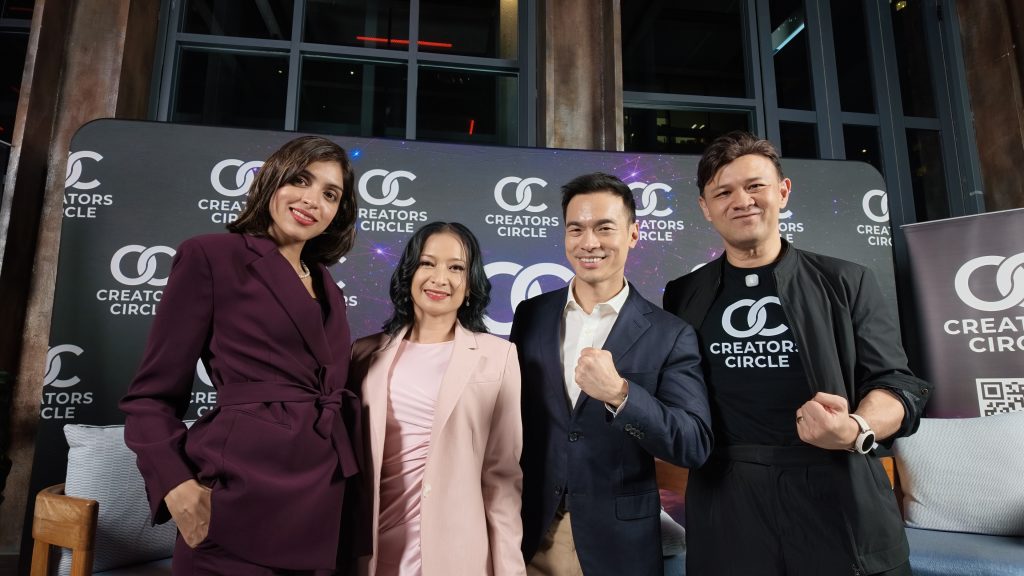
Creators Circle By LOL Asia Explores The Future Of Music In The AI Era

Artificial Intelligence is no longer knocking on the door of the music industry—it has already entered the room. That was the central message from the latest edition of Creators Circle by LOL Asia – Artists in the Age of AI, where leading voices from Malaysia’s music industry came together to examine one of today’s most debated questions: “AI Can Make Songs. But Can It Make Artists?” Held at 21 Rooftop Bar, Hyatt Centric Kuala Lumpur, the invitation-only forum brought together music executives, creators, entrepreneurs, media leaders and innovators for an honest conversation on how artificial intelligence is transforming music creation, copyright, artist development and the future of human creativity. Moderated by Rizal Kamal, Founder of Creators Circle and CEO of LOL Asia, the discussion featured Kim Lim, Managing Director of Universal Music Malaysia and Vice Chairman of the Recording Industry Association of Malaysia (RIM), alongside acclaimed music producer, composer and arranger Sharon Paul. Rather than framing AI as a threat to artists, the discussion explored how technology and human creativity can evolve together—and why authenticity may become more valuable than ever. The Future Isn’t AI Versus Artists Throughout the evening, panellists challenged the increasingly common narrative that AI will replace musicians. Instead, they argued that the industry’s real challenge is learning how to harness AI responsibly while protecting the creative and commercial value of human artistry. The discussion explored critical questions facing the global music ecosystem: Can AI truly replicate emotion, lived experience and artistic intuition? How should copyright evolve in an age of AI-generated music? What responsibilities do technology companies and record labels share? Will audiences continue to seek authentic human stories? How can creators use AI without losing their artistic identity? While AI can now compose melodies, generate lyrics, clone voices and assist production workflows within minutes, the panel agreed that music remains deeply rooted in emotion, culture and human experience. Technology may accelerate creation, but meaning, perspective and emotional connection still belong to people. Industry Moving Towards Collaboration One of the strongest conclusions to emerge from the session was that the music industry is already moving beyond fear towards practical collaboration. While important questions surrounding copyright, ethics, intellectual property and AI training data remain unresolved, panellists noted that AI companies, rights holders, record labels and policymakers are increasingly working together to develop new licensing frameworks and responsible AI practices. Rather than positioning AI as an adversary, the industry is beginning to view it as another evolution in music technology. As highlighted throughout the discussion, AI is no longer a future possibility—it is now an inevitable part of the evolution of music creation and distribution. Authenticity Becomes More Valuable Ironically, as AI-generated music becomes increasingly accessible, the panel believes authentic human creativity may become even more valuable. Verified human-created music, established catalogues and original artistic voices are expected to carry greater commercial and cultural significance because audiences increasingly seek provenance, authenticity and emotional truth. In an era where content can be generated almost instantly, originality becomes the new premium. Sharon Paul, Music Producer, Composer and Arranger, stated: “Technology has always changed the way we make music. AI is simply the next chapter. What will always distinguish great artists is not the tool they use, but the emotion, experience and humanity they bring to their work. AI can assist creativity, but it cannot replace the soul behind a song.” A Creative Explosion, Not a Creative Decline Far from signalling the decline of creativity, the panel concluded that AI is fuelling one of the most exciting periods in music history. New artists are emerging. New production workflows are reshaping collaboration. Independent creators now have unprecedented access to creative tools that were once available only to major studios. Hence, rather than replacing artists, AI is expanding the possibilities of artistic expression. The conversation concluded that the future belongs not to technology alone—but to creators who understand how to combine technology with imagination, storytelling and human connection. Rizal Kamal, Founder of Creators Circle and CEO of LOL Asia, shared: “Artificial intelligence isn’t replacing creativity—it’s expanding what’s possible. The real opportunity now is ensuring that innovation and artistic integrity evolve together. The future belongs to creators who understand both technology and humanity, and to industries willing to collaborate rather than compete with change.” Malaysia’s Opportunity With Southeast Asia rapidly becoming one of the world’s fastest-growing digital entertainment markets, the panel noted that Malaysia has an opportunity to become a regional leader in ethical AI adoption, music innovation and creative entrepreneurship. Success, however, will depend on continued collaboration between artists, technology companies, record labels, government agencies and rights organisations. A sentiment rightly advocated by Kim Lim, Managing Director of Universal Music Malaysia and Vice Chairman of RIM: “AI presents exciting opportunities for the music industry, but our business has always been built on artists, stories and emotional connection. Technology will continue to change how music is created and distributed, but audiences will always seek authenticity. Our responsibility is to embrace innovation while protecting creators and ensuring intellectual property and artistic integrity remain at the centre of that evolution.”

Scroll to Top

Subscribe
FREE Newsletter