Author name: admin

News

IPG Mediabrands appoints Darren Yuen as CEO in Malaysia

KUALA LUMPUR: IPG Mediabrands, a media holding company under Interpublic Group, has appointed Darren Yuen as chief executive officer (CEO) in Malaysia. Yuen takes over the role previously held by Bala Pomaleh for eight years. With his new position, Yuen is set to drive IPG Mediabrands growth. Previously, Yuen held the role of CEO at Initiative Malaysia. He has over 27 years of experience in the industry, spending eight years within the IPG Mediabrands network in Malaysia. Leigh Terry, CEO of IPG Mediabrands APAC, said, “I could not be more pleased to appoint the Malaysia CEO from within our own network ranks. With his passion, drive, and unsurpassed knowledge of the Malaysian media landscape, Darren embodies our commitment to craft and innovation on this strategic transformation journey.” “Bala has spent 8.5 years building IPG Mediabrands Malaysia to the much celebrated, industry-leading media network it stands proud as today. He leaves with our thanks and appreciation for his commitment and lasting impact,” Terry added. “I am honoured to take on the role of CEO IPG Mediabrands Malaysia. This is such an exciting time for our business, and a fantastic opportunity to empower our talented network of people to push the boundaries of how we can deliver exceptional value to our clients,” Yuen commented.

Upcoming Events

ART SG 2025: Southeast Asia’s Premier Art Fair Returns

Mark your calendars! From January 17–19, 2025, Singapore’s Sands Expo and Convention Centre will host the third edition of ART SG, presented by UBS. This renowned art fair will feature: 106 galleries from 30 countries, spotlighting both global and Southeast Asian talents. Dynamic sectors, including GALLERIES, FOCUS, and FUTURES, presenting a range of artistic disciplines. Programs like PLATFORM (site-specific installations), a FILM series curated with Bangkok Kunsthalle, and insightful TALKS with art leaders. Special Highlights: UBS launches its “Art for All” community initiative, including a 60-meter tapestry to celebrate Singapore’s 60th anniversary. Prestigious galleries such as Gagosian, White Cube, and Lehmann Maupin participate alongside regional newcomers. ART SG coincides with Singapore Art Week (January 17–26), amplifying the city’s vibrant cultural scene. Tickets available at: artsg.com/tickets Follow @art.sg on Instagram and Facebook for updates. Don’t miss Southeast Asia’s largest art showcase!

The Executives

Breaking Career Stagnation in Malaysia and Singapore

The Exchange Asia recently spoke with The University of Manchester South East Asia for an exclusive interview with Andrew Jones, an executive coach with over 13 years of experience guiding professionals across Malaysia, Singapore, and other global markets,  Jones shared valuable insights on the causes of career stagnation, strategies for career growth, and ways to future-proof careers in rapidly evolving industries. Cultural and Societal Factors in Career Stagnation Jones emphasised that career stagnation is not unique to Malaysia or Singapore but is a global issue. He believes that focusing on cultural or societal factors as the primary cause of professional deceleration can be a distraction. Instead, he noted that stagnation often arises when individuals fail to challenge themselves or when systems don’t foster growth. “Stagnation is often due to individuals not challenging themselves or systems that don’t foster growth,” he explained. Developing Self-Awareness: The Key to Career Growth For Jones, self-awareness is the first step in overcoming career stagnation. He advised professionals to engage in reflective practice—taking time to critically evaluate their achievements, challenges, and job satisfaction levels. While tools like psychometric tests are useful, Jones highlighted that live conversations provide deeper insights. “Real-time feedback fosters trust, transparency, and accountability—qualities that sterile assessments cannot replicate,” he said. Strategic Career Planning: A Roadmap for Long-Term Success Strategic career planning is essential for avoiding stagnation and ensuring continuous professional growth. According to Jones, professionals should outline both short-term decisions, such as skill acquisition, and long-term ambitions, like entering leadership roles. He added, “Strategic career planning should begin early in one’s professional journey, allowing career pivots, skill-building, and networking to align with long-term goals.” He also noted that even mid-career professionals can benefit from reassessing and updating their career strategies. Future-Proofing Careers in Technology and Finance As industries like technology and finance continue to evolve, Jones advised professionals in Malaysia and Singapore to focus on three key areas to remain competitive: Continuous Learning: Embrace lifelong learning through executive education, online courses, or certifications in emerging technologies such as AI, data analytics, and blockchain. Adaptability: Be open to lateral moves or cross-functional projects to diversify skills and gain exposure to different areas of business. Networking and Mentorship: Build strong networks both within and outside of one’s industry to stay aware of new opportunities. Mentors can also offer valuable insights into future industry shifts. Overcoming Mid-Career Stagnation For mid-career professionals facing stagnation, Jones recommended leveraging networking, mentorship, and further education. “Mid-career professionals should focus on expanding their networks to include not only peers but also senior leaders and industry disruptors,” he said. He also suggested engaging with mentors who have navigated similar challenges to gain strategic insights and advice. Further education, such as pursuing an MBA or executive programmes, can also provide the knowledge necessary for career advancement. Identifying High-Growth Sectors in Malaysia and Singapore Jones identified sectors such as technology, finance, healthcare, and renewable energy as areas offering strong growth opportunities. These industries, he noted, are characterised by rapid business cycles, which often create new job roles and leadership opportunities. He also highlighted that “the rapid digitisation of business operations across the region” will continue to drive career growth in the technology sector and industries that digitise quickly. Navigating External Challenges in a Stagnant Job Market When faced with a stagnant job market or industry-specific barriers, Jones recommended a multifaceted approach: Network Beyond Your Industry: Look beyond your immediate sector to find opportunities in adjacent industries where your skills may be in demand. Diversify Skillsets: Professionals with transferable skills will be better positioned to seize opportunities, even in difficult times. Explore Lateral Moves: If upward mobility is limited, consider lateral moves within your organisation to gain new challenges and learning opportunities. Staying Competitive Amid AI and Digital Transformation With the rise of AI and digital transformation, Jones advised professionals to invest in digital skills, particularly in areas like AI, data science, and digital tools. He also emphasised the importance of human-centric skills, such as leadership and emotional intelligence, which remain crucial despite automation. “Leadership, emotional intelligence, and strategic thinking remain crucial human-centric skills,” he stated. Staying informed about industry trends and technological advancements will also allow professionals to adapt and remain competitive. In conclusion, Jones stressed the importance of personal responsibility, adaptability, and continuous learning in navigating the modern career landscape. He encouraged professionals to stay proactive, embrace change, and pursue growth to thrive in an ever-evolving world of work. For professionals in Malaysia and Singapore, his advice offers a roadmap to overcoming stagnation and seizing emerging opportunities.

Investment & Market Trends, Property

Pavilion REIT Adds RM480M Iconic KL Hotels to Portfolio

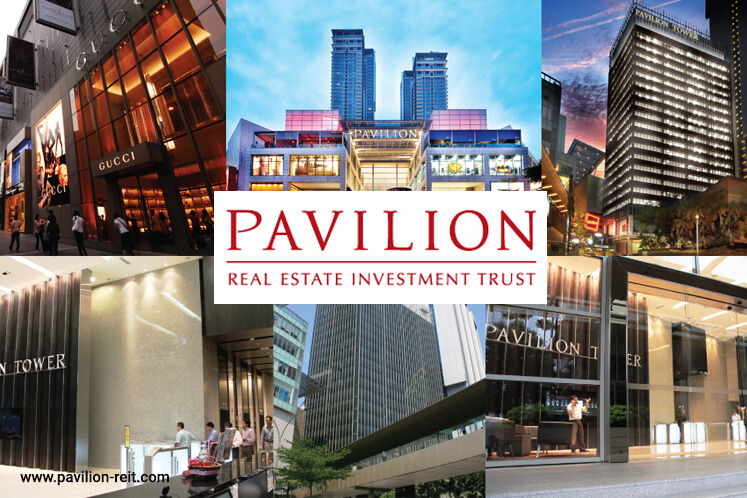
KUALA LUMPUR: Pavilion Real Estate Investment Trust (Pavilion REIT) has announced the proposed acquisitions of two prestigious hospitality assets in Kuala Lumpur, the Banyan Tree Kuala Lumpur (BTKL) and Pavilion Hotel Kuala Lumpur (PHKL), in a landmark deal worth RM480 million. MTrustee Berhad, acting for and on behalf of Pavilion REIT, entered into conditional sale and purchase agreements with Lumayan Indah Sdn Bhd for the acquisition of BTKL at a purchase consideration of RM140 million, and with Harmoni Perkasa Sdn Bhd for the acquisition of PHKL at a purchase consideration of RM340 million.   Both properties are located in the bustling Bukit Bintang area, at the heart of Kuala Lumpur’s Golden Triangle.   Dato’ Philip Ho, Chief Executive Officer of Pavilion REIT Management Sdn Bhd, which is the manager of Pavilion REIT said, “The acquisitions align with Pavilion REIT’s strategy which contributes positively to the overall portfolio and future growth, while also generating stable and sustainable income for unitholders.”   “Acquiring these iconic hospitality assets reinforces our commitment to delivering premium offerings while capitalising on synergistic opportunities with Pavilion Kuala Lumpur Mall”, he added.   The acquisitions will be funded via a combination of debt and/or equity, with Pavilion REIT proposing a private placement of new units to raise gross proceeds between RM264 million and RM552 million. Alternatively, it may issue up to RM246.5 million worth of units to settle part of the purchase consideration.   The transaction is expected to enhance portfolio diversification by reducing Pavilion Kuala Lumpur Mall’s contribution to Pavilion REIT’s total asset value from 61.4% to 58.0% via exposure to the hospitality sector.   BTKL and PHKL are seamlessly connected to Pavilion Kuala Lumpur Mall, one of Malaysia’s premier shopping destinations. The integration enables synergistic marketing and operational strategies, which are anticipated to drive higher revenue per available room for the hotels and further elevate the overall value proposition of the mall. Pavilion REIT’s ownership further enhances this synergy, enabling strategic partnerships that will maximise the long-term value.   The hotels are operated and managed by Banyan Tree Hotels & Resorts Pte Ltd since their openings in 2018. Banyan Tree Hotels & Resorts Pte Ltd is part of Singapore-listed Banyan Tree Holdings Limited, a global hospitality group renowned for its luxury offerings and award-winning services.   BTKL, an award winning five-star hotel within a 59-storey integrated building, features 55 premium suites, a rooftop bar, and the renowned Banyan Tree Spa. PHKL, located above Pavilion Kuala Lumpur Mall, offers 325 well-appointed rooms and extensive event and dining facilities.   BTKL and PHKL have consistently achieved average occupancy rates of 83.0% and 82.2% respectively up to 30 September 2024.   As part of the deal, the hotels will be leased back to the current operator for an initial 10-year term, with the option to renew for up to 20 additional years. The fixed annual rental income will commence at RM33.5 million for the first five years, generating an approximate annual gross yield of 7.0%. This rental income will be subject to incremental adjustments every five years.   This structure provides Pavilion REIT with a yield-accretive, stable and predictable income stream while offering potential upside through variable rental arrangements tied to the hotels’ performance.   These acquisitions come at a time when Malaysia’s tourism and hospitality industry is rebounding strongly. International tourist arrivals in 2024 are projected to reach 27.3 million, a significant increase from 20.1 million in 2023.   Dato’ Philip Ho said, “Within Kuala Lumpur’s Golden Triangle lies what we consider the ‘golden mile,’ Jalan Bukit Bintang. The area’s proximity to world-class attractions, premier retail, and excellent connectivity ensures the hotels and Pavilion Kuala Lumpur Mall are well-positioned to benefit from Malaysia’s ongoing promotion of the tourism sector.”   The proposals are subject to approval by Pavilion REIT’s unitholders and Bursa Malaysia Securities Berhad.   Upon completion, the hotels will represent 5.5% of Pavilion REIT’s enlarged total assets under management, further solidifying its position as a dominant player in Malaysia’s real estate investment trust industry.

ESG

Rice Straw Turned into Global Sustainable Products

GURUN: The production of “green gold,” or biodegradable packaging made from rice straw waste in Gurun, Kedah, is projected to achieve a market value of RM60 million once distributed locally and internationally starting next year. This production, a result of a public-private partnership between the Malaysian Bioeconomy Development Corporation (Bioeconomy Corporation) and BioNexus Status company Free The Seed Sdn Bhd (Free The Seed), aims to advance the country’s biodegradable industry through the use of biotechnological enzyme processing. The Minister of Science, Technology, and Innovation, YB Chang Lih Kang, expressed his full support for the production of biodegradable packaging products set to reach local and international markets, including Germany, the Netherlands, Japan, and the United Kingdom, by 2025. He added that the collaboration has significantly enhanced its value chain, creating additional income opportunities for farmers and local communities. “To date, 618 farmers have joined this initiative, with the number expected to increase to 3,700 when full operations begin next year. “Through this collaboration between Bioeconomy Corporation and Free The Seed, farmers in this region are expected to generate additional income of RM3 million annually by 2025 from selling rice straw waste,” he said during his working visit to Free The Seed’s facility here today. Also present were Bioeconomy Corporation Chief Executive Officer, Mohd Khairul Fidzal Abdul Razak and Free The Seed Chief Executive Officer, Ramaness Parasuraman. The minister highlighted the immense potential of biotechnology in transforming rice straw waste into “green gold,” playing a crucial role in boosting farmers’ income, creating jobs, driving the circular economy, and supporting environmental sustainability. This aligns with the National Biotechnology Policy 2.0 and the nation’s sustainable development agenda. “Kedah is now not only Malaysia’s main rice producer but also a hub for processing rice straw waste into ‘green gold’ through biotechnological applications,” he said. Meanwhile, Bioeconomy Corporation Chief Executive Officer, Mohd Khairul Fidzal Abdul Razak stated that the collaboration is expected to achieve an annual production of 120 million units of biodegradable packaging for the medical, food, industrial, and electronics sectors. Initially focused on food and healthcare packaging for export, the products have now expanded into new sectors, including local healthcare, the semiconductor industry, and sustainable energy, according to Mohd Khairul. He also stated that the expansion resulting from this collaboration has created 120 new jobs, 30% of which involve TVET-skilled workers. “Through industry engagement sessions and access to public and private sector stakeholders, Bioeconomy Corporation has supported Free The Seed in expanding its market reach. “This support has enabled Free The Seed to increase its production capacity to meet growing market demand across these sectors,” he said. The circular economy emphasised by the Malaysia MADANI Government not only focuses on the principles of reuse, return, and recreate to reduce waste but also reflects the government’s vision of managing the nation’s resources efficiently and sustainably. The collaboration between Bioeconomy Corporation and Free The Seed demonstrates the effectiveness of proactive government policies in driving the growth of multinational companies and strengthening Malaysia’s position in the bio-packaging industry. This initiative, which utilises local bio-based technology from rice straw, also positions itself as a potential carbon credit icon for Malaysia. It aligns with the Sustainable Development Goals (SDGs) and Environmental, Social, and Governance (ESG) frameworks outlined by the Malaysia MADANI Government, ensuring inclusive, sustainable, and competitive development for the well-being and benefit of all citizens.

Investment & Market Trends

Hong Kong Businesses Eye 2025 Growth

HONG KONG SAR: Hong Kong’s economic outlook and business confidence are set to further improve in 2025, CPA Australia’s latest survey shows. With more than half of respondents predicting their company’s revenue will grow in 2025, companies are becoming more aggressive in their expansion plans and hiring intentions are the highest since 2020. Surveyed executives and accounting professionals show a relatively optimistic outlook for Hong Kong’s economy, with 63 per cent anticipating the local economy will grow next year. Hong Kong’s tax system (31 per cent) ranks as the largest positive contributor to the city’s economic and business environment in 2025, while changes in consumer patterns (26 per cent) and tension in US-China relations (26 per cent) are seen to be the two biggest challenges. 56 per cent of respondents rated Hong Kong’s international competitiveness as high. Mr. Cliff Ip, CPA Australia 2024 Divisional President of Greater China, said, “The survey findings reflect that Hong Kong’s economy and business confidence are expected to steadily improve in the coming year. Recent stimulus measures unveiled by the central government and the Hong Kong government have contributed to this improved sentiment. The start of the rate-cutting cycle has also boosted business confidence. These positive factors should keep this momentum going into 2025 and strengthen Hong Kong’s international competitiveness. “However, external uncertainties still weigh on some sectors such as tourism and retail. Respondents indicate that changing customer behaviour and weak customer demand are some of the key challenges they expect to face in 2025. In response, companies must keep innovating their products and services, and how they deliver them. They also need to frequently engage with customers and potential customers to better understand trends both in Hong Kong and elsewhere.” The outlook for initial public offerings (IPOs) in the city is also optimistic. Some 63 per cent of respondents expect the value of funds raised in Hong Kong through IPOs to increase in 2025. “IPO activity in Hong Kong has shown signs of recovery since Q3 due to some mega-sized IPOs. Policies and regulatory reforms are stimulating capital activities and boosting investor confidence,” Ip explained. The improving economic sentiment is flowing through to revenue projections and business expansion plans in 2025. 51 per cent of respondents predict their company’s revenue will grow next year, with an increase in revenue of between 5 to 20 per cent being the most popular prediction. In response to this improving business environment, respondents are most likely to forecast that their company will increase their investment in advanced technologies (38 per cent), sales and marketing (37 per cent) and expansion outside of Hong Kong (36 per cent). A notably high proportion of respondents to this survey stated that their company has expansions plan in the next three years at home or abroad, with mainland China (40 per cent) again nominated as the most popular destination. Though cost management remains the top strategic focus for many companies, the percentage choosing it has dropped from 39 per cent in 2024 to 27 per cent in 2025. While slightly more are expected to focus on market expansion activities (27 per cent) and innovation and digitalisation (26 per cent). Ip stated, “The more positive business environment is being reflected in an expected shift in corporate strategy away from defensive strategies such as cost management and improving business efficiency towards more expansionary strategies such as market expansion and innovation.” To support growing revenue and expansion plans, companies are keen to add more employees and increase salary to retain talent. 57 of per cent respondents expect that their companies to increase headcount, the highest new hiring intention since 2020. These new hiring intentions are strongest amongst larger companies. Salaries are expected to grow, with 62 per cent expecting to receive a salary increase in 2025. While the economy looks to be on a positive trajectory, predictions for price changes in the property market in 2025 are uncertain, with similar numbers of respondents expecting prices to increase and decrease, however more respondents expect prices to increase than the previous two years. Ip explained, “The city’s property market is recovering, with demand gradually growing. This is due to recent interest rate cuts and changes in government policies such as the relaxation of restrictive measures in the housing market. However, with sectors such as SMEs undergoing a relatively slower recovery due to the weak domestic demand, this is leading to stagnation in the rental market.” The survey data shows nearly all Hong Kong companies have introduced at least some ESG measures into their operations, with only three per cent stating they have not taken any ESG actions. Another 35 per cent expect their company to increase their ESG-related initiatives and activities next year. Respondents were most likely to nominate compliance and increasing compliance costs as the biggest impact ESG is having on their business. CPA Australia collected 568 responses from Hong Kong-based executives, accounting and finance professionals working in various industries in October and November for this Hong Kong Economic and Business Sentiment Survey 2025.

News

Domestic airfares down 10%, Minister Thohir informs

TANGERANG: Minister of State-Owned Enterprises (SOEs) Erick Thohir has said that the airfares offered by several domestic airlines for the Christmas and New Year holidays have declined by 10 percent. “I have checked them (airfares); they are already correct and proper; Citilink and Pelita Air (fares) are already proper according to the directive of President Prabowo Subianto,” he informed here on Wednesday. He said that the reduction in air ticket prices is the result of strong synergy between the Ministry of SOEs and the Ministry of Transportation, as well as the full support of President Prabowo. According to the minister, cheaper flight tickets during the Christmas and New Year holiday period will ease the burden on people planning a vacation or homecoming. “We are also grateful to (state oil and gas company) Pertamina and the airport operators on how they can help reduce (flight) ticket prices according to the President’s instruction,” he said. Thohir added that in the future, his side and SOE leaders will continue to monitor flight ticket prices at the end of every month. Meanwhile, President Director of national carrier Garuda Indonesia Wamildan Tsani Panjaitan said that his side has reduced ticket prices for special domestic route flights for the period from December 19, 2024, to January 3, 2025. According to him, the 10-percent reduction in flight fares is a follow-up to President Prabowo’s directive. He added that Garuda Indonesia and its subsidiary Citilink have prepared a total of 98 aircraft to serve passengers during the year-end holiday.

News

Apple to invest in producing cell phone components

JAKARTA: Minister of Investment and Downstreaming/head of the Investment Coordinating Board (BKPM), Rosan Roeslani, has informed that Apple will likely invest in cell phone component production in Indonesia.   According to him, communication is still ongoing to ensure that the investment commitment is fulfilled and is in line with the agreement desired by the Indonesian government. “The progress is quite good. We are still fine-tuning and hopefully, tonight, we will talk again. Apple has conveyed their investment in several components,” Roeslani informed at the Presidential Palace in Jakarta on Thursday. He said that the agreement regarding Apple’s investment in Indonesia could be reached within one week. However, he did not provide details on the components that will be produced in Indonesia through the construction of a factory. The company is planning to produce both internal and external components of mobile phones later. “Hopefully, within next week, we can receive Apple’s written commitment,” Roeslani informed. Earlier, Industry Minister Agus Gumiwang Kartasasmita expressed the hope that Apple’s planned investment of US$1 billion would be realized through a production facility investment scheme or the construction of a factory in Indonesia. “By God’s willing, Apple will take the first scheme namely the investment in production facilities,” he said in Surabaya on Wednesday. According to him, the Ministry of Industry has been intensively communicating with Roeslani to prepare the best scheme for supporting the investment plan of the American technology major. The scheme, techniques, as well as industrial areas that will be offered to Apple still need to be determined, he said. He emphasized that Apple’s decision to invest US$1 billion in Indonesia reflects the government’s commitment to prioritizing the principle of justice in doing business. The government snubbed Apple’s earlier investment proposal worth US$100 million as it was not considered proportional to its sales in Indonesia, which reached 2.5 million iPhone units in 2023.

Energy & Technology, Property, The Executives

AI’s Transformative Impact on the Real Estate Industry

In an interview with The Exchange Asia, Christophe Vicic, Chief Growth Officer of JLL Malaysia, discusses how the integration of artificial intelligence (AI) is reshaping the real estate sector. AI is transforming traditional operations, creating innovative solutions, and opening new possibilities for investors, developers, and property managers. As AI technologies continue to evolve, Vicic highlights that their impact on real estate is becoming increasingly significant, particularly in Malaysia, where the market’s unique dynamics present significant opportunities for growth and innovation. Traditional AI vs. Generative AI in Real Estate AI applications in real estate can be categorised into two primary types: traditional AI and generative AI. Each offers distinct capabilities: Traditional AI: Specialises in structured data analysis and decision-making based on predefined rules. Common applications include market analysis, predictive maintenance, and risk assessments. Generative AI: Excels with unstructured data, offering creative solutions. It is used for property design, virtual tours, and bespoke marketing strategies. “Generative AI’s creative potential enables real estate firms to deliver tailored experiences and innovative designs, setting new standards in customer engagement and operational efficiency.” Current AI Applications in Real Estate AI is already revolutionising real estate through various cutting-edge applications: Property Valuation and Predictive Analytics: Data-driven tools provide accurate pricing and market forecasts. Tenant Engagement: AI-powered apps offer personalised recommendations for amenities and events. Smart Building Management: AI optimises energy consumption, automates maintenance, and enhances security systems. Automated Customer Service: Chatbots handle tenant queries and maintenance requests efficiently. “By automating repetitive tasks and enhancing analytical capabilities, AI enables property managers to focus on high-value activities, resulting in greater efficiency and improved tenant satisfaction.” AI’s Role in Malaysia’s Real Estate Decision-Making In Malaysia, AI’s transformative potential is particularly compelling. By harnessing big data analytics and machine learning, AI can: Identify emerging property hotspots and predict the impact of major infrastructure projects. Offer localised investment strategies, tailored to Malaysia’s unique market conditions. Simplify compliance with the country’s complex property regulations. “Developers can leverage AI to design smarter buildings and meet the rising demand for sustainable living, aligning with Malaysia’s growing focus on green developments.” Challenges and Opportunities While the benefits of AI are significant, widespread adoption faces several challenges: Data Privacy Concerns: Adherence to local and international regulations is vital. Algorithmic Bias and Transparency: The need for explainable AI ensures fairness in decision-making. Workforce Reskilling: Automation of routine tasks increases demand for AI expertise. “Overcoming these challenges requires collaboration between tech firms and real estate players, alongside investments in workforce upskilling and robust regulatory frameworks.” Emerging AI Trends in Real Estate Looking ahead, several AI advancements are poised to revolutionise the real estate sector: Natural Language Processing: Facilitating sophisticated chatbots and document analysis tools. Computer Vision and Augmented Reality: Transforming property inspections and visualisations. Edge AI and Quantum Computing: Enhancing smart building functionalities and market forecasting. AI-Driven Blockchain: Streamlining property transactions with improved security and efficiency. “AI trends such as edge computing and federated learning promise enhanced personalisation and privacy, paving the way for smarter cities and more responsive real estate ecosystems.” Competing in an AI-Driven Landscape For smaller firms, competing with AI-enabled giants is achievable by: Leveraging open-source tools and cloud-based solutions. Focusing on niche markets and adopting agile innovation strategies. Partnering with tech start-ups to access expertise cost-effectively. “Adaptability and customer focus are key differentiators, allowing smaller firms to implement AI solutions quickly and tailor them to specific client needs.” AI is not merely a tool; it is a transformative force redefining the real estate industry. As Malaysia and the global market continue to embrace these advancements, stakeholders must navigate challenges while seizing opportunities to drive efficiency, innovation, and sustainability in real estate practices.

Property

Radium Development Expands Urban Presence with Ampang Land Buy

KUALA LUMPUR: Radium Development Berhad (“Radium” or the “Company”) has reached a significant milestone with the acquisition of a 2.56-acre leasehold parcel in Bandar Ampang, Selangor. The acquisition was executed through its indirect wholly-owned subsidiary, Mayang Sepakat Sdn. Bhd. This marks Radium’s first project outside Kuala Lumpur, aligning with its expansion strategy to strengthen its presence in key Klang Valley locations and deliver well-connected, high-value properties. Key Highlights 1. Strategic Land Positioning Prime location near Kuala Lumpur City Centre. Direct accessibility via major highways and the Cempaka LRT Station. A transit-oriented development (TOD) opportunity appealing to urban residents and businesses. 2. Development Potential Planned mixed-use development with approximately 1,128 residential units, including 340 affordable Service Apartment Mampu Milik (SAMM) units. Commercial spaces to complement residential offerings. Estimated Gross Development Value (GDV): RM470 million. 3. Financial Strategy Acquisition cost: RM45 million, funded through a prudent mix of internal funds and bank financing. Reflects Radium’s financial stability and commitment to sustainable, growth-driven developments. Strategic Rationale The acquisition aligns with Radium’s vision of securing prime urban land in high-demand areas. Located within a TOD zone, just 350 meters from the Cempaka LRT Station, the site supports Radium’s focus on sustainable urban living and enhances its project pipeline catering to Klang Valley’s growing population. Leadership Perspective Group Managing Director Datuk Gary Gan Kah Siong shared his optimism about the project: “This acquisition is a cornerstone in Radium’s growth strategy. It positions us to meet the rising demand for accessible, high-quality urban spaces in Klang Valley while reinforcing our commitment to creating sustainable, long-term value for shareholders.” Outlook As Radium expands its land bank and project portfolio, this acquisition reflects its dedication to delivering exceptional urban living spaces. The project is set to meet market demand and sustainability goals while strengthening the Company’s leadership in the Klang Valley property market. For more information, visit www.radiumdevelopment.com.

Scroll to Top

Subscribe
FREE Newsletter