Author name: admin

ESG, News

Complete Human Network (CHN) Signs Landmark MoU With SDEC

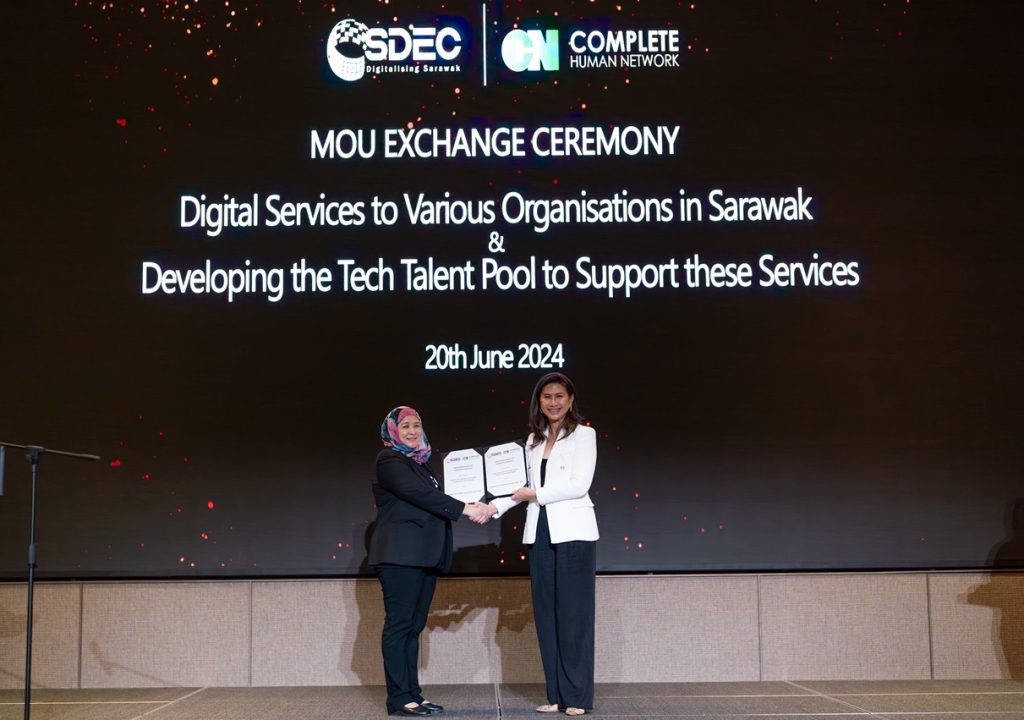
KUALA LUMPUR: Complete Human Network Sdn Bhd (CHN), one of Malaysia’s leading enterprise mobility solutions providers is kicking the second half of 2024 off with a bang, through entering a strategic partnership with the Sarawak Digital Economy Corporation (SDEC). The signing of a Memorandum of Understanding (MoU) between the two organisations marks a significant leap in fostering digital growth within Sarawak, in line with the Sarawak Government’s plan to become a global innovation hub by 2030. The MoU was formalised in a ceremony attended by CHN Founder and CEO, Teh Chai Peng and SDEC Chief Operating Officer, Malseni Jamal. This collaboration reflects a shared vision of leveraging technology to drive Sarawak’s economic transformation, with a particular focus on establishing specialised tech development, cultivating local tech talent, and supporting sustainable digital initiatives. By fostering a culture of continuous learning and professional development, the centre aims to bridge the skills gap and prepare the Sarawakian workforce for the evolving demands of the tech industry. To this end, the centre will also offer comprehensive training programs and resources tailored to address the same. “Our partnership with SDEC represents a critical step in empowering Sarawak’s tech ecosystem. We are dedicated to harnessing our expertise in enterprise mobility to develop a robust tech development infrastructure that nurtures local talent and supports the region’s digital aspirations,” Teh stated. Both CHN and SDEC will be working closely with local communities and relevant stakeholders to ensure the investment in tech development delivers tangible benefits. This includes facilitating educational partnerships and outreach programs designed to inspire and engage local talent. Meanwhile, Malseni re-emphasised the significance of community involvement in the initiative, saying, “Our partnership with CHN is a testament to our commitment to fostering an inclusive digital ecosystem in Sarawak. By engaging local stakeholders, we aim to create opportunities that drive economic growth and enhance the quality of life for our communities.” To further enhance the progress in tech development, CHN and SDEC will collaborate on providing comprehensive technical support and services. This includes the management of hardware services, the integration of software solutions through CHN’s Enterprise Mobility as a Service framework, and the deployment of the Choose Your Own Device (CYOD) Portal. By leveraging CHN’s expertise in Device-as-a-Service (DaaS) solutions that offers bundled IT devices and software services on a subscription basis, enabling enterprises to optimise their IT budgets, minimise IT-related hassles, and focus on their core business operations, the partnership aims to deliver innovative solutions that support Sarawak’s digital agenda. Teh added, “This MoU signifies more than just a partnership; it represents a collective effort to shape the future of Sarawak’s digital landscape. We are excited to embark on this journey with SDEC and look forward to the positive impact this initiative will have on the region.” This two-year partnership also builds on CHN’s extensive experience and successful collaborations with global and regional partners such as the Global Enterprise Mobility Alliance (GEMA) and COPE Private Equity (COPE). Notably, COPE’s investment in CHN highlights the company’s resilience and sustainable business model, positioning it among Malaysia’s leading enterprise mobility ESG providers.

Investment & Market Trends

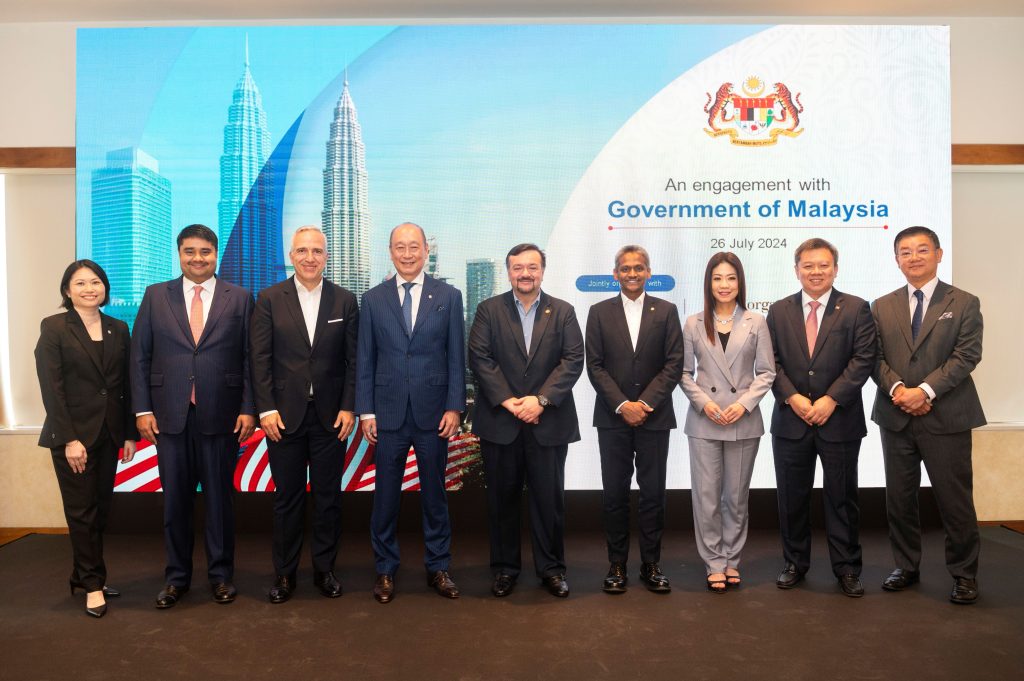
UOB Malaysia, CIMB and J.P. Morgan co-host investor engagement session for Government of Malaysia in Singapore

SINGAPORE: The Government of Malaysia undertook an investor engagement in Singapore on 26 July 2024, jointly supported by UOB Malaysia, CIMB and J.P. Morgan. Titled, “Highlights for Growth,” the event was held at UOB’s headquarters, UOB Plaza 1 Singapore, and featured insightful presentations and discussions led by YB Senator Datuk Seri Amir Hamzah Azizan, Minister of Finance II, Malaysia, and Dato’ Seri Abdul Rasheed Ghaffour, Governor of Bank Negara Malaysia.   The primary objectives of the session were to strengthen investor perception and sentiment towards Malaysia and to provide comprehensive insights into the government’s growth strategies, economic outlook, and fiscal reforms.   Over 100 participants, including financial investors and capital market players, attended the session which also delved into the implementation of the MADANI Economic Framework, providing investors with detailed explanations of the progress of key government policies and Malaysia’s overall economic strategy.   Commenting on the roadshow, YB Senator Datuk Seri Amir said, “The MADANI Economic framework will restructure the economy and raise Malaysia’s growth within the next 10 years. It aims to strengthen fiscal sustainability through more transparent and resilient fiscal management, attract quality investments, particularly in new growth areas, advance green growth to support the transition to a low-carbon economy and build a prosperous, inclusive society through more targeted policies. A positive outlook from analysts and rating agencies supported by encouraging economic figures shows Malaysia is making great strides to reclaim its Asian Tiger status.”   Ms. Ng Wei Wei, CEO of UOB Malaysia, said, “We are honoured to host this investor engagement session at our headquarters in Singapore to showcase Malaysia’s attractiveness as an investment destination, particularly for portfolio investors. Based on the UOB Business Outlook Study 2024, Malaysia is the top country that businesses in ASEAN and Greater China want to venture into in the next three years. UOB will continue to play a meaningful role in facilitating investments into the country as part of our commitment to support the nation’s economic advancement.”   Mr Chu Kok Wei, Co-Chief Executive Officer, of Group Wholesale Banking, CIMB Group, said: “We are pleased to be part of this engagement, elevating Malaysia as an attractive investment destination with strong prospects. The session is a pivotal opportunity to advance robust economic relations with all stakeholders and promote collaborations between all parties to align towards shared objectives and mutual benefits. Engagements such as this not only strengthen existing partnerships but also pave the way for effective strategies and sustainable economic growth for Malaysia.”   Ms Hooi Ching Wong, Chief Executive Officer of J.P. Morgan Chase Bank Berhad, said: “We see Malaysia as a bright spot amidst tight global financial conditions. Policy reforms, data center investment and infrastructure build-out have become key tailwinds for Malaysia. With a combination of resilient GDP growth and a sizable current account surplus, the country can offset global headwinds and exceed global GDP growth this year. We’re grateful for the opportunity to help promote this initiative and express our ongoing support for Malaysia’s efforts to further boost growth and the economy.”

Energy & Technology, News

Epic Plans to Expand Solar Energy Service Network

CHUKAI: Eastern Pacific Industrial Corporation Bhd (EPIC) plans to expand its service network through its subsidiary EPIC Solar Sdn Bhd (ESSB) in the field of solar energy and green technology in Malaysia. ESSB Chairman Dr Mamad Puteh said the plan is in line with the company’s mission and supports Malaysia’s aspiration to achieve the use of 40% renewable energy by 2035. Dr Mamad said that in order to achieve that wish, ESSB has become a pioneer and driver in solar projects on the East Coast with the opening of a 28-hectare solar farm with a capacity of up to 18.5 megawatts (MW) in Teluk Kalong. “The power plant in Teluk Kalong supplies solar energy with a capacity of up to 18.5MW to Tenaga Nasional Bhd (TNB) through the national grid for a period of 21 years until 2039. “It was developed with an investment of around RM80 million in 2017,” he said in a statement in conjunction with a ceremony to celebrate 150,000 Accident-Free Working Hours at the ESSB Solar Farm in Teluk Kalong Industrial Area. Also present were EPIC Group Chief Executive Officer Mukhtar Suhaili and ESSB Company Head Azman Muda. Dr Mamad said that in line with the goal of making Kemaman Port a green port, ESSB also carried out the installation of solar street lights and solar floodlights at the East Wharf terminal. According to him, the installation of street lights and floodlights, which are categorised as support services, are also extended to EPIC’s customers at Kemaman Supply Base (KSB), including Petronas Carigali Sdn Bhd. “EPIC has a great desire to make Kemaman Port a green port one day. Facilities based on solar energy generation such as street lights and floodlights will help the operations of not only EPIC’s subsidiaries but also our customers at the wharf and KSB,” he said. In the meantime, Dr Mamad said ESSB has also taken a step forward by producing the EMC Solar Car (ESCAR) which is environmentally friendly. ESCAR innovation is the result of a collaboration between ESSB and Universiti College TATI (UCTAT) in the Kemaman district. Dr Mamad said that initially ESCAR was only used in ESSB’s solar farm, but it was expanded to several premises of the subsidiary, namely Kuala Terengganu Support Base (KPKSB) and Sukna Samudra Sdn Bhd (SSSB). “ESCAR is an innovative light vehicle (buggy) that is usually used in golf clubs, the hospitality industry and tourist areas. “It uses electricity powered by solar energy stored in the battery. One of the advantages of ESCAR is that it can save on electricity,” he added. He further said that ESCAR will be improved in terms of increasing capacity and existing features for commercial purposes in the future. Dr Mamad said ESSB is also developing the ability to become an investor, supplier and installer of solar-powered roofs. Boosted by an experienced and highly skilled workforce, he is confident that ESSB will be a leading competitor in the renewable energy industry and further generate economic resources for Terengganu. — BERNAMA

Investment & Market Trends, News

Petronas’ Revenue May Suffer From Losing Sole Gas Aggregator Role in Sarawak

KUALA LUMPUR: Petroliam Nasional Bhd (Petronas) is expected to lose a portion of revenue for not being the sole gas aggregator in Sarawak. In a note, RHB Investment Bank Bhd (RHB IB) said there have been increasing talks about Petronas facing a potential capital expenditure (capex) cut following news of Petroleum Sarawak Bhd (Petros) taking over the buying and selling of Sarawak’s natural gas from Petronas. The transition will start in the second half of 2024. “We may see some potential operational disruption in the near term before much clarity or a clear resolution is achieved between Petros and Petronas. “However, we believe that ultimately, both parties would want to maximise production especially when oil prices are expected to remain stable,” it added. Moreover, RHB IB opined that a drastic domestic capex cut by one party is not sustainable in the long run as it would eventually imperil Malaysia’s oil and gas (O&G) position in the region. Previously, Petronas allocated a capex of RM300 billion between 2023 and 2027 (RM50 billion per annum) which includes a domestic average capex spending of RM22.6 billion per annum (5-year capex of RM113 billion). The investment bank said Petronas spent RM52.8 billion capex in the financial year 2023, with an almost equal split between its domestic and international portfolio. “The upstream and gas segments accounted for 52% and 22% of the domestic capex, respectively, and the transfer of the sole gas aggregator role to Petros may lead to a more prominent capex cut in the gas segment. “While we may see some potential operational disruption in the near term, we still assume a resolution to be achieved between these 2 involved parties without jeopardising existing productions and future domestic investments to capture the rising global gas demand,” it said. The investment bank said the earnings impact on Petronas remains uncertain, but the move may affect its ability to spend. Overall, despite the rising uncertainties over Petronas’ direction and strategy, RHB IB still maintained its overweight call on the O&G sector. For now, the investment bank continues to favour the upstream services players with greater exposure in the maintenance-related space, as they provide greater earnings resilience, coupled with corporations with international diversification such as Yinson, MISC and Bumi Armada. — BERNAMA

ESG, News

Census Findings Will Help People Explore Opportunities in Agriculture, Says DOSM

PEKAN: The findings of the 2024 Agriculture Census will shed light on numerous opportunities within the agricultural sector, providing valuable insights for the public. Chief Statistician Datuk Seri Dr Mohd Uzir Mahidin, who is also the 2024 Agriculture Census commissioner, emphasised that the data being gathered will offer significant benefits to various stakeholders and guide future developments in agriculture. “Many individuals are unaware of these opportunities while only a select few recognise them. The data will enable the government to refine existing programmes and make informed improvements,” he said, adding that the complete findings of the Agriculture Census will be made available next year. He said this during a visit to Kampung Pulau Manis with Pahang Deputy Commissioner (Technical), Razaman Ridzuan to meet entrepreneur Sharifah Yusnida Saiyed Ibrahim, who carries out various agricultural activities including aquaculture, cattle and goat farming. The ongoing 2024 Agriculture Census by the Department of Statistics Malaysia (DOSM) covers 4 sub-sectors namely crops, livestock, fisheries and aquaculture, forestry as well as logging. In Pahang, the 2024 Agriculture Census aims to cover 83,550 residences and 1,996 organisations or business entities engaged in agricultural activities. As of July 19, census teams have visited 13,609 residences with 10,636 of those having completed the census. The state Statistics Department has already conducted the 2024 Agriculture Census retreats across 11 districts. This effort involves collaboration with several agencies within the agriculture sector, the Orang Asli Development Department and the District and Land Offices at the district level. The 2024 Agriculture Census aims to establish an Integrated Agriculture Statistics Database. This comprehensive database will provide detailed information on the agricultural chain (upstream and downstream) which will be updated periodically. — BERNAMA

News

Tune Protect appoints How as CEO

PETALING JAYA: Tune Protect Group Bhd has appointed How Kim Lian, 50, as its new group chief executive officer. In a filing with Bursa Malaysia, Tune Protect said How was appointed as the group chief financial officer (GCFO) of the company on May 22, 2020, with an expanded role to oversee procurement, legal and corporate secretarial portfolios. “As the GCFO, he was responsible for reviewing and establishing key financial strategies in alignment to the company’s corporate strategy by evaluating financial operational trends, measurements and productivity levels, aside from looking at acquisition and expansion prospects, identifying areas for improvement and accumulating capital to fund expansion. “He has over 21 years of senior management experience including a decade of strategic development and execution planning in finance transformation, programme management, enterprise performance management and investor relations.” Separately, Tune Protect said it had appointed Teoh Kek Pin as its new chief financial officer.

News

Vietnam targets higher foreign tourist spending

HANOI: Vietnam’s tourism sector welcomed over 8.8 million international visitors in the first half of 2024, marking a nearly 60% increase compared to the same period last year. This substantial growth signals a recovery from the post-Covid-19 era. Despite this progress, Vietnam still faces significant challenges in making tourists spend more, lagging behind regional competitors like Thailand, Singapore and China. Many tourists said that their visits to Vietnam primarily involve sightseeing, beach outings, strolling and taking photos. Tourist destinations lack a wide variety of entertainment and recreational services. Although some places have improved by adding new facilities and services for visitors, these efforts have not been sufficient to attract repeat visits. Despite comprising only one-fifth of domestic tourist numbers, foreign tourists spent more, contributing better to the national economy. On average, a foreign tourist spends seven times more than a domestic tourist, resulting in 14 times higher revenue. Michael Kokalari, chief economist at VinaCapital, highlighted in a recent report that foreign tourist spending has indirectly boosted the local economy by bringing substantial foreign exchange and promoting trade and investment. In 2023, tourism contributed four percentage points to Vietnam’s gross domestic product (GDP) growth. While foreign tourists’ spending accounted for only 10% of retail sales, it significantly impacted economic growth. VinaCapital estimated that the total contribution of tourism to Vietnam’s economy, including both direct and indirect contributions, is over 15% of GDP. Before the pandemic, about 8% of Vietnam’s GDP was accounted for by international tourism, compared to 12% in Thailand. Another percentage point is expected to be added to national GDP growth by the ongoing recovery in 2024. Tran Phuong Linh, marketing and IT director of BenThanh Tourist, saw exceptional growth in the international tourism market for its business since the beginning of the year. The company’s foreign tourist numbers and revenue increased by over 50% compared to the same period in 2023. Both traditional and new markets have shown promising growth. Markets such as India, Taiwan and Europe have all seen significant growth, with foreign tourists in Ho Chi Minh City particularly interested in cultural and historical tours, local cuisine and the local coffee culture. At Ben Thanh Market, international tourists account for 60% of sales, with many purchasing local fruits, coffee and tea as souvenirs. The impact of foreign tourist spending is further highlighted by the Ho Chi Minh City Customs Department, which processed value-added tax refunds totalling more than 40 billion dong for over 7,200 foreign tourists in the first five months of 2024. Despite these positive trends, Vietnam needs to enhance its tourism services to attract higher spending from tourists. Compared to neighbouring countries such as Thailand, Singapore and China, Vietnam offers fewer entertainment and shopping options. This is evident in spending patterns, where most tourists’ expenses are on food and beverages, reflecting the lack of diverse attractions and entertainment choices. Vietnam must also improve its visa policies and develop unique tourism products to retain international tourists. Recent policy changes have extended e-visa duration and allowed longer stays for citizens from 13 countries. However, Vietnam must offer more engaging activities and entertainment options to attract and retain tourists. There is also potential to target high-spending markets such as Australia and New Zealand, especially during the winter months when tourists seek warmer destinations. Strategies could include visa waivers and tailored tourism products focusing on beach resorts and cultural experiences. — Viet Nam News/ANN

Energy & Technology, News

inDrive Malaysia Transforms Ride Hailing Industry with AI, Machine Learning

KUALA LUMPUR: inDrive, the global ride-hailing service, revealed how artificial intelligence (AI) is increasingly integrated into every aspect of its ride-hailing app to enhance efficiency and accuracy, lower costs, improve safety and elevate user experience. This integration is pivotal in a rapidly evolving market like Malaysia, where urbanisation and technological advancements are shaping the future of transportation, aligning with the Malaysian government’s initiative to actively promote AI through the National AI Framework and the Malaysia AI Blueprint, with the aim to position the country as a regional leader in AI technology. inDrive differs from many of its competitors in that it adopted a peer-to-peer negotiation model, allowing drivers and passengers to directly negotiate the price for a ride by utilising machine learning in the pricing models to improve the accuracy of the recommended price when customers bid for rides, providing a starting point for negotiation that is fair to both customers and drivers. Using pricing and matching models, inDrive can account for local conditions such as traffic surges, sporting events, and accidents, becoming more accurate in its predictions with more local data collected. These conditions can also affect the number of drivers available and, in turn, customers’ ability to book rides. inDrive uses this information to create heat maps, guiding drivers to hotspots to increase supply where it is needed and better serve its users. “Internally, AI can be used to improve operational efficiency by streamlining processes, for example, during security checks. When a driver wants to register in the app, they must supply several documents, including an Identification Card (IC) and driver’s licence. These are manually and digitally verified by a dedicated team of professionals using different filters, currently testing machine learning-based features to better identify fraudulent documents,” said inDrive Chief Technology and Product Officer (CTPO) Stephen Kruger. Meanwhile, in some countries, inDrive uses a facial recognition tool to validate its users’ identities and machine learning to review users’ profile images and exclude sensitive, potentially dangerous, or commercial content. As inDrive operates in many countries, it adapts to the different laws and regulations, balancing technological advancement with privacy protection and societal well-being on a regional basis. As in many other industries, AI and machine learning are enabling the ride-hailing sector to rapidly evolve in quality, safety, and efficiency, impacting every aspect of the business. The use of AI has transitioned from a futuristic concept to a fundamental component of the present, with its benefits being experienced each time a ride is hailed. On this, inDrive Malaysia Regional Driver Acquisition & Activation Team Lead, Mohamed Khalil says, “As we continue to integrate AI and machine learning to improve our services, inDrive remains committed to enhancing the ride-hailing experience in Malaysia by improving efficiency, safety, and customer satisfaction to benefit both drivers and passengers – paving the way towards transforming the local ride-hailing scene.”

Investment & Market Trends, News

Malaysia Poised to Capture Medical Device Manufacturing Market

BATU KAWAN: Malaysia has the right manufacturing landscape and enablers to capitalise on the global medical devices industry’s bright prospects. Investment, Trade and Industry Minister, Tengku Datuk Seri Zafrul Abdul Aziz said the global medical devices industry is projected to grow to US$887 billion by 2032 from US$542 billion projected for 2024. “Malaysia has what it takes – a solid foundation, a thriving ecosystem, the strong political will to engineer the rapid growth of our manufacturing industry by engaging key stakeholders, particularly industry members themselves. “The nation can be a manufacturing hub for medical devices, allowing global brands to serve the ASEAN market, with its 670-million population or even the Asian market, with its 4.7-billion people,” he said at the groundbreaking ceremony of Plexus Corp’s sixth manufacturing facility, Plexus Bridgeview in Penang. Tengku Zafrul said that Plexus’ focus on Semiconductor Capital Equipment as well as the Healthcare and Life Sciences sector aligns with the priority sectors under NIMP2030. “This will create a strong manufacturing ecosystem, driven by dynamic partnerships between leading global companies and Malaysian firms, powered by world-class talents. “This is what will make Malaysia a manufacturing and services hub for Asia,” he added. Plexus Regional President, Victor Tan said the establishment of the new Plexus Bridgeview facility demonstrates its commitment to growth within the region and provides a strong opportunity to meet the growing needs of its valued customers while simultaneously elevating the local small and medium industries. He said the state-of-the-art facility, located on a sprawling 8.09 hectares-plot, will encompass an impressive cutting-edge infrastructure, with an estimated investment of RM1 billion over the next 3 years. “This expansion will also create an estimated 1,800 new employment opportunities of high-skilled jobs in the region,” he added. Since its establishment in Malaysia over 20 years ago, Plexus has grown to employ more than 10,000 team members. In a separate statement, Malaysian Investment Development Authority (MIDA) Chief Executive Officer, Sikh Shamsul Ibrahim Sikh Abdul Majid said the agency is thrilled to see Plexus Corp’s commitment to expanding its operations in Malaysia. “Our country’s robust electrical and electronics ecosystem, the exceptional capabilities of our local talent, and our well-developed semiconductor supply chain provide the perfect foundation for investors like Plexus Corp. “We are optimistic about the opportunities this investment will bring for Plexus Corp, the local community and the industry. We look forward to Plexus Corp’s continued advancement in Malaysia,” he added. — BERNAMA

Scroll to Top

Subscribe
FREE Newsletter