Author name: admin

News

SMRT Holdings Berhad Announces Strong Financial Results for 3QFY24 and 9MFY24

CYBERJAYA: Pure play enterprise Internet of Things (IoT) solutions provider, SMRT Holdings Berhad (“SMRT” or the “Group”), has released its financial results for the third quarter (3QFY24) and nine months (9MFY24) ended 31 March 2024. The company previously changed its financial year-end to 30 June 2023 from 31 December 2022, which means comparative figures for the corresponding period last year are not available. In the third quarter of FY24, SMRT reported revenue of RM16.1 million, maintaining consistency with the RM16.8 million revenue from the previous quarter (2QFY24). The Group achieved a net profit of RM6.9 million in 3QFY24, reflecting a robust net profit margin of 42.7%. This profit includes a one-off gain of RM1.0 million from the disposal of an investment in a subsidiary. For the nine-month period ending 31 March 2024, SMRT recorded total revenue of RM51.2 million and a net profit of RM20.6 million. The Group’s financial health remains strong, with a net cash position and cash per share of 5.9 sen as of the end of March 2024. Group Managing Director, Mr. Maha Palan, expressed his satisfaction with the company’s performance: “We are delighted to have maintained positive momentum, delivering solid results and reinforcing our position as a leading pure play enterprise IoT solutions provider. Our primary markets in Malaysia and Indonesia continue to show promising growth, positioning us well to extend our successful business model into new ASEAN markets.” Mr. Palan highlighted SMRT’s recent venture into the financial services sector in the Philippines, noting it as a significant driver for future growth. He also emphasised the importance of the company’s recurring income base, which currently accounts for over 50% of total revenue. “Confident in our strategic direction, SMRT remains dedicated to becoming the leading provider of comprehensive end-to-end IoT services across ASEAN,” he added. The company’s focus on expanding its managed sites is expected to further enhance its recurring income, solidifying SMRT’s financial stability and growth prospects in the region.

ESG, Investment & Market Trends, News

Atour Unveils Sustainability Records in 2023 With Milestone ESG Report

SHANGHAI: Atour Lifestyle Holdings Ltd, a leading hospitality and lifestyle company in China, has released its inaugural Environmental, Social, and Governance (ESG) report for 2023, underscoring the company’s sustainability efforts over the past year and reflects the steady integration of ESG principles into its day-to-day operations. In essence, Atour is committed to reducing waste and making its operations more ecologically friendly. This is reflected in the company’s approach toward refurbishment and resource conservation. During the reporting period, Atour launched two new products, Atour Light 3.0 and Atour 4.0 ‘With Nature’, a midscale hotel offering and an upper midscale variation. They underwent refurbishment using modular designs, with modular elements accounting for over 90% and 80% of the overall designs, respectively. This initiative significantly reduces maintenance costs and non-essential construction waste. Sustainability practices extend beyond decoration. Atour hotels now are equipped with less carbon-intensive amenities, such as 100% biodegradable paper cups, as well as natural cotton beddings and natural bamboo paper products manufactured without bleach or fluorescents, easing the burden on the environment. Additionally, Atour promotes water conservation across some of its 1,210 hotels (as of the end of last year) using the dedicated-loop system for circulating hot water, resulting in a reduction of 12.67 tons of water consumption per room annually. Atour prioritizes customer experience, introducing innovations from Atour APLUS services to Late Night Congee to ensure customers feel at home during their stays. Customers can expect a carefree experience and peace of mind, thanks to Atour’s commitment to purified indoor air, fire safety, cleanliness, hygiene, and strict user privacy protection. Moreover, Atour has reinforced its support for franchisees through its ‘6 Commitments to Franchisees’ and ‘8 Supply Chain Procurement Commitments,’ empowering them with a responsible supply network, rights guarantees, as well as training on sustainability. Originating from Yaduo, a remote village in southwestern China, Atour has consistently given back to its place of inspiration by encouraging local villagers to grow tea, fueling economic development and rural revitalisation. As the report indicates, Atour purchased a cumulative 150 tons of processed tea leaves worth CN¥37 million from the villagers, benefiting some 1,400 households. As part of its charitable engagements, it also donated a batch of clothes with a value of around CN¥2 million to the needy and supported targeted poverty alleviation efforts. In urban areas, Atour contributes to societal well-being by offering resting places in its Shanghai headquarters for frontline workers such as couriers, delivery rider, and sanitation workers during their downtime. 10 years after its birth, Atour prides itself on creating a diverse, equitable, and inclusive workplace for its employees. Currently, over 58% of its 4,248 employees are female, and the company employs 17 people with physical disabilities and 162 members of ethnic minorities. On the corporate governance front, Atour has established an ESG working group tasked to report directly to its Executive Committee. The ultimate goal is to implement a coherent sustainability strategy throughout its corporate hierarchy, thereby embedding ESG concepts into Atour’s mission and core values. Recognising board diversity as a pillar for sustained growth, Atour aims to include factors like one’s gender, age, culture and professional background when nominating future board members. Currently, there are three independent directors and two female directors on the eight-member board. In aligning with its strategic vision to boast a network of 2,000 premier hotels by 2025 and deliver the optimum ‘Chinese experience’, Atour is set to invest more resources and energies in the realm of ESG. ‘Looking ahead, we aim to enhance our sustainable development initiatives and capacities consistently, turning our original aspirations of warmth and generosity into increased resilience through concrete measures,’ said Atour Founder and CEO Haijun Wang. “We remain committed to creating an intimate ambience where people can warmly connect and contribute to a greener ecology and a kinder, more compassionate society,” he added.

News

DNeX Records Net Profit of RM14.5 Mil in 1Q FY2024, Revenue Lifted by Energy and IT Businesses

CYBERJAYA: Dagang NeXchange Berhad (DNeX) has made a strong start in the new financial year, posting a net profit of RM14.5 million for the first quarter ending on 31 March 2024 (1Q FY2024). In 1Q FY2024, DNeX achieved a revenue of RM309.8 million. The Technology segment led the way with RM138.0 million, accounting for 45% of the total revenue. The Energy business followed, contributing RM105.9 million or 34%, while the Information Technology (IT) segment added RM65.9 million, representing 21% of the revenue. The company saw a 9% quarter-on-quarter (QoQ) increase in revenue, rising from RM283.7 million in the previous quarter (6Q FY2023) to RM309.8 million in 1Q FY2024. This growth was primarily driven by higher contributions from the Energy and IT segments. Due to a change in the financial year-end from 30 June to 31 December, there are no comparative figures for the quarter ending 31 March 2024. Breaking down the revenue contributions: Technology Division: Despite a slight decline from RM145.4 million in the previous quarter to RM138.0 million, the division faced lower average selling prices due to product mix, although wafer shipments increased. Energy Division: Revenue grew by 9% QoQ, from RM97.2 million to RM105.9 million, fueled by higher lifting volumes and favorable oil prices, which increased from USD81.9 per barrel to USD87.0 per barrel. IT Segment: Marking a substantial 61% growth in revenue, the segment surged from RM41.1 million to RM65.9 million, primarily due to the completion of progressive work on certain projects. In the Energy segment, DNeX’s immediate priority is the reactivation of the Abu Cluster, located offshore Terengganu, Malaysia, with first oil production targeted for early 2025. The anticipated production volume is 2,500 barrels per day. Ping, a subsidiary of DNeX, operates a geographically diverse late-life oil and gas portfolio, including assets in the UK (Anasuria, Avalon, and Fyne) and Malaysia (Meranti Cluster, A Cluster, and Abu Cluster). In the IT division, DNeX is actively bidding for strategic and large-scale public and private sector IT projects in both domestic and international markets. The company has been operating the National Single Window for Trade Facilitation since 2009 and is optimistic about securing an extension when the current contract is due for renewal in August 2024. “Leveraging our proven capabilities, we look forward to playing a strategic role in achieving the Malaysian Government’s aspirations to lead Malaysia’s digital economy forward,” said Tan Sri Syed Zainal Abidin Syed Mohamed Tahir Jamalullail. As of 31 March 2024, DNeX is in a healthy net cash position, with a total cash balance of RM630.6 million, exceeding total borrowings of RM252.4 million. Tan Sri Syed Zainal Abidin Syed Mohamed Tahir Jamalullail, Executive Chairman of DNeX, emphasised the company’s commitment to diversifying its revenue streams to drive growth. This strategy involves leveraging DNeX’s strengths across its three main business segments, expanding into adjacent profitable sectors, and forming strategic partnerships to enhance long-term financial performance. “In our Technology business, we anticipate a rebound in the global semiconductor market later in 2024, supported by a recovery in consumer, automotive, and industrial markets. To capitalise on this recovery, we are intensifying efforts to attract high-quality customers and enhance our Silicon Photonic technology. Additionally, we aim to fast-track the qualification process for products in emerging technology sectors, accelerating their market entry,” he stated. DNeX’s strategic focus and robust performance across its business segments position the company well for continued growth and financial success in the upcoming quarters.

Energy & Technology, News

ACE and Huawei Releases White Paper for the Future of Data Centre Sustainability

SINGAPORE: The ASEAN Centre for Energy (ACE) and Huawei co-developed the ‘White Paper on Building Next Generation Data Center Facility in ASEAN’, that was released at Global Data Center Facility Summit 2024 in Singapore. The white paper aims to accelerate the green and low-carbon transformation of the data centre industry in ASEAN. Driven by global digitalisation, digital transformation is booming in the ASEAN region. Massive data and huge computing demands have emerged, unlocking great potential in the data centre market. Due to the tropical climates of the ASEAN region, data centres feature high cooling requirements, high energy consumption, and power usage effectiveness (PUE) values far higher than the global average. Therefore, ASEAN governments are promoting the application of renewable energy and energy conservation technologies. ACE Executive Director, Nuki Agya Utama stated, “The white paper reflects on challenges in data centre installations and operations, as well as a comprehensive discussion on the matter of technology trends and ways to address energy consumption, cost savings, and environmental responsibility. “Moreover, it provides policy recommendations for data centre markets, both mature and emerging markets, for the development of data centres.” During the summit, ACE Head of Corporate Affairs, Andy Tirta delivered a keynote speech, “Beyond the renewable energy to support energy security in the ASEAN region, energy efficiency is the lowest hanging fruit that could be achieved by introducing advanced technology and innovation, enabling supportive financing mechanisms, policies and regulations, including the standardisation of the regional target.” The white paper summarises the four characteristics of next-generation data centres as reliable, simplified, sustainable, and smart. It calls for using efficient and energy-saving products and solutions in data centre design, development operation and maintenance to improve energy efficiency. Reliable: Reliable operation is the cornerstone of a data centre. Modular design and AI preventive maintenance are helpful in guaranteeing the safety and reliability of data centres at all levels, from components and equipment to systems. Simplified: In response to the increasing scale and complexity of data centres, the architecture and systems should be minimalist through hardware convergence. Sustainable: Innovative products and solutions can be used to build energy-efficient and low-carbon data centres that are a benefit to society. Smart: To address the O&M challenges of data centres, facility automation can be achieved with the help of digital and Al technologies. According to the white paper, utilising clean energy to power data centres is a good way of reducing carbon emissions. It recommends that ASEAN governments implement discounted electricity rates or tax breaks for data centre operators that use clean energy as their main power source. Additionally, carbon neutrality has become a global consensus. The white paper sets the direction for the ASEAN region to build reliable, simplified, sustainable, and smart next-generation data centres. Huawei will work with the ASEAN Centre for Energy to jointly accelerate the low-carbon and intelligent transformation across the data centre industry in the ASEAN region, contributing to a sustainable future.

Investment & Market Trends, News, Property

Gamuda Secures RM1.74 Bil Contracts for SDP’s Hyperscale Data Centre

KUALA LUMPUR: Gamuda Bhd’s wholly-owned unit Gamuda Engineering Sdn Bhd bagged 2 contracts worth a combined value of RM1.74 billion for the development of a hyperscale data centre at Sime Darby Property Bhd’s (SDP) Elmina Business Park. Gamuda said the project consists of 2 key phases, namely the construction phase, which has a contract value of RM815 million and the mechanical phase that is worth RM928.6 million. For the construction phase, it said Gamuda Engineering will be responsible for the construction, completion, testing and commissioning of the hyperscale data centre and associated ancillary facilities. “It is scheduled to begin on 27 May 2024, with a target completion date of 27 February 2026,” Gamuda said in a statement. For the mechanical phase, Gamuda said the contract covers the fit-out testing and commissioning of the data centre’s mechanical, electrical and plumbing systems in Elmina Business Park 1A. “This phase is expected to commence on 1 July 2025 and be completed by 9 September 2026,” it said. To meet the rising demand for data centre construction, Gamuda plans to ramp up its next-gen digital industrial building system (IBS) production capacity for data centre materials. “This strategic move positions Gamuda to capitalise on the significant opportunities,” it added. Sime Darby Property Shares Rise Sime Darby Property Bhd’s shares jumped by 7 sen to RM1.15 with 25.53 million shares traded at noon of 23 May 2024, following its announcement of doubled net profit for the first quarter ended 31 March 2024 (1Q24). The property company reported a net profit of RM123.58 million in 1Q24, up from RM60.67 million in the same quarter a year ago. Revenue also increased by 42.8% to RM978.69 million from RM685.33 million previously, with all segments contributing to the growth. RHB Investment Bank Bhd said the company is likely to exceed its RM3 billion sales target by year-end, as current bookings have already reached RM2.4 billion. “We like its strategic exposure to the industrial segment and strong earnings should continue to drive the re-rating of the stock,” it said in a note. The research firm has upheld its ‘buy’ recommendation, raising its 2024 and 2025 forecasts by 13-15% and setting a new target price of RM1.42 (up from RM1.05). — BERNAMA

News

Malaysia overtakes Thailand as Asean’s second-biggest auto market

KUALA LUMPUR: Malaysia has surpassed Thailand to become South-East Asia’s second-largest auto market, trailing only Indonesia. This marks a significant shift in a region that has become a crucial battleground for Asian automakers. Nikkei Asia analysed sales data from industry groups in Malaysia, Thailand, Indonesia, the Philippines, and Vietnam, revealing that Malaysia’s auto sales, which had long been third, outpaced Thailand’s for three consecutive quarters through January to March 2024. The Malaysian Automotive Association reported a 5% increase in auto sales in the first quarter compared to the previous year, reaching 202,245 vehicles. This followed an 11% increase in 2023, setting a record of 799,731 vehicles sold. Government sales tax exemptions for domestically produced vehicles, part of an economic stimulus package, bolstered national car brands Perodua and Proton, which together captured about 60% of the market share. Although these tax exemptions ceased in mid-2022, the fulfillment of tax-free bookings continued to boost 2023 sales. “Many new model launches, including competitively priced electric vehicles, helped spur sales,” the association stated. Ivan Khoo, a Toyota sales agent, told Nikkei Asia that sales in the first two months of 2024 exceeded expectations, with the Vios being the most popular model, priced below RM100,000. “Both segments, Toyota’s ICE (internal combustion engine) and hybrid cars, will continue to do well,” Khoo added. In contrast, Thailand’s auto sales have slumped. Known as the “Detroit of Asia” for its automotive industry concentration, Thailand fell to third place after a 25% year-on-year drop in first-quarter sales. Monthly auto sales have been declining since last June due to rising non-performing auto loans and stagnant consumption. The share of EVs is increasing, driven by the entry of Chinese manufacturers. Indonesia is also struggling, with first-quarter auto sales down 24% year-on-year due to rising interest rates, leading consumers to delay purchases. Sales in 2023 were just over one million vehicles, down 4% from 2022 and 30,000 fewer than in 2019, falling short of the Association of Indonesia Automotive Industries’ target of 1.05 million. Vietnam’s auto sales fell 16% in the first quarter, with the domestic economy stagnant due to sluggish exports and other factors. Despite a surge in demand in December before the expiration of a reduction in registration fees for domestically produced cars, sales figures declined year-on-year in January and February.

Energy & Technology, Investment & Market Trends

SEMIFIVE Signs MOU with Atron Technologies to Collaborate on Semiconductor Design

SEOUL: Leading design solution provider and pioneer of platform-based custom silicon solutions, SEMIFIVE signed a Memorandum of Understanding (MoU) with China-based Atron Technologies. Through the agreement, SEMIFIVE and Atron Technologies will collaborate on comprehensive semiconductor design and turnkey manufacturing, seeking potential customers in China and onsite technical support. Atron Technologies, a company specializing in high-end ASIC design solutions and turnkey services, has extensive expertise in semiconductor designs for AI/HPC, automotive, networking, and AIoT. It also has experience in 2.5D/3D IC and Chiplet designs up to 5nm for HPC applications and serves a diverse customer base in China. Specialising in SoC platform and ASIC design solutions, SEMIFIVE has been continuously expanding its global business with the establishment of a San Jose, USA office in March 2021 and a Shanghai, China office in August 2023. SEMIFIVE also aims to serve the Chinese market as the premier Design Solution Partner (DSP) for Samsung Foundry SAFETM Ecosystem. Most recently, SEMIFIVE announced the second mass production milestone of AI inference custom chip designed using its own 14nm AI SoC platform. The company also announced that the commercialization of NPU chip targeting HPC applications, using its 5nm HPC SoC platform, has started in the first half of 2024. “We look forward to working with SEMIFIVE on joint assignments in China and collaborating on joint semiconductor designs to expand our business. We believe that, together with SEMIFIVE, we can provide a complete and reliable fast-time-to-market SoC solution to customers worldwide,” said Atron Technologies CEO, Norman Zhang. Meanwhile, SEMIFIVE CEO and co-founder, Brandon Cho said, “The partnership between Atron Technologies and SEMIFIVE marks a critical juncture in the global expansion of innovations enabled by custom silicon. “Leveraging Atron Technologies’ deep experience at the very heart of digital innovation and SEMIFIVE’s proven SoC design platform, we will unlock significant value through the power of custom silicon.”

Energy & Technology, News

E-Home Household Services Holdings Ltd to Develop Its Own Service Platform Using AI

FUZHOU: E-Home Household Services Holdings Ltd, an integrated home services provider in China, announced that eHome’s holding company, Fujian Province Chuang Ying Business Learning Technology Co., Ltd has developed its own enterprise professional skills learning platform system based on AI technology. The software system focuses on professional talent training and standardised digital construction of jobs, specialising in providing online business school solutions for enterprises, enabling enterprises to sort out their organisational structure as well as guiding and helping them to research and develop business school curriculum systems suitable for their own development. The system also comprehensively reduces the cost of talent training and management, helping enterprises and employees grow together, and providing scientific solutions for enterprise development. By relying on AI technology, the platform is able to achieve a high degree of matching the diverse requirements of the growth of enterprise employees, which can be customised to meet the needs of the growth of enterprise employees course video. This makes it the perfect combination of human resources consulting and software and big data operation through the integration of resources to provide enterprises with the optimal solution to achieve human capital. E-Home Chairman and CEO, Wenshan Xie commented, “The sustainable development of enterprises in the future is to take the cultivation of highly skilled personnel as a precursor, leading to the development of a ladder of skilled personnel. “In the next few years, China will add more than 40 million skilled personnel, skilled personnel accounted for the proportion of employed people reaching 30%.” According to Wenshan, having adequate skilled personnel can help enterprises to realise digital management, improve the efficiency and quality of service, and help enterprises towards the transformation of talent strategy.

ESG, News

Hikvision Releases Its 6th ESG Report, Emphasising Commitment to ‘Tech for Good’

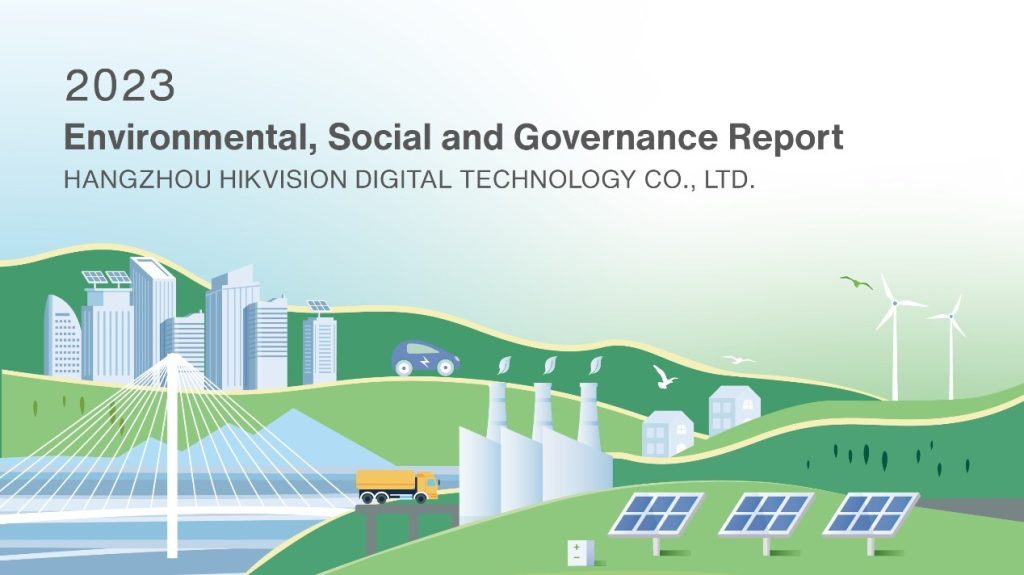
HANGZHOU: Hikvision has published its ‘2023 Environmental, Social and Governance (ESG) Report’, disclosing its ESG practices and performance for the sixth consecutive year. The report offers a comprehensive look at Hikvision’s focus on sustainability and its ESG priorities and actions, reaffirming the company’s commitment to fulfilling corporate social responsibility with innovative and sustainable technologies. “Practicing the ethos of ‘Tech for Good’, adhering to pragmatism, and exploring ‘green’ transformation, Hikvision leverages our products to deliver the value of sustainable development,” said its Chief Compliance Officer and Senior Vice President, Huang Fanghong. “We firmly believe that together with the momentum of digital transformation and technological advancements, we will attain stable and sustainable growth,” he added. With the belief that technologies play a pivotal role in promoting overall well-being, Hikvision has formulated an ESG management framework with ‘Tech for Good’ as its core. Leveraging cutting-edge technologies, Hikvision endeavored to protect historical relics, prevent water and air pollution, as well as enhance efficiency and productivity in manufacturing. Moreover, the company has contributed to providing more educational resources for children in remote areas, ensuring abundant apple harvests, and safeguarding wildlife, fulfilling its part to further the aspiration to build a better world. Apart from giving back to the society with innovative technologies, Hikvision places great emphasis on integrity and compliance, low-carbon development, and harmonious relationships with employees, partners, and communities, integrating these principles into its ESG management framework. Some highlights during the reporting period include: The company released the Hikvision Global Human Rights Policy, embedding the respect for human rights in the company’s governance and operations. Hikvision formulated and introduced the Management Procedure for Greenhouse Gas Emissions, aiming to reduce greenhouse gas (GHG) emissions and promote low-carbon operations. Hikvision further integrated eco-friendly principles into the process of product R&D, design, packaging and utilisation. By acquiring carbon footprint verifications of representative products, the company evaluated the GHG emissions throughout those products’ life cycles for continuous improvement. While promoting energy savings, Hikvision also proactively advanced the procurement of green power. In 2023, around 12,533.7 MWh of power was generated by photovoltaic (PV) systems deployed in the company’s manufacturing bases. Hikvision continued to drive sustainable development through innovation, winning 1,884 invention patents in 2023. The R&D investment of the company reached C¥11.39 billion (RM7.42 billion), up 16.08% year-over-year. Adhering to responsible procurement, Hikvision continuously enhanced supplier management. 100% of the new suppliers of the company were screened using the environmental and social criteria. Hikvision provided its employees with a series of trainings to support their personal and professional development, with total training time reaching 1,534,482 hours. Hikvision employees engaged actively in volunteer activities, collectively dedicating over 20,000 service hours.

Energy & Technology, News

Building on AI Ecosystem in Malaysia Ensures Economic Growth

KUALA LUMPUR: Economist Geoffrey Williams believes that the call by Prime Minister Datuk Seri Anwar Ibrahim to hasten the pace in building an artificial intelligence (AI) nexus is timely as any work towards this in Malaysia is currently minimal or non-existent. Williams said that such an ecosystem is vital to ensure that Malaysia cultivates an ample AI workforce and effectively stimulates economic growth in the future. He reckons that any research from Malaysia on developing AI applications is likely to be very small. He said while there was an announcement that the government would look into establishing the first AI polytechnic in the country, most universities in the country do not yet have AI as part of their programmes and research, except perhaps in specific modules in their information technology (IT) departments. “There are only ad hoc activities in AI at a relatively low level or early stage being carried out in Malaysia’s universities. There is very little research or teaching and no significant attempt to look at the potential economic impact,” he explained. Having this in mind, he suggested that local universities start adopting AI by prioritising among academicians while at the same time taking time to integrate AI into universities’ curricula, which would help build the much-needed ecosystem for such technology to succeed. However, Williams noted that academics have simply not begun this process due to many reasons. Some of the most important to include are regulations that slow down the creation of new programmes and a lack of awareness and training in AI among academics. He also stressed that the government must conduct thorough research to create policies to deal with the impact of AI so that people can thoroughly benefit from it. Besides making the call to hasten the pace for an AI nexus in the country, Anwar launched the AI Talent Roadmap 2024-2030 and the Faculty of AI and the Malaysian AI Consortium (MAIC). He said the governance of the AI ecosystem must be systematic and have professional and skilled talents with AI working with multinational corporations (MNCs) and the MAIC pursuing the growth of AI. — BERNAMA

Scroll to Top

Subscribe
FREE Newsletter