Author name: admin

Investment & Market Trends

AmBank Grants RM300 million Financing Facilities To Uzma

KUALA LUMPUR: AmBank Group has granted RM300 million in financing facilities to Uzma Engineering Sdn Bhd (UESB), a wholly owned subsidiary of Uzma Bhd, a leading energy and technology solutions provider. The financing supports key contracts awarded by Petronas Carigali Sdn Bhd (PCSB), the oil and gas exploration and production subsidiary of Petroliam Nasional Bhd (Petronas). These include the provision of hydraulic workover and plug and abandonment operations(Package A: 340K HWU Rig and Package B: 460K HWU Rig), awarded in May 2023. The financing also supports contract extension for the leasing, operation, and maintenance of the water injection facility for PCSB awarded in October 2022. “We are very pleased to be supporting Uzma, a key service provider to PCSB and Petronas in their climate change transition towards generating sustainable energy which strategically aligns with the National Energy Transition Roadmap. “This strategic collaboration is aimed at supporting essential operating expenditures for contracts that drive efficiency and innovation in our national oil and gas sector and align with our shared vision for a more sustainable future. “Responsible financing is pivotal in fostering sustainable operations across industries, and this initiative exemplifies our commitment to being at the forefront of environmental stewardship while supporting economic growth,” AmBank Group chief executive officer Jamie Ling said in a statement. Uzma stands at the forefront as a key beneficiary of Petronas Activity Outlook 2024-26 report. With anticipated increased upstream activities by Petronas, the outlook remains positive for upstream service providers like Uzma. Uzma has also positioned itself as a competitive solutions provider, leveraging ongoing energy transition efforts to drive sustainable growth. AmBank Group managing director of business banking Christopher Yap said in alignment with AmBank’s dedication to promoting sustainable practices, this financing arrangement with UESB is a testament to the bank’s proactive approach to supporting its clients through responsible banking practices. “By backing UESB’s endeavours to enhance operational efficiencies and reduce environmental impact within the oil and gas sector, we are not just investing in the future of business, but also in the future of our planet. “This initiative underscores our belief in the power of partnership and innovation to drive meaningful progress towards sustainability goals. “We are excited to play a pivotal role in facilitating these critical advancements, demonstrating our ongoing commitment to contributing positively to our community and the environment,” he said. Uzma group chief executive officer Datuk Kamarul Redzuan Muhamed said this financing agreement underscores AmBank’s confidence in Uzma’s capabilities and strategic position in the industry. “Dedicated to advancing the energy landscape, Uzma values AmBank Group’s unwavering commitment to supporting the energy sector. “With this financing in place, we are poised to deliver on our promises, driving sustainable solutions with low-carbon footprint and contributing to the nation’s energy security,” he said. This financing facility from AmBank Group reflects a shared commitment to driving growth and innovation in the energy sector. Uzma looks forward to leveraging this support to strengthen further its position as a leading solutions provider in the industry.

News

UEM Sunrise Appoints Datuk Sri Azmar Talib As Director

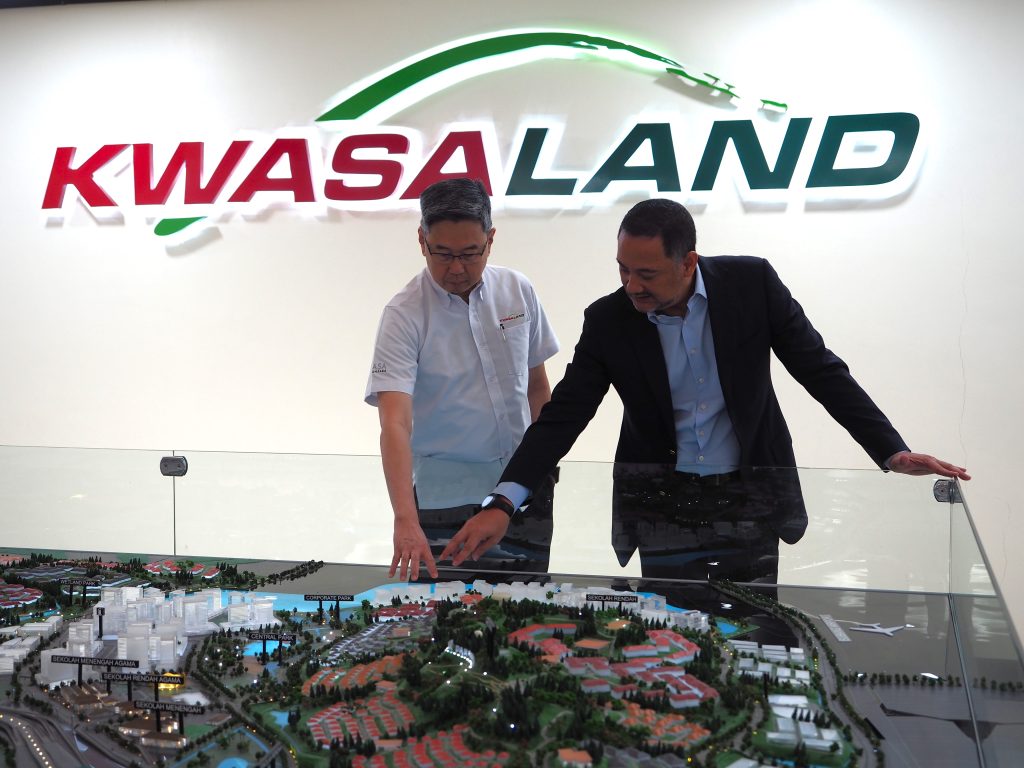
KUALA LUMPUR: Property player UEM Sunrise Bhd has appointed Datuk Sri Azmar Talib as independent non-executive director to its board. Azmar brings 40 years of experience in real estate, construction, banking, and project turnaround. His academic background includes a Bachelor of Science (Honours) in Estate Management from Universiti Teknologi MARA (UiTM) and Financial Risk Management from Harvard Business School. Additionally, he is a member of the Royal Institution of Surveyors Malaysia. He has held various leadership roles, including serving as the group chief executive officer of 7 companies within the Permodalan Nasional Bhd (PNB) group, throughout his 18 years with PNB. His accomplishments include leading the acquisition of public listed companies, turnaround and restructuring initiatives and developing multiple townships, with 9 major townships mostly in the Klang Valley area. Currently, he serves as the group chief executive officer of TRX City Sdn Bhd, overseeing the development of Tun Razak Exchange (TRX) and Bandar Malaysia. In a filing to Bursa Malaysia, UEM Sunrise said Azmar’s involvement in major projects, such as the new facilities for the Air Force, Army, and Police Air Wing under Bandar Malaysia, demonstrates his strategic vision and ability to drive successful outcomes. In addition to his professional roles, Azmar is actively involved in various industry organisations, including a member of Majlis Tindakan Ekonomi Negeri Melaka (MTENM), Tabung Haji Investment Panel and Majlis Agama Islam Melaka (MAIM). He is also the director of Lembaga Tabung Amanah Melaka (LTAM) and Straits of Melaka Waterfront Economic Zone (SM-WEZ). He also contributes to academia as a member of the industry advisory panel for real estate at the Faculty of Built Environment, Universiti Malaya. UEM Sunrise chairman Datuk Hisham Hamdan said the company looks forward to the invaluable insights and leadership that Azmar will bring to the board, further strengthening the company’s commitment to innovation in property development and the real estate industry.

Investment & Market Trends

IHH Healthcare Completes Timberland Medical Centre Acquisition In Sarawak

KUALA LUMPUR: IHH Healthcare Bhd subsidiary Pantai Holdings Sdn Bhd (PHSB) has completed its acquisition of the entity that owns Timberland Medical Centre and the earmarked vacant land in central Kuching for the construction of a 200-bed tertiary hospital for RM245 million on a cash-free debt-free basis. This acquisition allows PHSB to expand its range of quality healthcare offerings in East Malaysia. PHSB chief executive officer Jean-François Naa said as its patient numbers grow, the company recognise the need to enhance its capacity and reach to better serve them. “Timberland Medical Centre, with its 30-year legacy in Kuching and strong brand presence, is an ideal healthcare institution to fulfil this purpose. “With the acquisition of Timberland Medical Centre and expansion into Sarawak, we will be preparing for the future, while ensuring a quality healthcare experience for all our patients, here and now,” he said in a statement. Jean-François said that in the near future, PHSB intends to further scale up Timberland Medical Centre’s operations via a new 200-bed tertiary hospital to be constructed in central Kuching. This hospital will serve local needs and cater to the growing medical tourism market in Indonesia. “Our geographical proximity to Indonesia makes us an ideal healthcare destination, with direct and affordable flights available between our countries,” he said. Timberland Medical Centre currently offers a wide range of medical and surgical services including cardiology, nephrology, oncology, gastroenterology, general surgery, orthopaedic surgery, hepatology surgery, orthopaedic and urology. PHSN has been present in East Malaysia since 2015 with the establishment of Gleneagles Hospital Kota Kinabalu. It is one of the largest private healthcare providers in Malaysia, with a healthcare network of 11 Pantai Hospitals, four Gleneagles Hospitals, Prince Court Medical Centre and now, Timberland Medical Centre. Jean-François said this marks PHSB’s This is the company’s inaugural acquisition in Sarawak, and it is eager to harness the full potential of its healthcare network to further enhance its services and patient care here.

Energy & Technology

Rolls-Royce Supplies, Commissions Four MTU Kinetic PowerPacks To X-FAB Sarawak

KUALA LUMPUR: British multinational aerospace and defence company Rolls-Royce Holdings Plc has supplied and commissioned four of its mtu Kinetic PowerPacks to X-FAB Sarawak. X-FAB Sarawak is the Malaysian division of X-FAB Silicon Foundries, a leading foundry group for specialty semiconductor applications. The dynamic uninterruptible power supply (DUPS) units secure the critical power load for operations at the company’s manufacturing site in Kuching, Sarawak. mtu Kinetic PowerPacks are engineered to perform seamlessly under the most demanding power supply challenges. They provide immediate, high-quality power through the use of kinetic energy. The units eliminate the need for batteries as in a standard UPS configuration, offer a much smaller footprint, and are environmentally friendly due to their 20+ year equipment life and ability to run on sustainable fuels such as HVO. “Being secure in the knowledge that the power supply is reliable and of the highest quality, even during times of grid instability or interruption, is important for any business but is especially vital for a company such as X-FAB Sarawak, which has a consistent, high-level output of critical products and supports many employees and corporate functions,” Rolls-Royce Solutions Asia Pte Ltd project manager Bryan Foo said in a statement. The X-FAB site in Kuching manufactures semiconductor wafers for automotive, industrial, and medical applications. It has over 1,400 employees and a wide range of operations, such as finance and procurement. The four installed mtu Kinetic PowerPacks feature a medium voltage, parallel system configuration offering 2000 kVA (1600kW). They replace older, existing DUPS units from a different manufacturer that were experiencing ongoing issues with dropping critical load from the mains. In normal operation, when the public power supply is working, the mtu Kinetic PowerPacks use a choke – a heavy, rotating electromagnetic coil – to compensate for the power grid’s short-term current and voltage fluctuations. The Kinetic PowerPacks also come with an MTU ValueCare service agreement, which provides preventative maintenance at regular intervals and technical support to ensure maximum performance. Rolls-Royce Solutions Asia Pte Ltd project engineer Elvenrey Rios said the company’s project team upheld X-FAB’s strong safety culture, product quality and user-friendly equipment throughout the process. “The reliable critical load support provided by the current mtu Kinetic PowerPacks has also resulted in the customer engaging Rolls-Royce for an additional unit,” he said.

ESG

PNSB, IJM and LSH Collaborate To Transform Selangor’s Economy With Cohesive ESG Infrastructure Initiatives

KUALA LUMPUR: Permodalan Negeri Selangor Bhd (PNSB), IJM Corporation Bhd (IJM Corp) and Lim Seong Hai Capital Bhd (LSH) signed a strategic collaboration targeted at transforming the road transportation infrastructure in the southern districts of Selangor. Leveraging the combined strengths of PNSB, IJM Corp, and LSH, PNSB will take the lead in planning, land management and project oversight, showcasing its commitment to Selangor’s strategic ambitions, while LSH and IJM Corp’s industry expertise will ensure effective execution and delivery. This initiative is focused on the Southern Selangor Integrated Regional Development (IDRISS). IDRISS aims to harness the economic potential of the Sepang and Kuala Langat districts and is expected to significantly contribute to Selangor’s development as a key hub for regional trade and investment. Development projects within IDRISS cover a wide range of sectors, including industrial, logistics, warehousing, ports, commerce, housing, tourism and education. PNSB chief executive officer Raja Ahmad Shahrir Iskandar Raja Salim said this partnership underscores the agency’s commitment to harnessing the economic potential of Southern Selangor. “Leveraging PNSB’s extensive experience and deep understanding of the state’s local development needs, alongside the collective strengths of LSH and IJM Corp, we aim to create a robust infrastructure that supports our long-term vision for the region’s growth and development while incorporating sustainable elements within an environmental, social and governance (ESG) framework,” he said in a statement. An intent to collaborate agreement was signed between the three parties, signifying a unified commitment to this vision. The collaboration will study various viable connectivity routes and plans to introduce key transportation links. These efforts aim to improve connectivity, reduce travel time and create new development corridors. The initiative seeks to invigorate local economies by bolstering Selangor’s logistics and transport efficiency and providing better access to markets, services, and employment opportunities. In addition to immediate infrastructure enhancements, the projects will incorporate nature-positive infrastructure, including renewable energy, energy-efficient designs, sponge city planning model for flood mitigation and rehabilitation of mangrove forests, supporting Southern Selangor’s sustainable development. IJM Corp group chief executive officer and managing director Lee Chun Fai said the company’s involvement in this initiative draws upon its core expertise in construction and infrastructure development to support Selangor’s growth. “We aim to meet the state’s immediate and future infrastructure needs, ensuring long-term benefits. “Our approach is pragmatic, focused on the well-being of the community and sustainable regional development,” he said. LSH non-executive chairman Tan Sri Lim Keng Cheng said the company is excited to join forces with PNSB and IJM Corp on this strategic venture. “Our combined expertise in capital management and infrastructure development will ensure the successful realisation of the IDRISS initiative. “This collaboration aims to elevate Selangor’s transportation infrastructure, becoming the backbone of the region’s economic growth,” he said. This collaboration also represents a crucial step toward improving infrastructure connectivity and enhancing the economic landscape of Selangor’s southern districts. It seeks to create a vibrant ecosystem conducive to business and investment, signalling a brighter outlook for the state.

ESG

Nestlé Malaysia Starts New biomass Boiler For Its Industrial Complex In Chembong

KUALA LUMPUR: Nestlé Malaysia Bhd is further reducing its carbon footprint with the operation of its new biomass boiler at its Chembong factory in Rembau, Negeri Sembilan, reflecting the company’s strong environmental, social and governance (ESG) commitment. The biomass boiler started operations at the Chembong factory at the end of 2023 and uses oil palm empty fruit bunches (EFB) and palm kernel shells as renewable energy sources. It replaces fossil fuels to generate steam for heating processes in its manufacturing operations. This approach is part of a natural carbon cycle and does not contribute to long-term carbon emissions, making it carbon neutral. This innovative solution significantly reduces net CO2 emissions compared to fossil fuels, and it also aids in the reduction of other greenhouse gases. It is projected to significantly decrease the factory’s greenhouse gas emissions by 14,000 tonnes of CO2e annually while simultaneously minimising pollution, reducing landfill waste, and preserving valuable natural resources. Costing RM18 million to install, the biomass boiler was developed and installed by technology partner Enco Systems Sdn Bhd, a total boiler solutions provider. Officiating the biomass boiler at the factory, Negeri Sembilan chief minister Datuk Seri Utama Aminuddin Harun said driving meaningful change and sustainable development requires a collective effort, with the public and private sectors playing a role. “As such, I laud forward-thinking companies such as Nestlé Malaysia that are going the extra mile to champion sustainability in their business by taking proactive measures to minimise their carbon footprint. “This aligns with the state government’s shared values of environmental stewardship and responsible economic growth,” he said. Established in 1993 and expanded in 2019 to meet growing local and regional demand, the Chembong factory is Nestlé Malaysia’s largest Milo plant in the world. Over the past three decades, the factory has given rise to job creation, economic opportunities and community engagement. With a fully Malaysian manufacturing workforce, it is also an important production centre for other key brands such as Kit Kat, Nestlé Ice Cream and Koko Krunch. All products are halal-certified and made in Malaysia for local and global consumption, exporting to more than 20 countries worldwide. Nestlé Malaysia chief executive officer Juan Aranols said the company celebrates a 30-year journey of its Chembong factory with the official launch of this important sustainability investment. “This initiative enables us to make significant progress towards our environmental goals, namely the reduction of our carbon footprint as a responsible manufacturer and also allows us to impact the Chembong community and honour our environmental commitment positively. “It also serves as a testament to our dedication to producing high-quality products made in Malaysia by Malaysians,” he said. Aranols said that Milo is taking further strides towards a more sustainable future by adopting a biomass boiler and using renewable electricity. “Milo’s colour is green, and we are making Milo even greener for the planet and all Malaysians, with the adoption of cleaner technologies that complement further the move to renewable electricity implemented in 2022,” Aranols said

Energy & Technology

SMTrack, Straits Millennium Collaborate To Digitise Malaysia’s Rural Communities

KUALA LUMPUR: SMTrack Bhd has established a partnership with Straits Millennium Sdn Bhd (SMSB), a facility management service provider for digital economy initiatives for rural communities in Malaysia This partnership signifies the beginning of a collaborative effort to transform rural community centres in Malaysia by implementing digital economy initiatives as part of the Smart Village Program. Both companies will form a special purpose vehicle (SPV) to tender for projects under the Smart Village Program project. The investment reflects both parties’ commitment to this venture, with SMTrack holding a 60 per cent stake and SMSB holding 40 per cent. SMSB operates in the support services sector, which comprises construction, facility management, information and technology (IT) infrastructure, energy, oil and gas, marine, and general trading. SMTrack deputy executive chairman Datuk Azmi Osman said the joint venture between SMTrack and SMSB is a strategic move to leverage the company’s combined technology and facility management strengths. “Our goal is to ensure that the rural communities of Malaysia can enjoy the benefits of the digital economy, thus bridging the urban-rural divide,” he said in a statement. This collaboration aligns with the government’s initiative, Dasar Pembangunan Luar Bandar 2030 (DPLB), launched in June 2019. DPLB aims to prepare rural communities for local and global challenges and, more importantly, accelerate transformation in rural Malaysia by 2030. The Smart Village Projects aims to provide rural communities with high-speed internet access and digital technologies, enhancing education, healthcare, and economic opportunities through digital marketplaces and smart farming. SMTrack’s non-independent non-executive director Datuk Zaidi Hashim said this venture is a significant step forward for SMTrack and a testament to the immense potential of digitising rural Malaysia. “By empowering these communities with digital tools and infrastructure, we are not only enhancing their quality of life but also unlocking new economic prospects for the nation,” he said. As agreed by both parties, the formation of the SPV underscores their dedication to the successful execution and management of the project. With a strategic allocation of resources and expertise, this joint venture is poised to significantly contribute to the digital empowerment of Malaysia’s rural community centres, paving the way for a brighter, more connected future. SMSB chief strategy officer Norresah Abu Samah said the company’s collaboration is a testament to its shared vision of empowering rural communities through innovative digital solutions. “Together, we are set to make a tangible difference in the lives of Malaysia’s rural population,” she said.

Investment & Market Trends

Varia Inks MoU With Sungai Klang Link For 52.5km Elevated Highway Project

KUALA LUMPUR: Construction and property player Varia Bhd signed a memorandum of understanding (MoU) with Sungai Klang Link Sdn Bhd (SKL) for an elevated highway project. This venture represents a strategic partnership aimed at harnessing Varia’s extensive construction expertise in the design, construction, operation, and management of this pivotal infrastructure development in the Klang Valley. Varia managing director Datuk Benson Lau said this collaboration is a testament to the company’s commitment to enhancing Malaysia’s urban infrastructure and an opportunity to set new benchmarks in construction and design excellence. “By combining our rich expertise in innovative construction solutions with our dedication to sustainable development, we are poised to deliver a project that will significantly ease traffic flow, improve connectivity, and contribute to the economic growth of the Klang Valley. “We look forward to the positive changes this project will bring to the community and the environment,” he said in a statement. SKL, a special-purpose vehicle company, has been actively engaged since 2019 in securing a concession agreement from the government for the right to build, manage, own, and operate the Sungai Klang Link elevated highway. The highway, spanning approximately 52.5 kilometres along the Klang River, will integrate with existing highway networks through 7 interchanges, providing an essential alternative route for road users in the region. The project has garnered substantial support from various government departments and local authorities and is now at an advanced stage of securing final approval from the government. Varia, with its comprehensive portfolio of construction works and history of undertaking design and build projects, is uniquely positioned to contribute significantly to this venture. SKL managing director Datuk Mohd Nazri  Ismail, this partnership aligns with the company’s goal of improving the transportation network in the Klang Valley by offering an additional route to ease traffic congestion. “Varia’s experience in managing significant infrastructure projects gives us confidence in the successful execution of this elevated highway. “We anticipate this project will contribute positively to the urban infrastructure, supporting more efficient transportation options. “Our combined efforts aim to address the current challenges in urban mobility and serve as a practical addition to the region’s infrastructure,” he said. As of March 8, 2024, Varia’s share price was RM0.89, with a market capitalisation of RM371.1 million, while the company’s orderbook remained strong at RM1.1 billion.

The Executives

Solar Panel Manufacturers Upbeat On Rosy Demand For Green Energy

KUALA LUMPUR: Malaysia is set to register a rosy 9 per cent compound annual growth (CAGR) rate in the local solar energy market within the next five years. International market survey company Mordor Intelligence for the 2024-2029 forecast period noted that the Covid-19 pandemic had slightly affected the solar photovoltaics (PV) installations in the country due to lockdown restrictions, supply chain disruptions, disruption on the solar PV production, and project implementation delays. However, the market has now reached pre-pandemic levels, according to its findings. Factors propelling this robust growth include the increasing investments in the renewable energy sector and the country’s efforts to shift from fossil fuel-based power generation, which are expected to drive the market during this forecast period. However, high initial investment costs associated with solar projects are expected to hinder market growth during the study period. Nevertheless, Malaysia aims to install 9 gigawatts (GW) of solar energy capacity by 2050. According to the report, the country’s ambitious solar energy targets and business models, such as solar leasing, are expected to create many opportunities in the near future. Malaysia is increasing its usage of renewable energy in tandem with the acceleration of climate change. With the government’s efforts to encourage solar installations, the residential solar industry has shown a positive trend, and more homeowners are using solar systems. This shows that the country is on the right track to achieve the renewable energy installed capacity target of 70 per cent by 2050. This also means local players in the solar energy market are raring to use their strength to accrue the benefits of this gravy train. One such home-grown player, Verdant Solar Sdn Bhd (VSSB), envisions a Malaysia that is entirely reliant on solar energy. Since its founding in 2013, VSSB has been active in the renewable energy industry and is committed to providing high-quality solar energy services to Malaysian homes. Chief executive officer Zeth Lim told The Exchange Asia that the the future of solar panel usage in the country is promising. According to the National Energy Transition Roadmap (NETR), Malaysia aims to achieve 70 per cent renewable energy by 2050. “I believe we are on track. Solar PV remains the most encouraging segment of the National Renewable Energy landscape, showing significant growth from 4.2 GW in 2023 to a projected 56 GW in 2050. Malaysia’s CAGR for installed capacity stands at an impressive 48 per cent, expanding from 0.1GW to 2.6GW. “Moving forward, we anticipate a shift towards systems combining solar panels with battery storage. As the prices of both panels and battery storage continue to decrease, we expect to see an increasing trend in the installation of battery energy storage systems (BESS) over the next 3-5 years,” he said. Asked about the sentiments of commercial and industrial premises gravitating towards using solar energy, he said the high take-up rate for solar energy among these promises is primarily due to the favourable payback period. “Businesses are keen on investing because they anticipate recouping their initial costs within a relatively short timeframe. “Additionally, the availability of incentives for green investments further drives interest, potentially reducing the payback period to less than three years. “Another contributing factor is the attractiveness of solar system investors’ power purchase agreements (PPAs). These agreements provide appealing terms for purchasing solar energy, making it a financially viable option for businesses,” he said. Lim also pointed out that banks’ willingness to offer low-interest loans specifically tailored for industrial buildings looking to install solar systems plays a significant role. Access to affordable financing makes the transition to solar energy more feasible and attractive for businesses in this sector. “The government is supporting the industry through various initiatives, such as net energy metering (NEM) Rakyat and Nova Extension, which incentivize the adoption of renewable energy among the public and businesses. Alongside this, a framework for third-party access (TPA) and cross-border renewable energy (RE) Trading Platform will be established to facilitate renewable energy trading across borders. “Additionally, the government is providing financial support and incentives for renewable energy projects through various financing mechanisms and encouraging corporate commitments to carbon trading and Renewable Energy Certificates (REC) through platforms like the Bursa Carbon Exchange (BCX),” Lim said. Asked what it would take to reach the projected 56 GW in 2050, he said approximately 57GW of solar PV capacity must be installed to reach this goal. “This translates to a potential market worth around RM 142 billion by 2050. In terms of milestones, the government anticipates installing 7GW (approximately RM17.5 billion) by 2030 and 27GW (approximately RM 67.5 billion) by 2040,” he said. To another question on the government’s efforts to beef up the industry, he said, “First, government support. The government is working on policies encouraging banks to offer low-interest loans for solar panel installation, making it more affordable for Malaysians. “Investments in solar infrastructure, such as grid improvements announced in the NETR, also indicate the government’s commitment to enhancing solar infrastructure, which can facilitate the adoption of solar panels. “Moreover, Malaysia’s abundant solar resources further bolster the feasibility of adopting solar energy solutions amongst the Malaysian community. By embracing solar energy, Malaysians can bolster energy security and advance sustainability goals by reducing dependence on fossil fuels. “Lastly, there are ongoing public education and corporate social responsibility (CSR) efforts to raise awareness and foster expertise in the solar industry. At VSSB, we consistently utilise our social media platforms to advocate for the adoption of solar energy, contributing to the broader goal of widespread residential adoption of solar panels,” Lim said. He said his company is currently serving anchor clients like  Petronas, Daikin, Bandar Utama, Dutch Lady, 99 Speedmart, and Mavisco – while it doubled its previous record set in 2022 as the largest residential solar provider in the country in a year. According to him, in 2023, VSSB installed residential solar energy systems in over 1,300 homes across Malaysia, earning recognition through the Malaysian Book of Records. This brings the company’s current total of served landed properties and

Investment & Market Trends

Unitrade Declares Dividend Of 0.44 Sen For Shareholders, Boosting Investor Returns

KUALA LUMPUR: Unitrade Industries Bhd (UIB) has declared a first interim single-tier dividend of 0.44 sen per share for the financial year ending March 31, 2024 (FY24). This translates to a dividend payout of RM6.9 million. Managing director Nomis Sim Siang Leng said the dividend declared reflects the company’s commitment to shareholder value creation and serves as a token of appreciation for their continued confidence in UIB. “It also aligns with our dividend policy to distribute up to 30 per cent of our net profit while prioritising a balanced approach that ensures both shareholder rewards and sufficient capital for future growth initiatives,” he said in a statement. UIB reported an 11.2 per cent year-on-year (YoY) revenue growth of RM1.14 billion, driven by the wholesale and distribution segment. Net profit for the period stood at RM23.1 million. UIB maintains a consistent record of rewarding shareholders. The company distributed dividends of 0.82 sen per share and 0.30 sen per share for FY22 and FY23, respectively, a 30 per cent dividend payout for both financial years.

Scroll to Top

Subscribe
FREE Newsletter