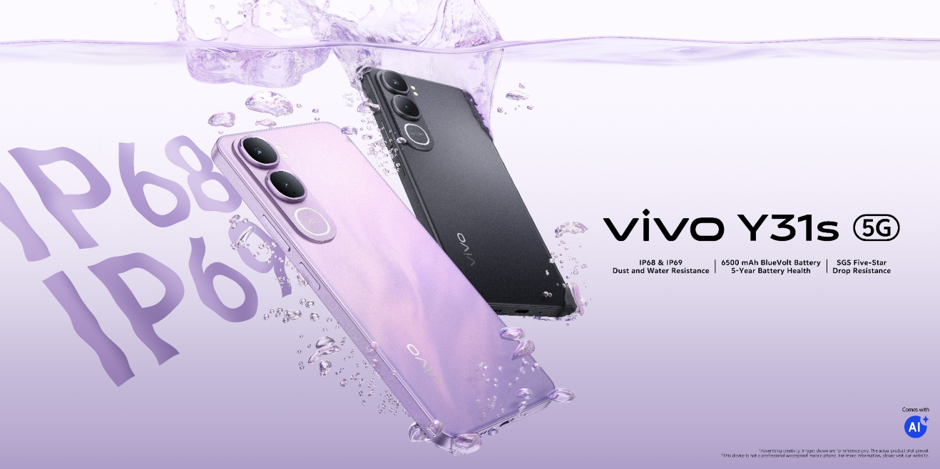
vivo today announced the launch of the new vivo Y31s 5G in Singapore. Designed to deliver a premium smartphone experience without compromise, the Y31s 5G offers a clearer display, stronger durability and a more reliable battery, making it a well-rounded 5G smartphone for everyday use. Featuring an upgraded 32MP HD front camera, a vibrant FHD display, a 6500mAh BlueVolt battery, enhanced durability and the latest OriginOS 6, the Y31s 5G delivers dependable performance for work, entertainment and staying connected throughout the day. In conjunction with the launch, vivo is also offering special promotional prices with savings of up to S$100 off the vivo X300 and S$50 off the X300 FE throughout July, giving customers more options across different smartphone categories. A Clearer Display and Enhanced Imaging for Everyday Moments The vivo Y31s 5G delivers an upgraded visual experience with a 90Hz High-Brightness FHD Dotch Display, offering sharper details and smoother scrolling for streaming, gaming and browsing. The Full HD display provides greater clarity while maintaining comfortable viewing both indoors and outdoors. Complementing the display is a significant camera upgrade, featuring a 32MP HD front camera, a substantial improvement over the previous generation’s 8MP selfie camera. Whether taking selfies, joining video calls or creating social content, users can capture clearer portraits with enhanced detail and natural-looking beauty effects. Together with the 50MP HD main camera, the Y31s 5G enables users to capture everyday moments with vivid colours and impressive clarity. The device also supports underwater photography, allowing users to capture memorable moments even in wet conditions with confidence. Long-Lasting Battery and Smooth Everyday Performance Powering the Y31s 5G is a 6500mAh BlueVolt Battery, providing dependable all-day performance for communication, entertainment and productivity. Combined with 44W FlashCharge, users can quickly recharge and spend less time waiting for their device to power up. Reverse charging is also available, enabling it to power compatible devices when needed. To ensure long-term reliability, the battery is engineered with 5-Year Battery Health, helping maintain stable battery performance even after years of everyday use. Beyond its long-lasting battery life, the Y31s 5G is designed to deliver a consistently smooth everyday experience. Under the hood, the Y31s 5G is powered by the Snapdragon® 4 Gen 2 Mobile Platform, built on an advanced 4nm process that delivers improved power efficiency and responsive everyday performance. Paired with up to 6GB Extended RAM, 256GB of storage, and the latest OriginOS 6 system, users can enjoy faster app launches, smoother multitasking and a more intuitive smartphone experience. These optimisations also contribute to the device’s 50-Month Smooth Experience, ensuring reliable performance over time. For entertainment, the Y31s 5G is equipped with dual stereo speakers with up to 400% volume, delivering louder, richer audio for videos, music and games. Built for Strong Durability Without Compromising Style Designed for worry-free everyday use, the Y31s 5G combines a sleek, lightweight design with enhanced durability. Measuring just 8.39mm thin and weighing approximately 209g, the smartphone offers a comfortable in-hand feel without compromising on strength. The device features IP69-rated dust and water resistance, offering reliable protection against rain, splashes and other everyday challenges. It is also certified with SGS Five-Star Drop Resistance, helping minimise the risk of damage from accidental drops. Whether commuting, travelling or enjoying outdoor activities, users can enjoy greater peace of mind knowing their smartphone is built to withstand everyday wear and tear. Bringing together stylish design, dependable durability and reliable everyday performance, the vivo Y31s 5G is built to keep up with users throughout the day. Available in Glowing Black and Midnight KL Purple, it offers a balanced combination of imaging, battery life and smooth performance, making it a dependable companion for work, entertainment and everyday life. Availability The vivo Y31s 5G is now available in Singapore. Customers can visit the vivo Experience & Service Store at 313@somerset or order via Shopee, Lazada, TikTok and authorised retailers. vivo Y31s 5G 6GB + 256GB – S$399 Colours: Glowing Black, Midnight KL Purple In addition to the launch of the Y31s 5G, a limited-time promotion is available on the vivo X300 Series throughout July: vivo X300 RRP: S$1,299 Promotional Price: S$1,199 (S$100 off) vivo X300 FE RRP: S$1,099 Promotional Price: S$1,049 (S$50 off)