Energy & Technology

Energy & Technology

ACO Tech, Geno Group And MARii Collaborate To Accelerate Malaysia’s EV Ecosystem

KUALA LUMPUR: Smart mobility provider ACO Tech Sdn Bhd (ATSB) has signed a memorandum of collaboration (MoC) with United Kingdom-based Geno Group Ltd and the Malaysia Automotive, Robotics & IoT Institute (MARii) to explore the use of blockchain solutions for Malaysia’s electric vehicle (EV) infrastructure. Among the blockchain solutions explored are smart contracts, digital traceability management of supply chain, tokenomics solutions and privacy protection technologies to complement ATSB’s solutions for e-mobility service platform (EMSP). This initiative can ensure data privacy and ownership, enable data monetisation, and ultimately benefit strategic investors through long-term sustainable investments. Present at the MoC signing were ATSB chief executive officer Li Pu, MARii chief executive officer Azrul Reza Aziz and Geno Group chief executive officer Zhang Yi Ian. Li Pu said the growth prospects of the mobility sector in Malaysia are positive, thanks to the government’s support and progressive national policies. “As a leading smart mobility solutions provider, ATSB is ready to share our knowledge and expertise and support all stakeholders in achieving national goals. “We are confident collaborations such as ours with MARii and Geno Group are the way forward in accelerating and expediting a comprehensive and conducive EV ecosystem for Malaysia, with an emphasis on security. “By addressing challenges and capitalising on opportunities, Malaysia can position itself as a leader in the EV revolution in Southeast Asia,” he said in a statement. The EMSP is the foundational layer of the government’s overarching connected mobility vision, which will help accelerate the development of EV infrastructure in the country. The collaborative expertise and capabilities of ATSB, Geno Group and MARii will effectively address concerns associated with owning an EV, such as the scarcity of charging ports and inconsistent charging rates. The utilisation of blockchain technology solutions empowers EV manufacturers, service providers, owners and users to engage more interactively through a tamper-proof decentralised ledger system. This approach aims to reduce costs, enhance user experience and confidence, and establish seamless tracking and maintenance records. Additionally, it facilitates peer-to-peer energy and charger-sharing, ensuring transparency throughout the entire lifecycle of products and services. This alliance is in line with the New Industrial Master Plan (NIMP) 2030 as well as the National Energy Transition Roadmap (NETR). The government aims to achieve 20 per cent of electrified vehicles (xEV) by 2030, 50 per cent by 2040 and 80 per cent by 2050. This agreement paves the way for the sector to become the first to leverage blockchain technology industry-wide in Malaysia. It will also assist the Government in realising the National Automotive Policy (NAP) 2020 by laying a solid foundation for the industry to be able to scale through the development of next-generation vehicles (NxGV), including EVs. It will also help create a national EV-ready infrastructure through Mobility as a Service (MaaS) and Blockchain as a Service (BaaS). Azrul Reza said MARii’s collaboration with ATSB, a joint venture between Proton Holdings Bhd, ECARX Holdings, Altel Communications Sdn Bhd, and Geno Group, marks a significant step forward in shaping the future of Malaysia’s EV ecosystem. “By exploring blockchain solutions, we are not only addressing current challenges in the EV sector but also laying the groundwork for a secure and scalable infrastructure aligned with the National Automotive Policy 2020. “By synergising our capabilities, we aspire to set new industry standards, promoting sustainable practices and user-centric innovations,” he said. Geno Group chief executive officer Zhang Yi Ian said this initiative signifies the first industrial-grade application of a blockchain solution. “The primary goal is to facilitate a transformative shift for participating enterprises towards a service-focused model. “This strategic move is aimed at enhancing engagement with end-user customers, enabling earlier, deeper, and more enduring interactions,” he said. ATSB, Geno Group, and MARii are committed to the active exploration of viable technologies towards the national connected mobility vision.  

Energy & Technology

Proton Sets New Sales Record In Brunei With X50 Taking The Lead

KUALA LUMPUR: National automaker Proton Holdings Bhd (Proton) is experiencing positive sales growth in Brunei, jumping 87 per cent with 789 Proton vehicles sold in 2023 from 422 units in 2022. In a statement, the automaker said the positive performance pushed the brand up to fifth overall in the sales table and garnered a market share of 5.4 per cent in Brunei, up one spot and an increase of 2.2 per cent over the previous year. Total industry volume (TIV) for the country closed at 14,640 units for 2023, up from 13,000 units for 2022. The Proton X50, the B-segment sports utility vehicle (SUV), leads sales for all Proton models in Brunei, with 476 units sold in 2023, making up approximately 60 per cent of total Proton vehicle sales and driving the model up to third overall in its market segment. To note, the Proton X50 has been the best-selling Proton X-series model since its introduction in October 2020. Over 100,000 units have rolled off the assembly line at Proton’s modern factory in Tanjong Malim, which is a testament to its popularity with customers both in Malaysia and overseas. Proton director of international sales division Steven Xu said the popularity of the Proton X50 in Brunei can be attributed to clear communications about its value, features, and brand equity. “Proton worked closely with our importers, PAD Motors, to promote the model’s competitive price and features over its rivals while offering finance packages to make ownership easier. “This was then bolstered by our on-ground activities to promote the Proton brand, which was assisted by the success of the X50 in Malaysia that helped build the confidence of Brunei customers,” he said. Other Proton models were also ranked in the top 10 of their respective segments in Brunei in 2023 due to their promotional and branding efforts. The Proton Persona and Proton Iriz were ranked sixth and eighth for B-segment cars, while the Proton X90 was ranked seventh for D-segment SUVs despite having been on sale for less than half a year. Using the success of 2023 as a platform, both Proton and PAD Motors are confident of achieving more than 1,000 units for Brunei in 2024. Key to achieving the goal is the introduction of the all-new Proton S70, which is due to occur before the end of February. The country is the first international market to receive the model, and 15 units were shipped there last month ahead of its official launch. “For 2024, Proton is confident of achieving more growth in Brunei. “With continued strong interest in the Proton X50 and other models, as well as the introduction of the Proton S70, we target breaking through the 1,000-unit barrier at the end of the year,” Xu said.

Energy & Technology

Minetech Resources Bags RM230mil Renewed Contract For Selinsing Gold Mine Project

KUALA LUMPUR: Minetech Resources Bhd’s (MRB) wholly-owned subsidiary, Minetech Construction Sdn Bhd (MCSB), has extended the contract with Able Return Sdn Bhd (ARSB) and Damar Consolidated Exploration Sdn Bhd (DCE) for waste removal, ore delivery, and associated works for the Selinsing gold mine project. This renewal extends the partnership for an additional 36 months, starting from January 1, 2024, to December 31, 2026, with a contract value of RM230.0 million. MRB executive chairman Abang Abdillah Izzarim said this contract with ARSB and DCE is a significant milestone for the company. “It not only reaffirms our leading position in the industry but also aligns with our strategic vision for growth and excellence. “We are committed to leveraging our expertise and capabilities to further contribute to the success of the Selinsing gold mine project, ensuring value creation for all stakeholders involved,” he said in a recent statement. MRB is a civil engineering specialist, bituminous products manufacturer and an emerging player in the solar energy space. To note, the Selinsing gold mine’s operations and the extended contract align with MRB’s commitment to environmental, social, and governance (ESG) principles. This alignment underscores the company’s dedication to sustainable mining practices, community engagement, and governance standards that not only ensure compliance but also aim to positively impact the surrounding environment. Nestled in Malaysia’s central gold belt, the Selinsing gold mine spans 150.3km, encompassing the Selinsing, Buffalo Reef, Felda Land, Peranggih, and Famehub properties, located 158km north of Kuala Lumpur. The mine boasts a gold processing plant and essential infrastructure, readily accessible from all properties. As of January 31, 2024, MRB’s share price closed at RM0.14, signifying a market capitalisation of RM258.7 million.

Energy & Technology

DPS Resources Partners Sunview To Develop Green Energy Projects

KUALA LUMPUR: Main market listed company DPS Resources Bhd’s (DRB) wholly-owned subsidiary, DPS Sunview Sdn Bhd (DSSB), recently signed a shareholders agreement with Sunview Asset Management Sdn Bhd (SAM). This collaboration entails the subscription of 199,900 ordinary shares in DSSB at RM1.00 each. Further, this move marks DRB’s entry into the green energy space, leveraging its track record in civil and structural work including infrastructure and earthwork and SAM’s expertise in solar photovoltaic (PV) systems, engineering, procurement, construction and commissioning (EPCC), mechanical and electrical (M&E) engineering. DRB executive chairman Tan Sri (Dr) Sow Chin Chuan said this partnership aligns strengths and expertise of the company. “With our wholly-owned subsidiary Shantawood’s Construction Industry Development Board (CIDB) G7 qualification and our proven track record in construction and civil engineering, coupled with SAM’s exceptional capabilities in solar PV systems, we believe this collaboration is strategic and highly synergistic,” he said in a recent statement. DRB is a key player in the construction, housing development, manufacturing and trading of home furniture. SAM is a wholly-owned subsidiary of ACE market-listed end-to-end solar photovoltaic system construction player Sunview Group Bhd (SGB). SGB is a leading expert in EPCC, solar PV construction, installation services, and power generation, which perfectly complements DRB’s construction prowess and commitment to sustainable development. A recent filing with Bursa Malaysia shows that upon completion of the agreement, DRB will hold 60 per cent and the balance will be by SAM in DSSB. With its extensive landbank of more than 1,000 acres, DRB provides a solid foundation for large-scale solar energy projects. “The synergistic alliance between DRB and SGB is poised to drive our financial growth and substantially impact environmental sustainability and social development,” Sow said. With a steadfast commitment to environmental, social, and governance (ESG) goals, this collaboration aligns with DRB’s broader initiative to champion clean energy, foster job opportunities, and reduce carbon footprint. In November 2023, DRB, through its wholly-owned subsidiary DPS Energy Sdn Bhd, signed a joint venture agreement (JVA) with Mutiara Mahajuta Sdn Bhd (MMSB) for a piece of land measuring 190.09 acres in Mukim of Bukit Apit II, Daerah Alor Gajah, Melaka. This collaboration involves a pioneering project encompassing agro-tourism, crops, bio-farms, renewable energy, solar farms, and aqua-phonics. This land, free from encumbrances and boasting an agriculture land use category, is poised to become a cornerstone of sustainable development in the region. The joint venture is a significant component of the DRB’s overarching strategy to enhance the value of its accumulated landbanks.

Energy & Technology

Samaiden Group, Solarvest Holdings Key Beneficiaries Of The Govt’s New BESS Pilot Project

KUALA LUMPUR: Samaiden Group Bhd and Solarvest Holdings Bhd stand to be the key beneficiaries in bagging the government’s battery energy storage system (BESS) pilot project that was recently announced. Hong Leong Investment Bank Bhd (HLIB Research) is conservatively estimating solar engineering, procurement, construction and commissioning (EPCC) opportunities of about RM7 billion from large-scale solar (LSS) competitive bidding program or LSS5 alone, and quota winners could be announced by the first half (1H) of 2025. “We like the sector riding on strong structural themes as well as a positive earnings growth cycle,” HLIB Research said in a recent note. To recap, Energy Transition and Public Utilities minister Datuk Sri Fadillah recently announced a cumulative 2.8 gigawatt (GW) of new renewable energy (RE) quotas and 400 megawatt hour (MWh) of BESS pilot project. After making the RE’s intentions clear in the National Energy Transition Roadmap (NETR), the slew of programmes announced form a tangible step in that direction. The key highlight was the comeback of LSS5 with a significantly upsized 2GW quota, HLIB Research noted. “Overall, we view the cumulative 2.8GW of new RE quotas through various programmes, as significantly uplifting for the sector and both stocks under coverage. “This sets in motion the government’s 2050 70 per cent RE share target as outlined in the NETR unveiled last year. “In our view, the key highlight was the comeback of the LSS5 with a significantly larger quota size of 2GW, which is about 2.4x larger than LSS4 awards. “While granular details were by and large missing, quota awards for LSS5 could come in 1H of 2025 with EPCC contracts to be formalised thereafter. “It is unclear if foreign participation limits will still be in place as it was with LSS4 considering the increased scale. “Nevertheless, we reckon with panel prices continuing to decline (US$11 per watt) bid tariffs could reach a new low,” HLIB Research said. The bank-backed research firm maintains an Overweight rating for the sector. “We like the sector riding on strong structural themes as well as a positive earnings growth cycle. “Both Solarvest and Samaiden are key winners from the slew of programmes announced. “Key catalysts include contract rollout, fresh RE quotas and export news flow while risks are execution and slow implementation,” HLIB Research noted.

Energy & Technology

Asia Pacific Sovereigns Outlook Shifted To Negative Due toTight Funding Conditions, Geopolitical Tensions

KUALA LUMPUR: The outlook for Asia Pacific (APAC) sovereigns has shifted to negative, given the anticipated slower regional growth and persistently tight funding conditions. According to a recent report by Moody’s Investor Service, this will impede governments in achieving deficit consolidation and debt reduction, leading to larger debt burdens and a notable decline in debt affordability due to higher interest rates. The agency said the interest rates are expected to stay elevated in APAC, with central banks likely having reached their peak policy rates, the decline in interest rates will be gradual. There is a possibility of occasional rate increases to mitigate unexpected inflationary pressures. Additionally, pressures on capital outflows and currencies in APAC, excluding China, may stabilise with the easing of monetary policy in the US, it said. Moody’s Investor Service further said  while growth is expected to decelerate in 2024, the region will still outperform most others. It said the slowdown in China’s growth trajectory is anticipated to have a spill-over effect through various channels like trade, commodity prices, and investment. “However, the impact will be mitigated by strong domestic demand in significant emerging markets, including Indonesia (Baa2 stable) and India (Baa3 stable),” Moody’s Investor Service report said. Moody’s Investor Service also noted that  geopolitics will persist as a prominent factor, with ongoing trade and technology competition between China and the US disrupting supply chains. “Amidst this disruption, economies with robust manufacturing bases and excellent infrastructure, such as Vietnam (Ba2 stable), Thailand (Baa1 stable), and Malaysia (A3 stable), may find opportunities. “Additionally, an escalation of military conflicts in the Middle East poses additional risks to supply chains,” it said. The agency said the proportion of stable outlooks in APAC across sectors has decreased from the previous year, indicating a less robust economic environment. In 2024, both non-financial companies and financial institutions in China are expected to grapple with challenging credit conditions, in contrast to their counterparts in the rest of APAC, which maintain a stable outlook. Non-financial companies heavily dependent on the high-yield market will continue to face heightened refinancing risks. Moving on, Moody’s Investor Service noted that the APAC region’s growth prospects face constraints due to China’s declining growth profile and a cyclical slowdown in the US, exacerbating challenges in deficit consolidation and debt reduction amid tight funding conditions and slow growth. Post-Covid, emerging and frontier economies like Pakistan and Sri Lanka experience increased debt burdens and reduced debt affordability due to higher interest rates. However, it said the easing policy rate tightening in the US may alleviate currency pressures for sovereigns across rating spectrums, although APAC currencies have weakened against the strong US dollar since 2022. Stabilisation in exchange rates could offer relief to holders of foreign currency debt. While some APAC governments have reduced exposure to foreign currency borrowings after Covid-19, certain frontier market sovereigns, including Sri Lanka, Laos, and Mongolia, maintain high levels of such debt. Nonetheless, countries like Cambodia, the Solomon Islands, and Bangladesh benefit from concessional terms on foreign currency-denominated debt, mitigating liquidity risks and currency mismatches. Mongolia has recently refinanced and decreased its exposure to maturing external financing obligations.

Energy & Technology

Harley-Davidson Inks Product Distribution Deal With Didi Resources

KUALA LUMPUR: American motorcycle manufacturer Harley-Davidson signed a motorcycle, parts and accessories, apparel and licensed products distribution agreement with Didi Resources Sdn Bhd (DRSB) for Malaysia, effective 1 January 2024. Under the agreement, DRSB will be the exclusive distributor of Harley-Davidson motorcycles and will provide after-sales service through a network of Harley-Davidson brand-exclusive dealers in Malaysia. DRSB will also be a non-exclusive distributor for Harley-Davidson parts, accessories, apparel and licensed products. Further, DRSB will deliver Harley-Davidson customer experience and its related programs like H.O.G. (Harley Owners Group) in the market. “Since 2008, Harley-Davidson has established itself and grown with Malaysia’s riding community, tapping into their passion for motorcycles and the open road. “With DRSB’s rich knowledge and experience in the Malaysian automotive market, we will work closely with them to continue to deliver the Harley-Davidson brand experience to our customers,” Harley-Davidson managing director, Asia, Emerging Markets and India Sajeev Rajasekharan said in a recent statement. DRSB chairman Rewi Hamid Bugo said the company looks forward to collaborating with the Harley-Davidson brand to bring the same spirit of adventure to Malaysia’s riding community. “We are honoured to play this important role and have put a larger local team in place to further strengthen the developments and programs that are aligned with Harley-Davidson, bringing greater value to customers,” he said. Customers can continue to experience the Harley-Davidson brand and purchase Harley-Davidson motorcycles and related products at their nearest Harley-Davidson-authorised dealerships.

Energy & Technology

MARC Partners Sarawak’s SEDC Energy For BETC 2024

KUALA LUMPUR: Malaysian Rating Corporation Bhd (MARC) recently collaborated with SEDC Energy, Sarawak’s new energy agency, for the Borneo Energy Transition Conference (BETC) 2024. Scheduled to take place in Kuching on February 26-27, this two-day conference will serve as a pivotal gathering, bringing together visionary thought leaders, change-makers, and industry experts to collectively explore ideas and catalyse decisive action towards shaping a sustainable energy landscape in the region. MARC group chief executive officer Datuk Jamaludin Nasir and SEDC Energy’s chief executive officer Robert Hardin paid a courtesy visit to Sarawak Premier Datuk Patinggi Tan Sri (Dr) Abang Abdul Rahman Zohari Tun Datuk Abang Haji Openg. This visit underscores the strategic importance of collaboration and its potential impact on the energy sector in the region. Present at the briefing were MARC’s chief commercial officer Badrul Hisham Zawawi and SEDC Energy’s corporate communications manager Dennis Harun Wong, which signifies the commitment of both organisations to the success of this conference. Reflecting on the collaboration, MARC group chief executive officer Datuk Jamaludin Nasir said this collaboration aligns with the agency’s  commitment to fostering innovation and sustainability in the energy sector. “SEDC Energy’s vision and dedication to driving positive change in the region resonate with MARC’s values. “Together, we aim to contribute to the development of a resilient and sustainable energy ecosystem,” he said in a recent statement. Robert expressed his optimism to have MARC as its strategic partner for this conference. “Their support will help build our reputation as a new energy player in the region, also putting Sarawak on the map. “So far, we have received an overwhelming response from sponsors and participants despite it being an exclusive by-invitation event.”This will be our first, but we want to make BETC our anchor event as we grow,” he said. The BETC 2024 promises to be a platform for engaging dialogue and collaboration, setting the stage for meaningful advancements in the energy landscape of the region.

Energy & Technology

Malaysia’s 70% Renewable Energy Goal Faces Dual Challenges

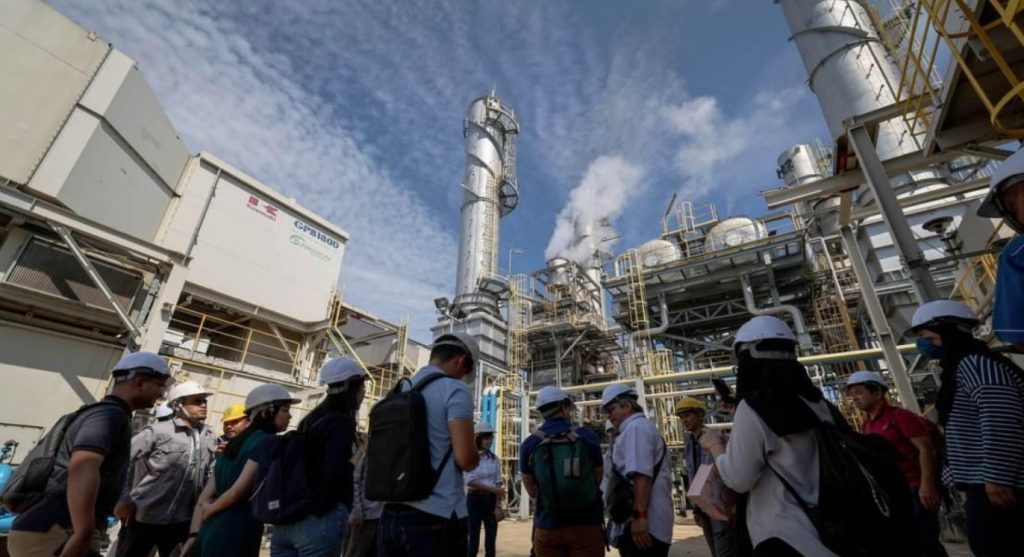
KUALA LUMPUR: Malaysia’s transition to low-carbon energy goals presents a dual challenge in delivering value and building the ecosystem to achieve the country’s ambition of 70 per cent renewable energy by 2050. Local think tank Datametrics Research and Information Centre Sdn Bhd (DARE) also noted that while Malaysia has exhibited a consistent capacity for growth in renewable energy sectors, improving energy efficiency and mitigating environmental concerns necessitates diversifying the sustainable energy mix. DARE published its latest report, entitled A Comparative Analysis of Renewable and Sustainable Energy Platforms in Malaysia, outlining a comparative thesis to advance Malaysia’s low-carbon goals. In identifying challenges and prospects in renewable and sustainable energy platforms, the report dives into various sources such as solar, wind, hydro, geothermal, biogas and biomass. It also scrutinises the synergistic potential of co-generation (Cogen) and waste heat recovery (WHR) systems, both pivotal for Malaysia’s ambition to secure 70 per cent renewable energy by 2050. Elaborating on Malaysia’s renewable energy developments, DARE managing director Pankaj Kumar emphasised the benefits observed in countries like Germany and Japan from adopting sustainable energy solutions such as Cogen and WHR. “Despite common challenges in renewables, Malaysia’s renewable energy sector has consistently demonstrated capacity for growth. However, industries involved in Malaysia’s renewable and sustainable energy sectors must remain agile. “Adapting to the ever-changing sustainable energy environment is crucial to maintaining our push towards net zero and ensure that the solutions we commit to are as practical as they are equitable and just,” he said in a statement. Key findings of the study also include the distinction between renewable and sustainable energy for effective energy investment decision-making, the role of carbon offsetting in enhancing Malaysia’s green initiatives like the National Energy Transition Roadmap (NETR), Malaysia Renewable Energy Roadmap (MyRER), and New Economic Policy (NEP) and Malaysia’s leadership in sustainable solutions and green innovative technologies in the ASEAN region. Pankaj said that while compiling data on the opportunities and benefits of renewable energy for adaptation and resilience in sustainable solutions, the think tank uncovered pressing challenges, such as energy storage. “These challenges could hinder achieving Malaysia’s energy targets if overlooked,” he said. Commenting on the impact of sustainable energy solutions, Pankaj said adopting sustainable technologies and a varied energy mix, climate adaptation, and resilience financing should not be seen as a burden but rather as an opportunity that yields financial benefits. “With Cogen, for example, it can reduce energy costs by about 40–60 per cent. “Industries and businesses, especially, need to assess the opportunities in terms of fiscal prudence, environmental dividends, and return on investment from green energy initiatives,” he said. Pankaj said it had been proven that this method is cost-effective and can reduce carbon emissions and energy costs. It serves as a power generation alternative that assists industrial and factory operations in mitigating the drawbacks of heat losses from their conventional systems, achieving up to 85 per cent efficiency compared to traditional methods, he said.  He pointed out that Safran, an aerospace company, has achieved savings of 168,000,000 kWh over ten years at its WHR facility in Sendayan, Seremban. This project, undertaken by Safran Group Malaysia’s subsidiary’s appointed solutions provider, Kinergy Advancement Bhd, highlights the practical benefits of sustainable technologies such as Cogen and WHR systems

Energy & Technology

Edotco Group ChargeSini Inks Partnership To Deploy EV Infrastructure

KUALA LUMPUR: Axiata Group Bhd’s subsidiary Edotco Group Sdn Bhd signed a collaborative agreement with ChargeSini, an innovative electric vehicle (EV) charging solutions provider, to deploy energy vehicle (EV) infrastructure in Malaysia. Edotco and ChargeSini aims to install EV charging stations at more than 200 potential in-building locations and poles nationwide, leveraging Edotco’s existing footprint in the next two years. Edotco Group director of Malaysia business Gayan Koralage said with over 13,000 electric vehicles already on Malaysian roads, the company is gearing up for an exponential increase to half a million by 2025. “This burgeoning demand underscores the need for comprehensive charging stations across the country. “Our infrastructures, readily available at strategic locations such as malls, airports, hospitals, universities, and roadside smart poles, seamlessly integrate with and bolster the growing EV ecosystem,” he said in a recent statement. This partnership also aligns with the national agenda outlined in the Low Carbon Mobility Blueprint 2021-2030, aiming to install 10,000 public EV charging stations by 2025. The strategic selection of the building locations in the initial phase is geared towards promoting sustainable urban mobility. Both Edotco and ChargeSini have set plans to grow by using Edotco’s smart poles in city centres all over the country. Both companies aim to not just add more charging stations but also make electric vehicle charging accessible to different markets. ChargeSini founder and chief executive officer James Goh said this partnership represents a synergistic fusion of Edotco’s extensive experience in telecommunications infrastructure and ChargeSini’s approach to EV charging technology. “Our joint efforts are not just about expanding infrastructure; they’re about accelerating the adoption of sustainable mobility in Malaysia. “We are committed to significantly advancing the EV landscape, aligning our endeavours with the nation’s vision for a greener, more sustainable future,” he said. Since its inception, Edotco has been steadfast in its commitment towards sustainability, demonstrating an unwavering dedication to environmental responsibility and community well-being. Based on data from Agmo DataHub, ChargeSini is currently ranked second in terms of EV plug count, having rolled out 599 charging ports in total.

Scroll to Top

Subscribe
FREE Newsletter