Energy & Technology

Energy & Technology

Pecca Inks Agreements With Global Component Asia To Elevate Aircraft Interior Standards

KUALA LUMPUR: Pecca Group Bhd’s (PGB) wholly-owned subsidiary Pecca Aviation Services Sdn Bhd (PASSB) has signed a distribution agreement and an agency agreement with Global Component Asia Sdn Bhd (GCA) in establishing a strategic partnership that will elevate the standard of aircraft interior maintenance, repair, and operations (MRO) in key global markets. The agreements build on PASSB and GCA’s memorandum of understanding (MoU) signed in May 2023, where both parties agreed to engage in joint marketing efforts to promote PGB’s aircraft seat cover solutions for global civil and defence markets. The partnership will see PASSB delivering aircraft interior solutions to GCA’s roster of prominent aviation customers which includes airlines and MRO players. PASSB and GCA will work together to serve key markets including Malaysia, France, the United States of America, the United Kingdom, and Indonesia. By strategically targeting these regions, GCA and Pecca Aviation aim to offer comprehensive aviation interior solutions to a diverse range of clients, enhancing the overall flying experience for passengers and optimising operational efficiency for airline operators. PGB executive director Teoh Zi Yi said the partnership with GCA will accelerate the global expansion of PASSB. “Our shared commitment to innovation and quality will enable us to deliver exceptional results for aviation players across Malaysia, France, the United States of America, the United Kingdom, and Indonesia,” he said in a statement. The signing ceremony was held at the Singapore Airshow 2024, witnessed by Malaysia’s Ministry of Defence deputy secretary general (policy) Mohd Yani Daud, the High Commissioner of Malaysia to Singapore Datuk Dr Azfar Mohamad Mustafar, and the National Aerospace Industry Corporation Malaysia (NAICO Malaysia) chief executive officer professor technologist Shamsul Kamar Abu Samah. GCA chairwoman Datuk Nonee Ashirin said this collaboration with PASSB represents a significant step forward in the company’s commitment to providing top-tier aviation solutions. “With their proven track record and expertise in the industry, we are confident that together, we will set new standards for aircraft interior excellence,” she said. Listed on Bursa Malaysia, PGB has been involved in the upholstery industry for over 25 years. The company is a one-stop centre for styling, manufacturing, distributing, and installing upholstery for seat covers and interior products for a global customer base, including Toyota and Nissan. In Malaysia, PGB is the largest leather upholstery supplier serving the automotive market. Shamsul Kamar said the partnership marks a pivotal moment for Malaysia’s aerospace industry and drive towards the objectives outlined in the Malaysia Aerospace Industry Blueprint 2030. “This momentous occasion signifies a significant leap forward for Malaysia’s aerospace industry and heralds a new era of collaboration, innovation, and prosperity,” he said.

Energy & Technology

Telekom Malaysia Registers Higher FY23 Profits, Sustaining Resilient Performance

KUALA LUMPUR: Telekom Malaysia Bhd (TM) posted a higher revenue of RM12.26 billion for the financial year ended December 31, 2023 (FY23) from RM12.1 billion posted in FY22, propelled by the strong performance of Unifi and TM Global. Specifically, Unifi’s fixed broadband subscriptions experienced a 3.1 per cent growth, reaching 3.13 million, while TM Global’s revenue grew from heightened demand for domestic and international data services. The group’s earnings before interest and tax (EBIT) remained flat at RM2.09 billion in FY23 due to higher operational costs. Meanwhile, the group’s net profit rose 63.6 per cent from RM1.14 billion to RM1.87 billion due to a lower net finance cost and tax impact. Capital expenditure (CAPEX) in FY23 stood at RM1.9 billion, or 15.9 per cent of its revenue. These investments aimed to expand the group’s network infrastructure nationwide and regional submarine cable system. TM declared a 2nd interim dividend and final dividend totalling 15.5 sen per share, amounting to approximately RM594.9 million, demonstrating its commitment to delivering shareholder value. TM group chief executive officer Amar Huzaimi Md Deris said TM has sustained its performance amidst challenging regulatory landscapes, heightened competition, and evolving market dynamics. “Our convergence solutions, paired with attractive packages, have continued to appeal to our customers, reinforcing our position as the only fixed-mobile convergence with quad-play in Malaysia. “The ongoing expansion of our nationwide fibre coverage and enhancing our data and network infrastructure have also contributed to our growth. “We remain committed to promoting digital inclusivity and wider digital adoption while addressing the evolving needs of our domestic and international customers,” said Amar in a statement. He said 2023 marked the completion of TM’s initial three-year transformation phase, during which the group further solidified its position in the local and global telecommunication landscape. “Advancing into the next level of our transformation journey, we are now focused on evolving into a Digital Powerhouse by 2030, while positioning Malaysia as a digital hub for the region. “Our commitment aligns with the nation’s aspiration of becoming a fully integrated digital society, ensuring that we continue to play a key role in the era of digital innovation,” Amar said. Unifi maintains its leadership in converged offerings of fixed broadband, mobile services, digital content and solutions for consumers and micro, small and medium enterprises (MSMEs), recording RM5.66 billion in revenue. Unifi’s fixed broadband segment grew 3.1 per cent to 3.13 million subscribers, driven by strategic convergence campaigns and aggressive customer retention efforts. As a preferred partner to more than 400,000 MSMEs nationwide, Unifi Business continues accelerating digital adoption by providing tailor-made solutions, offering them the tools and support needed to thrive in the digital economy. Looking ahead, Unifi will further cement its role as a leader in convergence to deliver unmatched converged digital services. TM One continues to navigate the market complexities while exploring new growth opportunities. Despite decreased revenue to RM3.14 billion in FY23, its fourth quarter (Q4) FY23 results showed an increase in revenue of 17.3 per cent compared to the third quarter (Q3) FY23, driven by a surge in solution-based customer projects. Moving forward, TM One is poised to remain at the forefront of supporting and enabling the digital infrastructure for government entities and enterprises. With a focus on innovation and strategic partnerships, TM One is set to play a significant role in Malaysia’s digital transformation journey. TM Global posted a solid financial performance in FY23, with revenue rising 8.7 per cent to RM3.10 billion, primarily from an increase in international data revenue, driven by managed wavelength services for hyperscalers, alongside an uptick in domestic data services. In the domestic landscape, TM Global continues to expand 5G backhaul sites and high-speed broadband (HSBB) access coverage in accelerating digital inclusivity nationwide. Globally, it recorded a year-on-year 30Tbps bandwidth growth and delivered a mega requirement of more than 35Tbps long-term leased connectivity for US-based hyperscaler. TM Global will continue to broaden its digital infrastructure solutions and forge strategic alliances with global carriers to position Malaysia as a digital hub for the region, facilitating seamless digital connectivity and services across borders.

Energy & Technology

Asia-Europe Sea-Air Hubs Record Strong Surge In Tonnages

KUALA LUMPUR: Several key Asia-Europe sea-air hubs have recorded a strong surge in tonnages in the last few weeks, as shippers continue to seek alternative logistics solutions due to the disruptions to container shipping caused by the attacks on ships in the Red Sea. According to a recent report by WorldACD Weekly Air Cargo Trends, freight sources have reported that some Asia-Europe sea-air hubs such as Dubai, Colombo and Bangkok have been inundated with air cargo in recent weeks, as cargo owners seek to replenish stocks in Europe that have run low because containerships that would normally transit via the Suez Canal have been forced make the longer voyage around the Cape of Good Hope. Recent in-depth analysis by WorldACD Market Data can confirm that air cargo tonnages to Europe from Dubai, Colombo and Bangkok have been at significantly elevated levels this year compared with the equivalent period last year. Analysis, based on the more than 450,000 weekly transactions covered by WorldACD’s data, reveals that in the first seven weeks of 2024, all three of those sea-air hubs have seen their respective flown tonnages to Europe rise by more than 50 per cent compared with the first seven weeks of 2023, with Dubai-Europe traffic up 71 per cent, Colombo-Europe tonnages up 61 per cent, and Bangkok-Europe volumes up 58 per cent, year-on-year (YoY). But despite some reports of elevated traffic volumes to Europe via Singapore and Doha, Singapore-Europe and Doha-Europe tonnages were up, YoY, by just 10 per cent and 3 per cent, respectively, in the first seven weeks of this year. “The later timing of the Lunar New Year (LNY) this year on February 10, compared with January 22 last year, makes precise and week-by-week comparisons difficult. “Still, across the first seven weeks, there is a clear pattern of elevated tonnages to Europe from Dubai, Colombo and Bangkok. “The patterns are less clear in pricing because of multiple variables at play, including LNY and the market-wide decline in pricing compared to last year,” the report noted. And it’s unclear currently whether the elevated demand for sea-air solutions will continue significantly beyond the LNY period, with ex-Asia Pacific normally associated with a spike in demand leading up to LNY followed by a subsequent fall in tonnages and prices, it said. Tonnages in week 7 (February 12 to 18) remained up, YoY, to Europe from Dubai, Colombo and Bangkok. Dubai-Europe gains have almost tripled in week 7 to 161 per cent YoY, while the previous three weeks stood at 89 per cent, 93 per cent and 77 per cent. Colombo-Europe volumes in week 7 were more than doubled to 112 per cent, the levels of week 7 in 2023, and Bangkok-Europe tonnages also remained highly elevated at 68 per cent. Meanwhile, the global picture shows the effects of the traditional seasonal decline in demand ex-Asia Pacific in the days following LNY, with a big decline in tonnages ex-Asia Pacific pushing down overall tonnages in week 7 by a further to 10 per cent, following a similar tonnage drop in week 6. “Looking at average global rates, we see a week-on-week (WoW) drop of 6 per cent in week 7 this year, compared to an 8 per cent WoW decline in the equivalent post-LNY week (week 4) last year, consistent with a broadly similar seasonal pattern. “Those average global yield declines can be explained as a ‘mix effect’, with reduced high-yielding volumes ex-Asia Pacific causing a drop in the global average, and not by individual rates decreasing,” the report said. Expanding the comparison period to two weeks, total combined tonnages for weeks 6 and 7 this year were down by 14 per cent, globally, compared with the preceding two weeks (2Wo2W), with average rates stable and capacity down by 4 per cent. The dominant effect of LNY on these figures can be seen in the 25 per cent drop in tonnages, 2Wo2W, from the origin region Asia Pacific. Even after that 25 per cent drop, 2Wo2W, those tonnages are still at almost the same level as in weeks 6 and 7 last year (1 per cent), despite LNY occurring almost three weeks later this year, pointing towards a structural improvement compared with last year. Meanwhile, tonnages from the Central and South America origin region were also down significantly by 27 per cent, 2Wo2W, but this was principally due to a spike in flower shipments from ex-Central and South America in previous weeks ahead of Valentine’s Day on 14 February. The only origin region in weeks 6 and 7 this year to record an increase in tonnages on a 2Wo2W basis was the Middle East and South Asia (2 per cent), mainly driven by a 6 per cent rise in Europe. And Middle East and South Asia were the only origin regions to show a significant rise (11 per cent) in average rates, 2Wo2W, with Middle East and South Asia to Europe the only major intercontinental lane to show a significant rise in average prices (18 per cent) – most likely a reflection of the surge in recent weeks of Asia Pacific to Europe traffic converted to sea-air, it said. The report further said YoY comparisons show a 1 per cent decrease in total worldwide tonnages for weeks 6 and 7, combined, compared with last year, despite LNY occurring almost three weeks later this year, again suggesting a structural improvement in demand levels compared with last year. With most origin regions showing a small to moderate YoY decline, the Middle East and South Asia were again the outliers, recording a YoY rise of 22 per cent – likely a further indication of the conversion of Asia Pacific to Europe ocean freight to sea-air volumes. On the pricing side, average worldwide rates of US$2.24 per kilo in week 7 are 16 per cent below their levels this time last year, with rates from ex-Europe and ex-North America down by 32 per cent and 21 per cent, respectively. Nevertheless, average global rates remain significantly

Energy & Technology

Global Aviation Biofuel Market To Reach US$51.23 Billion By 2028

KUALA LUMPUR: The global aviation biofuel market will reach US$51.23 billion by 2028 from $32.64 billion in 2022, with an expected compounded annual growth rate (CAGR) of 7.64 per cent. According to the Research and Markets report, the global aviation biofuel market is gaining significant attention as the aviation industry seeks to reduce its carbon footprint and mitigate the environmental impact of air travel. The report said several factors drive the market for aviation biofuel. Firstly, there is a growing awareness of the need to reduce greenhouse gas emissions in the aviation sector. Biofuels offer a way to achieve this goal by providing a more sustainable and environmentally friendly fuel option. Governments and regulatory bodies are also playing a crucial role in promoting the use of biofuels through incentives, mandates, and policies that encourage the adoption of sustainable aviation fuels. To note, the aviation biofuel, also known as sustainable aviation fuel (SAF), is derived from renewable sources such as biomass, cooking oil, algae, and other organic materials. It is considered a viable alternative to traditional jet fuel due to its lower carbon emissions and potential for reducing dependence on fossil fuels. Another factor driving the growth of the aviation biofuel market is the increasing demand for air travel. As the global population continues to grow and economies develop, the demand for air transportation is expected to rise. This, in turn, will lead to higher aviation fuel consumption. Biofuels offer a way to meet this growing demand while reducing the carbon emissions associated with air travel, the report noted. Further, technological advancements and research and development efforts are also contributing to the growth of the aviation biofuel market. Scientists and engineers are continuously working on improving the production processes, feedstock options, and overall efficiency of biofuels. This has led to developing advanced biofuel technologies that offer higher energy density, better performance, and compatibility with existing aircraft engines. However, the Research and Markets report noted that the aviation biofuel market still faces several challenges. One of the main challenges is the scalability of production. Scaling up biofuel production to meet the demands of the aviation industry requires significant investment in infrastructure, feedstock cultivation, and refining facilities. Additionally, biofuel costs are currently higher than traditional jet fuel, making it less economically viable for widespread adoption. “Despite these challenges, the global aviation biofuel market is expected to grow in the coming years. “The increasing focus on sustainability, coupled with government support and technological advancements, will drive the adoption of biofuels in the aviation industry,” the report noted. Continued research and development efforts and collaborations between industry stakeholders will be crucial in overcoming the challenges and realising the full potential of aviation biofuels in reducing carbon emissions and creating a more sustainable aviation sector, it said.

Energy & Technology

Maxis, Huawei Showcase First 5.5G Technology Trial In Malaysia, SEA

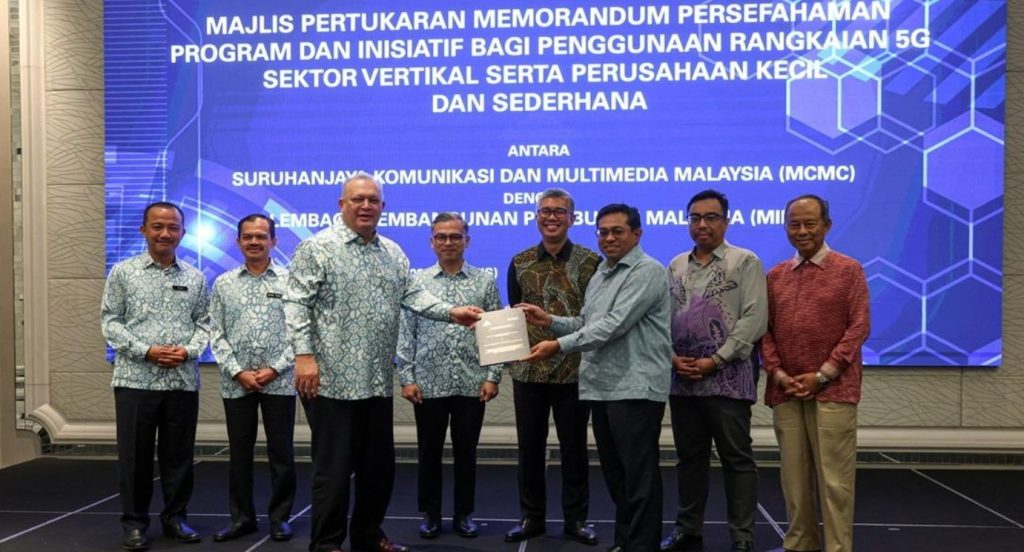
KUALA LUMPUR: Maxis Bhd and Chinese multinational technology corporation Huawei Technologies Co Ltd have successfully staged the first 5G-Advanced technology trial in Malaysia and Southeast Asia. The 5G-Advanced Trial Showcase included a live speed test to demonstrate 5G-Advanced’s capabilities to achieve ultra-fast peak speeds of up to 8Gbps. 5G-Advanced, also known as 5.5G, promises up to 10 times improvement in speed, connected devices, and latency compared to 5G. The event was officiated by Communications Minister Fahmi Fadzil. Also present was the Malaysian Communications and Multimedia Commission (MCMC) chairman Tan Sri Mohamad Salim Fateh Din. The event was held at KLCC The Place the first venue in the country to host a 5.5G technology trial. “This 5.5G trial demonstrates the potential of Malaysia’s telecommunications sector in contributing meaningfully to advancing our communications connectivity. “We hope more industry players will pioneer innovative technologies to help Malaysian enterprises move up the value chain through next-generation commercial and industrial solutions. “This will position Malaysia as a front-runner in telecommunications globally,” Mohamad Salim said. The showcase highlighted the potential of 5G-Advanced technology through next-generation connectivity and digital solutions, leveraging its ultra-high speeds, greater capacity for simultaneously connected devices, and ultra-reliable low latency. The demonstration booths featured interactive applications of the technology, including low latency live streaming of various Kuala Lumpur city centre views, live 3D content, and immersive augmented reality (AR) experiences. Maxis chief executive officer Goh Seow Eng said the telecommunication company is proud to have achieved a first for the nation and Southeast Asia with its 5.5G trial. “The potential of this technology is immense as it can power intelligent solutions across industries and economies. “We look forward to exploring this technology and developing solutions that will benefit industries and enterprises and advance our nation’s digital ambition,” he said. Huawei Technologies (Malaysia) Sdn Bhd chief executive officer Simon Sun said as a leading global information, communication and technology (ICT) player and an advocate for end-to-end 5.5G solutions, Huawei has been working on research and development (R&D) and verification of key 5.5G technologies and business cases. “Today, we bring the latest 5.5G technology and launch Malaysia’s first 5.5G showcase. “This will show the world that Malaysia leads the region in digital infrastructure, proving its enabling environment and digital facilities are among the best to attract and retain foreign investments. “Huawei Malaysia is firmly committed to walking alongside the nation in its digital transformation journey,” he said. 5.5G’s advanced capabilities can support digitalisation, automation, and the Internet of Things (IoT) across many sectors. These capabilities will facilitate the digital upgrade of core industries such as high-end manufacturing, automotive and smart transportation, and enable visual communication through 3D and extended reality (XR). In addition, 5G-Advanced will support the development of affordable IoT solutions. Following the event, the 5.5G trial will be showcased on the global stage as part of the Malaysia Pavilion supported by the MCMC at this year’s Mobile World Congress (MWC), which will be held on 26-29 February 2024 in Barcelona, Spain. Maxis is one of the leading Malaysian companies that will be representing the nation at MWC 2024, the world’s largest and most influential connectivity event.

Energy & Technology

Taiwan-Based Starlux Airlines Orders A350F, A330NEO

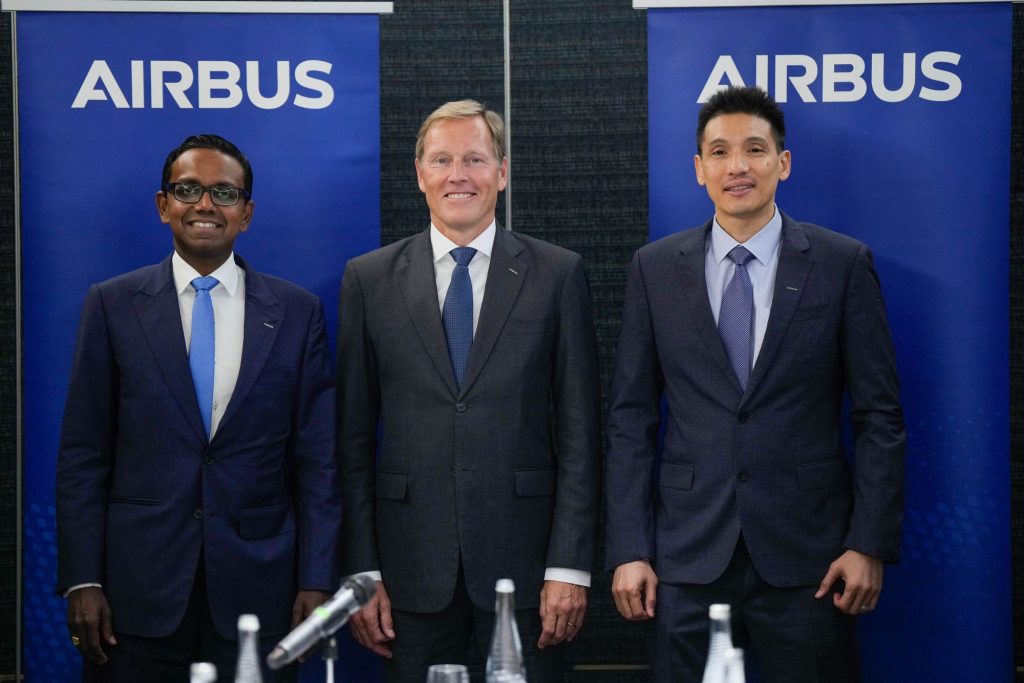
KUALA LUMPUR: Taiwan-based Starlux Airlines has placed a firm order for five all-new Airbus A350F freighters and three more Airbus A330neo widebody aircraft. Starlux Airlines chief executive officer Glenn Chai said the airline has continuously nurtured the cargo market since its inception, capitalising on the strategic advantages offered by Taiwan’s geographical location. With this order, he said that Starlux will become the first Taiwanese airline to operate the next-generation A350F widebody freighter. “In an era of climate change, the A350F has unbeatable efficiency in terms of fuel burn, CO2 emissions, and economics, offering significant energy-saving and carbon reduction benefits. “It meets customer requirements for carbon reduction and aligns with Starlux’s environmental, social, and corporate governance (ESG) plan to achieve zero emissions by 2050. “Additionally, the three new A330neos will strengthen our fleet advantage and provide greater flexibility for passenger operations,” he said in a statement. The agreement was signed at the Singapore Airshow by Starlux chairman KW Chang and Airbus chief executive officer of commercial aircraft business Christian Scherer. “We love working with Starlux Airlines in building and strengthening its fleet. Operating the latest generation Airbus single-aisle and widebody aircraft brings the airline enormous benefits. “It significantly reduces fuel consumption and carbon emission and offers unrivalled levels of technical commonality, benefits in maintenance and training. “The A350F, the only new generation large freighter, will fit seamlessly into this all-Airbus fleet and enable Starlux Airlines to compete effectively with the leading players in key cargo markets,” Airbus executive vice president of sales, commercial aircraft Benoît de Saint-Exupéry said. Starlux Airlines operates an all-Airbus passenger fleet that already includes the A350-900, A330neo and A321neo. Starlux Cargo will operate the A350F on some of the world’s busiest cargo routes. Currently under development, the A350F can carry a payload of up to 111 tonnes and fly up to 4,700 nautical miles/8,700 kilometres at a significantly lower cost than any other freighter available today. The A350F will enable Starlux Cargo to serve all heavy cargo markets worldwide. Powered by the latest Rolls-Royce Trent-XWB97 engines, the aircraft will reduce fuel consumption and carbon emissions by up to 40 per cent compared to the older 747F and is at least 20 per cent more efficient than its competitor. The A350F features the industry’s largest main deck cargo door, with fuselage length and capacity optimised around the industry’s standard pallets and containers. Over 70 per cent of the airframe is made of advanced materials, resulting in a 46-tonne lighter take-off weight than the competing derivative. The A350F is also the only freighter aircraft that will fully meet the International Civil Aviation Organization’s (ICAO) enhanced CO₂ emissions standards, coming into effect in 2027. Meanwhile, the additional order for the A330neo will see Starlux Airlines continue to build one of the most modern and efficient passenger fleets, offering the highest levels of in-flight comfort. The incremental order will boost its A330neo fleet from four to seven, with the aircraft features a premium two-class cabin comprising 28 business-class seats and 269 economy-class seats. Airbus widebody aircraft are especially popular with airlines in the Asia-Pacific, with nearly 900 in-service and 190 to be delivered. At the end of January, the latest generation A350 family had secured over 1,200 orders from 57 customers worldwide, including 50 for the A350F from nine leading cargo airlines. In the mid-size category, the A330neo family continues to gain momentum, with nearly 300 firm orders from 28 customers.

Energy & Technology

Hydrexia To Provide Hydrogen Application Solution To UMW Toyota’s Beyond Zero Event

KUALA LUMPUR: Subsidiaries of China-based hydrogen technology solution provider Hydrexia Holding Ltd and the Japanese automaker Toyota Motor Corporation in Malaysia have reached a commercial agreement for certain hydrogen application solutions. Under the terms of the agreement, Hydrexia Sdn Bhd will provide UMW Toyota Motor Sdn Bhd with its containerised mobile hydrogen refuelling stations (HRSs) to refuel the hydrogen fuel cell vehicles to be showcased at the current Toyota’s Beyond Zero event in Malaysia between February 20 and 28. Beyond Zero is a showcase of a multi-pathway approach towards carbon neutrality. It stands as a significant pledge and initiative by Toyota towards environmental sustainability and the journey towards carbon neutrality. Through this event, Toyota demonstrates its commitment to providing environment-friendly mobility for all, contributing to a net positive carbon impact and fostering a sustainable future. Hydrexia has worked closely with UMW Toyota in Malaysia to provide the comprehensive hydrogen application solution needed for this event. Hydrexia was chosen to be a partner based on considerations of its solution and equipment safety, functionality, and ability to deliver quickly. “We are excited and honoured to work with UMW Toyota on this project, where we can leverage our technological and solution strengths to add value to Toyota’s journey towards carbon neutrality,” Hydrexia global sales vice president and the general manager for Southeast Asia George Gan said in a statement. As China’s leading hydrogen technology solution provider, Hydrexia has recently expanded its footprint to overseas markets with business operations in Southeast Asia, Europe, the US, and Australia. The company provides technology solutions for hydrogen production, storage, transportation, and end-use applications. “Going forward, we will continue to work with Toyota to serve its needs for hydrogen application solutions in ASEAN countries,” he said.

Energy & Technology

BlackBerry, SANS Institute Partner To Bolster Cybersecurity Skills In Malaysia

KUALA LUMPUR: Canadian software company BlackBerry Ltd and US-based SANS Institute recently established a new partnership in Malaysia, offering SANS training courses through the soon-to-be-opened BlackBerry Cybersecurity Center of Excellence (CCoE) in Kuala Lumpur. To help bolster national cybersecurity capacity in Malaysia, the partnership will offer advanced technology and training to help upskill Malaysia’s cyber-defenders, focusing on critical areas like forensics and incident response. This new partnership with SANS marks the first significant milestone in BlackBerry’s landmark cybersecurity deal with the Malaysian government, announced at the APEC Summit in San Francisco in November 2023. In addition to Malaysia’s deployment of the full suite of trusted BlackBerry cybersecurity solutions, BlackBerry is opening its CCoE in the first half of 2024 to help Malaysia educate, train and upskill cyber professionals and grow the cybersecurity ecosystem. SANS Institute director of strategy and business development, Asia Pacific Matthias Chia said that as a leading provider of cybersecurity education, SANS knows first-hand that training, upskilling, and establishing a culture of continuous learning and innovation is crucial for any nation to build adequate cyber-resilience in our complex digital age. “We are proud to partner with BlackBerry in Malaysia to offer our globally accredited training programs to help upskill cyber-workforces and enhance technical capabilities among cyber professionals, but also train new students wishing to carve out a career in this exciting field,” he said in a statement. In addition to the SANS programs, BlackBerry will offer its curriculum at the new CCoE, as well as partner with Malaysian universities and other institutions to offer a wide range of courses, certifications, and other programs to help build skilled cybersecurity workforces in Malaysia and across the Indo-Pacific region. BlackBerry Cybersecurity senior vice president of strategy, business development and operations John Dimitropoulos said that with nearly 40 years of experience in protecting global governments from cyber-attacks, espionage and data leaks, BlackBerry has seen global demand for cyber skills and expertise explode, particularly in specialist areas such as machine learning and artificial intelligence (AI). “We are pleased to announce that SANS Institute’s training courses will be offered through our BlackBerry Cybersecurity Center of Excellence in Malaysia, delivering upon our shared goal to establish a globally competitive skills and learning ecosystem in Malaysia and the Indo-Pacific region for years to come,” he said. Now open for registrations, the SANS Secure Malaysia 2024 inaugural training will take place from March 11–16, and the first featured course will be SEC504: Hacker Tools, Techniques, and Incident Handling.

Energy & Technology

PCG, Sarawak Petchem Explores Low-Carbon Ammonia, Urea Plant In Bintulu

KUALA LUMPUR: Petronas Chemicals Group Bhd (PCG) signed a memorandum of understanding (MoU) with Sarawak Petchem Sdn Bhd (SPSB) to conduct a joint feasibility study to develop a low-carbon ammonia and urea plant in Bintulu, Sarawak. Under the terms of the MoU, the two companies will conduct a joint comprehensive study on the technical and commercial aspects, among other considerations, in meeting the rising demands for cleaner energy solutions by tapping into the renewable energy potential within the region. The MoU was signed by SPSB managing director and chief executive officer Datuk Mohammad Ibrahim and head of finance and commercial Abdul Razak Ali. PCG was represented by its managing director and chief executive officer Mazuin Ismail and the head of strategic planning and ventures Ir Yaacob Salim. The event was witnessed by the Premier of Sarawak, Datuk Patinggi Tan Sri (Dr) Abang Abdul Rahman Zohari Tun Datuk Abang  Openg, together with SPSB chairman Tan Sri Datuk Amar (Dr) Abdul Aziz Datuk Husain, Petroliam Nasional Bhd (Petronas) chairman Tan Sri Mohd Bakke Salleh and Petronas president and group chief executive officer Tan Sri Tengku Muhammad Taufik. “The collaboration to jointly study the potential development of a world-scale low-carbon ammonia and urea plant is very much welcomed. “This plant will be capable of producing ammonia with a very low carbon footprint. It is indeed a strategic initiative to capitalise on opportunities within the global energy transition market,” said Abang Abdul Rahman Zohari. Abdul Aziz said this collaboration allows SPSB to capitalise on synergies, optimise costs, and share the risks, thereby maximising value for Sarawak and Malaysia. “This further exemplifies our prudent business practices and collaborative mindset. This joint development initiative serves as a catalyst for economic development in Sarawak, driving job creation and fostering sustainable growth in line with the objectives outlined in the Sarawak Post Covid-19 Development Strategy 2030 (PCDS 2030),” he said. Mazuin welcomed this opportunity to work with SPSB, further strengthening PCG’s working relationship with the Sarawak state. “This is potentially PCG’s first low-carbon project and underlines our commitment to drive the sustainable transformation within our value chain. “This collaboration with SPSB aligns with PCG’s and the nation’s sustainability objectives and facilitates our further expansion into the Southeast Asian urea market. “Additionally, it presents an opportunity to leverage Sarawak’s renewable energy resources while complementing our efforts in developing carbon capture and storage (CCS) facilities,” he said.

Energy & Technology

Airbus, Malaysia Aviation Group Signs MoU On Emissions Studies

KUALA LUMPUR: French aircraft maker Airbus SE and Malaysia Aviation Group (MAG), the parent company of Malaysia Airlines, inked a memorandum of understanding (MoU) to conduct comprehensive studies on the carbon emissions of the airline group. The agreement was signed by MAG group chief sustainability officer Philip See and Airbus chief sustainability officer Julie Kitcher in Singapore ahead of the air show there. This significant step signifies the initiation of a two-year partnership between the two entities, dedicated to exploring various avenues for decarbonisation within MAG’s operations. The MoU between Airbus and MAG encompasses five key areas of focus. These include sustainable aviation fuel (SAF), carbon dioxide removal (CDR), assessment of financial implications associated with carbon dioxide (CO2) reduction, forecast and scenario planning and joint advocacy and communication efforts. A joint working group, comprising representatives from Airbus and MAG, has already been established and has been engaged in extensive deliberations on diverse decarbonisation strategies tailored to MAG’s unique requirements. Philip said this study with Airbus would strengthen the momentum MAG has on making its aviation units more sustainable. “Since the launch of MAG’s Sustainability Blueprint in 2021, the airline group has been committed to promoting socio-economic development and achieving net zero carbon emission by 2050. “This collaboration with Airbus is part of that initiative, and through the study, MAG will be better equipped to deliver on its environmental responsibilities and empower the global communities it serves,” he said. Julie said Airbus is committed to pioneering sustainable aviation, and this MoU showcases the aircraft maker’s commitment to increasing the development and adoption of decarbonisation tools such as SAF and CDR. “Airbus and Malaysia Airlines have a longstanding relationship, which will deepen when we celebrate the delivery of their new widebody fleet of A330neo later this year. “This agreement will provide an excellent foundation not only for MAG’s sustainability roadmap but also for Malaysia and the wider ASEAN region,” she said.

Scroll to Top

Subscribe
FREE Newsletter