Energy & Technology

Energy & Technology, News

Malaysian Residents Will Experience Eased Payments in China

KUALA LUMPUR: In a move to enhance travel facilitation, both Malaysia and China have recently implemented a short-term visa waiver program, allowing citizens of each country to travel visa-free for tourism and business purposes. With the increasing flow of people in both directions, UnionPay International (UPI) further optimises payment services. UPI plays a pivotal role in facilitating seamless payment experiences for Malaysian residents making local consumptions as well as travelling abroad including China. UPI offers a range of payment products, including credit cards, debit cards, and locally UnionPay-enabled e-wallets like SPay Global and GoPayz, ensuring cardholders have convenient payment options without the hassle of managing cash when travelling abroad. Recently, UnionPay announced the launch of Project Excellence 2024, a significant initiative aimed at enhancing payment services in China to cater to the needs of tourists and foreigners. This initiative, coupled with the seamless payment experience offered by UnionPay, simplifies travel between the two countries and encourages greater tourism and business exchanges. Tourists visiting China could consult at information booths at tourist hotspots for payment solutions provided by UnionPay and participate in various promotional activities under the theme “Explore China Your Way with UnionPay”. UPI also collaborates with travel-related organisations such as the Malaysia-China Folklore Culture Tourism Association, participating in events like the upcoming “Nihao, China” travel fair.

Energy & Technology, News

Jiankun International Unveils Green Energy in Taman Panchor Jaya

KUALA LUMPUR: Jiankun International Bhd (JIB) has inked a memorandum of understanding (MoU) with Micro Energy Holdings (M) Sdn Bhd (MEH) to advance an eco-conscious future further. This partnership illustrates the potential of sustainable development in the real estate industry and underlines a commitment to innovation and responsible development by installing solar photovoltaic (PV) systems in JIB’s Taman Panchor Jaya @ Nibong Tebal, Penang. JIB Executive Director and Chief Executive Officer Edwin Silvester Das said this initiative with MEH is more than an advancement in the company’s project portfolio. “It is a leap towards a greener Malaysia. By integrating sustainable solutions like solar energy into our luxury housing development, we aim to create not just homes but a legacy of environmentally responsible living,” he said in a statement. According to Edwin, the Taman Panchor Jaya @ Nibong Tebal will set a benchmark for environmentally conscious developments without compromising elegance and comfort. This initiative, expected to be completed in July 2026, will feature 116 double-storey units equipped with a minimum of 2.2KW solar systems, underscoring JIB’s investment in green technology and its environmental and community benefits. “The partnership between JIB and MEH for the Taman Panchor Jaya @ Nibong Tebal project reflects our foresight in melding luxury with eco-efficiency. “We are steering the Malaysian property market towards a horizon where luxury and sustainability coexist,” Edwin said. JIB announced in December 2023 that it had acquired a 99.99% stake in Oriental Link Properties (M) Sdn Bhd (OLP). The acquisition enlarged JIB’s footprint and enriched its portfolio with OLP’s high-value projects. The Taman Panchor Jaya @ Nibong Tebal Penang represents a gross development value (GDV) of RM72.69 million and will be a gated community, indicating substantial returns rooted in strategic location and advanced planning. The development, nestled on a verdant 7.58-acre land, is projected to attract buyers keen on green energy and sustainable living. MEH Chairman Tan Sri Abdul Aziz Jaafar said the company’s collaboration with JIB on the Taman Panchor Jaya project epitomises the fusion of modern technology and environmental stewardship. “By harnessing solar power, we contribute to a sustainable future and set a precedent for integrating green energy solutions in real estate development. “This partnership is a testament to our commitment to innovation and dedication to promoting sustainable living across Malaysia,” he said. JIB Executive Director Datuk Ir Donald Lim said this green initiative aligns with Malaysia’s aspirations for sustainable urban development and supports the nation’s agenda to reduce its carbon footprint for the country. “The project promises to lower energy costs for residents, increase the value of their properties, and contribute to the overall welfare by fostering a healthier environment,” he said.

Energy & Technology, News

MITI Maintains Target of 10k Charging Stations by 2025 Despite Setbacks

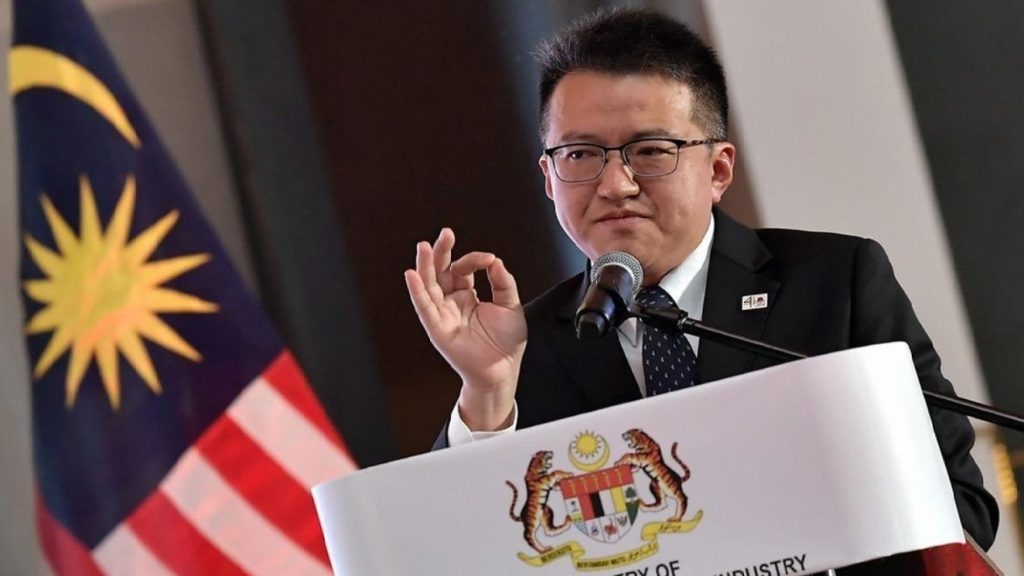
KUALA LUMPUR: A total 2,214 electric vehicle (EV) charging stations were installed as of 20 March 2024 as the Ministry of Investment, Trade and Industry (MITI) maintains its commitment to developing the EV charging infrastructure and reaching its target of 10,000 charging points by 2025. Under the Low Carbon Mobility Blueprint (LCMB) 2021-2023, 9,000 units of those charging points will be altering current (AC) chargers and 1,000 units will be direct current (DC) fast chargers. “Out of the 2,214 EV charging stations already installed, 1,741 AC chargers and 473 are DC fast chargers,” Investment, Trade and Industry Minister Tengku Datuk Seri Zafrul Abdul Aziz said during a press conference after announcing the ministry’s first-quarter 2024 report card. On the Electric Motorcycle Use Promotion Scheme (MARiiCas) programme, Tengku Zafrul said 1,995 applications were approved with rebates valued at RM4.8 million as of 31 March 2024. Earlier in January, he said that the government may not be able to meet the target of installing 10,000 charging stations around the country by next year. Having that in mind, Tengku Zafrul said that he and his Cabinet colleagues would re-examine if the target is feasible. “It seems that the target is quite aggressive because there are many issues that we need to address. “It involves agencies such as the Energy Commission, local authorities and other parties,” he said, adding that the procedures to install the charging stations needed to be streamlined as there had been complaints from equipment suppliers. “One of the main complaints was that it took a long time to get approval to set up a charging station. We need to make it seamless,” he commented. — BERNAMA

Singapore
Energy & Technology, News

Funds raised by Singapore’s tech startups up 59% in 2023

SINGAPORE: Singapore’s early-stage technology start-ups secured $402 million (S$548 million) in funding in 2023, a 59 percent increase from the $253 million raised in 2022, according to SGInnovate, the national investment arm. The number of seed-stage deals also rose by 50 percent, from 20 in 2022 to 30 in 2023, across four key sectors: advanced manufacturing, agrifood and sustainability, and health and biomedical sciences. SGInnovate noted these figures in its report on the sector’s development in 2023, highlighting a growing interest in emerging tech investments as Singapore’s ecosystem matures. SGInnovate examined early-stage start-ups established between January 1, 2019, and December 31, 2023, defining emerging technology start-ups as those developing tangible products like devices, machinery, food, and pharmaceuticals based on physical sciences, life sciences, and engineering. Tong Hsien-Hui, SGInnovate’s executive director, remarked that these trends reflect Singapore’s evolving and dynamic emerging tech landscape, with specialized investors increasingly supporting specific industry verticals. Agrifood and sustainability emerged as leading sectors in funding and start-up incorporations, likely driven by public and private initiatives. Both sectors saw growth in funding events year-on-year, with the agrifood sector securing 13 deals in 2023 (compared to eight in 2022) and the sustainability sector closing 16 deals in 2023 (versus 12 in 2022). Despite overall increases in funding and deals, the number of start-ups incorporated in 2023 across the four sectors declined from 35 in 2022 to 25 in 2023. SGInnovate attributed this to ongoing macroeconomic uncertainties, potentially leading to deferred incorporations. Looking forward, SGInnovate anticipates increased private market investments in emerging technologies in 2024, especially with predicted rate cuts, and remains optimistic about start-ups addressing long-term challenges, supported by Singapore’s policy initiatives.

Energy & Technology, Investment & Market Trends, News

PGB Intensify Efforts Towards Green Initiatives Amid Strong Financial Performance

KUALA LUMPUR: Petronas Gas Bhd (PGB) is committed to creating secure high-impact projects by leveraging on its core competencies and exploring industry-adjacent opportunities. This was revealed during the group’s 41st annual general meeting (AGM), where PGB reiterated its efforts of integrating sustainability into all decision-making processes, prioritising economic growth and sustainable development equally at all levels. “PGB’s efforts in upholding strength, resilience and sustainability are anchored in its strategic agenda of pursuing growth while maintaining commercial project and operational excellence,” the group said in a statement released in conjunction with the meeting. During the virtual session of the AGM, PGB Managing Director and Chief Executive Officer Abdul Aziz Othman highlighted the group’s strong 2023 financial performance with profit earnings increasing by 8.1% to RM1.9 billion compared to the previous year. The positive results were attributed to continued operational excellence and robust margins from the utilities segment as well as higher contribution from joint venture companies. “Backed by improved performance, the group declared a total dividend of 72 sen per share,” he said. For PGB’s full financial year ended 31 December 2023 (FY23), the group reported a total revenue of RM6.45 billion, an increase of 4.6% from RM6.16 billion posted in FY22, which was mainly contributed by the increased revenue from the utilities segment on the back of higher product prices in tandem with elevated fuel gas price and higher electricity tariff. By maintaining its successful performance and reliability across all its plants and facilities, the group was able to ensure steady earnings from long-term contracts under gas processing, gas transportation, regasification and utilities segments amidst challenging market conditions on the back of long-term agreements. For the fourth quarter ended 31 December 2023 (Q4 FY23), the group’s revenue declined by 3.1% to RM1.58 billion compared to RM1.63 billion posted in Q4 FY22 due to lower revenue from utilities and regasification segments. The lower utilities revenue was mainly due to lower product prices and customers’ offtake, while regasification revenue was lower. “Despite the challenging business environment, PGB still managed to record a strong financial performance in FY23. As we move forward, we continue to explore opportunities for growth within the National Energy Transition Roadmap (NETR),” Abdul Aziz said. He added that the group also initiated efforts to pursue a greener portfolio to support its target to achieve Net Zero Carbon Emissions by 2025.

Energy & Technology, News

Renuka Sharma Promoted to Director of Energy Solutions APAC at BayWa r.e.

BANGKOK: Renuka Sharma has been promoted to Director of Energy Solutions for the Asia-Pacific (APAC) region at BayWa r.e., a global renewable energy developer and service provider. This promotion recognizes Renuka’s outstanding leadership and her significant contributions to the company’s growth and influence in renewable energy. With more than 18 years of experience spanning various industries, Renuka has consistently demonstrated her ability to navigate complex projects and drive the energy transition forward. Previously, she served as Managing Director of BayWa r.e. Thailand, leading initiatives to promote renewable energy adoption in Southeast Asia. In her new role, Renuka will be responsible for guiding the strategic direction and operational performance of BayWa r.e.’s Energy Solutions business throughout the APAC region. Drawing from her extensive experience with companies like SunEdison and Brookfield Renewables, Renuka is well-positioned to foster innovation and sustainable growth within the organization. Reflecting on her promotion, Renuka remarked, “I am deeply honoured and excited to take on this new role at BayWa r.e. Our region is at a pivotal moment in the energy transition, and I am committed to leveraging our collective strengths to drive positive change and deliver sustainable solutions for our customers and communities.” Renuka, who holds degrees in Law and Russian, as well as an LLM in Banking and Finance Law from Kings College, London, is also a strong advocate for workplace diversity. Daniel Gaefke, Global Director of Projects & Executive Board Member at BayWa r.e., emphasized his confidence in Renuka’s leadership to drive the company’s energy transition objectives in APAC. BayWa r.e.’s Energy Solutions team has been active in Southeast Asia since 2019, delivering projects with a combined capacity of nearly 100MW for notable corporations in Thailand, Vietnam, Malaysia, and more. Their recent partnership with SUSI Partners underscores their commitment to advancing large-scale rooftop PV projects with major C&I corporations.

Energy & Technology, News

Meta Bright Enters Solar Supply Agreement to Power Hospitality Operations

KUALA LUMPUR: Meta Bright Group Berhad (“MBGB”), in its ongoing commitment to sustainable and eco-friendly energy solutions, announced today that its wholly-owned subsidiary, FBO Land (Serendah) Sdn. Bhd. (“FLSBB”), along with Doople Tech Sdn Bhd (“Doople”), has signed a solar supply agreement with Cherengin Hills Sdn. Bhd. (“Cherengin Hills”). This agreement represents a strategic step towards enhancing sustainable practices in the hospitality industry and supporting Malaysia’s national energy objectives. According to a filing with Bursa Malaysia, FLSBB will oversee the installation, maintenance, and operation of a solar photovoltaic system at Cherengin Hills’ properties in Pahang. This system will supply all net electricity output for 21 years from the start of operations. Cherengin Hills, primarily engaged in hotel, motel, and holiday camp operations, stands to benefit from reduced energy expenses and a diminished carbon footprint, while FBO Land aims to leverage the carbon credits generated by the system. This collaboration follows MBGB’s recent partnership with Doople Tech Sdn. Bhd., announced on 19th April 2024, which focused on renewable energy ventures. By combining Meta Bright’s investment capabilities with Doople Tech’s operational expertise, MBGB is eager to explore targeted opportunities in solar energy initiatives within the hospitality sector. This marks MBGB’s initial entry into solar solutions tailored for hospitality, with intentions to further expand in this field. Given the hospitality industry’s strong recovery post-pandemic, driven by rising travel demand and a renewed emphasis on sustainable practices, the timing is ideal for introducing renewable energy solutions. Mr. Derek Phang Kiew Lim, Executive Director of Corporate and Strategic Planning at Meta Bright, commented, “Cherengin Hills is taking a commendable step towards sustainability, and we are pleased to facilitate this transition. By harnessing solar energy, we contribute positively to the environment and demonstrate the economic viability of green initiatives in the hospitality sector.” “MBGB’s venture into renewable energy underscores a broader strategy of responsible corporate stewardship and reflects the Group’s forward-thinking approach in aligning business operations with global sustainability trends,” Mr. Derek Phang added. The partnership with Cherengin Hills signifies another significant achievement for MBGB as it continues to strengthen its position as an innovative player in Malaysia’s business landscape. With a focus on long-term sustainability and growth, MBGB remains committed to leading the way in eco-friendly business practices. MBGB is pleased to announce that the completed installation value of projects to date is approximately RM3.55 million. Furthermore, the company has ongoing projects valued at around RM11.89 million.

Energy & Technology

Unitrade Teams Up with Huawei, JJ-Lapp for Renewable Energy Push

KUALA LUMPUR: Homegrown building materials wholesaler and distributor Unitrade Industries Bhd (UIB), through its wholly-owned subsidiary Syarikat Logam Unitrade Sdn Bhd (SLU), signed a collaboration agreement with Huawei Technologies (Malaysia) Sdn Bhd and JJ-LAPP (M) Sdn Bhd. The agreement aims to advance solar adoption by pooling the collective expertise, resources, and technology to facilitate purchasing and selling Huawei digital power-smart photovoltaic (PV) solutions. Under the agreement, Huawei will serve as the technology advisor, while JJ-LAPP will be the authorised value-added partner to promote and sell smart PV solutions across residential as well as commercial and industrial (C&I) sectors. Meanwhile, UIB will facilitate broader market access as the project delivery partner. UIB managing director Nomis Sim Siang Leng said the company is committed to continuously enhancing its customers’ value. “Recognising the growing demand for solar energy, we offer comprehensive solar PV products featuring top-quality options like Huawei’s smart PV solutions and PV Evolution Labs (PVEL), a recognised astronergy solar panels. “By integrating solar solutions into our existing portfolio of over 6,000 building material stock-keeping units, we not only meet our customers’ extensive building and infrastructure project needs but also streamline the process for those seeking to adopt solar energy solutions,” Sim said in a statement. Huawei’s smart PV solutions integrate modern digital technologies into solar power systems to optimise energy generation and efficiency while enabling remote monitoring and management of solar power systems – a significant advantage for businesses and homeowners. The agreement reinforces UIB’s commitment to providing a holistic solution for customers seeking to adopt solar energy solutions. UIB has built a full-suite of solar offerings portfolio, including solar panels, inverters, mounting brackets, cables, electric vehicle (EV) chargers, batteries, and optimisers, providing customers with a one-stop solution for their solar energy needs. “Importantly, this strategic initiative aligns seamlessly with our commitment to environmental, social and governance (ESG) principles and our ambition to contribute to Malaysia’s energy transition journey. “The growing awareness for sustainability initiatives, especially among the C&I players, signifies a positive shift towards clean energy adoption. “Encouragingly, the government’s proactive efforts, including the unveiling of National Energy Transition Roadmap (NETR) and the recent open bidding of 2GW for the large-scale solar programme (LSS), along with the introduction of Solar for Rakyat incentive scheme (SolaRIS) further drives this transition,” Sim said. This agreement builds upon the memorandum of understanding (MoU) with Huawei and JJ-LAPP in January 2024 to explore the business opportunities under Huawei’s smart PV solutions across residential and C&I sectors.

ICT Minister, Lee Jong-ho
Energy & Technology, News

Korea to Invest US$527 Mil to Integrate AI into All Sectors of Society

KOREA: Korea is poised to make a substantial investment of 710.2 billion won (US$527 million) this year across 69 sectors to drive innovations powered by artificial intelligence (AI) in daily life, industries, and government services, according to announcements from the Ministry of Science and ICT. This initiative aims to catalyse transformative advancements and improve efficiency across various sectors through AI integration. Minister of Science and ICT Lee Jong-ho emphasized the significance of this investment, stating, “We bear a significant sense of responsibility as the primary ministry for AI in this era. Our commitment is to promptly implement measures that will yield tangible results for our citizens and businesses.” This strategic investment aligns with a broader government vision articulated through the establishment of the AI Strategy High-Level Consultative Council. The council, co-chaired by Minister Lee Jong-ho and Taejae University President Yeom Jae-ho, comprises 32 members, including private-sector experts and representatives from major IT companies like Samsung Electronics, SK Telecom, KT, Naver, and Kakao, alongside director-level officials from relevant government ministries. Minister Lee highlighted the council’s role, stating, “We hope that the council will serve as a stepping stone for the nation’s AI advancement, enriching the lives of our citizens, and setting a leading example of harmonious coexistence with AI on the global stage.” The government’s investment and the establishment of the consultative council are part of a comprehensive strategy to leverage AI as a catalyst for economic growth and societal advancement. A government-led study forecasts that the successful integration of AI across various sectors and daily life could generate an annual economic impact of 310 trillion won by 2026. “This analysis suggests that the revenue-generating effect of adopting AI could lead to an additional average annual GDP growth of 1.8 percentage points,” noted the ICT ministry. The council’s objectives extend beyond economic impact to include spearheading innovations in the global AI technology market, facilitating industry transitions through AI adoption, and enhancing the prevalence of AI-based services in daily life. Senior presidential secretary for science and technology, Park Sang-ook, underscored the multifaceted impact of AI, stating, “Given its profound social impact, addressing legal systems, policies, and ethical norms is crucial. However, it’s equally imperative to advance technological innovations, industrialization, and services in tandem to harness AI’s full potential.” The government sees AI technology as an opportunity to address structural challenges such as low growth and a declining birthrate in Korea. Through a joint study with Bain & Company, it is projected that the successful implementation of AI across the economy could yield an annual economic impact of 310 trillion won by 2026, with substantial revenue increases from AI-integrated products and significant cost reductions through enhanced efficiency and automation. Looking ahead, the ICT ministry plans to announce follow-up actions and agenda items following the council’s inaugural meeting, with the next strategic council meeting scheduled for June. This ongoing commitment underscores Korea’s ambition to become one of the top three AI nations globally by bolstering its competence in AI innovation.

Awantec
Energy & Technology, News

Awantec Faces Share Suspension Amid Regulatory Compliance Challenges

KUALA LUMPUR: AwanBiru Technology Bhd (Awantec) has announced that trading in its shares will be suspended starting April 26, following its failure to submit a regularisation plan to regulators within the required timeframe. In a disclosure to Bursa Malaysia Securities on Thursday, the software service provider revealed that it was obligated to submit the regularisation plan by April 13 but missed the extended deadline. Awantec now faces the risk of delisting if it fails to submit an appeal within five market days from the notification of potential delisting. The company, formerly known as Prestariang Bhd, was categorized as an affected listed issuer in January 2021 after its wholly owned subsidiary, Prestariang Systems Sdn Bhd, lost its membership in the Microsoft Partner Network. Seeking reprieve, Awantec applied for a waiver from the regularisation plan requirement on April 8, citing recent financial improvements. Additionally, the group requested a reclassification of its affected issuer status and a six-month extension until October 13 for plan submission in case the waiver and reclassification applications are not approved. Financially, Awantec showed improvement, reporting a net profit of RM1.19 million for the six-month period ending December 31, 2023, compared to a net loss of RM4.31 million in the prior year. Revenue also grew by 9.7% to RM28.63 million from RM26.1 million. Awantec recently made headlines by winning a lawsuit against the government, receiving RM231.55 million in compensation following the termination of the RM3.5 billion National Immigration Control System (SKIN) project in March. An appeal was lodged in early April. The SKIN project was awarded to Awantec’s wholly owned subsidiary, Prestariang Skin Sdn Bhd (PSKIN), in August 2017 under the leadership of former Prime Minister Datuk Seri Najib Razak. However, the project was scrapped by the Pakatan Harapan government in December 2018, leading to legal action by PSKIN against the government due to the failure to agree on compensation terms. Despite these developments, shares in Awantec closed unchanged at 32 sen on Thursday, with a market capitalisation of RM252.77 million. Investors and stakeholders await further updates from Awantec regarding its regulatory status and plans for compliance.

Scroll to Top

Subscribe
FREE Newsletter