Energy & Technology

Energy & Technology, News

Seoul Accelerates AI Strategy with Appointment of Industry Leader to Cabinet Post

In a decisive move underscoring South Korea’s commitment to artificial intelligence, President Lee Jae-myung on Monday nominated Dr Bae Kyung-hoon, a leading AI authority and head of LG AI Research, as Minister of Science and ICT. The appointment is widely seen as a strategic pivot to fast-track the country’s ambition to become one of the world’s foremost AI powers. The nomination of Dr Bae follows closely on the 15 June appointment of Ha Jung-woo, head of Naver’s AI Innovation Centre, to the newly established position of Senior Secretary for AI and Future Planning. This senior Blue House role is designed to steer AI-related investment and national policy coordination. Presidential Chief of Staff Kang Hoon-sik confirmed the decision reflects a high-level commitment to bolstering South Korea’s global AI competitiveness. “We expect Bae to strengthen AI competitiveness alongside Ha Jung-woo,” he stated. President Lee has pledged a monumental investment of over ₩100 trillion (approximately USD 73.5 billion) through public-private partnerships aimed at accelerating the country’s AI ecosystem. The enlistment of top executives from major conglomerates such as LG and Naver signals a profound integration of private-sector expertise into national policy. Dr Hwang Yong-sik, professor at Sejong University College of Business and Economics, affirmed the strategic significance of these appointments. “There is growing recognition that relying solely on the public sector for AI development has its limitations,” he said. “While the government can provide direction, true progress depends on the deep involvement of the private sector.” Dr Bae brings an extensive background that bridges startups, academia, and corporate R&D. His early career included a role at Samsung Thales, a now-defunct joint venture between Samsung Techwin and French defence company Thales. He later joined SK Telecom’s Future Technology R&D Centre before moving to LG in 2016. At LG, Dr Bae held senior positions across its key technology subsidiaries and, in 2020, became the founding president of LG AI Research. Under his leadership, the organisation launched South Korea’s first hyperscale language model, Exaone, in 2021. It was commercialised in 2023, and an open-source third iteration was released last year. Most recently, in March 2025, his team debuted Exaone Deep, the country’s first interference AI model. Beyond the corporate sphere, Dr Bae has contributed to national policy as a government adviser on AI governance and data privacy. His rare combination of technical depth and leadership experience positions him uniquely in the fast-evolving field. “Only a handful of professionals in South Korea can handle a frontier model from end to end, and Bae is one of them,” noted Dr Choi Byung-ho, professor at Korea University’s Human-inspired AI Research Lab. “We are in a race against time. The pace of AI development demands rapid, expert decision-making. This is not a role for a generalist or a bureaucrat.” Pending confirmation by Parliament, Dr Bae will assume oversight of the Ministry of Science and ICT, with responsibility for the nation’s scientific and digital infrastructure policy at a time when global competition in AI intensifies. -The Korea Herald

Energy & Technology, News

SoftBank Sets Ambitious Goal to Lead in Artificial Super Intelligence

SoftBank Group CEO Masayoshi Son has outlined an ambitious new direction for the Japanese investment giant, revealing his vision for SoftBank to become the world’s leading platform provider for “artificial super intelligence” (ASI) over the next decade. Speaking at the company’s annual shareholder meeting on Friday, Son said: “We want to become the organiser of the industry in the artificial super intelligence era.” He drew comparisons between his goal and the dominance enjoyed by major US technology firms such as Microsoft, Amazon, and Google, describing the ASI sector as one likely to be governed by a “winner takes all” dynamic. Son, a long-time advocate of disruptive technologies, has defined artificial super intelligence as a form of AI capable of surpassing human abilities by a factor of 10,000. His latest strategy signals a bold return to the kind of aggressive investment approach that once defined SoftBank’s rise — from early success with Alibaba to high-profile setbacks like WeWork. This year, SoftBank has already made significant moves in the AI space. The group acquired US semiconductor designer Ampere for $6.5 billion and has underwritten as much as $40 billion in new investment in OpenAI, the company behind ChatGPT. Son confirmed that SoftBank’s total committed investment in OpenAI now stands at $32 billion since its initial funding in autumn 2024. “I’m all in on OpenAI,” he said, also expressing regret over not having invested sooner. He added that he expects OpenAI to pursue a public listing in the future. SoftBank previously held a 5% stake in Nvidia but divested in 2019 — prior to the 2022 AI boom catalysed by ChatGPT’s release. Nvidia has since emerged as the dominant player in AI chipmaking and one of the world’s most valuable companies. The group’s renewed focus on high-growth technology comes after a period of retrenchment. Following the decline in valuations of portfolio companies from 2022, SoftBank had adopted a more cautious stance. However, its fortunes reversed with the $5 billion IPO of chip designer Arm in September 2023. The appreciation in Arm’s share price has significantly strengthened SoftBank’s asset base, allowing it to leverage its holdings for further investment. In June, SoftBank raised an additional $4.8 billion through the sale of a portion of its stake in T-Mobile. Despite the company’s risk-on posture, Son assured shareholders that SoftBank remains committed to disciplined investment, maintaining the financial capacity and strategic user base needed to act decisively during industry inflection points. -Reuters

Energy & Technology, ESG

MIGHT Launches National Innovation Centres to Advance Rail and Smart City Technologies

The Malaysian Industry-Government Group for High Technology (MIGHT), an agency under the Ministry of Science, Technology and Innovation (MOSTI), has launched two strategic innovation centres aimed at accelerating the development of local technologies within Malaysia’s rail and smart city sectors. The launch of the Industrial Technology Innovation Centre (ITIC) and the Smart City Experience & Next Generation Innovation Centre (SCENIC) was held in conjunction with MIGHT’s 30th Annual General Meeting, marking a significant milestone in the organisation’s ongoing commitment to advancing national innovation capabilities. According to a statement from MIGHT, the ITIC programme has been established in collaboration with the Malaysia Rail Industry Corporation (MARIC) and the Malaysia Smart Cities Alliance Association (MSCA), with the objective of catalysing the adoption and deployment of locally-developed solutions in high-technology sectors. “The programme seeks to drive the deployment of home-grown technological solutions across the rail and smart city sectors, enhancing Malaysia’s position in high-tech innovation,” MIGHT stated. As part of the initiative, MARIC has partnered with Tech Store Malaysia to develop a Smart Rail Monitoring System. The system leverages real-time data and predictive analytics to improve maintenance and operational efficiency across the rail network. Real-time monitoring of train location, speed, axle counting, and overload detection is a core feature of the system, supporting predictive and preventive maintenance to reduce downtime and enhance safety. In tandem with the launch, MIGHT has also released the Malaysia Rail Industry Report, developed with input from key stakeholders across the sector. The report highlights a range of emerging technologies, including additive manufacturing, remote monitoring, smart stations, and environmentally sustainable solutions. “Featured technologies include additive manufacturing, rail flaw detection systems, energy-efficient and green technologies, advanced training tools, data-driven decision-making, smart maintenance systems, train automation, and next-generation smart station infrastructure,” MIGHT added. SCENIC, constructed using composite materials through the Industrialised Building System (IBS), is designed to serve as a collaborative hub for the demonstration and integration of local smart city technologies. MIGHT noted that SCENIC also functions as a bridge between innovation and policy, facilitating the real-world deployment of future technologies in line with national urban development objectives. In support of this ecosystem, MIGHT has introduced a Smart City Directory to catalogue technologies, products, and services along the smart city value chain. The directory aims to enable more informed, data-driven decision-making among municipalities and industry stakeholders. “These initiatives reflect MIGHT’s ongoing commitment to strengthening Malaysia’s innovation landscape through the cultivation of local technological capabilities,” it said. The programmes are aligned with the 10-10 Malaysian Science, Technology, Innovation and Economy (MySTIE) Framework and the National Science, Technology and Innovation Policy (DSTIN) 2021–2030. MIGHT confirmed that the ITIC initiative will continue to expand across multiple platforms to drive forward strategic technologies and socioeconomic enablers, reinforcing Malaysia’s position at the forefront of global innovation in transport and urban development. -Bernama

Energy & Technology

SNS Network Doubles Q1 Profit on Record Revenue, Driven by ICT Sales Momentum

SNS Network Technology Bhd has posted a substantial improvement in first-quarter earnings, supported by a surge in demand for information and communication technology (ICT) products across its commercial and online channels. For the financial quarter ended 30 April 2025 (1QFY2026), the group recorded a net profit of RM10.24 million, representing a 174% increase compared to RM3.74 million in the same period last year. Revenue reached an all-time high of RM822.75 million, more than tripling from RM213.59 million in 1QFY2025, according to its filing with Bursa Malaysia. In line with the strong financial performance, SNS Network declared a first interim dividend of 0.25 sen per share for FY2026, payable on 28 August. To support its long-term growth strategy, the group is progressing with plans to establish 10 additional retail outlets across Malaysia, capitalising on rising ICT adoption in both public and private sectors. This expansion is further driven by advancements in technology, government-led digital transformation policies, and an increased focus on digital education in schools. The company has already launched two multi-brand concept stores in Penang and Selangor in May and November 2024, respectively, as well as two brand-specific outlets in Penang during the review quarter. SNS Network remains optimistic about the future growth of its device-as-a-service (DaaS) model, which offers businesses an alternative to traditional ICT procurement by enabling access to technology on a subscription basis. This approach reduces upfront capital expenditure while improving operational flexibility. “The group continues to prioritise and expand its DaaS offerings to support both existing and future subscription agreements,” it said in a statement. “The group believes in the coming years, artificial intelligence will play a significant role in its success.” At market close on Wednesday, shares of SNS Network rose 1.5 sen or 2.75% to 56 sen, valuing the ICT solutions provider at RM938.42 million. Despite the day’s gain, the stock remains down 20% year-to-date. -The Edge

Energy & Technology

CRRC Dalian to Begin Shipping ECRL Trains to Malaysia by October 2025 for 2027 Rail Launch

CRRC Dalian Locomotive & Rolling Stock Co., Ltd, a wholly-owned subsidiary of CRRC Corporation, is set to begin shipping the first batch of Electric Multiple Unit (EMU) trains and electric locomotives for Malaysia’s East Coast Rail Link (ECRL) project in October 2025. The shipment, comprising two EMU sets and two electric cargo locomotives, is expected to take approximately one month to reach Malaysian shores. Speaking to a visiting Malaysian media delegation at the company’s headquarters in Dalian, vice-president Zhang Jian confirmed that the ECRL fleet would be supported by a comprehensive full life cycle service model. This will encompass product development, production, operations, maintenance and after-sales servicing. “For the ECRL project, we aim to ensure long-term collaboration across the entire life cycle to guarantee the reliable operation of the trains on Malaysia’s railway network,” Zhang stated. Located in the coastal city of Dalian in northeastern China’s Liaoning Province, approximately 800 kilometres southeast of Beijing, CRRC Dalian has built a strong reputation for its port facilities and advanced manufacturing capabilities. In August 2022, CRRC Dalian entered into a supply contract with China Communications Construction (ECRL) Sdn Bhd (CCCECRL), the main contractor for the ECRL, to deliver 11 EMU train sets and 12 electric locomotives for the project. According to Zhang, factory commissioning of the trains will be completed prior to shipment. Upon arrival in Malaysia, the first EMU will undergo an 8,000-kilometre testing phase, while subsequent units will be subject to 5,000-kilometre performance tests. The EMUs are designed for a maximum speed of 160 km/h for passenger services, while the electric locomotives, operating at 120 km/h, will cater to cargo operations. CRRC Dalian will also deploy technical teams to Malaysia, focusing on on-site servicing and technical training. One group will be tasked with repair and maintenance activities, while another will deliver training programmes to Malaysian personnel to facilitate local capacity-building in fleet maintenance. The company will provide a two-year warranty for all EMUs and electric locomotives supplied under the contract. The delivery of the initial fleet by the end of 2025 will ensure adequate lead time for operational readiness ahead of the ECRL’s scheduled launch in 2027. With a legacy of manufacturing over 12,800 locomotives across more than 70 diesel and 13 electric models as of October 2020—representing half of China’s locomotive fleet—CRRC Dalian has a well-established track record in the international rail sector. Since its first overseas delivery to Myanmar in 1993, the company has supplied rail vehicles to 27 countries, including Malaysia, South Africa, New Zealand, Argentina, Uzbekistan, India, Nigeria and Hong Kong. -Bernama

Energy & Technology

Tesla to Develop First Grid-Scale Energy Storage Plant in Mainland China

Tesla has formally entered into an agreement to construct its inaugural grid-scale energy storage power station in mainland China, marking a significant milestone in the company’s global energy ambitions. Announced yesterday via the Chinese social media platform Weibo, Tesla confirmed the project will play a key role in enabling more flexible grid resource management and aims to “effectively resolve pressures relating to urban power supply”. Upon completion, Tesla stated, the facility is anticipated to become the largest grid-side energy storage installation in China. Grid-scale energy storage systems such as this are increasingly critical as renewable energy capacity expands. They provide essential stability to electricity networks, particularly given the rising adoption of variable sources such as solar and wind power. The announcement follows a formal signing ceremony held in Shanghai, attended by representatives from Tesla Shanghai, local municipal authorities, and China Kangfu International Leasing Co, as reported by Chinese financial media outlet Yicai. The investment involved in the project is valued at 4 billion yuan. This development comes amid ongoing geopolitical tensions between the United States and China, with a comprehensive bilateral trade agreement yet to materialise following a series of tariffs introduced by former US President Donald Trump. However, recent negotiations in London yielded a provisional “framework” deal after two days of high-level discussions. -AFP

Energy & Technology

Sechin Signals China’s Move Towards Energy Export Leadership

Rosneft Chief Executive Officer Igor Sechin stated that China is steadily advancing towards full energy independence and could emerge as a significant energy exporter in the foreseeable future. Speaking at the St. Petersburg International Economic Forum, Sechin emphasised China’s increasing influence in global energy dynamics, positioning it among the world’s foremost energy players. Sechin, a key figure in Russia’s energy landscape and close ally of President Vladimir Putin, remarked that the sweeping transformation of global energy markets is being driven by surging electricity demand, particularly across Asia and Africa, in tandem with rapid digitalisation. He noted that China, already the world’s largest crude oil importer, has been heavily investing in renewables, nuclear power and synthetic fuel technologies. “China, which has already ensured its energy security, is confidently moving towards complete energy independence, forming a stable energy balance based on its own resources,” Sechin said. He suggested that given China’s methodical approach, the country is poised to become a net energy exporter in the coming years. China currently leads global energy investment, accounting for approximately one-third of total global investment in the sector. It has also positioned itself at the forefront of nuclear energy development, underscoring a long-term strategic shift away from energy import dependency. Sechin highlighted the continued growth in electric vehicle sales as a key factor in the recent decline in motor fuel demand, warning that if this trend persists, it could significantly alter the balance of the global oil market. A major aspect of China’s energy independence strategy involves processing domestic coal resources into synthetic fuels and chemical products. According to Sechin, the country utilises around 40 million tonnes of coal annually for synthetic fuel production and over 260 million tonnes for ammonia and methanol manufacturing. Turning to global oil markets, Sechin described the OPEC+ decision to accelerate output increases as prescient, particularly in light of the ongoing geopolitical tensions between Israel and Iran. He suggested the coalition might bring forward planned production increases by approximately one year from the original schedule. He also issued a caution regarding the escalating US national debt, drawing historical parallels to the decline of past global powers including Habsburg Spain, the Ottoman Empire, and pre-revolutionary France. Sechin argued that the significant expansion of Western military-industrial spending is diverting capital away from productive sectors, a trend he views as an inadequate response to broader economic challenges facing both Europe and the United States. “There is always an asymmetrical answer,” he remarked, hinting at the emergence of alternative global economic strategies, with China at the forefront. Rosneft, which Sechin has led since 2012, is responsible for approximately 40% of Russia’s oil production, 14% of gas output, and 32% of refining capacity. The company is also Russia’s largest oil exporter to China, reflecting the deepening energy partnership between the two countries. -Reuters

Energy & Technology, News

JERA and Woodside Ink Seasonal LNG Deal to Secure Winter Energy Supply

Japan’s largest power producer, JERA Co., has entered into a strategic agreement with Australian energy major Woodside Energy to secure liquefied natural gas (LNG) supplies specifically during the winter season, the companies confirmed on Friday. The Heads of Agreement was formalised at the LNG Producer-Consumer Conference held in Tokyo, an event co-hosted by Japan’s Ministry of Economy, Trade and Industry (METI) and the International Energy Agency. Under the terms of the deal, Woodside will deliver approximately 200,000 metric tonnes of LNG per year to JERA between December and February, beginning in fiscal year 2027. The supply arrangement will remain in place for five years. This seasonal supply model diverges from traditional annual term contracts and introduces a more flexible procurement strategy. Yuya Hasegawa, Director at METI, noted during a press conference that the structure of the agreement reflects a growing need for adaptability in response to changing climate conditions. “This arrangement allows JERA to avoid taking unnecessary shipments during milder-than-expected winters, offering a layer of operational efficiency,” Hasegawa stated. He further expressed the ministry’s expectation that other Japanese firms may explore similar supply models with alternative LNG providers, citing potential benefits to Japan’s long-term energy security. “If this type of agreement becomes more common, it could strengthen the country’s ability to maintain stable procurement,” he added. JERA, a joint venture between Tokyo Electric Power Company and Chubu Electric Power Company, remains Japan’s foremost LNG importer and a key player in the global energy landscape.

Energy & Technology

SK Group and Amazon to Invest US$5.11 Billion in South Korea’s Largest AI Data Centre

South Korea has formally announced a landmark investment of approximately 7 trillion won (US$5.11 billion or RM21.74 billion) for the construction of the country’s largest artificial intelligence (AI) data centre. The project is a collaboration between SK Group and Amazon Web Services (AWS), with AWS contributing US$4 billion towards the initiative, according to a statement released by the Ministry of Science on Friday. The data centre, set to be established in the southern industrial city of Ulsan, is scheduled to break ground in September. It is expected to be fully operational by 2029, with an initial capacity of 100 megawatts. The facility will serve as a strategic hub for AI development and infrastructure, underlining South Korea’s ambition to become a global leader in high-tech innovation. During a meeting attended by President Lee Jae-myung and several senior technology executives, SK Group Chairman Chey Tae-won revealed plans to eventually scale the facility’s capacity to one gigawatt. He emphasised the strategic importance of the data centre, aiming to position it as a global AI node capable of supporting domestic and international demand. “AI is crucial for South Korea’s growth,” Chey stated, reinforcing the group’s commitment to national digital competitiveness. President Lee added that the project sets a precedent for developing advanced technology infrastructure outside the capital region. “It may set a good example that South Korea’s high-tech industry is possible not only in the metropolitan area but also in the provinces,” he said. News of the investment fuelled a surge in AI-related equities on Friday, driven by increased policy optimism. SK Hynix rose by over 3%, Kakao recorded an 11% jump, and LG CNS gained 9%, helping to lift the benchmark Kospi Index above 3,000 points for the first time in three and a half years. The government’s confirmation follows earlier media speculation regarding the SK-AWS partnership to establish a data centre in the country. -Reuters

Energy & Technology

Baidu Targets Southeast Asia with Apollo Go Robotaxi Expansion

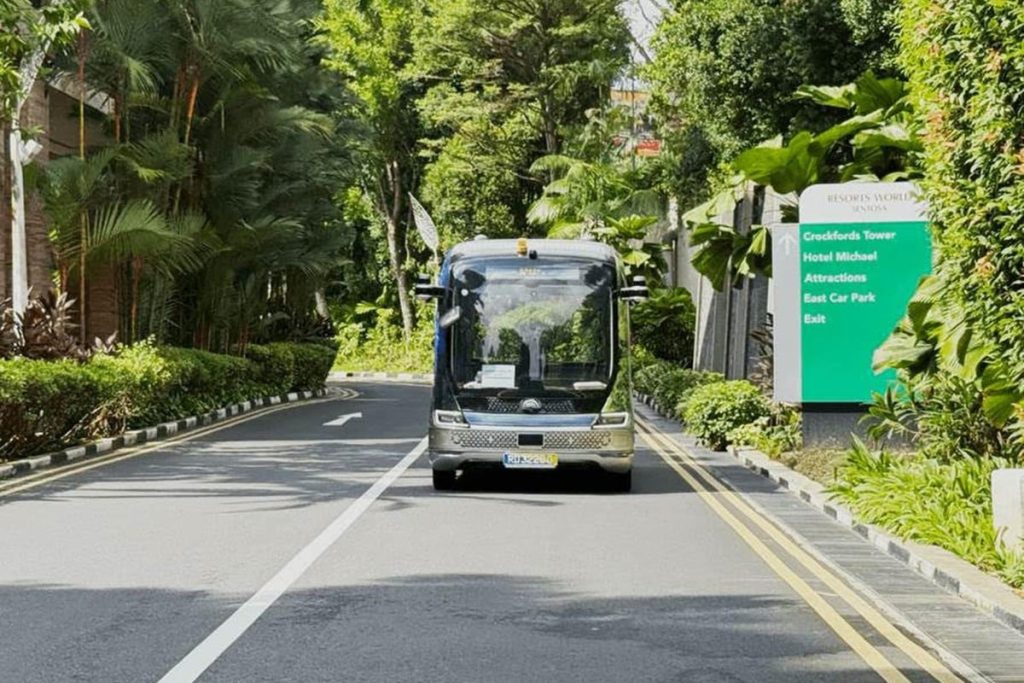
Baidu Inc. is preparing to introduce its Apollo Go robotaxi service in Singapore and Malaysia as early as this year, according to a source familiar with the plans. The move marks a significant step in the Chinese technology giant’s strategy to accelerate its global autonomous mobility footprint. The company is currently engaged in discussions with potential partners to determine optimal business models for the two Southeast Asian markets. The source, who requested anonymity due to the confidential nature of the discussions, noted that Baidu is considering collaborations with local mobility service providers, taxi firms, and third-party fleet operators. This aligns with CEO Robin Li’s previously stated preference for an asset-light expansion model. The development comes at a time when global competition in autonomous driving is intensifying. Tesla is expected to unveil its Cybercab robotaxi network in the coming days, with CEO Elon Musk heavily promoting autonomy as a cornerstone of the electric vehicle maker’s long-term growth. Meanwhile, other Chinese players such as Apollo Go, along with US-listed firms WeRide Inc. and Pony.ai Inc., are extending their reach into the Middle East, Europe and Southeast Asia. Although Baidu has not officially commented on the plans, the initiative was earlier reported by Dow Jones Newswires. Apollo Go has been scaling rapidly. The service has deployed more than 1,000 self-driving vehicles globally, the majority of which operate within China. As of the first quarter of 2025, Apollo Go had recorded 11 million rides, surpassing Alphabet’s Waymo, which reached 10 million paid rides by 23 May. Baidu is also eyeing expansion into Europe and Turkey, with ongoing discussions involving PostAuto, a subsidiary of Swiss Post, regarding the launch of robotaxi services in Switzerland. -Bloomberg

Scroll to Top

Subscribe
FREE Newsletter