Energy & Technology

Energy & Technology, News

TDK Acquires US Smart Glasses Innovator SoftEye in Strategic AI-Driven Expansion

Tokyo: Japanese electronics manufacturer TDK Corporation has announced the acquisition of SoftEye, a US-based company specialising in software and hardware for smart glasses, as part of a broader strategy to capitalise on the growing intersection of artificial intelligence and next-generation wearable technologies. Headquartered in San Diego, California, SoftEye is known for its advanced eye-tracking and object recognition technologies. The company was founded by Te-Won Lee, who brings significant industry pedigree as a former executive at Samsung Electronics and Qualcomm. Although the financial terms of the transaction were not officially disclosed, a source familiar with the matter indicated the deal is valued at under $100 million. The acquisition marks a strategic move by TDK, which, having transitioned from its legacy as a cassette tape maker, has become a prominent supplier of electronic components and battery systems. The company already provides battery technology for smart glasses, aligning this acquisition with its existing capabilities and forward-looking growth plans. As the broader tech industry seeks to diversify hardware portfolios beyond smartphones, interest in smart glasses continues to surge. Meta, the parent company of Facebook, along with Alphabet’s Google and Snap Inc., are actively developing AI-integrated eyewear. Google showcased smart glasses at its recent developer conference, while Snap has announced plans to bring consumer-ready models to market in 2026. Qualcomm, a key player in mobile and wearable chipsets, also unveiled a new processor tailored for smart glasses earlier this month, further underscoring industry momentum. TDK’s acquisition of SoftEye positions the company at the forefront of this accelerating convergence of AI and wearable technology. -Reuters

Energy & Technology

Malaysia’s Data Centre Growth Unaffected by Nvidia Chip Concerns

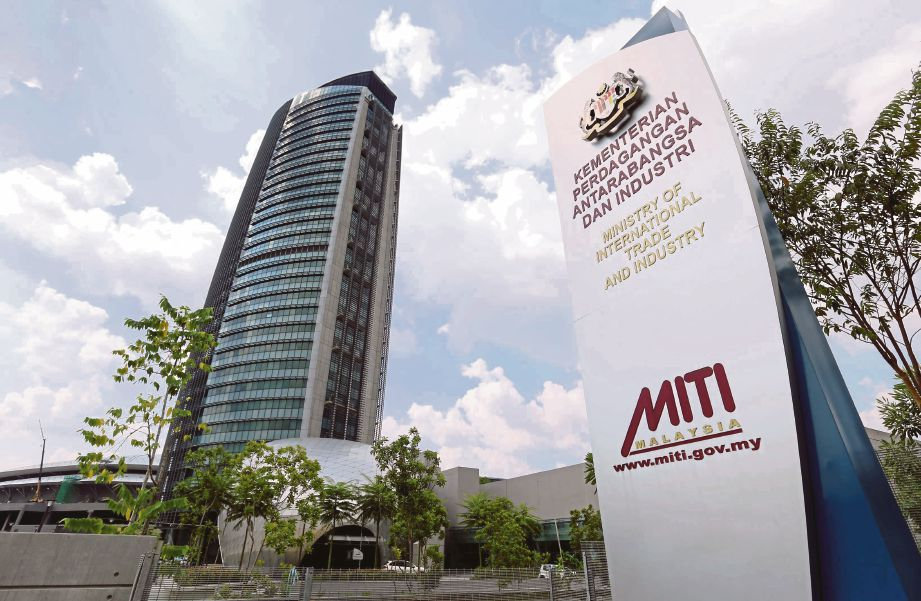
Malaysia’s data centre sector remains resilient and on track despite recent concerns involving Nvidia chips and alleged use by Chinese firms to train artificial intelligence (AI) models within the country, according to MIDF Research. The investment research house clarified that the chips in question are likely to be older-generation Nvidia models, and not the latest GB200 AI chips, which are subject to export restrictions imposed by the United States government. As such, there appears to be no material disruption to ongoing or upcoming data centre projects across the country. “There is no indication of slowdown or deferment in data centre developments,” MIDF said, adding that construction firms continue to actively tender for new data centre infrastructure jobs. Among the major developments is Gamuda Bhd’s disposal of 389 acres in Port Dickson to Pearl Computing, a company linked to Google, alongside securing a RM1.01 billion contract for data centre-related works. Separately, Sunway Construction Group Bhd has landed a RM1.16 billion contract from a US-based technology giant. In a further display of continued investment confidence, Microsoft has reaffirmed its RM10.5 billion commitment towards cloud and AI infrastructure, including hyperscale data centres in the Klang Valley. While many Malaysian data centres are designed to be AI-capable, not all are purpose-built solely for AI functions. For instance, YTL Power International Bhd has allocated only 100MW for AI operations at its 500MW facility in Kulai, Johor. Meanwhile, the Ministry of Investment, Trade and Industry (Miti) is currently investigating claims stemming from a Wall Street Journal report, which alleged that a Chinese technology firm has been leveraging Malaysian data centres to circumvent US chip restrictions. According to Miti, the servers in question are not classified as controlled items under the Strategic Trade Act 2010. It stated that Malaysian data centres are free to operate commercially provided they comply with local regulations. Nonetheless, the ministry stressed that Malaysia will take firm action against any party attempting to violate export controls or engage in illicit trading practices. It reaffirmed the country’s adherence to international trade regulations, particularly those relevant to semiconductors and AI technologies. Miti reiterated Malaysia’s neutral stance amid global geopolitical tensions, including those between the US and China, and urged companies operating within its borders to observe all applicable export controls to avoid secondary sanctions. The government’s ambition to position Malaysia as a regional leader in artificial intelligence continues, despite mounting international scrutiny. Prime Minister Anwar Ibrahim has previously affirmed Malaysia’s commitment to becoming a leading AI hub in Southeast Asia. Given the high computational demands of AI, including machine learning and real-time data analytics, data centres remain the core infrastructure necessary to fully realise this ambition. According to the Malaysian Investment Development Authority, the national data centre market is expected to grow from US$4.04 billion (RM17.2 billion) in 2024 to US$13.57 billion (RM57.8 billion) by 2030. -FMT

Energy & Technology

Moomoo Launches Moomoo AI, Setting a New Benchmark for Retail Investing in Southeast Asia

KUALA LUMPUR: Moomoo announced the launch of Moomoo AI, a comprehensive suite of AI-powered investment tools, now live on its platforms in Malaysia and Singapore. This launch marks a major milestone in Southeast Asia’s digital investing landscape—bringing to market a new class of investment experience where data, automation, and decision-making intelligence converge in a single platform. Designed to meet the needs of everyday investors navigating increasingly complex markets, Moomoo AI delivers speed, precision, and insight once reserved for institutional players, now made accessible to retail investors. Moomoo AI delivers the kind of market intelligence today’s investors want — previously only available through institutional tech stacks, now fully reimagined for the individual investor,” stated Ivan Mok, CEO of Moomoo Malaysia. “By embedding AI at the core of the investment experience, we’re enabling users to process information faster, identify opportunities earlier, and implement strategies with greater precision and confidence. It’s about giving every investor a smart, scalable edge in today’s dynamic markets.” “AI is redefining the future of investing – and with Moomoo AI, we’re putting that power directly into the hands of retail investors,” said Gavin Chia, CEO of Moomoo Singapore. “What was once complex, fragmented, and confined to institutional desks is now unified, intuitive, and accessible. With Moomoo AI, what used to be a time-consuming research process is now quicker than ever before — empowering investors to capture opportunities with unprecedented speed.” Institutional‑Grade Intelligence For Everyday Investors Moomoo AI marks a significant shift in how advanced technology is being deployed at the retail level. Built for investors navigating increasingly complex and data-rich environments, it integrates AI across research, analysis, decision-making, and execution—offering a streamlined, intuitive experience that levels the playing field. The Moomoo AI suite is structured around three core components: Advanced Stock Analytics Engine: This engine delivers real-time, multi-factor analysis by combining technical indicators, fundamental metrics, sentiment signals, and capital flow data—powered by proprietary algorithms. It provides investors with a clear, data-backed view of a security’s potential, dramatically reducing the time spent on manual research and fragmented tools. 24/7 AI Investment Assistant: An always-on intelligence assistant, the AI Investment Assistant responds to complex investor questions with contextual insights—across global sectors, asset classes, and market events. Whether analysing sector rotation, macro trends, or specific stocks, it delivers actionable answers anytime, day or night—making institutional-grade market thinking available 24/7. Quantitative Strategy Builder (Algo Trading): Moomoo AI’s intuitive, no-code tool allows investors to build, test, and deploy automated trading strategies—without writing a single line of code. It brings the discipline of algorithmic trading to everyday investors, helping them eliminate emotional decision-making and improve consistency. Whether users want to apply technical indicators, set entry/exit rules, or automate portfolio rebalancing, this tool makes systematic trading accessible and practical. These features are engineered to give moomoo’s clients a competitive advantage through superior technology and data access. Moomoo users will be provided with trial access to these new features. Visit www.moomoo.com/my or www.moomoo.com/sg for more information. *Investments involve risk. Full disclaimers at https://www.moomoo.com/my/support/topic9_37. This advertisement has not been reviewed by SC. -PRNewswire

Energy & Technology, News

CelcomDigi Partners with Bridge Alliance to Strengthen Digital Financial Security

KUALA LUMPUR : CelcomDigi Berhad has formalised a strategic partnership with Bridge Alliance aimed at reinforcing digital financial security and accelerating the adoption of API-as-a-Service solutions. This collaboration supports national efforts to strengthen Malaysia’s digital economy and foster innovation across industries. The partnership was cemented through the signing of a memorandum of understanding (MoU), marking CelcomDigi’s formal entry into the Bridge Alliance API Exchange (BAEx) partner programme. Through this initiative, CelcomDigi will expand access to its suite of Application Programming Interfaces (APIs) via the BAEx open platform, enabling global developers and enterprises to more easily build secure digital services without the need for complex telecommunications infrastructure. APIs, or Application Programming Interfaces, serve as a set of protocols that allow software systems to communicate and function together seamlessly. CelcomDigi Chief Executive Officer Datuk Idham Nawawi said the initiative to provide open access to secure, interoperable telecom APIs is a key enabler of Malaysia’s digital financial ecosystem. “This move empowers the sector to deliver a smoother, smarter and more reliable user experience,” he said. Bridge Alliance CEO Ong Geok Chwee added that the collaboration not only broadens market access but also creates new business opportunities via a harmonised API network. “This will drive digital transformation across sectors including banking, fintech, e-commerce and tourism, supported by our ecosystem of partners and developers,” Ong noted. Bridge Alliance comprises leading telecommunications operators across the Asia Pacific, Middle East, Africa and Europe, offering extensive regional and global connectivity. BAEx, an industry-driven platform, enables telcos to implement CAMARA-based APIs using a standardised framework aligned with GSMA’s Open Gateway specifications, further advancing interoperability and innovation across the digital services landscape. -Bernama

Energy & Technology

Nissan Launches Next-Generation Leaf to Regain EV Market Share

TOKYO : Nissan has launched the third-generation Leaf, a cornerstone in the company’s renewed push to reclaim its standing in the electric vehicle (EV) market. Once a pioneer in mass-market EVs, the Japanese manufacturer has in recent years lagged behind its rivals, and the new model represents a critical step in its broader recovery strategy. The updated Leaf, revealed on Tuesday, will enter the United States market this autumn, with other regions to follow. However, its path to commercial success is likely to be challenging. Units sold in the U.S. will be manufactured at Nissan’s Tochigi facility in Japan, rendering them subject to import tariffs. Compounding the difficulty, American consumer interest in pure EVs has softened, with a growing preference emerging for hybrid alternatives – a segment in which Nissan lacks a current offering in the U.S. Industry analysts have flagged the timing of the launch as problematic. “There is a high possibility that this is going on sale at the worst possible time, given the imposition of tariffs and the Trump administration’s rollback of EV subsidies,” said Koji Endo of SBI Securities. “If the new Leaf doesn’t sell, it will mean big trouble for Nissan.” The price for the new model has not yet been disclosed. However, significant changes have been introduced. The Leaf has transitioned from its original hatchback styling to a crossover design, boasting a battery capacity increase of up to 25 per cent over the prior version. Nissan estimates that the top variant, equipped with a 75 kWh battery, will offer a maximum range of up to 303 miles under U.S. test conditions. Despite the impact of tariffs, a company spokesperson stated the pricing will remain competitive in the American market. Symbolically, the Leaf continues to occupy a pivotal position in Nissan’s EV narrative. Once the world’s best-selling electric vehicle, it was overtaken by Tesla in more recent years. The model, introduced under former chairman Carlos Ghosn, embodied Nissan’s early ambition to lead in electric mobility. To date, nearly 700,000 Leaf units have been sold globally. Chief Executive Ivan Espinosa now faces a balancing act: executing substantial cost reductions while simultaneously investing in product development. These efforts are intended to update Nissan’s ageing model portfolio and address its lack of hybrid offerings in key markets. Espinosa has already announced sweeping restructuring measures, including the closure of seven manufacturing plants and the elimination of 11,000 jobs. These cuts are part of a broader initiative that will reduce the company’s global workforce by approximately 20,000 positions, including reductions introduced under his predecessor. Nissan recorded a net loss of approximately $4.5 billion in the previous fiscal year and is currently contending with debt obligations totalling 596 billion yen (roughly $4.1 billion), due in the next financial year. Production of the new Leaf will also take place at Nissan’s Sunderland plant in the United Kingdom. While both the Tochigi and Sunderland sites are expected to remain operational, there is speculation that the Oppama plant – the original production location for the Leaf – could face closure. -Reuters

Energy & Technology, News

PETRONAS Projects Global Energy Demand to Double by 2050

KUALA LUMPUR : Global energy demand is projected to nearly double by 2050, driven by population growth, industrialisation and digital expansion, according to PETRONAS President and Group Chief Executive Officer Tan Sri Tengku Muhammad Taufik Tengku Aziz. Addressing the opening of Energy Asia 2025, he called for collective, urgent, and coordinated action across the energy ecosystem to ensure a just and equitable transition that leaves no community behind. Tengku Muhammad Taufik warned of a “polycrisis” confronting the global energy sector, citing escalating geopolitical tensions, including conflict near the Strait of Hormuz – which channels 20% of global oil supply – along with climate pressures and disruptive technological advances. These factors, he said, are reshaping global energy dynamics, introducing heightened price volatility and systemic uncertainty. Emphasising that energy security and climate action must be approached as complementary rather than competing agendas, he noted that the Asia-Pacific region, home to 4.8 billion people, will account for half of global energy demand by 2050. To meet this rising demand while aligning with decarbonisation goals, he highlighted the need for a projected US$88.7 trillion in energy investment through to 2050. The sharp rise in energy consumption by data centres was also underscored, with global demand expected to more than double from 415 terawatt-hours (TWh) in 2024 to 945TWh by 2030, representing over 20% of total growth in energy demand during that period. Despite fossil fuels still comprising more than 80% of Asia’s energy mix, Tengku Muhammad Taufik said the region is well-positioned to scale up renewable capacity and decarbonisation technologies such as solar, wind, carbon capture, utilisation and storage (CCUS), and cleaner forms of natural gas. He identified three strategic imperatives to address the region’s energy challenge: diversification of the energy mix, increased investment, and strengthened regional cooperation. He urged governments and industry players to develop a balanced portfolio that includes lower-emissions fossil fuels, sustainable aviation fuel, biofuels, liquefied natural gas (LNG) from increasingly challenging environments, low- or zero-carbon hydrogen, and expanded renewables. At the same time, scaling investment will be crucial to ensure energy remains both available and affordable. Fostering regional collaboration, he said, will be essential to deliver a shared energy future. Saudi Aramco President and CEO Amin H Nasser echoed these concerns, stating that the global energy transition has so far been “oversold and under-delivered”, particularly in Asia. He challenged the assumption that the shift to renewables would be swift and effortless, noting that oil demand still exceeds 100 million barrels per day with no sign of abating. Nasser advocated for a pragmatic approach, acknowledging the central role of fossil fuels in the current energy mix while calling for improvements to reduce their emissions footprint. Institute of Strategic and International Studies Malaysia Chairman and CEO Datuk Mohd Faiz Abdullah also stressed the importance of cooperation across ASEAN, given the region’s economic and technological diversity. He identified key barriers to a fair transition, including the need for skilled labour, enhanced financial support for less developed economies and reduction of regional imbalances. Organisation of the Petroleum Exporting Countries (OPEC) Secretary-General Haitham Al Ghais highlighted the continued relevance of oil, estimating that the sector will require US$17.4 trillion in investment through 2050. He cautioned that efforts to mitigate climate change must not compromise energy security or affordability.

Energy & Technology, News

Solarvest Secures Landmark 30MW Solar Project in Brunei via Joint Venture

Solarvest Holdings Bhd has announced its entry into Brunei’s clean energy sector by securing the country’s largest national solar development to date. The contract was awarded through its wholly owned subsidiary, Atlantic Blue Sdn Bhd, under a joint venture with Serikandi Oilfield Services Sdn Bhd and Khazanah Satu Sdn Bhd. The joint venture entity, Seri Suria Power (B) Sdn Bhd, will spearhead the initiative. According to a corporate statement, the project is scheduled to commence in the third quarter of 2025 and will see the development of a 30MW solar photovoltaic power plant. The facility will be located on a 33.29-hectare remediated landfill site in Kampong Belimbing, Brunei. The undertaking will position the new solar plant as the largest of its kind in the nation upon its targeted completion by the end of 2026. The solar installation is projected to generate an estimated 64,473,000 kilowatt-hours of electricity annually. This renewable output is expected to offset approximately 645,000 million British Thermal Units (BTUs) of natural gas consumption and reduce carbon dioxide emissions by an estimated 92 million tonnes. Solarvest, a regional developer specialising in clean energy infrastructure, noted that this project underscores its strategic push into new markets and reinforces its commitment to advancing sustainable energy solutions across Southeast Asia. -The Star

Energy & Technology, News

Abu Dhabi’s National Oil Company Tables US$18.7 Billion Takeover Offer for Santos

Abu Dhabi’s state-owned energy giant, the Abu Dhabi National Oil Company (ADNOC), has submitted a takeover offer for Australian energy company Santos, valuing the business at US$18.7 billion. Both firms confirmed the development on Monday. The proposed acquisition, led by ADNOC through its subsidiary XRG, marks a significant step in the UAE’s ambition to expand its global presence in gas and liquefied natural gas (LNG) markets. The offer of US$5.76 per share represents a 28% premium on Santos’ closing share price last Friday. Santos, headquartered in Adelaide, operates a diversified energy portfolio across Australia, Papua New Guinea, East Timor and the United States. It is one of the leading LNG suppliers to Australia and broader Asian markets. The company’s board has stated its intention to unanimously recommend the deal to shareholders, provided terms are finalised and no superior proposal emerges. Santos disclosed that this marks ADNOC’s third proposal, following two prior confidential bids made in March. Monday’s announcement referred to the offer as “final and non-binding”, subject to due diligence, regulatory approval and a binding agreement on terms. Following the news, Santos’ shares surged nearly 12% on the Australian Securities Exchange during early afternoon trading. The bidding consortium, alongside XRG, includes Abu Dhabi Development Holding Company and global investment firm Carlyle. In a statement, XRG said the acquisition would reinforce Santos’ legacy as a trusted energy provider while advancing regional and global energy security. “The proposed transaction is aligned with XRG’s strategy and ambition to build a leading integrated global gas and LNG business,” the group stated. ADNOC’s offer comes at a strategic juncture. Santos, which had previously engaged in merger discussions with Woodside Energy in an effort to become one of the world’s largest LNG exporters, ended those talks last year. The company has been the subject of takeover speculation for over two years. Analysts at E&P Financial Group described the timing of the bid as “opportune”, pointing to rising energy prices and Santos’ completion of major capital projects. The firm also suggested that ADNOC’s interest in LNG may not be limited to Santos, citing media reports linking the Middle Eastern company to BP’s LNG and gas operations. The consortium has committed to maintaining Santos’ corporate headquarters in Adelaide and to working with the current management team to accelerate growth, protect jobs and strengthen its operational base. Additionally, XRG underscored its intention to invest in low-carbon technologies, including carbon capture and storage, as well as low-emissions fuels, in support of decarbonisation across Australia, Asia Pacific and beyond. The deal remains subject to regulatory approval in Australia, Papua New Guinea and the United States. -AFP

Energy & Technology, News

LG Energy Solution Wins £575m EV Battery Deal with China’s Chery Automobile

LG Energy Solution Ltd., South Korea’s foremost battery manufacturer, has announced a significant agreement with China’s Chery Automobile Co. for the supply of advanced cylindrical electric vehicle (EV) batteries. Under the terms of the multi-year partnership, LG Energy Solution will deliver a total of 8 gigawatt-hours (GWh) of its next-generation 46-series cylindrical batteries over a six-year period. The company noted that this capacity would be sufficient to power approximately 120,000 electric vehicles. While the financial details of the agreement remain undisclosed, industry sources estimate the contract to be valued at approximately 1 trillion South Korean won, equivalent to around US$730 million. The supply of batteries is expected to commence in early 2026, with Chery planning to integrate the technology into its flagship electric models. The 46-series battery cells, developed using LG Energy Solution’s proprietary nickel-cobalt-manganese (NCM) chemistry, are recognised for their high energy density and production efficiency. These next-generation cylindrical cells reportedly offer more than five times the energy output of conventional battery types and demonstrate superior performance in low-temperature environments compared to lithium iron phosphate (LFP) counterparts. “This deal marks a pivotal step in scaling up global adoption of our new 46-series batteries and securing a dominant market leadership,” said Kim Dong-myung, Chief Executive Officer of LG Energy Solution. The collaboration is expected to expand further, with both companies aiming to apply the high-performance battery technology across a broader range of EV models within the Chery Group. -Yonhap

Energy & Technology

Telecom Sector Faces Cautious Outlook Amid 5G Shifts

PETALING JAYA: The telecommunications sector is entering the second half of the financial year with a more cautious outlook, shaped not only by macroeconomic and geopolitical headwinds but, more significantly, by structural shifts in Malaysia’s 5G policy landscape. According to a report by RHB Investment Bank Bhd, insights from the first quarter of financial year 2025 (1Q25) and recent management commentary suggest the industry is bracing for a more restrained performance in the coming months. This is primarily due to the expected increase in 5G wholesale costs. Despite the headwinds, dividend payouts are anticipated to remain steady, offering some reassurance to investors. CelcomDigi Bhd is expected to benefit from increasing operational synergies as integration-related costs decline through FY25. Nevertheless, the sector may still see further policy recalibrations as the government’s 5G agenda evolves. The completion of the share subscription agreement and ongoing cost rationalisation at Digital Nasional Bhd (DNB) remain in focus. CelcomDigi, Maxis and Yes are each contributing an additional RM320 million to acquire DNB’s shareholder loan from the Ministry of Finance and related equity stakes by the end of 2025. This financial commitment underscores the significant investment still required from operators as the 5G rollout continues. RHB Investment noted that Axiata Group Bhd delivered the weakest results among the major players, largely due to its exposure to overseas earnings. Consequently, the research house revised down Axiata’s core earnings estimates for FY25 to FY27. This adjustment was primarily driven by the deconsolidation of XL Axiata, which has been reclassified from a subsidiary to an associate since mid-April. Similarly, earnings forecasts for OCK Group Bhd were lowered for the same period. Conversely, TIME Dotcom Bhd emerged as the strongest performer, attracting investor interest amid global trade tensions. Its domestic-focused business model provided a relative safe haven following retaliatory tariffs imposed by the United States. Within a regional context, RHB observed that four Malaysian telcos currently outperform their Indonesian counterparts but still trail behind players in Singapore and Thailand, particularly in terms of dividend yields. The March quarter results highlighted ongoing pressure on industry mobile revenues and average revenue per user (ARPU) in the retail fixed broadband segment. Prepaid ARPU fell to new lows, with mobile service revenue remaining soft even after adjusting for seasonal factors. At the same time, retail fixed broadband additions declined, pointing to market saturation in key urban areas. Despite these challenges, TIME Dotcom continued to outperform its peers in fixed broadband revenue, bolstered by the expansion of its fibre network and increasing penetration into single-dwelling units — an area traditionally dominated by Telekom Malaysia Bhd (TM). Cost management remains a central theme for industry players, with telcos maintaining a strong focus on operational efficiency amid the uncertain operating environment. RHB’s top stock picks within the sector include Telekom Malaysia, CelcomDigi and Axiata, reflecting a preference for fixed-line operators over mobile players due to stronger structural drivers and more resilient earnings. Nevertheless, the outlook remains neutral, with competition, regulatory uncertainty and weaker-than-expected financial results cited as key risks. -The Star

Scroll to Top

Subscribe
FREE Newsletter