Investment & Market Trends

Investment & Market Trends, News

Malaysia-China Signed 14 MoUs/MoAs, Enhancing Economic and Trade Cooperation

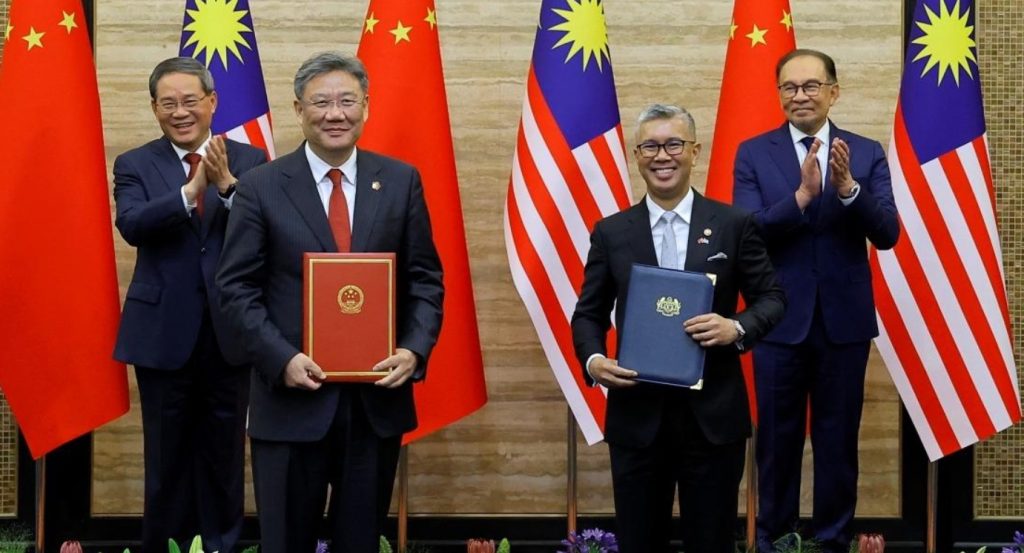
PUTRAJAYA: A total of 14 Memoranda of Understandings, Agreements (MoUs/MoAs), protocols and joint statements involving 9 ministries have been exchanged between Malaysia and China, witnessed Prime Minister Datuk Seri Anwar Ibrahim and China Premier Li Qiang. The documents were exchanged during Li’s official visit to Malaysia, marking his first visit to the country as premier, in conjunction with the 50th anniversary of diplomatic relations between Malaysia and China. The 9 ministries involved are the Ministry of Investment, Trade and Industry (MITI); Finance (MOF); Agriculture and Food Security; Housing and Local Development; Home Affairs; Science, Technology and Innovation (MOSTI); Higher Education (MOHE); Tourism, Arts and Culture; as well as Communications. Apart from the MoUs, Malaysia and China also inked the second cycle of the Malaysia-China 5-year programme for economic and trade cooperation to deepen further linkages between industries in priority sectors like high-level manufacturing and digital economy. The programme, which will from 2024 to 2028, aims to deepen cooperation in robotics, entrepreneur development, innovation and startup, along with research and development in agriculture and primary industries. According to MITI, the second cycle will also focus on existing areas such as trade and investment, manufacturing, the digital economy, logistics and the development of small and medium enterprises. On this, MITI Minister Tengku Datuk Seri Zafrul Abdul Aziz and China’s Minister of Commerce Wang Wentao signed and exchanged 3 key documents – the first document related to the initial Malaysia-China 5-Year Programme for Economic and Trade Cooperation, while the other 2 were new MoUs aimed at increasing high-quality investment in the digital and green economies. More specifically, both countries aim to explore cooperation in digital infrastructure, including communication networks, smart infrastructure and smart cities, enabled by technologies such as AI and 5G connectivity in sectors like manufacturing, transportation, business, finance, education and healthcare. The MoU on green development seeks to explore cooperation in clean energy, new energy vehicles, green finance, sustainable infrastructure construction and green technology. This includes research and development (R&D) and the establishment of scientific and technological innovation platforms to accelerate the green transformation journey of both countries. MITI also welcomes the Malaysia-China cooperation on establishing a single window system to facilitate cross-border trade by streamlining trade regulatory processes and simplifying documentation. The system will enable the seamless digital exchange of trade-related information between customs authorities in both countries, which would utilize leading-edge technologies including AI and blockchain to ensure real-time and accurate exchange of data. “The single window trade initiative is a strategic step towards enhancing Malaysia’s trade facilitation capabilities and is expected to significantly expedite the movement of goods while reducing the administrative burden for businesses. “This will not only support bilateral trade growth, but also nurture economic resilience between the two countries,” Tengku Zafrul said. China has been Malaysia’s largest trading partner for 15 consecutive years since 2009. Last year, total trade with China was valued at RM450.84 billion (US$98.80 billion), contributing 17.1% of Malaysia’s global trade.
Investment & Market Trends

Yi-Lai Industry Launches New Product Range To Capture Wider Market

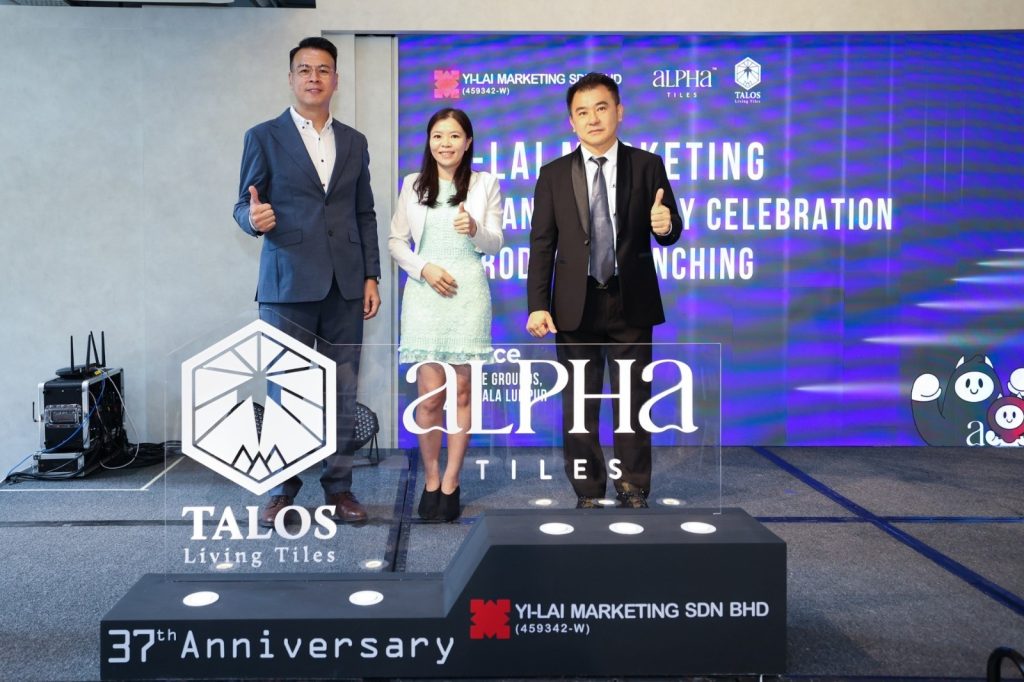
KUALA LUMPUR: Tiles manufacturer Yi-Lai Industry Bhd (YLI), a subsidiary of Bursa Malaysia’s main market-listed YB Ventures Bhd (YBV), continues to make greater market strides for its Alpha Tiles and Talos Living Tiles brands in Malaysia. The company noted that the brands’ technological properties have achieved higher sales and continue to garner new inquiries across industries in the country. “We aim to transform tiles from mere functional items to integral elements of stylish and modern living spaces,” YBV chairman Datuk Sri Tajudin Md Isa said in a statement. Celebrating its 37 years in the business, the company’s Alpha Tiles and Talos Living Tiles brands, marketing arm Yi-Lai Marketing Sdn Bhd, continues to see new inquiries. YLI has already secured interest from significant projects, including the Sheraton Hotel in Johor Bahru. YLI’s Alpha brand has evolved from a local tile manufacturer to a market pioneer known for its diverse range of small-sized ceramic and homogenous tiles. Today, Alpha Tiles introduces large-format tiles with various designs and surfaces to meet modern consumers’ needs. The new product line, known as the Infinity Collection, combines the strengths of Alpha Tiles and Talos Living Tiles to create infinite design possibilities for customers. The new tiles are crafted using a revolutionary material called shape ink, which enhances the tile surface with ink and glaze. This innovation saves time and eliminates the need to change moulds, streamlining the production process. “We are proud to incorporate this cutting-edge technology, which allows us to offer superior quality and variety to our customers,” Tajudin said. The new tile series addresses common challenges consumers face, such as matching tiles in different areas with varying sizes and surfaces. The Infinity Collection offers a variety of surfaces and sizes, enabling easy coordination and reducing decision fatigue. This flexibility makes the collection ideal for both residential and commercial use. YBV executive director Datuk Au Yee Boon said the new products are designed for tech-savvy, daring, and art-oriented buyers who appreciate unique and innovative items. “Our comprehensive range, complete with multiple sizes and stock availability, sets us apart from competitors,” he said. The new tiles’ innovative production process ensures high quality and durability, contributing to longer-lasting installations and reduced replacement needs. The launch of the Infinity Collection marks a significant milestone for Alpha Tiles, positioning the brand to the upper-middle market. Talos Living Tiles continues to expand its high-end offerings, catering to discerning customers seeking premium products. “This is just the beginning of our journey with these new products, and we are excited about the potential collaborations and market expansion,” stated Datuk Au Yee Boon. YLI was among the first in Malaysia to produce Slate Effect Homogeneous Tiles and achieved a significant technology breakthrough with the Rustico Embossed Slate Effect Tile (RESET) in 1996. The company has been recognised for contributing to major residential and commercial projects, including developments in Subang Jaya and several key public facilities in Malaysia. The tile industry continues to evolve, with increasing demand for innovative and high-quality products. YLI’s commitment to technological advancements and design innovation positions it well to capitalise on these trends. The introduction of large-format tiles and advanced materials like shape ink demonstrates the company’s dedication to meeting and exceeding market expectations.

Investment & Market Trends

FTSE4Good Bursa Malaysia June Semi-Annual Review

KUALA LUMPUR: Bursa Malaysia Berhad (“Bursa Malaysia” or the “Exchange”) announced today the addition of 12 companies to the FTSE4Good Bursa Malaysia (“F4GBM”) Index and 9 companies to the FTSE4Good Bursa Malaysia Shariah (“F4GBMS”) Index. The F4GBM Index evaluates the performance of public listed companies (PLCs) with good liquidity that demonstrate strong Environmental, Social, and Governance (ESG) practices. Constituents are selected from the FTSE Bursa Malaysia EMAS Index, encompassing small, medium, and large market capitalization segments. The F4GBMS Index, a subset of the F4GBM, tracks Shariah-compliant constituents according to the Shariah Advisory Council (SAC) screening methodology. Both indices undergo semi-annual reviews in June and December based on international criteria. In the latest review period for June 2024, the F4GBM Index has increased its total number of constituents to 120 with the addition of 12 new companies, marking a 400% increase since its inception in December 2014, when it started with 24 constituents. The F4GBMS Index will see 9 additions and 1 deletion, bringing its total to 95 constituents. All changes will take effect on 24 June 2024 (Monday). Details of the changes are as follows: FTSE4Good Bursa Malaysia Index Inclusions: 1. Bank Islam Malaysia – Now meets FTSE4Good criteria 2. Carimin Petroleum – Now meets FTSE4Good criteria 3. Harbour-Link Group – Now meets FTSE4Good criteria 4. Icon Offshore – Now meets FTSE4Good criteria 5. Pecca Group – Now meets FTSE4Good criteria 6. Petron Malaysia Refining & Marketing – Now meets FTSE4Good criteria 7. QL Resources – Now meets FTSE4Good criteria 8. Shangri-La Hotels (Malaysia) – Now meets FTSE4Good criteria 9. Sports Toto – Now meets FTSE4Good criteria 10. Sunway – Now meets FTSE4Good criteria 11. Wasco – Now meets FTSE4Good criteria 12. YTL Power International – Now meets FTSE4Good criteria FTSE4Good Bursa Malaysia Shariah Index Inclusions: 1. Bank Islam Malaysia – Meets FTSE4GBMS criteria 2. Carimin Petroleum – Meets FTSE4GBMS criteria 3. Icon Offshore – Meets FTSE4GBMS criteria 4. Pecca Group – Meets FTSE4GBMS criteria 5. Petron Malaysia Refining & Marketing – Meets FTSE4GBMS criteria 6. QL Resources – Meets FTSE4GBMS criteria 7. Shangri-La Hotels (Malaysia) – Meets FTSE4GBMS criteria 8. Sunway – Meets FTSE4GBMS criteria 9. Wasco – Meets FTSE4GBMS criteria Exclusion: 1. Eco World International – Did not meet SAC criteria Bursa Malaysia has been working with financial institutions and institutional investors to encourage PLCs to improve their ESG practices. The increasing number of index constituents reflects the success of these initiatives and the growing adoption of ESG practices by PLCs. The updated lists of F4GBM Index and F4GBMS Index constituents, effective 24 June 2024, are detailed in Appendix 1. The ESG ratings (Grading Band) for both indices will be available on the Bursa Malaysia website after 24 June 2024 at the following link: Bursa Malaysia – FTSE4Good Bursa Malaysia Index

Investment & Market Trends, News

Positive View on DRB-Hicom Remains Due to Proton’s Growth

KUALA LUMPUR: Hong Leong Investment Bank (HLIB) remained positive on DRB-HICOM Bhd’s long-term outlook on potential growth driven by Proton subsidiaries amid increasing market competition. In a research note, HLIB said that Proton is targeting to achieve 2024 sales of 160,000 units against 151,000 units in 2023, through new models introduced and attractive promotional campaigns. “Proton has recently launched the updated X50 RC with good discounts and is expected to launch another X70 facelift soon, along with introducing a new electric vehicle (EV) model by the end of the year in line with management’s target of one new model launch per annum,” it said. HLIB said the DRB-Hicom management brushed aside the potential market competition from Zeekr’s entry into the Malaysian market, given the different market segment, where Zeekr would be positioned as a higher premium segment than Proton’s e.MAS EV. Zeeker is a publicly listed Chinese automobile company and the brand is owned by Geely Automobile Holdings. HLIB also said that Bank Muamalat and CTRM would continue supporting DRB-Hicom 2024’s performance. “We reiterate our ‘buy’ rating with an unchanged target price (TP) of RM1.65 based on a 20% discount to sum-of-parts (SOP) RM2.04,” said the research firm. Additionally, Kenanga Research also maintained its ‘market perform’ call on DRB-Hicom with a SOP-derived TP of RM1.40. The research house said it likes the company for being the second largest player in the local automotive sector, second only to Perodua, with a market share of about 30% and its strong Proton and Honda franchises as well as its improving banking franchise under Bank Muamalat. “However, DRB-Hicom’s outlook has weakened with Rival Perodua turning up the heat with aggressive new launches, coupled with earnings drags from certain non-performing units,” it said. Kenanga Research said the risks to its call include consumers cutting back on discretionary spending amidst high inflation and persistent disruptions in the global supply chain. “Other risks also include a slowdown in capital market activities and a global recession hurting the demand for transport and aviation services,” it added. — BERNAMA

Investment & Market Trends

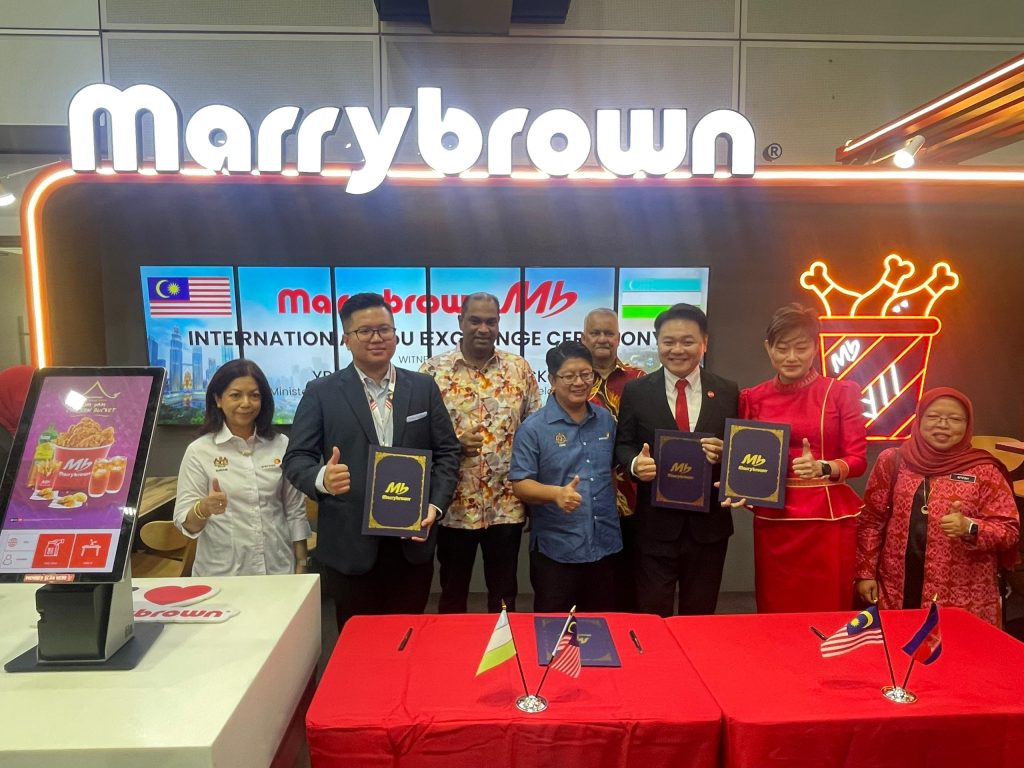
Marrybrown Continues to Amplify International Presence with Expansion to Cambodia and Uzbekistan

KUALA LUMPUR: After its first foray in the land down under, Marrybrown, the largest homegrown Halal Quick Service Restaurant (QSR), expands its footprint across Asia through an MoU signing with SP QSR and Food Services Co. Ltd and Gemilang International Limited, officiating its partnership for the opening of new Marrybrown outlets in Cambodia and Uzbekistan! With over 40 years of franchising experience, Marrybrown aims to strengthen its international presence by opening more than 30 new outlets in Cambodia and Uzbekistan over the next five years. The rising demand for halal food presents an excellent opportunity for Marrybrown to introduce its signature crispy chicken and innovative meals infused with Malaysian flavours to these high-tourism regions.   “Our collaboration with these companies aligns perfectly with our international expansion plans. Given their extensive experience and deep knowledge of the local markets, we are optimistic that this partnership will be highly successful. This move will allow us to deliver unique dining experiences and high-quality service to new audiences,” said Dato’ Joshua Liew, Group Executive Director of Marrybrown.   Following the MoU, Marrybrown is set to launch its first outlet in Phnom Penh, Cambodia. This marks a significant milestone in establishing a new presence in Cambodia, where Marrybrown will serve its signature menu items such as crispy chicken, Nasi Lemak MB, and other beloved meals. The expansion aims to cater to the growing demand for halal-certified food options within the local community and introduce them to the unique flavours of Malaysia.   Similarly, the opening of the first Marrybrown outlet in Uzbekistan will be in Tashkent City. This exciting development will bring more halal and delicious options to the residents of Uzbekistan, marking an important step in Marrybrown’s international expansion. The new outlet will offer a diverse range of menu items, catering to the tastes of local food enthusiasts and ensuring that Marrybrown’s high standards of quality and service are maintained. “As the demand for halal-certified food grows, Marrybrown recognises the need for more diverse dining options within communities. This expansion to Phnom Penh, Cambodia and Tashkent City, Uzbekistan, presents a prime opportunity to introduce our halal Malaysian flavours to new markets,” assured Dato’ Joshua. Marrybrown currently serves millions of customers in more than 500 restaurants across 16 countries with the objective of delivering the highest standard of quality, service, cleanliness, and value for the perfect dining experience.

Energy & Technology, Investment & Market Trends, News

Simpor Hibiscus to Acquire TotalEnergies Brunei for RM1.22 Bil

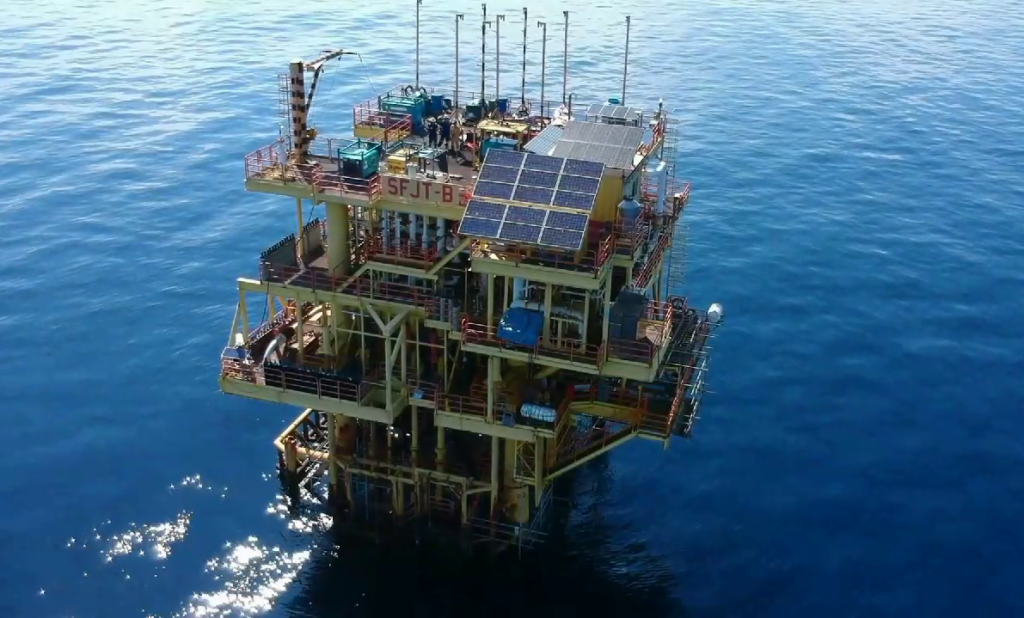
KUALA LUMPUR: Hibiscus Petroleum Bhd’s indirect wholly-owned subsidiary Simpor Hibiscus Sdn Bhd has entered into a conditional share purchase agreement with Total Energies Holdings International BV to acquire the entire equity interest in TotalEnergies EP (Brunei) BV for RM1.22 billion. The group noted that TotalEnergies was incorporated in the Netherlands and is operating via its branch in Brunei Darussalam with its principal activity being hydrocarbon exploration and production. It also owns a 37.5% operated interest in Block B Maharajalela Jamalulalam (MLJ) field. Hibiscus Petroleum said in a filing with Bursa Malaysia that the MLJ field is a high-quality gas asset located offshore Brunei. “Located in a prolific hydrocarbon-bearing region, the asset was discovered in 1989 and has been producing gas and condensate since 1999. The asset has long-term production rights of up to 15 years (expiring on 23 Nov 2039) if extended with the agreement of the joint venture parties. “Other parties holding the remaining interest in the asset are Shell Deepwater Borneo Ltd (35%) and Brunei Energy Exploration Sdn Bhd (27.5%), a company ultimately owned by Brunei Minister for Finance Corporation,” it said. The group said the funding of the proposed acquisition is expected to be sourced from a combination of internally generated funds and its existing debt or other facilities. Hibiscus Petroleum said this asset is expected to add a net of up 21.7 million barrels of oil equivalent (MMboe) to the group proven and probable (2P) oil reserves, an increase of 36% from 60.9 MMboe to 82.6 MMboe as of 1 January 2024, while a total daily net production of oil, condensate and gas is expected to increase by circa 7,865 boe per day from 21,398 boe per day to 29,263 boe per day in calendar year 2024. This is expected to bring the gas production share of the group’s portfolio to almost 50%, in line with the group’s energy transition strategy of acquiring gas-weighted assets in stable regulatory jurisdictions. “This transaction also represents a significant step towards fulfilling the group’s aspiration of becoming a net zero emissions producer by 2050. The group is set to gain multiple benefits from the proposed acquisition. “Beyond acquiring a well-established gas asset in Brunei and taking over its operations, the proposed acquisition further strengthens the group’s position as an independent exploration and production (E&P) player in the region,” it said. Hibiscus Petroleum Managing Director Dr Kenneth Pereira said the additional volumes from this transaction are material for the group and will provide an uplift of nearly 86% to gas production while bringing the company closer towards achieving the 2026 mission of growing the group’s net production to 35,000 to 50,000 boe per day. “In addition, employees of TotalEnergies Brunei will be joining the group as part of the transaction. They bring with them a wealth of knowledge and experience. “We look forward to working together to enhance the value of the asset safely and efficiently for all stakeholders. Most importantly, we are excited by the opportunity to work with our joint venture partners, Shell Deepwater Borneo, Brunei Energy Exploration as well as the government of Brunei,” he said. — BERNAMA

Investment & Market Trends, News

KL’s Startup Ecosystem Generates More Than RM220 Bil in Value Over 3 Years

KUALA LUMPUR: The startup ecosystem in Kuala Lumpur has generated more than RM220 billion (US$47 billion) in ecosystem value from 1 July 2021 to 31 December 2023, said Cradle Fund Sdn Bhd. The agency – operating under the Finance Ministry and administered by the Ministry of Science, Technology and Innovation (MOSTI) –  said that the ecosystem value measures the city’s economic impact from the value of exits and startup valuations. In a statement, Cradle said that KL also received recognition in the latest Global Startup Ecosystem Report (GSER) 2024, placing it among the top 30 emerging ecosystems, which reflects its rapid growth and substantial economic impact. Its Group Chief Executive Officer Norman Matthieu Vanhaecke said these achievements underscore the efforts and strategic initiatives to foster a conducive environment for startups. “Malaysia views startups as a pivotal force in driving local innovation and technological advancement. Cradle seeks to combine the resources and experiences of all ecosystem stakeholders. “With a consistent commitment to cultivating a high-performing, inclusive, globalised and sustainable ecosystem, Cradle envisions propelling Malaysia to the forefront of the global startup ecosystem,” he said. According to the GSER 2024 report, Kuala Lumpur’s ecosystem has also received notable rankings in several key areas within Asia, namely the Top 15 Asia Ecosystems in Funding, the Top 20 Asia Ecosystems in Performance and the Top 20 Asia Ecosystems in Talent and Experience. — BERNAMA

Investment & Market Trends, News, Property

MTDC to Focus on Large-Scale Development, Increased FDI in Johor

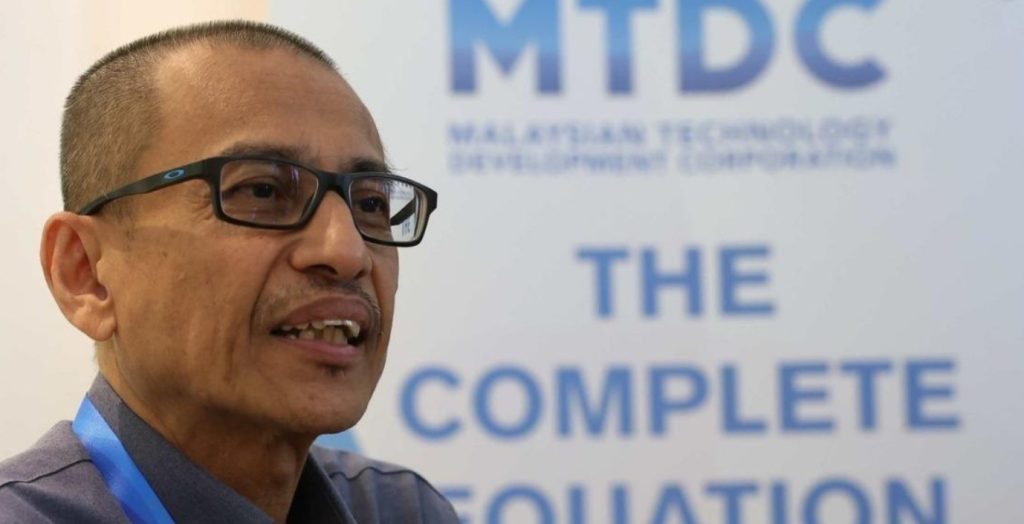
ISKANDAR PUTERI: Large-scale development and increased foreign investments in Johor are the focus of the Malaysian Technology Development Corporation (MTDC) in organising the first instalment of Road2Growth (R2G) Southern Region this year. Chief Executive Officer Mohamad Hazani Hassan said Johor’s rising stature as a strong economic state is one of the reasons MTDC is eager to introduce its technology, innovative solutions in Industry 4.0 (IR4.0) and digitalisation to the participants at R2G Southern Region. “Over the past few years, the growth in Johor has been phenomenal with large-scale development and increased foreign investments making Johor their port of call. “We highly encourage entrepreneurs, especially those from Johor, to seize this unique opportunity to further expand your business,” he said. He also mentioned that in the R2G programme in Johor, participants were able to choose from any of the 7 tracks, specifically on commercial funding, developmental funding, ecosystem partnerships, business and technology consulting training, talent development and business innovation. Speakers include representatives from Bursa Malaysia Bhd, Malaysian Industrial Development Finance Bhd (MIDF), SME Bank and the Ministry of Science, Technology and Innovation (MOSTI). “Overall, MTDC’s R2G aims to offer valuable insights and make the right support and resources available to Malaysian technopreneurs to compete on a global level so that they may continue significantly to the technological advancements and the economic growth of the country,” he added. Additionally, MTDC is looking to increase its investment in Johor, especially in companies supporting data centres. “In Johor, MTDC has invested and funded 65 companies with a total of RM110.9 million and 2 of these companies have been listed on Bursa Malaysia. “The state is currently a hot spot with the introduction of many data centres so we are looking at that potential for investing,” said Hazani. According to him, MTDC did not set any specific target for growth in investment in the state but is actively looking at early stage technology companies. “We want to create the ecosystem that supports the supply chain. It can be in the energy area because data centres are power hungry, or even blockchain,” he added. — BERNAMA

Investment & Market Trends, News

Malaysian RE, Pacific Life Re Collaborate to Enhance Takaful Solutions

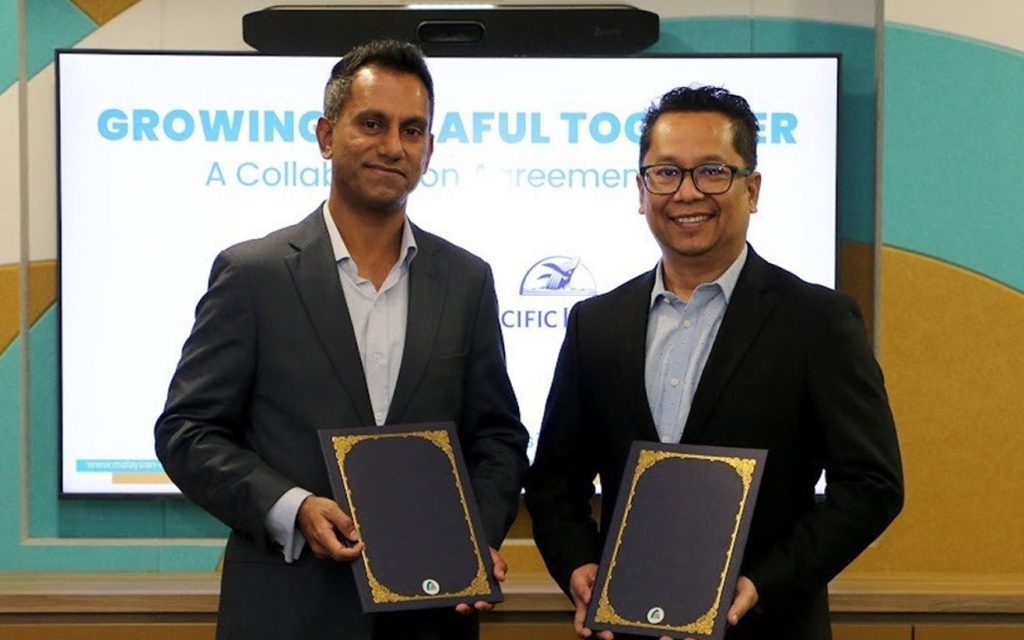
KUALA LUMPUR: Malaysian Reinsurance Bhd and the Singapore branch Pacific Life Re Ltd have inked a Memorandum of Understanding (MoU) to provide sustainable retakaful solutions to takaful operators. In a statement, Malaysian Re’s President and Chief Executive Officer Ahmad Noor Azhari Abdul Manaf said the collaboration has allowed both parties to deliver exceptional retakaful solutions to meet the diverse needs of their customers. The collaboration was first established in 2019 and since then, Malaysian Re through its retakaful division Malaysian Re Retakaful Division (MRRD) has worked with Pacific Life Re to provide family retakaful solutions leveraging on Pacific Life Re’s global experience and technology solutions powered by UnderwriteMe, Pacific Life Re’s fully-owned subsidiary. “Within the first 5 years of this collaboration, Malaysian Re has expanded not only its takaful business but also its conventional business and we look forward to unlocking new opportunities from the extension of this collaboration. “By combining both Malaysian Re and Pacific Life Re’s strengths and advantages, we are well-positioned to continue providing innovative retakaful solutions to address complex risk challenges faced by the industry as well as promote the benefits of retakaful to a larger pool of industry players,” Noor Azhari said. Meanwhile, Pacific Life Re’s Managing Director Vasan Errakiah said this collaboration underscores the shared vision and commitment of both Malaysian Re and Pacific Life Re to meet the demands of the sector and contribute to the enhancement of retakaful solutions. “By combining our expertise, we are confident that we will continue to deliver greater value to our customers and contribute to the development of a robust and innovative retakaful market,” he added.

Investment & Market Trends, News

Economist Calls for Buoyancy, Reforms in Malaysia’s Tax System

KUALA LUMPUR: Malaysia’s tax system requires reform due to its imbalanced distribution of non-tax revenue, which tends to narrow the tax base, said an economist. Bank Negara Malaysia’s (BNM) board of directors member, Dr Nungsari Ahmad Radhi said that the country’s taxation system must undergo reform to give greater buoyancy to government revenue and to broaden the tax base. “The problem with our tax base is that it is not buoyant to show a 1% gross domestic product (GDP) growth yields more than 1% tax revenue,” he said at the BNM-organised Sasana Symposium 2024. Nungsari emphasised that the current taxation system relied on direct taxes, such as income and corporate taxes and taxpayers will be monitoring government spending. Nungsari said the dependency on non-tax revenue in the form of dividends from Petroliam Nasional Bhd (Petronas) is not sustainable in the long run. “We have been taking so much from Petronas, that they are not making enough investments to explore more wells to pay the dividend they have been paying. “We have to be prepared for the post-carbon, post-(crude) oil scenario where petroleum-based revenues will no longer be there as in the past,” he said. Nungsari also said that in the longer term, structural issues highlighted in Madani Economic framework would need close attention. — BERNAMA

Scroll to Top

Subscribe
FREE Newsletter