Investment & Market Trends

Investment & Market Trends, News

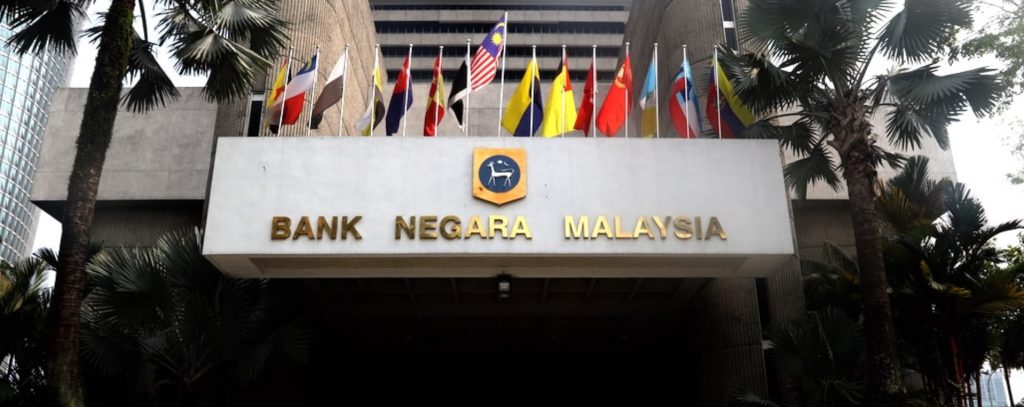
BNM International Reserves Stands at US$113.4 Bil On 15 April 2024

KUALA LUMPUR: Bank Negara Malaysia’s (BNM) international reserves amounted to US$113.4 billion (RM542.39 billion) as of 15 April 2024 compared with US$113.8 billion (RM544.3 billion) as of 29 March 2024. The central bank said the reserves are sufficient to finance 5.6 months worth of imported goods and services and is 1 times the total short-term external debt. The main components of the reserves were foreign currency which stood at US$100.1 billion (RM478.77 billion), International Monetary Fund Reserves at US$1.4 billion (RM6.69 billion), special drawing rights (SDRs) of US$5.7 billion (RM27.26 billion), gold at US$2.8 billion (RM13.39 billion) and other reserve assets at US$2.4 billion (RM11.47 billion). Meanwhile, total assets stood at RM630.93 billion comprising gold, foreign exchange and other reserves including SDRs (RM536.93 billion), Malaysian government papers (RM12.99 billion), deposits with financial institutions (RM1.66 billion), loans and advances (RM24.53 billion), land and buildings (RM4.12 billion and other assets (RM50.67 billion). According to BNM, capital and liabilities comprised paid-up capital (RM100 million), reserves (RM192 billion), currency in circulation (RM172.25 billion), deposits by financial institutions (RM142.29 billion), federal government deposits (RM6.09 billion) and other deposits (RM63.64 billion), BNM papers (RM20.70 billion), SDRs allocation (RM30.21 billion), and other liabilities (RM3.62 billion). — BERNAMA

Investment & Market Trends, News

Meta Bright Partners with Doople Tech for RE Venture

KUALA LUMPUR: Meta Bright Group Bhd (MBG), via its wholly-owned subsidiary, FBO Land (Serendah) Sdn Bhd (FBO Land), signed a subscription and joint venture agreement with Doople Tech Sdn Bhd (DTSB).   In a filing with Bursa Malaysia, MBG said the agreement entails FBO Land to subscribe 1,000,000 redeemable non-convertible preference shares (RNCPS) at an issue price of RM1.00 per RNCPS in a new joint venture company to be incorporated. The new joint venture company will identify, invest in, and develop renewable energy (RE) projects, particularly those requiring Bumiputera’s participation. This initiative perfectly aligns with MGB’s commitment to supporting Malaysia’s national energy roadmap and contributing to a greener planet. MBG executive director of corporate and strategic planning Derek Phang Kiew Lim said the company looks forward to its partnership with DTSB, which has expertise in the solar sector and is experienced in the commercial and industrial (C&I) front. “This partnership allows MBG to leverage its position as a listed company to fund promising renewable energy projects, while DTSB’s technical proficiency ensures exceptional execution,” he said in a statement. Besides expansion into sustainable energy, the joint venture also promises substantial financial benefits. FBO Land is set to receive a yearly cumulative preferential dividend of 8 per cent per annum, creating a stable, recurring income stream over the five-year tenure of the RNCPS. This collaboration highlights the synergistic potential between MBG’s financial capabilities and DTSB’s operational expertise. The focus will particularly be on niche markets within the solar C&I sector, which are currently underserved by larger players. This targeted approach is expected to unlock new opportunities and drive growth within Malaysia’s renewable energy sector. MBG reported that the total value of projects that have completed installation is approximately RM3.55 million. Additionally, the company has projects currently in progress valued at around RM11.89 million.

Investment & Market Trends, News

Malaysia’s Economic Expansion Estimated at 3.9% in Q1

PETALING JAYA: Malaysia’s economy expanded by 3.9% in the first quarter of the year according to preliminary figures released by the statistics department. This growth represents an improvement from the 3% seen in the previous quarter, which was affected by lower export activity. Chief statistician Uzir Mahidin highlighted that the services sector drove the Q1 growth, increasing by 4.4%, led by gains in wholesale and retail trade, transport and storage, and business services. The construction sector notably surged by 9.8%, largely propelled by civil engineering projects. Manufacturing rebounded with a 1.9% growth after a contraction of 0.3% in the preceding quarter. Agriculture expanded by 1.3%, supported by increased oil palm and livestock production. The mining and quarrying sector grew by 4.9% in Q1 2024, primarily due to expansion in the natural gas sub-sector. Separately, the Ministry of Investment, Trade, and Industry reported Malaysia’s highest-ever Q1 trade figures this year, with total trade increasing by 7.1% year-on-year to RM690.59 billion, resulting in a trade surplus of RM34.22 billion. Exports rose by 2.2% to RM362.41 billion, driven by higher shipments of manufactured and mining goods including iron and steel products, machinery, crude petroleum, and liquefied natural gas. Imports surged by 13.1% to RM328.19 billion, mainly due to increased imports of capital and intermediate goods for manufacturing.

Investment & Market Trends

Topmix Posts RM2.8mil for Q4

KUALA LUMPUR: ACE market-bound surface decorative products company Topmix Bhd posted a net profit of RM2.8 million on the back of RM21.6 million in revenue for the fourth quarter (Q4) ended December 31, 2023 (FY23). This is the first interim financial report announced in compliance with the ACE Market Listing Requirements of Bursa Malaysia. There are no comparative figures for last year’s quarter as no financial report was made. For FY23, Topmix recorded revenue of RM72.7 million, with high-pressure laminate (HPL) products accounting for 94.4 per cent of this total. The remaining revenue was contributed by the sales of other surface decorative products (5.1 per cent) and kitchen and wardrobe accessories (1 per cent). In tandem with the topline growth, gross profit (GP) was RM26.0 million, translating into a healthy GP margin of 35.8 per cent. As for the bottom line, net profit stood at RM8.4 million in FY23. Managing director Teo Quek Siang said that looking ahead, Topmix remains confident in its future prospects as it focuses on executing growth strategies and reinforcing its market position in the surface decorative products industry. “With the anticipated proceeds of RM25.6 million from our listing, we are initiating our expansion strategies to strengthen Topmix’s market reach further. “Moving forward, Topmix will expand into the assembly of melamine-faced chipboard (MFC) products, extend our footprint to the northern region of Peninsular Malaysia, increase warehouse capacity in the central region, and enhance our Topmix HPL mobile application,” he said in a statement. Teo said these initiatives are well-aligned with the recovery and growth of residential and commercial property markets, bolstering demand for surface decorative products. “The positive outlook is further supported by the growing affluence of the population and preference for personalised spaces,” he said. Topmix is slated to be listed on the ACE market on April 23, 2024. Upon listing, Topmix will have a market capitalisation of RM122.1 million, calculated based on the issue price of RM0.31 per share and the enlarged issued share capital of 393.9 million shares.

Investment & Market Trends, News

Maxis Invests RM813 Mil To Enhance Network And IT Capabilities

KUALA LUMPUR: Maxis Bhd has invested RM813 million in FY2023 to enhance its mobile network capacity, grow its fibre-to-premise footprint and improve digitalisation across the company. Its Chief Executive Officer Goh Seow Eng said that at the end of 2023, Maxis has more than 11,000 LTE sites in Malaysia, covering 95% of the population and connecting an additional 181,000 premises with its fibre infrastructure. “We continue to record a high touch point net promoter score of +68, thanks to the loyalty of our customers and their satisfaction with our products and services,” he said in the company’s annual report. According to Goh, Maxis has improved its Maxis and Hotlink apps to enable features such as plan upgrades, device purchases, roaming passes and credit top-ups to be completed with as few clicks as possible. It will also focus on digitalising customer interactions to ensure faster, more accessible and reliable service and is confident that Maxis will strengthen its position as Malaysia’s leading integrated telco. “Our long-term goal remains firmly set on sustainable and predictable business growth. “Despite the intensifying competition and ever-changing regulatory landscape, we are confident that our agility and fast response allow us to seize opportunities that may arise from these developments,” he added. Maxis’ net profit for the financial year ended 31 Dec 2023 (FY23) fell 16.8% to RM993 million from RM1.15 billion in FY22. However, its revenue increased to RM10.18 billion from RM9.79 billion a year ago, with the total revenue growing 4% while underlying service revenue, excluding low-margin wholesale voice service terminated in the fourth quarter of 2022 (4Q22) grew 4.2% year-on-year (YoY). Preparing For The Digital Future Moving forward, Maxis plans to further explore automation and AI capabilities for improved operational efficiency while maintaining its focus on the company’s strategic initiatives. The company also plans to incorporate sustainability elements into its supply chain in the long run. “Our long-term vision focuses on evolving into a cyber-resilient digital telecommunications company. We expect threats against mobile networks, systems and attempts to compromise data to grow more advanced and persistent. “At the same time, our interconnected supply chains create new risks. We pre-empt this through our investment into resources, capabilities, AI/ML (machine learning)-led capabilities, targeted automation and strong partnerships,” Goh added.

ALPHA IVF
Investment & Market Trends, News

Alpha IVF Group posts RM13.58mil in net profit for Q3

KUALA LUMPUR: The Alpha IVF Group Bhd (AIG) posted a net profit of RM13.58 million for the third quarter (Q3) ended February 29, 2024 (FY24). Revenue stood at RM40.70 million for the quarter, attributed to the provision of assisted reproductive services, notably in-vitro fertilisation (IVF) treatments. There are no previous earnings comparisons, as the company was listed on the ACE market of Bursa Malaysia on 22 March 2024. In a filing with Bursa Malaysia, AIG did not provide any profit forecasts or guarantees for the current quarter. AIG plans to grow and improve its operations using its IVF expertise. The company plans to open more specialist centres in Malaysia, Indonesia, Cambodia, and Laos. Further, the company plans to upgrade and expand current centres, facilities, and offices and launch marketing campaigns to promote services and attract customers locally and internationally. In addition, AIG also plans to invest in research and development to stay ahead in assisted reproductive services and support business growth. In the filing, AIG expresses optimism about its future in the assisted reproductive services field and the broader healthcare industry.

Sime Darby Bhd growth
Investment & Market Trends, News

Sime Darby Heading Towards Strong Growth Trajectory

PETALING JAYA: UOB Kay Hian Research (UOBKH Research) predicts that Sime Darby Bhd will achieve a compounded annual growth rate (CAGR) of 14.8% from the fiscal year ending June 30, 2023 (FY23) to FY26. The positive outlook is supported by Sime Darby’s recent strategic acquisitions, notably UMW Holdings Bhd, and anticipated recovery in the Chinese market. In its coverage initiation on Sime Darby, UOBKH Research recommends a “buy” rating with a target price of RM3.13, based on 12.2 times the estimated price-earnings ratio for FY25. According to UOBKH Research, Sime Darby stands to benefit significantly from its acquisition of UMW, particularly in the motor vehicles segment, by capitalizing on broader opportunities in customers’ car-replacement cycles. UOBKH Research highlighted that Sime Darby’s recent acquisitions, combined with the rebound in the Chinese market, support the projected three-year CAGR of 14.8% from FY23 to FY26. Following the acquisition of UMW, Sime Darby now commands a leading 58% market share in Malaysia’s automobile industry, up significantly from 5% in FY23, driven primarily by Perodua and Toyota brands. In China, where premium and luxury vehicles dominate, Sime Darby holds a modest 5% market share. The company’s revenue from Malaysia and China together contributes 66% of the motor-vehicle division’s revenue, while Australasia and other Southeast Asian countries contribute the remaining 34%. This diversified market presence provides a robust revenue base that helps mitigate risks associated with regional economic fluctuations, according to UOBKH Research. While Sime Darby’s motor-vehicles division experienced a slowdown in China, its largest revenue contributor, there is considerable growth potential in the luxury vehicle market. Despite challenges such as supply chain disruptions and price competition affecting margins, Sime Darby plans to expand its sales networks and introduce higher-margin products. In its industrial division, which accounts for 35% of Sime Darby’s total revenue, growth will continue to be driven by overseas markets, particularly Australasia, supported by a stable order book fueled by strong demand in the mining sector and steady commodity prices. Although commodity prices are projected to soften, UOBKH Research expects continued positive momentum in order book replenishment due to increased demand for metals driven by renewable energy trends and recovery in China’s construction industry. Sime Darby’s strategic focus on acquisitions and divestments aims to strengthen its vehicles and industrial businesses, achieving a more balanced revenue distribution across key markets including Malaysia, China, and Australasia. UOBKH Research also noted that divestment of non-core assets would further enhance the company’s financial position, with assets like Komatsu, Malaysia Vision Valley land, and UMW’s Serendah land potentially being put up for sale in the future.

Citi Bank
Investment & Market Trends, News

Citi Bank And Leading Banks Streamline Workforce For Enhanced Efficiency

KUALA LUMPUR:  Citigroup’s headcount dropped by 2,000 employees following a comprehensive reorganization aimed at boosting profits and streamlining management layers. Similarly, Bank of America, Wells Fargo, and PNC Financial collectively trimmed more than 2,000 jobs in the three months ended March 31 compared to the previous quarter. This downsizing reflects banks’ efforts to manage costs amidst economic uncertainty, though expectations about future interest rate adjustments remain unsettled. Citigroup‘s recent layoffs are part of a broader initiative to cut 7,000 jobs, which will be reflected in upcoming quarterly earnings as employees complete their notice periods. The goal is to reduce Citi’s workforce by 20,000 over the next 2 years. Other banking executives acknowledged the challenges posed by changing interest rates, with higher funding costs and fluctuating trading results contributing to a cautious approach. Bank of America’s CEO noted a planned reduction in headcount, which has already decreased by over 4,700 since the first quarter of 2023. Meanwhile, investment banks like Goldman Sachs and Morgan Stanley saw declines in their workforce sizes, although they remain optimistic about increased revenue from capital markets activities like equity offerings and mergers. JPMorgan Chase, in contrast, expanded its workforce by nearly 2,000 employees in the first quarter, reaching a total of 311,921 employees, bucking the overall trend of workforce reductions across the industry.

Bursa
Investment & Market Trends, News

Bursa Rebounds Slightly from Beaten-down Prices

KUALA LUMPUR: Bursa Malaysia’s downward momentum is anticipated to ease today after Wall Street’s mixed performance, with the Dow Jones edging up slightly. The FBM KLCI benchmark opened marginally higher at 1,535.05, reflecting cautious sentiment in the market. Key Malaysian stocks rebounding from previous losses included Axiata, climbing five sen to RM2.55, MISC adding 3 sen to RM7.82, Telekom Malaysia rising 3 sen to RM6.03, and YTL Power advancing 3 sen to RM3.85. Consumer stocks saw gains too, with Dutch Lady adding 44 sen to RM32 and Heineken Malaysia climbing 30 sen to RM22.80. Ingenieur Gudang was highly active, rising one sen to 15.5 as the most traded share, while SBH held steady at 27.5 sen and MRCB edged up one sen to 66.5 sen. In the US, blue-chip stocks rebounded slightly on Tuesday after a significant decline, driven by hotter-than-expected inflation data that hinted at delayed interest rate cuts. Federal Reserve Chairman Jerome Powell, speaking at a recent policy forum, suggested policymakers would wait longer before adjusting rates, aligning with investor expectations of rate stability. Apex Securities Research predicts bargain-hunting in the domestic market following recent declines, with potential relief from China’s economic growth. The firm advised caution, recommending defensive strategies focusing on fundamentally strong stocks amid volatility. It also highlighted potential benefits for export-oriented companies from a strengthening USD and expressed optimism towards commodities-related stocks, especially in the oil and gas sector, supported by sustained high oil prices.

Investment & Market Trends, News

Concern Rises As Ringgit Heads Toward Worrying Level

KUALA LUMPUR: The ringgit may again reach its lowest valuation point as it nears the 4.80 level again against the strengthening US dollar (USD). US inflation data, rising US treasury yields, and escalating Israel-Iran tensions in the Middle East have thrown a spanner in the ringgit’s steady recovery against USD over the past month, following policy measures by Bank Negara Malaysia (BNM). The ringgit opened lower against the USD yesterday for the second consecutive day, falling to 4.7885 from Monday’s closing of 4.7785, which weakened even further to 4.7945 by 6pm. The ringgit touched RM4.80 against the greenback in February, which is its weakest level since January 1998 during the height of the Asian financial crisis. Bank Muamalat Malaysia Bhd chief economist Afzanizam Rashid said US data continued to point towards robust economic growth with retail sales in March, rising more than expected to 0.7% month-on-month (MoM) and beating the consensus forecast of 0.4%. “Consequently, the futures market has assigned a lower probability for rate cuts, suggesting the monetary easing thesis this year has diminished and lending more support to USD. “We have a heightened geopolitical risk which resulted in forex players flocking to the US dollar, and we have the US Federal Reserve (Fed) which is likely to keep the rate higher for longer,” he told Bernama. He also said the Fed seemed unlikely to cut the interest rate in the near- term considering the stubbornly high inflation rate recorded in March at 3.5%. Meanwhile, on Monday, BNM issued a statement reaffirming it will ensure that Malaysian financial markets remain orderly and continue to function efficiently in light of the geopolitical situation in the Middle East. The central bank said it would also ensure sufficient liquidity and the orderly functioning of the foreign exchange (FX) market, supported by ongoing initiatives with government-linked companies (GLCs), government-linked investment companies (GLICs), corporations and exporters bringing more inflow and liquidity into the forex market. Earlier this month, BNM’s Financial Markets Committee (FMC) said it was encouraged by the central bank’s “enhanced efforts” to further promote FX conversion activities by government-linked entities, Malaysian corporates and businesses. It noted that between Feb 26 and April 5, the ringgit was the only regional currency that strengthened against USD, gaining 0.6%.

Scroll to Top

Subscribe
FREE Newsletter