Investment & Market Trends

Investment & Market Trends

KPJ Healthcare Is Set To Post Positive Year-On-Year Earnings Growth, Says RHB Research

KUALA LUMPUR: RHB Research expect KPJ Healthcare Bhd to continue posting positive year-on-year (YoY) earnings growth, underpinned by robust patient traffic growth, improving operating efficiency of hospitals under gestation, and pick-up in foreign patient visits. “Notwithstanding the above, we gather that the company is set to see a better patient-case mix in the first quarter (Q1) 2024 – this could potentially lift revenue intensity higher, in our view,” the bank-backed research firm said in a recent note. The research firm said additionally, the health ministry’s latest move to exempt the post-basic qualification exemption for foreign nurses to work here from October 2023 till September 2024 could potentially address the country’s nursing shortage issue. “We believe a private hospital player like KPJ Healthcare could capitalise on such opportunities to meet its nursing requirements,” RHB Research noted. In addition, RHB Research opined that visa-free entry for foreign tourists, particularly from China and India, is set to have a positive spillover effect on the healthcare tourism (HT) sector here, as the two nations contributed 5 per cent and 3 per cent to Malaysia’s HT revenue, respectively. KPJ Healthcare’s key emphasis in prioritising the strengthening of its presence in Indonesia by setting up representative offices and recruiting agents that can help lead Indonesian patients along their HT route. KPJ Healthcare has set an ambitious RHB Research noted that the target is to achieve 18-20 per cent market share by 2024-2025 from the current 6 per cent. On earnings, RHB Research expect Q1 FY24 net profit to come within an RM67-RM72 million range, representing 26-36 per cent YoY growth, predicated on strategic upscaling initiatives in driving the growth of revenue intensity, improvements in operating efficiency from hospitals under gestation, and pick-up in HT. Based on its channel checks, the research firm also noted that five hospitals under gestation are set to post narrower earnings before interest, taxes, depreciation, and amortization (EBITDA) losses in Q1 FY24, underpinned by gradual improvements in operating efficiency. Notably, Damansara Specialist Hospital 2’s (DSH2) bed occupancy rate in January 2024 was guided to increase to 50 per cent on top of healthy growth in average monthly revenue. Note that DSH2 recently boosted its operating beds to 100. It looks to add 30-50 beds by the end of 2024. “We keep our earnings estimates unchanged but lower our required returns assumption to 9.2 per cent from 9.6 per cent. “Maintain Buy with a higher target price of RM2.12 as we think KPJ Healthcare’s domestic-centric focus should offer it a valuation premium over IHH Healthcare Bhd in the near term. “Key downside risks are lower-than-expected patient visits and higher-than-expected operating costs,” RHB Research said.

Investment & Market Trends

Local Firm Eyes Global Expansion In Booming Alternative Protein Industry

KUALA LUMPUR: Domestic alternative protein firm Ultimeat is eyeing the United States (US), China, Hong Kong, Taiwan, and Indonesian markets. Ultimeat founder and chief executive officer Edwin Lee said there are about seven alternative plant-protein-producing companies locally. The company see strong demand in Malaysia and globally for the alternative protein industry. According to Ernst & Young, the sustainable, alternative protein industry in Malaysia is projected to reach US$17.4 billion in 2027. Another data and analytics company GlobalData, reports that the local meat substitutes market is set to expand at a value compounded annual growth rate (CAGR) of 7.4 per cent throughout 2023 to 2027. Protein products like tofu, obtained from soybeans, registered a global market size of US$2.75 billion in 2022 and expanded at a CAGR of 15.16 per cent to reach US$6.43 billion from the 2023-2030 forecast period. Industry stakeholders have noted a surge in demand for newer alternative protein products in the global and local markets in recent decades. Strikingly evident today are newer varieties of plant-based alternatives made from quinoa and other sources displayed on supermarket shelves. Plant-based nuggets, burgers, and minced meat are the common consumables visible in the cold section as they are readily accessible and affordable to the community. Noting this significant demand for plant-based products, United States entrepreneur Alfred C Cheung, a certified food scientist, has set his foot on this rosy trail with his founder and chief executive officer Edwin Lee. Having set up their own company called Ultimeat, both men are bent on riding the gravy train in this area of food production. Speaking to The Exchange Asia recently, Cheung said that he is aware that the average Malaysian supermarket sells a range of varied plant-based proteins like soy-based tofu or wheat-based seitan, and many of these products are great choices for local consumers. According to him, plant-based protein has a growing middle-class and flexitarian niche market, with consumers always looking for delicious alternative protein sources. “It is here that we saw the opportunity to embark on this ultra-modern food production venture,” said Cheung. Ultimeat, established in 2021, is up and running, rolling out plant-based proteins from soy. The company is transitioning to mycoprotein, derived from fungi, as its main ingredient. “Yes, our feedstock fodder is fungi. We intend to introduce the wonderful world of ‘mycoprotein’, a revolutionary fungi-derived product that is, though a little underrated, economically viable, and an eco-friendly alternative to traditional animal proteins,” he said. Asked if local consumers would take to this plant-based food derived from fungi, he said Malaysians love trying new and interesting foods, and there are still many lesser-known and potentially more suitable alternative proteins out there that can be harnessed to provide protein food choices to the growing local market. “Not only do these products have a lower environmental impact than animal agriculture, but they also make up an essential part of vegetarian and vegan diets, with the necessary amino acids for building and repairing tissues in the body,” said Cheung. According to him, mycoprotein is created through a process known as biomass fermentation. The process uses the high protein content and rapid growth of microorganisms—in this case, fungi—to efficiently make large amounts of protein-rich food. Since fermentation is a natural process, this has the added benefit of being much cheaper than other methods of creating alternative protein products. He said the extrusion method uses moisture, high heat, and mechanical energy to produce meat substitutes in seconds. While the extrusion process is quicker, it is significantly more expensive. In contrast, fermentation uses less energy and utilises carbon and nitrogen sources, which, as a bonus, is better for the environment. According to Edwin Lee, there are about seven alternative plant-protein-producing companies locally. When suggested that the playing field could be crowded with seven players competing for the market share, Lee said Ultimeat is committed to operating alongside the environment, social, and governance practices, offering plant-based food and its soon-to-be-launched mycoprotein alternatives, aiming to reduce environmental impact without sacrificing nutrition and taste. “By leveraging efficient lab-based production to lower carbon footprints and ensuring its products are both healthy and flavourful, we are showcasing our commitment to sustainability, affordability, and quality. These salient factors position Ultimeat products as the preferred choice,” he said. Lee also disclosed that Ultimeat is eyeing the opportunity to reach further horizons by exporting its products to the US, China, Hong Kong, Taiwan, and Indonesia as early as this year. “Our products are supplied to retailers, supermarkets, food service and hotel industries. We are also developing newer products such as meal replacement shakes and ready-to-drink products to complement our existing range of products. “Our base fodder is mycoprotein, which offers an umami flavour, meat-like texture, and a slew of nutritional alignment with our mission to provide healthy, sustainable food options without compromising taste or environmental integrity. “We are committed to pioneering mycoprotein as a key player in the future of our food,” he added. Ultimeat, which started operations with an initial investment capital of US$2.20 million, has a total staff strength of 35 employees. When asked to comment on the expected return on investments (ROI), Lee said the company’s current stance is to shift the focus from traditional ROI metrics to a broader impact on the food system. “Our investment goes beyond financial gains. We aim to improve sustainability and nutrition within the global food industry significantly. “We want to contribute to a more sustainable, healthy, and equitable food future that aligns with the United Nations Sustainable Development Goals,” he said.

Investment & Market Trends

Strong Demand For Dollar Bolstered DXY, Ringgit Remains Weak, Says Kenanga

KUALA LUMPUR: The strong demand for the greenback due to uncertainty about the Fed’s outlook has bolstered the US Dollar Index (DXY) within a 103.4 to 104.0 range, keeping the ringgit weak above RM4.70 per dollar. Kenanga Investment Bank Bhd said that following the Federal Open Committee Meeting (FOMC) meeting, the ringgit recovered some losses, which was helped by Fed chairman Powell’s remarks interpreted as dovish. The research firm said despite the pivotal decision by the Bank of Japan (BoJ) to end its negative interest rate policy and stronger-than-expected China’s industrial production index (IPI) and retail sales data, the ringgit surprisingly did not strengthen. “Also, disappointing domestic export growth has further weighed on the currency,” Kenanga said in a report. Meanwhile, the unexpected 25 bps rate cut by the Swiss National Bank on Thursday has significantly weakened the Swiss franc (CHF). “This, combined with the Bank of England’s dovish shift and robust US manufacturing purchasing managers’ index (PMI) data, has propelled the DXY higher, weakening the ringgit,” Kenanga said. The research firm said next week’s lack of catalysts may tether the ringgit’s movement against the dollar. However, anticipated fund inflows into emerging markets, particularly in Malaysia, due to speculation of a Fed pivot in June and the nation’s relative stability might aid the ringgit’s recovery. Additionally, continuous government and Bank Negara Malaysia (BNM) efforts to boost the ringgit’s value through short- and long-term policy reforms could support its stability. Kenanga said the market attention will be on the US core personal consumption expenditures (PCE) data next Friday.

Investment & Market Trends

Radium Development Declares RM1.00 Single-Tier Dividend To Shareholders

KUALA LUMPUR: Radium Development Bhd (RDB) (Radium) has declared the first single-tier interim dividend of 1.00 sen per share to its shareholders following a year of positive earnings growth and strategic accomplishments. The property developer, in a statement, said the dividend was for the financial year ending December 31, 2024 (FY24), reflecting the company’s robust revenue growth and unwavering commitment to delivering value to its shareholders. Radium reported an unaudited profit before tax (PBT) of RM19.80 million for FY23, showcasing the company’s ability to generate substantial earnings amidst a competitive market landscape. The company is also maintaining a low gross gearing ratio of 0.05 times, which underscores RDB’s prudent financial management practices and solid financial foundation, positioning the company for sustained growth and stability in the property development sector. Group managing director Datuk Gary Gan Kah Siong said the company’s successful financial performance and strategic investments have enabled it to not only meet commitments but also reward shareholders for their continued support. “The announcement of the first single-tier interim dividend reaffirms RDB’s financial strength and capacity to deliver sustainable value to its stakeholders. “With a focus on financial prudence and strategic growth initiatives, RDB remains at the forefront of the property development sector in Malaysia,” he said in a statement. RDB’s strategic land acquisition at Old Klang Road and successful project launches such as Vista Adesa @ Desa Timur and Radium Adesa @ Desa East Residences have been pivotal in driving growth and enhancing shareholder value. The high take-up rates for Vista Adesa and Radium Adesa projects, at 60 per cent and 78 per cent respectively, demonstrate strong market demand and confidence in RDB’s developments. The alignment of the Vista Adesa project with the government’s homeownership strategy, supported by the Housing Credit Guarantee Corporation (HCGS) loan programme, highlights RDB’s strategic partnerships and commitment to providing accessible property solutions. Furthermore, RDB’s collaboration with MyCharge EV Sdn Bhd to integrate electric vehicle (EV) chargers in its developments showcase the company’s dedication to environmental sustainability and innovation.

Investment & Market Trends

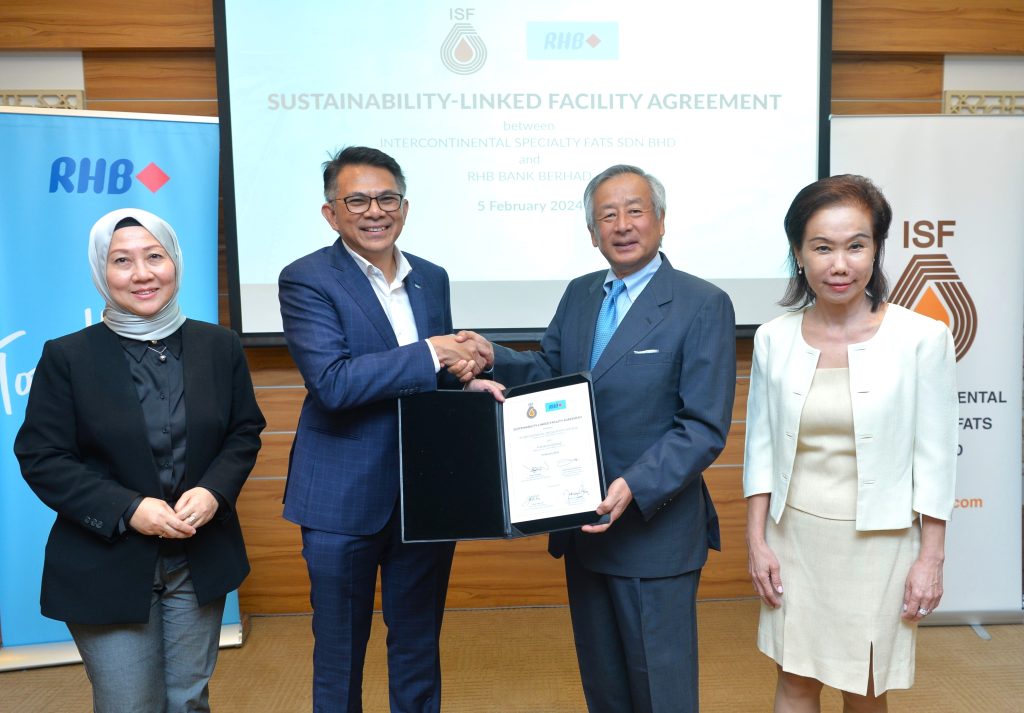
RHB Offers A Sustainability-Linked Facility Of RM90Mil To Intercontinental Specialty Fats

KUALA LUMPUR: RHB Bank Bhd has inked an agreement to provide a sustainability-linked facility (SLF) of RM90 million to Intercontinental Specialty Fats Sdn Bhd (ISF), a wholly-owned subsidiary of The Nisshin Oillio Group Ltd (NOG). Under the SLF terms, ISF will enjoy rebates upon achieving the pre-agreed sustainability performance targets (SPTs). These SPTs drive significant and measurable progress in key areas of ISF’s operations, supply chain engagement and client requirements, contributing to a more sustainable palm oil industry. RHB Banking Group group managing director and group chief executive officer Mohd Rashid Mohamad said the bank is committed to driving the adoption of sustainable practices across its business and operations. “The SLF extended to ISF not only embodies our shared vision of sustainable development but also solidifies RHB’s role as a catalyst of positive change, through collaborative efforts and mutual commitment to sustainability and financial success. “We are delighted to have the opportunity to support ISF on its sustainability journey and business growth through this SLF,” he said in a statement. The NOG is Japan’s largest edible oil manufacturer, while ISF is one of the leading specialty fats and oils manufacturers. ISF chief executive officer Takashi Ishigami said this partnership exemplifies the company’s shared commitment to sustainability and environmental, social, and governance (ESG) principles, empowering the advancement of impactful initiatives for a greener and more inclusive future. “Together, we are driving positive change and building a more sustainable world,” he said. The initiative also aligns seamlessly with RHB’s broader sustainability strategy. “As part of our ‘Together We Progress’ commitment, we remain steadfast in assisting our clients in achieving their sustainability goals. “Our collaboration with ISF exemplifies our unwavering support for companies prioritising ESG principles. “We look forward to making progress together with ISF, paving the way towards a more sustainable and low-carbon future,” Mohd Rashid said.

Investment & Market Trends

Wilhelmina, Ecoscience Collaborate On Black Pellet Plant In Kuantan

KUALA LUMPUR: Integrated palm oil milling services provider, Ecoscience International Bhd (EIB), through its wholly-owned subsidiary Ecoscience Manufacturing & Engineering Sdn Bhd (EME), signed a collaboration agreement (CA) with Maatschappij Wilhelmina N.V. (MWNV) for the engineering, procurement, and construction (EPC) work of a nominally 15 metric tonne per hour TG2 black pellet plant in Kawasan Perindustrian Gebeng Fasa III, Mukim Sungai Karang, Kuantan, Pahang. Under the CA, MWNV will finance, own and operate the TG2 black pellet plant. The Dutch renewable energy company intends to engage EME as the contractor to undertake the EPC work for the plant and manufacture certain structures, components, and equipment to be incorporated into the plant. Upon finalising details, both parties will execute a definitive EPC and master manufacturing agreement, which is expected by the fourth quarter of 2024. MWNV will outsource the operation and maintenance (O&M) of the TG2 black pellet plant to EME, formalising this through an O&M agreement. MWNV co-founder and chief executive officer Barthold van Doorn said the company’s goal is to operate with a carbon-neutral impact. “We see tremendous opportunities in generating renewable and carbon-neutral energy through recycling industrial agricultural waste streams. “We are primarily focused on the Southeast Asia region and Malaysia ticked all the boxes for us to locate our first plant,” he said in a statement. Based in the Netherlands, MWNV’s principal business activity is converting agricultural waste streams into sustainable energy in the form of TG2 black pellets. The plant converts agricultural waste, such as empty fruit bunch (EFB), into TG2 black pellets, which are a drop-in-coal replacement fuel. “This is why we chose Malaysia as the location for our plant. In fact, this TG2 black pellet plant, which will use EFB as feedstock, will be the first of its kind in the world. “As the second largest producer of palm oil globally, we understand Malaysia generates some 20 million tons of EFB waste a year. “Instead of being left to decay or fill up landfills, these can be transformed into a clean and high-energy coal replacement that could reduce as much as 12 million tons of methane, equivalent to 300 million tons of CO2. This can certainly contribute to the Malaysian government’s target of becoming a carbon-neutral nation by 2050,” Barthold said. He said MWNV’s investment in Malaysia is only the first step in its overall strategic expansion plan. “We have earmarked a number of locations in Malaysia and Southeast Asia to establish more TG2 black pellet plants that will also use other agricultural wastes, such as coconut husks and rubber tree wood, as feedstock,” Barthold added. EIB managing director Wong Choi Ong said the TG2 black pellet plant is expected to be the largest project in the company’s history. “In addition, we see this as a sizeable foreign direct investment into Malaysia. Besides taking on the EPC role, we are expected to also operate, maintain and manage the plant for MWNV upon commissioning. “The plant is expected to give our orderbook a significant boost, as well as provide consistent recurring income to our Group in the future,” he said. Wong said the EIB is also contributing to the country’s sustainability cause through its expertise. “This reflects our commitment to sustainable energy production and reducing greenhouse gas emissions. “On balance, we are upbeat on our company’s prospects and we certainly look forward to continuing our support for MWNV as they build more TG2 black pellet plants in the region,” Wong said.

Investment & Market Trends

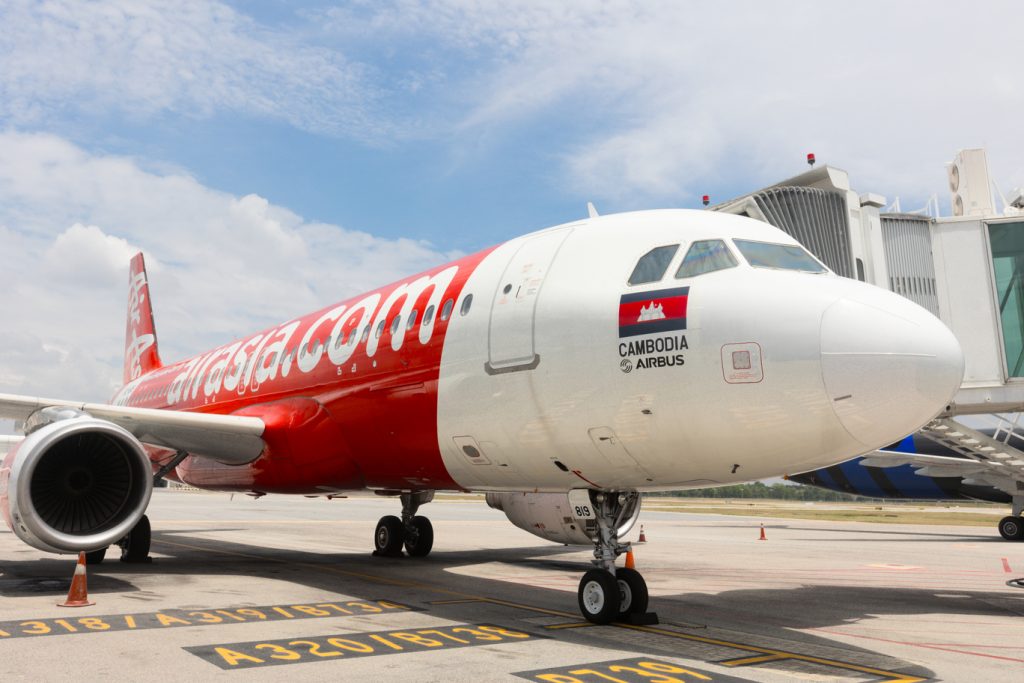
AirAsia Expands Influence In ASEAN With Introduction Of Fifth Carrier – AirAsia Cambodia

KUALA LUMPUR: AirAsia Aviation Group Ltd (AAGL) has launched its fifth airline, AirAsia Cambodia, as the aviation industry continues to rebound from the Covid-19 pandemic, the worst aviation crisis in history. AirAsia’s decision to venture into Cambodia underscores its resilience and determination to reclaim growth, despite the formidable challenges faced by the sector. The new airline will take off on May 2, 2024, and operate out of Phnom Penh International Airport (PNH), with an initial fleet of two Airbus A320s. Fares are now on sale on three domestic routes from Phnom Penh to Siem Reap and Sihanoukville, with plans to grow the network in the future. AAGL chairman Tan Sri Jamaludin Ibrahim said the launch of AirAsia Cambodia marks another momentous occasion for AirAsia to provide low-cost and high-value travel for the people of ASEAN to connect with friends and family and explore the region and beyond. “After the most challenging period, the new airline is a significant milestone in our incredible journey of expansion and recovery from the turbulence posed by the pandemic. “With the aviation sector in its infancy, Cambodia and its 17 million population offer a wealth of opportunities for cultural, historical, and natural experiences, and we are proud to be able to connect travellers from all over the world to this remarkable country,” he said in a statement. Group chief executive officer Bo Lingam said AirAsia founders Datuk Kamarudin Meranun and Tony Fernandes have always envisioned making ASEAN a smaller place. “AirAsia has a long history in Cambodia, and we see much-untapped potential in the region, including the opportunity to train and graduate hundreds of skilled pilots, engineers, and other professional aviation workers, much like how we have done in Malaysia, Thailand and the rest of the countries we operate in. “The launch of AirAsia Cambodia further cements our mission to truly own ASEAN for affordable travel, where our brand and footprint are strongest. Historically, we have six routes into Cambodia across the group, carrying 1.3 million passengers into the kingdom,” he said. Lingam said AAGL remain focused on building an incredible network in its core markets that cannot be surpassed with the best connectivity and flight frequencies. “Everything great starts with two planes. In the next five years, we aim to grow AirAsia Cambodia’s fleet to 60 planes. “With the pending merger of all of the AirAsia airlines in the group as a single listed company, including medium-haul affiliate airline AirAsia X, we will have seven airlines leveraging off one another to over 130 destinations and growing. “This will truly transform the future of short—and longer-haul air travel across ASEAN and beyond,” Lingam said. AirAsia’s expansion into Cambodia is a testament to the airline’s deep-rooted understanding of the ASEAN market and its unwavering commitment to delivering the best value and exceptional service across the region. With its strong brand presence and a loyal customer base, AirAsia is poised to significantly impact Cambodia’s aviation landscape, with over 300 new specification aircraft on order across the AAGL group.

Investment & Market Trends

Export Forecast For This Year Retained At 9.4PC, Says Kenanga

KUALA LUMPUR: Kenanga Investment Bank Bhd has retained the 2024 export growth forecast at 9.4 per cent on an expected turnaround in the export of electric and electronic (E&E) and a demand recovery from China, particularly in the second half (2H) of 2024. “We anticipate export growth to gradually improve in the coming months, expecting a double-digit expansion by year-end, driven by a tech sector upturn and China’s steady economic rebound underpinned by the ongoing government stimulus. “However, we maintain a cautious outlook due to potential disruptions from rising geopolitical tensions that could disrupt the global supply chain and trade activities,” Kenanga said in a report. The investment bank said a slower-than-expected recovery in China may also cap the growth potential, particularly in the export-oriented sector. Exports fell slightly in February, lower by 0.8 per cent year-on-year (YoY) below Kenanga’s expectations of 3.0 per cent and consensus at 2.4 per cent. Month-on-month (MoM) exports fell sharply by 9.1 per cent, partly due to seasonal factors, such as the factory shutdown during the Chinese New Year holidays. There were also lower shipments to major trading partners and weak demand for manufactured products. Exports to major destinations demonstrated a mixed performance. Although growth remained supported by positive exports to the United States (US) by 10.1 per cent and Japan by 5.6 per cent, it was dragged down by sustained weakness in shipments to China, down by 0.4 per cent, and Singapore, also lower by 15.3 per cent. By sector, weak exports were dragged by manufacturing, down by 2.4 per cent in February, and agriculture, down by 4.8 per cent, but this was partially supported by a sharp rebound in the mining sector of 16.8 per cent. By product, weak exports mainly came from E&E products, which were down by 9.8 per cent and have remained in contraction since August 2023, as well as subdued exports of petroleum products by 14.0 per cent. Kenanga also noted that Malaysia’s trade surplus expanded slightly to RM10.9 billion in February from RM10.2 billion in January this year, beating the house estimate of RM10.3 billion but lower than the consensus of RM12.3 billion as imports outperform exports on an MoM basis. Meanwhile, total trade moderated sharply by 3.3 per cent in February from 13.3 per cent in January but remained positive for the second straight month. “We expect a recovery in the manufacturing export-oriented sector, alongside domestic demand growth driven by a lower unemployment rate and improving household income. “That said, our gross domestic product (GDP) growth forecast for 2024 remains at 4.5-5.0 per cent in 2024,” Kenanga said.

Investment & Market Trends

Graphjet Expands Graphite Production With NASDAQ Listing

KUALA LUMPUR: Graphjet Technology Sdn Bhd (GTSB) has successfully listed on the NASDAQ stock exchange, marking a significant milestone in the company’s journey towards global leadership in the green graphite industry. The listing on NASDAQ comes at a crucial time when the demand for graphite and graphene is surging, especially in the United States, where the battery storage and electric vehicle (EV) industries are rapidly expanding. “With the majority of graphite production currently concentrated in China, GTSB is set to become a key supplier to the US market, offering a more sustainable and cost-effective alternative,” GTSB co-founder and chief executive officer Aiden Lee Ping Wei said in a statement. GTSB has raised US$5.8 million through its NASDAQ listing and plans to use these funds to accelerate its growth strategy and expand its manufacturing capacity. The company is actively exploring opportunities to deploy its technology at scale in North America and other regions in response to the global demand for graphite and graphene. GTSB has revolutionised graphite production by developing patented technologies that convert agricultural waste into high-quality graphite and graphene. This innovative approach addresses the critical supply needs for these strategic materials and significantly reduces the environmental impact associated with traditional graphite production. GTSB’s process cuts the carbon footprint by up to 83 per cent and reduces costs by up to 80 per cent, positioning the company as a frontrunner in the global shift towards sustainable manufacturing practices. GTSB’s new production facility, scheduled to commence operations in the second quarter (Q2) 2024, is expected to bolster further the company’s capacity to meet the growing demand. The company’s commitment to sustainability extends beyond its production processes. GTSB’s products are poised to play a vital role in various sectors, including energy storage, lubricants, and conductive materials, contributing to developing a more circular economy. “Our goal is to leverage our sustainably produced graphite and graphene to drive innovation across multiple industries, ultimately creating a greener and more sustainable future,” Aiden Lee added. GTSB, as a publicly traded company, remains dedicated to delivering shareholder value through its groundbreaking technologies and sustainable business practices. The company’s NASDAQ listing enhances its global visibility and provides a strong platform for future growth and innovation.

Investment & Market Trends

Kinergy Advancement Appoints Dr Amanda, Jonathan Wu As Directors

KUALA LUMPUR: Kinergy Advancement Bhd (KAB) has appointed Ts Dr Amanda Lee Sean Peik as an independent non-executive director and Jonathan Wu Jo-Han as an executive director. With Dr Amanda’s inclusion, KAB’s board now comprises three female directors, underscoring the company’s dedication to fostering gender diversity and inclusive leadership. This commitment extends the strategic direction set by Datuk Dr Ong Peng Su’s appointment as chairman of KAB in April 2021. Dr Ong’s extensive experience in the power industry and his vision for KAB’s growth in green energy solutions have been instrumental in steering the company towards its current focus on sustainable energy solutions (SES). These strategic appointments strengthen KAB’s technical expertise in the sustainable energy and engineering sector while encouraging a positive outlook to fuel the company’s strategic growth and ambition. Dr Amanda holds a PhD in civil engineering from the University of Nottingham (Malaysia Campus) and a Bachelor’s degree in civil engineering from the National University of Malaysia (UKM). Her wealth of experience in hydrology and water resources engineering, with a notable focus on climate change impacts and flood forecasting, will be instrumental in guiding KAB’s hydropower and water resource management projects. Her expertise will undoubtedly be a valuable asset to KAB as KAB embarks on more hydropower projects. Jonathan joined the company in August 2018 and has been instrumental in driving KAB’s expansion into sustainable energy, working closely with the executive deputy chairman and group managing director Datuk Lai Keng Onn. His strategic leadership in managing operations and securing key deals have significantly contributed to KAB’s growth. Having served as director for KAB subsidiaries and chief operating officer for the SES segment since 2023, Jonathan’s promotion to executive director underscores his invaluable contributions to the organisation’s success. His experience will continue to be crucial in driving KAB’s future growth. These strategic appointments are pivotal as KAB continues to expand its sustainable energy solutions portfolio. Dr Amanda’s expertise in hydropower and water resource management projects will be instrumental in furthering KAB’s growth in these areas. “We welcome Dr Amanda and Jonathan to our board. As we actively expand our energy portfolio, we are thrilled to boast a board comprising a wide range of experts who offer different perspectives to enrich our decision-making processes. “Their decision to join the board reflects mutual trust and underscores our shared values and vision, driving forward our sustainable energy development in the ASEAN region and globally,” Lai said.

Scroll to Top

Subscribe
FREE Newsletter