Investment & Market Trends

Investment & Market Trends

Kimlun To Issue RM26 Million Islamic Commercial Papers (ICP)

Kimlun Corp Bhd has issued Islamic commercial papers (ICP) with a nominal value of RM26.4 million under its existing ICP programme. In a filing on April 28, the group said the issuance has a tenure of six months and forms part of its ICP programme, which, together with its Islamic medium-term notes programme, carries a combined limit of up to RM800 million. The programme is structured under the Shariah principle of murabahah via a tawarruq arrangement, in line with terms lodged with the Securities Commission in October 2021. Kimlun said proceeds from the issuance will be used for Shariah-compliant general corporate purposes, including working capital, capital expenditure and refinancing of existing borrowings across the group. OCBC Al-Amin Bank Bhd is acting as the lead manager for the issuance.

Investment & Market Trends

BNM Launches RM5 Billion SME Support Facility

Bank Negara Malaysia (BNM) has introduced the SME Stabilisation Relief Facility (SME SRF), a RM5 billion financing scheme to support small and medium enterprises (SMEs), including microenterprises, affected by the ongoing West Asia conflict. In a statement, the central bank said some SMEs are facing operational disruptions, cash flow pressure and difficulty meeting short-term financial obligations. The facility was announced following the prime minister’s roundtable discussion with financial institution CEOs on April 21, 2026. It is aimed at providing working capital support to help viable businesses continue operations during the period of uncertainty. Eligible SMEs can obtain financing of up to RM750,000 with a repayment period of up to five years. The maximum financing rate is 3.75% per annum, inclusive of guarantee fees. BNM said the loans will be supported by guarantees of up to 80% from Credit Guarantee Corporation Malaysia or Syarikat Jaminan Pembiayaan Perniagaan, especially for SMEs without sufficient collateral. Applications will be open from May 15, 2026 to December 31, 2026, or until the funds are fully utilised. SMEs can apply directly through participating financial institutions, including commercial banks, Islamic banks and development financial institutions regulated by BNM. The central bank urged businesses facing or expecting financial difficulties to engage early with their banks, noting that early communication allows lenders to explore solutions such as repayment flexibility, restructuring or other support measures. BNM added that financial institutions are ready to assist affected SMEs during this period. Businesses may also seek support from Agensi Kaunseling dan Pengurusan Kredit (AKPK), including debt management programmes for individuals and sole proprietors, as well as the Small Debt Resolution Scheme for SMEs.

Investment & Market Trends

CIMB Backs Malaysia’s First Tokenised Sukuk As Sole Principal Adviser

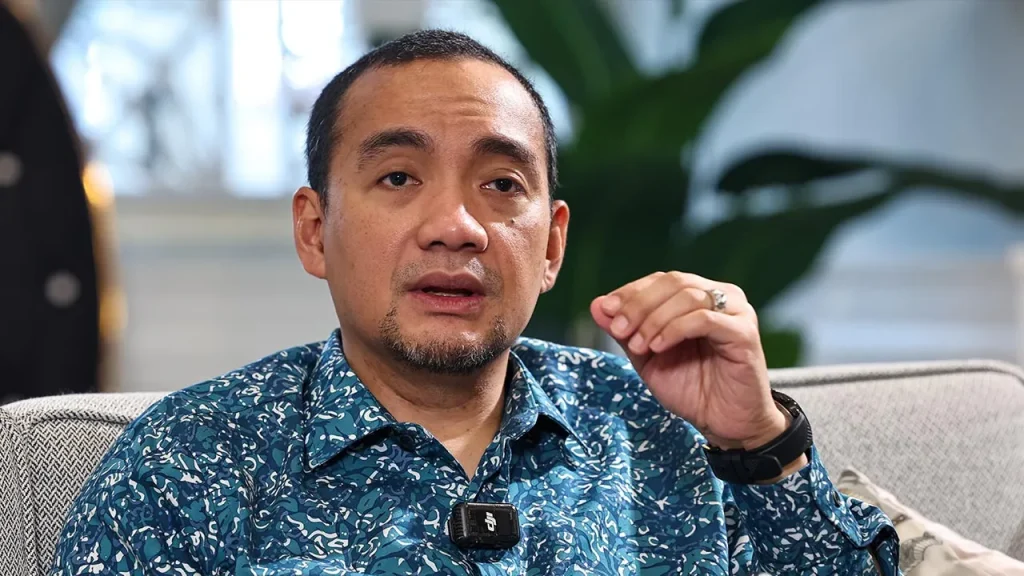
CIMB named sole principal adviser, arranger and facility agent for Malaysia’s first tokenised sukuk by Khazanah and SC CIMB Group Holdings Bhd has announced its role as the sole principal adviser, sole lead arranger and sole facility agent for Malaysia’s inaugural tokenised sukuk issued by Khazanah Nasional and the Securities Commission Malaysia. Chu Kok Wei, CEO of group wholesale banking for CIMB. In a statement, the bank said the issuance reflects collaboration between regulators and market participants to explore the use of distributed ledger technology to improve efficiency, transparency and execution, while maintaining strong governance and market integrity. The initiative also strengthens Malaysia’s position as a key hub for Islamic finance innovation, particularly in developing next-generation capital market instruments. “Khazanah’s inaugural tokenised sukuk represents an important step forward in advancing the practical application within a controlled and credible framework. It demonstrates how digital capabilities can be explored within existing capital market structures in a disciplined manner, while remaining aligned with established market practices. We are focused on supporting this milestone by working closely with regulators and partners to ensure that emerging structures are operationally sound, scalable and aligned with market expectations,” said Chu Kok Wei, CEO of Group Wholesale Banking at CIMB. CIMB said it will continue working with regulators and industry stakeholders to support the development of tokenised financial solutions and the wider digitalisation of financial markets.

Investment & Market Trends

SC, Khazanah Launch Malaysia’s First Tokenised Sukuk

Khazanah Nasional Berhad and the Securities Commission Malaysia (SC) have priced Malaysia’s first tokenised sukuk, a RM100 million issuance built on distributed ledger technology (DLT). The tokenised sukuk creates a secure digital version of the Islamic bond, allowing it to be issued and transferred as a token on a shared digital ledger. The issuance is the first tranche under Khazanah’s Sukuk Danum Programme, an Islamic Medium-Term Notes (IMTN) programme of up to RM20 billion. It carries a one-year tenure and is structured under the Shariah principle of Wakalah bi al-Istithmar, where an investment agent manages funds on behalf of investors. CIMB Group and Maybank acted as advisers and arrangers, while Credit Guarantee Corporation Malaysia (CGC), Kumpulan Wang Persaraan (Diperbadankan) (KWAP), OCBC Bank (Malaysia) and other institutional investors took part in the issuance. CIMB had previously committed to supporting the tokenised sukuk pilot across structuring, execution, custody and servicing. Khazanah and the SC said the issuance is a controlled pilot to test how blockchain technology can improve efficiency in sukuk issuance, settlement and post-issuance processes. The SC is running the pilot under its innovation framework to support future adoption by corporate issuers. “This is not about introducing a new product for its own sake, but about building the foundations for a more efficient and transparent market over time,” said Khazanah managing director Dato’ Amirul Feisal Wan Zahir. SC executive chairman Dato’ Mohammad Faiz Azmi said the pilot supports the Capital Market Masterplan 2026–2030, which targets growth of Malaysia’s capital market to RM5.8 trillion–RM6.3 trillion by 2030, with bond and sukuk market modernisation as a key focus. “Tokenisation offers potential to improve transparency, broaden participation and support a more vibrant market,” he said. Malaysia’s broader push into asset tokenisation is also advancing through Bank Negara Malaysia’s Digital Asset Innovation Hub, which is exploring tokenised deposits and stablecoin use cases with major financial institutions. The initiative is part of efforts to modernise Malaysia’s RM2.4 trillion Islamic capital market, including improving transparency, automation and accessibility through digital assets.

Investment & Market Trends

Pimpinan Ehsan To Return RM62.9m To Shareholders, Seek delisting After PN16 plan fails

Pimpinan Ehsan Bhd (KL:PEB) has proposed to return RM62.9 million in cash to shareholders and voluntarily delist from Bursa Malaysia after its long-running PN16 regularisation plan with reNIKOLA Holdings Sdn Bhd fell through. In a Bursa filing on Tuesday, the company said it plans a capital reduction exercise to distribute 91 sen per share to eligible shareholders, with the date to be announced later. The proposed payout will be funded from cash reserves held in a custodian account, which stood at about RM65.17 million as at April 22, including interest earned. Major shareholder Pitahaya (M) Sdn Bhd, which holds a 37.4% stake, is expected to receive about RM23.53 million. Substantial shareholder and director Lim Beng Guan, who owns 9.36%, is set to receive around RM5.89 million. The proposal is subject to shareholder approval, court confirmation for the capital reduction, and Bursa Malaysia’s approval for the delisting. The group aims to complete the process by the third quarter of 2026. The move follows reNIKOLA’s decision to withdraw from the proposed regularisation plan, which led Pimpinan Ehsan to conclude it would not meet Bursa’s June 30 deadline to submit a new plan. The company said returning cash to shareholders is the best option in light of the situation. After the cash distribution and delisting, it also plans to proceed with a voluntary winding-up, with any remaining funds to be distributed to shareholders. Pimpinan Ehsan has been classified as a PN16 cash company since 2018 after disposing of its TRIplc Bhd subsidiary. It had since attempted to regularise its status through renewable energy asset injections involving reNIKOLA, but the plan was ultimately abandoned. Shares of Pimpinan Ehsan were untraded on Tuesday. The counter last closed at 81.5 sen, valuing the company at RM56.3 million.

Investment & Market Trends

Crewstone Invests In AI Firm TROOPERS, Valued At RM253.4 Million

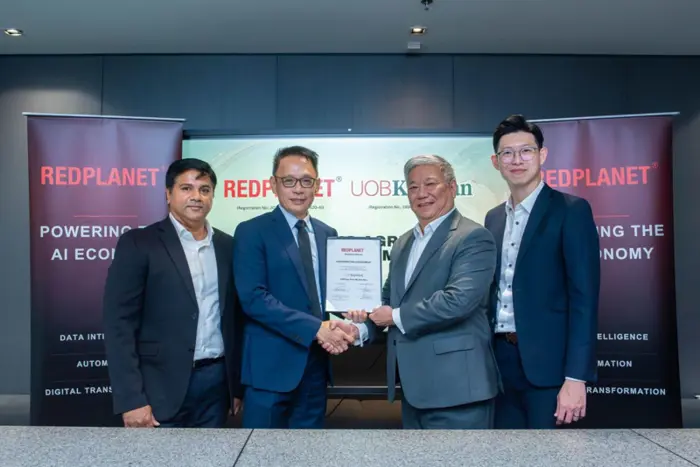
Crewstone International Sdn Bhd has today announced its investment in TROOPERS, an AI-powered workforce infrastructure company valued at RM253.4 million, as the company advances a RM31.2 million growth capital raise to support its next phase of scale across Southeast Asia’s RM42.8 billion staffing, workforce management and HR technology sub-market. Keng Fai Wong, Chief Executive Officer of Crewstone International (second left), Joshua Tan, Chief Executive Officer of TROOPERS (centre), and Craig Goonting, Chief Financial Officer of TROOPERS, commemorating a strategic funding milestone between both parties. Combined Malaysia and Singapore revenue grew at approximately 49% CAGR over the last two years, reflecting enterprise demand that is recurring, operationally embedded and increasingly scalable across regional labour markets. Since its establishment in 2017, TROOPERS has operated across on-demand gig staffing, workforce onboarding and management, and HR SaaS solutions, serving a roster of prominent regional and multinational clients across FMCG, food and beverage, retail and logistics. The business has already built a meaningful operating scale, with 148,000+ active users across Malaysia and Singapore and 670,000+ completed shifts, pointing to a platform that is no longer proving demand but increasingly processing repeat labour flow at volume. On the demand side, TROOPERS served 840+ clients, retained approximately 95% of them, and generated 95.9% recurring projects, demonstrating repeat enterprise usage rather than one-off campaign activity. On the execution side, the platform recorded 95%+ machine-learning matching, indicating both matching efficiency and a live billing engine already embedded in real customer workflows. As the platform continues to scale, TROOPERS is also strengthening the part of the model that matters beyond growth alone, namely how it supports and protects the workforce behind that growth. This is reflected both at the policy level, with CEO Joshua Tan appointed as one of the 26 inaugural members of Malaysia’s Majlis Penasihat Gig formed alongside the Gig Workers Act 2025, and at the operating level through TROOPERKS, which provides platform-funded benefits including supplementary personal accident coverage, e-healthcare access and shift cancellation compensation. Craig Goonting, Chief Financial Officer of TROOPERS Innovation Sdn Bhd (second left), pictured with the broader Crewstone team. In Malaysia, employed persons reached 17.13 million in December 2025, with services employment growth led by wholesale and retail trade, accommodation and food & beverage services, and information and communication sectors, where workforce gaps show up immediately in lost sales, slower service, weaker customer experience and operational bottlenecks. “What differentiated Crewstone was how quickly the team understood both the mechanics and the opportunity in our business. “They moved fast, underwrote the platform properly and structured around what TROOPERS actually needs as we scale. Very few capital partners combine speed, commercial sharpness and strategic fit that way. That matters when you are already serving enterprise clients at scale and building toward a much larger next chapter,” said Craig Goonting, Chief Financial Officer of TROOPERS. “Within Crewstone’s broader responsible investing approach, TROOPERS sits at the intersection of commercial relevance and measurable workforce impact. “The platform broadens access to employment by making job opportunities more visible to workers who might otherwise only see what is available within a limited physical radius or through fragmented, informal networks. For employers, it provides access to a broader and more responsive labour pool at a time when workforce availability remains a practical constraint across many sectors,” said Keng Fai Wong, Chief Executive Officer of Crewstone International.

Investment & Market Trends

Porsche Sells Bugatti Stake To BlueFive Capital

Porsche has agreed to sell its equity stake in Bugatti Rimac.Porsche and Rimac Group established Bugatti Rimac as a joint venture in 2021 to serve as home to the iconic Bugatti brand. In this joint venture, Porsche holds a minority stake of 45%, Rimac Group owns 55%. Porsche also holds a 20.6% stake in Rimac Group. As part of the transaction announced today, Porsche will fully divest its equity stakes in Bugatti Rimac and Rimac Group to a HOF Capital-led consortium. This includes BlueFive Capital as its largest investor, as well as a group of institutional investors across the US and EU. Following completion, Rimac Group is set to take control of Bugatti Rimac and form a strategic partnership with BlueFive Capital and HOF Capital to support its continued growth. Hazem Ben-Gacem, Founder and Chief Executive of BlueFive Capital: “Bugatti is a monument to automotive obsession, born from Ettore Bugatti’s pursuit of beauty and performance combined. BlueFive Capital approaches this opportunity as more than simply a financial transaction, and we look forward to working alongside the entire Bugatti Rimac team to honor that legacy for generations to come.” Dr Michael Leiters, CEO of Porsche AG: “In setting up the joint venture Bugatti Rimac together with Rimac Group, we successfully laid the foundation for Bugatti’s future. And as an early-stage investor of Rimac Group, Porsche made a significant contribution to developing Rimac Technology into an established Tier-1 automotive technology company. Now, with the sale of our stake, we are focusing Porsche on the core business. We would like to thank Mate Rimac and his team for the constructive and trusting cooperation over the past years.” Mate Rimac, CEO of Bugatti Rimac: “Porsche has been a crucial partner, and we are deeply grateful for their role in establishing Bugatti Rimac. With the strong foundations their support has provided, we now have a structure that allows us to execute even faster on our long-term vision. We look forward to our collaboration with our new partners.”

Investment & Market Trends

Padini Shares Fall Amid MACC Investigation

Shares of apparel retailer Padini Holdings Bhd came under selling pressure on Monday after news emerged that several of its bank accounts had been frozen by the Malaysian Anti-Corruption Commission (MACC) as part of an ongoing money-laundering investigation. The stock fell nearly 10% in early trading to an intraday low of RM1.40 before recovering some losses. As of 9.39am, shares were trading at RM1.48, down 4.52% from Friday’s closing price of RM1.55, with 8.21 million shares traded. Over the weekend, Padini confirmed that it had launched an internal review to assess the circumstances surrounding the MACC’s action involving accounts belonging to the company and several subsidiaries. The group said the freezing order was related to an ongoing investigation involving certain external counterparties linked to the company, and clarified that the individuals involved are not employees, officers or members of Padini’s management. Padini stressed that, based on currently available information, it is not aware of any allegations of wrongdoing against the company and understands that the account freeze is part of standard procedures during the investigation process. The company added that it has appointed external legal counsel to advise on the matter and has taken steps to seek appropriate relief, including the unfreezing of the affected accounts. Padini also reassured shareholders that its day-to-day operations remain fully functional and unaffected, with stores, business activities and corporate operations continuing as normal. The retailer said it will continue to cooperate fully with the relevant authorities and remains committed to transparency, adding that further announcements will be made if there are any material developments.

Investment & Market Trends

Malaysia’s Capital Market Reaches Record RM4.3 Trillion In 2025

The Securities Commission Malaysia (SC) has released its Annual Report 2025, Audit Oversight Board Annual Report 2025, and Capital Market Stability Review 2025. Malaysia’s capital market grew 3.2% in 2025 to a record RM4.3 trillion, up from RM4.2 trillion in 2024, supported by stronger corporate bond issuances and higher fund management inflows. The SC said the performance was achieved despite heightened global market volatility caused by trade tensions and geopolitical uncertainty. Average daily trading value in the Malaysian equity market fell 19.7% to RM2.76 billion in 2025 from RM3.44 billion in 2024, reflecting cautious investor sentiment. SC chairman Dato’ Mohammad Faiz Azmi said the Malaysian capital market remained resilient despite the challenging global environment. He said the results reflect the market’s strong fundamentals, with the SC continuing to balance market development with integrity while providing a stable and innovative environment for stakeholders. He added that while global uncertainty, geopolitics and technological disruption remain challenges, the Capital Market Masterplan 2026–2030 positions Malaysia to continue reforms, improve competitiveness, strengthen governance and enhance investor protection. Key Highlights from 2025: Malaysia’s Islamic Capital Market grew 4.31% to RM2.7 trillion. Assets under management in the fund management industry rose 6.9% to a record RM1.14 trillion. Total funds raised through the capital market jumped 35.4% to RM187.7 billion. A record 60 IPOs were listed in 2025, surpassing 55 in 2024. Venture capital and private equity committed funds increased 21.66% to RM30.05 billion. Alternative financing channels raised RM5.7 billion for MSMEs and mid-tier companies. Regional Competitiveness: Malaysia strengthened its regional position in 2025 through: Recognition by the IFRS Foundation as one of the first ASEAN jurisdictions to adopt ISSB Standards under the National Sustainability Reporting Framework. Introduction of the Single-Family Office incentive framework, which has so far secured nine conditional approvals representing nearly RM670 million in indicative assets under management. Investor Protection and Enforcement: The SC said it continued to strengthen investor protection and enforcement in 2025. Malaysia achieved “Regular Follow-up” status under the Financial Action Task Force (FATF), the highest possible rating. The SC initiated 96 criminal charges against 16 individuals for securities law breaches. Courts secured nine convictions, with jail terms of up to three years and fines totalling RM13.1 million. Civil enforcement actions recovered RM11.14 million through disgorgement and penalties. A total of RM1.98 million was returned to 239 investors, with another RM8.63 million earmarked for 993 affected individuals. The SC also imposed 99 administrative sanctions, including RM8.28 million in penalties. Market Stability: The Capital Market Stability Review 2025 found that domestic markets remained fair and orderly, with no systemic risks identified. The report said intermediaries remained well-capitalised, equity and derivatives markets functioned smoothly, no corporate bond defaults were recorded, and listed companies continued to show resilience. Audit Oversight Board: There are currently 41 audit firms and 397 individual auditors registered under the Audit Oversight Board (AOB). In 2025, the AOB inspected 41 audit engagements involving 40 auditors from 14 audit firms. The AOB also took enforcement action against two audit firms and six auditors for breaches of auditing standards, imposing penalties totalling RM423,750. It also suspended one audit firm and two partners for serious audit quality issues. SC Priorities for 2026: The SC said future initiatives under the Capital Market Masterplan 2026–2030 will focus on market vibrancy, inclusivity, sustainability and regional opportunities. Upcoming measures include: Revised Malaysian Code on Corporate Governance 2026 Enhanced Main Market and ACE Market value proposition Improved LEAP Market framework Stronger Digital Asset Exchange framework Greater tokenisation of securities The SC has also launched the MY Value Up Programme, a private debt framework for MSMEs, and expanded ETF rules to allow Digital Asset ETFs.

Investment & Market Trends

PwC To Pay US$166 Million To End Evergrande Probe In Hong Kong

PwC Hong Kong has agreed to pay HK$1.3 billion (US$166 million or RM658 million) in fines and compensation in Hong Kong over its auditing work for China Evergrande Group. The Accounting and Financial Reporting Council (AFRC) said PwC Hong Kong will be suspended for six months from accepting, performing, or issuing reports for new listed-company audit clients. It was also fined HK$300 million. In a separate settlement with the Securities and Futures Commission (SFC), PwC Hong Kong agreed to pay HK$1 billion, which will be used to compensate eligible independent minority shareholders of China Evergrande, according to the regulator. The SFC said both parties agreed the matter would be fully resolved without admission of liability, and no further action will be taken provided PwC Hong Kong complies with the settlement terms. The penalties come as PwC Hong Kong works to rebuild its reputation following earlier regulatory action linked to its audit of Evergrande, which contributed to client departures among state-owned enterprises, major Chinese firms, Hong Kong regulators, and staff. PwC China audited Evergrande, while its mainland arm, PwC Zhong Tian, audited its unit Hengda Real Estate Group. PwC Hong Kong served as Evergrande’s auditor for over a decade before resigning in January 2023, citing audit-related disagreements. Evergrande is listed in Hong Kong but operates mainly in mainland China. Separately, the AFRC issued a public reprimand to PwC Hong Kong and two former partners, and required the firm to submit regular updates on remedial actions for 12 months, as well as conduct staff training. PwC China chair and CEO Hemione Hudson said the settlements conclude regulatory matters related to Evergrande audits from more than five years ago, with no impact on existing clients. Regulatory scrutiny intensified following Evergrande’s collapse. Founder Hui Ka Yan has pleaded guilty to bribery, embezzlement, and fraud, while Chinese authorities previously accused the developer of inflating revenue by over 560 billion yuan. PwC was also fined 441 million yuan in China and suspended for six months, with regulators alleging it “turned a blind eye” to Evergrande’s fraud. Audit firms typically pay such fines from internal reserves, as professional indemnity insurance does not usually cover regulatory penalties, and partners may also be required to contribute depending on firm policy. Separately, a lawsuit filed by Evergrande’s liquidators seeking to recover funds from PwC Hong Kong is scheduled for its first public hearing in May, nearly two years after being initiated.

Scroll to Top

Subscribe
FREE Newsletter