Investment & Market Trends

Investment & Market Trends

GoTo Recovery Depends On Shareholder Approval As Grab Merger Considered

GoTo Group’s shares are showing renewed momentum ahead of a key shareholder meeting that could clear the path for a long-discussed merger with regional rival Grab Holdings Ltd. The Indonesian tech group’s stock has climbed about 20% so far this quarter in Jakarta, outperforming global ride-hailing and delivery peers. The rally has been fuelled by growing support from major shareholders and the Indonesian government for a potential takeover by Grab, following years of weak performance. At a shareholders’ meeting on Wednesday, investors will vote on the proposed appointment of Hans Patuwo as chief executive officer, replacing Patrick Walujo, who has been opposed to a merger with Singapore-based Grab. Market observers say a leadership change could accelerate talks on a deal that would create one of Southeast Asia’s largest technology groups. Analysts note that a combined Grab-GoTo entity would command significantly greater scale and market share across the region. GoTo, which operates services ranging from ride-hailing and food delivery to e-commerce and financial services, has been exploring strategic options as it works towards profitability. Despite the recent rebound, GoTo’s market capitalisation remains below US$5 billion, sharply lower than the more than US$30 billion valuation it reached shortly after its 2022 listing. The company’s founders and key investors, including SoftBank Group, have supported changes at the top, while Indonesia’s sovereign wealth fund Danantara is reportedly helping to facilitate discussions with Grab. The outlook for GoTo has improved in recent months, with the company raising its guidance and analysts expecting it to turn profitable next year. However, analysts caution that merger speculation is currently driving sentiment more than fundamentals. Grab, which is backed by Uber Technologies, is also expected to report a profit this year and has been keen on a deal to strengthen its operating leverage. A merger could lead to cost savings and stronger margins, but it has also raised concerns in Indonesia about reduced competition, higher prices and potential job losses, given the combined group’s dominant position in ride-hailing and food delivery. Government involvement is seen as a key factor in addressing regulatory and competition concerns, with analysts suggesting that changes in management and shareholder backing could improve the chances of approval should a merger move forward.

Investment & Market Trends

Malaysia’s Insurtech Firm Bjak Considers IPO As It Plans To Expand Into Europe

Malaysia-based insurtech platform Bjak is considering an initial public offering (IPO) within the next two years as it looks to fund its next phase of international expansion, including a potential move into Europe. According to reports, Bjak is evaluating opportunities beyond Asia, with Spain and Germany identified as possible entry markets in 2026, marking the company’s first expansion into Europe. This would build on its recent regional growth, following successful market entries into Japan, Taiwan and Thailand. Founder and chief executive officer Low Wei said the company has recorded strong momentum, with gross written premiums growing between 20% and 30% this year, and expects growth to accelerate further as Bjak expands into new overseas markets. He added that the company has been profitable since its founding in 2019 and operates with low leverage, although detailed financial figures were not disclosed. Low said a potential IPO would help support Bjak’s global expansion plans while also providing liquidity for employees through stock-based compensation. As part of its growth strategy, the company plans to significantly expand its workforce, with global headcount expected to double from nearly 200 to about 400 employees by the end of 2026. Founded in 2019, Bjak operates a digital insurance comparison and purchasing platform, allowing users to easily compare policies and buy insurance across multiple markets. The company currently serves around seven million users and partners with 16 insurance providers, including global insurers such as Allianz and Tokio Marine. Low noted that uneven adoption of insurance technology across Asia continues to create opportunities for digital-first platforms like Bjak, even as more mature markets such as the UK already show higher levels of insurance penetration.

Investment & Market Trends

Kenanga Invests RM13.3 Million In Halogen Capital, Taking Almost 15% Stake

Halogen Capital has raised RM13.3 million in a funding round led by Kenanga Investment Bank, with support from 500 Global and other investors. The investment was made through Kenanga’s wholly owned unit, Kenanga Private Equity Sdn Bhd. Following the round, Kenanga now owns a 14.9% stake in Halogen Capital, making it the company’s largest institutional shareholder. Datuk Chay Wai Leong, Group Managing Director of Kenanga Investment Bank, said the move reflects the bank’s commitment to advancing its digital asset ecosystem. He added that Kenanga’s investments in digital-first businesses like KDX, Helicap, and Merchantrade demonstrate its belief that innovation, governance, and transparency will shape the future of finance. By leveraging blockchain and tokenisation, Kenanga aims to make capital markets more efficient, accessible, and globally competitive. Other participants in the round included Digital Currency Group, The Hive Southeast Asia, Jelawang Capital, and Mythos Venture Partners. Liew Ooi Hann, Founder and CEO of Halogen Capital, said the support from leading investors highlights the growing recognition of digital assets as an important part of global capital markets. He noted that institutional demand for regulated and professionally managed digital asset exposure has grown significantly in Malaysia over the past three years. The funds raised will be used to advance Halogen Capital’s real-world asset tokenisation strategy, covering unit trust funds, bonds, sukuk, private credit, and real estate. The capital will also support the development of new digital asset investment products and crypto yield strategies backed by Malaysian assets. Founded in 2023, Halogen Capital is a licensed digital asset fund manager in Malaysia. As of November 2025, the firm managed about RM400 million across eight wholesale funds and private mandates. Its investor base includes high-net-worth individuals, family offices, corporates, and institutional investors. Halogen distributes its products through more than 15 partners, including commercial banks and distributors approved by the Federation of Investment Managers Malaysia.

Investment & Market Trends

PAC, Baiyuzen And Alliott Sign MoU To Drive Aerospace Development And Funding

In a significant step forward for regional aerospace development and international collaboration, Pahang Aerospace City (PAC), Baiyuzen Holding Sdn Bhd, and Alliott Management Consulting today formalised a strategic three-party Memorandum of Understanding (MoU). The ceremony, witnessed by representatives from the Embassy of Malaysia, marks an important milestone in aligning local innovation with global advisory strength and capital-market outreach. This partnership unites the core capabilities of each organisation: PAC as the lead developer of a next-generation aerospace and aviation hub in Pahang; Baiyuzen Holding, providing strategic leadership, regional partnerships and investment-structuring expertise; and Alliott Management Consulting, contributing international advisory support, cross-border market access and strategic investor engagement. A key highlight of the collaboration is Baiyuzen Holding’s upcoming launch of a new Medium-Term Note (MTN) under its Private Sukuk Programme in December. The issuance has been structured to optimise capital mobilisation for PAC-linked infrastructure and other strategic assets across Baiyuzen’s investment portfolio. The first tranche, amounting to approximately USD100 million, has been earmarked specifically to support mobilisation works and early-stage development for the PAC project, establishing a scalable and sustainable funding platform for long-term growth. Under the MoU, Alliott Management Consulting will lead strategic investor coverage, leveraging its global network to engage institutional mandates, private-wealth investors and cross-border capital-market participants. This partnership is set to strengthen distribution capability, broaden market penetration and elevate overall investor confidence, positioning the MTN as a strong and credible investment proposition. Beyond the financing framework, the three parties will cooperate on project formulation, regulatory engagement, investment planning and the adoption of advanced aerospace technologies. This supports PAC’s long-term ambition to position Malaysia as a competitive, sustainable and high-value aerospace hub within the IMT-GT region and the broader Asia-Pacific landscape. The tripartite alliance reflects a shared commitment to advancing international partnerships, enabling high-impact infrastructure and accelerating the development of future-ready industry ecosystems. The presence of the Malaysian Embassy as a witness underscores the strategic relevance of the initiative and reinforces its global significance. This signing represents a unified vision for aerospace excellence, innovative financing structures and long-term economic growth for the region.  

Investment & Market Trends

Biocon Completes Full Merger Of Biocon Biologics In $5.5 Billion Deal

Indian biopharmaceutical giant Biocon has announced the full integration of its biosimilar unit, Biocon Biologics, consolidating all of its biosimilars and generics operations under one unified entity. This move aims to streamline operations, strengthen Biocon’s presence in global biosimilars markets, and enhance value creation for shareholders. As part of the integration, Biocon will acquire the remaining stakes in Biocon Biologics currently held by Serum Institute Life Sciences, Tata Capital Growth Fund II, and Activ Pine LLP. The acquisition will be executed through a share swap arrangement, where 70.28 Biocon shares will be exchanged for every 100 Biocon Biologics shares, at a price of 405.78 rupees (approximately US$4.51) per Biocon share. The transaction values Biocon Biologics at a substantial US$5.5 billion. Following the integration, Biocon Biologics’ CEO Shreehas Tambe will take the helm as CEO and managing director of the newly consolidated entity, while Kedar Upadhye will serve as chief financial officer. Biocon CEO Siddharth Mittal will transition to a broader group leadership role, overseeing strategic growth and global operations. The integration is expected to be completed by March 31, 2026. The Bengaluru-based company said it evaluated several options for Biocon Biologics, including an initial public offering (IPO) and a merger, before concluding that acquiring minority stakes through a share swap would be the most efficient and value-accretive approach. According to Tambe, the company may still pursue a listing of its key biosimilars business by March 2026 and aims to secure a double-digit market share in the US for its upcoming launches. Biosimilars are cost-effective alternatives to expensive and complex biologics, which are used to treat conditions such as cancer, autoimmune diseases, and other chronic illnesses. By integrating Biocon Biologics, Biocon expects to leverage operational efficiencies, strengthen its product pipeline, and accelerate growth in key international markets. In a related development, Biocon also plans to acquire the remaining stake in its previously acquired biosimilars business Viatris for US$815 million, of which US$400 million will be paid in cash and US$415 million via a share swap. To facilitate the cash component of the transaction, the company has approved raising up to 45 billion rupees (approximately US$500 million) through a Qualified Institutional Placement (QIP). This series of strategic moves reflects Biocon’s focus on consolidating its biosimilars and generics operations, strengthening its balance sheet, and positioning the group for sustainable growth in the high-value global biologics market. The combined entity is expected to deliver enhanced financial performance, operational efficiency, and a more robust platform for international expansion, solidifying Biocon’s status as a leading player in the biosimilars industry.

Investment & Market Trends

SC Approves Sunway Healthcare’s Listing On Bursa Main Market

The Securities Commission Malaysia (SC) has given its approval for Sunway Healthcare Holdings Bhd (SHH) to be listed on the Main Market of Bursa Malaysia. SHH is currently an 84%-owned joint venture under Sunway City Sdn Bhd (SunCity), which is wholly owned by Sunway Bhd. The remaining 16% stake is held by Singapore-based Greenwood Capital Pte Ltd. As part of the listing exercise, SHH will undertake a share split, increasing its number of shares from 1.2 billion to 10.9 billion without changing its total share capital. Following the share split, SunCity will distribute its SHH shares to Sunway through a dividend-in-specie. The proposed initial public offering (IPO) will involve up to 1.97 billion SHH shares. This includes an offer for sale of up to 1.39 billion existing shares — representing 12.1% of SHH’s enlarged share base — as well as a public issue of 575 million new shares, or 5% of the enlarged share base, which will be offered to both retail and institutional investors. In its filing to Bursa Malaysia today, Sunway confirmed that the SC had also approved SHH’s listing in line with the Bumiputera equity requirements for public-listed companies. SHH will allocate at least 50% of the shares offered to Malaysian retail investors (via balloting) specifically to Bumiputera investors under the retail portion of the IPO. Sunway added that Maybank Investment Bank, AmInvestment Bank and SHH will still need to obtain Bursa Securities’ approval regarding SHH’s public shareholding spread ahead of the listing. “Maybank IB, AmInvestment Bank and SHH are required to notify the SC in writing on the final number of SHH shares relating to the proposed listing before the prospectus is registered,” the group said.

Investment & Market Trends

Johor’s BMS Holdings Drops Below IPO Price On Its ACE Market Debut

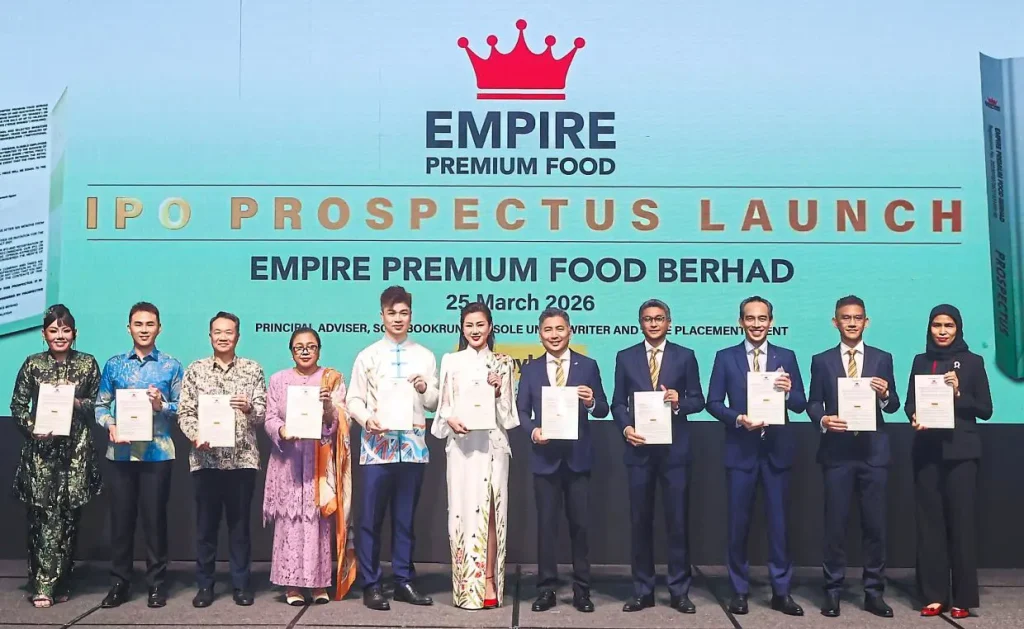
BMS Holdings Bhd, a Johor-based building materials distributor, saw its shares fall below its initial public offering (IPO) price during its debut trading session on the ACE Market on Monday, December 8. The stock opened at 19.5 sen per share, down from its IPO price of 22 sen, and quickly dropped to a low of 18.5 sen shortly after trading commenced. By 9.15am, the share price had recovered slightly to 19 sen, representing a nearly 14% decline, with over 34 million shares changing hands. At this price, BMS Holdings was valued at RM292.6 million. BMS Holdings Bhd managing director Ang Kwee Peng (third from left) and the company’s board members at Monday’s listing ceremony. The decline comes on the heels of a relatively subdued IPO, where applications from public investors amounted to just slightly more than double the shares available for subscription, making it one of the least oversubscribed public offerings in Malaysia this year. Through the IPO, the company raised RM80.1 million from newly issued shares, with an additional RM34.3 million generated from an offer for sale (OFS) by existing shareholders. BMS Holdings operates across retail, wholesale, and project sales of building materials, with a focus on tiles and stone surfaces such as porcelain and ceramic tiles, engineered stones, natural stones, and mosaics. The company also offers complementary bathware and kitchenware products to its customers. According to its IPO prospectus, approximately 43% of the proceeds from the new share issuance will be allocated to expanding BMS Holdings’ retail and distribution network. This includes plans to open new showrooms in Seremban, Selangor, and Kuala Lumpur, as well as establishing a new distribution centre in the Klang Valley. The company also plans to acquire electric vehicle forklifts and upgrade existing facilities, including its retail outlets in Kota Damansara, Kepong, and Klang, along with the Pasir Gudang distribution centre. Another 21% of the IPO proceeds will be invested in enhancing the company’s digital infrastructure, including the implementation of an upgraded enterprise resource planning (ERP) system and warehouse management system. The remaining funds are earmarked for working capital, marketing activities, and listing-related expenses. Proceeds from the OFS were distributed to a group of more than 10 shareholders, including co-founders and directors Ang Kwee Peng (managing director) and Lee Kok Chuan (executive director), who have built the company over more than three decades. Alliance Islamic Bank served as the principal adviser, sponsor, sole underwriter, and placement agent for the IPO. Despite the soft debut, analysts note that the company’s strong long-term growth plans, including retail expansion and digital upgrades, could support future performance as it continues to establish a broader footprint in Malaysia’s building materials market.

Investment & Market Trends

AmBank, Huawei Malaysia Seal RM350 Million Financing Deal

AmBank Group and Huawei Technologies (Malaysia) Sdn Bhd have formalized a RM350 million supply chain financing agreement aimed at bolstering Malaysia’s digital infrastructure and supporting the country’s ambitious technology-driven development goals. The financing facility is part of a broader effort to accelerate the rollout of Malaysia’s second 5G network and enhance the nation’s technology ecosystem, positioning Malaysia as a competitive hub for digital innovation and foreign investment in the region. In a joint statement, both parties emphasized that the agreement reflects their commitment to facilitating foreign direct investment (FDI) by providing customized financial solutions that meet the operational needs of multinational corporations. Through this collaboration, AmBank aims to support Huawei Malaysia’s supply chain while contributing to the broader national agenda of advancing digital transformation and building a resilient, future-ready economy. AmBank Group managing director of business banking Christopher Yap said the partnership underscores the bank’s long-standing relationship with Huawei Malaysia and its strategic role in supporting Malaysia’s digital growth. He highlighted that the RM350 million facility demonstrates AmBank’s confidence in the country’s digital ambitions and its capacity to deliver large-scale, tailored financial solutions to global technology leaders. “This collaboration not only strengthens Malaysia’s digital infrastructure but also acts as a catalyst for attracting high-value foreign investments. By working closely with Huawei Malaysia, we are helping create a robust ecosystem that supports innovation, enhances connectivity, and drives economic growth across multiple sectors,” Yap added. The supply chain financing facility is expected to facilitate smoother operations for Huawei Malaysia’s local and regional business activities, enabling timely procurement, production, and deployment of digital solutions. Both AmBank and Huawei Malaysia highlighted the mutual benefits of the arrangement, which include strengthening the local technology ecosystem, promoting financial inclusion, and enhancing Malaysia’s position in the global digital economy. This partnership reflects AmBank’s ongoing commitment to being a trusted financial partner for multinational corporations and to supporting strategic initiatives that align with Malaysia’s vision of becoming a technology-driven, future-ready nation. By combining financial expertise with technology innovation, AmBank and Huawei Malaysia aim to accelerate digital infrastructure development, attract sustainable foreign investments, and contribute to the long-term growth and competitiveness of the Malaysian economy.

Investment & Market Trends

FiMI Attracts RM486 Million In Investments At MIPCOM 2025

The Malaysian film industry has secured investment commitments totaling RM486 million through the Film in Malaysia Incentive (FiMI) at MIPCOM 2025, the world’s largest content market held in Cannes last October, Communications Minister Datuk Fahmi Fadzil announced. The investments are projected to create up to 1,500 jobs for local industry players and generate an estimated economic impact of RM1.66 billion. “I have directed the Malaysian National Film Development Corporation (FINAS) CEO and chairman to prepare next year’s strategic plan so promotional and investment-attraction initiatives can be executed more comprehensively,” he said. The minister noted that the government has allocated RM110 million for FiMI in 2026. The incentive provides a 30% rebate for productions filmed in Malaysia, with an additional 5% rebate for projects incorporating local cultural elements. “FiMI is highly competitive. While many Southeast Asian countries offer attractive filming locations, Malaysia continues to compete strongly in the region,” Fahmi added. He also clarified that the government has no plans to require filming permits or production certifications for influencers or podcasters, nor does it intend to introduce licensing rules for OTT streaming platforms at this time. The Communications Ministry is currently updating the National Film Policy following amendments to the FINAS Act 1981. The revisions aim to strengthen industry governance, development, and enforcement without limiting creative freedom. “The amendment broadens regulatory scope to include new technologies, such as digital platforms, while subsidiary regulations will clarify protections for industry workers, covering welfare, standard contracts, job security, payment terms, and production safety,” Fahmi said. “These changes ensure that regulations under the Act support FINAS’ role as the national film industry leader and as a catalyst for the development of local creative content,” he added.

Investment & Market Trends

SPAN: No bids Yet For RM5 Billion Northern Perak Water Project.

The National Water Services Commission (SPAN) has confirmed that it has not received any applications for the RM5 billion Northern Perak Water Supply Scheme (NPWSS), despite earlier reports about a joint venture planning to carry out the project. SPAN emphasised that while private sector participation in water projects is encouraged under the government’s Water Transformation Plan 2040, all parties must comply with the law. “As the regulatory body for the water services industry, SPAN ensures that the planning, development and distribution of water adhere to the provisions of the Water Services Industry Act 2006 and its subsidiary legislation. Compliance is essential to protect the interests of all parties, including consumers,” the commission said in a statement. SPAN also urged project promoters to seek official approval before making public statements to prevent confusion. The NPWSS, to be developed by a joint venture between the Perak State Development Corporation and Gamuda (PKNPk-Gamuda JV), is designed to address water shortages in northern Perak for irrigation, domestic, and industrial use. Under a draft arrangement, Penang could potentially purchase surplus treated water from the scheme, paying an annual capacity charge of RM210 million and a treated water rate of RM1.70 per cubic metre. The project is expected to provide a guaranteed supply of 300 million litres of water per day over 40 years, with a rate review at the halfway point. SPAN reiterated that no applications have been received and that all legal procedures must be followed before the project can proceed.

Scroll to Top

Subscribe
FREE Newsletter