Investment & Market Trends

Investment & Market Trends

L&P Global To Divest Kulim Industrial Property For RM13.9 Mil

KUALA LUMPUR, L&P Global Bhd, a manufacturer of industrial packaging products, is selling a leasehold industrial property in Kulim, Kedah, for RM13.88 million in cash as part of efforts to unlock value from underutilised assets and strengthen its liquidity. In a filing with Bursa Malaysia, the group said its wholly owned subsidiary, Berjayapak Sdn Bhd, is disposing of the asset — which includes a double-storey factory and a single-storey office — to General Point Asset Sdn Bhd. The property spans approximately 11,171 sq m and carries a 60-year leasehold tenure expiring in 2064. It is currently charged to CIMB Islamic Bank Bhd. L&P expects to record an estimated gain of RM3.61 million from the disposal, after accounting for the property’s net book value of RM9.14 million and associated transaction costs. Proceeds from the sale will be channelled toward improving the group’s working capital and overall financial flexibility to support its future expansion plans. The transaction is anticipated to be completed within three months, subject to the fulfilment of all conditions. As of June 30, 2025, L&P reported cash and bank balances of RM38.03 million and total borrowings of RM26.15 million, translating to a net gearing ratio of about 0.25 times based on total equity of RM103.9 million. Shares in L&P ended unchanged at 11.5 sen on Friday, valuing the group at RM64.49 million. The counter has declined over 55% year-to-date.

Investment & Market Trends

China Scraps Gold Tax Exemption, Dealing Blow To Major Bullion Market

China has announced the end of a long-standing tax incentive on gold, a move expected to raise consumer prices and potentially dampen demand in one of the world’s largest bullion markets. Effective Nov 1, Beijing will abolish the value-added tax (VAT) offset previously granted to retailers who purchased gold from the Shanghai Gold Exchange, whether sold in its original form or after being processed, according to a new directive issued by the Ministry of Finance. The policy shift marks a significant change for China’s gold industry, which has long benefited from tax exemptions that helped keep domestic gold prices competitive. Analysts say the move is part of the government’s broader effort to boost fiscal revenues, as slowing economic growth, a prolonged property sector downturn, and rising local government debt have weighed heavily on public finances. While the change is expected to strengthen the government’s tax base, it will also raise retail gold prices across China — a country where gold ownership remains deeply rooted in cultural traditions and seen as a hedge against inflation and currency volatility. Retailers are likely to pass on the additional tax burden to consumers, potentially cooling household demand that has been a major driver of global gold purchases. The timing of the policy shift coincides with heightened volatility in the global bullion market. A surge in retail and institutional buying earlier this year propelled gold prices to record highs, breaching the US$4,000-per-ounce mark in early October. However, that rally has since stalled amid profit-taking and easing demand for safe-haven assets following a temporary trade truce between the US and China. Global gold prices also retreated sharply in recent weeks — marking one of the worst sell-offs in more than a decade — as exchange-traded fund (ETF) inflows reversed after months of consistent buying. Seasonal factors, such as the end of India’s festive buying period, have also contributed to the pullback. Despite the near-term correction, analysts remain optimistic about the long-term trajectory of gold prices. They point to continued central bank accumulation, expectations of US interest rate cuts, and persistent geopolitical tensions that are likely to sustain demand for the metal as a safe store of value. “Even with the recent volatility, the macroeconomic backdrop still favours gold,” said one market strategist. “China’s policy shift may reduce local demand temporarily, but globally, the fundamental drivers — from monetary easing to diversification of reserves — remain intact.” Some analysts predict that gold could still approach the US$5,000-per-ounce level within the next 12 months, supported by robust central bank purchases and lingering uncertainties in global markets. In the short term, however, China’s removal of the tax break is expected to reshape local market dynamics, with higher costs squeezing retailer margins and moderating consumer enthusiasm. The move underscores Beijing’s balancing act between fiscal prudence and market stability — even in sectors as culturally and economically significant as gold.

Investment & Market Trends

AIIB, Four Malaysian Banks To Raise Up To US$6 Billion For ASEAN Infrastructure

KUALA LUMPUR, The Asian Infrastructure Investment Bank (AIIB) has partnered with four Malaysian banks to mobilise up to US$6 billion (RM25.1 billion) for sustainable, technology-driven infrastructure projects across ASEAN. The participating banks are Malayan Banking Bhd (Maybank), CIMB Bank Bhd, AMMB Holdings Bhd, and Bank Pembangunan Malaysia Bhd. The cooperation agreements, effective until October 2031, were signed following the ASEAN Summit in Kuala Lumpur, underscoring a shared commitment to advancing green and inclusive infrastructure, enhancing regional connectivity, and attracting private capital to meet the region’s growing infrastructure needs. Under the partnerships, the banks will support investments in key sectors including renewable energy, power transmission and distribution, transport, digital infrastructure, and telecommunications. AIIB highlighted that the collaboration leverages the Malaysian banks’ regional expertise in managing large-scale infrastructure assets, combined with AIIB’s capacity to provide long-term debt and equity financing. Kim-See Lim, AIIB’s Chief Investment Officer for Public Sector (Region 1) and Financial Institutions and Funds (Global) Clients, said each bank brings unique strengths in terms of regional presence and expertise across asset classes, while AIIB contributes its convening power, ESG standards, and ability to catalyse additional capital for regional connectivity projects such as the Asia Power Grid (APG). She added that ASEAN, projected to become the world’s fourth-largest economy by 2030, will require expanded energy capacity to drive prosperity and economic growth. “We look forward to being a part of the region’s energy transition,” Lim said. Founded in 2016, AIIB is a multilateral development bank focused on financing sustainable infrastructure. AAA-rated by major international credit rating agencies, AIIB has mobilised over US$64 billion across more than 300 projects in 38 countries.

Investment & Market Trends

Taiwan’s Ichia Inaugurates New RM490 Mil Manufacturing Plant In Malaysia

KUALA LUMPUR, Taiwanese electronic components manufacturer Ichia Technologies Inc has officially launched its second production facility at Kulim Hi-Tech Park, Kedah, marking a significant expansion of its presence in Malaysia. (From left) Edri Eastern China Branch deputy director and general manager Liu XiaoHu, Kide International Sdn Bhd chairman Huang WeiJun, Ichia Technologies Inc chairman Benng Huang, Taipei Economic and Cultural Office in Malaysia deputy representative James Buu, Ichia Technologies Inc CEO Eric Tseng, Mida Kedah director Nazlizan Abdullah and Invest Kedah chief operating officer Noor Ikhsan Abdul Aziz. The RM490 million investment is expected to generate around 600 new job opportunities in the state, according to the Malaysian Investment Development Authority (Mida) in a statement on Tuesday. Ichia chairman Huang Chiu-Yung said the new facility would play a central role in strengthening the group’s long-term growth amid global supply chain realignments and tariff challenges. “Our new facility in Kulim will be a key driver of Ichia’s sustainable growth as we continue adapting to global manufacturing shifts,” Huang said. Spanning over 55,000 sq m, the new plant will serve as Ichia’s second-largest manufacturing base worldwide. Listed on the Taiwan Stock Exchange, Ichia reported revenues exceeding US$311 million (RM1.3 billion) in 2024. The Kulim facility will focus on producing printed circuit boards, assemblies, and components primarily for the automotive and telecommunications industries. Mida CEO Datuk Sikh Shamsul Ibrahim Sikh Abdul Majid said the investment underscores Malaysia’s growing role as a strategic hub in the global electrical and electronics (E&E) supply chain, while also helping nurture local talent. Invest Kedah chief operating officer Noor Ikhsan Abdul Aziz added that Ichia’s expansion would enhance the local ecosystem by creating high-value employment and fostering new business opportunities for local suppliers.

Investment & Market Trends

India, Russia Ink Fighter Jet Manufacturing Deal Ahead Of Putin Visit

India and Russia have formalised an agreement to jointly produce passenger aircraft, just weeks before Russian President Vladimir Putin’s scheduled visit, highlighting the continued strength of ties between New Delhi and Moscow despite growing pressure from the United States. Under the deal, India’s state-owned Hindustan Aeronautics Ltd (HAL) will collaborate with Russia’s United Aircraft Corp (UAC) to manufacture the SJ-100 civil commuter aircraft, HAL said in a statement on Tuesday (Oct 27). The announcement did not clarify whether the agreement includes technology transfer to India or specify the investment involved. “This will also be the first instance wherein a complete passenger aircraft will be produced in India,” HAL said, adding that the collaboration reflects “mutual trust between the organisations.” Under the pact, HAL will have the rights to manufacture SJ-100 twin-engine, narrow-body aircraft for Indian customers. The timing of the announcement comes as India prepares to host Putin in December, amid US criticism over New Delhi’s continued purchases of Russian crude. Washington has also imposed 50% tariffs on Indian goods, citing both trade barriers and India’s ongoing ties with Moscow. The partnership supports Prime Minister Narendra Modi’s push to expand domestic manufacturing and improve short-haul connectivity, as India plans to double its number of airports to 350 by 2047. HAL did not provide details on the capital required for the project or which Indian carriers might adopt the aircraft. The company has previously faced challenges in producing sufficient fighter jets for the Indian Air Force, raising questions about its broader aerospace capabilities.

Investment & Market Trends

Japan And US Announce Initial Projects Under US$550 Billion Flagship Fund

Japan and the US have unveiled the first list of potential projects under their US$550 billion (RM2.31 trillion) joint investment fund, offering a first glimpse into the initiatives that could be supported under the framework of their landmark trade agreement. The announcement came during a signing ceremony in Tokyo on Tuesday, where US Commerce Secretary Howard Lutnick highlighted some of the highest-profile commitments, naming companies such as SoftBank Group, Westinghouse, and Toshiba Corp. Project sizes range from US$350 million to as much as US$100 billion. A fact sheet released by Japan’s trade ministry also listed additional Japanese firms interested in launching projects in sectors including energy, artificial intelligence (AI), and critical minerals. Lutnick described the moment as “really, really exciting,” noting that these projects form the foundation for broader cooperation between the two countries. The initial announcements aim to flesh out a trade deal reached earlier this year, under which US tariffs on Japanese goods were lowered and capped in exchange for Japan committing to invest US$550 billion in US projects. Key projects outlined include: Westinghouse (Energy): Construction of AP1000 nuclear reactors and smaller modular reactors, potentially involving Mitsubishi Heavy Industries, Toshiba Group, and IHI, with an estimated scale of up to US$100 billion. GE Vernova/Hitachi (Energy): Small modular reactor (SMR) construction, also valued up to US$100 billion. Bechtel (Energy): Large-scale power and industrial infrastructure, including power plants, substations, and transmission systems, worth up to US$25 billion. SoftBank Group (Energy): Development of large-scale power infrastructure, up to US$25 billion. NuScale/ENTRA1 Energy: Power projects to support AI applications, including gas-thermal and nuclear generation. Toshiba: Strengthening AI infrastructure through the supply of power modules, data center transformers, and other power-generation equipment. Carbon Holdings (Critical Minerals): Construction of a greenfield ammonia and urea fertiliser facility, valued at up to US$3 billion. The fund, still in its “launch phase,” will see preliminary project work vetted by a Japanese consultation committee and the US investment committee before final approval by the US president, Lutnick said. The goal is to start physical construction once projects are greenlit, a process expected to take several months. Energy-related projects dominate the initial list in terms of scale, with both Westinghouse and GE Vernova/Hitachi SMR projects estimated at up to US$100 billion each. Other projects under consideration span semiconductors, pharmaceuticals, metals, shipbuilding, AI, and quantum computing, reflecting the fund’s dual focus on economic growth and national security. The US retains final decision-making authority over which projects are funded, though Japan is expected to provide input. The investment fund is designed to complement the July trade agreement, which lowered US car duties from 27.5% to 15% and capped tariffs on other Japanese imports, while promoting collaboration on high-priority industries. Lutnick emphasised that these companies were “fully vetted with the Japanese” and that the fund aims to build foundational infrastructure critical to both nations’ economic and security interests. This marks a major step in operationalising the US$550 billion fund, with projects spanning multiple high-impact sectors, from clean energy and critical minerals to AI and quantum computing, reflecting a coordinated effort to strengthen the economic partnership between Japan and the United States.

Investment & Market Trends

Starbucks Reportedly Eyes Boyu Capital As Leading Contender For China Unit Sale

BEIJING, Oct 28 — Private equity firm Boyu Capital has reportedly taken the lead in Starbucks Corp’s search for a strategic partner in its China operations, as the global coffee giant works to rejuvenate performance in its second-largest market. According to sources familiar with the matter, Boyu has outbid other major private equity firms, including Carlyle Group Inc, and is now seen as the most likely buyer of a controlling stake in Starbucks’ China business. The potential transaction could value the unit at over US$4 billion (RM16.8 billion). Negotiations between Starbucks and Boyu are ongoing and could take several months to finalise, the sources said, noting that the outcome is not yet guaranteed. The deal could also see participation from internet companies as limited partners to help co-finance the acquisition. Starbucks and Boyu have not commented publicly on the matter, while Carlyle declined to provide a statement. In August, Bloomberg reported that Starbucks had invited a dozen private equity firms and technology players, including EQT AB, FountainVest Partners, KKR & Co, Hillhouse Investment and Primavera Capital, to express interest in acquiring a stake in its China arm. Founded in 2011 and headquartered in the Cayman Islands, Boyu Capital manages investments across private equity, public equities, real estate and infrastructure. The firm’s private equity portfolio includes holdings in technology, retail, consumer and healthcare sectors. Starbucks, which entered China in 1999 with its first store in Beijing, now operates around 7,800 outlets in over 250 mainland cities. Despite its strong presence, it faces stiff competition from local brands such as Luckin Coffee Inc. Starbucks CEO Brian Niccol has previously said the company plans to maintain a “meaningful” stake in its China business while bringing in new strategic investors. He added in July that more than 20 parties had expressed interest in partnering with the coffee chain as it eyes long-term expansion to as many as 20,000 stores in China.

Investment & Market Trends

SkyGate Divests Penang Factory To Denmark’s Ambu For RM39.8 Million

KUALA LUMPUR, SkyGate Solutions Bhd, formerly known as Ewein Bhd, has announced the sale of its Penang factory to Danish medical device manufacturer Ambu AS for RM39.8 million. In a filing with Bursa Malaysia, the company said its 98%-owned subsidiary, SkyGate Integration Sdn Bhd, has entered into a conditional sale and purchase agreement with Ambu Sdn Bhd for the disposal of a 1.8-acre leasehold parcel and its accompanying factory building. SkyGate explained that the divestment aims to free up capital for reinvestment into high-growth ventures to strengthen the group’s profitability, though details on the utilisation of proceeds were not revealed. The RM39.8 million consideration was determined based on current market conditions and a willing-buyer, willing-seller arrangement, taking into account the strategic location of the property. No independent valuation was conducted, it added. SkyGate Integration originally purchased the Bayan Lepas factory in April 2017 for RM15.2 million. The latest transaction is expected to be completed by July 2026. Founded in 1937, Ambu is a Denmark-based global medical device company specialising in single-use endoscopy, diagnostic and life-support equipment. Earlier this year, SkyGate raised its ownership in SkyGate Integration from 51% to 98% through the acquisition of an additional stake from founder Ong Chee Fui for RM9.8 million via a share issuance exercise completed in August. The remaining 2% stake is held by Sharp Capital Sdn Bhd, owned by Lee Koh Yung. On Tuesday, SkyGate’s shares closed 1.5 sen or 1.88% lower at 78.5 sen, giving the group a market capitalisation of RM263.61 million.

Investment & Market Trends

SCIB Challenges Court Ruling Over RM14mil Refund Suit Against Dynamic Prestige

KUALA LUMPUR, Sarawak Consolidated Industries Bhd has lodged an appeal against the High Court’s decision to dismiss its RM14 million refund claim against Dynamic Prestige Consultancy Sdn Bhd, which stemmed from payments related to proposed engineering, procurement, construction and commissioning (EPCC) ventures. In a filing with Bursa Malaysia, the civil engineering and precast concrete specialist said the High Court on Oct 10 ruled in favour of Dynamic Prestige, dismissing SCIB’s suit with costs of RM35,000. The court found that the documentation presented was insufficient to substantiate SCIB’s claim at this stage. “After reviewing the sealed judgment received from the High Court on Oct 27, 2025, and upon advice from our solicitors, SCIB has filed an appeal to the Court of Appeal on the same date,” the company said. SCIB reaffirmed its confidence in the merits of its claim, asserting that it is entitled to recover the outstanding RM14 million from Dynamic Prestige. The dispute traces back to payments made by SCIB between October and November 2022, purportedly for potential EPCC business collaborations. Dynamic Prestige had agreed to issue redeemable convertible preference shares (RCPS) to SCIB and, under a March 7, 2023 agreement, to refund the funds should either party decide not to proceed. SCIB later opted to terminate the arrangement but alleged that Dynamic Prestige failed to return the money, prompting the company to initiate legal action in 2023. At Tuesday’s market close, SCIB’s shares were unchanged at 25 sen, valuing the company at RM174.81 million.

Investment & Market Trends

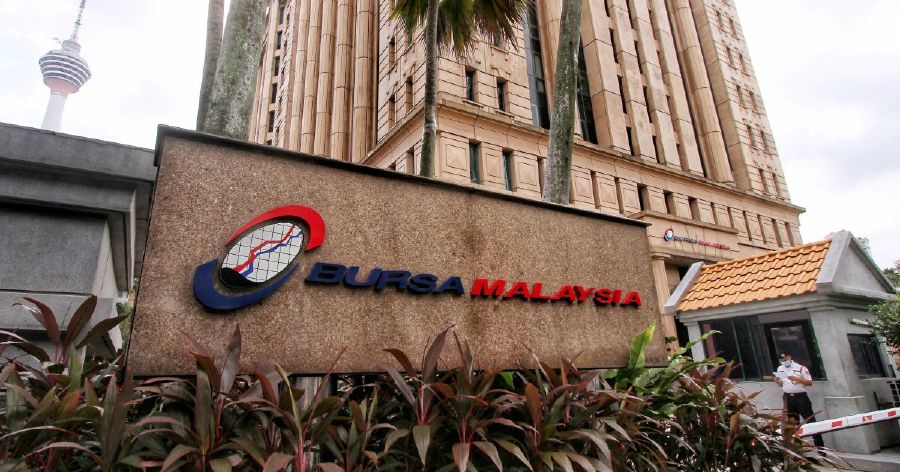
Bursa Malaysia Sues MAA Group To Stop EGM On KNM Subsidiary Sale

KUALA LUMPUR, Bursa Malaysia Securities Bhd has initiated legal proceedings against MAA Group Bhd (KL) to prevent it from convening an extraordinary general meeting (EGM) regarding the proposed sale of Deutsche KNM GmbH (DKNM), a subsidiary of KNM Group Bhd (KL). In a filing on Tuesday, KNM said Bursa had filed an originating summons at the Kuala Lumpur High Court against MAA, CIMSEC Nominees (Tempatan) Sdn Bhd, KNM, and its wholly-owned unit, KNM Process Systems Sdn Bhd. MAA was named the first defendant, while CIMSEC Nominees was listed as the second. The hearing is scheduled for Oct 29 — a day before the planned EGM on Oct 30, 2025. Through the court action, Bursa is seeking an injunction to restrain MAA and CIMSEC Nominees from convening the EGM or tabling a special resolution related to the DKNM disposal until all Main Market Listing Requirements have been satisfied. The legal move follows Bursa’s prior warning to MAA on Oct 23 that proceeding with the shareholder vote would constitute a breach of listing rules. MAA, led by Tunku Datuk Yaacob Khyra, holds a 19.37% stake in KNM. On Monday, KNM announced its decision to withdraw an appeal against Bursa’s rejection of its Practice Note 17 (PN17) regularisation plan — a step that paves the way for its delisting on Nov 5 after 22 years on the stock exchange. KNM said the withdrawal was necessary to finalise the €270 million (RM1.34 billion) sale of DKNM to Japan’s NGK Insulators Ltd. The group emphasised that the disposal is crucial for its turnaround, as proceeds will be used to reduce RM1.3 billion in debt and provide RM100 million in working capital to support operations. The EGM called by MAA is intended to seek shareholder approval for the transaction, despite Bursa’s objections. DKNM owns Borsig GmbH, KNM’s core German asset, which has been identified as key to the group’s debt-reduction strategy. KNM has been classified under PN17 since October 2022 after auditors raised going-concern issues. KNM’s shares have been suspended since Oct 13, following Bursa’s rejection of its restructuring plan. They last traded at 0.5 sen, giving the group a market capitalisation of RM20.23 million.

Scroll to Top

Subscribe
FREE Newsletter