Investment & Market Trends

Investment & Market Trends

Diageo Considers Divesting China Assets, Including Potential Sale

Diageo plc is reviewing strategic options for its operations in China, including the possibility of divesting certain assets, as the global spirits group looks to streamline its portfolio, sources familiar with the matter said. The owner of brands such as Guinness and Johnnie Walker is working with advisers Goldman Sachs Group Inc and UBS Group AG to assess its China exposure, which includes a more than 63% stake in Shanghai-listed Sichuan Swellfun Co. The advisers have begun gauging interest from potential domestic buyers and private equity firms, the sources said, declining to be identified as the discussions are private. If pursued, Diageo would join a growing list of multinational companies reassessing their footprint in China amid rising competition from increasingly sophisticated local players with strong ties to domestic consumers. Shares of Sichuan Swellfun have fallen about 14% over the past year, valuing the Chengdu-based liquor producer at around US$2.7 billion. Diageo shares, which are down roughly 29% over the same period, rose as much as 2.4% in early London trading on Tuesday. The review is still at an early stage and no final decision has been made, the sources stressed, adding there is no certainty any transaction will proceed. Diageo, Goldman Sachs and UBS declined to comment. A spokesperson for Sichuan Swellfun said the company had not been informed of any plans involving a stake sale. The potential move comes as several Western companies reconsider their China strategies. In recent months, Starbucks Corp agreed to sell a majority stake in its China business to Boyu Capital, while Restaurant Brands International Inc took a similar step with Burger King’s local operations. Other multinational groups, including GE Healthcare Technologies Inc, have also explored options for their China units, according to sources. Diageo has been reshaping its global portfolio as weaker alcohol consumption weighs on demand for premium spirits. In December, the group agreed to sell a majority stake in East African Breweries to Japan’s Asahi Group Holdings Ltd for US$2.3 billion, though the deal is facing legal challenges from a local distributor. The strategic review also coincides with a leadership change at Diageo. Dave Lewis, former chief executive of Tesco plc, took over as CEO this month, replacing Debra Crew, whose tenure was marked by a profit warning and a sharp share price decline amid softer demand and trade tensions. In November, Diageo cut its full-year sales and profit outlook, citing weaker consumption in the US and China, where anti-extravagance measures have curbed spending. Sichuan Swellfun, best known for its baijiu products, reported a sharp drop in its latest quarterly results, with revenue falling nearly 59% and net profit down more than 75%.

Investment & Market Trends

IJM Shares Hit Four-Month High On Sunway Takeover Proposal

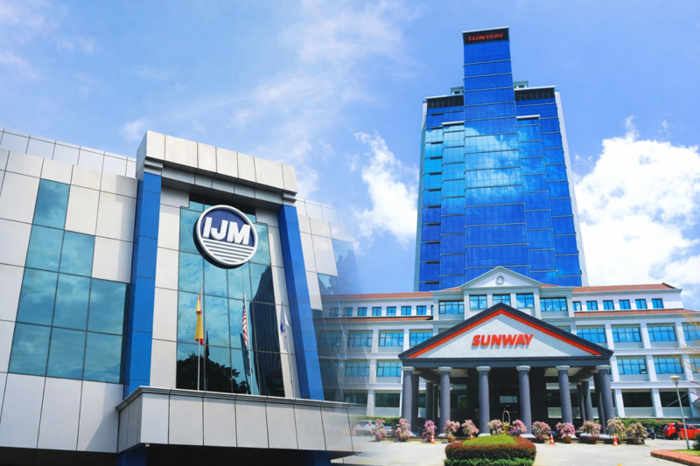
Shares of IJM Corporation Bhd climbed to a more than four-month high on Tuesday following Sunway Bhd’s proposal to acquire the construction group in a cash-and-share deal valued at over RM11 billion. IJM rose 19 sen or 6.9% to RM2.94 — its highest level since August — giving it a market capitalisation of RM10.7 billion. In contrast, Sunway shares slipped 12 sen or 2.1% to RM5.48, valuing the group at RM37.3 billion. Under the proposed voluntary takeover offer (VTO), IJM shareholders will receive RM315 in cash and 501 Sunway shares for every 1,000 IJM shares held. If completed, the enlarged group would rival Gamuda Bhd as Malaysia’s largest construction company by revenue. Analysts largely favour acceptance, Kenanga dissents Most research houses have recommended that IJM shareholders accept Sunway’s offer of RM3.15 per share, describing it as fair and providing valuation certainty. However, Kenanga Research stands out as the sole major dissenting voice. Kenanga advised shareholders to reject the offer, arguing it is below its RM3.40 target price for IJM and that the share-swap element overvalues Sunway. It noted that Sunway’s implied issue price of RM5.65 reflects a calendar year 2026 price-earnings ratio of 27.6 times, compared with 19.4 times for IJM under the offer. Based on Kenanga’s Sunway target price of RM4.73, the implied value of the offer for IJM would be only RM2.69 per share, below both its current market price and Kenanga’s target. Strategic upside highlighted Other analysts view the VTO as reasonable, pointing to IJM’s ability to monetise its investment at a fair valuation while gaining exposure to Sunway’s larger, more diversified earnings base. TA Securities said the offer’s valuation is broadly in line with IJM’s historical price-earnings multiples and close to its net asset value, making it attractive despite some analysts’ target prices sitting slightly above the offer. The transaction values IJM at around RM11 billion, with consideration comprising 90% new Sunway shares and 10% cash. Completion is subject to regulatory and shareholder approvals, including a minimum acceptance level of 50% plus one share, with completion targeted for the third quarter of 2026. Analysts also highlighted potential earnings accretion and synergies, including scale benefits, bulk procurement savings and operational efficiencies. They added that IJM could benefit from Sunway’s internal property development pipeline, which offers more predictable margins than open-tender construction projects. Sunway has indicated it does not intend to maintain IJM’s listing status, with analysts flagging possible consolidation of overlapping construction, manufacturing and quarrying operations following the deal’s completion.

Investment & Market Trends

MiniMax Stock Doubles In Hong Kong Trading Debut

MiniMax Group Inc, one of China’s leading generative artificial intelligence (AI) start-ups, surged in its Hong Kong debut after raising US$619 million in an initial public offering. The shares jumped 109% to close higher on Friday, after being priced at HK$165 (about US$21.17) per share in an upsized offering. Retail demand was exceptionally strong, with subscriptions exceeding the available shares by more than 1,830 times. Supported by investors including Alibaba Group Holding Ltd and Abu Dhabi’s sovereign wealth fund, MiniMax is among the first wave of China’s post-ChatGPT AI companies to list publicly. The strong debut followed a more muted listing by rival Knowledge Atlas Technology JSC Ltd, also known as Zhipu, which gained 13% on its first trading day last Thursday. According to UOB Kay Hian Hong Kong executive director Steven Leung, the rally reflects interest from both short-term traders and long-term institutional investors. He added that some capital may be rotating away from the US amid concerns over a potential AI market bubble. MiniMax’s performance suggests investor appetite in China’s AI sector is expanding beyond hardware manufacturers to include software-focused companies. Earlier, strong localisation demand had driven chipmakers Moore Threads Technology Co and MetaX Integrated Circuits Shanghai Co to post multi-fold gains on their Shanghai debuts. Zhipu extended its gains by a further 21% last Friday. Still, Bloomberg Intelligence analyst Marvin Chen cautioned that it remains early in China’s AI investment cycle compared with global peers, making it challenging for investors to clearly distinguish long-term winners from laggards.

Investment & Market Trends

Sunway Unit To Raise RM10b Sukuk For Capital And Debt

Sunway Bhd announced on Thursday that one of its subsidiaries plans to raise up to RM10 billion through a sukuk wakalah programme to support working capital and refinance existing borrowings. Sunway Treasury Sdn Bhd, a wholly owned unit of Sunway City Sdn Bhd, which is in turn fully owned by Sunway, has submitted the necessary documents to the Securities Commission Malaysia for the sukuk programme, according to a Bursa filing. The sukuk programme will have a perpetual tenure, while each issuance will carry a tenure of over one year, with specific terms determined before issuance. The first tranche will be backed by a corporate guarantee from Sunway. Proceeds from the sukuk are intended for capital expenditure, investments, general corporate purposes, working capital, refinancing of both Shariah-compliant and conventional borrowings, programme-related fees, and inter-company advances within the Sunway Group. OCBC Al-Amin Bank Bhd has been appointed as principal adviser, lead arranger, lead manager, sustainability structuring adviser, and Shariah adviser for the programme. Last month, another Sunway subsidiary, Sunway Cochrane Sdn Bhd, proposed a separate RM2 billion sukuk wakalah programme to support working capital and expansion plans. As of September 2025, Sunway reported cash and bank balances of RM6.52 billion, with short-term debt of RM6.34 billion and long-term borrowings of RM6.08 billion. Shares of Sunway closed unchanged at RM5.58 on Thursday, giving the group a market value of RM38 billion.

Investment & Market Trends

Hang Seng Bank Shareholders Greenlight HSBC’s US$13.6bn Takeover

Hang Seng Bank shareholders have approved HSBC’s plan to take the bank private in a move aimed at strengthening the Asia-focused lender’s footprint in Hong Kong. In a vote held Thursday, about 86% of shareholders backed HSBC’s proposal to acquire the 36.5% of Hang Seng shares it does not already own, in a deal valued at roughly US$13.6 billion. The plan now awaits approval from Hong Kong’s High Court, which will hold a hearing on January 23 to decide if the take-private transaction can proceed. If cleared, Hang Seng is expected to be delisted from the Hong Kong Stock Exchange on January 27. HSBC CEO Georges Elhedery said the strong shareholder support reflects confidence in Hang Seng’s business and the growth opportunities that full ownership under HSBC could unlock. The move aligns with HSBC’s strategy of expanding key operations while continuing selective divestments. Founded in 1933, Hang Seng Bank is one of Hong Kong’s largest banks, serving around four million customers across more than 250 branches and digital platforms. The bank has faced challenges in recent years due to its exposure to the Hong Kong and mainland Chinese property markets, and the acquisition will make it a wholly owned subsidiary of HSBC Asia Pacific.

Investment & Market Trends

Anta Sports Bids For Pinault Family’s 29% Stake In Puma

China’s Anta Sports Products has made an offer to acquire a 29% stake in struggling German sportswear brand Puma from France’s Pinault family, according to sources familiar with the discussions. The offer was made several weeks ago, and Anta has already secured financing for the potential acquisition, two of the sources said. However, negotiations have since stalled, one source added. All sources spoke on condition of anonymity as the talks are private. The Pinault family’s investment vehicle, Artemis, is said to be seeking a price of more than €40 per share for its Puma stake, a separate source told Reuters. Artemis is led by François-Henri Pinault, chairman of luxury group Kering. The Pinault family acquired the stake in 2018, when Kering divested Puma as part of its strategy to become a pure luxury-focused group. Both Artemis and Puma declined to comment, while Anta did not immediately respond to a request for comment. Puma’s market capitalisation stood at €3.3 billion (US$3.85 billion or RM15.6 billion) at Wednesday’s close, roughly half its value a year earlier, as the company grapples with declining sales and weak consumer demand. The sportswear group appointed Arthur Hoeld as chief executive officer in October, unveiling a turnaround plan after recent sneaker launches, including the Speedcat, failed to gain traction. Sales have also suffered as consumers shifted towards competitors such as Adidas, On and Hoka. Hong Kong-listed Anta, known for acquiring and revitalising Western sports and lifestyle brands, has previously explored a bid for Puma. In 2019, Anta led a consortium that acquired Amer Sports, the owner of brands including Wilson and Salomon. A senior source close to Artemis said in September that the Pinault family viewed its Puma stake as non-strategic, but was unwilling to sell at the company’s then-prevailing valuation. Puma shares have since rebounded by about 15%. Artemis, which controls Kering, auction house Christie’s and talent agency CAA, has faced investor scrutiny over rising debt levels built up as the Pinault family diversified beyond luxury amid a slowdown in global luxury demand.

Investment & Market Trends

China Reviews Meta’s US$2B AI Start-Up Purchase

Chinese regulators are examining whether Meta Platforms Inc.’s US$2 billion acquisition of AI start-up Manus violates national security or technology export rules. The early-stage review could potentially delay or complicate the deal if officials find any wrongdoing. Although Manus is now headquartered in Singapore, Chinese authorities are focusing on AI technology developed by the company when it was still based in China. The start-up’s agentic AI system can perform tasks such as booking flights, screening resumes, creating itineraries, and analyzing stocks, but it is unclear whether Beijing considers this technology critical to national security. The review, first reported by the Financial Times, remains preliminary, and regulators may ultimately choose not to intervene. However, similar reviews in the past have led to formal investigations, penalties, or conditions being imposed on deal approvals. China has previously scrutinized other high-profile transactions, such as ByteDance Ltd’s sale of TikTok US, which has yet to receive full approval from authorities. Meta’s acquisition marks a rare US purchase of an Asian tech company and represents CEO Mark Zuckerberg’s latest multi-billion-dollar bet on AI. Manus’ parent company, Butterfly Effect Pte, was founded in China before relocating to Singapore over the past year. The start-up has mainly focused on international markets, and its products have never been offered in China. The move comes amid Beijing’s push to strengthen domestic technology capabilities and reduce reliance on US software and semiconductors. The acquisition has drawn scrutiny in the US as well; in 2025, venture firm Benchmark faced criticism from lawmakers and investors for backing AI companies with links to China.

Investment & Market Trends

China’s AI Firm Zhipu Rises On Debut But Trails Hardware Peers

Shares of Knowledge Atlas Technology JSC Ltd, better known as Zhipu, gained in their Hong Kong debut following a US$558 million (RM2.27 billion) initial public offering (IPO), making it the first major Chinese generative artificial intelligence (AI) start-up to go public. The stock closed at HK$131.50 (RM68.57) on Thursday, up 13.2%, after opening weaker. Zhipu offered 37.4 million shares at HK$116.20 apiece last week, with retail allocations oversubscribed by more than 1,159 times. Zhipu is the first of China’s so-called “AI tigers” — start-ups developing large language models (LLMs) to rival OpenAI and Anthropic — to list publicly. However, its initial gain is modest compared with the strong debut of Chinese hardware firms, highlighting the tougher market environment for software developers. Analysts note that hardware companies, such as chipmakers, are seen as more central to Beijing’s push for technological self-reliance, while AI software faces fierce competition, price pressures, and limited access to advanced chips due to US export controls. “Investor preference at this stage is still skewed towards tangible infrastructure,” said Gary Tan, portfolio manager at Allspring Global Investments. “Hardware plays offer clearer visibility on government support and a more quantifiable total addressable market.” Zhipu co-founder and chairman Liu Debing acknowledged the challenges of a competitive domestic market, but highlighted the company’s international ambitions. “As we expand globally, users will recognise the value of our models,” he said. The IPO proceeds will be largely allocated to research and development, with 70% earmarked for general-purpose AI model development. The Beijing-based company, founded in 2019 by Tsinghua University researchers, reported revenue of 312.4 million yuan (RM181.42 million) in 2024. Its backers include Alibaba, Tencent, and local government funds, which have helped Zhipu secure contracts with state-owned enterprises seeking customised AI infrastructure. Despite the modest debut, analysts remain positive. Douglas Kim of Smartkarma assigned Zhipu a valuation of HK$223 per share, about 30% below its peer average. Sanford C Bernstein analysts noted that China’s AI sector is only months behind global leaders, predicting continued growth through 2026. The IPO comes amid a broader surge in Chinese tech listings, particularly in semiconductors and AI-related hardware. Recent debuts by Shanghai Iluvatar CoreX, Shanghai Biren Technology, Moore Threads, and MetaX Integrated Circuits have recorded strong first-day gains, underscoring investor appetite for tangible tech assets over software ventures. Zhipu’s current market capitalisation of US$6.6 billion based on the issue price remains lower than many of its chipmaking peers, reflecting the market’s current preference for hardware-focused investments over generative AI software companies in China.

Investment & Market Trends

Pioneer Heat Eyes ACE Market Listing

Pioneer Heat Holdings Bhd is planning to list on the ACE Market of Bursa Malaysia as part of its growth and expansion strategy. The group is mainly engaged in providing mechanical engineering services, as well as undertaking civil engineering works for the construction of industrial and supporting facilities across various sectors. In its prospectus exposure, Pioneer Heat said its initial public offering (IPO) will involve the issuance of 86.7 million new ordinary shares. The proceeds raised from the IPO will be channelled towards strengthening the group’s operational capabilities and expanding its footprint. A significant portion of the funds will be used to establish a new headquarters in Sendayan, Negeri Sembilan, alongside the setup of a new office in Sarawak. The company also plans to allocate part of the proceeds for the purchase of additional machinery and equipment to support its project execution capacity. According to the prospectus, the new Sendayan headquarters will feature a total built-up area of 42,790 square feet, comprising a three-storey office building, a one-storey workshop and a one-storey warehouse. The facility is expected to enhance operational efficiency and provide a centralised base for the group’s administrative and engineering activities. Malacca Securities Sdn Bhd has been appointed as the sponsor for Pioneer Heat’s proposed ACE Market listing.

Investment & Market Trends

ES Sunlogy Wins RM15 Million Contract

ES Sunlogy Bhd’s wholly owned subsidiary, Savelite Engineering Sdn Bhd, has secured a RM15.22 million contract for a project located in Johor, the company announced in a Bursa Malaysia filing. The contract involves the supply, delivery, installation, testing, commissioning, and maintenance of electrical services as a sub-contractor at Lot 156682 along the Johor Bahru–Pasir Gudang Highway, near Plentong, Johor. The project has been awarded by Parkland Southern Sdn Bhd, the main contractor for the development. ES Sunlogy noted that the sub-contract work is based on a firm price arrangement, which covers all associated costs, including transport, lifting, hoisting, packing, freight, insurance, payroll, taxes, import duties, and any other applicable charges, such as fees, royalties, and exchange rate adjustments. No price adjustments will be made for any future fluctuations. Savelite Engineering also confirmed that it will bear all increases in import duties, tariffs, and taxes that may arise during the contract period, and any such increases will not be recoverable from the main contractor or employer. The award of this contract strengthens ES Sunlogy’s track record in the electrical and engineering services sector, particularly in Johor, and reflects the group’s ongoing capabilities in managing mid-sized infrastructure projects with comprehensive electrical services. This contract is expected to contribute positively to the group’s revenue and earnings once execution is underway, further supporting ES Sunlogy’s strategic growth objectives in the region.

Scroll to Top

Subscribe
FREE Newsletter