
Investment & Market Trends

Investment & Market Trends

CPO Futures Likely To Stay Flat Next Week During Chinese New Year

Crude palm oil (CPO) futures on Bursa Malaysia Derivatives are expected to trade sideways with a slight bearish bias next week due to the Chinese New Year holidays, as both Malaysian and Chinese markets will be closed. David Ng, a proprietary trader at Iceberg X Sdn Bhd, said the market faces pressure from high stock levels and weak demand in recent weeks. Subdued buying from key importing countries, combined with ample inventories, is likely to limit any price gains despite support from competing edible oils. He expects CPO prices to trade between RM3,950 and RM4,180 per tonne next week. Jim Teh, senior palm oil trader at Interband Group, noted that trading will slow further because many mills, factories, and international traders are on extended leave during the festive period. Stock levels in Malaysia and Indonesia remain high due to weak physical demand, though some buying is expected from Pakistan, India, the Middle East, and the EU. He predicts prices will range between RM3,700 and RM3,800 per tonne next week. On a Friday-to-Friday basis, February 2026 CPO fell RM132 to RM3,950 per tonne, March 2026 dropped RM84 to RM4,037, and April 2026 declined RM104 to RM4,050. May 2026 eased RM117 to RM4,046, June 2026 lost RM118 to RM4,040, and July 2026 fell RM115 to RM4,035. Weekly trading volume rose to 392,823 lots from 274,729 lots last week, while open interest increased to 230,392 contracts from 219,059 contracts. Meanwhile, the new physical CPO price for February South decreased RM80 to RM4,050 per tonne.

Investment & Market Trends

Macquarie-Led Consortium To Acquire Qube Holdings For US$8.3 Billion

A consortium led by Macquarie Asset Management will acquire Qube Holdings Ltd in a deal worth around A$11.7 billion (US$8.3 billion or RM32.36 billion), expanding the Australian firm’s infrastructure portfolio to include ports and rail operations. The group will pay A$5.20 per share, a 28% premium to Qube’s closing price on Nov 21 before Macquarie’s initial approach. The consortium also features Pontegadea, the investment arm of Zara founder Amancio Ortega. Qube runs a transport and trade network handling goods such as grain and cottonseed and employs about 10,000 people across Australia, New Zealand, and Southeast Asia. UniSuper, an Australian pension fund, will transfer its 15% stake in Qube into the consortium. The transaction is subject to regulatory approvals from the Foreign Investment Review Board and the Australian Competition & Consumer Commission. Macquarie Asset Management, part of Macquarie Group Ltd, manages around A$736 billion in public and private assets, including container terminals in New York and toll roads in South Korea. Qube shares rose 3.5% in Sydney trading, marking a 22% gain over the past year.

Investment & Market Trends

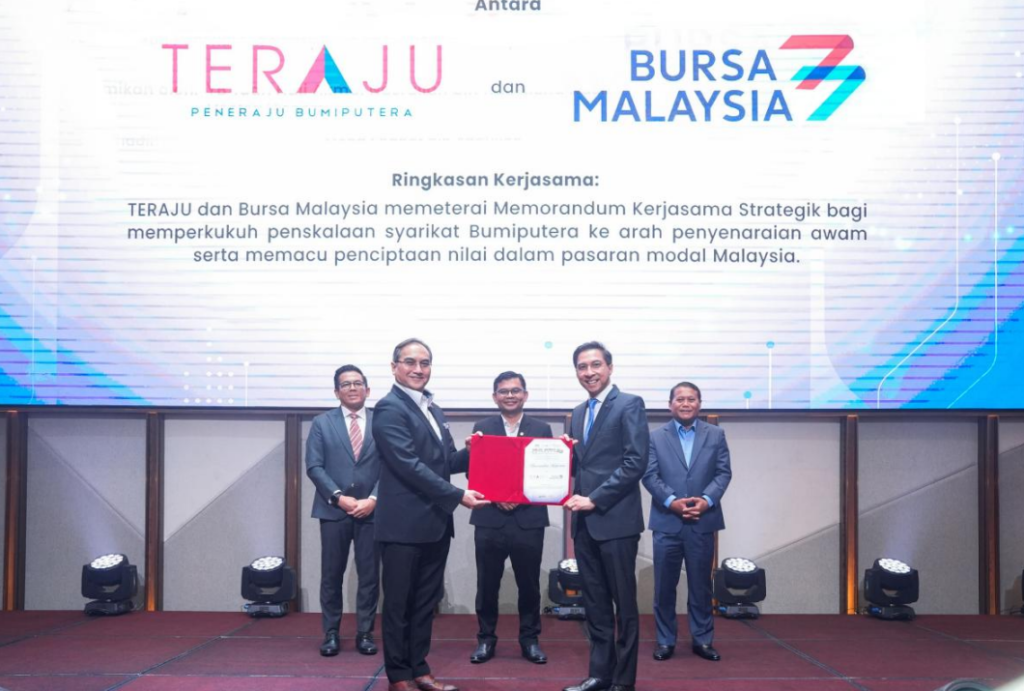
Bursa Malaysia And TERAJU To Boost Bumiputera IPO Preparation

Bursa Malaysia has teamed up with TERAJU to strengthen the pipeline of Bumiputera companies preparing for initial public offerings (IPOs). The partnership, formalised through a Memorandum of Collaboration (MoC), aims to increase Bumiputera participation in Malaysia’s capital market while supporting more companies towards listing. Under the collaboration, Bursa Malaysia will guide selected high-potential companies in meeting IPO requirements, offering advisory support, networking opportunities with capital market intermediaries, and programmes to enhance governance and compliance standards. TERAJU will identify suitable Bumiputera companies, facilitate access to funding and incentives, and coordinate with government agencies, financial institutions, and industry players to provide comprehensive support throughout the IPO journey. Bursa Malaysia CEO Dato’ Fad’l Mohamed said the initiative supports the Pelan Transformasi Ekonomi Bumiputera (PuTERA35), which targets 30% Bumiputera equity ownership by 2035. He noted that many Bumiputera companies have untapped potential to grow into listed entities. TERAJU CEO Junady Nawawi said the collaboration focuses on mid-sized Bumiputera firms with strong growth prospects that may lack structured support in preparing for listing. In addition, Bursa Malaysia’s subsidiary BR Capital signed a separate Letter of Collaboration with TERAJU to provide debt and alternative financing solutions, helping companies scale up ahead of a potential IPO. Both organisations have also been conducting IPO roadshows nationwide to raise awareness and encourage more companies to consider listing.

Investment & Market Trends

McDonald’s Malaysia To Invest RM1B, Open 100 Outlets, Hire 10,000 Staff

McDonald’s Malaysia has unveiled a RM1 billion investment plan to expand its operations over the next five years, aimed at improving accessibility, creating jobs, and supporting local communities. McDonald’s Malaysia has announced a RM1 billion investment plan to expand its operations over the next five years.  Under the plan, the company will open 100 new outlets nationwide, generating more than 10,000 job opportunities. McDonald’s Malaysia, which currently employs over 16,000 Malaysians, will maintain its 100% local hiring policy. The company also sources 75% of its products locally, supporting domestic suppliers and contributing to the growth of Malaysia’s food industry. Managing Director and Local Operating Partner Datuk Azmir Jaafar said the expansion aligns with the company’s long-term vision of building a skilled and future-ready workforce. Despite a challenging business environment, McDonald’s Malaysia recorded 26% year-on-year growth in 2025, reflecting strong customer trust and loyalty. The announcement coincided with the reopening of the McDonald’s Titiwangsa Drive-Thru outlet after renovations. The company currently operates more than 370 outlets nationwide, having opened seven new restaurants in 2025 and 11 in 2024. Several of the new outlets will be located in Sabah and Sarawak to meet rising demand. McDonald’s will also continue expanding its Vocational Academy, developed with the Human Resources Ministry under the National Dual Training System, to provide training and career opportunities for youths, persons with disabilities, B40 communities, and Orang Asli groups. Azmir said the investment underscores the company’s commitment to sustainable growth, workforce development, and long-term contributions to Malaysian communities.

Investment & Market Trends

New Tax And More Relief This Year

Malaysians filing their tax returns this year will benefit from several new and expanded tax reliefs, but they should also be aware of a new taxable income. For the first time, dividend income is subject to tax. Accounts and tax expert Datin Christine Koh explained, “A 2% tax is imposed on total dividend income exceeding RM100,000 a year, regardless of how many companies it comes from. Many taxpayers may overlook this because dividends were previously tax-free.” On the relief side, families and caregivers stand to gain the most. Parent medical expenses relief has been increased to RM8,000 and now includes grandparents. Sports-related lifestyle relief of up to RM1,000 has been expanded to cover expenses for parents, in addition to the self, spouse, or children. Relief limits for persons with disabilities have also risen: RM7,000 for disabled individuals, RM6,000 for a disabled spouse, and RM8,000 per disabled child. Education and medical insurance relief has increased to RM4,000, while environmental sustainability relief of up to RM2,500 now includes food waste composting machines, claimable once between assessment years 2025 and 2027. Despite these expansions, Koh warned that many taxpayers still miss out due to misunderstandings. “Common mistakes include assuming both parents can claim childcare relief or overlooking that sports equipment bought for parents is claimable. Dental treatment expenses up to RM1,000 and skill-enhancement courses are also often under-claimed,” she said. However, Koh noted that tax reliefs only reduce tax payable, not actual spending. “At a 20% tax rate, spending RM1,000 saves only RM200 in tax. The remaining RM800 is still an out-of-pocket expense. The RM9,000 personal relief equates to about RM25 a day—far from enough to cover basic necessities.” First-time homebuyers should also note the new housing loan interest relief. Tax expert Datuk Koong Lin Loong explained, “Loans signed between Jan 1, 2025, and Dec 31, 2027, are eligible. Properties priced RM500,000 or below can claim up to RM7,000 a year, while homes priced between RM500,000 and RM750,000 can claim up to RM5,000 annually for three consecutive years. For example, a loan signed at the end of 2027 can provide relief until 2029.”

Investment & Market Trends

MBSB Bank Allocates RM1bn To Support Rail SMEs

MBSB Bank has set aside up to RM1 billion in financing to support small and medium enterprises (SMEs) in Malaysia’s rail sector, under a strategic partnership with the Malaysia Rail Industry Corporation (MARIC). The collaboration aims to strengthen the country’s rail industry ecosystem by providing structured financing solutions to rail-related SMEs, technology providers and solution developers. Both parties will also undertake joint industry engagement initiatives and capacity-building efforts. In a statement, the bank said initial initiatives will include industry dialogues, knowledge-sharing sessions focused on commercial development and environmental, social and governance (ESG) readiness, as well as aligning financing frameworks with innovation and sustainability benchmarks relevant to the rail sector. MBSB Group chief strategy officer Datuk Azlan Shahrim said the partnership will allow the bank to better understand the challenges faced by industry players. “By engaging directly with MARIC members, we can gain clearer insights into their operational challenges and develop financing solutions that are carefully structured to meet their specific requirements,” he said. MARIC president Datuk Dr Mohd Yusott Sulaiman described the collaboration as a significant step towards strengthening Malaysia’s rail industry landscape. “Many of our SMEs and technology players have strong technical capabilities but require appropriate financial backing to scale and commercialise their solutions. This partnership helps bridge the gap between innovation and market readiness while supporting the growth of a more competitive and sustainable rail sector,” he said. Looking ahead, both parties expect the collaboration to contribute to a more integrated and future-ready rail ecosystem, enhancing SME competitiveness, accelerating commercialisation efforts and reinforcing Malaysia’s position as an innovation-driven rail industry hub.

Investment & Market Trends

Grab Buys Stash For $425m After First Full-Year Profit

Southeast Asian ride-hailing and food delivery giant Grab Holdings is acquiring U.S.-based digital investment platform Stash Financial, expanding its financial services business as the superapp achieves its first full-year profit. Under the cash-and-stock agreement, Grab will purchase Stash in two stages. It will initially acquire a 50.1% stake based on an enterprise valuation of $425 million. The remaining shares will be acquired over the next three years at fair market value. The transaction is expected to close in the third quarter, subject to regulatory approvals and customary conditions. Stash manages approximately $5 billion in assets and serves more than one million paying subscribers through its AI-powered investment platform. The acquisition strengthens Grab’s growing fintech ecosystem, which already includes payments, lending and digital banking services built around its core ride-hailing and food delivery operations. Grab said Stash is cash-flow positive and is projected to generate more than $60 million in adjusted EBITDA by 2028. “This marks an important milestone in Grab’s evolution as a trusted international financial services provider,” said Grab co-founder and CEO Anthony Tan. He added that the acquisition not only brings recurring, high-margin subscription revenue but also enhances Grab’s broader fintech capabilities. The announcement comes as Grab reported a net profit of $200 million for 2025 — its first annual profit — compared with a net loss of $158 million the previous year. Full-year revenue rose 20% to $3.4 billion.

Investment & Market Trends

Maxland Seeks RM32m Through Rights Issue

Maxland Bhd has proposed a rights issue aimed at raising up to RM32.07 million to fund maintenance of its timber camp infrastructure, tree replanting and plantation improvement works, as well as general working capital. The proposed issuance will involve up to 2.405 billion new rights shares, offered at two sen each, on a one-for-one basis for existing shareholders, according to a filing with Bursa Malaysia. Maxland Bhd has proposed to offer 2.405 billion rights shares at two sen each on the basis of one new share for every one existing share held. The two-sen issue price represents a 16.32% to 32.2% discount compared with Maxland’s five-day to 12-month volume-weighted average market price of 2.78 sen to 3.9 sen as of Feb 11. Non-independent and non-executive chairman Datuk Abd Aziz Haji Sheikh Fadzir has committed to fully subscribe to his entitlement of 17.7 million rights shares, with an additional undertaking for up to 110 million shares if required. Assuming full subscription and no exercise of the company’s 801.81 million outstanding warrants B, Maxland expects to raise RM32.07 million from the issuance of approximately 1.6 billion rights shares. Proceeds will be used to maintain timber camp infrastructure and processing plants, support tree plantations, cover working capital needs, and defray expenses related to the rights issue. Over the past five years, Maxland has conducted five equity fundraising exercises, including a RM6.78 million private placement and a RM51 million redeemable convertible note issuance in June 2021, a RM2.05 million private placement in December 2021, a RM13.64 million private placement in January 2023, and an RM11.37 million private placement in February 2024. The rights issue remains subject to shareholder approval at an extraordinary general meeting, with completion anticipated in the second quarter of 2026. Maxland is 19% owned by its 73-year-old managing director Datuk Lim Nyuk Sang. Shares in the company were untraded on Thursday, with the last transaction on Feb 9 at 3.5 sen, valuing the group at RM56.13 million.

Investment & Market Trends

Mercuria Takes Back Stake From Chinese Backer

Mercuria Energy Group Ltd has bought back the shares previously held by CNIC Corp, ending nearly a decade of minority ownership by a Chinese state-linked investor in one of the world’s largest commodity trading firms. According to documents, CNIC no longer holds any shares in Mercuria’s holding company. The firm’s billionaire co-founders, Marco Dunand and Daniel Jaeggi, have increased their combined stake to 68.21%, up from around 64% a year ago. The change in ownership comes at a time when global commodity supply chains have become increasingly politicised, particularly amid rising tensions between China and the United States. Markets ranging from oil to copper and soybeans have been affected, and major trading houses such as Mercuria are facing greater scrutiny as commodities take centre stage in geopolitical strategy. CNIC, a state-backed fund, acquired just under 5% of Mercuria in late 2022. The investment followed Mercuria’s earlier repurchase of a 12% stake from ChemChina, another Chinese state-linked company that had invested in 2016. Documents show that 4.99% of Mercuria’s shares are now classified as treasury shares. Dunand and Jaeggi have strengthened their control over the company in recent years, particularly after senior executive Magid Shenouda departed in 2024. Although Mercuria brought in three senior leaders as part of a management transition, one has since left the firm. The co-founders have been major beneficiaries of the commodity trading boom triggered by Russia’s invasion of Ukraine, with Mercuria paying out US$5.5 billion (RM21.54 billion) in dividends over the past three years. Mercuria, which began as a trader of Russian oil into Poland, has grown into one of the world’s leading commodity houses, with significant operations in gas, power and metals. The company is among three trading firms selected to help manage purchases for a US$12 billion US stockpile aimed at countering China’s dominance in critical metals supply chains. It is also reportedly seeking to trade Venezuelan oil under a US permit, following a recent licence expansion that excludes companies owned or controlled by Chinese shareholders. Mercuria traces its roots to J&S Group, founded by Gregory Jankilevitsch and Wiaczeslaw Smolokowski. The two founders, together with early investor and trader Vadim Linetskiy, now hold a combined 7.25% stake in the holding company, down from 11.2% in 2018. Employees collectively own 18.55% of the company through a share ownership plan, while Han Jin, Mercuria’s head of Asia, retains a 1% stake. A Mercuria spokesperson declined to comment. CNIC did not immediately respond to requests for comment.

Investment & Market Trends

QuickIn Targets SME Operational Gaps Amid E-Invoicing And Digital Shift

Malaysian small and medium enterprises (SMEs) continue to grapple with manual invoicing, scattered financial records and disconnected business tools, even as regulatory timelines around e-invoicing evolve.  These ongoing operational gaps have led to the introduction of solutions like QuickIn, designed to centralise invoicing, sales tracking and financial management for SMEs. Built by a team with accounting and finance backgrounds, the platform is designed for immediate usability without the need for additional hardware or complex setup. According to its developers, SMEs often rely on tools that do not integrate well, resulting in duplicated work and inconsistent records. By consolidating invoices, payments and transaction histories, the system aims to streamline workflows and reduce administrative errors. “Many Malaysian SMEs are resilient and hardworking, but they’re often held back by manual processes and disconnected tools that were never designed for how they actually operate,” said Leon Wong, Co-founder and Financial Systems Architect of QuickIn. He said the platform was developed to provide a unified system to simplify invoicing and financial management while reducing daily operational friction. With QuickIn, businesses can issue invoices, enable self-billed invoicing, consolidate multiple transactions and manage everything through a single dashboard. Automatic updates keep financial records accurate, while paperless workflows help reduce administrative workload. The all-in-one e-invoicing solution platform also integrates seamlessly with existing systems, enabling SMEs to improve efficiency without operational disruption. By simplifying core financial processes, the system helps SMEs reduce reliance on manual work and adopt more structured operations, improve cash flow visibility, and support faster decision-making. QuickIn is among platforms entering the SME digital management space as businesses review internal systems amid evolving regulatory and operational demands. It offers an easy entry point. 

Scroll to Top

Subscribe
FREE Newsletter