Investment & Market Trends

Investment & Market Trends

PM Anwar Urges Geely To Boost Investment In AHTV Project

TANJONG MALIM, Prime Minister Datuk Seri Anwar Ibrahim has urged Chinese automotive giant Zhejiang Geely Holding Group Co Ltd (Geely) to scale up its investment in the Automotive Hi-Tech Valley (AHTV), positioning the site as a key hub in the regional automotive supply chain. Anwar, who also serves as Finance Minister, said AHTV’s growth is being driven by national carmaker Proton Holdings Bhd’s substantial investment. “We want AHTV to be a major centre for Geely. I told its chairman Li Shufu that beyond car manufacturing, Geely should also set up a centre of excellence for training and education here,” he said during the launch of Proton’s new electric vehicle (EV) plant. The ceremony was also attended by Perak Menteri Besar Datuk Seri Saarani Mohamad, Investment, Trade and Industry Minister Tengku Datuk Seri Zafrul Abdul Aziz, and Transport Minister Anthony Loke. Anwar emphasised the importance of collaboration between the state government and relevant ministries to ensure the success of AHTV-related projects. He added that Proton’s EV factory will help lower production costs, enabling the company to offer affordable EVs suited to middle-income buyers. “These vehicles will also cater to lower-income groups seeking cars with better features at lower prices,” he said. The Prime Minister noted that Proton’s expansion would strengthen its international presence, highlighting Egypt as an example. “In Beijing, Egyptian Prime Minister Mostafa Madbouly praised Proton Egypt’s performance, where the brand has become a popular choice among consumers,” Anwar said. He revealed that discussions are underway for Proton to expand into South Africa and Brazil, with both nations’ leaders — President Luiz Inacio Lula da Silva of Brazil and President Cyril Ramaphosa of South Africa — expected to attend the 47th ASEAN Summit in October. “I have asked Proton to showcase its technology and capabilities during the summit so foreign leaders and delegations can see firsthand the brand’s strengths, opening doors to more export markets,” Anwar added.

Investment & Market Trends

WTK To Acquire Three Firms In RM555 Million Oil Palm Expansion Drive

KUALA LUMPUR, WTK Holdings Bhd, together with its wholly-owned subsidiary BioPalm Venture Sdn Bhd, has announced plans to acquire three companies in deals worth a combined RM555 million. In a filing with Bursa Malaysia, WTK said the proposed acquisitions are part of its strategy to strengthen its footprint in the oil palm sector in Sarawak, covering upstream plantation activities as well as palm oil milling operations. The first deal, with WTK Realty, involves the purchase of seven million ordinary shares in Desacorp Sdn Bhd — representing 100% equity interest — for RM230 million. The second transaction, through BioPalm Venture and WTK Realty, will see the acquisition of 14 million shares in Imbok Enterprise Sdn Bhd, equivalent to a 70% stake, for RM290 million. Meanwhile, the third proposal involves BioPalm Venture and WTK Realty acquiring 3.5 million shares in WTK Oil Mill Sdn Bhd, also representing a 70% equity interest, for RM35 million. Upon completion, Desacorp will become a wholly-owned subsidiary of WTK, while Imbok Enterprise and WTK Oil Mills will be 70%-owned subsidiaries of BioPalm Venture. WTK said the acquisitions will boost the group’s financial strength, as the subsidiaries’ results will be consolidated into the group’s accounts in line with Malaysian Financial Reporting Standards. This is expected to enhance WTK’s asset base, revenue streams, profitability, cash flow, and long-term earnings visibility. “Given the robust global demand for palm oil, the group remains optimistic about the plantation division’s ability to deliver sustainable growth and profitability in the coming years,” it said. The acquisitions are targeted for completion by the first quarter of 2026.

Investment & Market Trends

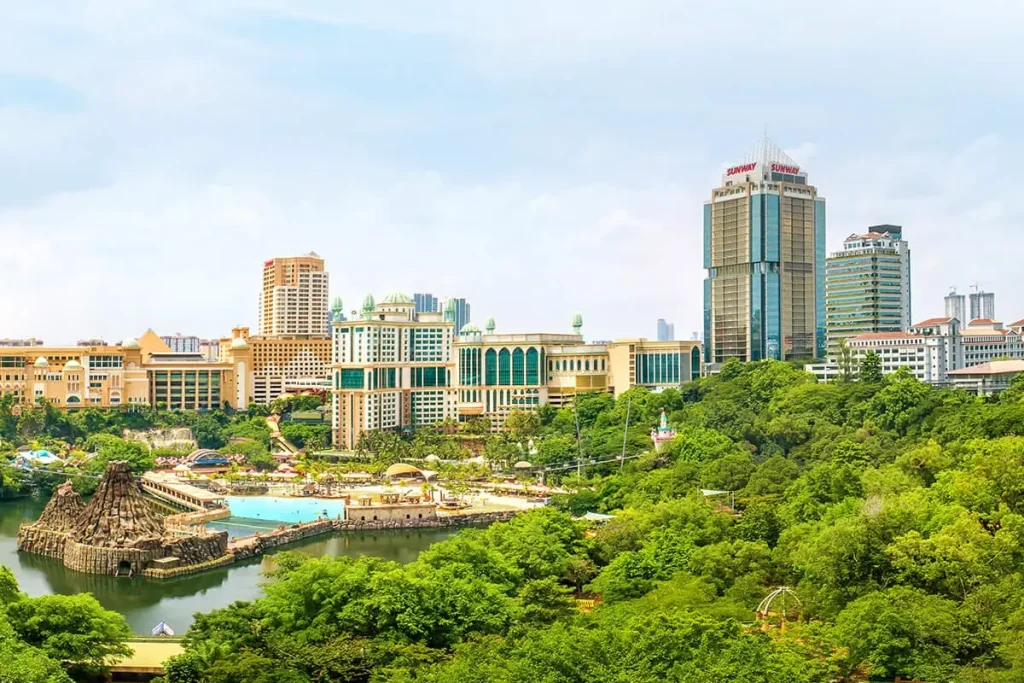
Sunway Eyes Early 2026 IPO Of Healthcare Division With Share Dividend For Investors

KUALA LUMPUR, Sunway Bhd has unveiled plans to list its healthcare arm, Sunway Healthcare Holdings Bhd (SHH), by early 2026, with the exercise also involving a share dividend distribution to its shareholders. Ahead of the proposed IPO of up to 1.97 billion new and existing shares, SHH will undertake a share split, converting each share into nine shares. This will expand its share base from 1.2 billion to 10.9 billion without altering its current valuation of RM2.2 billion. SHH is 84%-owned by Sunway via Sunway City Sdn Bhd (SunCity), while the remaining 16% is held by Singapore’s Greenwood Capital Pte Ltd. Following the share split, SunCity will distribute its SHH holdings to Sunway as a special dividend, which Sunway intends to pass on to its shareholders at a ratio of one SHH share for every 10 Sunway shares. The IPO, subject to regulatory approval, will comprise up to 575 million new shares and 1.4 billion existing shares, representing as much as 17.2% of SHH’s equity. Proceeds from Sunway’s portion of the sale will be used to reduce borrowings, support working capital and cover listing expenses. SHH’s portion will be channelled towards hospital expansion, new developments, partial redemption of Islamic medium-term notes, and IPO-related costs. Post-listing, Sunway is expected to retain a 69.5% stake in SHH through SunCity. The group noted that the exercise would unlock value, provide SHH direct access to capital markets, and strengthen its financial flexibility while reinforcing its position as a leading private healthcare provider in Southeast Asia. SHH currently operates five hospitals with a combined 1,662 licensed beds, led by its flagship Sunway Medical Centre in Subang Jaya. Its portfolio also includes hospitals in Cheras, Penang, Damansara and Ipoh, alongside services in ambulatory care, fertility, traditional and complementary medicine, home care and senior living. Expansion plans are underway, including hospitals in Seremban, Iskandar Puteri and Putrajaya, as well as a fertility centre in Kota Bharu. These projects are expected to more than double SHH’s capacity to over 3,400 beds by 2032. For FY2024, SHH reported a net profit of RM257.5 million on revenue of RM1.85 billion, compared with RM181.6 million and RM1.46 billion respectively in FY2023. Adjusted Ebitda rose to RM458.5 million from RM380.8 million. Maybank Investment Bank and AmInvestment Bank are joint advisers for the IPO. Sunway’s shares eased two sen or 0.40% to RM4.92 at Friday’s midday break, giving the group a market capitalisation of RM30.85 billion. Year to date, the counter has gained 4.02%.

Investment & Market Trends

Wilmar’s Indonesia Case Could Expose PPB To RM600 Million Worst-Case Loss

KUALA LUMPUR, PPB Group Bhd could face a potential financial exposure of up to RM600 million in a worst-case scenario if its associate Wilmar International Ltd fails in its appeal before Indonesia’s Supreme Court over alleged misconduct linked to palm oil export permits. Managing director Lim Soon Huat said the figure, equivalent to about 45 sen per PPB share, represents the group’s share of Wilmar’s US$729 million (RM3.1 billion) security deposit with Indonesia’s Attorney General’s Office (AGO). “However, this is only a worst-case scenario. We remain confident that the Supreme Court ruling will be more favourable,” Lim said at PPB’s first-half results briefing on Wednesday, adding that the group has not made any financial provisions for the matter. Despite the legal overhang, Lim assured that PPB’s dividend policy remains unaffected. The group declared an interim dividend of 12 sen for the second quarter ended June 30, 2025 (2QFY2025), unchanged from a year earlier, supported by a net cash balance of RM1.3 billion. “Beyond dividends from Wilmar, we also receive cash from other investments. After accounting for capital and operational requirements, we are confident of continuing to deliver consistent shareholder returns,” he said. Lim also noted that Wilmar’s operations in China and India are expected to remain profitable and supportive of future payouts. Wilmar is PPB’s largest profit contributor, delivering RM992 million to PPB’s FY2024 profit before tax of RM1.33 billion. However, in 2QFY2025, Wilmar’s contribution fell 19% to RM197 million, in line with its lower net profit of US$251 million compared with US$277 million a year earlier. PPB holds an 18.8% stake in Wilmar. On concerns about exposure to Indonesia, Lim dismissed speculation that PPB may scale back operations following recent legal uncertainty and social unrest. “Instead of pulling out, we are expanding further in Indonesia, not only in business but also in infrastructure and distribution. Wilmar remains one of the strongest consumer products players, with cooking oil, rice and sugar under its portfolio,” he said, describing the ongoing case as a temporary setback against a broader economic slowdown. Wilmar, along with two other palm oil companies, was implicated in a 2022 graft case involving export permits. While the Central Jakarta Court acquitted all parties earlier this year, prosecutors have appealed after several judges involved in the acquittal were arrested on bribery allegations. In June, Wilmar confirmed that it placed 11.8 trillion rupiah (US$729 million or RM3.1 billion) with the AGO as a security deposit, which will be returned if the company is cleared but could be forfeited in part or full if the appeal is unsuccessful. Kenanga Research said the development increases PPB’s risk premium and may weigh on sentiment until the case is resolved. The research house has lowered its target price for PPB from RM15.00 to RM10.50 and downgraded the stock to a ‘market perform’ call. PPB shares, which recently slipped below RM10 for the first time in over 16 years, rebounded at mid-day trading on Wednesday, rising 27 sen or 2.99% to RM9.31, valuing the company at RM13.24 billion.

Investment & Market Trends

Tropicana Fully Redeems RM100m Sukuk Wakalah

KUALA LUMPUR, Tropicana Corporation Bhd has completed the redemption of another tranche of its Sukuk Wakalah Programme amounting to RM100 million, which matured today. In a statement, the group said it had earlier redeemed a tranche worth RM123.5 million on June 30, 2025, under the same programme. “The redemption of the sukuk underscores Tropicana’s prudent financial management and steadfast commitment to honouring its obligations to investors. The group continues to deliver sustainable earnings, supported by unbilled sales of RM2.1 billion and strengthened by its ongoing and upcoming signature developments across Malaysia with an estimated gross development value (GDV) of RM6.5 billion,” it said. Tropicana added that it remains on a growth trajectory through initiatives focused on enhancing sales performance, monetising landbank and investment properties, as well as optimising financial management. The group’s balance sheet has also continued to strengthen, with its gross gearing ratio easing from 0.43 times as at Dec 31, 2024, to 0.42 times as at June 30, 2025. “We have in place strategic divestment plans and will continue to implement effective sales campaigns to drive growth. We would also like to extend our sincere appreciation to our business partners for their continuous support towards Tropicana Group,” it said. As at June 30, 2025, Tropicana’s landbank stood at 1,336.1 acres (540.70 hectares), with a total potential GDV of RM168.4 billion.

Investment & Market Trends

DNeX Secures Sixth One-Year Extension To Operate National Single Window

KUALA LUMPUR, Dagang NeXchange Bhd (DNeX) has secured its sixth extension from the Ministry of Finance (MOF) to continue operating and maintaining Malaysia’s National Single Window (NSW) for Trade Facilitation. The latest extension, awarded to DNeX’s wholly owned subsidiary Dagang Net Technologies Sdn Bhd, runs from Sept 1, 2025, to Aug 31, 2026, with the option for a further one-year renewal subject to performance review, prevailing needs, and mutual agreement, the company said in a Bursa Malaysia filing. Dagang Net, which sits under DNeX’s information technology division, specialises in business-to-business e-commerce and digital transaction services, and has been managing the NSW platform since its launch. DNeX first won the NSW concession in September 2009 for a five-year term. Since then, it has received multiple extensions — two years in 2014, two in 2016, two in 2017, two in 2019, three in 2021, and now a further year in 2025. The NSW functions as Malaysia’s backbone for digital trade facilitation, connecting users with permit-issuing agencies, financial institutions, and customs checkpoints to streamline cross-border transactions. In earlier disclosures, particularly during the 2017 extension, DNeX noted that Dagang Net charged government users 75 sen per kilobyte of electronic data interchange (EDI) volume, while private-sector users were charged 80 sen per kilobyte or RM5 per successful permit and certificate of origin application. No updated pricing has been provided for the latest contract renewal. On Wednesday, DNeX’s shares slipped two sen or 4.08% to close at 47 sen, giving the group a market value of RM1.57 billion. Despite the dip, the stock remains up more than 67% year to date, having reached a year-high of 53.5 sen on July 28.

Investment & Market Trends

Maybank Becomes Substantial Shareholder In Alam Maritim

KUALA LUMPUR, Malayan Banking Bhd (Maybank) has officially become a substantial shareholder in offshore oil and gas services provider Alam Maritim Resources Bhd, following the completion of a debt settlement exercise. In a filing with Bursa Malaysia on Tuesday, Maybank disclosed that it, together with its wholly owned subsidiary Maybank Islamic Bhd, has been issued a total of 85.38 million new ordinary shares in Alam Maritim. The issuance, priced at 27.83 sen per share, represents a 19.16% equity stake in the company. The new shares were allotted pursuant to a scheme of arrangement under Section 366 of the Companies Act 1966, which was part of the settlement plan for outstanding liabilities. As part of the same settlement, Maybank also received 21.34 million free detachable warrants in Alam Maritim, on the basis of one warrant for every four settlement shares subscribed. These warrants, referred to as “settlement warrants,” further enhance Maybank’s potential equity exposure to Alam Maritim should they be exercised in the future. The restructuring exercise, involving both Alam Maritim and its wholly owned subsidiary Alam Maritim (M) Sdn Bhd, was undertaken to resolve debts owed to creditors. By converting liabilities into equity and warrants, the company aims to strengthen its balance sheet while ensuring business continuity in a challenging offshore and marine services environment. Following the share issuance, as at Aug 29, Maybank’s direct shareholding stood at 5.57 million shares, while its indirect holding through Maybank Islamic amounted to 79.81 million shares. Collectively, this cements Maybank’s position as one of Alam Maritim’s key substantial shareholders. The move underscores Maybank’s increasing involvement in corporate restructuring exercises, particularly in sectors that have faced prolonged headwinds, such as oil and gas support services. For Alam Maritim, the debt-to-equity conversion provides a crucial lifeline, reducing financial obligations while bringing a strong institutional shareholder into its fold. Market observers note that the participation of a major financial institution like Maybank could help restore investor confidence in Alam Maritim, which has faced liquidity and operational challenges in recent years amid volatility in the offshore oil and gas industry.

Investment & Market Trends

DBS’ Move To Acquire Stake In Alliance Bank Malaysia Reportedly On Hold

KUALA LUMPUR, DBS Group Holdings Ltd’s plan to acquire a stake in Alliance Bank Malaysia Bhd (KL:ABMB) has reportedly stalled, as Singapore’s largest bank has yet to receive regulatory approval to begin formal discussions, according to people familiar with the matter. Both DBS and Alliance Bank’s largest shareholder, Vertical Theme Sdn Bhd, submitted separate applications to Bank Negara Malaysia (BNM) about eight months ago but have not received any response, the people said. Under local regulations, approval is required before talks on a potential deal can proceed. Bloomberg News reported in January that Vertical Theme — a Malaysian holding company backed by Temasek Holdings Pte Ltd — was weighing the sale of its 29% stake in Alliance Bank to DBS. If approved, DBS may seek to raise its stake to as much as 49% through a voluntary partial general offer, the people said. While Malaysia currently caps foreign ownership in commercial banks at 30%, there has been speculation about potential relaxation of the limit in selected sectors. One source noted the deal would be unlikely to move forward if DBS cannot secure approval for a 49% stake. Discussions remain ongoing and no final decision has been made. Representatives for DBS and Vertical Theme’s investors declined to comment. Alliance Bank said it was not aware of any such matter. BNM, in response to queries, reiterated its policy of not commenting on specific applications regarding acquisitions or disposals of interests in regulated entities. The central bank said all applications involving licensed banks — including those by foreign parties — are assessed under the Financial Services Act 2013 and Islamic Financial Services Act 2013. A successful deal would expand DBS’ presence in Malaysia, where rivals Oversea-Chinese Banking Corp (OCBC) and United Overseas Bank Ltd (UOB) already operate extensively. DBS is Southeast Asia’s largest bank by total assets. Vertical Theme is 49% owned by Temasek through Duxton Investment & Development Pte Ltd, with the remainder held by RRJ Capital founder Richard Ong, hotelier Ong Beng Seng, and corporate adviser Seow Lun Hoo via Langkah Bahagia Sdn Bhd. Temasek is also DBS’ single largest shareholder, with a 28.3% stake. Shares of Alliance Bank have fallen 4.8% year-to-date, broadly in line with Kuala Lumpur’s benchmark index. The lender’s market capitalisation stands at about RM7.8 billion (US$1.8 billion).

Investment & Market Trends

Former Patimas Computers Director Loses Appeal In RM1.24mil Insider Trading Case

PETALING JAYA, The Court of Appeal has upheld a High Court ruling requiring former Patimas Computers Bhd executive director Ng Back Heang to pay RM1.24 million to the Securities Commission Malaysia (SC) for insider trading. According to Bernama, the SC said a three-judge panel—Justices P Ravinthran, Choo Kah Sing and Nadzarin Wok Nordin—unanimously dismissed Ng’s appeal and ordered him to pay RM30,000 in costs. In 2022, the High Court found Ng liable under Section 188(2)(a) of the Capital Markets and Services Act 2007 (CMSA). The judgment required him to pay RM1.24 million to the SC, equivalent to three times the losses avoided through insider trading. Ng was also ordered to pay a civil penalty of RM700,000 and barred from serving as a director of any listed company for five years, effective from Nov 17, 2022. The High Court further awarded RM100,000 in costs to the SC. The offence stemmed from Ng’s disposal of 16.5 million Patimas shares between May and July 2012 while in possession of material non-public information. The information related to audit queries and suspicious transactions between Patimas and its major debtors, raised by the company’s external auditor. On July 31, 2012, Patimas’ board announced to Bursa Malaysia that it was unable to release its audited financial statements for the period Jan 1, 2011, to March 31, 2012, due to unresolved audit issues. The SC said the case was prosecuted by deputy public prosecutors Hafiz Yusoff, Mageswary Karroppiah, and Eunice Ong, while Ng was represented by lawyer Jasbeer Singh. This decision comes just months after the Federal Court dismissed an appeal attempt by another former Patimas executive, ex-deputy chairman Raymond Yap, over a similar insider trading offence committed in 2012. In May, the apex court ruled that Yap failed to meet the legal threshold under Section 96 of the Courts of Judicature Act 1964 to obtain leave for appeal. This followed the Court of Appeal’s decision in November 2024 affirming the High Court’s finding that Yap was also liable for insider trading of Patimas shares. The SC, which initiated the civil suit in 2020, alleged that Yap had breached Sections 188(2)(a) and (b) of the CMSA by disposing of 43.8 million Patimas shares belonging to former managing director Law Siew Ngoh between June and July 2012, while in possession of material non-public information about audit queries and questionable transactions involving the company’s top debtors.

Investment & Market Trends

Malaysia Confirms Taxation On Cryptocurrency Trading And Mining Income

KUALA LUMPUR, The Ministry of Finance (MoF) has confirmed that income generated from cryptocurrency-related activities is taxable under the Income Tax Act 1967. The clarification came in response to a query from Lim Guan Eng (PH-Bagan), who pointed out that LUNO Malaysia recorded RM254 million in revenue but paid only RM3.8 million in taxes between 2019 and 2024. According to the MoF, digital currencies are treated as commodities, meaning that profits derived from trading, mining, or operating exchanges are considered business income and subject to tax. This approach, the ministry noted, is consistent with international practices. The Inland Revenue Board (IRB) has also published guidelines on the tax treatment of such activities. However, the IRB clarified that Malaysia does not impose capital gains tax. As such, if an individual buys cryptocurrency, holds it long-term, and later sells it for a profit, the gain is regarded as capital in nature and is not taxable. By contrast, frequent trading, mining operations, or running an exchange are classified as business activities, and earnings are taxed accordingly. The MoF further emphasized that digital services are subject to service tax. Since 2020, this rule has applied not only to local providers but also to foreign companies offering services directly to Malaysian consumers — ensuring equal treatment for domestic and overseas platforms, including crypto exchanges. LUNO, established in Malaysia in 2015 and licensed by the Securities Commission in 2019, provides trading and storage services for digital assets such as bitcoin and ethereum. It also offers shariah-compliant features, including Islamic staking. The company has not issued a public statement regarding the matter. On concerns over corporate tax contributions, the MoF stressed that tax assessments are based on net taxable income after allowable expenses and deductions, not on total revenue. The ministry also underscored that details of tax paid by individual companies remain confidential under Section 138 of the Income Tax Act 1967, in line with global standards on taxpayer privacy.

Scroll to Top

Subscribe
FREE Newsletter