Investment & Market Trends

Investment & Market Trends

SD Guthrie’s Q2 Earnings Set to Dip 20% Amid Softer CPO Prices

SD Guthrie Bhd is expected to see a decline in core net profit for the second quarter of 2025, as softer crude palm oil (CPO) prices weigh on earnings, according to UOB Kay Hian (UOBKH) Research. The research firm anticipates the group’s profit to fall by approximately 20% quarter-on-quarter, coming in between RM380 million and RM400 million. This anticipated dip follows a decline in average selling prices of CPO after the first quarter of the year. However, UOBKH notes that the impact is likely to be partially offset by stronger production volumes. Fresh fruit bunch (FFB) output for April and May rose by 13% and 4% month-on-month respectively, also registering a year-on-year increase of around 5%. The research house highlighted this trend as a clear sign of improving operational performance, following a period of uneven output influenced by weather-related disruptions. May marked the fourth consecutive month of year-on-year production growth, suggesting that the group is recovering from prior production setbacks driven by the lingering effects of the 2023 El Niño and wet weather experienced in late 2024. In parallel with its core plantation operations, SD Guthrie is actively pursuing growth in its industrial development and renewable energy verticals. Following a memorandum of understanding signed with EcoWorld Development Group Bhd and NS Corp, the group is moving forward with plans to develop a 1,200-acre industrial park in Negeri Sembilan, projected to carry a gross development value (GDV) of RM2.95 billion. Additionally, the company has entered into a joint venture with Sime Darby Property Bhd to develop a 2,000-acre industrial and logistics hub on Carey Island, Selangor. These strategic ventures form part of the group’s diversification into high-potential, long-term sectors. UOBKH Research has revised its earnings forecasts for SD Guthrie for FY25 to FY27 upward by 4% to 5%, largely due to revised assumptions around lower CPO unit costs. These adjustments reflect recent management guidance indicating a more stable cost environment, even in the face of inflationary pressures, including adjustments to the minimum wage. While maintaining a ‘hold’ call on the counter, the research house set a target price of RM4.75. It noted that although SD Guthrie offers compelling medium-term prospects through favourable production growth and diversification into new business verticals, current valuations appear to reflect the near-term softness in CPO pricing. -The Star

Investment & Market Trends

Malaysia Secures RM8.13 Billion in Potential Investments from Italy

Malaysia has secured potential investments amounting to RM8.13 billion following a series of strategic economic engagements in Italy, Prime Minister Datuk Seri Anwar Ibrahim announced at the conclusion of his official visit to Rome. The investment prospects stemmed from the Malaysia-Italy Economic Cooperation Roundtable and targeted meetings with Italian corporations. The roundtable saw participation from 41 Italian entities, comprising 23 manufacturing companies, nine service providers, two trading firms, five government agencies and two industry organisations. According to the Prime Minister, the projected investments span key sectors including petrochemicals, machinery and equipment, electrical and electronics, as well as oil and gas services and equipment. In addition to investment commitments, the meetings yielded export potential estimated at RM425 million, particularly in oleochemical products, renewable energy, biofuel feedstocks, animal feed additives and food-related products. The roundtable enabled Italian firms to express keen interest in partnering with Malaysian companies, particularly in high-technology manufacturing, renewable energy, the digital economy and sustainable infrastructure. During bilateral talks with his Italian counterpart, Prime Minister Giorgia Meloni, both leaders reaffirmed their commitment to deepening cooperation in the energy sector, notably in solar, geothermal and hydrogen technologies. Significant collaborations were highlighted, including a joint venture between Petronas and Eni SpA in Johor’s Pengerang region to develop sustainable aviation fuel (SAF); strategic cooperation between Perodua and Magna Steyr on electric vehicle battery systems; and Italian interest in supporting the modernisation of Malaysia’s electricity grid infrastructure, including the ASEAN Power Grid (APG) initiative. Anwar also raised the issue of environmental standards during the discussion, formally requesting Italy’s recognition of the Malaysian Sustainable Palm Oil (MSPO) certification and appealing for a more balanced evaluation of the European Union Deforestation-Free Products Regulation (EUDR). Malaysia seeks to be classified under the EU’s low-risk category when the benchmark is revised in 2026. Furthermore, Malaysia has requested Italy’s support in accelerating the conclusion of the Malaysia-European Union Free Trade Agreement (FTA), currently under negotiation. Anwar’s three-day visit to Italy, undertaken at the invitation of Prime Minister Meloni, underscores Malaysia’s continued commitment to strengthening trade and investment ties with key EU economies. He was accompanied by Foreign Minister Datuk Seri Mohamad Hasan, Transport Minister Anthony Loke, Agriculture and Food Security Minister Datuk Seri Mohamad Sabu, Defence Minister Datuk Seri Mohamed Khaled Nordin and Investment, Trade and Industry Minister Tengku Datuk Seri Zafrul Abdul Aziz. Deputy Energy Transition and Water Transformation Minister Akmal Nasrullah Mohd Nasir also joined the delegation. In 2024, total trade between Malaysia and Italy rose by 2% year-on-year to US$3.18 billion (RM14.61 billion). For the January–May 2025 period, bilateral trade continued its upward trajectory, increasing by 3.3% to US$1.48 billion (RM6.5 billion) compared to the corresponding period last year. The Prime Minister has since departed for France for an official visit on 3 and 4 July. -Bernama

Investment & Market Trends

Indonesia Seeks US Investment in Battery and Critical Mineral Sectors

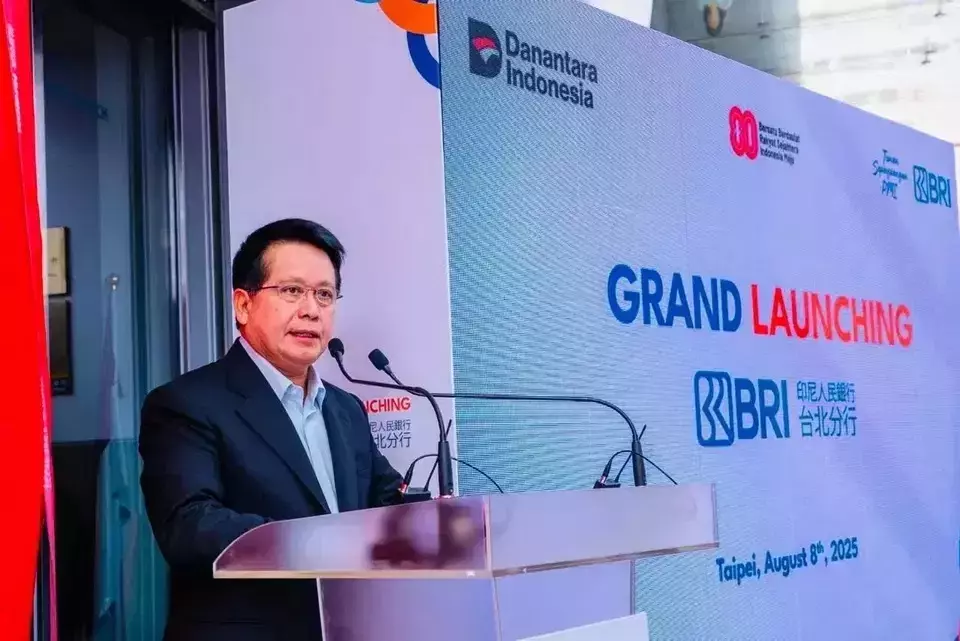
The Indonesian government is intensifying its efforts to secure United States investment in the country’s electric vehicle (EV) battery ecosystem and critical minerals sector, positioning the offer as part of ongoing bilateral tariff negotiations. Coordinating Minister for Economic Affairs Airlangga Hartarto confirmed on Monday that the newly established state asset fund, Danantara, will participate in the proposed mineral ventures. “The investment is intended for brownfield critical mineral projects in Indonesia. We are explicitly offering these to the United States,” he stated. While specific projects were not disclosed, the initiative focuses on expanding existing operations rather than initiating new developments. Indonesia, the world’s largest producer of nickel and holder of the largest known reserves globally, aims to leverage its resource base to scale up EV battery production, a sector where US manufacturers such as Tesla Inc. remain heavily reliant on nickel supplies. President Prabowo Subianto officially commenced construction of a US$5.9 billion EV battery facility in Karawang, West Java, over the weekend. The plant will be operated by a joint venture between the Indonesia Battery Corporation and Chinese battery manufacturer Contemporary Amperex Technology Co Ltd. Minister Airlangga also emphasised the strategic value of investment in critical minerals, citing its importance for key sectors such as electronics, defence, and aerospace. “All of them require copper and cables. We already produce copper cathodes, and American firms are integrated into that ecosystem,” he said, referencing the presence of US interests in PT Freeport Indonesia. The proposal aligns with Indonesia’s earlier commitments to the United States, including measures to boost imports of US-manufactured food and energy products, ease import restrictions, and facilitate Indonesian outbound investment into the US to help balance the trade relationship. These measures are designed to address Washington’s concerns and avert the imposition of steep reciprocal tariffs. Negotiations remain under pressure as more than 60 days have passed since both parties agreed to conclude talks within that period. The US granted Jakarta a grace period to resolve the matter and avoid a proposed 32 per cent import tariff on Indonesian goods. A 90-day pause on tariff implementation is currently in place and is due to expire on 9 July. In anticipation of the deadline, the Indonesian government has announced new import regulations aimed at easing access to raw materials and lowering non-tariff barriers. Airlangga noted that these regulatory reforms form part of the broader negotiation strategy with Washington. “Deregulation will be conducted in stages. We have already implemented certain measures, while others will depend on the outcome of the negotiations,” he said. US President Donald Trump has indicated there will be no extension to the current 90-day tariff reprieve beyond 9 July. Without a bilateral agreement, elevated trade penalties are expected to come into force. -The Jakarta Post

Investment & Market Trends

NTT Targets US$812 Million in Singapore REIT IPO

Japan’s NTT Ltd is preparing to raise as much as US$812 million (approximately RM3.42 billion) through the initial public offering of its data centre real estate investment trust (REIT) in Singapore, potentially ending a prolonged IPO drought in the city-state. The REIT, to be listed as NTT DC REIT, is targeting a market capitalisation exceeding US$1 billion. Units are expected to be priced at US$1 each, according to terms of the offering reviewed by Bloomberg. Should the over-allotment option be exercised in full, total proceeds could climb to US$864 million. Seven cornerstone investors have pledged to subscribe for a combined US$172.8 million. Notably, Singapore’s sovereign wealth fund, GIC Pte Ltd, has committed to invest over US$100 million. Additional commitments have come from the wealth management clients of UBS Group AG, alongside institutional investors such as AM Squared Ltd and Viridian Asset Management Ltd. The proposed listing would be Singapore’s largest since NetLink NBN Trust’s IPO in 2017, which raised US$1.7 billion. It also represents a significant boost to the country’s lacklustre equity capital market, which has recorded only a single listing in 2025 to date—a modest US$4.5 million flotation by a car servicing company. In February, Singapore’s government introduced a package of market-stimulating incentives, including tax relief measures aimed at encouraging listings and spurring domestic fund investment in local equities. NTT’s global data centre platform, among the largest worldwide, operates across more than 20 countries. The assets being seeded into the REIT are collectively valued at around US$1.6 billion, according to its listing prospectus. The offering is being jointly managed by a consortium of global financial institutions, including DBS Group Holdings Ltd, Bank of America Corp, UBS, Mizuho Financial Group Inc, and Citigroup Inc. -Bloomberg

Investment & Market Trends

GEAR-uP Deploys RM11 Billion to Drive Strategic Industries and Social Reform

PUTRAJAYA : The Government-linked Enterprises Activation and Reform Programme (GEAR-uP), under the stewardship of the Ministry of Finance, has disbursed RM11 billion to catalyse high-growth sectors, notably semiconductors and the energy transition, while simultaneously advancing social equity and talent development nationwide. The deployment represents approximately 50% of the RM22 billion allocated for domestic direct investments (DDI), which in turn constitutes 88% of the RM25 billion collectively pledged by six key government-linked investment companies (GLICs) since the programme’s inception in August 2023. The initiative is driven by Malaysia’s foremost institutional investors, namely Khazanah Nasional Bhd, the Employees Provident Fund (EPF), Permodalan Nasional Bhd (PNB), Kumpulan Wang Persaraan (Diperbadankan) (KWAP), Lembaga Tabung Angkatan Tentera (LTAT), and Lembaga Tabung Haji. Operating within the Ekonomi Madani framework, GEAR-uP is designed to unlock RM120 billion over five years, aimed at accelerating socioeconomic reforms and supporting Malaysia’s industrial transition. To date, more than RM800 million has been invested into Malaysia’s semiconductor ecosystem. In parallel, GLICs have launched green industrial developments across 3,000 acres in Kerian and Carey Island, Port Klang. Additionally, over 50 local enterprises have received support through venture capital and private equity channels. A notable milestone includes the agreement by 34 GLICs and government-linked companies (GLCs) to implement a minimum monthly living wage of RM3,100 for 153,000 employees. This move underscores the programme’s commitment to wage reform and raising quality of life standards. Further, RM200 million in scholarships have been awarded, while employment placements have benefited 8,000 youths from the bottom 40% income group. Broader community investment initiatives under the programme have reached more than 700,000 Malaysians. Prime Minister Datuk Seri Anwar Ibrahim noted that GEAR-uP realigns GLICs with a renewed mandate for nation-building, stating that the initiative is mobilising national wealth to uplift communities and cultivate high-value industrial ecosystems. Second Finance Minister Datuk Seri Amir Hamzah Azizan elaborated on the investment strategy, confirming continued momentum through targeted allocations. He highlighted that PNB will groom ten Bumiputera companies towards IPO-readiness, and EPF will deepen its involvement in the healthcare sector, expanding into ambulatory and home-based services. Meanwhile, LTAT and PNB will collaborate to enhance domestic pharmaceutical manufacturing, supporting efforts under the Joint Ministerial Committee on Private Healthcare Cost. Khazanah will intensify development of the semiconductor supply chain, and KWAP is set to channel RM6 billion via its Dana Pemacu initiative starting Q3 this year, with focus areas including private equity, infrastructure, and real estate. Amir Hamzah emphasised that GEAR-uP is strategically aligned to unlock RM120 billion of investment over the medium term, facilitating growth in emerging industries, while simultaneously driving income uplift and capacity-building. The programme is also preparing to broaden participation to over 30 GLCs, with key performance targets including RM10 billion in market capitalisation, 7.5% shareholder returns, and non-financial deliverables encompassing minimum living wages and workforce development. These efforts aim to fortify Malaysia’s economic resilience in the face of evolving global trade dynamics. On a related note, the Second Finance Minister expressed hope that the RM3,100 minimum wage standard adopted by GLICs and GLCs will catalyse adoption within the broader private sector. He noted that initiatives by Khazanah to invest in workforce upskilling, coupled with this new wage benchmark, are expected to enhance productivity and quality of life. He added that the shift may incentivise competition among corporations to offer more competitive compensation, further supporting wage growth and strengthening Malaysia’s talent retention landscape. -The Star

Investment & Market Trends, News

MyAxis Anticipates Revenue Contribution from New Kedah Facility by 2QFY2026

KUALA LUMPUR: Meat processor and distributor MyAxis Group Bhd expects its upcoming processing facility in Bukit Kayu Hitam, Kedah, to begin contributing to revenue in the second quarter of the financial year ending 31 July 2026. Executive Chairman Datuk Tan Hwa Sing announced that the group will invest RM11.3 million in the new facility, which will significantly enhance production capabilities. Upon completion, MyAxis’s annual poultry processing capacity will double to 708 tonnes, while red meat handling capacity is projected to triple to 1,870 tonnes. In addition, storage capacity will increase tenfold, from 53.0 tonnes to 566.0 tonnes. The announcement was made during a press conference held in conjunction with the company’s official listing on the LEAP Market of Bursa Malaysia. MyAxis has also laid out plans to migrate to the ACE Market within the next two years, in line with its long-term growth strategy. Tan highlighted that the company’s upstream operations, handled through its wholly owned subsidiary KK Fresh Frozen Sdn Bhd, mark a strategic shift towards processing and selling poultry and red meat products. With expanded facilities, the group aims to broaden its reach among food and beverage operators, hotel groups, and processed food manufacturers. The customer base has grown substantially to 300 nationwide, up from just 20 in 2024. The new facility, spanning a built-up area of 17,567.76 square feet, is expected to be fully operational in 2026. In response to queries regarding supply, Tan stated that half of the company’s poultry products are sourced from Thailand, with the remainder imported from Malaysia and China. He indicated that this sourcing ratio is expected to remain stable, ensuring consistent product quality for frozen meats. To support its expansion, MyAxis aims to raise RM5.29 million via a private placement of 44.1 million new shares at an issue price of 12 sen per share, implying a market capitalisation of RM40.9 million upon listing. The proceeds will be allocated towards repaying bank borrowings (RM3 million), acquiring new machinery, enhancing working capital, strengthening branding and marketing initiatives, and covering listing-related expenses. -Bernama

Investment & Market Trends

Kospi Set to Record Strongest First-Half Performance in Over Two Decades

South Korea’s Kospi index is poised to deliver its largest first-half gain in 26 years, buoyed by a combination of renewed investor confidence and political clarity. The benchmark index has surged 27% in the first half of 2025, rising from 2,399.49 at the end of 2024 to 3,055.94 as of last Friday, according to data from the Korea Exchange. This marks the steepest first-half performance since 1999, when the Kospi soared 57% during the height of the dot-com rally. It also significantly outpaces the 5.4% increase recorded during the same period in 2024. Historic comparables include the 51% rise in the first half of 1987 and the 49% jump in 1986, both driven by favourable macroeconomic conditions such as a weak US dollar, low interest rates and declining oil prices. The Kospi has continued to rally into the final trading session of the half. Provided the index does not decline by more than 2.95% today, it will secure its best start to a year since 1999. A sharper fall would still mark the strongest first-half gain since 2009, when markets rebounded from the global financial crisis with a 23.6% rise. June has proven especially bullish, with the index gaining 13.2% in the month alone. The surge reflects optimism over newly elected President Lee Jae Myung’s market-friendly policy agenda. Pledging to revitalise capital markets and enhance corporate competitiveness, President Lee has set an ambitious goal of driving the Kospi to 5,000 points. However, concerns over market overheating are becoming increasingly pronounced. As of last Thursday, 10 stocks were labelled as an “investment risk” – the highest warning level under the Korea Exchange’s surveillance framework – compared to six at the same time last year. Designations of “investment alert” rose 55% to 175, while “investment caution” warnings climbed 27% to 1,176. In June alone, 30 stocks were tagged “short-term overheated”, up sharply from 11 in March. Analysts have cautioned that external pressures could further affect market dynamics. Washington recently extended a three-month grace period, until 9 July, on reciprocal tariffs targeting South Korean imports. This temporary reprieve is part of an effort to reach revised trade terms. Lee Kyoung-min, analyst at Daishin Securities, noted that the index’s proximity to record highs could amplify sensitivity to geopolitical and trade-related developments. “With the Kospi nearing an all-time high, upcoming noise from tariffs and political events could increase pressure for profit-taking,” he said. Lee Eun-taek, equity strategist at KB Securities, echoed similar concerns, warning that “tariff threats are highly likely to resurface, and while such risks are nothing new, the market is unlikely to remain unaffected – especially amid growing concerns over an economic slowdown”. The index breached the 3,000-point mark on 20 June for the first time in nearly three and a half years, and swiftly crossed 3,100 the following session. It is now approaching its record high of 3,305, reached in July 2021. Despite the mounting risks, market sentiment remains broadly positive. Many strategists anticipate further upside through the remainder of the year, particularly if corporate earnings momentum holds. Daishin Securities’ Lee Kyoung-min advised that in policy-driven sectors such as nuclear energy, finance and software, investors may benefit from waiting for a pullback. Conversely, undervalued sectors like semiconductors, autos and retail could offer opportunities amid ongoing capital rotation. Noh Dong-kil, strategist at Shinhan Securities, projected the Kospi could reach 3,400 by year-end, citing a potential valuation re-rating. “After the liquidity rally, earnings will become the key variable,” he said. “There’s a risk that third-quarter results may fall short of expectations due to weakening external demand. Only structurally growing stocks with low sensitivity to the economic cycle will be able to break through.” -ANN

Investment & Market Trends, News

Google to Invest RM9.4 Billion in Malaysia, Creating Over 26,000 Jobs

Google’s landmark RM9.4 billion investment in Malaysia is set to generate 26,500 jobs and contribute RM15.04 billion in long-term economic impact, according to Investment, Trade and Industry Minister Tengku Datuk Seri Zafrul Abdul Aziz. The investment will see the establishment of Google’s first data centre and Google Cloud Region in the country, representing a significant strategic milestone in Malaysia’s digital transformation agenda. Tengku Zafrul described the move as a “multi-faceted strategic boost” to the nation’s aspirations in the digital economy. The minister, currently on a working visit to Washington, United States, confirmed in a social media statement that discussions with Google focused on advancing Malaysia’s capabilities in artificial intelligence and cloud computing, enhancing cybersecurity, and developing digital skills within the local workforce. He reaffirmed the government’s commitment to ensuring a conducive environment for high-quality, forward-looking investments, underscoring strong support for digital infrastructure and innovation. According to national news agency Bernama, the discussions aimed to explore how Google’s technological leadership can further stimulate growth across Malaysia’s digital ecosystem. Malaysia’s position as a premier destination for data centre investment in Southeast Asia continues to strengthen. In May, Malaysia Digital Economy Corporation (MDEC) chief executive officer Anuar Fariz Fadzil stated that the country is increasingly viewed as a key regional hub by global technology players. He attributed this to stable governance, a well-articulated digital strategy, and strong institutional collaboration. Investor confidence, Anuar noted, is further bolstered by reliable power infrastructure, low exposure to natural disasters, effective public-private partnerships and a clear commitment to sustainability. -NST

Investment & Market Trends, News

NTT Files for S$1.36 Billion Data Centre REIT IPO on Singapore Exchange

Nippon Telegraph and Telephone Corporation (NTT) has submitted a preliminary prospectus for the initial public offering (IPO) of its data centre real estate investment trust, NTT DC REIT, on the Singapore Exchange (SGX), according to a filing published on the Monetary Authority of Singapore’s website. The move marks a significant development in NTT’s strategy to capitalise on growing investor interest in digital infrastructure. While the preliminary filing did not specify the expected IPO size or launch date, sources cited by Reuters earlier indicated the deal could raise up to US$1 billion (approximately S$1.36 billion), positioning it as the largest listing in Singapore in recent years. The last comparable IPO was the US$977 million (S$1.33 billion) listing of Digital Core REIT in 2021, based on LSEG data. NTT DC REIT’s initial portfolio comprises six data centre assets spanning the United States, Austria, and Singapore. The total appraised value of these assets stands at approximately US$1.6 billion (S$2.17 billion), the preliminary prospectus revealed. The REIT’s sponsor is NTT Ltd, the global IT services subsidiary of the Japanese telecommunications group. The offering has attracted strong institutional interest, with cornerstone investors including Singapore’s sovereign wealth fund GIC, AM Squared Ltd, and Viridian Asset Management Ltd. These investors commit to subscribing to shares ahead of the IPO’s public launch, offering early validation of the REIT’s market appeal. NTT declined to comment when approached for further details. The listing comes amid renewed momentum in Singapore’s equities market. In February, the city-state introduced a suite of initiatives aimed at revitalising IPO activity, including a 20% corporate tax rebate for companies undertaking primary listings on SGX. Market activity has responded positively. IPO proceeds on SGX rose more than five-fold in the first half of 2025, reaching US$331.6 million compared to US$59.3 million in the same period last year, according to LSEG data. Separately, Hong Kong-listed China Medical System announced earlier this week that it had applied for a secondary listing on SGX, signalling growing regional interest in Singapore’s capital markets. -Reuters

Investment & Market Trends, News

Shein Targets Hong Kong IPO with Confidential Filing in Strategic Shift

Fast-fashion giant Shein is preparing to confidentially file a draft prospectus for a planned initial public offering (IPO) in Hong Kong, according to three individuals familiar with the matter. This move marks a significant deviation from the typical practice in the territory, where major IPO applicants such as Xiaomi and Meituan have traditionally opted for public filings. Sources indicate the China-founded retailer is aiming to submit the draft as early as this week, with one suggesting a Monday deadline. If accepted, the confidential filing would require a waiver of one of the Hong Kong Stock Exchange’s principal listing regulations—an exceptional measure that underscores the unique regulatory complexities surrounding Shein’s public offering. The proposed listing in Hong Kong follows previous unsuccessful attempts to go public in the United States and the United Kingdom, where regulatory hurdles, including lack of approval from the China Securities Regulatory Commission (CSRC), impeded progress. Reuters previously reported that Shein’s London IPO bid had gained support from UK authorities, but still failed to secure the green light from Beijing. Founded in 2012 by entrepreneur Sky Xu, Shein has built a global presence, offering low-cost apparel such as US$5 dresses and US$10 jeans across approximately 150 countries. The business, headquartered in Singapore since 2022, maintains a significant reliance on its supply network in China, sourcing products from around 7,000 third-party suppliers. This operational structure has kept the firm within the ambit of Chinese offshore listing regulations, despite its overseas base. Confidential IPO filings—commonplace in the United States—allow companies to engage regulators without immediate public scrutiny of financials or risk factors. Although rare in Hong Kong, the exchange’s rules do permit such filings for secondary listings or in specific spin-off scenarios upon regulatory waiver. Should Shein proceed under this framework, details of the offering will remain undisclosed until it clears a formal hearing with the Hong Kong exchange. Final approval hinges on authorisation from the CSRC, though it remains unclear whether Shein has received an informal nod from the commission. According to sources, the confidential nature of the filing enables both Hong Kong and mainland Chinese regulators to conduct private evaluations and request clarifications before the materials are made available to institutional investors. A successful IPO in Hong Kong would mark Shein’s third and potentially final bid to enter the public markets, and could become the city’s largest float this year. It would also represent a critical boost to Hong Kong’s capital markets, which recorded US$12.8 billion in IPOs and secondary listings in the first half of the year, amid turbulence driven by geopolitical and trade tensions. Valued at US$66 billion during a 2023 pre-IPO fundraising round—down from earlier valuations—Shein’s public market debut will be closely watched. Analysts suggest the eventual valuation will reflect recent shifts in global trade policy, particularly US tariff increases on Chinese goods and the end of duty-free ecommerce imports, developments that have negatively impacted Shein’s largest market. The company has also faced reputational challenges related to its supply chain. Allegations of forced labour involving Uyghur minorities in China’s Xinjiang region have led to increased scrutiny. While Beijing denies any human rights abuses, the US has imposed a ban on products linked to forced labour in the region. Shein maintains that its global supplier code of conduct prohibits forced labour and asserts that it does not permit Chinese cotton to be used in products destined for the US market. Under current rules, Shein will be required to file with the CSRC within three business days of submitting its Hong Kong application. The regulator applies a “substance over form” principle, allowing significant discretion in determining whether companies fall under its purview—even if formally headquartered abroad. If granted regulatory clearance, Shein’s confidential listing could set a precedent for future high-profile IPOs in Hong Kong, marking a turning point for both the company and the broader fundraising environment in Asia. -Reuters

Scroll to Top

Subscribe
FREE Newsletter