Investment & Market Trends

Investment & Market Trends

Bahlil: Indonesia’s $618B Downstream Push Aims To Build National Strength

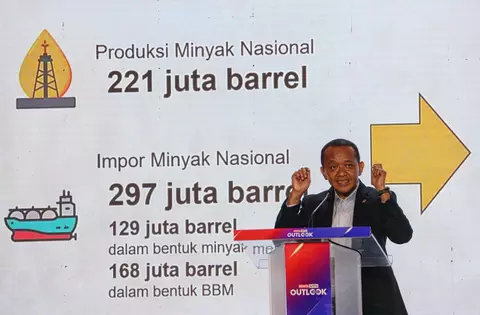
Jakarta — Indonesia’s ambitious plan to boost its downstream industries across 28 key commodities could transform the nation into a global powerhouse, according to Investment and Energy Minister Bahlil Lahadalia. Speaking at the 2025 Energi and Mineral Festival, Bahlil said the government aims to process raw materials domestically—such as turning nickel ore into stainless steel or batteries—to create higher-value exports and attract more global investment. Energy Minister Bahlil Lahadalia kicks off the Energi Mineral Festival 2025 in Jakarta on July 30, 2025. Behind him is the government’s blueprint for the massive downstream sector development spanning different sectors.  A comprehensive roadmap has been drawn up to add value to a wide range of resources including bauxite, gold, and seaweed. To achieve this, Indonesia will need to attract an estimated $618 billion in investment by 2040. “We’ll keep pushing this downstreaming agenda. If we remain consistent and execute it well, I believe Indonesia will become one of the world’s most respected countries,” Bahlil said. Of the required investment, about $498.4 billion is targeted for the mineral and coal sectors, $68.3 billion for oil and gas, and $51.3 billion for marine, forestry, and agriculture—including commodities like palm oil, rubber, and salt. The government projects the downstream plan will generate $857.9 billion in export value, contribute $235.9 billion to GDP, and create approximately 3 million jobs. Indonesia has already made progress, notably in nickel. Since banning raw nickel exports in 2020, the country has positioned itself as a leading global exporter of nickel-based products. Copper exports were similarly restricted earlier this year to encourage domestic processing. Bahlil highlighted the contributions of major mining players like Freeport Indonesia, which operates a gold refinery in Gresik with a 50-ton annual capacity, and Amman Mineral, whose West Sumbawa smelter is expected to produce 18 tons of gold annually. From January to June 2025 alone, downstream investments reached Rp 280.8 trillion ($17 billion), with nickel and copper accounting for the bulk.

Investment & Market Trends

Apple Makes First Retail Exit In China

Apple will shut down a retail store in China for the first time, signaling a rare retreat in a key market where the tech giant is working to regain momentum. The company announced on Monday that its Parkland Mall store in Dalian’s Zhongshan District will officially close on August 9. Apple cited changes at the shopping complex as the reason for the closure. The Parkland Mall location is one of two in Dalian — the other, located at Olympia 66, will remain operational. “In light of several retailers exiting Parkland Mall, we’ve decided to close our store there,” Apple said in a statement. “We remain committed to offering exceptional service across our more than 50 Apple Store locations in Greater China and online.” Apple currently operates around 56 stores in the Greater China region, which accounts for over 10% of its global retail footprint of more than 530 outlets. Employees from the closing store will be offered opportunities at other locations. The move comes as China faces economic headwinds, including weak consumer demand, deflationary pressures, and declining property prices. Retail sales have underperformed expectations, while global tariffs continue to weigh on exports. Despite the closure, Apple is actively expanding its retail presence. A new store is set to open at Uniwalk Qianhai in Shenzhen on August 16, with additional openings planned in Beijing and Shanghai over the next year. Apple also launched a store in Anhui province in January. Internationally, the company recently opened new stores in Osaka, Miami, and Malaysia, with more to come in Detroit, Saudi Arabia, the UAE, and India. However, Apple has been more selective with physical locations since the pandemic, prioritizing online store rollouts and relocating or upgrading older stores. In addition to the Dalian closure, Apple is shutting down stores in Bristol (UK), Partridge Creek (Michigan), and Hornsby (Australia). Parkland Mall has seen other major brands exit in recent years, including Coach, Sandro, and Hugo Boss. Earlier this year, the mall’s majority shareholder assumed full operational control.

Investment & Market Trends

Pharmaniaga Plunges 16% After Corporate Moves

PETALING JAYA, Pharmaniaga Bhd’s shares plunged 16% on Tuesday, despite the completion of two key corporate exercises aimed at steering the pharmaceutical group out of its Practice Note 17 (PN17) status. Bursa Malaysia Securities granted Pharmaniaga a three-month extension to Aug 29 to implement its PN17 regularisation plan. The stock fell 3.5 sen to 18 sen, hitting its intra-day low and ending the day with a market capitalisation of RM883 million. It was also one of the most actively traded counters, with 51.8 million shares changing hands. The sharp drop came after the company made two Bursa Malaysia filings earlier in the day, detailing the completion of its rights issue and private placement exercises—both central components of its PN17 regularisation plan. In May, Bursa Malaysia granted Pharmaniaga a three-month extension until Aug 29 to implement its regularisation strategy. The plan includes a RM520 million capital reduction, along with the two equity-raising exercises. Pharmaniaga fell into PN17 status in February 2023 after recording a massive impairment loss due to unsold RM552 million worth of Covid-19 vaccines. This resulted in its largest-ever quarterly net loss of RM664.39 million in Q4 FY2022. Based on current figures, the two completed exercises are expected to raise a total of approximately RM569.5 million, helping to stabilise the group’s financial position. This falls within the company’s previous guidance of raising between RM560.9 million and RM641.4 million. However, the exercises are highly dilutive, adding 5.1 billion new shares to Pharmaniaga’s share base. The company confirmed that the new shares will be listed on July 31, a likely reason for today’s share price decline. The rights issue involved the issuance of 3.45 billion new shares at 10 sen each, raising an estimated RM345.9 million. Initially, the company had proposed up to 3.52 billion rights shares, on the basis of 12 rights shares for every five existing shares. In addition, Pharmaniaga placed 1.65 billion shares with third-party investors at 13.5 sen per share, generating about RM223.6 million. The placement was done at a 6.6% discount to the five-day volume-weighted average price of 14.46 sen as of June 16. While today’s filings did not disclose the identities of the placement investors, The Edge weekly previously reported that Jakel Group, Great Eastern, Koperasi Angkatan Tentera Malaysia Bhd, and shipping magnate Halim Mohammad were among the interested parties, according to sources.

Investment & Market Trends

AI Chip Slowdown, China Curbs Slash Samsung’s Q2 Profit By 55%

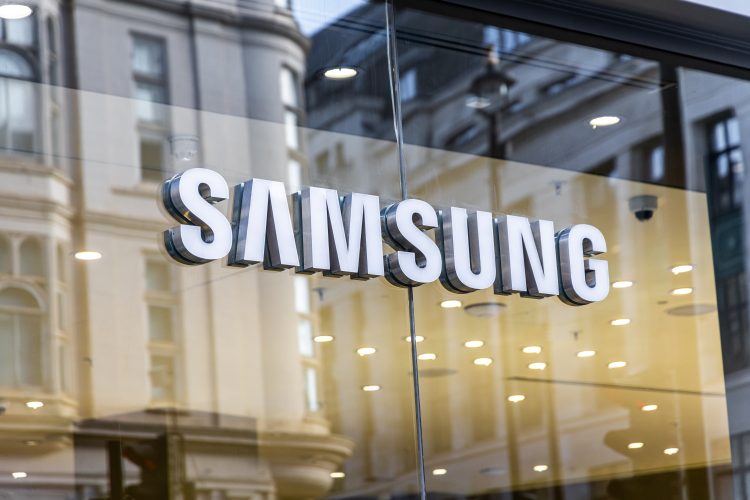
SEOUL: Samsung Electronics reported a 55% year-on-year decline in second-quarter operating profit, as delays in shipments of high-bandwidth memory (HBM) chips and continued U.S. export restrictions on advanced semiconductor sales to China weighed heavily on its semiconductor business. The world’s leading memory chip manufacturer posted an operating profit of 4.7 trillion won (US$3.37 billion) for the April–June period, marking its weakest quarterly performance in a year and a half. The result aligned closely with its earlier estimate of 4.6 trillion won, which had already dampened investor expectations. Total revenue rose 0.7% to 74.6 trillion won, largely in line with the preliminary forecast of 74 trillion won. Samsung’s chip division, which has historically been a key profit driver, earned 400 billion won in the quarter, a sharp drop from 6.5 trillion won during the same period last year. This marks the first time in six quarters that the division’s profit has fallen below the 1 trillion won threshold. In its official statement, Samsung attributed the profit erosion to inventory valuation adjustments in its memory chip business and one-off expenses related to the U.S. export controls that have impacted its contract chip manufacturing operations for Chinese clients. The extended downturn in its semiconductor segment has intensified concerns among investors about the company’s ability to stay competitive—particularly in the race to develop and supply next-generation HBM chips to tech leaders like Nvidia, which uses them in AI-powered data centers.

Investment & Market Trends

JS-SEZ Secures RM1.34 Billion Investment Pledges From Five Singapore Firms

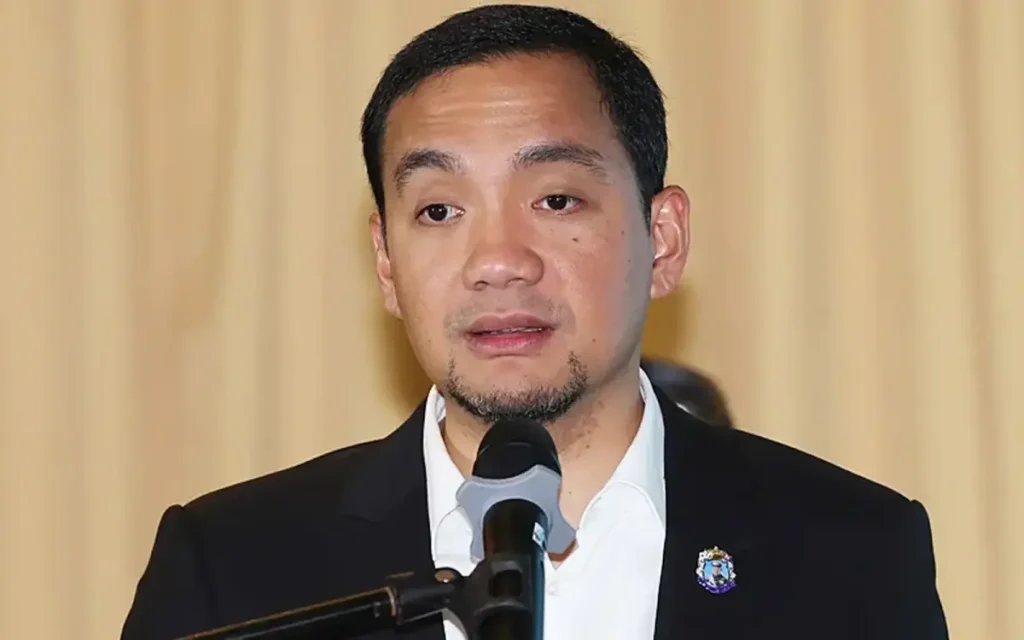
PETALING JAYA,  Johor has attracted RM1.34 billion in investment commitments from five Singapore-based companies under the Johor-Singapore Special Economic Zone (JS-SEZ), according to Menteri Besar Onn Hafiz Ghazi. He added that an additional RM78 million in potential investments is currently being negotiated as part of the second phase. Onn Hafiz said these investments were facilitated by the Johor branch of the Malaysian Investment Facilitation Centre, which plays a key role in coordinating and expediting strategic investments in the state. Johor menteri besar Onn Hafiz Ghazi said 70 companies from countries such as Singapore, China, Germany, the UK and the Netherlands have expressed interest in investing in the JS-SEZ. “To date, 70 companies from Singapore, China, Germany, the UK, the Netherlands and local investors have expressed interest in investing in the JS-SEZ,” Bernama quoted him as saying during his official visit to Singapore as the 82nd recipient of the Lee Kuan Yew Exchange Fellowship. During the visit, he met with Singapore’s Deputy Prime Minister and Minister for Trade and Industry Gan Kim Yong to discuss strengthening economic ties and advancing the JS-SEZ agenda. Topics discussed included the establishment of a free trade zone within the JS-SEZ, enhancing the cross-border movement of goods and talent, and developing a second Rapid Transit System (RTS) link on Johor’s western side. Onn Hafiz also highlighted discussions on addressing the rising cost of living, improving infrastructure, and creating a more efficient transport system. He reiterated Johor’s readiness to adopt progressive policies that drive growth and deliver tangible benefits to the people while reaffirming the importance of strong cooperation between Johor, Malaysia and Singapore. “I believe the strategic cooperation between Johor, Malaysia and Singapore must continue to be strengthened to achieve an inclusive, equitable and sustainable development agenda where no one is left behind,” he said. Formally established in January through an agreement between Malaysia and Singapore, the JS-SEZ aims to attract 100 projects worth RM100 billion and create around 100,000 jobs in high-value sectors such as manufacturing, the digital economy, logistics, clean energy, and tourism over the next decade.

Investment & Market Trends

IGB REIT’s Q2 Net Profit Climbs to RM92.51mil On Stronger Rental Income

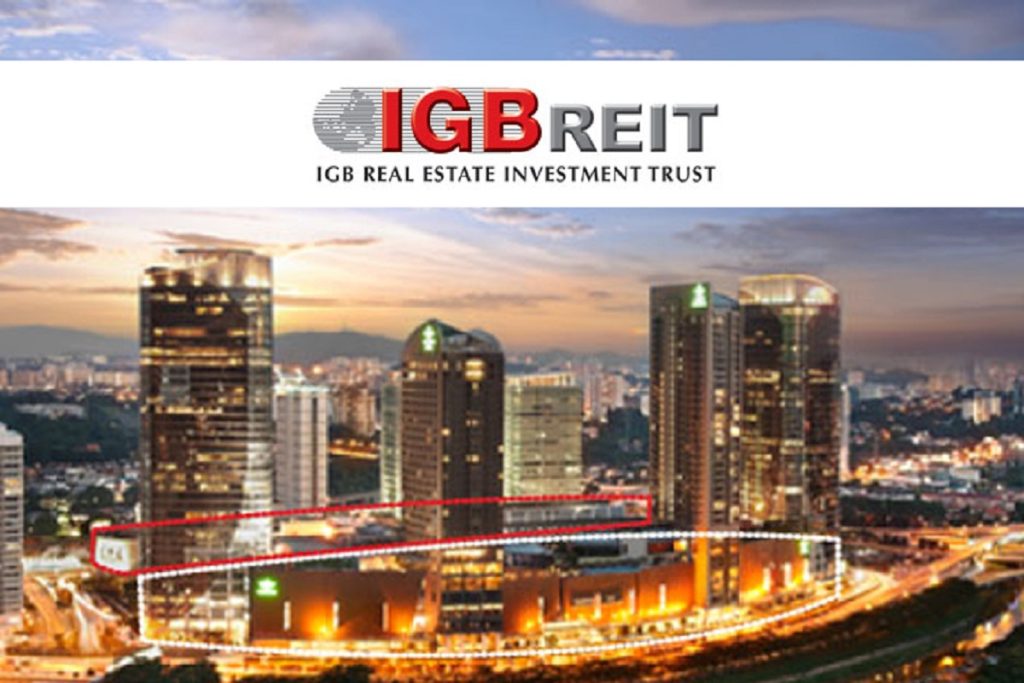
KUALA LUMPUR, IGB Real Estate Investment Trust (IGB REIT) reported a net profit of RM92.51 million for the second quarter ended June 30, 2025 (2Q 2025), up from RM81.55 million in the same period last year. Revenue grew to RM160.09 million from RM149.97 million previously, driven by stronger rental income, the company said in a filing with Bursa Malaysia today. Looking ahead, IGB REIT noted that while the retail outlook remains soft — with Retail Group Malaysia revising its full-year 2025 retail sales growth forecast down to 3.1% from 4.3% — it remains positive about long-term prospects. The trust pointed to its expansion plans, including the proposed acquisition of The Mall, Mid Valley Southkey in Johor, as a key growth driver. “The Johor retail market is supported by initiatives such as the Johor-Singapore Special Economic Zone, the Rapid Transit System Link, and strong cross-border spending. Subject to completion, this acquisition will further strengthen and diversify IGB REIT’s portfolio,” it said. For the first half of 2025, net profit rose to RM199.08 million from RM181.16 million a year earlier, while revenue climbed to RM331.53 million from RM312.53 million previously.

Investment & Market Trends

FGV Set for Delisting As Felda Acquires Over 90% Stake

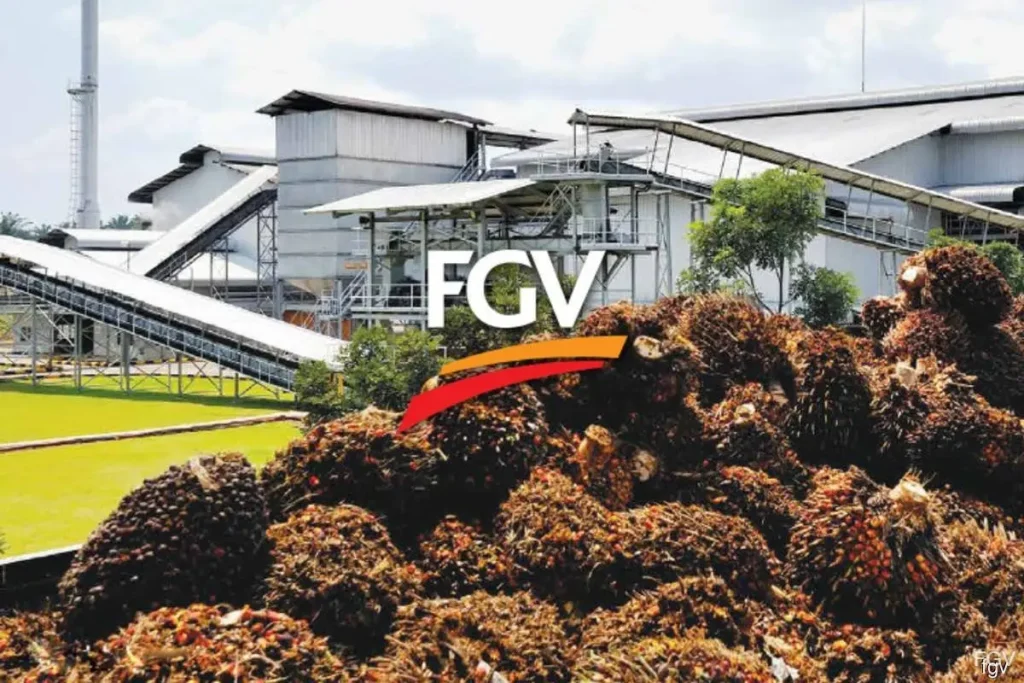
KUALA LUMPUR, FGV Holdings Bhd will be delisted from Bursa Malaysia’s Main Market after the Federal Land Development Authority (Felda) secured almost 92% of the company’s shares, surpassing the 90% threshold required under its unconditional voluntary takeover offer. In a filing to Bursa Malaysia, FGV said Felda and its concert parties collectively held 3.35 billion shares, or 91.73% of FGV’s total issued shares as of 5:00 pm today. Felda had previously stated it did not intend to retain FGV’s listing status. As a result, Bursa will suspend trading of FGV shares five market days after the final offer closing date on August 15, after which Felda will begin the process of delisting the plantation company. The update was communicated to FGV through a press notice from Maybank Investment Bank Bhd, which is acting on Felda’s behalf. Felda launched its takeover bid in June, offering RM1.30 per share for all remaining shares it did not own—a cash offer representing a 9.91% premium over FGV’s six-month volume-weighted average price prior to the notice. This move is part of Felda’s long-term strategy to privatise FGV and strengthen its control over the company. It marks Felda’s second attempt to take FGV private, following a similar bid in December 2020, when it acquired more than 82% of the shares at the same offer price of RM1.30.

Investment & Market Trends

Oxford Innotech Berhad Debuts On The Ace Market With A Premium Of 24.1%

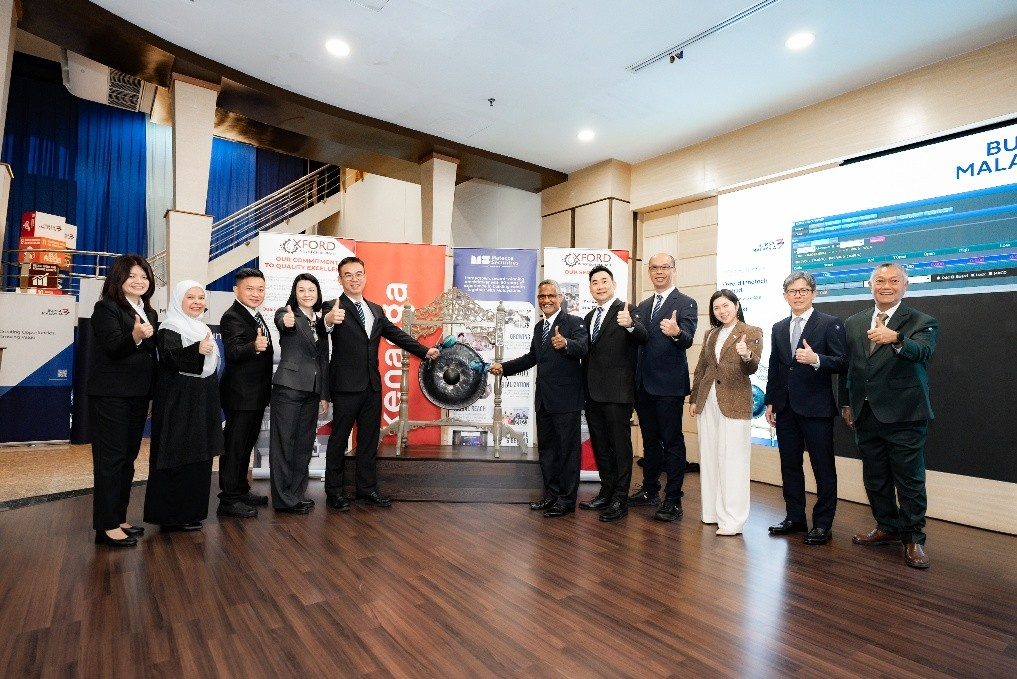
Integrated engineering solutions provider, Oxford Innotech Berhad (“OXB”) (牛津科创有限公司), has successfully debuted on the ACE Market of Bursa Malaysia Securities Berhad (“Bursa Securities”) today. The stock is categorised under the Industrial Products & Services sector and carries the stock name OXB, with a stock code of 0368. (From left to right) Ms. Kaoy Lay Min (郭莉敏), Independent Director of Oxford Innotech Berhad, Puan Che Rogayah binti Sudin, Independent Director of Oxford Innotech Berhad, Mr. Khoo Lay Tatt (邱勵達), Independent Director of Oxford Innotech Berhad, Ms. Lee Lai Chan (李丽珍), Executive Director of Oxford Innotech Berhad, Mr. Ng Thean Gin (黄天仁), Managing Director of Oxford Innotech Berhad, Dr. Hari Narayanan a/l P.Ondiveeran, Independent Chairman of Oxford Innotech Berhad, Mr. Oh Yen San (胡炎山), Executive Director of Oxford Innotech Berhad, Mr. Teh Teng Wah (鄭庭華), Executive Director of Oxford Innotech Berhad, Ms. Lim Chia Wei (林嘉薇), Managing Director of Malacca Securities Sdn Bhd, Datuk Kenny Yong (杨富乾), Director, Corporate & Institutional Coverage of Kenanga Investment Bank Berhad, Mr. Wong Yoke Nyen (黄育源), Managing Director of WYNCORP Advisory Sdn Bhd At the opening bell, OXB’s share price opened at 36 sen, representing a premium of 24.1% over the issue price of 29 sen, with an opening volume of 9.2 million shares. Managing Director of OXB, Mr. Ng Thean Gin (黄天仁), said, “The listing of OXB on the ACE Market of Bursa Securities is certainly a defining moment for us. It provides a stronger foundation to scale our operations and grow our presence, particularly in the modular building systems, electrical and electronics (“E&E”), and semiconductor sectors. Looking ahead, we aim to broaden our product offerings and expand our customer base in these industries by cross-selling to existing customers.” “In addition, we are also constructing a new factory that will add another 67,722 square feet of production area, bringing the total manufacturing space to 192,896 square feet upon its completion in 2027. The facility is intended to meet the anticipated demand from customers in the modular building systems, E&E and semiconductor industries. At the same time, we are purchasing new machinery and equipment to complement our existing setup and optimise production capacity as the business scales.” “With our expanding manufacturing capacity and engineering capabilities, we are well-positioned to capture opportunities across our core markets, while remaining committed to delivering innovative, high-quality solutions,” Mr. Ng concluded. Of the RM41.6 million raised from the IPO, OXB has allocated RM23.1 million (55.5%) for the construction of a new factory, RM11.2 million (26.9%) for the purchase and refinancing of new machinery, RM3.3 million (8.0%) for general working capital, and RM4.0 million (9.6%) for the defrayment of listing expenses. On the financial front, OXB reported its first quarter results for the financial period ended 31 March 2025 (“1QFYE2025”), posting a profit after tax (“PAT”) of RM3.2 million on the back of RM19.5 million in revenue, translating to a PAT margin of 16.6%. The mechanical assembly solutions segment was the largest contributor, accounting for 65.0% of total revenue, followed by the precision engineering components solutions segment at 33.4%, and the automation and robotics solutions segment at 1.7%. Geographically, revenue in 1QFYE2025 was predominantly derived from Malaysia, which contributed 96.4%, with the remaining 3.6% coming from other Asian countries, North America, and Europe. Malacca Securities Sdn Bhd serves as the Principal Adviser, Sponsor, Underwriter and Joint Placement Agent, while Kenanga Investment Bank Berhad is the Joint Placement Agent, and WYNCORP Advisory Sdn Bhd is the Corporate Finance Adviser for the IPO exercise.

Investment & Market Trends

PGF Capital Starts New Financial Year With 12% Profit Growth, Earning RM7.5 Million In 1QFY26

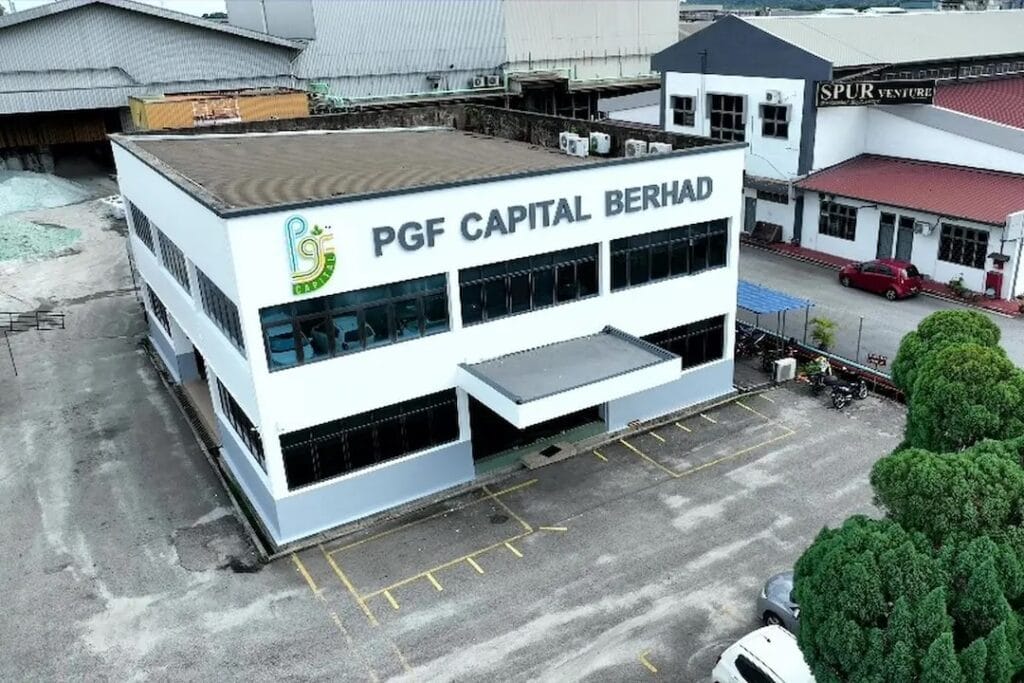
KUALA LUMPUR, PGF Capital Berhad (“PGF Capital” or “the Group”) (stock code: 8117), a leading insulation manufacturer listed on the Main Market, kicked off its new financial year on a strong note, recording a net profit of RM7.5 million for the first quarter ended 31 May 2025 (1QFY26), up 11.9% from RM6.7 million in the same period last year. Revenue held steady at RM40.6 million compared to RM40.5 million in 1QFY25. The improved profit was mainly due to solid demand for insulation products from the Oceania region and tighter cost controls, though it was partly offset by a RM0.6 million unrealised loss on currency swaps. PGF Capital Berhad – Group CEO Fong Wern Sheng The Insulation segment remained the Group’s main revenue driver, contributing 99.7% of total revenue. PGF Capital noted strong sales momentum in Australia, supported by government policies such as updated building codes and housing targets, along with incentives like the Victorian Energy Upgrades programme. However, a gas pipeline incident in Putra Heights temporarily affected production and exports during the quarter. The Group also shared positive updates on its new mineral wool sandwich panels, which have been certified by SIRIM and are awaiting final approval from Malaysia’s Fire Department. These products are expected to support energy-efficient construction under the Energy Efficiency and Conservation Act 2024. PGF Capital’s new 40,000 metric-tonne plant in Kulim, Kedah, remains on track to begin commercial operations in the first half of 2026. The project has secured a tax incentive package under the Northern Corridor Economic Region (NCER), which includes a 5+5 year corporate tax holiday. The Group reassured stakeholders that ongoing US reciprocal tariffs are unlikely to impact its business, as the majority of its exports go to Oceania and Malaysia, with no direct exports to the US. On the property development front, PGF Capital received conditional planning approval for Phase 1 of its Tanjong Malim project. In partnership with Malvest Properties, the development will deliver 1,808 residential and commercial units, supporting the government’s vision of making Proton City an Automotive High-Tech Valley. Financially, the Group maintained a healthy net gearing ratio of 0.15 times and net assets per share of RM1.39. It also generated RM3.4 million in operating cash flow during the quarter, reflecting solid underlying performance.

Investment & Market Trends

Accenture Completes Acquisition Of Aristal Malaysia

KUALA LUMPUR,  Accenture (NYSE: ACN) has acquired Malaysia-based consulting firm Aristal, marking its first banking-focused acquisition in the country. The move strengthens Accenture’s ability to help Malaysian banks modernize their core systems, streamline operations, and manage major changes such as mergers and system upgrades. Founded in 2006, Aristal is known for its strong expertise in core banking transformation and has successfully delivered large-scale IT and business change projects across Malaysia, Indonesia, Singapore, and Thailand. “Aristal has a proven track record in helping banks improve outdated systems and enhance customer experience,” said Paul Ng, Financial Services Lead for Southeast Asia at Accenture. “Their skills in platform implementation and post-merger integration will strengthen our services across the region.” The firm’s team of 30 experienced professionals will join Accenture’s Financial Services division in Malaysia, combining local banking knowledge with Accenture’s global technology and operations expertise to deliver end-to-end transformation for clients. With banks across Southeast Asia facing growing pressures from regulatory demands, M&As, and digital competition, the region is expected to invest heavily in core system upgrades. The global core banking market is forecast to reach USD 28.8 billion by 2027. “This acquisition grows our local talent pool and boosts our ability to help clients embrace modern core systems, AI, and data,” said Azwan Baharuddin, Accenture’s Country Managing Director for Malaysia. “It reflects our ongoing investment in the country’s financial services sector.” Lin Kok Liong, Managing Director at Aristal, added: “Joining Accenture allows us to scale our impact and tap into its global resources. We’re excited to bring more value to clients and grow with the team.” This acquisition follows Accenture’s continued focus on Southeast Asia, including the acquisition of Percipient’s digital twin technology in Singapore and the launch of its AI Refinery Engineering Hub in the region. Financial details of the Aristal deal were not disclosed.

Scroll to Top

Subscribe
FREE Newsletter