Investment & Market Trends

Anton Tan, Chief Officer of Product Solutions at AHAM Capital
Investment & Market Trends, News

AHAM Capital Declares Income Distribution of RM 1.11 Billion

KUALA LUMPUR : AHAM Asset Management Berhad (“AHAM Capital” or “the Company”) has declared a total income distribution of RM1.11 billion for the financial year 2024, spanning across 89 wholesale and retail funds managed by the Company. These funds encompass a diverse set of strategies and asset classes, including equities, bonds, and mixed assets. Anton Tan, Chief Officer of Product Solutions of AHAM Capital, said: “We are delighted to reaffirm our commitment to delivering consistent income to investors, with average distribution yields ranging between 4.0% – 8.0% across our funds. In 2024, our strategic positioning in Malaysian equities paid off, supported by strong market performance driven by policy reforms and a surge in foreign direct investments. Additionally, easing inflationary trends and interest rate cuts by the US Federal Reserve created a supportive backdrop for fixed income markets, contributing to the overall stability of our income strategies.” Looking ahead to 2025, Anton added: “As the global stage shifts under Trump’s new administration, alongside heightened geopolitical tensions and persistent currency volatility, the need for diversification is more critical than ever. Income strategies help provide a cornerstone for portfolio resilience by offering stability and capital preservation in an uncertain environment. “While the pace of rate cuts may slow, and interest rates could remain higher-for-longer, the current environment still offers a rare window for income-seeking investors to lock in higher yields today. We remain steadfast in our commitment to providing globally diversified solutions spanning different strategies, assets, and currency classes to help our clients recalibrate and position for the year ahead.” The Company’s Select and World Series funds delivered strong income distribution yields ranging from 4.0% to 8.0% across various asset classes and strategies. Notable highlights include: AHAM World Series – Income Fund: Achieved an impressive yield of 8.3% by capitalizing on global income opportunities. AHAM Select SGD Income Fund and AHAM Select AUD Income Fund: Each recorded yields of 4.50%, offering investors the advantages of currency diversification. In the Shariah-compliant segment: AHAM Aiiman Income Plus Fund: Delivered a competitive yield of 4.50%. AHAM Aiiman Quantum Fund: Achieved a yield of 4.60%. As of 31 December 2024, AHAM Capital’s total Assets Under Administration (AUA) stood at approximately RM89.0 billion, encompassing assets under management, investment advisory, and those under distribution.

Investment & Market Trends

Oriental Kopi Holdings Berhad’s Ace Market IPO Oversubscribed by Approximately 60 Times

KUALA LUMPUR: Food and beverage (“F&B”) services cafe chain operator, Oriental Kopi Holdings Berhad (“Oriental Kopi” or the “Company”) (“华阳餐飲集团”), has been oversubscribed by approximately 60.0 times ahead of its listing on the ACE Market of Bursa Malaysia Securities Berhad (“Bursa Securities”). The approximately 60-times oversubscription rate reflects a total subscription value of RM1.6 billion at an initial public offering (“IPO”) price of RM0.44 per share. Upon listing, Oriental Kopi is anticipated to achieve a market capitalisation of RM880.0 million, based on the aforementioned IPO price and an enlarged share base of 2.0 billion ordinary shares. Oriental Kopi, through its subsidiaries (collectively known as the “Group”), is primarily involved in cafe chain operations as well as the distribution and retail of its brands of packaged foods. The Group’s cafe chain operates under the Oriental Kopi brand providing F&B services and in-store sales of its brands of packaged foods. Established in December 2020, Oriental Kopi has experienced rapid growth, operating a network of 19 owned-and-operated Oriental Kopi cafes across Malaysia. These cafes are strategically located in locations such as shopping malls, shop lots, and Kuala Lumpur International Airport 2 airport retail mall. In a joint venture arrangement with Paradise Group Holdings Pte Ltd, the Group has recently commenced its first oversea cafe in Singapore’s bustling Bugis Junction. Additionally, the Group operates 1 specialty retail store in St. Giles Southkey Hotel in Johor. Oriental Kopi’s initial public offering (“IPO”) comprises a public issue of 418.1 million new ordinary shares (“Issue Shares”) at an issue price of RM0.44 per share. This represents 20.9% of the enlarged share capital, with RM184.0 million expected to be raised. In respect of the 60.0 million Issue Shares allocated to the Malaysian public, Oriental Kopi has received a total of 66,041 applicants for 3,657,610,800 Issue Shares with a value of approximately RM1,609.3 million, representing an overall oversubscription rate of approximately 60.0 times. For the Bumiputera portion, a total of 10,156 applications for 695,882,800 Issue Shares were received, representing an oversubscription rate of 22.20 times. For the public portion, a total of 55,885 applications for 2,961,728,000 Issue Shares were received, representing an oversubscription rate of 97.72 times. The 20.0 million Issue Shares made available for application by the eligible directors, employees and persons who have contributed to the success of the Group have been fully subscribed. Meanwhile, for the private placement, the 88.1 million Issue Shares allocated to selected investors, as well as the 250.0 million Issue Shares allocated to the selected Bumiputera investors approved by Ministry of Investment, Trade and Industry of Malaysia (“MITI”) have also been fully placed out. Notices of allotment will be posted to all successful applicants by 21 January 2025.   Managing Director of Oriental Kopi, Dato’ Chan Jian Chern (拿督陈建丞) said, “We are pleased and encouraged by the overwhelming response to our IPO, which reflects public confidence in the Oriental Kopi brand, the quality of our offerings, and the exciting growth prospects we have ahead. The funds raised will empower us to accelerate our expansion plans to meet the increasing demand for our F&B products and services.” “The majority of the IPO proceeds, amounting to RM75.8 million (41.2%), will be used to supplement our working capital requirements. RM53.7 million (29.2%) will be used for the establishment of a new head office, central kitchen and warehouse, while RM36.4 million (19.8%) will go towards expanding our cafe chain across Malaysia. Additionally, RM5.0 million (2.7%) is earmarked for the expansion of our packaged foods segment, RM5.5 million (3.0%) for marketing activities in foreign markets, and RM7.6 million (4.1%) to defray our listing expenses.” “With these IPO proceeds, we are well-positioned to capitalise on growth opportunities driven by economic expansion, improved household spending, and increasing tourist arrivals and spending. We remain committed to deliver high-quality Malaysian cuisine and are confident that our strategic initiatives will generate long-term value for shareholders while further solidifying Oriental Kopi’s leadership in Malaysia’s F&B services industry,” Dato’ Calvin concluded. Oriental Kopi is scheduled to be listed on the ACE Market of Bursa Securities on Thursday, 23 January 2025. Alliance Islamic Bank Berhad is the Principal Adviser, Sponsor, Sole Underwriter and Placement Agent for the IPO exercise.

Investment & Market Trends

GFM to Acquire 45% Stake in Shapadu Energy

KUALA LUMPUR: Integrated Facilities Management provider, GFM Services Berhad (“GFM”), announced today that it has entered into a Heads of Agreement (HOA) with Shapadu Corporation Sdn. Bhd. (“Shapadu Corporation”) and its wholly-owned subsidiary, Shapadu Energy Sdn. Bhd. (“Shapadu Energy”). The HOA outlines GFM’s intent to acquire a 45% equity stake in Shapadu Energy for an indicative purchase consideration of RM30.0 million, to be fully settled in cash. Shapadu Energy’s Operations Shapadu Energy specializes in downstream maintenance and turnaround services at the Pengerang Refinery and Petrochemical Complex within the Pengerang Integrated Complex (PIC) in Johor. The company also performs upstream maintenance, hook-up, and commissioning activities. Through its subsidiaries, Shapadu Energy provides oil and gas (O&G) extraction, repair, and maintenance services. Shapadu Energy, through its 60%-owned subsidiary, Shapadu CR Asia (SCRA), holds the TA4MS contract (Integrated Turnaround Main Mechanical and Maintenance Mechanical Static) with Pengerang Refining Company Sdn. Bhd. and Pengerang Petrochemical Company Sdn. Bhd. (collectively “PRefChem”) – a joint venture between Saudi Aramco and PETRONAS. SCRA delivers plant turnaround services to PRefChem’s refinery and petrochemical facilities within the PIC. Strategic Move for GFM Encik Ruslan Bin Nordin, Group Managing Director of GFM, highlighted: “The Proposed Acquisition is a strategic move to strengthen GFM Group’s foothold in the O&G facilities maintenance sector. By joining forces, we aim to leverage combined strengths to enhance capacity and capabilities, particularly in delivering TA4MS services.” GFM currently holds a TA4MS contract through its wholly-owned subsidiary, Highbase Strategic Sdn. Bhd., managing six facilities at the PIC. The inclusion of Shapadu Energy will expand GFM’s portfolio to two TA4MS contracts within the complex. Resource Consolidation and Growth The Proposed Acquisition will enable GFM to consolidate financial and technical resources, optimize manpower and equipment, and enhance contracts management. This positions GFM to better meet PRefChem’s expectations while pursuing larger O&G FM projects. “Looking ahead, GFM is poised to unlock synergies through expanded project opportunities, cost optimization, and operational efficiencies – driving improved profit margins and long-term value for stakeholders,” Ruslan added. Details of the Acquisition GFM will subscribe to 15% new ordinary shares in Shapadu Energy for RM10.0 million. GFM will acquire an additional 30% equity stake from Shapadu Corporation for RM20.0 million. Total indicative purchase consideration: RM30.0 million. Put and Call Option Agreement GFM and Shapadu will enter into a Put and Call Option Agreement. This allows GFM to sell its shares back to Shapadu Corporation and grants Shapadu the option to purchase GFM’s shares. If exercised: The consideration will involve shares and Redeemable Convertible Preference Shares (RCPS) in SCRA. GFM’s stake in SCRA could increase to 49% through share issuance, and up to 60% upon RCPS conversion. The options are valid for two years from the definitive agreement execution. Next Steps GFM, Shapadu Corporation, and Shapadu Energy intend to finalize definitive agreements within six months. The Proposed Acquisition is subject to: Approvals from relevant authorities. GFM’s shareholders at an Extraordinary General Meeting (EGM).

Investment & Market Trends, Property

Pavilion REIT Adds RM480M Iconic KL Hotels to Portfolio

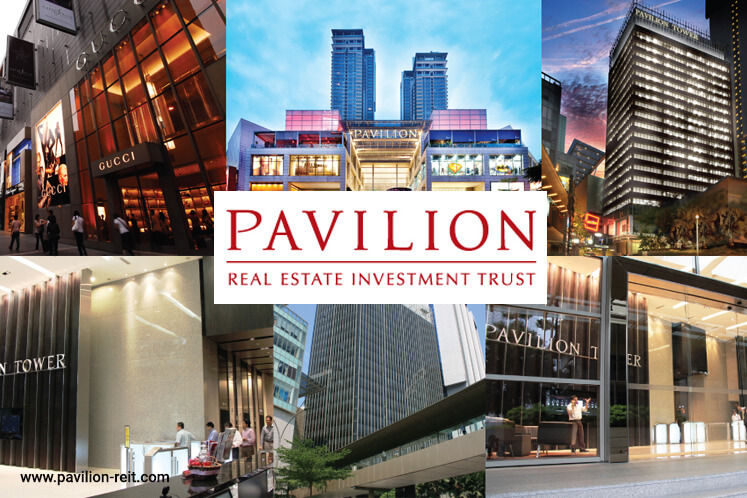
KUALA LUMPUR: Pavilion Real Estate Investment Trust (Pavilion REIT) has announced the proposed acquisitions of two prestigious hospitality assets in Kuala Lumpur, the Banyan Tree Kuala Lumpur (BTKL) and Pavilion Hotel Kuala Lumpur (PHKL), in a landmark deal worth RM480 million. MTrustee Berhad, acting for and on behalf of Pavilion REIT, entered into conditional sale and purchase agreements with Lumayan Indah Sdn Bhd for the acquisition of BTKL at a purchase consideration of RM140 million, and with Harmoni Perkasa Sdn Bhd for the acquisition of PHKL at a purchase consideration of RM340 million.   Both properties are located in the bustling Bukit Bintang area, at the heart of Kuala Lumpur’s Golden Triangle.   Dato’ Philip Ho, Chief Executive Officer of Pavilion REIT Management Sdn Bhd, which is the manager of Pavilion REIT said, “The acquisitions align with Pavilion REIT’s strategy which contributes positively to the overall portfolio and future growth, while also generating stable and sustainable income for unitholders.”   “Acquiring these iconic hospitality assets reinforces our commitment to delivering premium offerings while capitalising on synergistic opportunities with Pavilion Kuala Lumpur Mall”, he added.   The acquisitions will be funded via a combination of debt and/or equity, with Pavilion REIT proposing a private placement of new units to raise gross proceeds between RM264 million and RM552 million. Alternatively, it may issue up to RM246.5 million worth of units to settle part of the purchase consideration.   The transaction is expected to enhance portfolio diversification by reducing Pavilion Kuala Lumpur Mall’s contribution to Pavilion REIT’s total asset value from 61.4% to 58.0% via exposure to the hospitality sector.   BTKL and PHKL are seamlessly connected to Pavilion Kuala Lumpur Mall, one of Malaysia’s premier shopping destinations. The integration enables synergistic marketing and operational strategies, which are anticipated to drive higher revenue per available room for the hotels and further elevate the overall value proposition of the mall. Pavilion REIT’s ownership further enhances this synergy, enabling strategic partnerships that will maximise the long-term value.   The hotels are operated and managed by Banyan Tree Hotels & Resorts Pte Ltd since their openings in 2018. Banyan Tree Hotels & Resorts Pte Ltd is part of Singapore-listed Banyan Tree Holdings Limited, a global hospitality group renowned for its luxury offerings and award-winning services.   BTKL, an award winning five-star hotel within a 59-storey integrated building, features 55 premium suites, a rooftop bar, and the renowned Banyan Tree Spa. PHKL, located above Pavilion Kuala Lumpur Mall, offers 325 well-appointed rooms and extensive event and dining facilities.   BTKL and PHKL have consistently achieved average occupancy rates of 83.0% and 82.2% respectively up to 30 September 2024.   As part of the deal, the hotels will be leased back to the current operator for an initial 10-year term, with the option to renew for up to 20 additional years. The fixed annual rental income will commence at RM33.5 million for the first five years, generating an approximate annual gross yield of 7.0%. This rental income will be subject to incremental adjustments every five years.   This structure provides Pavilion REIT with a yield-accretive, stable and predictable income stream while offering potential upside through variable rental arrangements tied to the hotels’ performance.   These acquisitions come at a time when Malaysia’s tourism and hospitality industry is rebounding strongly. International tourist arrivals in 2024 are projected to reach 27.3 million, a significant increase from 20.1 million in 2023.   Dato’ Philip Ho said, “Within Kuala Lumpur’s Golden Triangle lies what we consider the ‘golden mile,’ Jalan Bukit Bintang. The area’s proximity to world-class attractions, premier retail, and excellent connectivity ensures the hotels and Pavilion Kuala Lumpur Mall are well-positioned to benefit from Malaysia’s ongoing promotion of the tourism sector.”   The proposals are subject to approval by Pavilion REIT’s unitholders and Bursa Malaysia Securities Berhad.   Upon completion, the hotels will represent 5.5% of Pavilion REIT’s enlarged total assets under management, further solidifying its position as a dominant player in Malaysia’s real estate investment trust industry.

Investment & Market Trends

Hong Kong Businesses Eye 2025 Growth

HONG KONG SAR: Hong Kong’s economic outlook and business confidence are set to further improve in 2025, CPA Australia’s latest survey shows. With more than half of respondents predicting their company’s revenue will grow in 2025, companies are becoming more aggressive in their expansion plans and hiring intentions are the highest since 2020. Surveyed executives and accounting professionals show a relatively optimistic outlook for Hong Kong’s economy, with 63 per cent anticipating the local economy will grow next year. Hong Kong’s tax system (31 per cent) ranks as the largest positive contributor to the city’s economic and business environment in 2025, while changes in consumer patterns (26 per cent) and tension in US-China relations (26 per cent) are seen to be the two biggest challenges. 56 per cent of respondents rated Hong Kong’s international competitiveness as high. Mr. Cliff Ip, CPA Australia 2024 Divisional President of Greater China, said, “The survey findings reflect that Hong Kong’s economy and business confidence are expected to steadily improve in the coming year. Recent stimulus measures unveiled by the central government and the Hong Kong government have contributed to this improved sentiment. The start of the rate-cutting cycle has also boosted business confidence. These positive factors should keep this momentum going into 2025 and strengthen Hong Kong’s international competitiveness. “However, external uncertainties still weigh on some sectors such as tourism and retail. Respondents indicate that changing customer behaviour and weak customer demand are some of the key challenges they expect to face in 2025. In response, companies must keep innovating their products and services, and how they deliver them. They also need to frequently engage with customers and potential customers to better understand trends both in Hong Kong and elsewhere.” The outlook for initial public offerings (IPOs) in the city is also optimistic. Some 63 per cent of respondents expect the value of funds raised in Hong Kong through IPOs to increase in 2025. “IPO activity in Hong Kong has shown signs of recovery since Q3 due to some mega-sized IPOs. Policies and regulatory reforms are stimulating capital activities and boosting investor confidence,” Ip explained. The improving economic sentiment is flowing through to revenue projections and business expansion plans in 2025. 51 per cent of respondents predict their company’s revenue will grow next year, with an increase in revenue of between 5 to 20 per cent being the most popular prediction. In response to this improving business environment, respondents are most likely to forecast that their company will increase their investment in advanced technologies (38 per cent), sales and marketing (37 per cent) and expansion outside of Hong Kong (36 per cent). A notably high proportion of respondents to this survey stated that their company has expansions plan in the next three years at home or abroad, with mainland China (40 per cent) again nominated as the most popular destination. Though cost management remains the top strategic focus for many companies, the percentage choosing it has dropped from 39 per cent in 2024 to 27 per cent in 2025. While slightly more are expected to focus on market expansion activities (27 per cent) and innovation and digitalisation (26 per cent). Ip stated, “The more positive business environment is being reflected in an expected shift in corporate strategy away from defensive strategies such as cost management and improving business efficiency towards more expansionary strategies such as market expansion and innovation.” To support growing revenue and expansion plans, companies are keen to add more employees and increase salary to retain talent. 57 of per cent respondents expect that their companies to increase headcount, the highest new hiring intention since 2020. These new hiring intentions are strongest amongst larger companies. Salaries are expected to grow, with 62 per cent expecting to receive a salary increase in 2025. While the economy looks to be on a positive trajectory, predictions for price changes in the property market in 2025 are uncertain, with similar numbers of respondents expecting prices to increase and decrease, however more respondents expect prices to increase than the previous two years. Ip explained, “The city’s property market is recovering, with demand gradually growing. This is due to recent interest rate cuts and changes in government policies such as the relaxation of restrictive measures in the housing market. However, with sectors such as SMEs undergoing a relatively slower recovery due to the weak domestic demand, this is leading to stagnation in the rental market.” The survey data shows nearly all Hong Kong companies have introduced at least some ESG measures into their operations, with only three per cent stating they have not taken any ESG actions. Another 35 per cent expect their company to increase their ESG-related initiatives and activities next year. Respondents were most likely to nominate compliance and increasing compliance costs as the biggest impact ESG is having on their business. CPA Australia collected 568 responses from Hong Kong-based executives, accounting and finance professionals working in various industries in October and November for this Hong Kong Economic and Business Sentiment Survey 2025.

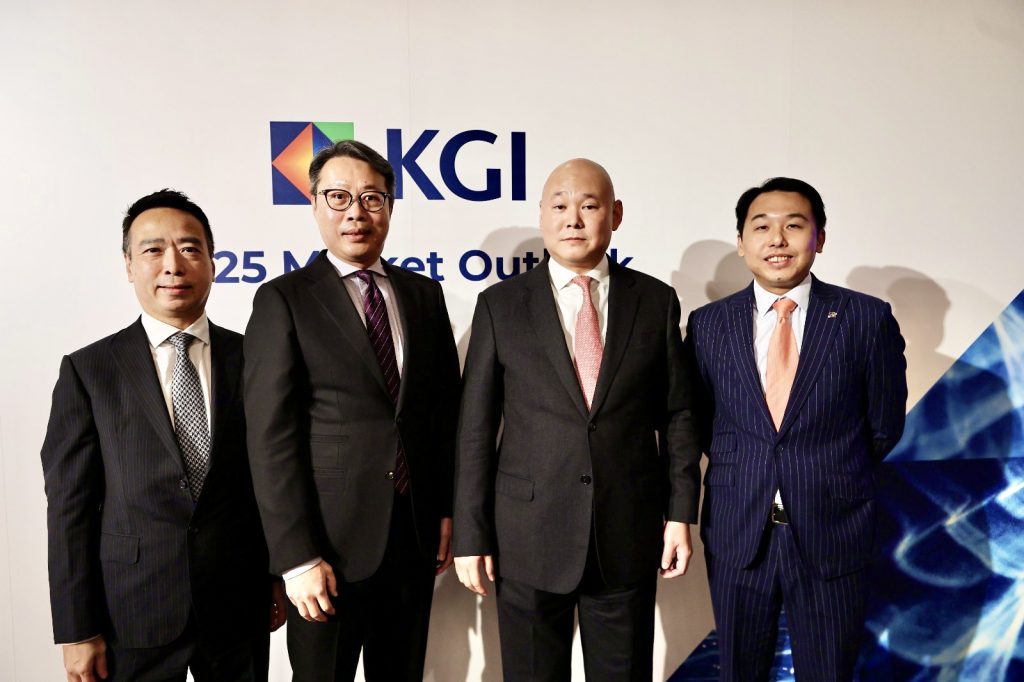
(From left) Cusson Leung, Chief Investment Officer at KGI; James Chu, Chairman at KGI Securities Investment Advisory; James Wey, Head of International Wealth Management at KGI; Kenny Wen, Head of Investment Strategy at KGI
Investment & Market Trends

KGI: 2025 Market Outlook

HONG KONG SAR: KGI has released its 2025 Market Outlook, covering regions including Mainland China, Hong Kong, Taiwan, the U.S., Singapore, and Indonesia. Reflecting on this year, the cooling of inflation and the labor market in the United States has brought the economy to a roughly balanced risk between employment and inflation. With Trump re-entering the White House, his policy propositions are poised to impact global economic development and shape the trend of medium and long-term interest rates. In China, domestic investment confidence remains weak. With the potential risk of the United States significantly increasing tariffs, Chinese exports may be affected. In response, China will introduce relevant measures to address these challenges. Under this backdrop, we recommend the “ACE” strategy for 2025: Alternatives: Gold and cryptocurrencies — assets with lower correlation to traditional stocks and bonds. Credit Selection: Prioritize high-rated bonds, focusing on opportunities in corporate bonds. Elite Stocks: Prefer U.S. and Japanese stocks, maintain a preference for large-cap over small-cap, and pay attention to sector rotation. Kenny Wen, Head of Investment Strategy at KGI, says:  “Regarding asset allocation, based on our assessment of the global economy and geopolitical factors for 2025, investors can consider the ACE strategy: A is for Alternatives, which refers to diversifying into alternative assets to reduce portfolio volatility, with gold being a viable option. C is for Credit Selection, meaning carefully selecting investment-grade bonds to enhance potential income. Lastly, E is for Elite Stocks, where we prefer large-cap stocks, particularly from the U.S. and Japan.” Macro and the U.S. Market Within developed markets, the U.S. economy may slow down more significantly than the current market consensus estimate. In other regions, the recovery in the Eurozone and the UK was weaker than expected, but the trend of year-on-year growth is still improving. It is expected that the overall performance will still lag behind the U.S., but the gap is narrowing. In China, the market is currently focused on whether the Central Economic Work Conference in December can propose effective fiscal “stimulus” policies; otherwise, achieving 5% economic growth in the future remains challenging. In the U.S., the manufacturing recovery has been weak, mainly due to overall weak capital expenditure. On the other hand, for the service sector, has shown unexpectedly strong performance, which has been key to the U.S. economy outperforming other mature markets over the past six months. However, with declining savings rates and increasing financial burdens, credit consumption momentum will weaken, potentially dragging on the U.S. economy in 2025. Trump’s four major policies—tax cuts, increased tariffs, immigration restrictions, and financial deregulation—have an uncertain execution order, which may adversely affect inflation. Starting with restrictions on immigration and the implementation of tariffs, these policies are visible. Therefore, throughout the year, the four policies mentioned above may be announced in the first half, increasing the volatility of financial markets. However, higher economic risk for the United States is still in the second half of the year, and whether there will be improvement in the fourth quarter depends on the policy changes at that time. The U.S. has returned to a roughly balanced dual-risk target of employment and inflation, with core inflation expected to continue declining in 2025. However, Trump’s increased tariffs and anti-immigration policies could lead to a resurgence in goods and services inflation, posing a risk of rising inflation again in 2026. The U.S. has returned to a state of full employment, with the unemployment rate for non-temporary jobs slowly rising, which may negatively affect the consumer spending. In terms of U.S. stock investment, after two consecutive years driven by the AI wave, the overall U.S. stock market is no longer cheap. However, we see opportunities for sector rotation in the future, mainly reflected in estimated earnings improvements, particularly in finance, materials, industrial, and healthcare sectors. From a timing perspective, we believe the positive post-election stance can be maintained in the first quarter, but starting in the second quarter, the risks of Trump’s policies and economic downturn expectations will be reflected; risks will further increase in the second half, with the first half overall better than the second half. As for bond investment, under Republican full control, bond investment may be adversely affected. For example, worsening fiscal deficits will increase bond issuance costs, rising inflation will lead to higher yields on medium- and long-term bonds, and poor fiscal discipline and long-term inflation risks will push up neutral interest rates and bond term premiums. Therefore, medium- and long-term government bonds are less favored in 2025, while some short-term government bonds or high-credit-quality corporate bonds, with relatively higher yields, can provide good interest income. Overall, 2025, with increased inflation risk and potential monetary policy reversal, is not favorable for bond investment. James Chu, Chairman at KGI Securities Investment Advisory, says: “The global economy’s overall growth in 2025 is expected to be similar to that of 2024. Although the U.S. economy is showing a downward trend, it remains relatively strong among developed markets. The biggest variable for economic performance in 2025 remains the implementation of policies following Trump’s return to office; the impact of these policies on the economy might be difficult to assess immediately, but they are certainly unfavorable for inflation. The Federal Reserve is expected to cut interest rates by 75-100 basis points, potentially reaching a low of 3.75-4.0% in 2025, with rate hikes possibly resuming in 2026. In terms of investment, after being driven by the AI wave for two consecutive years, U.S. stocks are no longer cheaply valued, but there are opportunities for sector rotation. It is expected that in 2025, the S&P 500 will still see mid to high single-digit profit growth, with annual returns estimated between 6-12%, which is a decline compared to the previous two years. In terms of timing, we believe the first quarter should maintain the current post-election bullish trend. Starting in the second quarter, the market is expected to reflect the risks associated with Trump’s policies and the anticipated economic downturn, which may lead to market volatility. Risks are expected to increase further

Investment & Market Trends

AS Watson Opens 16,800th Store Globally

HONG KONG SAR: AS Watson announced the grand opening of its 16,800th store worldwide, further consolidating its position as the world’s largest international health and beauty retailer, with a portfolio of 12 brands operating across 29 markets. This store was opened in Rotterdam, marking a remarkable milestone in AS Watson’s ongoing expansion and its commitment to delivering a seamless and exceptional O+O (Offline plus Online) customer experience. Dr. Malina Ngai, Group CEO of AS Watson, expressed her excitement at the store opening ceremony, “The opening of our 16,800th store represents more than our growth as a company – it symbolises our commitment to serving the communities worldwide. With every store we open, we create jobs, foster customer relationships, and build lasting trust.” “16,800 is a number with special meaning in Chinese culture. The number 6 symbolises ‘everything goes smoothly’ while 8 represents ‘good fortune’. We embrace the special meaning of this milestone and look forward to a future of lasting success and prosperity, not only for our business growth but also in extending these best wishes for a brighter future for the world during this festive Christmas season,” Malina added. Commitment to Continuous Growth Ed van de Weerd, CEO of AS Watson Benelux, remarked, “We’re honoured that AS Watson’s 16,800th store worldwide opens in vibrant Rotterdam, demonstrating AS Watson’s steadfast commitment to growth in the Benelux region and globally. As the No. 1 health and beauty retailer in the Netherlands, Kruidvat serves its customers with nearly 1,000 O+O stores and over 24,000 passionate colleagues, and has become an integral part of many Dutch people’s lives.” The brand-new store will serve over 11,000 customers every week. As one of the largest Kruidvat stores, it spans over 770 square meters and is designed to enhance O+O shopping experience with clear in-store navigation. The store offers an extensive assortment of over 36,000 products, making it the largest selection among all Kruidvat stores. The newly upgraded Kruidvat app delivers personalised offers and health advice to customers, enabling them to effortlessly manage their shopping lists and track their points balance, ensuring they always get the best deals. Additionally, the app’s streamlined checkout process enhances convenience with click-and-collect options. Looking ahead, AS Watson remains committed to innovation and excellence in customer experience, and will continue its growth journey with the purpose of putting a smile on the customers’ faces today and tomorrow.

Investment & Market Trends

Johnson Electric Reports H1 Results for FY 2024

KONG KONG SAR: Johnson Electric Holdings Limited (“Johnson Electric”), a global leader in electric motors and motion subsystems, today announced its results for the six months ended 30 September 2024. Total group sales for the first half of the 2024/25 financial year were US$1,854 million, a decrease of 4% compared to the first half of the prior financial year. Net profit attributable to shareholders increased by 8% to US$130 million or 13.92 US cents per share on a fully diluted basis. Underlying net profit increased by 3% to US$133 million. Automotive Products Group The Automotive Products Group (“APG”), which accounted for 84% of total Group sales in the period under review, reported a 3% decline in sales on a constant currency basis – which was in line with the overall reduction in global light vehicle production volumes. On a regional basis, APG’s constant currency sales were lower by 1% in Asia, 3% in Europe, and 5% in the Americas. All major product and subsystem categories felt the effects of weaker OEM demand as the industry worked to reduce excess inventory levels that accumulated during 2023’s post-Covid rebound in production. At the same time, consumer appetite to purchase new cars is being negatively impacted in China by concerns over declining property prices and, in the case of North America and Europe, by high vehicle prices and high interest rates. Current macro-economic conditions notwithstanding, the automotive industry’s structural evolution is continuing at a rapid pace. Most notably, China has emerged as a transformative force in the sector through its position as both the world’s largest market and the most dynamic in terms of its adoption of electric propulsion technology. Sales of all-electric and plug-in hybrid models recently exceeded the rate of one million vehicles per month and these now account for close to half of all passenger vehicles sold. Furthermore, in less than five years, PRC OEMs have become the domestic market leaders by offering high-quality, cost-competitive new energy vehicles that feature integrated software and advanced infotainment systems. APG’s strategy of developing a portfolio of motion subsystems and products that function as key technology enablers of electrification has meant that we have continued to grow our sales across all of the major PRC OEMs. This includes the supply of electric water pumps, coolant valves, and integrated thermal management systems that optimize the performance of battery-powered vehicles, as well as a wide array of motion products that improve the comfort and safety of passengers. The automotive markets in the major western economies are experiencing a period of adjustment which, for a number of reasons, is leading to greater volatility and less visibility on production volumes. In the face of changing consumer preferences, increasing regulatory pressures, and the imperative to reduce production costs, OEMs have been shifting production to different plants in different regions, exiting unprofitable models, and delaying new model launches. The pace of adoption of electric vehicles in some countries has also slowed as the market seeks to progress beyond early adopters to mass market acceptance at a time when consumers remain concerned about high vehicle prices and financing costs, along with persistent anxieties about driving range, charging infrastructure and resale values. Indicative of these concerns, sales of hybrid vehicles in Europe and North America have picked up strength as buyers view these vehicles as an affordable compromise between all-combustion and all-electric. Although the varying speed and dimensions of the structural changes taking place in the automotive industry creates near-term operational challenges for component suppliers, APG remains particularly well positioned to continue to gain market share. We possess a unique global manufacturing footprint that extends across every major geographic market. And our strength in China places us at the forefront of vehicle electrification technology development. Industry Products Group The Industry Products Group (“IPG”), which accounted for 16% of total Group sales, reported a 9% decrease in sales on a constant currency basis. Although the rate of sales contraction compared to a year earlier has slowed, IPG continues to experience challenging operating conditions. In part this reflects the prolonged weakness in demand in the aftermath of the pandemic which has seen consumers generally less willing to spend on discretionary hardware products compared to services. It also reflects delays to a number of contracted new product launches and heightened competition in more commoditized product segments where price rather than functionality and reliability has become the key determinant of purchase. IPG’s management is responding to these difficult conditions by rationalizing and consolidating its production to focus on segments where it can obtain the greatest leverage from highly automated assembly lines and digital processes. At the same time, the division is aggressively pursuing new business in a number of high growth segments where Johnson Electric has innovative solutions to customer problems, including warehouse automation, semiconductor manufacturing equipment, liquid cooling applications, and electric bikes. Gross Margins and Operating Profitability Despite the slowdown in sales in the first half of the year, management has continued to make encouraging progress in implementing its core strategies aimed at reducing operating costs and improving profitability. Gross profit margins increased to 23.6% from 22.2%. The improvement was largely the result of lower raw material costs and gains from foreign currency hedging contracts. Earnings before interest, tax and amortization (“EBITA”) were US$171 million (compared to US$168 million in the first half of the prior year). Adjusted to exclude non-cash foreign exchange rate movements and restructuring charges, EBITA was US$177 million or 9.5% of sales (compared to 9.3% in the first half of the prior year). The increase in EBITA margins reflected the improvement in gross profit, offset by modest increases in freight and staff costs. Net Profit and Financial Condition Net profit attributable to shareholders totalled US$130 million or 13.92 US cents per share on a fully diluted basis. Underlying net profit, adjusted to exclude the non-cash impact of foreign exchange rate movements and restructuring charges, was US$133 million compared to US$130 million in the first half of the prior year. Free

Investment & Market Trends

Atome Financial Raises US$200M for Southeast Asia Inclusion

SINGAPORE: Southeast Asia’s leading digital financial services platform, Atome Financial has secured a syndicated credit facility of up to US$200 million, which is being led and arranged by Hongkong and Shanghai Banking Corporation Limited (HSBC). The new facility is anchored by HSBC through its ASEAN Growth Fund and is also supported by DBS Bank Ltd, Sumitomo Mitsui Banking Corporation (SMBC) Singapore branch and Brunei’s Baiduri Bank. The facility will accelerate the expansion of Atome Financial’s profitable regional portfolio and products such as lending and the Atome (Pay Later Anywhere) Card in key Southeast Asian markets. “As a fast-growing startup with a rapidly growing and profitable business, we are deeply appreciative of this syndicated facility, which underscores the banking community’s trust and confidence in us,” said Andy Tan, Chief Commercial Officer at Atome Financial. “We look forward to HSBC, and our other partners, continuing to support our capital needs and launch of new and innovative personal finance products in key markets like Singapore, Malaysia and the Philippines.” “We are pleased to deepen our support to lead this syndicated facility, along with other lenders. Through this support, Atome Financial will bring about greater financial inclusion by extending access to affordable and responsible personal finance solutions to more consumers from across Southeast Asia,” said Priya Kini, Head of Commercial Banking, HSBC Singapore. Atome Financial’s operating income in FY2023 nearly doubled to US$170 million, marking an impressive jump from the previous year’s US$88 million. With GMV (Gross Merchandise Volume) of nearly US$1.5 billion processed in 2023 – a 40% increase from the preceding year – Atome’s buy-now-pay-later business also turned profitable, thanks to a 130% surge in revenue. In the first quarter of 2024, Atome Financial achieved another significant milestone by turning EBITDA positive. This new syndicated facility of up to US$200 million expands from Atome Financial’s previous arrangement with HSBC, while adding new partners DBS, SMBC and Baiduri Bank. Earlier in June, Atome Financial also announced it had secured a three-year term  facility worth up to USD100 million from EvolutionX Debt Capital and other investors.

Investment & Market Trends

HE Group Records a Net Profit of RM20.3 Mil in 9MFY24

KUALA LUMPUR: Electrical engineering service provider, HE Group Berhad (“HE Group” or the “Company”) has announced its third quarter (“3QFY24”) and nine months financial performance for the financial year ended 31 December 2024 (“9MFY24”). HE Group continues to deliver growth in 9MFY24, reporting a 7.8% year-on-year (“YoY”) rise in revenue to RM172.6 million, from RM160.2 million in the previous corresponding period (“9MFY23”). This growth was primarily attributable to increased contributions from its Electrical Equipment Hook-Up and Retrofitting segment compared to 9MFY23. Also, the Company’s profit after tax (“PAT”) grew by 24.5% to RM10.3 million, compared to RM8.3 million in 9MFY23, resulting in an expanded PAT margin of 6.0% in 9MFY24, up from 5.2% in 9MFY23. HE Group’s overall revenue was primarily contributed by the Power Distribution System segment, generating RM102.1 million, or 59.1% to the overall revenue in 9MFY24 (9MFY23: RM104.6 million). This was followed by the Electrical Equipment Hook-Up and Retrofitting segment which grew substantially, expanding more than fivefold to RM42.3 million, representing 24.5% of total revenue in 9MFY24, compared to RM7.4 million in 9MFY23. Revenue from the Other Building Systems and Works division amounted to RM27.3 million (9MFY23: RM47.7 million), contributing 15.8% to the total revenue. On the other hand, the Trading of Electrical Products contributed RM0.9 million in 9MFY24 (9MFY23: RM0.4 million), representing 0.5% of the total revenue. In 3QFY24, HE Group recorded a softer revenue of RM58.9 million, from RM78.9 million recorded in the previous year’s corresponding quarter (“3QFY23”) due to lower work deliveries from the Power Distribution System, and Other Building Systems and Works segments. PAT increased by 31.0% YoY to RM4.6 million in 3QFY24, from RM3.5 million in 3QFY23. This resulted in a hike in PAT margin to 7.8%, compared to 4.5% in 3QFY23. Managing Director of HE Group, Mr. Haw Chee Seng  said, “Our performance in 9MFY24 was underpinned by the new orders secured throughout the period, valued approximately at RM94.3 million.  As at 31 October 2024, our orderbook is valued at RM114.2 million. While we remain mindful of market conditions, our robust tender book and the increased market activity positions us favourably for continued growth.” “In turn, we strive to secure new contracts and expand our orderbook by capitalising on the strengthening Malaysian economy, supported by the robust performance in the services, manufacturing, and construction sectors. The government’s strategic initiatives, such as the New Industrial Master Plan 2030, New Investment Policy and the National Energy Transition Roadmap, are expected to continue stimulating economic activity and attract increased investments to key industries.” “By leveraging our strong industry expertise and experienced team, we are confident in our ability to navigate future challenges and capitalise on emerging opportunities. We are dedicated to deliver exceptional value to our stakeholders and drive sustainable long-term growth for HE Group.” The Company continues to deliver growth with a recorded 20.5% quarter-on-quarter (“QoQ”) increase in revenue to RM58.9 million in 3QFY24, from RM48.9 million in 2QFY24 due to higher work deliveries for the Electrical Equipment Hook-Up and Retrofitting segment. HE Group’s profitability also expanded by 9.9% QoQ to RM4.6 million in 3QFY24, compared to RM4.2 million in 2QFY24 on the back of a higher revenue base.

Scroll to Top

Subscribe
FREE Newsletter