News

News

Manufacturers Urge Swift Government Action Amid US Tariff Reprieve

PETALING JAYA: The Federation of Malaysian Manufacturers (FMM) has called on the government to take swift, strategic action during the 90-day suspension of the US-imposed 24% tariff, warning that the temporary relief must not be mistaken for a pause in urgency. FMM President Soh Thian Lai stressed that the volatility of US trade policy continues to pose a serious threat to long-term industrial planning and competitiveness. “This 90-day window is not a reprieve, but a critical opportunity for Malaysia to implement contingency measures that safeguard its industrial base,” he said. With Investment, Trade and Industry Minister Tengku Zafrul Aziz scheduled to lead a trade mission to the US, Soh urged Putrajaya to leverage this engagement to secure sector-specific relief. He highlighted key sectors that require priority attention, including rubber products, industrial machinery, non-semiconductor E&E components, furniture, paint, garments, medical devices, and the electronics manufacturing services (EMS) segment—industries vital to both Malaysia’s manufacturing ecosystem and the resilience of US supply chains. The appeal follows former US President Donald Trump’s announcement of a 90-day tariff pause—just one day after new tariffs were implemented—while maintaining a 10% blanket duty on most US imports and hiking tariffs on Chinese goods to 125%. This shift has heightened global concerns over trade unpredictability. In light of rising external pressures, Soh also urged the Malaysian government to halt any upcoming domestic policies that may inflate manufacturing costs, including the planned expansion of the Sales and Service Tax (SST) effective May 1. He further proposed the establishment of a National Supply Chain Council to coordinate labour strategies and support manufacturers through economic disruptions. A similar mechanism at the ASEAN level, he added, would help reinforce the region’s position as a reliable and adaptive global manufacturing hub. Additionally, Soh called for enhanced customs surveillance and enforcement to manage potential trade diversions into Malaysia, which could lead to a spike in imports from other countries seeking to circumvent tariff barriers. “These measures are essential to ensure Malaysia remains competitive and responsive in an increasingly protectionist global trade environment,” he said.

News

Perak’s Lumut Maritime Industrial City Set to Attract RM72 Billion

KUALA LUMPUR – The Lumut Maritime Industrial City (LuMIC) project in Perak is projected to attract €15 billion (approximately RM72 billion) in investments over the next 25 years, reinforcing the state’s ambitions to become a key player in the regional maritime and industrial sectors. Announced by Perak Menteri Besar Datuk Seri Saarani Mohamad during the unveiling of the LuMIC Masterplan at the World Trade Centre, the development is expected to generate over 50,000 jobs and open doors for local entrepreneurs and businesses, positioning Perak as a high-growth investment destination. Designed as a flexible, demand-driven initiative, LuMIC will be developed in phases, aligning with global trends across the green, blue, and digital economies. Spanning 9,307 hectares, the project will include a globally recognised port, a sustainable smart city, and an eco-friendly industrial zone. “Perak is well-placed to lead the blue economy with strong potential in maritime tourism, fisheries, marine biotech, and renewable energy. In 2023 alone, the state contributed nearly 23 per cent of Malaysia’s total fisheries output,” Saarani said. He added that LuMIC’s sustainable development model—emphasising carbon reduction, clean energy, and resilient supply chains—supports the National Energy Transition Roadmap (NETR) and enhances Perak’s position as a regional leader in maritime sustainability. The feasibility study, funded by the European Union and developed in collaboration with the Port of Antwerp-Bruges International (PoABI), identified several competitive advantages: Lumut’s captive industrial base, rich natural resources, a skilled talent pool, and strong institutional support. Datuk Redza Rafiq Abdul Razak, CEO of the Perak State Development Corporation (PKNPk), noted that the collaboration with Europe’s second-largest port marks a major milestone in the state’s industrial transformation. “Together with PoABI, we’re developing a robust and actionable blueprint to establish Lumut as a world-class maritime and industrial hub. This partnership not only drives economic growth but also uplifts communities through sustainable development,” he said. With its strategic location along the Straits of Malacca—a key artery for global trade—LuMIC is expected to unlock significant regional economic opportunities and cement Perak’s role as a central node in Malaysia’s future industrial landscape.

News

China, Malaysia Strengthen Trade Ties Amid Rising US Tariffs

In a strategic move to reinforce regional trade cooperation and counter escalating US tariffs, China and Malaysia have held high-level discussions focused on economic collaboration and a unified ASEAN response. Chinese Commerce Minister Wang Wentao and Malaysia’s Minister of Investment, Trade and Industry, Tengku Datuk Seri Zafrul Abdul Aziz, convened via video call as part of Malaysia’s role as the current ASEAN chair. The dialogue, reported by Xinhua, covered bilateral trade cooperation and a collective stance against the United States’ proposed “reciprocal tariffs.” Minister Wang criticised the US tariffs as a “unilateral bullying act” that undermines years of multilateral trade efforts and threatens global economic stability. He reaffirmed China’s readiness to implement countermeasures and called for greater coordination with ASEAN to preserve the multilateral trading system. Tengku Zafrul echoed similar concerns, stating that the US measures are inconsistent with the principles of free and fair trade as outlined by the World Trade Organisation (WTO). Malaysia has issued a formal statement opposing the policy and plans to consult ASEAN counterparts for a coordinated regional response. Both ministers emphasised the importance of open dialogue, mutual respect, and multilateralism in addressing global trade challenges and sustaining regional economic resilience.

News

Japan’s Nikkei Soars Nearly 8% as Trump Suspends Tariffs

TOKYO: Japan’s Nikkei 225 surged 7.9% to close at 34,226.17 on Thursday, buoyed by investor relief following US President Donald Trump’s surprise announcement of a 90-day suspension on newly imposed tariffs. The broader Topix index also climbed 7.2% to 2,518.26, as nearly all sectors rebounded sharply. The rally marks a dramatic turnaround after a week of heightened market volatility. On Monday, the Nikkei plunged 7.8% to a one-and-a-half-year low, before rebounding 6% on Tuesday, then falling another 4% on Wednesday. Thursday’s recovery was fueled by a strong overnight performance on Wall Street, where the S&P 500 posted a 9.5% gain — its biggest single-day increase since 2008. Market analysts attributed the rebound to investor optimism that the tariff pause could soften geopolitical tensions and reduce headwinds for global trade. “Investors were quick to buy back into the market, likely regretting the heavy selling earlier in the week,” said Seiichi Suzuki, Chief Equity Market Analyst at Tokai Tokyo Intelligence Laboratory. “The sharp rebound also shows the market had overreacted to the initial tariff announcement.” Fast Retailing, the parent company of Uniqlo, rose 7.2%, providing a strong lift to the benchmark index. Chip-related stocks also posted outsized gains, with Tokyo Electron jumping 11.77% and Advantest surging 13.66%, buoyed by renewed investor confidence in the tech sector. All 33 industry sub-indexes on the Tokyo Stock Exchange gained, with the nonferrous metals sector leading the rally with a 12.65% increase. The banking sector, which had been heavily sold off amid recession concerns, bounced back with a 9.2% gain. Morgan Stanley analysts said the tariff suspension is particularly bullish for Asian markets, with Japan standing out due to its strong reflationary fundamentals. “Japan had come closest to pricing in a recession among major Asian markets,” the investment bank noted in a research update. “This policy reversal unlocks significant upside potential.” Of the 225 constituents on the Nikkei, all but one registered gains. On the Tokyo Stock Exchange’s Prime Market, 99% of stocks advanced, underscoring broad-based investor confidence and renewed momentum in Japanese equities.

News

AWC Lands 10-Year Automated Waste Concession at Terminal Bersepadu Gombak

SUBANG JAYA: Main Market-listed engineering services provider AWC Berhad (“AWC” or “the Group”) has strengthened its foothold in sustainable urban infrastructure with a strategic win—securing a 10-year Build-Operate-Transfer (BOT) concession for an automated waste collection system at Terminal Bersepadu Gombak, Kuala Lumpur. Awarded to its wholly owned subsidiary Stream Environment Sdn Bhd (SESB), the concession is valued at RM18.4 million and runs from 15 March 2025, encompassing the construction, operation, servicing, and maintenance of the system in collaboration with Landasan Kapital (M) Sdn Bhd and Terminal Bersepadu Gombak Sdn Bhd. “This is a significant milestone that affirms both our technical expertise and track record in delivering modern environmental solutions,” said Dato’ Ahmad Kabeer bin Mohamed Nagoor, Group Chief Executive Officer and President of AWC Berhad. “It reinforces our commitment to driving smart, sustainable solutions that align with the evolving needs of urban infrastructure.” The award also adds a substantial boost to AWC’s environment division, increasing its outstanding order book—valued at RM163 million as of end-December 2024—and enhancing its recurring revenue stream, which currently accounts for approximately 22 per cent of total turnover. “This BOT concession offers clear earnings visibility for the next decade and positions us well to capitalise on future opportunities, both locally and globally,” Dato’ Ahmad Kabeer added. “We’re not just managing waste—we’re redefining how public transportation hubs function by integrating environmentally friendly, high-efficiency waste solutions.” The Gombak project marks AWC’s second BOT venture, following its successful decade-long contract at KLIA Terminal 2, which has since transitioned into a three-year maintenance agreement worth RM8.9 million. The Group sees this latest concession as a continuation of its strategy to deliver long-term value while strengthening client partnerships. As cities accelerate their transition toward smarter, greener infrastructure, AWC’s proprietary technology and engineering capabilities are expected to play a vital role in enabling efficient, low-impact urban environments.

Investment & Market Trends, News

CIMB Securities Maintains ‘Hold’ on Nestlé Malaysia

KUALA LUMPUR: CIMB Securities has reiterated its ‘Hold’ rating on Nestlé (Malaysia) Bhd, maintaining a target price of RM92.00. The valuation is based on a weighted average cost of capital (WACC) of 5.9 per cent and a terminal growth rate of 2.5 per cent. While the stock continues to trade within the RM82.00–RM85.00 range, the research house remains cautiously optimistic. This outlook is supported by recent insights gained during a visit to Nestlé Malaysia’s Maggi manufacturing facility in Batu Tiga, Selangor. CIMB noted that the site visit provided deeper understanding into Nestlé’s local manufacturing capabilities, the strong market leadership of the Maggi brand, and the company’s sustained focus on product innovation. From financial years 2020 to 2024 (FY20–FY24), Nestlé Malaysia has invested RM1.5 billion in capital expenditure. These investments have been channelled towards capacity expansion, efficiency improvements, facility upgrades, and regulatory compliance.–BUSINESS TIMES

Investment & Market Trends, News

Trump Pauses Global Tariffs for 90 Days, Slaps 125% Tariff on China

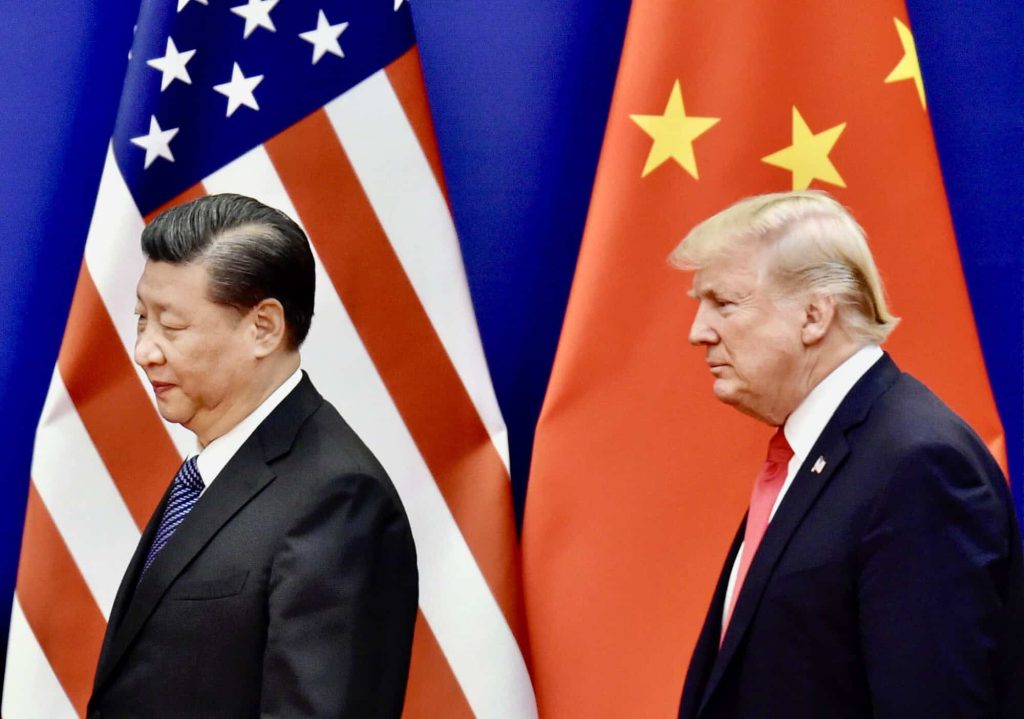
WASHINGTON: US President Donald Trump has announced a 90-day pause on new tariff hikes for most countries, in an apparent response to recent market volatility. However, he intensified his trade offensive against China, imposing a steep 125% tariff citing a “lack of respect” from Beijing. The surprise move came after a turbulent week on Wall Street, with markets reeling from the president’s earlier announcement of sweeping global tariffs. Following the pause, stocks rebounded dramatically, with the S&P 500 surging 9.5% to close at 5,456.90—snapping a week-long losing streak. Despite the pause for most nations, Trump doubled down on China, saying the country’s leadership “doesn’t quite know how to go about” negotiating a deal. “A deal’s going to be made with China. A deal’s going to be made with every one of them,” Trump said, while hosting motor racing champions at the White House. Responding to criticism that he had backtracked on his aggressive trade stance, Trump insisted he was simply being “flexible.” “People were getting a little yippy, a little afraid,” he said, referring to market jitters. “I saw last night where people were getting a little queasy.” The move follows mounting pressure from investors and global leaders after the US imposed a baseline 10% tariff on all imports last Saturday, with elevated rates for key trading partners—including China and the European Union—taking effect Wednesday. Trump revealed on Truth Social that over 75 countries had reached out to negotiate and refrained from retaliatory action, prompting him to issue the 90-day tariff suspension, though the baseline 10% remains in effect. China, however, struck back earlier Wednesday by raising tariffs on US imports to 84%, retaliating against Trump’s escalation of duties on Chinese goods to 104%. In response to the latest move, Beijing’s finance minister remarked, “The United States simply piles mistakes on top of mistakes.” Meanwhile, the European Union announced retaliatory tariffs targeting over €20 billion worth of US goods—including soybeans, motorcycles, and beauty products. However, the EU has not responded to the separate “Liberation Day” tariffs of 20% that took effect Wednesday. Despite heightened tensions, Trump remains confident that his strategy will revive American manufacturing by compelling companies to relocate operations back to the US. “I’m telling you, these countries are calling us up kissing my ass,” he told fellow Republicans at a private dinner, referring to nations eager to secure favourable trade deals. In addition to economic tensions, diplomatic strains are escalating. China issued a travel advisory warning its citizens to assess risks before visiting the US. Meanwhile, US Defence Secretary Pete Hegseth, speaking from Panama, accused Beijing of issuing “threats” as tensions continue to build around control of the Panama Canal. As Trump presses forward with his trade vision, the world’s two largest economies appear locked in an increasingly hostile standoff. — AFP

Investment & Market Trends, News

Yuan Hits New Lows as US Tariffs on China Take Effect

HONG KONG: The Chinese yuan fell to a fresh 19-month low against the US dollar today, following a record-low drop in its offshore counterpart overnight, as tensions from the escalating Sino-US trade war continue to weigh on investor sentiment. In afternoon trading, the yuan weakened by 0.2%, hitting 7.3498 per US dollar, after briefly dipping to 7.3505 earlier, the lowest level since September 2023. Meanwhile, the offshore yuan pared some losses, rising 0.62% to 7.3812 per dollar after dropping over 1% in the previous session and reaching a record low of 7.4288 per dollar. The declines come amid growing concerns as the trade war between the world’s two largest economies intensifies. These concerns were exacerbated by China’s central bank loosening its control over the yuan in an effort to mitigate the negative impact on exports. US President Donald Trump’s “reciprocal” tariffs on numerous countries took effect today, including hefty duties of 104% on Chinese goods, even as the US prepares for further trade negotiations. Carol Kong, a currency strategist at Commonwealth Bank of Australia, noted that the recent shift in the dollar was significant, influenced by the decision to proceed with additional tariffs on Chinese goods. She predicts the offshore yuan could fall to 7.7 per dollar by the end of Q3, though this could happen sooner if further tariff hikes are imposed by both countries. To stabilise the market, China’s central bank set the onshore yuan’s midpoint rate at 7.2066 per dollar, the weakest since September 2023. The yuan is permitted to trade within a 2% band of this rate, with a lower limit of 7.3507, which is just above the September 2023 low. Despite this, the central bank’s fixing was slightly firmer than expected, indicating a reluctance to allow the yuan to depreciate drastically. Chinese state-owned banks were observed selling dollars in the onshore market early this morning to slow the yuan’s decline. Lei Zhu, head of Asian fixed income at Fidelity International in Hong Kong, commented that Chinese regulators are likely focused on stabilising the market, deeming this a priority over sending dramatic signals to the market. Both the onshore and offshore yuan have fallen by more than 1% against the dollar this month, continuing the downward trend since the start of the year, largely due to concerns over the impact of the tariffs. Economists noted that while a weaker yuan could make Chinese exports more competitive and ease pressure on the economy, a sharp decline could also lead to unwanted capital outflows, posing risks to financial stability.

Investment & Market Trends, News

Khazanah Faces Challenges in Exiting Private Assets

KUALA LUMPUR: Khazanah Nasional Bhd, Malaysia’s sovereign wealth fund, has expressed difficulty in exiting private assets as it navigates the uncertainty caused by US President Donald Trump’s sweeping global tariffs. The fund, which oversees over US$30 billion in assets, is currently reviewing its portfolio as global market conditions remain volatile. In an interview with Bloomberg TV’s Avril Hong on the sidelines of the ASEAN Investment Conference 2025, Managing Director Amirul Feisal Wan Zahir highlighted the challenge of exiting and making investments amid shifting global policies. “We are exposed to private assets both internationally and domestically,” said Amirul. “Policy changes, like the ones we’re seeing now, have a significant impact on global markets, making it harder to exit or make new investments. We will have to see how things unfold,” he added. Amirul noted that Khazanah is focusing on diversifying risks internationally, particularly in response to the restructuring of global trade. Domestically, the fund is focused on supporting key sectors crucial to Malaysia’s economy, such as aviation connectivity and energy transition. In addition, Khazanah is exploring investments in startups, venture capital, and semiconductors, he mentioned. The uncertainty surrounding Trump’s tariffs, which have raised concerns about a potential global recession, has caused market turbulence and threatened to impact Khazanah’s investment returns. Last year, however, the fund reported a 22% increase in its net asset value, bolstered by gains in domestic assets. Amirul also acknowledged the challenges posed by a 24% tariff imposed on Malaysian imports by the US, part of broader measures aimed at addressing perceived trade imbalances. Despite this, Malaysia remains committed to engaging with Washington for a fair resolution. While Malaysia’s stock market has faced significant fund outflows in recent weeks, Amirul remains optimistic about the country’s economic prospects. “We are more optimistic about Malaysia’s growth,” he said. “Current rates remain conducive for trade.”–BLOOMBERG

News

Government to Review Judicial Appointments Commission Act, Says Anwar

PETALING JAYA: The government will undertake a comprehensive review of the Judicial Appointments Commission (JAC) Act 2009, following growing calls to remove the prime minister’s role in the appointment of judges. Prime Minister Anwar Ibrahim said the review would be holistic and aligned with the broader agenda of institutional reform. “It aims to ensure that the judicial appointment process upholds the principles of transparency and judicial independence, while safeguarding the role of the Yang di-Pertuan Agong and the constitutional privileges of the Malay Rulers,” he said in a statement. Anwar added that the review would include consultations with key stakeholders, such as the judiciary, the Conference of Rulers, the Malaysian Bar, and civil society organisations. The announcement comes after Chief Justice Tengku Maimun Tuan Mat remarked that eliminating the prime minister’s involvement in judicial appointments could help dispel perceptions of political interference in the judiciary.

Scroll to Top

Subscribe
FREE Newsletter