News

News, Uncategorized

Court Grants Injunction Freezing Nearly RM20 Mil of AlphaCapital’s Assets

PETALING JAYA: The Kuala Lumpur High Court has frozen nearly RM20 million of ’s assets and funds following an ex parte injunction granted against the private investment company. The plaintiffs’ lawyer, Rajesh Nagarajan, stated that Judicial Commissioner Yusrin Faidz Yusoff issued the order yesterday after an application was made on behalf of his 64 clients, who are suing AlphaCapital for breach of contract, seeking a collective claim of RM19,831,440.50. The court ordered the freezing of RM19,831,440.50 from AlphaCapital’s funds held across four bank accounts. The injunction also covers any funds, credit balances, or loans of the same amount held in any financial institution under AlphaCapital’s name, as well as all assets and shares issued by the company. Additionally, AlphaCapital has been instructed to provide detailed information on any other bank accounts, assets, or funds within 48 hours of receiving the court order. The company must also supply the 64 plaintiffs with supporting documents that detail how the invested funds were utilised. The ex parte injunction is in effect for 21 days, ending on September 24. During this period, the court will determine whether to extend the Mareva injunction until the case is resolved or to lift it. A Mareva injunction is a temporary legal measure that prevents a defendant from disposing of assets while a civil case is ongoing.– FMT (Free Malaysia Today)

News

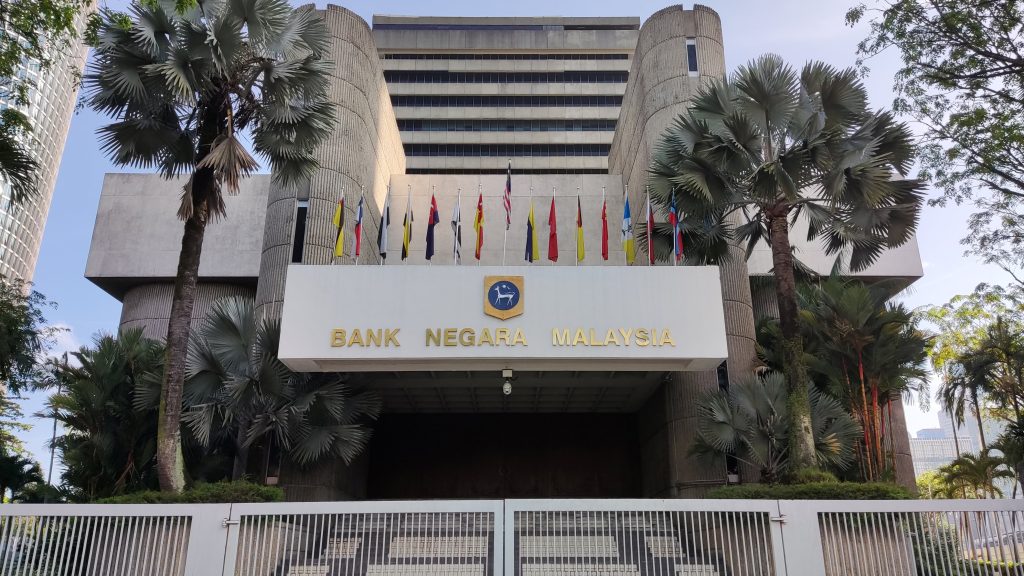
Bank Negara keeps interest rate at 3%

PETALING JAYA: As anticipated, Bank Negara has kept its overnight policy rate (OPR) unchanged at 3% after its fifth Monetary Policy Committee or MPC of 2024 meeting yesterday, pointing out that its policy stance remains supportive of the economy. On top of that, the central bank emphasised that the OPR level is also consistent with the current assessment of inflation and growth prospects, as it continues to keep its eye on ongoing developments relating to domestic inflation and growth trajectories going into 2025. Looking ahead, Bank Negara commented that the latest indicators pointed towards sustained strength in economic activity, driven by resilient domestic expenditure and higher export activity. “Going forward, exports are expected to be further lifted by the global technology upcycle, given Malaysia’s position in the semiconductor supply chain, as well as continued strength in non-electrical and electronic (E&E) goods,” it said. Besides that, it said tourist spending is expected to continue to increase, and employment and wage growth as well as policy measures remain supportive of household spending. At the same time, the regulator predicted that robust expansion in investment activity would be sustained by the progress of multi-year projects in both the private and public sectors, the implementation of catalytic initiatives under the national master plans, as well as the higher realisation of approved investments. Explaining matters from a bigger picture perspective, Bank Muamalat (M) Bhd chief economist Mohd Afzanizam Abdul Rashid believes that keeping the OPR steady is the correct move at the current juncture. He mentioned that this was because the central bank’s decision was primarily driven by domestic factors, outlining inflation dynamics as a component to keep an eye on. With subsidy rationalisation of the RON95 fuel still being held back, Afzanizam said: “Since petroleum accounts for 5.5% of the total consumer price index (CPI) weight as compared to diesel’s 0.2%, the changes in RON95 is expected to have greater impact on inflation.” Given that Malaysia has continued to chart strong growth in the second quarter of 2024 (2Q24) and the trend is likely to continue into the latter half of the year, he cautioned that the impression is that the balance of risks for inflation is tilted to the upside. “For now, the domestic factors have been quite favourable and the inflows of foreign funds into our capital market suggest that market confidence would translate into an appreciation of the ringgit as well as improved sentiment among businesses and households,” said the economist. Earlier in the week, economists Julia Goh of UOB Global Economics and Markets Research and Prof Geoffrey Williams had both voiced their support for Bank Negara’s “balanced” policy, with the former believing the OPR rate would provide further support for the local currency. Williams, meanwhile, had advocated for a steady monetary policy in the present environment, saying it was unnecessary at this point in time to effect a change in rates. He said inflation was hovering within the expected range in the midst of a growing economy, while the financial sector has also remained sound, before cautioning that a lowering of the OPR may rewiden the interest rate differentials to the detriment of the ringgit’s recent strengthening. Concurrently, Bank Negara reported that the higher intermediate and capital imports will further support export and investment activity. Elaborating on inflation, it said spillover effects from the diesel price adjustment to broader prices have been contained, given effective mitigation and enforcement measures to minimise the cost impact on businesses. “For the year as a whole, average headline and core inflation are expected to remain within the earlier projected ranges and are unlikely to exceed 3%,” it added. Externally, the central bank said global growth is expected to be sustained by positive labour market conditions, moderating inflation and less restrictive monetary policy. Global trade recovery is expected to continue, supported by both E&E as well as non-E&E products, although it remains subject to downside risks, mainly from further escalation of geopolitical tensions, volatility in global financial markets, and slower growth momentum in major economies, said Bank Negara.–THE STAR

News

Renting expected to gain popularity

KUALA LUMPUR: Renting a place to stay or a house could become more mainstream among the population, moving forward, in line with developments that are seen in other parts of the world. This could happen following several macro developments in Malaysia on falling birth rates, a present level of high home ownership, the trend towards smaller families among married individuals, increased number of adults choosing to stay single or marry later and affordability. These recent developments were heard at the real estate forum titled “Form to Future” organised by UEM Sunrise in Kuala Lumpur yesterday. But Knight Frank Malaysia’s executive director for research and consultancy Amy Wong said while renting can become more popular among people in the main cities such as Kuala Lumpur, she believes owning a home will still be the main choice for people in the smaller second-tier cities such as Ipoh, Kuantan or Melaka. “Home ownership is at an all-time high at 76% but the other 24% may be waiting to inherit. But then also what is critical if it is about inheritance is to develop homes that can sustain through the generations. “So this means developing good quality homes and not disposable homes,” Wong told StarBiz on the sidelines of the forum yesterday. “I think the trend towards renting will be in the main cities such as Kuala Lumpur. But in the other second-tier cities, it will still be very much about home ownership. “But because we are living in the city, we may feel it is a rental market but this is also because we have so many investors who own units. If there is no robust rental market, then it would leave us with empty units which is another problem,” she added. Earlier in the forum, Urbanmetry’s founder and chief executive officer Koh Cha-Ly said this is a pertinent question to grasp following the ageing population trend society is moving towards. “One thing about the ageing population in Malaysia is that of the 76% or so home ownership levels, what will happen to these (owned) houses when these people are not around anymore? “We are looking at the largest generation in Malaysia that will inherit a home in the next 10 to 20 years and it is going to be the largest number of people who will be born with a house,” Koh said. “They will either inherit it from their parents or inherit land. And honing in further, what will happen to these homes if everybody buys a new house or vice versa? “This is one question that the industry should start thinking of. It is not unprecedented. If you look at other ageing countries such as Japan, Europe or South Korea, they all have this problem and solutions have already been found,” Koh added. She also highlighted that the people who would inherit a home will likely refurbish or renovate it themselves and with the advent of artificial intelligence, the barriers of entry to home development in terms of knowledge of knowing what to do or where to get the approvals or source the relevant materials will be lowered. “To a certain extent, it is no longer a competition about if I can build a house at a cheaper price per sq ft. “This is not enough for the tech-savvy younger buyer because the generation which will inherit land or a house has a chance of outcompeting in terms of price per sq ft construction,” Koh said. Commenting on this, executive director of Socio-Economic Research Centre and veteran economist Lee Heng Guie said with the high home ownership rates, it is likely the younger generation may already not feel a need to own a home anymore. “They may think otherwise since they can’t afford it. So they might opt to rent a house or room instead. “Malaysia’s population growth is 1.1% and with declining fertility rates, there are concerns that this will have an impact on productivity and labour force participation which will impact housing demand along with the ageing population. Aged-care facilities and community living will be in demand here moving forward,” Lee said. Meanwhile, Bursa Malaysia’s director of the origination and listing division Leong See Meng suggested that given these developments, property developers should not just rely on incomes from property development as it can be quite lumpy. “To iron out the lumpiness, perhaps for the overhang units, they can be converted to rental housing or rental housing with an exit such as rent-to-own programmes. “There is no harm in doing this, and if you come to Bursa Malaysia you can always do a secondary issuance, rights issue or private placement to fund this to take up the overhang units,” Leong said at the forum. “Over time, this can also be a robust business to be translated to a rental housing real estate investment trust or REIT, for example. “And if it happens, it will be the first in the country – not only for the sponsoring developer but also for Bursa Malaysia. This can potentially be replicated and is sustainable as well, moving forward,” Leong added. Commenting further on this, Pelaburan Hartanah Bhd’s chief investment officer Norani Mustapha said at the forum that this was a global megatrend that had not reached Malaysian shores. In Tokyo, New York City and London, people can’t afford to buy houses or flats and they’re mostly renting. “And institutional investors are actually going in where they actually own the block and get a property manager to let out the space to whoever is interested,” Noraini said.–THE STAR

News

JCorp appoints Najmie Noordin as first chief learning officer

KUALA LUMPUR: Johor Corporation (JCorp) Group has appointed Najmie Noordin as its first chief learning officer (CLO). In a statement, JCorp said the new CLO role highlights its commitment to innovation and meeting evolving corporate learning needs as part of its transformation journey. The division includes JCorp Academy (JCA), Johor Skills Development Centre (JSkills), and CEREBRUM, JCorp’s innovative think-and-do tank. Najmie holds an MBA from the University of Manchester and a Bachelor’s Degree in Law (Hons) from Universiti Teknologi MARA (UiTM). His expertise spans people management, sales planning, branding and marketing. Prior to joining JCorp, Najmie served as chief executive officer (Group) at Cosmopoint Sdn Bhd, where he also held the position of chief operating officer (Group).–THE STAR

News

MCMC in final stages of evaluating second 5G tenders, says Fahmi

KUALA LUMPUR: Communications Minister Fahmi Fadzil announced that the Malaysian Communications and Muia Commission (MCMC) is in the final stages of evaluating tenders for the country’s second 5G rollout. “We expect an announcement within the next few weeks on the operators selected to develop the second 5G network,” he told reporters after the launch of CIMB’s Kita Bagi Jadi initiative here. Last month, it was reported that four major mobile network operators (MNOs) had submitted bids to develop the second 5G network: CelcomDigi Bhd, Maxis Bhd, UMobile, and Telekom Malaysia Bhd. Fahmi reiterated that the telecommunications companies involved had agreed on several key principles before acquiring shares in Digital Nasional Berhad (DNB), originally set up as the national 5G wholesaler, which is a prerequisite for bidding on the second rollout. These principles include ensuring that the services offered in the second network will not cost more than those currently offered by DNB. In May last year, Putrajaya agreed to introduce a second 5G service provider to move towards a two-network model. Meanwhile, Fahmi highlighted that the ministry’s focus under the 2025 budget includes improving internet access in schools and higher education institutions. “We are prioritising the telecommunications sector to ensure that schools and higher learning institutions receive the best possible internet access.” He also noted the ministry’s commitment to the creative industry, citing the success of initiatives like the Film in Malaysia Incentive, which he believes has laid a strong foundation for growth in the creative sector. Deputy Communications Minister Teo Nie Ching previously stated on August 20 that the programme has attracted significant foreign investment and boosted film production activities within the country.–FMT

News

ByteDance taps banks for $9.5 billion Asia dollar corporate loan, sources say

TikTok-owner ByteDance is tapping banks for a $9.5 billion loan that would be the biggest dollar-denominated corporate facility in Asia ex-Japan, two sources with knowledge of the matter said on Monday. Citigroup, Goldman Sachs and JPMorgan are the financing coordinators, which carry a tenor of three years and can be extended to up to five years, the sources, who did not want to be named because the discussions are confidential, said. Bloomberg News reported that the loan will be partly used to refinance an existing $5 billion dual-tranche facility.–REUTERS

Investment & Market Trends, News

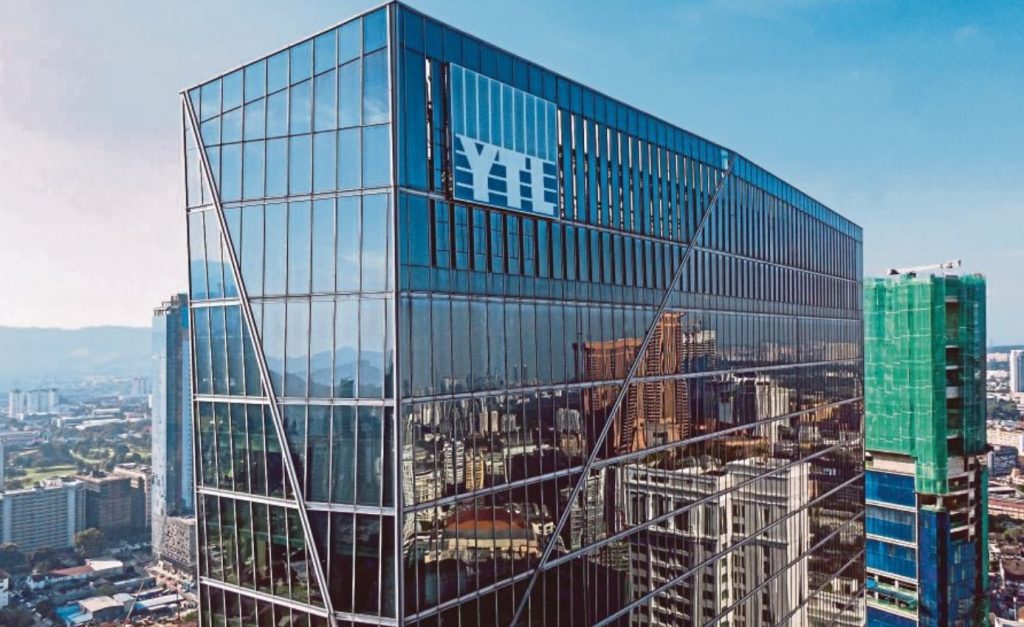
YTL Corp Share Prices Up 13 Sen Following Net Profit Surge

KUALA LUMPUR: YTL Corporation Bhd’s (YTL Corp) share prices rose in the morning session following the announcement of its net profit almost doubling to RM2.14 billion in the financial year ended 30 June 2024 (FY2024) from RM1.09 billion in FY2023, mainly boosted by stronger utility business. As of the morning on 22 August, YTL Corp’s share prices added 13 sen to RM3.19 with 8.24 million shares traded. The integrated infrastructure developer also said that its revenue increased to RM30.52 from RM29.61 billion previously. “Going forward, the group expects the performance of its business segments to remain resilient as its major business segments are substantially engaged in essential services and it will continue to closely monitor the related risks and impact on all business segments,” it said. — BERNAMA

News

HK Tycoon Cheng’s family Office Appoints Son to Co-CEO Role

HONG KONG: The private investment vehicle of Hong Kong billionaire Henry Cheng’s family has appointed one of his sons as co-chief executive officer, the latest development in the family’s closely-watched succession saga. Christopher Cheng Christopher Cheng will be in charge of North Asia investment for Chow Tai Fook Enterprises, according to a statement on Friday (Aug 30). The office also appointed Patrick Tsang – an in-law to the family – as the head of Americas, Australia and Europe. Gilbert Ho, co-CEO of infrastructure-to-insurance conglomerate NWS Holdings, will look after corporate functions and operations. Four of the elder Cheng’s children now lead key parts of the family’s sprawling business empire. Adrian is the CEO of real estate developer New World Development Co, Sonia serves as a joint vice-chairman for Chow Tai Fook Jewellery Group and Brian is co-CEO of NWS. Henry Cheng remains in charge of the family office and chairman of all three companies. The family has been embroiled in a succession saga following Henry Cheng’s public statement that he is still looking for an heir and that he may bring in outside talent. That has put Adrian in the spotlight, who was widely seen as the strongest candidate to take over the family’s business group. The elder Cheng said he has closely worked with the three new leaders of Chow Tai Fook Enterprises in different parts of the family business, and that the office strives to create a positive impact and drive results for its stakeholders and wider communities, according to the statement. –Bloomberg

ESG, News

Malaysia Can Champion Sustainable Practices Via Aerospace Industry, Says Deputy Minister

KUALA LUMPUR: Malaysia could champion sustainable practices by leveraging its strength in the aerospace industry through regional collaboration across ASEAN. Deputy Minister of Investment, Trade and Industry (MITI) Liew Chin Tong emphasised the importance of sustainability in the aerospace industry as it adopts global demands for greener practices, adding that trends like sustainable aviation fuels, electrification and carbon-neutral technologies are shaping the future of flight. “Malaysia has a unique opportunity to lead the region in these advancements when we assume the ASEAN Chairmanship in 2025. “By leveraging our strength, we can champion sustainable practices, foster regional collaboration and accelerate the adoption of green technologies across ASEAN,” he said. Liew said Malaysia should not only adopt technology but also strive to become an innovator in the industry. He noted that the aerospace industry can be constrained by the fact that there are ultimately only a few global players making most of the planes and industries in Malaysia are vertically linked to the global giants as suppliers. “But that must not stop the Malaysian aerospace industry from horizontally linking with other industries in Malaysia such as the semiconductor industry or those involved in developing materials, speciality chemicals or critical minerals. “There is also much potential to connect the palm oil industry to develop the sustainable aviation fuel industry,” he said. Liew added that through these horizontal linkages, Malaysia could innovate and create new products, processes or materials with Malaysian intellectual property. “Malaysia does not just want to be a manufacturing hub, we aspire to be a nation that creates,” he added. — BERNAMA

Investment & Market Trends, News

Tune Protect driving future performance with a focus in Travel

KUALA LUMPUR: Tune Protect Group Berhad’s (“Tune Protect” or “Group”; TUNEPRO, 5230) financial results for the second quarter of the financial year 2024 (“2Q24”) were affected by one-off impairments from the Group’s subsidiary Tune Protect Ventures (“TPV”) and its associate company, Tune Protect Thailand (“TPT”), and abnormally high fire losses. Insurance revenue also declined 6.7% year-on-year (“YoY”) which led to a Loss Before Tax (“LBT”) of RM10.3 million. How Kim Lian (“How”) Tune Protect Group’s Chief Executive Officer elaborated further on the key factors affecting the Group’s 2Q24 financial performance.   Normalised numbers, excluding one-off impairments and claims   “The Group’s profitability was impacted by the one-off impairments from TPV of RM3.0 million, as well TPT of RM4.9 million. Our net claims incurred were also higher as we experienced two abnormally large fire losses in 2Q24, contrary to 2Q23 where we had benefitted from the better-than-anticipated claims experience from the Tenang Personal Accident (“Tenang PA”) scheme, which had since been discontinued,” said How.   Consequently, the Group’s combined ratio increased by 9.9% YoY due to the higher net incurred claims and attributable expenses. Increased acquisition cost ratio also contributed to the increase in the Group’s combined ratio, partially offset by a lower reinsurance ratio.   “The lower reinsurance ratio was due to the Group’s gradual exit from the Large Industrial Risk business leading to savings in reinsurance premiums. If we were to remove the anomalies mentioned above from the equation, overall, the Group would have recorded a slight Profit Before Tax (“PBT”) of RM1.5 million,” added How. Tune Protect Group (RM’mil)            2Q24 2Q23 YoY 1H24 1H23 YoY Insurance revenue 95.4 102.3 -6.7% 190.0 224.3 -15.2% Net incurred claims and attributable expenses (50.9) (39.8) 28.1% (108.0) (87.8) 23.0% Amortisation of insurance acquisition cash flow (34.9) (36.6) -4.7% (66.9) (68.9) -2.9% Allocation of reinsurance premiums (14.5) (21.2) -31.4% (29.3) (57.0) -48.6% Net insurance service result (4.9) 4.8 >-100% (14.2) 10.4 >-100% Combined ratio 105.2% 95.3% 9.9% 107.5% 95.4% 12.1% Total investment income 7.0 8.7 -19.7% 16.4 18.0 -8.9% Total other income and expenses (7.3)     (2.5) >100% (11.7) (12.6) -7.0% Share of results1 (5.0) 2.0 >-100% (4.8) 1.0 >-100% Profit/(loss) before tax (10.3) 13.0 >-100% (14.3) 16.8 >-100% Profit/(loss) after tax (10.1) 11.2 >-100% (14.0) 14.4 > -100% Notes: Share of results of an associate (TPT) and a joint venture company (TP EMEIA) Amounts presented may not foot due to rounding.   Stable investment performance and strategy   The Group maintains a conservative investment strategy while looking for opportunities to enhance its overall investment returns. Moving forward, it plans to progressively increase its investment into Low-Risk Unit Trust Funds, with underlying investment predominantly in Malaysian Government Securities, Government Investment Issues, and Government Guaranteed Corporate Bonds.   “The Group’s investment performance in 1H24 has been stable and we expect more of the same in 2H24. We will be rebalancing some of our money market or fixed deposits into Malaysian government guaranteed bond funds where we are aiming for a reallocation mix of 2% in deposits and 98% in low-risk unit trust funds by the end of 2024,” said How.   Capitalising on market gaps and opportunities   The Group is reprioritising its efforts in the Travel segment with various initiatives in key growth areas such as championing the regional travel ecosystem. For example, it is focused on increasing the take-up rate (“TUR”) through existing distribution channels, such as AirAsia.   “Through in-depth analysis of our current Travel business, we acknowledge that more can still be done to address the gaps in the take-up rate for the Group’s airline business such as AirAsia. Now that we’ve seen where the gaps are, we will be actively rolling out various initiatives to increase the take-up rate and grow our Travel business further,” said How.   To capitalise on various market gaps and opportunities identified by the Group, there are exciting plans to optimise the airline market by seizing new opportunities based on flight durations and meeting the demands of customers with new products based on certain behaviours and lifestyles.   For medium-haul flights, there are opportunities to reprice bundled products to be more competitive by offering better product benefits. For international short-haul flights, the Group is benchmarking the affordability of insurance relative to air tickets and premiums to airfare ratio. It is conducting some experiments to increase the TUR by adjusting prices to match affordability.   “We are also actively looking at addressing market needs with unique new products. For example, for budget-conscious non-tourists we plan to offer gadget protection at low premiums on top of our travel insurance. For eventgoers and concertgoers, we plan to offer event protection at affordable premiums. For affluent travellers, we plan to offer cancellation insurance,” explained How.  

Scroll to Top

Subscribe
FREE Newsletter