News

ESG, News

Ecological Conservation Efforts Rewarded With Better Environment

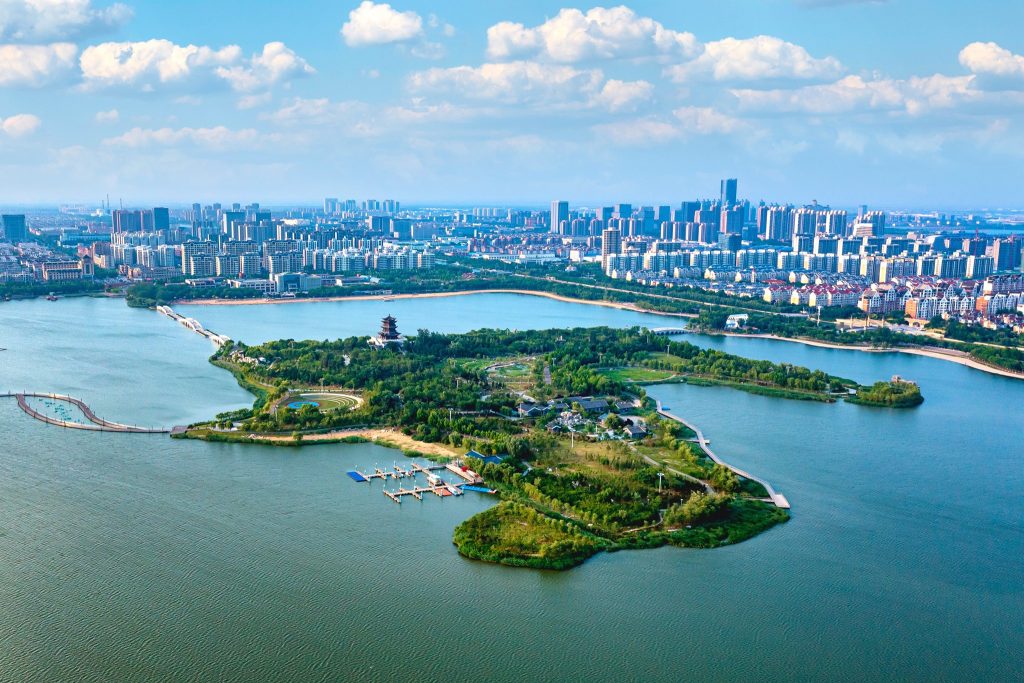
DONGYING: Dongying in East China’s Shandong province has been making significant strides in implementing the national strategy for the protection of the Yellow River in recent years, focusing on advancing ecological conservation and promoting green, low-carbon and high-quality development. Its efforts have resulted in a remarkable improvement in the quality of the ecological environment, with steady progress made in the construction of an ecological civilization and the continuous enhancement of the environmental governance system. The heart of these efforts lies in the building of the Yellow River Delta National Nature Reserve, where a diverse array of bird species has found sanctuary. Due to the comprehensive ecological restoration network established around the reserve, the bird population has doubled since the reserve’s inception, showcasing the success of conservation and restoration efforts. With the creation of the Yellow River Estuary National Park, the city has pioneered wetland restoration models specific to the Yellow River Estuary. Through 17 wetland restoration projects, the reserve has replenished 469 million cubic meters of water, connected over 241km of water systems, and restored 282,000 mu (18,800 hectares) of freshwater wetlands, among other achievements. What was once barren or saline-alkali lands have been transformed into lush wetlands teeming with biodiversity, creating a paradise for birds. A total of 373 bird species have been identified in the reserve. Dongying has also made targeted efforts to combat severe pollution by enhancing the coordinated control of PM2.5 and ozone. By emphasising targeted and scientific atmospheric governance, the city has seen stable improvement in key environmental indicators. To drive ecological conservation, the city has been developing a green, low-carbon economy. It has accelerated the implementation of the “dual carbon” strategy of peak carbon emissions and carbon neutrality, with 20 key emission units in the power generation sector participating in national carbon emission trading. Furthermore, Dongying is focusing on innovative approaches in the construction of a park city, aiming to create a livable and prosperous environment while enhancing modern urban governance.

News

ABB to Upgrade Gas Turbine Control System to Boost Reliability and Efficiency at Singapore Power Plant

ZURICH: ABB has been commissioned to upgrade one of the turbine control systems at the 1,300 MW Keppel Merlimau Cogen (KMC) combined cycle gas turbine on Jurong Island in Singapore, to improve efficiency and reliability. The scope includes replacing the existing Egatrol 8 turbine control system with Egatrol X, which is based on the ABB Ability™ System 800xA® flagship distributed control system (DCS) and modern AC800M portfolio. Transferring full functionality from the existing application to the updated solution allows the customer to avoid downtime and install the control system in the shortest possible time. The project involves upgrading DCS components while keeping the overall structure as far as possible. Instead of having to rebuild the entire system in one go, ABB will provide a flexible, customized approach whereby older components are replaced as and when needed. This prevents unnecessary downtime, avoids the costs associated with loss of operation, and ensures a stable, reliable energy supply with high availability. All control settings are adopted through an in-house software code conversion process, eliminating time-consuming adjustments of system parameters. The user interface, based on System 800xA, only requires minor adjustments, which eliminates operator retraining. The hardware design, featuring ABB’s latest I/O evolution kit, significantly reduces commissioning time and eliminates the risk of re-wiring errors. As part of Singapore’s commitment to achieving net zero emissions by 2050, the government is driving business transformation through grants for energy efficiency and emissions reduction. It is also investing in low carbon technologies to progress the energy transition. With power generation currently accounting for 40 percent of carbon dioxide emissions, the country plans to diversify its energy supply with a focus in four areas: solar, regional power grids, emerging low-carbon alternatives including hydrogen, and natural gas. While natural gas continues to play an important role, as the country expands its energy portfolio, the KMC project showcases how ABB enables customers to enhance energy and carbon efficiency in gas power generation. This initiative not only safeguards current energy security but also supports the integration of renewable energy into the grid, driving forward shared energy transition goals. “As a global leader in the DCS market, ABB has both the expertise and technology to deliver flexible, customized upgrade installations in the fastest and safest way available,” said Per Erik Holsten, President of ABB Energy Industries. “Turbines sit at the heart of a power plant and our gas turbine control systems have been helping utilities to provide electricity to households across the world in the most efficient and sustainable way possible.” “We are pleased to renew the longstanding partnership between Keppel and ABB with the latest turbine upgrade project. Leveraging ABB’s strong domain knowledge, we are confident that KMC will experience a smooth and seamless migration to the updated system, which is critical to our productivity and ability to provide reliable power supply to the grid,” said Miguel Benito, Assistant Managing Director, Technical and Operations, Power & Renewables, Infrastructure, Keppel. This is part of KMC’s ongoing initiatives to adopt automation solutions to boost system reliability and responsiveness, to achieve enhanced efficiency, lower fuel costs, and a reduced environmental impact.

News

Fintech app adoption in SEA will reach 60% by 2030

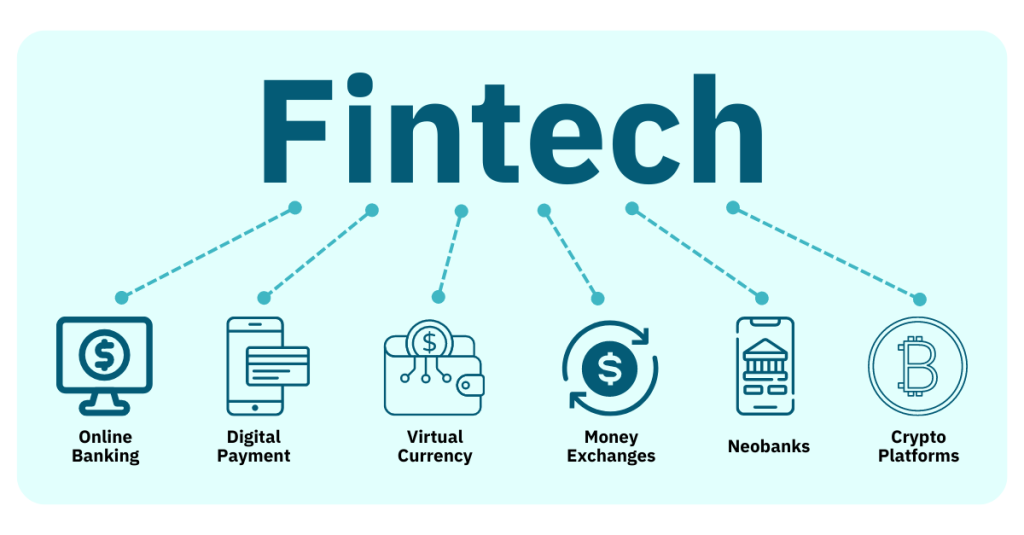
SINGAPORE:  According to the report, mobile fintech penetration in six countries of  Southeast Asia has more than tripled since 2019, reaching 49% in May 2024. The Philippines leads with 63%, followed by Malaysia (55%), Indonesia (49%), Thailand (45%), Singapore (45%) and Vietnam (32%). Analysts at UnaFinancial explain: “The leadership of the Philippines is due to several factors, including the large share of the unbanked population, regulatory efforts to develop digital financial technologies, a large proportion of young and tech-savvy population and a growing level of mobile and Internet penetration.” They add: “Indonesia also stands out with the highest growth rate of fintech users over the past 5 years. The level of mobile fintech app adoption increased from 9% in 2019 to 49% in 2024. Similar to the Philippines, Indonesia is actively developing fintech, supported by government efforts and a large share of the unbanked population.” The leading segments of fintech apps are digital wallets & payments (35%) and mobile banking (18%). The fastest-growing segment is lending apps, which showed an increase from 1% in 2019 to 5% in 2024. The lowest penetration levels are seen in investing and cryptocurrency trading apps (2% each), likely due to decreased investment activity amid the unstable global economic situation. UnaFinancial expects the share of fintech app users in Southeast Asia to grow to 60% by the end of 2030. The Philippines will continue to lead with 72%. Indonesia will take second place with 64%, followed by Malaysia (61%), Thailand (50%), Singapore (48%) and Vietnam (41%). The analysts considered data from data.ai on the number of active users of fintech applications starting from May 2019. In total, the sample included 8,740 apps (IOS + Android) across six countries in Southeast Asia (Singapore, Malaysia, Thailand, Indonesia, the Philippines and Vietnam).

Energy & Technology, News

FinVolution Takes Next-Gen Tech to Fight Deepfake-Driven Financial Crimes

SHANGHAI: Deepfake technology, an artificial intelligence tool capable of generating convincingly fake audio and video, is increasingly being used to perpetrate financial crimes worldwide, raising serious concerns about sophisticated fraud. In a notable incident reported by CNN earlier this year, a finance worker was tricked into transferring US$25 million during a video call with an individual posing as the company’s chief financial officer (CFO), who was actually a deepfake. Such an incident has intensified fears about the vulnerability of financial systems to advanced fraud techniques. Furthermore, global fintech platforms are confronting a rising wave of AI-driven criminal activities. FinVolution, a leading fintech company, has reported an increase in AI-generated attacks on its platforms and has significantly invested in deepfake detection technologies to combat this threat. The increasing prevalence of deepfake technology in financial crimes has been underscored by a report from Sumsub, an identity verification provider. Its latest annual report revealed that identity fraud cases involving deepfakes have increased tenfold from 2022 to 2023. The situation in the Philippines is particularly concerning, with a staggering 4,500% increase in attempted fraud schemes utilising deepfake technology. In China, identity fraud involving voice manipulation has outpaced facial deepfakes, with FinVolution intercepting over 1,000 such incidents in just a few months last year. Meanwhile, Southeast Asia is experiencing a surge in AI visual deception techniques, such as facial swaps, which pose new challenges to the security of digital financial services. FinVolution Vice President Lei Chen and head of its big data and AI division emphasised the urgency of the situation. “Globally, the technology to detect fake voices is not keeping pace with the technology used to create them. We are pushing for advancements in AI that can detect these fakes, aiming to align these defences with the capabilities of large-scale model applications,” Chen said. “Such efforts are vital for effectively safeguarding the security of public information and individual rights,” he added. In an effort to combat these threats, FinVolution Group has heavily invested in developing voiceprint recognition anti-fraud solutions tailored for financial scenarios. The company has taken a proactive approach by introducing its proprietary voiceprint recognition algorithmic model, which has been commercially utilised 2 years before external open-source models. The model has gained recognition within a mere 4 seconds across millions of transactions. Moreover, it supports multiple languages, including Indonesian, Chinese, Spanish, and more, and holds a particularly strong position in Indonesian and Spanish markets. FinVolution is also at the forefront of combating fraud in global financial markets with its tailor-made AI anti-fraud technologies. These cutting-edge services include advanced facial and document forgery detection and voice synthesis algorithms, which are integrated into apps of leading international brands. By leveraging facial recognition and voice verification, these AI-driven tools play a crucial role in preventing illegal impersonation and bolstering the effectiveness of risk management strategies. Notably, in Southeast Asian markets, FinVolution’s technologies stand out by accurately identifying and intercepting financial fraud activities with generative AI, achieving a detection accuracy rate of over 98%. In another proactive move to advance AI deepfake detection development, FinVolution is leading the charge in fostering industry collaboration. This includes hosting competitions and supporting academic research. For example, the company’s latest initiative – the 9th FinVolution Global Data Science Competition – zeroes in on deepfake speech detection and challenges global participants to leverage deep learning and AI adversarial techniques. This competition targets the accurate identification of falsified speech generated by the latest large-scale models, with increasing difficulty levels reflecting evolving threats. Notably, this year’s competition has been featured as part of the International Joint Conference on Artificial Intelligence (IJCAI) 2024 challenges. Looking ahead, FinVolution remains steadfast in its commitment to advancing deepfake recognition technologies, prioritising user safety, and fostering a secure financial environment on a global scale.

News

emart24 continues aggressive expansion into East Coast

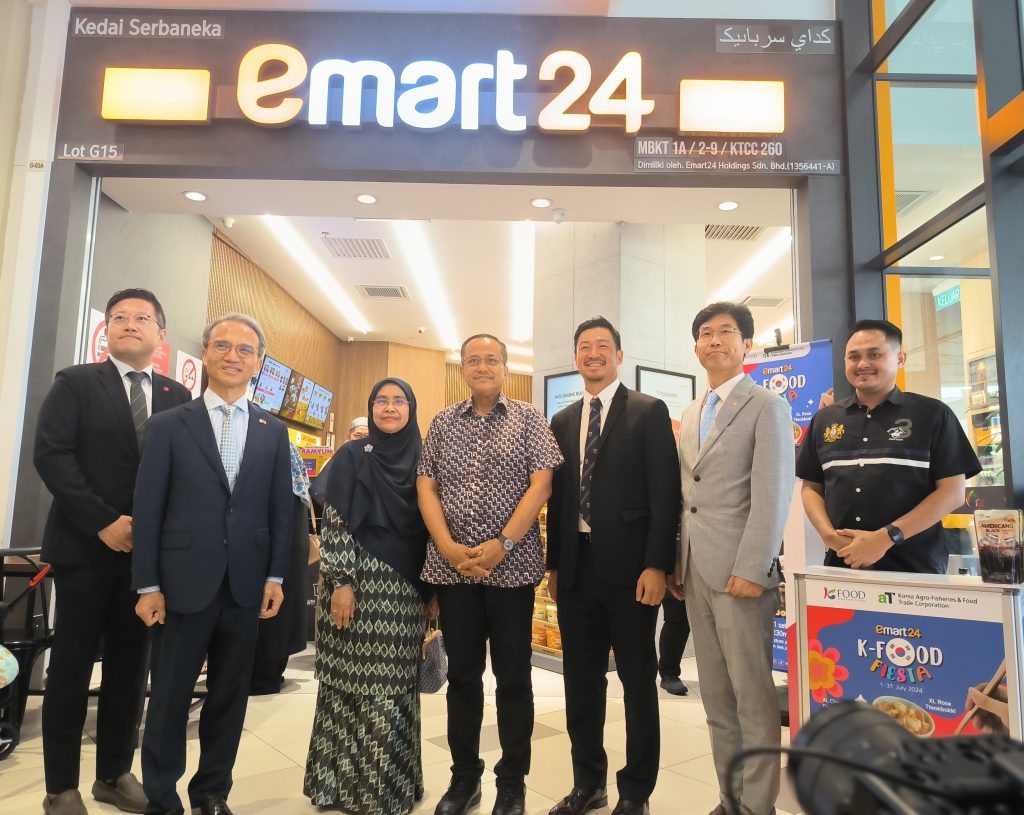
KUALA TERENGGANU: Popular Korean convenience store emart24 plans to open 17 more outlets on the East Coast this year due to strong customer demand for its affordable Korean street food and drinks made from halal ingredients. Chief executive officer of emart24 Holdings Sdn Bhd Vuitton Pang said this after a visit to emart24 at KTCC Mall here by Menteri Besar Dato’ Seri Dr Ahmad Samsuri Mokhtar and Ambassador of South Korea Yeo Seung-Bae recently.   “We are encouraged by the extremely strong response from Malaysian consumers especially those in Kelantan, Terengganu and Pahang. Being grateful for the tremendous support for emart24, we want to serve our customers wherever they are, even in the smallest towns,” Pang said.   emart24’s plans to increase its East Coast outlets from the current 28 to 45 by the end of this year will also create hundreds of jobs for locals. Its stores in East Coast now serves almost 300,000 customers each month.   “We plan to more than double our store count in Terengganu from seven to 15 by year-end while in Kelantan, we are already firm on opening six more to add to the current 14 stores there.    “For Pahang, we have earmarked three store locations already to make it 10 by year-end from seven currently,” he said, adding that the company was always open to proposals from property owners who felt there was a need for the store in their neighbourhood.   emart24 now has 65 stores in Malaysia and plans to expand its network to 300 within five years. “With our consistent quality and affordable Korean street food and drinks served in a modern sleek ambience, we are confident of meeting the tastes and preferences of Malaysian consumers,” Pang added.   Owned by Shinsegae Group, the largest retailer in South Korea, emart24 is the fastest-growing convenience store brand in South Korea with more than 7,000 outlets in various formats and store sizes. It entered Malaysia, its first overseas market, in 2021 and has adopted a tagline of Rasa Korea, Hari Ceria, to fit its brand position of being the “destination for tasty Korean Street Food to brighten up your day”. The outlet at KTCC Mall was a hive of activity during the recent K-Culture Festival held there and both the Menteri Besar and the Korean Ambassador tried the newly-launched Jjajajang Tteokbokki. Its other popular menu items are Cupbap, Corn Sausage, Korean Fried Chicken, pouch drinks and Ramyun which customers could prepare themselves at the store.

Investment & Market Trends, News

Malaysia on Track to Become ASEAN’s Data Centre Hub

KUALA LUMPUR: With Malaysia’s data centre industry projected to reach RM3.6 billion in revenue by 2025, it’s more important than ever to prepare local industry players for the expected growth and strategically place data centres throughout the country, accelerating the industry’s development. Recently, Deputy Communications Minister Teo Nie Ching said that Malaysia is on the right track in its aspirations to become a regional data centre hub. “RM76 billion worth of data centre-related investments have been approved by the Investment, Trade and Industry Ministry via the Malaysian Investment Development Authority (MIDA) from 2021 to March 2024. “From this, we see that more industry players are investing in the digital economy and a lot of existing data centre operators here are expanding their operations,” he said. “This is an opportunity to create more high-value jobs for Malaysians and at the same time, to ensure our place as a digital economy leader in ASEAN,” she added. According to Teo, creating an ecosystem for data centres and cloud services could potentially increase the number of industry suppliers in the country. Leading global provider of hyperscale data centre campuses, Vantage Data Centres is one that is making its presence known in Malaysia, with the development of the campus being part of the US$3 billion investment that was injected into the country. Digital Minister Gobind Singh Deo said that the growth in the data centre market in Malaysia experienced an expected compound annual growth rate (CAGR) of 13.92% from 2023 to 2029, presenting a huge potential for expansion. Attractive Market Among the many factors of Malaysia being an attractive location for data centre operations include the low electricity tariff, which is the lowest in ASEAN. On this, Savills Malaysia Managing Director Datuk Paul Khong said, “The average electric tariff in Thailand and Singapore are now well priced at 51 sen per kWh (THB3.99) and RM1.11 per kWh (S$0.3247) respectively. In comparison, Malaysia charges 33.7 sen per kWh and 20.2 sen per kWh during peak and off-peak periods, respectively, for high-voltage industrial usage.” Khong also added that favourable government policies in Malaysia, with tax incentives and subsidies, are an added bonus, saying, “Notable incentives given include a 100% tax exemption to eligible data centres and cloud business investments.” Furthermore, the abundance of industrial land in the north and south of the peninsula increases Malaysia’s attractiveness. “These industrial parks provide competitive land prices, alongside investment incentives supported by the government,” he added. Having this in mind, a prominent investment outfit, Qew Group Bhd is also making its mark in the telecommunications industry which further contributes in the digital landscape of the country. Currently, the Group operates 59 telco towers in Klang Valley, Sabah and Labuan with an asset value of RM59 million and generating an annual revenue of RM6.24 million. Having 37 sites fully operational and an additional 22 monopole structures scheduled for completion by 3Q 2024, the assets are under a 10-year contract with the option for renewal. “We are also involved in the fibre network operations in Kelantan, KELNET with a capital investment of RM45 million. To date, KELNET’s projected revenue and asset value are estimated to reach RM278 million over a period of 5 years,” said Qew Group Bhd Group Executive Chairman, Dato’ Dr Muhamad Iqbal. Additionally, Dato’ Iqbal highlighted that Phase 2 of the project anticipates the completion of 127 new towers and the deployment of a 100km fibre network by 2026, which is expected to generate an annual commercialisation value of RM5 million. These projects are outlined in one of the Group’s 3 strategic pillars, dubbed Bright Future, which also includes real estate development.

Investment & Market Trends, News

Vietnam’s Non-Life Insurance Segment to Remain Stable, Says Am Best

KUALA LUMPUR: Global credit rating agency, AM Best has maintained a stable outlook on Vietnam’s non-life insurance segment, citing accelerating non-life premium growth and increased demand for commercial lines insurance. In its latest Best’s Market Segment Report, ‘Market Segment Outlook: Vietnam Non-Life Insurance’, the rating agency notes the country’s Insurance Business Law as a recent regulatory reference supporting the stable outlook, as the newly adopted requirements on risk management, internal controls, internal audits and actuarial standards are expected to enhance risk governance and strengthen financial conduct. Property insurance was a key business growth driver in 2023, in which government spending on renewable energy, transportation, and other large-scale infrastructure projects are likely to drive greater demand for insurance coverage going forward. Vietnam’s non-life insurance market growth also should continue to benefit from the country’s reputation as an attractive destination for foreign direct investment (FDI). AM Best Senior Financial Analyst, Ken Lau said FDI inflows are expected to continue as one of the growth engines of the country’s economy, which in turn will bolster demand for commercial lines insurance. “Vietnam remains a magnet for FDI, as investors continue to seek global supply chain diversification,” he said in a statement. At the same time, market competition has eroded the underwriting profit margins of the motor and health insurance segments, owing partly to looser underwriting. Near-term pricing competition in these lines could constrain technical margins. The non-life insurance industry’s earnings also may be dampened by lower investment yields over the near term. The State Bank of Vietnam lowered the policy interest rate multiple times in the first half of last year and is expected to maintain an accommodative monetary policy stance over 2024. — BERNAMA

News

Kakao founder charged with stock manipulation in landmark case

SEOUL: South Korean prosecutors have indicted Kakao Corp. founder Brian Kim on charges of stock manipulation, kicking off a watershed case that’s transfixed South Korea’s young internet industry. Prosecutors formally charged the entrepreneur with market violations during his company’s takeover battle for SM Entertainment Co., Yonhap News reported Thursday (Aug 8). Kim was allegedly involved with an attempt to buy and push SM stock above a rival offer of 120,000 won (US$87) from BTS-agency Hybe Co. Executives carried out that alleged maneuver over a total of four days, in mid-February 2023 as well as later that month, Yonhap said, citing prosecutors. The billionaire who created Korea’s dominant social media platform is at the center of one of the country’s most sensational corporate cases in years. Kim was arrested in July for his suspected involvement in that alleged scheme – making him the highest-profile tech executive behind bars since prosecutors went after Samsung Electronics Co.’s Jay Y. Lee. Thursday’s indictment paves the way for an eventual trial, a date for which will be set later. Kim will remain in detention till then. Kakao’s shares gained as much as 2.1 per cent after the company reported an 81 per cent surge in June-quarter net income. But longer term, the outcome of the case could have serious implications for a US$25 billion business empire spanning several listed firms and a plethora of internet spheres. Kakao had pursued the deal to secure the content it needed to extend its dominance in markets from music and shopping to ride-hailing. Instead, it triggered legal scrutiny, and raised questions about the future of up-and-coming innovators as they challenge the country’s conglomerates. A representative for the prosecutors’ office confirmed in a message that Yonhap’s report was accurate. Kim and Kakao spokespeople have repeatedly denied the allegations and said no illegal activities transpired during the acquisition of SM. On Thursday, a company representative said it will explain the truth about what happened during the impending trial, and work to minimize any management disruption with Chief Executive Officer Chung Shina at the helm. It’s a stunning turn for the 58-year-old Kim who amassed a fortune of US$14.4 billion at its peak, earning his place as Korea’s richest person. As of this week, that had dropped to about US$3.4 billion, according to the Bloomberg Billionaires Index. His arrest also reflects a shift in attitude in South Korea. Kim and fellow entrepreneurs like Coupang Inc.’s Bom Kim were once hailed as pioneers who prevailed against Silicon Valley titans to create a Korean-centric internet – a high-growth, splashier alternative to the steel firms, chipmakers and shipbuilders that power Korea’s economy. But as their influence grew, government officials grew concerned about the way internet services were displacing smaller merchants and incumbents in banking, retail and entertainment. In 2022, a widespread outage after a datacenter fire exposed how much of the population relied on Kakao for basic needs such as news and commerce. Kim has since 2021 dealt with a host of investigations into everything from whether he was paying his taxes to alleged monopolistic behavior. Then came the bidding war against Hybe, the agency that represents the hit boy band BTS. Financial regulators have accused executives at Kakao and unit Kakao Entertainment Corp. of buying 240 billion won (US$173 million) of stock in SM at the time, to disrupt Hybe’s offer. The courts decided to detain Kim while investigators worked out the details. Meanwhile, critics pointed out Kakao’s extraordinary number of affiliates with cross-shareholdings – more than 120 according to official data. That was reminiscent of the way in which the nation’s biggest conglomerates, or chaebol, expanded their dominance in past decades – a practice that’s spurred government crackdowns because of its potential for abuse. – Bloomberg

News, Property

Brilliance Capital Announces Sale of Prime Office Units at Samsung Hub and The Adelphi

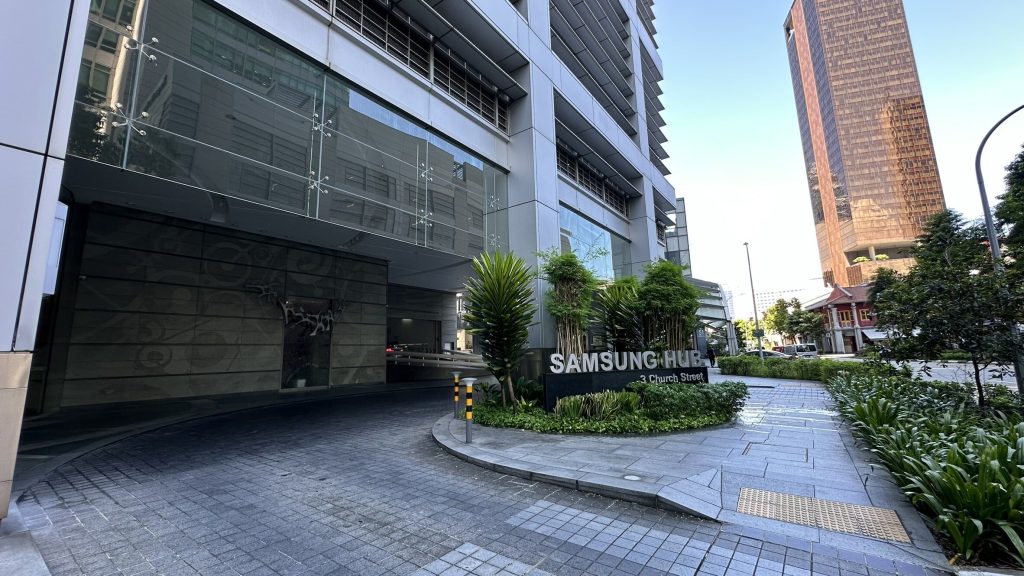
SINGAPORE: Brilliance Capital announced the sale of prime office units at 2 prestigious developments: Samsung Hub and The Adelphi that offer exceptional opportunities for investors and businesses looking to establish a presence in Singapore’s most sought-after commercial areas. Samsung Hub is considered one of the most coveted office spaces in Singapore that is available for strata purchase comes with a 999-year tenure and is an impressive 30-storey commercial development situated prominently in Singapore’s Central Business District. As a focal point of the CBD, Samsung Hub is equidistant from key areas such as the Orchard Road Shopping Belt and the Bugis-Rochor burgeoning arts, cultural, and rejuvenated business district. Strategically located in the heart of the bustling financial district, Samsung Hub offers unparalleled access to major financial institutions, corporate headquarters, and a diverse array of dining and retail options. The office floors are occupied by a broad spectrum of businesses, including multinational corporations, financial service firms, legal practices, and technology companies, making it a dynamic hub for commercial activity. Located on the high zone floors at Samsung Hub, this 3,595 square feet office unit is sold with existing tenancy and available on a private treaty basis, with a guide price of S$4,350 per square foot. Meanwhile, The Adelphi is an iconic 10-storey mixed-use development comprising a five-storey retail podium with a six-storey office block. It is located in the heart of the Civic District and within the Business and Financial Centre of Singapore, as well as the burgeoning Arts, Cultural, and Rejuvenated District. The office floors are characterised by occupiers in a diverse range of businesses, including corporate offices, law firms, and corporate secretarial companies, among many others. The advantageous location of The Adelphi places it in proximity to several prominent shopping and recreation destinations. Enjoying the benefits of a prime location in a bustling commercial district, The Adelphi offers a dynamic blend of commercial, cultural, and hospitality offerings, ensuring high visibility and footfall for businesses within the retail quadrant, easily accessible to both locals and tourists. The building also provides ample parking with 382 carpark lots available for its occupants and visitors. The two subject units, approximately 2,034 square feet and 2,852 square feet, combine to form a contiguous space of approximately 4,887 square feet. They feature ample natural light, expansive views of St Andrew’s Cathedral and North Bridge Road, a reception area, open office space, partitioned offices, conference rooms, a pantry area, discussion areas and storage space. The combined guide price for these units is S$14.4 million, translating to approximately S$2,950 psf. These units are available for sale individually or collectively. Brilliance Capital Pte Ltd Founder and Executive Director, Sammi Lim commented, “Samsung Hub has always been an extremely sought-after office asset where demand exceeds supply. The ownership and tenant profiles are unparalleled, making it the ideal choice for businesses seeking a prestigious address with strong neighbours. “We have also witnessed significant capital appreciation of sale prices over the past 10 years, and this is expected to continue for a scarce commodity that offers a 999-year tenure, which is akin to freehold. This property represents an exceptional opportunity for companies looking to establish or expand their presence in Singapore’s most dynamic commercial hub,” she said. Lim further added, “The offering of two adjoining corner units at The Adelphi is particularly compelling in today’s market. Also featuring a 999-year tenure and a strategic location, these units benefit from superb public transportation links. We anticipate strong interest from both investors and owner-occupiers. This is an excellent opportunity for owner-occupiers to acquire an ideally sized office asset in a highly sought-after location.” With the limited availability of quality freehold and 999-year office properties, along with the convenient accessibility offered by both The Adelphi and Samsung Hub, it is expected to have robust potential for capital and rental appreciation.

Investment & Market Trends, News

MADANI Economy Framework Informs Govt Policies, Programmes to Strengthen Economy

By Zarul Effendi Razali and Durratul Ain Ahmad Fuad KUALA LUMPUR: The MADANI Economy framework is viewed as an integral part of the government’s continuing rollout of policies and programmes that help to sustain the growth and resilience of the Malaysian economy. Malaysian Economic Association President Dr Yeah Kim Leng said the framework is seen as the fundamental policy framework that provided the setting to guide the formulation of various plans, roadmaps and blueprints that were subsequently rolled out. “Efforts under the framework to raise production, boost productivity and move up the value chain in the supply-side or production sector, along with a steady rise in employment, wage and incoming in the household or consumption sector, will translate into poverty eradication, improved livelihood and well-being, and higher overall gross domestic product (GDP). “Thus far, the country’s median income growth has kept pace with inflation although the B40 and the lower half of the M40 income groups may grapple with the rising cost of living, depending on their geographical location, lifestyle, family size and age group,” he told a local news agency. Year of Implementation The National Council of Professors fellow Prof Dr Azmi Hassan concurs with Finance Minister III Datuk Seri Amir Hamzah Azizan’s statement that 2024 is the starting point for the execution of the MADANI Economy framework. “I think the (framework) is still in the works in the first 6 months of the year so there is not enough to gauge the progress. “But looking at the economic growth via GDP, which grew at a higher rate of 4.2% in the first quarter of 2024 compared with 2.9% in the fourth quarter of 2023, there was a lot of improvement,” he said. In February this year, Amir Hamzah said 2024 will be about executing the MADANI Economy framework and all the policies that the government put out last year, as the government has established clear guidelines for the economy to move forward. “We are confident that we will be able to move along the path to execute the MADANI Economy framework this year and all the policies that we put out last year,” Amir Hamzah said. Additionally, Azmi opined that government will or political will is very important for the implementation of the MADANI Economy framework, adding that the implementation of the Fiscal Responsibility Act (FRA), which was passed in Parliament in October last year, would portray an efficient and responsibility government under Anwar’s leadership. “The government knew that targeted subsidies for diesel would be a sensitive issue but the subsidy (rationalisation) was implemented for a better future. “According to the FRA, the government wants to reduce the fiscal deficit to four per cent this year and 3% in the next 2 years. “The government is also committed to reducing the national debt to 60% of GDP. I think that’s a strong message from the government that it wants to implement the MADANI Economy framework,” he said. Enhancing fiscal position, people wellbeing On the targeted diesel subsidy implementation, Yeah said the move, besides strengthening the government’s financial and fiscal positions, also resulted in a more efficient allocation of scarce resources due to reduced leakages and more productive spending on development rather than subsidising consumption. In addition, he said the economy will also be more resilient in withstanding future oil price shocks. Bank Muamalat Malaysia Bhd Chief Economist Dr Mohd Afzanizam Abdul Rashid said the government is cognisant of the plight faced by society as prices continue to remain elevated. This, he said, has led to greater allocation on cash transfer programmes such as the Sumbangan Tunai Rahmah (STR) and Sumbangan Asas Rahmah (SARA) in order to alleviate the financial burden experienced by low-income households. “The Employees Provident Fund Account 3 withdrawal is also being implemented, as the government recognises the need to accord the rakyat some flexibility to use their retirement savings. “On that note, the short-term needs have been looked at. Now it’s about how to use the savings from the subsidy rationalisation to improve our education, healthcare and infrastructure. Again, it will take some time for us to see the results,” he said. According to Mohd Afzanizam, cash transfer programmes such as STR and SARA, along with targeted subsidies have been the main tools for the government to minimise the impact on the rakyat arising from the policy changes on subsidies and taxes. “Such policy changes are not easy to implement, but it is the right thing to do in order to reduce leakages and ensure only those who are deserving will get the financial aid. “The lifting of diesel subsidies was more like the government demonstrating its commitment to fiscal discipline, which should create more space for spending in areas that will bring better productivity gains in the mid to long term. This may include spending on education, healthcare and infrastructure,” he said. Medium-term targets and NIMP 2030 Anwar, who is also Finance Minister, said the MADANI Economy: Empowering the People initiative is a comprehensive plan for Malaysia to address various challenges and issues related to its competitiveness and investment attractions, as well as outlining actions to address current issues that affect people’s lives. The initiative sets 7 key performance indicators as medium-term targets to be achieved within 10 years. They include Malaysia being in the top 30 of the world’s largest economies, the top 12 in the Global Competitiveness Index, the top 25 in the Human Development Index and the top 25 in the Corruption Perception Index. Other targets are increasing labour share of income to 45%, raising women’s labour participation rate to 60%; and achieving fiscal sustainability with a fiscal deficit of 3% or lower. Meanwhile, the New Industrial Master Plan (NIMP) 2030 is a key component of the MADANI Economy as it will support the realisation of economic reforms. According to Anwar, NIMP 2030 will revitalise the manufacturing sector to ensure Malaysia remains resilient amid growing challenges and megatrends. With a short window of 7 years, 4 missions have been formulated

Scroll to Top

Subscribe
FREE Newsletter