News

News

RHB Singapore Aims For Regional Leadership With New PROGRESS27 Strategy

RHB Singapore has unveiled its 2025–2027 strategic roadmap, PROGRESS27, setting the stage for its enhanced role as the group’s regional growth engine under the newly established Group International Business (GIB) division. The leadership team outlined the group’s strategy, highlighted recent performance milestones and reaffirmed its commitment to strengthening its regional footprint through Singapore. Announced on July 18, the plan positions RHB Singapore as the lead hub for the group’s international operations, which span Cambodia, Thailand, Laos and Brunei. This move follows a robust 2024 performance, with profit before tax nearly doubling to S$98.7 million, an increase of 95.6% year-on-year. Total income rose 18.6% to S$252.6 million, and gross loans climbed 14.7% to S$8.95 billion, while sustainable financing surged 40% to S$972 million, underscoring the bank’s growing focus on green finance. “RHB Singapore plays a pivotal role in advancing the Group’s regional agenda,” said CEO Goh Ken-Yi. “We’re strategically placed to anchor our cross-border ambitions and build synergy through PROGRESS27.” The roadmap outlines three main goals: to be best in service, highly profitable, and responsible. To achieve these, RHB is rolling out eight transformation programmes. By 2027, the group aims to deliver a 12% return on equity, keep its cost-to-income ratio below 44.8%, and maintain a gross impaired loan ratio under 1.3%. The newly created GIB division — now headed by former RHB Singapore CEO Danny Quah — oversees all regional operations and contributed 12% of group income in 2024, with profit before tax up 156.8% and core operating profit rising 30.4%. Singapore alone accounts for 80% of GIB’s income and has been formally designated the group’s international business hub. Quah highlighted the impact of local market alignment: “By tailoring our strategies to local conditions and regulatory requirements, we’ve significantly enhanced our capacity to unlock regional growth.” Beyond financials, RHB Singapore has invested heavily in customer experience and brand strength. The bank recently completed a three-year overhaul of its branches, blending a digital-first strategy with its signature Peranakan-inspired design. In 2025, it maintained the top Net Promoter Score among Singapore banks and won eight industry awards, including Mid-sized International Retail Bank of the Year and IPO Deal of the Year. Sustainability is also a continued focus. RHB Singapore’s headquarters was recently certified as an Eco Office by the Singapore Environment Council. “PROGRESS27 builds on our past momentum and sets a clear direction for future growth,” said Dato’ Mohd Rashid Mohamad, group managing director of RHB Banking Group. “We’re sharpening our execution focus to drive quality expansion, accelerate sustainable finance, and deliver lasting value to our stakeholders. RHB Singapore’s progress reflects the forward momentum we’re aiming to replicate across our international markets.”
News

KTI Group Bags RM130.6 Million Contract for ABM Sabah Campus Project

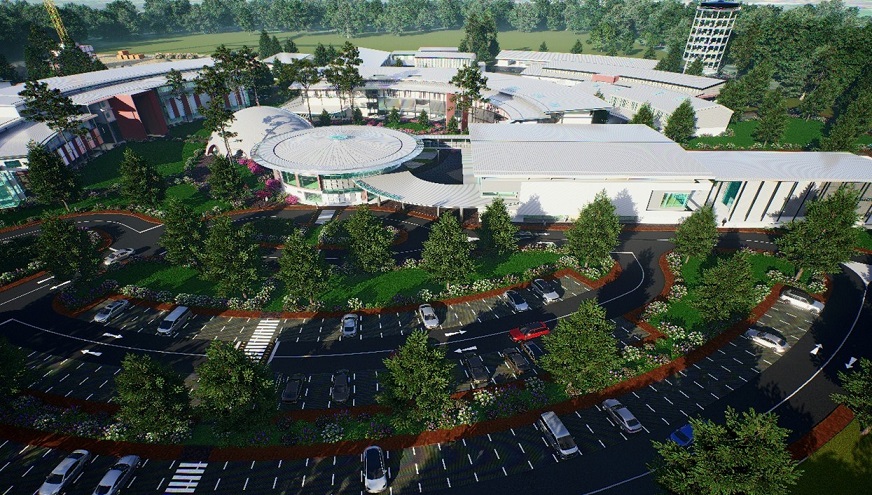
KOTA KINABALU, KTI Landmark Bhd, through its wholly owned subsidiary KTI Sdn Bhd, has secured a RM130.6 million contract from the Construction Industry Development Board (CIDB) Malaysia to build the Akademi Binaan Malaysia (ABM) campus in Papar, Sabah. A model of the Akademi Binaan Malaysia campus in Papar. Spanning 24 months from July 1, 2025, to June 30, 2027, the project will serve as a new regional centre for vocational and technical training in the construction sector — aligning with national goals to enhance skilled labour and uplift industry standards. This award marks a key milestone for KTI, reinforcing its reputation as a reliable and capable contractor in Sabah, especially with its strengths in Industrialised Building System (IBS) construction. It is the group’s first contract win of the year, boosting its order book to RM345 million. KTI aims to secure RM250 million to RM300 million in new contracts for its financial year ending Dec 31, 2025 (FY25), driven by a strong project pipeline and continued execution momentum. “This win is more than just a financial achievement — it’s a brand milestone,” said Datuk Dr Gordon Loke, KTI’s Group Managing Director and CEO. “It reflects growing trust in KTI’s capabilities and reinforces our role in shaping both infrastructure and human capital development in Sabah.”

News

Former AmBank CEO Dato’ Sulaiman Appointed as Chairman of Takaful Ikhlas

Takaful Ikhlas Family Berhad and Takaful Ikhlas General Berhad have announced the appointment of Dato’ Sulaiman Mohd Tahir as the new Non-Independent Non-Executive Chairman of both boards, effective 16 July 2025. Dato’ Sulaiman succeeds Datuk Johar Che Mat, who retired from his role on 15 July 2025, concluding his tenure as Chairman of both entities. The Board of Directors of the MNRB Group extended its sincere appreciation to Datuk Johar for his leadership and contributions, which were instrumental in driving the organisations’ continued growth and transformation. Dato’ Sulaiman currently also serves as Chairman of MNRB Holdings Berhad, Bank Pembangunan Malaysia Berhad, and Malaysian Reinsurance Berhad. With an extensive background in the financial services industry, he is expected to bring strong oversight and strategic guidance to the Takaful Ikhlas entities in his new role.

News

Malaysia’s Workforce Strategy for a Digital and Inclusive Future

As the Fourth Industrial Revolution advances with unprecedented speed, nations across the globe are grappling with how to prepare their people for an increasingly digital and automated economy. In Malaysia, this preparation is taking a deliberate, evidence-based and human-centred approach—one that prioritises resilience, dignity and inclusion in the face of evolving technologies such as artificial intelligence (AI). When Rudyard Kipling penned The Secret of the Machines over a century ago, he captured the awe and trepidation that society felt during the second industrial revolution. Today, similar sentiments are being echoed as AI rapidly reshapes the contours of work. With it comes both the promise of augmented productivity and the existential worry of displacement. In Malaysia, these anxieties are being met with action. Upon assuming the role of Minister of Human Resources 17 months ago, Steven Sim was struck not by abstract theories but by real conversations with Malaysians—corporate leaders, employees, gig workers and entrepreneurs—all uncertain about their place in a changing economy. The questions were simple yet profound: Will I still have a meaningful job? Can I earn a dignified living? Will my skills remain relevant? In response, the Ministry of Human Resources, through its agency TalentCorp, initiated a nationwide study to examine the implications of AI, digitalisation and the green economy on the labour market. The results were sobering: approximately 620,000 jobs are at high risk of becoming obsolete due to automation. This necessitates large-scale cross-skilling, upskilling and reskilling to future-proof the workforce. However, the findings also revealed significant opportunities. The study identified 60 emerging job roles, with 70% rooted in AI and digital technologies. These roles are not hypothetical—they are already being advertised in job listings, and several countries are outpacing Malaysia in preparing their talent pipelines to fill them. Malaysia’s strategic response is both broad-based and data-driven. The country currently invests RM10 billion (£1.65 billion) annually in skills-related education and training, with roughly 30% of that funding sourced from a statutory levy imposed on private sector employers. To ensure this investment leads to meaningful outcomes, the government launched MyMahir—a national digital platform providing real-time insights into job trends, required competencies and available training. This tool is designed to empower individuals, companies and policymakers alike in making informed decisions about skills development. To align training more closely with industry needs, the Ministry established the Future Skills Talent Council, comprising sector-based, industry-led groups. These councils bridge the gap between policy and practical workforce requirements, ensuring that training programmes reflect the realities of the workplace. Early results are promising: workers trained under these schemes have earned a 12% higher average wage than the national norm in the programme’s first year. Looking ahead, the government plans to establish “skill universities”—accessible, industry-aligned institutions that offer credentials equivalent in value to traditional degrees. These will serve as a new model for post-secondary education in a skills-driven economy. The country’s workforce strategy is not limited to domestic ambitions. Recognising the interconnectedness of the ASEAN region, Malaysia will spearhead the ASEAN Year of Skills 2025 during its chairmanship, with support from the International Labour Organization. This initiative aims to catalyse deeper regional cooperation on human capital development. One of its flagship efforts will be to open Malaysia’s National Training Week in June 2025 to all ASEAN citizens. The programme will offer access to 65,000 high-quality training courses delivered by both local and international providers, positioning ASEAN as a globally competitive and highly skilled region. Gender inclusion is also a core component of Malaysia’s workforce agenda. In partnership with the World Economic Forum, Malaysia is co-chairing the Gender Parity in the Future of Work Accelerator. This programme will formulate data-driven policy recommendations to enhance women’s participation in the labour market, aligning with Malaysia’s broader Madani Economic Framework, which seeks to boost female labour force participation. As technology continues to redefine economies and societies, Malaysia remains committed to ensuring that human dignity is not an afterthought but the cornerstone of its future-of-work policies. Echoing Kipling’s reassurance that technology remains a tool—powerful yet ultimately subordinate to human intent—the government’s strategy is clear: people must write the manual for technology, not the other way around. Reflecting on his tenure, Minister Sim acknowledged that the greatest concerns were never just about employment statistics or wage growth. They were about ensuring that in the pursuit of innovation, no one is left behind. -World Economic Forum

News

Couche-Tard Withdraws US$47 Billion Bid for Seven and i Over Stalled Talks

Canadian convenience store giant Alimentation Couche-Tard has withdrawn its US$47 billion takeover bid for Japan’s Seven and i Holdings, citing a lack of constructive engagement from the Japanese retailer. The move marks the collapse of what could have been the largest foreign acquisition of a Japanese company, as Couche-Tard, operator of Circle K, sought to create a global convenience store powerhouse by acquiring the company behind 7-Eleven. “There has been no sincere or constructive engagement from Seven and i that would facilitate the advancement of any proposal, contrary to comments made publicly by its representatives,” Couche-Tard said in a letter to its board of directors. The letter further accused Seven and i of engaging in “a calculated campaign of obfuscation and delay, to the great detriment of the company and its shareholders.” In response, Seven and i said it was “disappointed” by Couche-Tard’s decision and disagreed with “numerous mischaracterisations,” but added it was “not surprised” by the withdrawal. The development is seen as a test of Japan’s openness to foreign takeovers, coming shortly after Nippon Steel secured a US$14.9 billion deal to acquire US Steel. Shares in Seven and i were untraded on Wednesday due to an excess of sell orders. “We are very disappointed in what appears to be a lack of willingness to engage from Seven and i,” said Manoj Jain, co-founder and co-chief investment officer of Hong Kong-based Maso Capital. “We believe there is significant value to be realised in a combination and have expressed this view to the management and the board.” Couche-Tard had initially offered US$38.5 billion in October last year and raised its bid to US$47 billion. In March, the Canadian group indicated it was willing to increase the offer further if Seven and i provided greater financial transparency. Couche-Tard also worked with the Japanese firm on a store divestiture plan aimed at easing regulatory hurdles. The approach seemed to gain momentum after the Seven and i founding Ito family’s US$58 billion white-knight bid failed to secure financing. However, Couche-Tard said attempts to engage directly with the family were rebuffed. Despite a non-disclosure agreement between the companies, Couche-Tard criticised the “negligible” due diligence process, which it claimed was limited to “two tightly constrained management meetings.” The Canadian firm believed a full merger would have maximised shareholder value but explored alternative proposals, including acquiring all of Seven and i’s international business and 40 per cent of its domestic operations. Convenience stores in Japan are considered critical infrastructure due to their role in supporting communities during natural disasters. Seven and i reportedly countered with a proposal to sell its international business to Couche-Tard in exchange for a stake in the Canadian company. However, Couche-Tard dismissed the suggestion, arguing it would not deliver the “significant premium” offered in its original proposals. Under pressure to improve sluggish earnings and prove it can grow independently, Seven and i has announced a share buyback, divested non-core assets, and plans to list its North American convenience store operations. “We remain fully committed to our standalone value creation plan, which we have been pursuing in parallel,” Seven and i said. -Reuters

News

HDC Achieves RM345.2 Million Potential Sales at Tokyo JFEX Summer Show 2025

Halal Development Corporation Bhd (HDC) has secured potential sales valued at approximately RM345.2 million during the JFEX Summer Show 2025 in Tokyo, held from 9 to 11 July 2025. In a statement, HDC head of international cooperation Mohamad Romzi Sulaiman said the corporation’s participation underscores Malaysia’s commitment to expanding its halal footprint in Japan and across the region. “HDC’s presence at JFEX 2025 provided a strategic platform for 50 Malaysian halal-certified exporters and export-ready companies to showcase their products and services to the Japanese market and neighbouring countries. This initiative aimed to promote the Halal Malaysia brand while creating valuable trade and investment opportunities for Malaysian businesses,” he said. Over the three-day event, HDC facilitated more than 100 business-to-business meetings between Malaysian exhibitors and high-quality Japanese and international buyers. The engagements highlighted strong demand for Malaysia’s halal offerings, further strengthening the country’s position as a key player in the global halal market. -Bernama

News

Sunway Unit Secures S$703.6 Million Residential Development Project in Singapore

The Urban Redevelopment Authority of Singapore has awarded a 1.58-hectare land parcel at Chuan Grove to Sing Holdings Residential Pte Ltd (SHRPL) and Sunway Developments Pte Ltd (SDPL), following the success of a joint tender by both parties. In a filing to Bursa Malaysia today, Sunway Bhd confirmed that the project involves a 99-year lease for residential development at a total consideration of S$703.6 million, equivalent to approximately RM2.33 billion. SDPL is a wholly owned subsidiary of Sunway Holdings Sdn Bhd, which is in turn wholly owned by Sunway Bhd. Sunway stated that SHRPL and SDPL will establish a joint venture company, with SHRPL and SDPL holding equity interests of 65 per cent and 35 per cent respectively, to undertake the development of the land parcel. The proposed development is expected to contribute positively to the earnings of the Sunway Group from the financial year ending 31 December 2026 onwards. -Bernama

News

Ancom Nylex FY2025 Net Profit Declines to RM63.49 Million

Ancom Nylex Bhd reported a decline in net profit for the financial year ended 31 May 2025 (FY2025), registering RM63.49 million compared to RM81.47 million in the previous year. Revenue also eased to RM1.87 billion from RM1.99 billion in FY2024, the group disclosed in a filing with Bursa Malaysia today. The company attributed the lower revenue to softer contributions from its industrial chemicals segment, which faced reduced selling prices and volumes. The drop in net profit was primarily due to elevated freight costs and unfavourable foreign exchange fluctuations. Managing Director and Group Chief Executive Officer Datuk Lee Cheun Wei described FY2025 as a challenging year marked by geopolitical tensions that pushed up freight costs and created volatility in currency markets, weighing on overall performance. “Escalating tariffs and volatile trade conditions could further impact both global and domestic economic projections, making it increasingly difficult to anticipate trends in raw material costs and market prices,” he noted. Nevertheless, Lee expressed optimism that Malaysia’s economic growth is expected to remain positive over the next 12 months, with scope for further improvement if global conditions stabilise. For the fourth quarter ended 31 May 2025 (4Q2025), Ancom Nylex recorded a lower net profit of RM17.07 million compared to RM18.44 million a year earlier, while revenue slipped to RM459.4 million from RM487.2 million. During FY2025, the group declared a first interim dividend through the distribution of treasury shares on the basis of four shares for every 100 shares held. A second interim dividend was also distributed at one treasury share for every 100 shares. -Bernama

News

Saliran Group Names CFO Yong Wai Kin as Executive Director

Saliran Group Bhd has announced the appointment of its chief financial officer Yong Wai Kin as executive director, reflecting the board’s confidence in his leadership and expertise as the company advances its growth trajectory following its initial public offering. Yong, who has held the role of CFO since May 2022, brings more than three decades of experience in finance, audit and corporate management, spanning industries including manufacturing, automotive, media and palm oil. Since joining Saliran, he has played a key role in strengthening the company’s financial management, supporting its strategic expansion plans. The supplier and distributor of pipes, fittings and flanges said the appointment marks a significant step in reinforcing its leadership team to drive long-term value creation. -The Star

News

Boost Names New Deputy CEO and Consumer Business Head to Drive Innovation

Boost has announced key leadership changes aimed at accelerating its growth trajectory and reinforcing its position in the digital financial services landscape. Ungku Norliza Syazwan Ungku Halmie has been named Deputy Chief Executive Officer of Boost Bank. Formerly the CEO of Boost Life, Ungku Norliza was pivotal in transforming the Boost eWallet into a fast-growing platform. Recognised as ‘Female Leader of the Year’ in 2023, she will now collaborate with Boost Bank CEO Fozia Amanulla to spearhead the bank’s expansion and innovation agenda. Meanwhile, Gin Wong has been appointed Head of Consumer Business, assuming leadership of Boost Life. Previously serving as Head of Product, she played a critical role in evolving the eWallet into a comprehensive financial solution. In her new capacity, Gin will be responsible for advancing consumer strategy, enhancing user experience, and driving product innovation. Group CEO of Boost, Sheyantha Abeykoon, emphasised the company’s commitment to nurturing internal talent and providing growth opportunities. “At Boost, one of our core principles is creating a platform where every employee can grow and thrive professionally. We believe it’s our responsibility to provide opportunities, and it’s up to our people to seize them. There’s nothing more fulfilling than seeing Boosties who embrace this chance and advance in their careers, fuelling our collective growth as a company. Leaders like Ungku Liza and Gin exemplify this spirit, and we’re immensely proud whenever we can open doors for our own people to rise within Boost.” These appointments underline Boost’s strategic focus on strengthening leadership capacity as it works towards becoming a leading regional digital banking group. -Fintech News

Scroll to Top

Subscribe
FREE Newsletter