News

News

Vietnam Targets US$65 Billion in Agro-Forestry-Fishery Exports

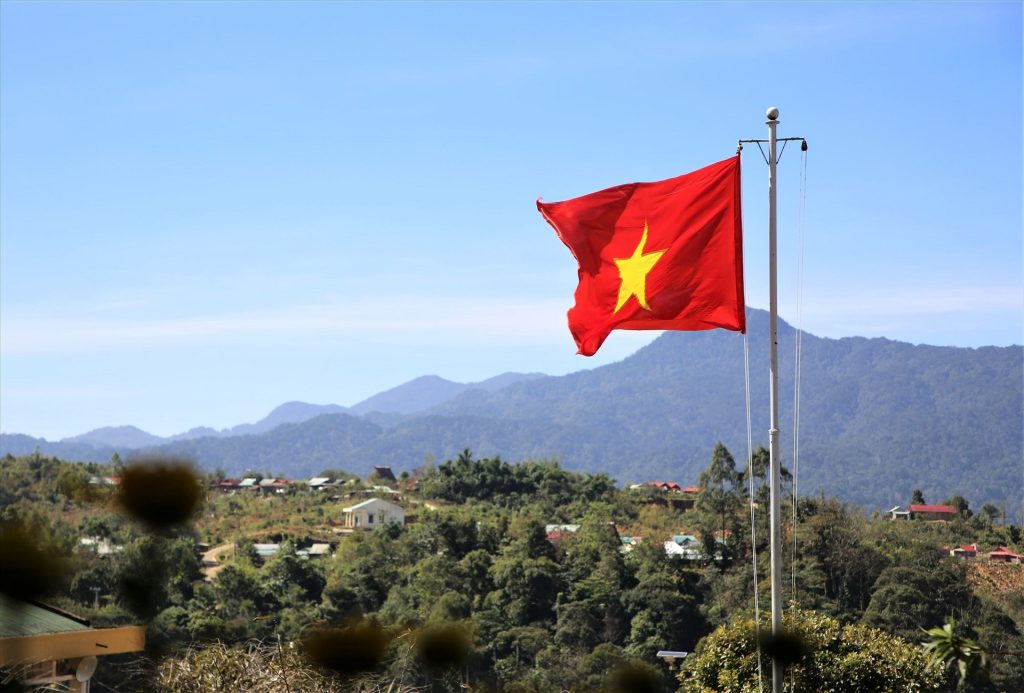
Vietnam’s agro-forestry-fishery trade reached an estimated US$57 billion in the first half of 2025, with exports contributing US$33.5 billion, reflecting a year-on-year increase of 14.3%, according to the Ministry of Agriculture and Environment (MAE). Imports for the same period rose by 12.8%, totalling US$23.5 billion. The ministry acknowledged that 2025 continues to present significant global economic and political volatility. In particular, recent changes in US tariff policy have exerted a notable impact on Vietnam’s agricultural export sectors. Despite these challenges, the MAE remains committed to achieving its annual export target of US$65 billion by the end of the year. To meet this goal, the ministry has outlined specific growth scenarios and quarterly objectives. It aims to reach between US$14 billion and US$15 billion in exports during the third quarter of 2025. For the final quarter, it plans to leverage seasonal demand during the year-end holidays, setting an ambitious target of at least US$16 billion in exports. Vietnam’s key export products—coffee, tea, pepper, cashew nuts, rubber, and livestock—are expected to maintain strong momentum and play a critical role in achieving the national export target. The coffee sector in particular has shown exceptional performance in the first half of 2025, with export earnings estimated at US$5.5 billion, already equalling its annual target. Despite limited supply in the second half of the year due to the main harvest season falling between December and April, the industry is on track to reach a projected US$7.5 billion by year-end. This would represent a 36.9% increase compared to 2024. To sustain growth, Vietnamese coffee exporters are intensifying efforts to expand into new markets, particularly within the European Union, where interest in strengthening trade relations with Asia and the Middle East is growing. Exporters are also targeting major robusta-consuming markets including China, Japan, South Korea, the Philippines and Thailand. In the long term, north-east Asia is identified as a strategically important region that could offset any potential decline in market share in the United States. Meanwhile, the cashew sector has set a modest but positive export goal of US$4.5 billion for 2025, up 2.7% from the previous year. To meet this objective, the industry aims to consolidate its presence in traditional markets such as the United States and China, while expanding into high-potential markets with currently low penetration. The Middle East, particularly the United Arab Emirates and Saudi Arabia, has been identified as a priority for trade promotion and strategic realignment. The MAE’s focus remains on proactive policy adjustments and market diversification to navigate global uncertainties while sustaining export growth across the agricultural sector. -Viet Nam News
ESG, News

Prasarana Launches Vendor ESG Hub to Advance Sustainable Supply Chain Practices

Prasarana Malaysia Berhad has unveiled its new digital platform, the Vendor ESG Hub, a strategic initiative aimed at elevating environmental, social and governance (ESG) practices across its vendor ecosystem. The platform, developed to support the nearly 5,000 vendors registered with the company—including more than 3,000 local small and medium enterprises (SMEs)—marks a significant step in Prasarana’s commitment to integrating sustainability throughout its operations. Group President and Chief Executive Officer, Mohd Azharuddin Mat Sah, described the platform as a purposeful move to strengthen ESG adoption among both local and international suppliers. Speaking at the launch event in Petaling Jaya, he emphasised the need for the supply chain to align with global ESG standards. “The Vendor ESG Hub portal offers practical resources, guides and digital tools tailored to help vendors understand, assess and gradually implement ESG principles,” he said. “The platform is structured around four key components—Assess, Inspire, Learn and Do—each designed to build vendor capability and readiness for a sustainable business future.” The initiative was launched in conjunction with the Health, Safety, Security, Environment and Sustainable Development (HSSE & SD) Week 2025, underscoring Prasarana’s long-term commitment to ESG integration. Implementation will be phased, with 30 to 50 companies selected for initial participation in education and awareness programmes related to ESG practices. These will span both domestic and international vendors, including partners from Europe, China and Japan. “We are engaging with all our vendors—local and global—to explore how their practices can be enhanced to support sustainability goals,” Azharuddin noted. “One of our long-term priorities is the reduction of carbon emissions in vendor operations. While ESG is a broad domain, this platform allows us to focus on tangible actions, such as equipping our partners with the knowledge and tools to lower emissions in their day-to-day processes.” The launch of the Vendor ESG Hub further reinforces Prasarana’s role as a key enabler of sustainable transformation within the public transportation ecosystem and broader industry supply chains. -Business Times

ESG, News

SIRIM Appointed Sole Approval Body for Plastic Waste Imports from July 1

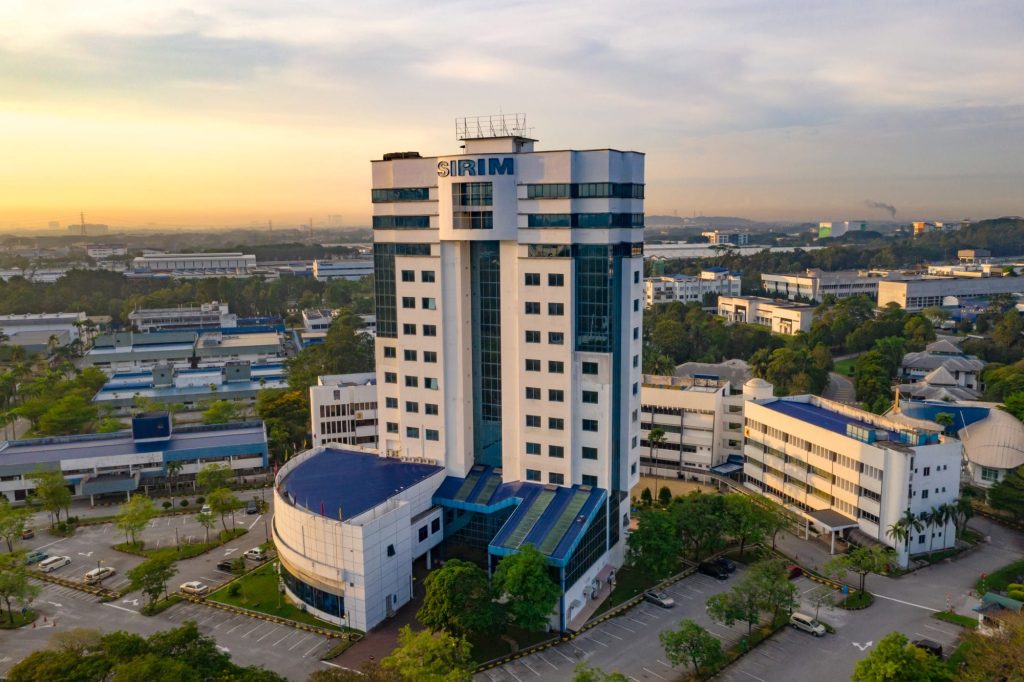
SIRIM Berhad has been officially designated as the sole inspection authority and issuer of the Certificate of Approval (COA) for the importation of waste plastic into Malaysia, effective 1 July 2025. In a statement issued by the Ministry of Investment, Trade and Industry (MITI), the move is part of the government’s ongoing efforts to enhance environmental governance in line with the MADANI Economy framework, which prioritises green growth and climate resilience. The ministry stated that COAs for waste plastic imports will only be granted if all regulatory conditions under Malaysian law are fulfilled, and provided that the exporting countries are parties to the Basel Convention, an international treaty controlling transboundary movements of hazardous waste and its disposal. “Malaysia will not hesitate to take firm action against individuals or companies that attempt to circumvent import regulations or are involved in illegal waste trafficking,” the ministry emphasised. MITI reaffirmed its commitment to promoting a legitimate, responsible and environmentally sound trade ecosystem that supports the nation’s sustainable socio-economic objectives. The ministry also stressed that Malaysia’s policies remain aligned with international standards and multilateral commitments to environmental protection. Importers seeking to bring in waste plastic are advised to consult the official guidelines published by SIRIM, which outline the procedures and inspection requirements. The documentation is accessible at: https://www.sirim-qas.com.my/wp-content/uploads/2025/05/faq-importationof-waste-plastic-1.pdf. SIRIM, a statutory body under MITI, is Malaysia’s leading industrial research and technology organisation and a national authority on quality assurance. -Bernama

News

MSM Malaysia Announces Group CEO Resignation, Appoints Acting Successor

KUALA LUMPUR: MSM Malaysia Holdings Berhad has announced that its Group Chief Executive Officer, Syed Feizal Syed Mohammad, will step down from his position effective 3 July. The resignation was disclosed in a filing with Bursa Malaysia, with the company confirming that Syed Feizal is departing to pursue personal interests. Syed Feizal, 60, has led the sugar-producing group since February 2021. MSM confirmed that there were no disagreements between the outgoing CEO and the Board of Directors, and that no matters relating to his departure require shareholder attention. In the interim, MSM has appointed Group Chief Operating Officer Hasni Ahmad as Acting Group CEO, effective the same day. Hasni, 57, holds a degree in chemical engineering from Clarkson University in the United States. He has served as the company’s COO since 2021 and brings with him extensive operational experience, having previously held senior leadership roles at FGV Holdings Berhad. MSM did not indicate when a permanent appointment will be made. -Bernama

News

TM Data Centre Earnings Projected to Double by FY2027

Telekom Malaysia Berhad (TM) is poised to significantly strengthen its position in the data centre (DC) market, with RHB Research projecting that earnings from this segment could double by the financial year ending 2027. The bullish outlook is underpinned by ongoing infrastructure expansion and increasing demand from hyperscale clients. RHB Research noted that TM’s twin-core data centres in Cyberjaya and Iskandar Puteri are progressing well, with both facilities expected to be fully operational by the fourth quarter of 2025. Upon completion, the expanded IT load capacity is expected to reach approximately 40 megawatts (MW), setting the stage for full utilisation and a step-change in revenue potential. In addition to its core data centre business, TM is also benefiting from growing revenues in managed wavelength and DC fibre connectivity services, as demand from hyperscalers continues to rise. These segments are seen as strategic growth pillars that complement TM’s broader digital transformation agenda. The research house has maintained a “Buy” recommendation on TM shares, with a target price of RM8.15. At the time of analysis, TM’s shares were trading at RM6.71. While the long-term outlook remains favourable, RHB Research cautioned that potential risks include delays in commercialising the expanded DC capacity, slower-than-expected uptake, increased competition from colocation providers, and broader geopolitical uncertainties that may impact enterprise IT spending. Despite the company not disclosing specific revenue figures for its DC operations, RHB’s on-ground assessments indicate solid progress at TM’s key expansion sites. In the Klang Valley, the construction of KVDC2 (Klang Valley Data Centre Block 2) has surpassed the 60% completion mark. Structural works for the four-storey facility are completed, and upon full commissioning, KVDC2 is expected to offer a total IT load of 9.2MW. It will house eight data halls (two per floor), utilising conventional air-cooling systems. Similarly, at the Iskandar Puteri Data Centre (IPDC) located in Nusajaya Technology Park, the second block (IPDC2) is slated for completion by the third quarter of 2025. Construction of the four-storey building has already progressed beyond 70%, reflecting strong execution capabilities and adherence to project timelines. -The Star

News

Hiap Teck Targets Recovery on Back of ESSB Contributions

Hiap Teck Venture Bhd is positioning itself for a gradual recovery, driven by improving performance at its associate Eastern Steel Sdn Bhd (ESSB), even as near-term challenges persist. The group’s fourth quarter for the financial year ending 31 July 2025 (4Q25) is anticipated to remain subdued, reflecting continued pressure from weak global steel prices, ongoing uncertainty surrounding US trade tariffs, and the sluggish rollout of domestic infrastructure projects. In the third quarter of FY25 (3Q25), Hiap Teck reported a net profit of RM34.28 million and revenue of RM344.84 million, compared with RM46.82 million and RM399.68 million, respectively, in the corresponding period last year. For the cumulative nine-month period, the group recorded a net profit of RM89.41 million on revenue totalling RM1.09 billion. The group’s core net profit declined by 42.9% year-on-year to RM47 million, primarily attributed to margin compression within its trading and downstream segments. This margin erosion stemmed from weaker selling prices and softer sales volumes, which offset the improved contribution from its 27.3%-owned associate, ESSB. ESSB’s core earnings rose to RM71.1 million during the period, supported by increased sales volumes, which helped counterbalance lower average selling prices. The performance of ESSB is expected to remain a key driver of Hiap Teck’s earnings stability going forward. According to Hong Leong Investment Bank (HLIB) Research, Hiap Teck’s near-term outlook remains challenging, underpinned by ongoing macroeconomic concerns in China and delays in the implementation of domestic infrastructure projects. Nonetheless, steady earnings from the scaffolding division, alongside improved output from ESSB, are projected to cushion these headwinds. Of particular note is ESSB’s hot rolled coil (HRC) plant, which commenced operations in December 2024 and is currently operating at approximately 50% capacity. Hiap Teck aims to raise this utilisation rate to near full capacity by the end of 2025, which is expected to drive further reductions in unit conversion costs. Reflecting the lower sales volume assumptions, HLIB Research has revised down its core net profit forecasts for FY25 to FY27 by 3.3%, 0.9% and 3.8%, respectively. Despite the near-term earnings softness, the research house has reiterated a “buy” recommendation on Hiap Teck, albeit with a reduced target price of 34 sen, based on a revised valuation of 6.5 times the forecast FY26 core earnings per share of 5.2 sen. -The Star

News

Federal Court Reinstates RM1.25 Billion Tax Assessment Against TNB

The Federal Court has ruled in favour of the Inland Revenue Board (IRB), reinstating an additional tax assessment of RM1.25 billion against Tenaga Nasional Berhad (TNB) for the 2018 financial year. This follows a remission from the original RM1.812 billion tax notice initially imposed by the IRB. In a filing with Bursa Malaysia, TNB confirmed the Federal Court’s decision to allow the IRB’s appeal against earlier rulings by the High Court and Court of Appeal. Both lower courts had previously sided with TNB’s judicial review, which sought to annul the tax notice. TNB is currently evaluating the full financial implications of the ruling. According to the Federal Court, TNB, as a utility company, falls under Schedule 7B of the Income Tax Act 1967, which concerns the Investment Allowance, rather than Schedule 7A, which pertains to Reinvestment Allowance (RA). In light of this clarification, TNB will now proceed to claim the Investment Allowance under Schedule 7B. The utility giant acknowledged that the ruling may exert a negative impact on earnings and net assets for the financial year ending 31 December 2025. However, operational performance is expected to remain unaffected. The dispute dates back to 3 July 2020, when the IRB informed TNB via formal correspondence that the RA claimed for 2018 had been disallowed. A notice of additional assessment amounting to RM1.812 billion was issued shortly thereafter, on 7 July 2020. TNB subsequently filed for judicial review to contest the imposition, which resulted in a reduction of the assessment to RM1.25 billion. In a separate development, the newly restructured electricity tariff, effective from this month, is anticipated to strengthen sectoral stability and support long-term reform. Analysts have noted that the revised framework promotes a more balanced cost distribution across consumer segments, which is expected to provide sustainable funding for infrastructure maintenance and future capacity expansion. CIMB Research, following a detailed briefing by TNB, reaffirmed that the Incentive-Based Regulation (IBR) mechanism continues to ensure that TNB achieves the regulatory rate of return of 7.3% on its regulated asset base (RAB), irrespective of tariff adjustments. During Regulatory Period 4 (RP4), the RAB is projected to expand, supported by a 12% increase in base capital expenditure to RM26.6 billion, alongside contingent capex of RM16.3 billion. Hong Leong Investment Bank (HLIB) Research highlighted that the revised tariff structure introduces more granular billing and a fairer allocation of fixed costs. The adjustments, including increased emphasis on demand charges and reduced energy charges, aim to address previous cost recovery shortfalls. A new five-part bill structure is also being introduced to enhance transparency. Crucially, the Automatic Fuel Adjustment (AFA) mechanism has replaced the Imbalance Cost Pass-Through (ICPT), launching at a neutral rate of zero this month. CIMB Research noted that going forward, deviations in fuel costs from RP4 projections will be charged at uniform rates across all non-exempted residential and commercial users. Households consuming 600 kilowatt-hours or less remain exempt. HLIB Research indicated that the AFA is expected to improve cash flow predictability for TNB, enabling more accurate and timely cost recovery. MIDF Research echoed the sentiment, stating that the AFA’s dynamic structure helps mitigate volatility in fuel costs, thereby reinforcing financial stability. Electricity demand is forecast to rise by between 3.5% and 4.5% this year, with peak demand reaching an all-time high of 20.75GW in May. The impact on consumer billing will vary. Residential users may experience flat or reduced bills, potentially by as much as 15%, especially if they shift consumption to off-peak periods under the Time-of-Use tariff model. CIMB Research also projected that approximately 71% of medium-voltage customers could benefit from reductions of up to 16%. However, data centres are set to face increased electricity costs due to a reclassification under the new ultra-high voltage category. CIMB Research estimated a 10% to 15% hike in their electricity bills, driven by peak and off-peak charges that are 24% to 26% higher than the new high-voltage tariffs. -The Star

News

Liquid Group CEO Jeremy Tan Appointed to Inaugural Board of SPaN

Liquid Group, CEO, Jeremy Tan, has been appointed to the inaugural board of the Singapore Payments Network (SPaN) — a new entity established by the Monetary Authority of Singapore (MAS) and the Association of Banks in Singapore (ABS) to drive the next stage of growth for national payment schemes like PayNow. As Chair of the Singapore FinTech Association (SFA) Payments Subcommittee, Tan will represent the payments industry, ensuring that the perspectives of non-bank financial institutions are part of shaping Singapore’s future payments landscape.

News

JF Tech Appoints Andy Goh As CEO To Drive Next Phase Of Growth

Main Market-Listed leading innovator and manufacturer of high-performance test contacting and interface solutions for global integrated circuit (“IC”) makers, JF Technology Berhad (the “Group”) , announced today the appointment of Mr Andy Goh Joo Hwa (“Andy Goh”) as Chief Executive Officer (“CEO”), effective 1st July 2025. Meanwhile, Dato’ Foong Wei Kuong (“Dato’ Foong”) was re-designated to Group Managing Director to concentrate his efforts in driving the group new strategic expansion plan in JF 4.0 Transformation. Under the new leadership structure, Andy Goh will oversee the Group’s existing businesses and operations, focusing on enhancing technological innovation, market expansion, improve customer intimacy, and operational excellence. Meanwhile, Dato’ Foong will concentrate on Group’s expansion opportunity through venturing into strategic new business partnership and corporate mergers and acquisitions (“M&A”), in line with the Group’s JF 4.0 Transformation. Andy Goh brings with him 30 years of valuable experience in the semiconductor and electrical and electronics (“E&E”) industry. Since joining the Group in 2008, he has held key roles including Senior Vice President (“SVP”) of Sales & Marketing and SVP of Business Development & Investment, focusing on strategic partnerships and market expansion to drive growth. He was instrumental in the Group’s M&A activities including the recently concluded acquisition of probe card manufacturing specialist, Q3 Probe Pte., Ltd.  Commenting on the appointment, Group Managing Director of JF Technology Berhad, Dato’ Foong Wei Kuong said, “This appointment is part of the Group’s long-term strategic plan aimed at sharpening strategic focus, enhancing operational effectiveness, and driving growth. Furthermore, this clear delineation of roles allows us to move with greater agility and focus. With Andy Goh leading the day-to-day business, I will concentrate on unlocking new growth opportunities and driving strategic expansion.” “This appointment is the result of our Group carefully planned internal human resource strategy to nurture and promote from within our organisation. Andy Goh has been growing his career in the Group for almost 20 years and the Group valued his contribution, dedication and outstanding business acumen. Hence, his appointment is a natural progression. The Board and I are confident that he is the right leader who will embrace our Group competitive culture and will definitely be driving the Group to new height.” Dato’ Foong concluded his comments. Chief Executive Officer of JF Technology Berhad, Mr. Andy Goh Joo Hwa commented, “I am deeply honoured by the trust placed in me by Dato’ Foong and the Board of Directors. Having been in the forefront of the Group for many years, I see tremendous potential ahead. I am ready to embrace both the opportunities and challenges in leading the Group forward.” “Together with our dedicated team, I look forward to strengthening the solid foundation built by Dato’ Foong and further enhancing our position in the semiconductor value chain. More excitingly, I believe this transition will help accelerate the momentum of our JF 4.0 Transformation. We fully understand that we need to be mindful and agile in manoeuvring the current macroeconomic uncertainties and to stay relevant in this competitive industry.  We must move forward courageously and seize the new opportunities that may arise in current situation. I believe JF Tech will expand and grow into a stronger and profitable company in this JF 4.0 Transformation.  All in all, the long-term outlook of the Group remains very promising.”

News

CGS Asset Management Offers New Cash Management Solutions to Enhance Portfolio Diversification, Yield and Liquidity

CGS International Wealth Management Malaysia Sdn Bhd (“CGS Asset Management”), a wholly-owned subsidiary of CGS International Securities Malaysia Sdn Bhd (“CGS MY”), launched two new wholesale fund-of-funds under their Cash Management Solutions suite – the CGS Ihsan Cash Fund and CGS Dynamic Cash Fund (“the funds”) – to meet the increasing demand for efficient, yield-enhanced high-liquidity investments. CGS Asset Management aims to raise RM1 billion in assets under management from their new Cash Management Solutions over the next year.   CGS Asset Management’s Shariah and conventional Cash Management Solutions are wholesale fund-of-funds designed to provide investors a one-stop access to a diversified portfolio. A minimum 90% of the funds will be invested in top-performing money market collective investment schemes (“CIS”). These liquid and low-risk, short-term money market CIS serve to preserve capital and support short-term cash flow needs with active allocation by fund managers to further optimise the funds’ yields. Both funds are tailored for sophisticated investors – individuals, businesses, corporates and institutions – looking for smarter ways to manage their cash. Mr Alan Inn Wei Loon, Deputy Chief Executive Officer of CGS MY said, “CGS Asset Management is pleased to roll out our first Cash Management Solutions products. These cash fund-of-funds are the first of its kind in market and offer our investors access to a diversified portfolio of money market CIS via an optimised-allocation approach that allows our fund managers to enhance yield, while minimising single fund and portfolio risks. We have been rolling out different services and solutions under our Asset Management portfolio, such as our Single-Family Office solution, launched in May with the Malaysian government. With our current and upcoming suite of solutions, we are confident that we will be able to offer a comprehensive and tailored approach to asset management for our clients, from building their wealth, to optimising the yield on their short-term holdings and better manage their cash needs.” The CGS Ihsan Cash Fund is Shariah-compliant, tailored for investors seeking to align their investment strategies with Islamic principles. The CGS Dynamic Cash Fund, meanwhile, offers a conventional structure. Both funds are managed with disciplined portfolio construction and monitored against parameters such as interest rates, fund manager performance, and liquidity cycles. Key features of both funds: One-stop access to top-tier Money Market CIS in Malaysia Active management of portfolio with dynamic rebalancing based on yield potential and liquidity Optimised allocation strategy – targeting high-performing funds with sizeable AUM Daily T+2 liquidity ensuring timely access to cash when needed Available in both conventional and Shariah-compliant structures The funds leverage CGS Asset Management’s experienced fixed income team and robust selection framework, ensuring each underlying investment meets stringent performance, governance, and liquidity standards. The Cash Management Solutions represent a natural extension of CGS Asset Management’s strategy to expand its portfolio of innovative investment solutions, supported by the global network and research strength of the CGS International Group. The CGS Ihsan Cash Fund and CGS Dynamic Cash Fund are available starting 1 July 2025. Interested investors are advised to review the respective Information Memorandum and Product Highlights Sheet, accessible at www.cgsi.com.my.

Scroll to Top

Subscribe
FREE Newsletter