News

News

MIM Champions Responsible AI Through Regional Conference and Leadership Certification Launch

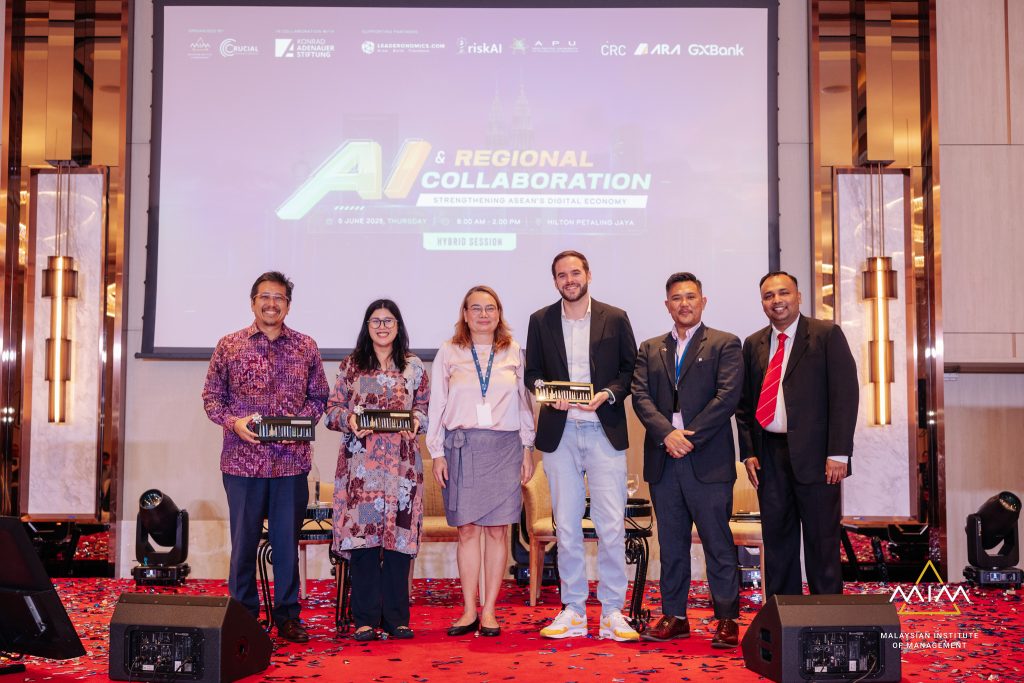
PETALING JAYA: The Malaysian Institute of Management (MIM), with support from Konrad-Adenauer-Stiftung (KAS) Malaysia, convened a regional conference aimed at fostering closer ASEAN collaboration to strengthen the region’s digital economy through artificial intelligence (AI). The event as part of MIM Crucial Conversations Series brought together policymakers, AI experts, industry leaders, as well as representatives from National AI Office (NAIO) Malaysia and Microsoft, to address digital policy gaps and prepare regional leaders for the rapid growth of artificial intelligence. Titled “AI & Regional Collaboration: Strengthening ASEAN’s Digital Economy,” the hybrid conference featured expert-led plenaries and breakout tracks on key issues such as AI governance, regulatory convergence, digital sovereignty, and the emerging digital economy. MIM Chairman Datuk Zainal Amanshah Zainal Arshad emphasized the importance of collaborative leadership to navigate the evolving AI landscape. “There is a need for ASEAN nations to enhance digital readiness and policy coherence to ensure inclusive and responsible growth in the AI era,” he said in his opening speech. Delivering the keynote address, Shamsul Izhan Abdul Majid, Head of NAIO, called for responsible and people-focused AI adoption across ASEAN. He also highlighted Malaysia’s efforts to advance clear guidelines and regional cooperation. A key highlight of the conference was the launch of the MIM AI Leadership Certification Programme, which he officiated. The programme offers a structured pathway for professionals to build the knowledge and confidence needed to lead responsibly in an AI-driven world. As leadership evolves alongside technological disruption, decision-makers are expected not just to understand AI, but to guide its ethical adoption and scale its impact across organisations. Building on this, Kabenesh Eliathamby, MIM Chief Executive Officer said, “AI is more than a tool; it’s a strategic imperative. Its value lies in how leaders use it to elevate thinking, leadership, and impact. The future belongs to those who lead this transformation with purpose and courage”. The event brought together local and international experts across two plenary sessions and industry-focused tracks, featuring speakers from NAIO, ISIS Malaysia, Microsoft, GX Bank, Ara Research AI, RiskAI Technologies GmbH, and the Cyfluence Research Centre in Germany. Discussions covered topics ranging from ethical AI policy and ASEAN’s digital economy to real-world applications such as influence operations and the region’s AI-ready tech stack. In closing, MIM Vice Chairman Azlan Abdullah reaffirmed the Institute’s commitment to preparing leaders for an AI-powered future.  The MIM Crucial Conversations Series is an ongoing initiative by MIM that brings together experts, leaders, and stakeholders to discuss pressing and emerging issues affecting Malaysia and the region. Through these dialogues, MIM fosters knowledge sharing, collaboration, and actionable insights to drive sustainable development and effective management practices.

News

Nomura to Close Zhejiang Office as Part of China Wealth Strategy Shift

Nomura Holdings Inc is set to close one of its four branches in China as the Japanese financial services group continues to scale back its wealth management operations on the mainland. The decision marks a significant retreat from a key growth initiative launched in recent years. According to individuals familiar with the matter, the company’s brokerage subsidiary, Nomura Orient International Securities, plans to shutter its branch in Zhejiang province by the end of 2025. The individuals requested anonymity due to the private nature of the discussions. A spokesperson for the Tokyo-based firm declined to comment on the development. The Zhejiang branch was established in late 2021 as part of Nomura’s broader push to expand in affluent Chinese regions. At the time, the firm viewed wealth management as a strategic priority for its growth ambitions in China. However, that plan has been challenged by a confluence of factors including China’s slowing economy, intensifying competition, and regulatory pressures linked to President Xi Jinping’s “common prosperity” initiative. Since its inception in 2019, Nomura Orient International Securities has consistently posted losses. In the year ending 31 December, the joint venture reported a net loss of 128.7 million yuan (approximately USD 18 million), representing a 30 percent improvement from the previous year and marking the second consecutive year of reduced losses. In April, it was reported that Nomura is realigning its focus in China, shifting emphasis away from wealth management in favour of expanding its brokerage and asset management capabilities. This strategic pivot reflects a broader recalibration by global banks in China’s USD 69 trillion financial services sector. Initial enthusiasm following China’s market liberalisation five years ago has been tempered by geopolitical tensions and economic headwinds. Major firms including JPMorgan Chase and UBS have since moderated their expansion plans. Zhejiang, located on China’s eastern coast, is considered one of the country’s most affluent provinces. It hosts major commercial centres such as Yiwu, a global manufacturing and export hub, and is the home of tech conglomerate Alibaba. In addition to Zhejiang, Nomura’s majority-owned joint venture with Oriental International and Shanghai Huangpu Investment Holding currently operates branches in Shanghai, Beijing and Shenzhen. -Bloomberg

News

BYD Sparks Industry Reckoning Amid Mounting Pressure on China’s EV Sector

The escalating price war in China’s electric vehicle (EV) market, driven largely by industry leader BYD Co., is triggering profound repercussions, prompting mounting concern from Beijing. As market forces shift and overcapacity intensifies, the sector faces a period of painful realignment, with authorities scrambling to stabilise a rapidly deteriorating competitive landscape. Despite Chinese regulators’ efforts to curb further price erosion, analysts caution that softening demand and excessive production capacity—currently operating at just 49.5% according to data from the Gasgoo Automotive Research Institute—will severely compress margins even for top-tier brands and potentially eliminate weaker competitors altogether. The number of EV manufacturers has already begun to decline, yet the market remains oversaturated. Beijing has responded with rare direct intervention, criticising what it terms “rat race competition” and summoning major automaker executives to a meeting last week. However, past attempts to temper the price spiral have faltered. BYD, which stands to benefit most from market consolidation, has seen a dramatic market value drop of $21.5 billion since its share price peak in late May, underscoring investor unease. John Murphy, senior automotive analyst at Bank of America, described the situation in China as “disturbing,” highlighting the dangerous combination of weak demand and steep discounting. He predicted a wave of industry consolidation as companies seek to rationalise capacity and survive a volatile pricing environment. Relentless price competition is eroding profit margins, weakening brand equity, and pushing even financially robust players into unsustainable positions. The Communist Party’s People’s Daily has warned that a race to the bottom in pricing and quality could tarnish the global perception of Chinese-made cars, just as brands like BYD, Geely, Zeekr and Xpeng are beginning to earn international recognition. From the consumer standpoint, falling prices may appear advantageous, but they conceal longer-term risks. The unpredictability of pricing is undermining buyer confidence, with complaints surfacing on Chinese social media about the futility of buying now when cheaper deals may appear in weeks. Additionally, pressure to cut costs may lead to compromises in vehicle safety, quality, and after-sales service. At the recent meeting in Beijing, automakers were urged to “self-regulate,” with explicit instructions not to sell below cost or engage in excessive discounting, according to individuals familiar with the discussions. Officials also addressed the controversial practice of selling zero-mileage vehicles into the second-hand market—a tactic viewed as an artificial boost to reported sales figures. Chinese carmakers have embraced price cutting more aggressively than their foreign rivals. Murphy suggested that U.S. automakers might be better off exiting the market altogether, citing the high risks involved. “Tesla probably needs to be there to compete with those companies and understand what’s going on, but there’s a lot of risk there for them,” he said. There is little ambiguity about who is leading the price cuts. “It’s obvious to everyone that the biggest player is doing this,” said Jochen Siebert, managing director at JSC Automotive. He accused BYD of attempting to monopolise the market by undercutting rivals, raising red flags over dumping practices, supply chain pressures, and dealership sustainability. An April report from consultancy AlixPartners highlighted a wave of emerging competition among new energy vehicle manufacturers. In 2024, the industry witnessed its first recorded brand consolidation, with 16 NEV-focused companies exiting the market and only 13 launching. “The Chinese automotive market, despite its vast scale, is expanding at a slower rate,” noted Ron Zheng, partner at Roland Berger. “Capturing market share must now take precedence.” The turbulence is affecting firms across the spectrum. Jiyue Auto, backed by Geely and Baidu, began cutting production and seeking fresh capital barely a year after launching its first vehicle. AlixPartners consultant Zhang Yichao noted that smaller players may not have the luxury of staying out of a price war once leaders like BYD make aggressive moves. He also pointed out that low production utilisation, exacerbated by export challenges, is fuelling competition. As China looks abroad to absorb its surplus capacity, export markets offer limited relief. “The U.S. market is completely closed, and Japan and Korea may soon follow suit if they see a wave of Chinese imports,” Siebert said. “Russia, the largest export destination last year, is becoming increasingly difficult. Southeast Asia, too, no longer presents viable opportunities.” Cost pressures are raising alarm about supply chain financing practices. A late-2024 demand by BYD for supplier price reductions drew scrutiny over the company’s financial health. GMT Research reported BYD’s actual net debt at 323 billion yuan ($45 billion), vastly exceeding the 27.7 billion yuan officially recorded as of June 2024. The financial strain is also rippling through the dealership ecosystem. Since April, two dealership groups selling BYD vehicles in separate provinces have collapsed. This is not the first time Beijing has attempted to impose a ceasefire. In mid-2023, 16 major automakers—including Tesla, BYD, and Geely—signed a pledge brokered by the China Association of Automobile Manufacturers (CAAM) to refrain from abnormal pricing. Yet within days, CAAM retracted one of the key clauses, citing antitrust concerns, and discounting resumed unabated. As the price war deepens, China’s electric vehicle market appears headed for a transformative reckoning, with only the most agile and well-capitalised players likely to emerge intact. -Bloomberg

News

Singapore to Block Octa and XM Platforms for Breaching Financial Regulations

Singapore authorities have announced that access to the websites of two overseas online trading platforms, Octa and XM, will be blocked from 20 June following regulatory breaches. The decision was disclosed in a joint statement by the Singapore Police Force and the Monetary Authority of Singapore (MAS) on Friday, 6 June. Both platforms were found to be offering financial trading services, including leveraged foreign exchange, commodities, indices, and equities trading, to Singapore-based customers without the required licences under the Securities and Futures Act (SFA). These activities constitute a direct contravention of the Act. According to the authorities, a Capital Markets Services (CMS) licence is mandatory for any entity conducting business in capital market products within Singapore. Investigations revealed that Octa and XM not only provided unauthorised trading services but also actively marketed them to individuals in Singapore. Octa is operated by Octa Markets and Uni Fin Invest, reportedly incorporated in the Union of Comoros and Mauritius, respectively. XM is operated by XM Global, which is purportedly based in Belize. None of these entities holds the necessary authorisation to deal in capital markets products and are therefore not permitted to offer such services to Singapore persons. The joint statement emphasised that this prohibition applies even to entities based outside Singapore if their services are solicited to Singapore residents or if there is a significant number of Singapore-based users. The content available on the platforms’ websites has been deemed prohibited under Singapore’s Internet Code of Practice. Consequently, from 20 June onwards, users in Singapore will be unable to access Octa and XM through local Internet Access Service Providers. Consumers with active accounts will lose access to these platforms via Singapore-based networks. The MAS and the police have urged the public to engage only with licensed financial service providers listed in MAS’ Financial Institutions Directory. They warned that unregulated trading platforms, particularly those headquartered overseas, present a higher risk of fraud due to the lack of transparency and difficulty in verifying the legitimacy of their operations. Such platforms often offer limited avenues for dispute resolution and may require customers to make payments via credit or debit cards, thereby increasing the risk of unauthorised transactions. The authorities confirmed that they will continue coordinated efforts to restrict access to unlicensed foreign trading services. In a statement to CNA on Monday, Octa acknowledged the regulatory requirements and affirmed its intention to comply. The platform stated that it is working towards establishing a legally compliant presence in the regions it serves and is engaging with regulators, legal counsel, and other relevant stakeholders to align with local legislation. Octa added that it adheres to international policies designed to protect client funds and prevent illicit activities, and is currently prioritising the security of its Singaporean clients’ assets. -CNA

News

Money20/20’s Vision for Asia: Inclusive, Open, and Interconnected

The financial landscape in Asia is shifting rapidly—and at the heart of this transformation lies the evolution of cloud-based payments. Tracey Davies, Global President of Money20/20, shares how Asia’s fintech ecosystem is scaling, innovating, and pushing the boundaries of digital finance while grappling with fragmentation, inclusion, and security.   “Asia’s cloud payments ecosystem is evolving fast,” Davies observes. “Mobile wallets are booming in Southeast Asia, and real-time payment systems like Singapore’s PayNow and Thailand’s PromptPay are now mainstream.” She points to regional initiatives such as Project Nexus and QR code interoperability frameworks as pivotal in boosting cross-border connectivity. While growth is undeniable—digital payments are projected to account for 94% of Southeast Asia’s e-commerce transactions by 2028—scalability remains uneven. “Markets like Singapore are leading, while others are still ramping up,” Davies explains. “Scalability is improving, but fragmentation across markets is still a key challenge.” That fragmentation, rooted in regulatory diversity, is a hurdle that fintech players must navigate carefully. “Scaling cloud payments responsibly in Asia really comes down to collaboration and adaptability,” she says. With progressive regulatory sandboxes in places like Singapore contrasted against stricter environments in emerging markets, Davies believes the way forward lies in “building regional partnerships” and “adopting common standards like open banking APIs or dynamic QR codes to bridge the gaps.” Money20/20’s expansion into Asia has placed Davies in a unique position to observe the trends shaping the fintech community. One theme, she says, is crystal clear: “AI is dominating. Around 80% of financial institutions in APAC are using it for things like fraud detection and personalisation.” She also notes the rapid embedding of fintech into e-commerce platforms and super-apps like Gojek and Grab, while security innovations—such as biometric authentication—are becoming a focus. “Companies like Visa and Tencent are trialling palm and facial recognition tech,” she adds. But technology alone doesn’t guarantee financial inclusion. Davies underscores the region’s persistent gaps: “Southeast Asia still has around 290 million unbanked individuals.” She believes bridging this divide requires a multi-layered approach. “AI-driven credit scoring can bridge the gap by leveraging non-traditional data sources like telco usage to evaluate creditworthiness,” she says. She also highlights the role of government-backed digital ID systems such as Malaysia’s MyDIGITAL in simplifying KYC processes and boosting trust. Above all, she stresses that “collaborations with local fintechs are essential to lower onboarding costs and ensure solutions are contextually relevant.” Banks and traditional players, too, are feeling the push toward transformation. For leaders overseeing digital infrastructure shifts, Davies has clear advice: “The starting point should be modular architecture, cloud-native, and API-first platforms that allow for greater agility and faster innovation.” Emphasising the need to reskill workforces for long-term growth, she adds: “There’s a growing need for expertise in AI, cybersecurity, and cloud engineering.” Security remains a critical concern—and one Davies believes must evolve in tandem with innovation. “Balancing innovation with trust starts by embedding AI-driven defences into cloud infrastructure,” she notes. “Tools like Gen AI can detect and respond to threats in real time, making security more proactive than reactive.” On a regional level, she sees promise in “shared frameworks for threat intelligence,” particularly those developing under ASEAN cybersecurity initiatives. Beyond the technological and structural shifts, Davies is passionate about driving social change in fintech leadership. Through initiatives like RiseUp and Do.Better.Together, Money20/20 champions gender equity and inclusion. “RiseUp is particularly resonating with the industry as it addresses the crucial need for diverse leadership in Asia’s rapidly growing fintech sector,” she shares. The programme connects participants with mentorship, content, and a global network. “We are helping them create tangible pathways for career advancement and professional growth,” she says. There’s progress—but the journey is far from complete. “The representation of women in fintech leadership has shown positive growth, increasing from just 4% in 2010 to around 30% today,” Davies explains. Still, she calls for “more systematic and sustainable changes,” including industry benchmarks, accountability measures, and visibility for successful female leaders who can act as role models. As Money20/20 Asia solidifies its presence in the region, its mission remains clear. “Our long-term vision is to help shape a more inclusive, open, and connected financial future across Asia,” Davies says. Impact isn’t measured merely by conference attendance. “We measure impact by the partnerships formed, deals initiated, and ideas brought to life. It’s about moving from conversation to action.” So what’s next for Asia’s cloud payments ecosystem? Davies offers a bold forecast: “By 2030, we’ll see a unified cross-border payment network emerge across ASEAN+ markets, powered by blockchain and CBDCs. This will enable real-time settlements, slash transaction costs, and most importantly bring more SMEs into the regional digital economy in a way that simply hasn’t been possible before.” From innovation to inclusion, Davies’s outlook reveals a region not only on the cusp of transformation—but actively leading it.

News

MACC Investigates Tan Sri for Alleged Misuse of Highway Sukuk

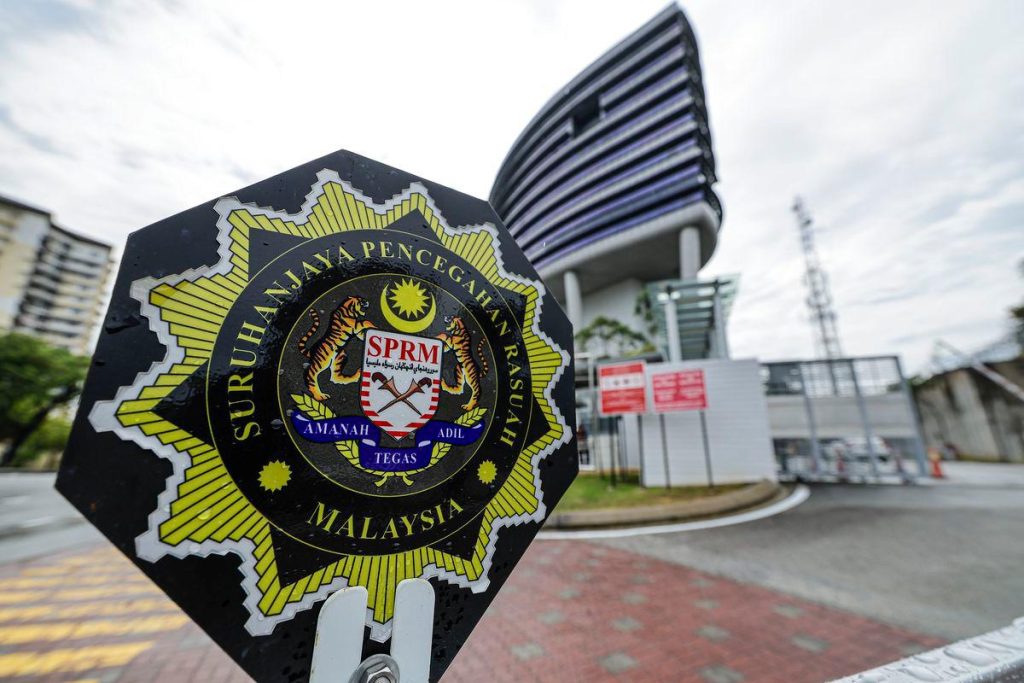
KUALA LUMPUR : The Malaysian Anti-Corruption Commission (MACC) is set to summon a Tan Sri for questioning in connection with the alleged misappropriation of sukuk funds tied to a major highway project in the Klang Valley. The individual, believed to be a highway concessionaire, has recently been discharged from a private hospital, where he was undergoing treatment. The MACC has confirmed that he is also being investigated for offshore asset holdings and involvement in gambling activities valued in the millions of ringgit. MACC Chief Commissioner Tan Sri Azam Baki, speaking to Astro Awani on Saturday, stated that the individual has yet to provide a statement due to his recent medical condition. “A statement has not yet been recorded from the Tan Sri, but I have been informed that doctors have recently allowed him to be discharged. My officers will be contacting him soon to arrange an appointment,” Azam said. Although the individual is a key witness in the investigation, MACC has already obtained statements from 45 other witnesses, some of whom have been recalled for further questioning. Azam noted, “He is indeed one of the individuals we have yet to question, but we already have testimonies from other witnesses. I cannot confirm whether additional witnesses will be required after his statement.” Sources confirmed that prior to arranging an interview, MACC had secured a medical assessment from the Tan Sri’s attending doctor to verify his condition. The investigation focuses on the suspected misappropriation of sukuk bonds allocated for the construction of the highway. On 3 June last year, MACC revealed that it had seized assets valued at approximately RM143 million from the individual in question. The assets confiscated include luxury vehicles and properties located both domestically and abroad, with holdings in London and Switzerland among them. Among the seized items are 14 personal bank accounts containing RM4.5 million, eight corporate accounts with RM33 million, a luxury condominium and a parcel of land valued at RM24.5 million, as well as nine high-end vehicles worth RM7.65 million. In addition, authorities seized designer watches valued at RM25 million, handbags worth RM3 million, jewellery and diamonds estimated at RM6 million, and four horses valued at RM400,000. Other confiscated assets include premium alcoholic beverages worth RM3 million, foreign holdings estimated at over RM15 million, and gambling-related transactions amounting to approximately RM20 million. A formal notice to declare assets has already been issued to the Tan Sri and other related parties as part of the ongoing investigation. -The Star

News

Hydroshoppe’s Contempt Application Against Fahmi Fadzil and Others Dismissed by High Court

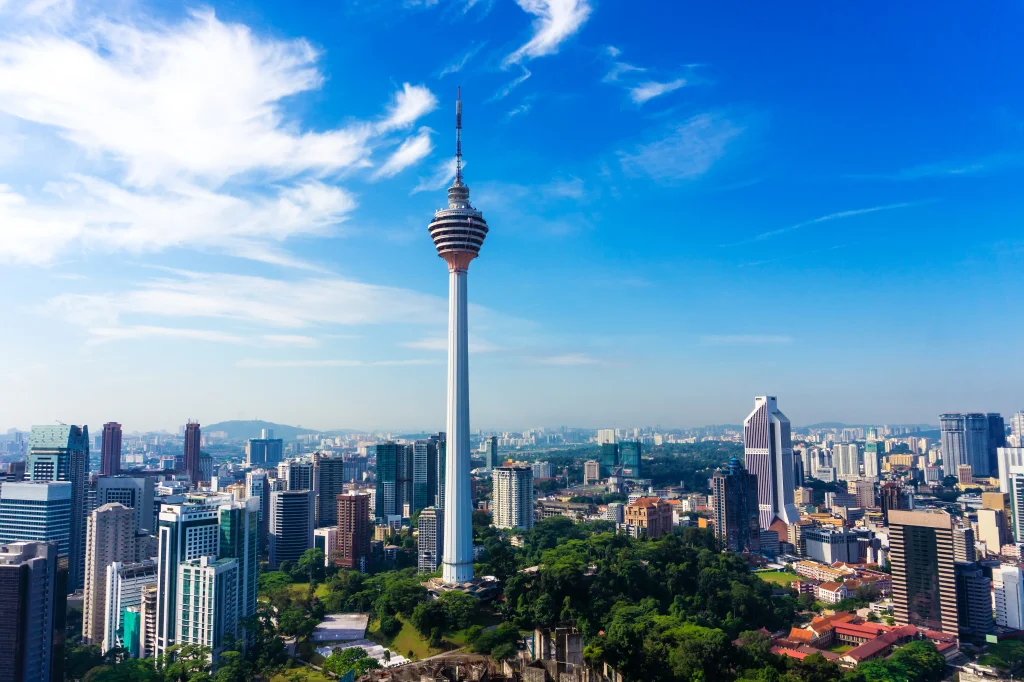
KUALA LUMPUR: The High Court has dismissed an application by Hydroshoppe Sdn Bhd, the former operator of the Kuala Lumpur Tower, to initiate contempt of court proceedings against Communications Minister Datuk Fahmi Fadzil and several other parties. Presiding judge Roz Mawar Rozain ruled that there were no legal grounds to grant leave for contempt proceedings, citing the absence of any temporary injunction following the company’s unsuccessful application—a decision previously upheld by the Court of Appeal. The court further found no merit in Hydroshoppe’s claim that government authorities had unlawfully encroached on its properties following the expiration of its operating contract on 31 March. “This court is not satisfied there is a prima facie case for this court to grant leave for contempt of court (to ask the parties to answer),” said Roz Mawar in delivering her judgment. As a result, the court ordered Hydroshoppe and its subsidiary, Menara KL Sdn Bhd, to pay legal costs totalling RM15,000 to Fahmi and the government. An additional RM10,000 in total costs was awarded to other named defendants, namely LSH Service Master Sdn Bhd, LSH Best Builders Sdn Bhd, and Service Master (M) Sdn Bhd. In addition to the minister, Hydroshoppe and Menara KL had filed contempt proceedings against two office bearers from the three companies named, as well as six other individuals. These include Dang Wangi district police chief Sulizmie Affendy Sulaiman, Federal Land Commissioner Datuk Muhammad Azmi Mohd Zain, and Communications Ministry Secretary General Datuk Mohamad Fauzi Md Isa. Separately, the High Court is currently hearing Hydroshoppe and Menara KL’s ongoing application for an inter partes injunction. -The Edge Malaysia

News

Revised E-Invoicing Timeline Announced as Businesses Raise Concerns

GEORGE TOWN: The Malaysian government has announced a deferment in the implementation of the electronic invoicing (e-invoice) system, following constructive dialogue with business owners, particularly those within the micro, small, and medium enterprise (MSME) segment. Deputy Finance Minister Lim Hui Ying confirmed that the decision was made after careful consideration of industry feedback and readiness. Lim stated that the postponement is intended to provide companies with additional time to adjust to the Inland Revenue Board’s (IRB) e-invoicing framework. The system, initially scheduled to be rolled out on 1 July 2025 for businesses with annual sales of RM500,000 and above, will now be implemented in three revised phases. According to an IRB statement dated 5 June, taxpayers with income or annual sales below RM500,000 will be exempt from the system for the time being. Those with revenue between RM1 million and RM5 million will begin using the system from 1 January 2026, while those earning up to RM1 million will transition on 1 July 2026. “The original plan was to commence implementation on 1 July 2025 for businesses generating RM500,000 and above in annual sales. However, in response to concerns raised by MSMEs, the government has revised the approach to include three additional phases,” Lim said during the launch of smart toilets at the Lebuh Cecil public market. She reiterated the Madani government’s commitment to supporting the business community, particularly in adapting to regulatory transformations that impact operational processes. Lim also confirmed that the third phase of e-invoicing, which commences on 1 July 2024, will apply to taxpayers with annual income or sales between RM5 million and RM25 million. In a separate announcement, Lim addressed the stamping of employment contracts, clarifying that the IRB has not previously enforced this requirement. Moving forward, contracts executed prior to 1 January 2025 will be exempt. However, beginning 1 January 2026, employment contracts will be subject to stamp duty in line with existing legislative provisions. She expressed hope that companies will ensure compliance with all stipulations under the Stamp Act 1949, especially with regard to the stamping of employment contracts. -Bernama

News

Econpile Secures RM42.8 Million Deal as Penang LRT Momentum Builds

PETALING JAYA : Econpile Holdings Bhd has secured its first contract under the Penang Light Rail Transit (LRT) Mutiara Line, a development that positions the company for additional job wins as the RM10 billion project gains momentum. On 5 June, Econpile announced its award of a RM42.8 million bored piling sub-contract covering three stations from East Jelutong to Gelugor, part of the overall 21-station alignment. Construction works are scheduled to commence on 1 August 2025 and are expected to conclude by 31 October 2027. According to CGS International (CGSI) Research, this development confirms expectations that the Penang LRT Mutiara Line is progressing according to schedule, with full-scale construction anticipated in the fourth quarter of 2025. CGSI highlighted that the broader construction sector stands to benefit significantly, particularly Gamuda Bhd, which is expected to secure an additional RM3 billion in contracts, supplementing its existing RM5 billion in awarded works for the project. Other potential beneficiaries include Malayan Cement Bhd, HSS Engineers Bhd, IJM Corp Bhd, and Sunway Construction Group Bhd. As at June 2025, Econpile’s new job wins for the year total RM333 million, contributing to an order book valued at RM487 million. The group is targeting RM400 million to RM450 million in new contract wins for the financial year ending 31 December 2025, maintaining a performance trajectory consistent with the previous year. CGSI noted that the Penang LRT bored piling contract is expected to yield a gross profit margin of approximately 10% to 15%, surpassing the margins from recent property development-related piling contracts. This improved profitability is projected to support stronger earnings performance in the fourth quarter of 2025. CGSI Research has reiterated its “add” rating on Econpile, with a target price of 46 sen, citing the group’s robust presence in infrastructure works and its position as the operator of the largest bored pile fleet in Malaysia. CIMB Securities Research also commented on the contract, noting that it forms part of a broader civil works package undertaken by the SRS Consortium Sdn Bhd, led by Gamuda (60%), Ideal Property Development Sdn Bhd (20%), and Loh Phoy Yen Holdings Sdn Bhd (20%). The project developer and asset owner of the Mutiara Line is Mass Rapid Transit Corp Sdn Bhd. Having secured this initial major piling contract, CIMB Research believes Econpile is strategically positioned to compete for larger upcoming piling-related works. The firm maintains a “buy” rating on Econpile, with a target price of 38 sen, reflecting a valuation of 19 times its projected 2026 core earnings per share of 1.9 sen. -The Star

News

Yageo Commits to Technology Safeguards in Pursuit of Shibaura Acquisition

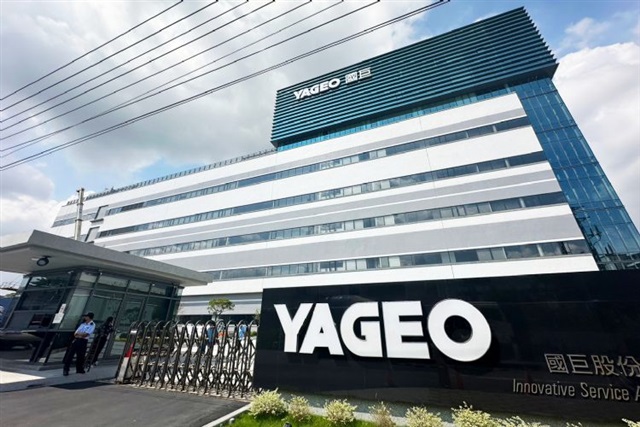
Taipei/Tokyo: Taiwan’s Yageo Corporation has committed to implementing stringent technology protection measures should its acquisition of Japan’s Shibaura Electronics be successful. The announcement comes in response to growing concerns in Japan surrounding the implications of the deal on national security. Chairman Pierre Chen, speaking to reporters in Taipei on Saturday, confirmed that the company is scheduled to meet Shibaura representatives in Tokyo in mid-June to explore avenues for potential cooperation. Yageo, the world’s largest manufacturer of chip resistors, initiated an unsolicited tender offer for Shibaura Electronics in February. The Japanese firm is recognised for its expertise in thermistor technology, which complements Yageo’s existing portfolio. The initial offer of ¥4,300 per share valued Shibaura at over ¥65 billion (approximately $450 million). Shibaura declined the offer and instead aligned with Japanese components supplier Minebea Mitsumi, sparking a bidding war. Yageo has since raised its offer to ¥6,200 per share, while Shibaura’s stock closed at ¥6,100 on Friday. Chen outlined Yageo’s strategy to inject capital and enhance research and development capabilities in Japan. He also signalled plans for increased investment to expand Shibaura’s local facilities. Addressing Japan’s national security concerns, Chen emphasised Yageo’s commitment to strict controls to prevent any leakage of sensitive technology. He also noted that discussions with Japan’s Ministry of Economy, Trade and Industry have been progressing smoothly. The acquisition, if successful, would fill a critical gap in Yageo’s thermistor offerings, strengthening its ability to serve global customers. The integration would also facilitate Shibaura’s expansion into international markets, according to Chen. Yageo aims to reduce the operational complexity faced by major clients, including Apple and Nvidia, by offering a more comprehensive suite of components and solutions. In addition to leading the global chip resistor market, Yageo is the third-largest producer of multilayer ceramic capacitors and supplies essential components for Apple’s iPhones, Nvidia’s AI servers, and Tesla’s electric vehicles. -Reuters

Scroll to Top

Subscribe
FREE Newsletter