News

News

Ho Hup Construction Faces Legal Action After RM45.27 Million Loan Default

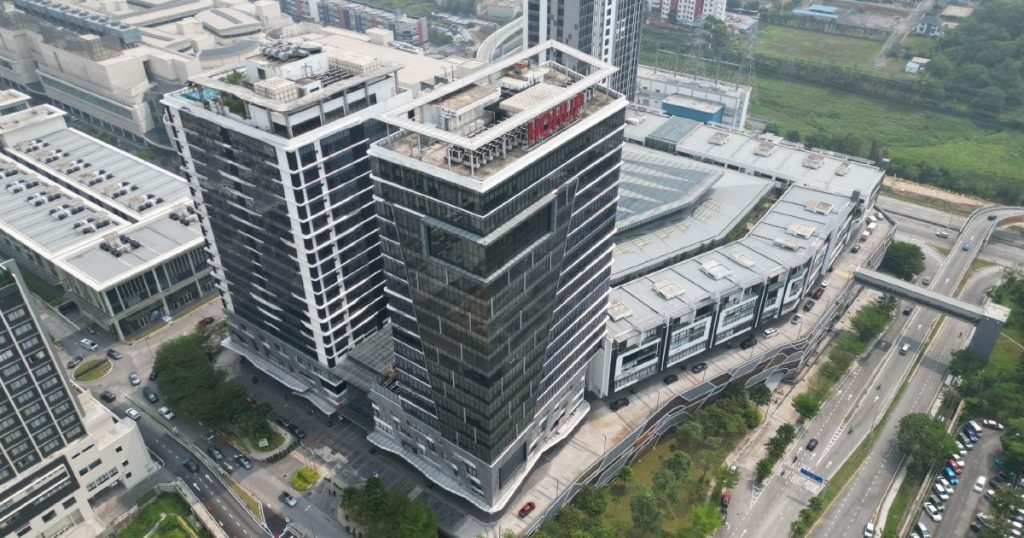
Ho Hup Construction Company Bhd has defaulted on a revolving credit facility amounting to RM45.27 million, triggering legal proceedings initiated by AmBank Islamic Bhd. In a filing with Bursa Malaysia today, the company disclosed that it had received a notice of demand and termination dated 29 May 2025 from the legal firm Lee & Koh, acting on behalf of AmBank Islamic. The notice, delivered on 4 June 2025, pertains to the non-payment under the said facility. The outstanding amount constitutes 13.37 percent of Ho Hup’s audited net assets of RM338.48 million for the financial year ended 31 December 2023. It also represents 31.97 percent of its most recent net assets report totalling RM141.60 million. The company attributed the payment default to its inability to meet scheduled principal and interest instalments as a result of cash flow constraints. Ho Hup was classified under the Practice Note 17 (PN17) category on 18 April 2025 and is currently subject to a restriction order. In response to the situation, the company intends to initiate negotiations with AmBank Islamic and other creditors in relation to a proposed debt restructuring exercise aimed at restoring financial stability. To support this process, an independent financial advisor has been appointed to facilitate discussions with creditors. -Bernama

News

MICSEA Commends Stamp Duty Exemption for Pre-2025 Employment Contracts

KUCHING: The Malaysian Industrial, Commercial and Service Employers Association (MICSEA) has expressed strong support for the government’s decision to exempt stamp duty on employment contracts signed before 1 January 2025. MICSEA president YK Lai stated that the move demonstrates the government’s commitment to business facilitation while maintaining regulatory compliance through proper enforcement. He noted that many employment agreements between employers and employees had not been stamped in accordance with the First Schedule of the Stamp Act 1949. Under the leadership of the Madani Government, the Ministry of Finance has granted full stamp duty exemption and penalty waivers for all employment contracts signed before 1 January 2025. This measure is implemented under Subsection 80(1A) and Subsection 47A(2) of the Act. Contracts signed between 1 January and 31 December 2025 will remain subject to stamp duty; however, late penalty charges will be waived if the documents are stamped by 31 December 2025. Lai added that starting from 1 January 2026, all contracts will fall under the new Self-Assessment System for Stamp Duty (STSDS), under which full stamp duty and any applicable penalties will be strictly enforced. He said this exemption and the accompanying waiver reflect the government’s genuine intent to foster a collaborative environment while promoting fairness in enforcement. In light of this, Lai encouraged all employers and human resource practitioners to take advantage of the exemption period to review and regularise employment contracts, ensuring full compliance before the implementation of STSDS in 2026. -Borneo Post

News

Ecomate Strengthens Earnings Base with ICT Expansion and Bonus Share Plan

KUALA LUMPUR: Ecomate Holdings Bhd has announced its strategic expansion into the information and communications technology (ICT) sector through the acquisition of a majority interest in Progressive Computer Systems Sdn Bhd (PCS), marking a significant diversification from its core furniture manufacturing business. The company entered into a definitive agreement on Friday to acquire a 60 percent stake in PCS from its sole shareholder, Law Seng Peng, for a total cash consideration of RM8.4 million. According to the Bursa Malaysia filing, the acquisition is backed by a profit guarantee, under which Law has committed that PCS will achieve a minimum profit after tax of RM3 million annually for the financial years ending 28 February 2026 through to 2028. In the event PCS incurs a loss after taxation during the guarantee period, Law is obligated to compensate Ecomate with RM1.8 million for each affected financial year, corresponding to Ecomate’s 60 percent equity interest. PCS is engaged in the marketing and servicing of computers and related peripherals, as well as software sales, development, and programming services. For the financial year ended 29 February 2024 (FY2024), PCS recorded a profit after tax of RM2.03 million, a decline from RM4.8 million in FY2023, but marginally higher than the RM2.01 million achieved in FY2022. Revenue for FY2024 increased to RM22.65 million, compared to RM20.02 million in FY2023 and RM20.22 million in FY2022. Ecomate stated that the RM8.4 million purchase consideration represents a price-to-earnings ratio of 2.8 times based on the guaranteed profit figures. The group expects the ICT business to contribute at least 25 percent of its earnings or result in a diversion of at least a quarter of its net assets, as it seeks to secure additional projects to further expand the segment. In tandem with the acquisition, Ecomate has also proposed a bonus issue involving up to 358.03 million new shares, on the basis of one bonus share for every existing share held. Additionally, the company will issue 358.03 million free warrants on the same basis. While the exercise price of the warrants has yet to be finalised, Ecomate indicated that full exercise of the warrants could potentially raise RM222 million, which will be utilised to support the group’s working capital requirements. Ecomate’s shares closed unchanged at RM1.29, giving the group a market capitalisation of RM461.85 million. -The Edge Malaysia

News

ChemOne Seeks Over US$2.7 Billion Loan to Advance Johor Energy Complex

Singapore-based ChemOne Holdings Pte Ltd is seeking more than US$2.7 billion (approximately RM11.42 billion) through a syndicated loan to support the development of a major chemical processing facility in Johor, Malaysia, according to sources familiar with the matter. In response to queries from Bloomberg News, the petrochemicals group confirmed that the project financing carries a weighted average tenor of around 7.5 years. The proposed loan features an interest margin of approximately 150 to 180 basis points above the benchmark Secured Overnight Financing Rate. Mizuho Securities Co Ltd is among the financial institutions acting as arrangers for the deal. This syndicated loan forms part of a broader US$3.5 billion funding package, for which ChemOne finalised financing terms in December. The company has already secured commitments for approximately 90 percent of the total loan amount and is in advanced negotiations to conclude the remaining tranche. A consortium of global export credit agencies and development financial institutions, including the Export-Import Bank of the United States and Italy’s SACE, has confirmed its participation in the transaction. ChemOne expects to formally sign the agreement in the third quarter of the year. The financing will support the construction of the Pengerang Energy Complex in southern Johor, a strategic development within a growing oil, gas and petrochemical hub near key international shipping routes. The site’s deep-water access will enable it to accommodate some of the largest crude carriers globally. Designed as a low-carbon facility, the complex is projected to deliver 5.6 million metric tonnes annually of aromatic and energy products. Construction is scheduled to commence in mid-2025, with full operational streaming anticipated by the end of 2028. ChemOne added that the syndicated loan is supported by investment-grade credit insurance, covering up to 95 percent of both interest and principal obligations. -Bloomberg

News

Danantara Explores Involvement in US$7 Billion Grab–GoTo Merger

Indonesia’s sovereign wealth fund, Danantara, is reportedly exploring a role in the proposed US$7 billion (RM29.6 billion) acquisition of GoTo Group by Grab Holdings Ltd, a potential move that could enable the Indonesian government to retain partial ownership in one of Asia’s leading digital platforms. Preliminary discussions have been initiated between Danantara and GoTo regarding the acquisition of a minority stake in the merged entity, according to individuals familiar with the matter. Such an arrangement may help address national concerns over the sale of a homegrown technology company to Grab, a Singapore-based firm. While both Grab and GoTo have progressed in shaping a potential deal structure, negotiations have slowed in recent weeks due to concerns surrounding regulatory scrutiny. In May, Indonesia’s antitrust authority announced it would investigate the merger’s potential impact and called on both firms to ensure the agreement would not result in monopolistic behaviour. In this context, Danantara’s potential participation could enhance the likelihood of regulatory approval from the Indonesian government, which is expected to pose the greatest hurdle for the transaction. However, the discussions are still in early stages and may not result in a formal agreement. It remains uncertain whether Danantara has held direct discussions with Grab. Spokespersons for Grab, GoTo and Danantara have declined to comment on the matter. The two companies have engaged in intermittent merger talks for years, though no agreement has materialised, largely due to antitrust risks associated with combining Southeast Asia’s two largest ride-hailing and food delivery providers. Since exiting Southeast Asia in 2018, Uber Technologies Inc has retained a stake in Grab. Despite competition from smaller players, Grab and GoTo continue to dominate market share in Indonesia and Singapore. The potential sale of GoTo has triggered concerns within Indonesian political circles regarding national autonomy and the preservation of local technology jobs. Some officials have expressed apprehension about potential price increases in ride-hailing and food delivery services should Grab achieve dominant market control, particularly at a time when consumers face economic headwinds. One of the potential mitigations being discussed includes a commitment by Grab to maintain employment levels for a set period post-merger. The Indonesian government is concurrently navigating market uncertainty triggered by the populist measures implemented by President Prabowo Subianto. Since assuming office late last year, the 73-year-old former general has enacted a series of populist policies, including raising the minimum wage, expanding consumer subsidies, curtailing central bank independence, and adopting a firm stance toward foreign businesses. In March, he ordered both Grab and GoTo to provide holiday bonuses to their drivers. According to reports by Bloomberg News, Grab is evaluating GoTo at over US$7 billion, with one option under consideration being an all-stock transaction priced at approximately 100 rupiah per share. GoTo’s shares closed at 61 rupiah on Thursday, 5 June. A proposed sequence involves GoTo first acquiring Grab’s Indonesian ride-hailing and food delivery operations. Subsequently, Grab would take a majority stake in the new entity, thereby assuming control over GoTo’s Indonesian operations. Concurrently, GoTo would divest its Singapore-based ride-hailing business to a third party. Grab, headquartered in Singapore, is currently Southeast Asia’s largest ride-hailing and delivery platform, maintaining leadership in key markets including Malaysia and Thailand. GoTo, while having exited countries such as Thailand and Vietnam amid aggressive cost-cutting efforts, remains a significant player in Indonesia, the region’s most populous country with over 275 million residents. Acquiring GoTo would reinforce Grab’s foothold in Indonesia, particularly as emerging competitors like InDrive and Maxim continue to expand their presence. Grab’s revenue from Indonesia rose 6.3% to US$643 million in 2024, marking the company’s slowest growth among Southeast Asian markets. -Bloomberg

News

Airbus Procurement Chief to Lead South Asia Operations

Airbus has announced that its Chief of Procurement, Juergen Westermeier, will assume leadership of the company’s operations in India and South Asia, effective 1 September. The internal appointment was communicated via a company memo reviewed by Reuters. A successor for the procurement role has yet to be named, with the memo stating that the position remains “subject to further notice.” Airbus has declined to comment publicly on the internal reshuffle. The leadership transition comes amid ongoing challenges for the European aerospace giant as it continues to grapple with persistent supply chain disruptions. These issues, rooted in labour shortages and reduced industrial capacity following the COVID-19 pandemic, have hampered the company’s ability to maintain consistent production and delivery schedules. Recent performance indicators underscore the pressure Airbus is facing. Aircraft deliveries in May fell by 4 per cent compared to the previous month, contributing to a year-to-date decline of 5 per cent. Airbus has set an ambitious target of delivering 820 aircraft by the end of 2025, representing a 7 per cent increase over previous figures. Achieving this will require a significant ramp-up in output over the coming months. Analyst Rob Morris, Head of Consultancy at Cirium Ascend, noted via LinkedIn that production of Airbus’s A320neo family trailed Boeing’s 737 MAX in May for the first time since August 2019, based on the number of first flights. Airbus did not comment on monthly production figures but has attributed recent shortfalls to ongoing weaknesses in key parts of the supply chain, particularly involving engine components and aerostructures. Westermeier’s reassignment marks the second high-level change in Airbus’s engineering and industrial leadership in recent weeks. Earlier, Sabine Klauke, the group’s Chief Technology Officer, was reassigned to focus on digital design and manufacturing transformation efforts. During his tenure as procurement chief, Westermeier was known for a firm stance on supplier quality and stock management. In 2021, a letter reported by Reuters revealed that he had urged suppliers to hold more inventory and improve performance standards. More recently, he spearheaded an initiative aimed at unifying standards across the supply network. While some suppliers have called for fresh approaches to encourage readiness for increased production, a source familiar with the matter said Westermeier’s transition is unrelated to current supply chain challenges, which are reportedly beginning to stabilise. Airbus CEO Guillaume Faury commended Westermeier’s contributions in the internal communication. Westermeier will replace Remi Maillard, who was recently appointed Head of Technology as Airbus explores future development paths for the successor to its best-selling A320neo aircraft.

News

Amazon Launches Infrastructure Region in Taiwan

Amazon has officially launched the AWS Asia Pacific (Taipei) Region, significantly expanding its global cloud infrastructure footprint. The new region will enable developers, enterprises, startups, and organisations across various sectors—including education, entertainment, finance, healthcare, manufacturing, and the nonprofit space—to run applications with reduced latency and meet data residency requirements by hosting content within Taiwan. In support of this long-term initiative, Amazon has committed to investing more than USD 5 billion to build, connect, operate, and maintain its data centres in Taiwan. The launch marks a key milestone in Amazon Web Services’ (AWS) global infrastructure expansion, bringing the total to 117 Availability Zones across 37 regions worldwide. The Taipei Region comprises three Availability Zones, and AWS has plans to add 13 more zones and four additional regions in Chile, New Zealand, Saudi Arabia, and the AWS European Sovereign Cloud. Prasad Kalyanaraman, Vice President of Infrastructure Services at AWS, stated that the new region will empower organisations of all sizes to scale confidently using AWS’s extensive portfolio of cloud services. These include compute, storage, advanced analytics, and artificial intelligence, all while maintaining compliance with local regulations. Kalyanaraman added that the infrastructure is designed to deliver single-digit millisecond latency, enhancing user experiences and accelerating innovation. Taiwan’s Premier, Mr Jung-tai Cho, welcomed the investment, noting that it underscores Taiwan’s vital role in the global supply chain and reinforces the country’s collaboration with AWS. He expressed optimism that the initiative would support national efforts in digital transformation and foster innovation in cloud computing and emerging technologies. Amazon’s latest launch builds upon a decade of infrastructure development in Taiwan. Since 2014, AWS has introduced Amazon CloudFront edge locations and AWS Direct Connect sites in Taipei, in addition to launching AWS Outposts in 2020 and AWS Local Zones in 2022. The new Taipei Region is sovereign-by-design and aims to meet the most stringent requirements for security, reliability, and performance. The region will benefit local organisations such as TSMC, Acer, Trend Micro, Cathay Financial Holdings, Chunghwa Telecom, and Yahoo! TW Ecommerce, among others. AWS Partners in Taiwan include CKmates, eCloudvalley, Going Cloud, MetaAge Corporation, Netron Ltd., and NextLink Technology. Amazon is also investing in talent development through programmes like AWS Academy, AWS Educate, and AWS Skill Builder. To date, over 200,000 individuals in Taiwan have received cloud training, contributing to the nine million trained across Asia Pacific and Japan since 2017. AWS plans to further expand its local workforce to support the new region. The company continues to pursue its sustainability goals, with AWS data centres engineered for energy efficiency through innovations in design, purpose-built chips, and cooling technologies. A study by Accenture estimates AWS’s infrastructure is up to 4.1 times more energy-efficient than traditional on-premises data centres, with potential carbon footprint reductions of up to 99% when workloads are optimised on AWS. With the launch of the AWS Asia Pacific (Taipei) Region, customers across Asia Pacific can now leverage world-class infrastructure to meet increasing demand for secure, reliable, and low-latency cloud services, helping drive growth, efficiency, and innovation in a digitally transforming region. -BusinessWire

News

BYD Plans Major South African Expansion with Dealership Network Set to Triple

Chinese electric vehicle manufacturer BYD is set to significantly expand its footprint in South Africa, with plans to nearly triple its dealership network by next year, as part of a broader strategy to strengthen its position in Africa’s largest automotive market. The company, which made its South African debut in 2023 with the launch of its battery electric ATTO 3 model, currently operates approximately 13 dealerships across the country. According to Steve Chang, General Manager of BYD Auto South Africa, that number is expected to increase to 20 by the end of this year, with further growth to between 30 and 35 dealerships targeted for 2025. This strategic expansion comes amid increasing competition in South Africa’s emerging new energy vehicle (NEV) segment, where other Chinese automakers such as GAC, Chery, and GWM are also gaining traction. The market is witnessing a gradual shift towards electrification, driven by rising consumer interest and a broader global transition towards sustainable mobility. BYD currently offers six models to South African consumers, with a dual-powertrain approach that includes both hybrid and fully electric vehicles. Its latest additions to the market — the plug-in hybrid Shark pick-up, the hybrid SEALION 6, and the fully electric SEALION 7 SUV — were introduced in April, enhancing the brand’s appeal across a diverse customer base. The expanded dealership network is expected to bolster brand visibility and accessibility across South Africa, a country that remains in the early stages of electrified vehicle adoption. According to the National Association of Automobile Manufacturers of South Africa (NAAMSA), sales of new energy vehicles more than doubled in 2024, reaching 15,611 units compared to 7,782 units the previous year. Despite this growth, NEVs still account for a relatively small share of overall car sales. Chang emphasised BYD’s commitment to being a long-term player in the market, stating the company’s intention to educate consumers and lay the groundwork for broader adoption. “We want to educate and cultivate the market of South Africa and make sure that the South African consumers can catch up with the rest of the world,” he said. He acknowledged that the uptake of electric vehicles in Africa remains slow when compared to other emerging markets, due in part to challenges such as limited charging infrastructure, unstable electricity supply, and high import duties on electric vehicles relative to traditional combustion-engine cars. Nevertheless, BYD remains optimistic. “South Africa is actually one of the most important automotive markets in the southern hemisphere. It’s probably the biggest market in all of Africa, so it’s a market that we have to look at and see how we can develop,” Chang added. With a growing model line-up and a strengthened retail presence, BYD is positioning itself to play a key role in shaping the future of electric mobility in South Africa. -Reuters

News

Sime Darby Property’s Wage Increase Marks Private Sector Milestone

Sime Darby Property Bhd has taken a significant step in advancing employee welfare by announcing an 80 per cent increase in the minimum living wage for its B40 employees. Effective in 2024, the new wage level of RM2,700 per month represents a marked rise from the previous minimum of RM1,500. Economists suggest this move could serve as a new benchmark within the private sector, particularly for companies seeking to align compensation with the rising cost of living. While the revised wage still falls short of the RM3,100 monthly living wage recommended by Bank Negara Malaysia and government-linked investment companies (GLICs), it has been welcomed as a progressive development. Economist Dr Geoffrey Williams described the increase as a positive initiative, acknowledging that it demonstrates the capacity of large corporates—especially GLICs and government-linked entities—to improve the financial standing of lower-income workers. On 1 May, six GLICs, namely Khazanah Nasional Bhd, Permodalan Nasional Bhd (PNB), the Employees Provident Fund (EPF), Kumpulan Wang Persaraan (KWAP), Lembaga Tabung Angkatan Tentera and Lembaga Tabung Haji, implemented a RM3,100 living wage policy for all permanent Malaysian employees under the Finance Ministry’s GEAR-uP initiative. This framework seeks to consolidate and optimise GLIC contributions to national economic growth. “The RM2,700 offered by Sime Darby Property is slightly below the RM3,100 standard, but it remains a substantial improvement and a meaningful threshold,” said Williams. “It clearly benefits their lower-paid staff, though greater transparency is needed in terms of how many employees will be impacted.” As of 1 February, Malaysia’s national minimum wage stands at RM1,700 for businesses with five or more staff, as well as enterprises within the Malaysia SME and Small to Medium Enterprises (MASCO) category. Companies with fewer than five employees are required to comply with the new minimum by 1 August. Putra Business School’s economic analyst, Professor Dr Ahmed Razman Abdul Latiff, praised Sime Darby Property’s decision, observing that RM2,700 is near the national median income level. He noted the broader socioeconomic implications of such a wage increase, highlighting not just improved living standards but also higher contributions to the Employees Provident Fund, which could significantly enhance post-retirement quality of life. “This is a step forward that should be emulated by other major corporations, especially those with large workforces in urban areas. It will also help close the wage gap between senior management and rank-and-file employees,” said Razman. Dr Mohd Afzanizam Abdul Rashid, Chief Economist at Bank Muamalat Malaysia Bhd, remarked that the decision could establish a new standard in wage setting and support talent retention in a competitive labour market. He pointed out that own-account workers (OAWs) have steadily grown at an annual rate of 2.9 per cent from 2019 to 2024, reaching 3.1 million people. “Younger demographics are increasingly opting for gig work and self-employment. Competitive and stable wages can be a powerful draw for talent, although factors like career development and flexible working hours remain equally important,” he said. Afzanizam added that while RM2,700 is a commendable start, income adequacy varies depending on geographic location and household composition. Referring to EPF’s Belanjawanku guide, he explained that a single individual in the Klang Valley typically requires RM2,800 per month, while a family with one child may need more than RM6,400 to meet basic living expenses. “Wage policies must reflect both skill level and real income needs, taking into account the local cost of living. Policymakers must explore diverse strategies to ensure living costs are kept in check,” he added. Sime Darby Property chairman Datuk Rizal Rickman Ramli emphasised that the decision was made in response to the rising cost of living and reflects the company’s commitment to the financial wellbeing of its workforce. “This initiative highlights our commitment to financial stability and the well-being of our workforce, particularly those most impacted by rising living costs,” he stated in the group’s Integrated Annual Report 2024. As at 28 March, Sime Darby Property’s major shareholders included Amanah Saham Bumiputera (36.73 per cent), EPF (11.08 per cent), KWAP (6.25 per cent), and PNB (5.23 per cent). -Business Times

Investment & Market Trends, News

Bursa Malaysia Opens Lower as Wall Street Decline

KUALA LUMPUR : Bursa Malaysia opened lower on Friday, mirroring overnight losses on Wall Street, as market sentiment turned cautious following heightened geopolitical tensions and weaker labour data from the United States. At 9.10am, the FTSE Bursa Malaysia KLCI (FBM KLCI) declined by 2.78 points to 1,515.34, down from Thursday’s close of 1,518.12. The benchmark index opened slightly softer at 1,516.91, registering a drop of 1.21 points at the start of trading. Market breadth was negative, with 207 counters declining against 84 gainers. A total of 243 counters remained unchanged, while 1,812 were untraded and 20 suspended. Turnover stood at 119.92 million units with a total value of RM70.92 million. Rakuten Trade Sdn Bhd equity research vice-president Thong Pak Leng noted that investors are closely monitoring developments surrounding a recent phone conversation between China’s President Xi Jinping and US President Donald Trump. Trump described the call as “very good”, raising expectations that a bilateral meeting may take place in the near future. Meanwhile, mixed signals from the US labour market added to investor caution. Latest data pointed to a slowdown in job growth, while the yield on the US 10-year Treasury note ticked up slightly to 4.39 per cent, suggesting market concerns over inflationary pressures and Federal Reserve policy direction. In contrast, Hong Kong’s Hang Seng Index advanced further, buoyed by China’s latest purchasing managers’ index (PMI) figures for May, which exceeded market expectations and helped alleviate fears of a broader economic deceleration. Domestically, the FBM KLCI came close to breaching the 1,520 level on Thursday, possibly driven by more aggressive stock accumulation by local institutional investors. “We were surprised by this sudden strong buying interest after a lacklustre performance throughout the past month. For today, we expect the index to hover within the 1,515 to 1,530 range,” said Thong. -Bernama

Scroll to Top

Subscribe
FREE Newsletter