News

News

Annuar Zaini Appointed Chairman of 7-Eleven Malaysia Holdings

KUALA LUMPUR : 7-Eleven Malaysia Holdings Berhad has announced the appointment of Tan Sri Annuar Zaini, 73, as its new Independent Non-Executive Chairman. His appointment follows the resignation of Farhash Wafa Salvador Rizal Mubarak, who stepped down on 30 May, one day after the company’s annual general meeting. In a filing to Bursa Malaysia, the company highlighted Annuar’s extensive background in civil service and the corporate sector, with more than four decades of experience. He currently serves as a board member of the Social Security Organisation (Socso), and holds chairmanship positions at Country Annex Sdn Bhd, MRCB Land Sdn Bhd, and UDA Holdings Bhd. In addition, he is the Senior Advisor of International Affairs to the Malaysian Communications and Multimedia Commission. -Bernama

News

Petronas Job Cuts Signal Broader Industry Overhaul as Energy Sector Shifts Accelerate

KUALA LUMPUR : The recent decision by Petroliam Nasional Bhd (Petronas) to reduce its workforce by over 5,000 employees is a reflection of broader structural shifts within the global oil and gas industry, according to economists. Mounting cost pressures, the accelerating shift towards renewable energy, and rapid advancements in automation and artificial intelligence (AI) are compelling major energy companies to recalibrate their operational models. Over the past year, industry giants such as Chevron, BP and Shell have all undertaken significant workforce reductions as part of cost rationalisation and restructuring initiatives. These actions underscore a move towards more streamlined, technologically adaptive and future-oriented operations across the sector. Economists highlight that Petronas’ downsizing represents a strategic response to preserve long-term commercial viability in the face of a rapidly evolving energy environment. Bank Muamalat Malaysia Bhd chief economist Dr Mohd Afzanizam Abdul Rashid emphasised that the company is confronting multiple concurrent challenges, including rising labour, equipment and logistics costs, tighter environmental, social and governance (ESG) compliance, and the disruptive influence of automation and AI. “The industry landscape has shifted substantially. The growing emphasis on renewable energy necessitates higher capital expenditure to position Petronas effectively for the energy transition,” he told Business Times. Echoing this perspective, economist and Global Asia Consulting senior consultant Samirul Ariff Othman noted that the national oil company is also grappling with declining yields from ageing oil and gas fields, exerting further pressure on profitability. Petronas reported a 32 per cent decline in net income in 2024, following a 21 per cent drop in 2023. Profit margins are anticipated to continue contracting, with projections pointing to low double-digit figures in the near term. “The global pivot towards clean energy is fundamentally challenging the conventional oil and gas business model. Petronas is now required to channel increased investment into clean energy alternatives, significantly raising its capital expenditure,” Samirul said. Both economists warned of potential ripple effects stemming from the job cuts, particularly among subcontractors and service providers within the oil and gas supply chain. These include offshore support vessel (OSV) operators, engineering consultancies and maintenance firms, which may face reduced demand for services and subsequent financial strain. Regions such as Sarawak and Sabah, where local economies are heavily intertwined with Petronas operations, may see increased unemployment and economic headwinds as a result. Investor sentiment may also be affected, with the restructuring viewed as indicative of wider industry consolidation and strategic repositioning. Afzanizam suggested that affected parties, including subcontractors and support industries, will need to explore alternative opportunities and enhance workforce reskilling efforts. “With 90 per cent of Malaysia’s mining sector linked to oil and gas, we foresee a transition in the industry. Rising demand for Rare Earth Elements (REE), especially in support of the electric vehicle (EV) market, may drive a shift in mining sector dynamics. The existing talent pool could be redirected into the REE sector, potentially creating a new equilibrium within the broader extractive industry,” he explained. According to Samirul, the developments at Petronas may signal the beginning of a broader restructuring trend in Malaysia’s oil and gas sector. Other companies may be compelled to review their operations to maintain competitiveness and ensure financial sustainability in light of the global momentum towards decarbonisation. He further cautioned that Petronas’ declining profitability could have wider implications for national revenue, given the company’s substantial contribution to the federal budget through dividends and taxation. This could in turn influence government spending priorities and broader fiscal policy frameworks. -Business Times

News

Boeing Jets Return to China as Tariff Pressures Ease

Boeing Co has restarted deliveries of its commercial aircraft to China for the first time since early April, marking a significant development in the ongoing trade tensions between the United States and the world’s second-largest economy. Flight tracking data from Flightradar24 revealed that a Boeing 737 Max, registered as N230BE, departed from King County International Airport-Boeing Field in Seattle at approximately 10am local time on Friday. The aircraft’s first stop is Kailua-Kona, Hawaii, en route to Zhoushan, China, where Boeing completes final delivery processes for jets bound for domestic Chinese customers. This milestone follows a temporary easing of tariffs between the two countries. On 12 May, Chinese authorities lifted a previous ban on airlines accepting Boeing aircraft after a temporary trade truce with the United States. Under the agreement reached in Geneva, China reduced tariffs on US goods from 125 percent to 10 percent, while the United States agreed to cut combined duties on Chinese imports from 145 percent to 30 percent. However, the truce is valid for only 90 days, leaving the future of aerospace trade vulnerable to renewed escalation. The resumption of Boeing deliveries to one of the world’s largest aviation markets comes amid renewed geopolitical friction surrounding critical technologies and minerals. In recent weeks, both Washington and Beijing have imposed restrictions involving semiconductors and rare-earth elements. Additionally, the White House has advanced efforts to limit the transfer of US aerospace technologies to China’s state-backed aircraft manufacturer, Commercial Aircraft Corporation of China Ltd (Comac), which is developing the C919 jetliner as a challenger to Boeing and Airbus. Boeing has not commented on the resumed shipments. However, the move signals the possible unfreezing of its Chinese inventory, as Chinese carriers including Air China, Hainan Airlines, and Xiamen Airlines have resumed taking deliveries, according to data from Aviation.flights, a platform that monitors aircraft handovers. The developments also coincide with reports that China may soon place a major order for aircraft from Boeing’s European competitor, Airbus SE. Bloomberg recently reported that an order for several hundred Airbus jets could materialise as early as next month, heightening the strategic stakes for Boeing in the Asia-Pacific region. The temporary détente may provide Boeing with a narrow window to alleviate financial pressure by delivering dozens of jets previously sidelined due to trade policy. Prior to the April dispute, Boeing had planned to deliver approximately 50 aircraft to China. These plans were disrupted when China responded to fresh US tariffs by increasing levies that rendered the aircraft unaffordable for Chinese carriers. China’s dependence on diversified aircraft sources, including US-made engines and avionics for Comac’s C919, highlights the mutual reliance underpinning the aviation sector. Despite ongoing tensions, both countries have historically benefited from aerospace trade, with the United States recording consistent surpluses in the sector. Industry analysts have warned, however, that further disruption may hinder Boeing’s delivery schedule. Kristine Liwag of Morgan Stanley noted in a 16 May client briefing that while Boeing could potentially redirect aircraft to other buyers if tensions escalate, doing so might jeopardise its short-term delivery targets. As commercial air travel demand continues to outpace supply, Boeing’s ability to navigate geopolitical headwinds while maintaining production and delivery timelines remains a critical factor for its global market position. -Bloomberg

Investment & Market Trends, News

Gaw Capital Expands Middle East Investments Amid Regional Property Boom

Hong Kong-based multi-asset investment manager Gaw Capital is accelerating its investment activity in the Middle East, aiming to capitalise on the region’s robust post-pandemic rebound across real estate and industrial sectors. Christina Gaw, Managing Principal and Global Head of Capital Markets at Gaw Capital, confirmed the firm’s strategic interest in the United Arab Emirates and Saudi Arabia, citing strong demand for real assets across these rapidly growing markets. “The Middle East is very wealthy, but the question is what value can be added. The answer is expertise,” she said in a recent interview. “They want to attract talent and a wide range of businesses. We have tenants and enterprises ready to expand into the region, and we serve as a bridge to facilitate that expansion by offering capital and local networks.” In May, the firm acquired a residential property in Abu Dhabi valued at over $150 million. This follows a November agreement signed with Expo City Dubai and Lingang Group to explore the development of the Expo Life Science Park in Dubai. Gaw Capital anticipates closing an additional deal in the region in the second half of 2025. The firm, which reported $34.4 billion in assets under management as of the end of 2024, is planning to establish a dedicated investment vehicle to build a regional track record before allocating capital from its broader funds. This strategic shift aligns with the increasing inflow of business and foreign capital into the Middle East real estate market, supported by favourable economic conditions and development momentum in key sectors. While the Middle East emerges as a new focal point, Gaw Capital continues to expand its presence across Asia Pacific. The firm is currently raising a $2 billion fund targeting private equity and private credit investments in the region. Investors from the Middle East, Asia and North America have shown interest, driven by a desire to diversify in the face of evolving geopolitical dynamics. “Given the current uncertainties in the U.S., investors who have historically been overweight in the American market are now considering rebalancing,” said Gaw. “Asia, having underperformed over the past five years, now presents relative value and an opportunity for strategic repositioning.” In addition to its Middle East activities, Gaw Capital has recently completed other major investments including a more than $1 billion acquisition of Tokyo’s Tokyu Plaza Ginza mall in partnership with a joint venture, and a 45% stake in Agility Asset Advisers, a real estate asset manager in Japan. In its home market of Hong Kong, the firm is focusing on the private credit sector, particularly in upper-middle class residential developments. Gaw confirmed ongoing discussions with developers requiring liquidity and with banks seeking to offload non-performing loans. Gaw Capital, founded in 2005 by Christina Gaw’s two elder brothers, continues to diversify its investment portfolio both geographically and across asset classes, reflecting a proactive strategy in response to shifting global capital flows. -Reuters

News

Teo Chee Hean Named Chairman of Temasek Holdings as Lim Boon Heng Retires

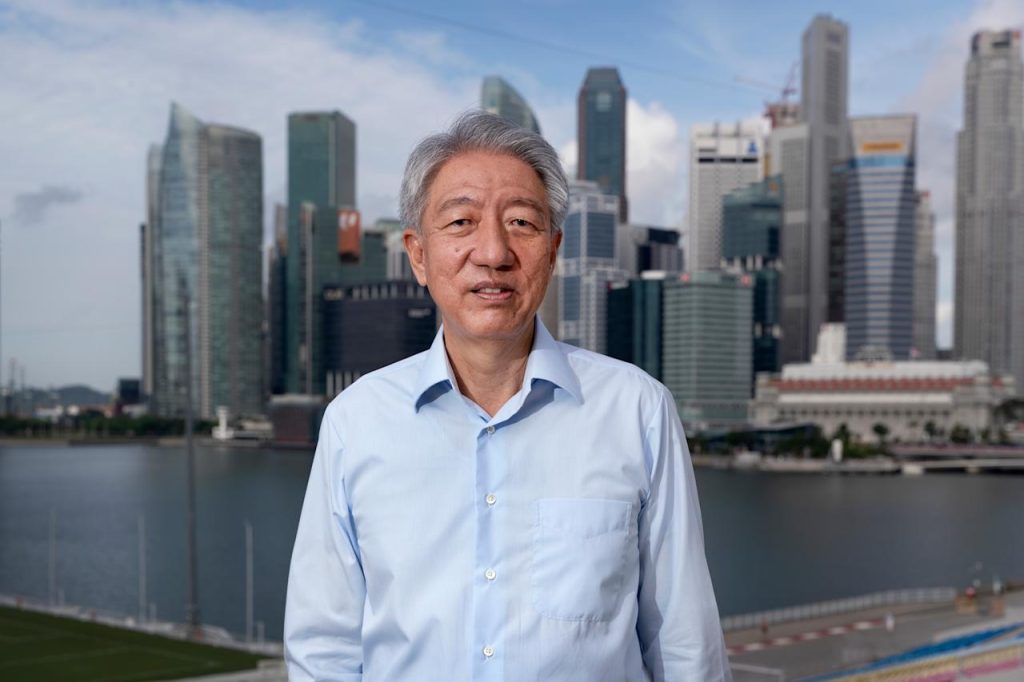
Temasek Holdings has announced the appointment of Mr Teo Chee Hean as its fifth chairman, succeeding Mr Lim Boon Heng. Mr Teo, who retired from politics in April and did not stand in the recent General Election, will join Temasek’s board as deputy chairman on 1 July. He will formally assume the role of chairman on 9 October following the conclusion of the company’s third-quarter board meeting. A seasoned public servant with more than five decades of service, Mr Teo, 70, previously served as Singapore’s Chief of Navy before entering politics in 1992. His political career began with a by-election victory in Marine Parade GRC and continued through multiple successful terms in Pasir Ris-Punggol GRC. Over the years, he held senior ministerial roles, including Deputy Prime Minister from 2009 to 2019 and Senior Minister thereafter. He also served as Coordinating Minister for National Security and led key national initiatives involving digital transformation and climate policy. Temasek cited Mr Teo’s deep expertise in geopolitics and complex policy matters, noting his strategic acumen in managing cross-agency challenges. The firm expressed confidence that Mr Teo’s leadership would be instrumental in navigating an increasingly volatile global environment while sustaining its growth as a global investment house. Prime Minister and Finance Minister Lawrence Wong paid tribute to Mr Lim’s contributions and welcomed Mr Teo’s appointment. Mr Wong commended Mr Lim for enhancing Temasek’s global reach, reinforcing governance standards, and positioning the company as a sustainability leader. He expressed confidence in Mr Teo’s ability to build on these foundations. Mr Lim Boon Heng, 77, has chaired Temasek since 2013, following a distinguished public service career including roles as Minister in the Prime Minister’s Office and Secretary-General of the National Trades Union Congress. He joined Temasek’s board in 2012 and has played a pivotal role in shaping its global trajectory. Under his leadership, the firm’s net portfolio value grew from S$223 billion (US$174 billion) in March 2014 to S$389 billion in the most recent financial year. During his tenure, Temasek expanded significantly across developed markets in Europe and the United States, which now account for nearly half of its 13 international offices. Mr Lim also led the firm through a critical leadership transition in 2021, with Mr Dilhan Pillay assuming the role of CEO from Mdm Ho Ching. He placed strong emphasis on talent development and international representation, aligning with the company’s broader strategy. Temasek credited Mr Lim for strengthening corporate governance and promoting sustainability through initiatives such as the Temasek Roundtable and the Ecosperity conference series. He also spearheaded Temasek’s social initiatives during the COVID-19 pandemic and played a vital role in shaping its T2030 strategy, a decade-long roadmap focused on resilience and long-term value creation. Reflecting on his 13-year journey at Temasek, Mr Lim expressed gratitude for the opportunity to work with a dedicated team committed to excellence. He expressed his confidence in Mr Teo’s leadership, noting his profound understanding of both domestic and international issues. In response, Mr Teo acknowledged Mr Lim’s stewardship and emphasised the need for clarity and foresight in an era marked by global uncertainty. He reaffirmed Temasek’s commitment to addressing both present and future challenges while sustaining its mission to generate long-term value for Singapore and beyond. Mr Pillay praised Mr Lim’s leadership, describing him as a model of stewardship and a unifying force across Temasek’s ecosystem. He credited Mr Lim for fostering a culture of trust through initiatives like the Temasek Tripartite Conversations and welcomed Mr Teo’s appointment as a strategic step forward for the firm. In addition to the chairmanship transition, Temasek announced the upcoming retirements of three long-serving board members. Deputy Chairman Cheng Wai Keung and Director Stephen Lee will step down on 30 June, while Director Bobby Chin will retire on 31 July. Their combined expertise in governance, investment strategy, and industry developments has significantly shaped the company’s decision-making and global positioning. Temasek, which celebrated its 50th anniversary last year, has evolved from managing a S$354 million portfolio of Singapore-based companies to becoming a globally recognised investment firm with a multibillion-dollar footprint. -CNA

News

Moody’s Downgrades Nissan Motor Corporate Family Rating to Ba2

Moody’s Investors Service has downgraded Nissan Motor Co Ltd’s corporate family rating from Ba1 to Ba2, citing ongoing weakness in the company’s financial profile as it attempts to implement a wide-ranging turnaround plan. The global ratings agency has maintained a negative outlook for the Japanese automaker. According to Dean Enjo, Vice-President and Senior Analyst at Moody’s, the downgrade reflects continued deterioration in Nissan’s credit metrics, particularly in relation to its automotive free cash flow and EBIT margin. These key indicators are expected to remain under pressure, raising concerns about the company’s financial resilience. Nissan, Japan’s third-largest car manufacturer, recently announced a significant restructuring initiative aimed at restoring profitability. As part of the plan, the company will reduce its global workforce by approximately 15 percent and scale back the number of its production plants worldwide from 17 to 10. These measures come amid persistent challenges in core markets that have adversely impacted performance. -Reuters

News

Japanese Battery Giant Pauses $1.6 Billion South Carolina Project

AESC, a Japanese battery manufacturer, has announced a temporary halt to construction of its $1.6 billion electric vehicle (EV) battery plant in Florence, South Carolina, citing ongoing policy and market uncertainty in the United States. The company, which is a key supplier for BMW’s EV production, did not elaborate on the specific challenges it is facing. However, South Carolina Governor Henry McMaster pointed to concerns over the potential loss of federal tax incentives for EV buyers, the broader impact of shifting EV-related subsidies, and tariff uncertainties under the trade policies proposed by former President Donald Trump. “What we’re doing is urging caution — let things play out because all of these changes are taking place,” Governor McMaster stated. AESC confirmed the decision in a corporate statement issued on Thursday, noting that while construction will pause, the company remains committed to its long-term investment in the state. “Due to policy and market uncertainty, we are pausing construction at our South Carolina facility at this time,” the statement read. The company has already invested $1 billion in the project and reaffirmed its commitment to invest a total of $1.6 billion and to create 1,600 jobs. AESC did not specify a timeline for when construction would resume. In addition to its operations in Japan, AESC maintains battery production facilities in China, the United Kingdom, France, Spain, and Germany. In the United States, it currently operates a plant in Tennessee and is developing another in Kentucky. The company did not report any disruptions at these other locations. The South Carolina plant is designed to supply battery cells to BMW, which is building a battery assembly facility near its automotive manufacturing hub in Greer. BMW confirmed that its plans to open the plant in 2026 remain unchanged despite the construction delay by AESC. This is not the first adjustment to AESC’s plans in the region. The company had initially announced a second facility on the Florence site, but later revised its projections, stating that a single plant would suffice to meet BMW’s demand. As a result, South Carolina officials rescinded $111 million in state assistance tied to the now-cancelled second plant. Nevertheless, AESC is still receiving significant support from the state, including $135 million in grants from the South Carolina Department of Commerce and $121 million in bonds. The department confirmed that the temporary pause in construction would not affect the current incentive agreements. South Carolina has aggressively pursued EV investment in recent years. Volkswagen-owned Scout Motors is planning a $4 billion facility in the state, which is expected to generate 10,000 jobs and begin production of new electric SUVs by 2027. The state’s economic strategy has long relied on attracting foreign manufacturers such as BMW, Michelin, and Samsung, which have collectively contributed to a significant economic upswing over the past two decades. However, renewed concerns around the potential imposition of high tariffs by the Trump administration are creating a sense of unease regarding the future stability of these partnerships. Governor McMaster sought to allay concerns, noting ongoing discussions between state leaders and federal officials. “I think the goal of the president and the administration is to have robust economic growth and prosperity, and there is no doubt there has to be changes made in our international trade posture, and President Trump is addressing that,” he told reporters. -Japan Today

News

Link REIT in Early Talks for Singapore IPO Amid Shift Toward Fund Management

Link Real Estate Investment Trust is reportedly exploring a potential listing of a new real estate investment trust in Singapore, comprising selected assets located outside of mainland China and Hong Kong. Sources familiar with the matter, who requested anonymity due to the private nature of the discussions, indicated that the Hong Kong-based REIT has engaged in preliminary consultations with advisers regarding the proposed initial public offering. The deliberations remain at an early stage, and there is no certainty that the company will proceed with the listing. Link Asset Management, which manages Link REIT, declined to provide comment on the matter. This move aligns with Link REIT’s broader strategic pivot towards diversification beyond its traditional property management portfolio. In recent months, the firm has announced plans to expand into fund management, partnering with capital investors. As part of this initiative, the company appointed John Saunders, formerly Head of Asia-Pacific Real Estate at BlackRock Inc, to lead its newly launched platform, Link Real Estate Partners. Link REIT has experienced a 27% surge in its share price on the Hong Kong exchange this year, resulting in a market capitalisation of approximately US$13.7 billion (RM57.9 billion). Should the listing proceed, it would mark a notable addition to Singapore’s capital markets, which have been facing challenges in attracting IPOs. As of early June 2025, only five companies have gone public in Singapore, raising a total of just US$39 million, according to data compiled by Bloomberg. Nonetheless, there are indications of renewed activity. Japan’s Nippon Telegraph & Telephone Corp is said to be preparing a REIT listing in Singapore later this year, while US-based AvePoint Inc filed for a secondary listing in the city-state in January. -Bloomberg

News

Substantial Shareholders File Counterclaim Against Peterlabs Over EGM Dispute

KUALA LUMPUR: A legal tussle at Peterlabs Holdings Bhd has intensified, with two of its substantial shareholders initiating a counterclaim against the company and its board, following the firm’s earlier legal move to block an extraordinary general meeting (EGM) requested to restructure its leadership. The shareholders, Bu Yaw Seng and Datin Lin Ching Yein, who jointly hold more than 10 percent of Peterlabs, are seeking a court declaration affirming their right to call for the EGM. Their claim includes an assertion that the current board members breached their statutory duties by failing to convene the requested meeting. Bu and Lin are also asking the court to compel the company to proceed with the EGM. Peterlabs, a manufacturer specialising in animal health and nutrition products, confirmed the counterclaim in a filing with Bursa Malaysia on Friday and stated that it intends to “defend and resist” the action. The counterclaim names all seven current members of the board, along with the company itself, as defendants. The board comprises non-executive chairman Datuk Lim Tai Soon, group managing director Lim Tong Seng, executive directors Teo Chin Heng and Yap Siaw Peng, and directors Datuk Ng Boon Siong, Loh Poh Im, and Ho Siew Li. An additional board member, executive director Datuk Low Saw Foong, is currently suspended from his executive role pending the outcome of both an internal investigation and an ongoing probe by the Malaysian Anti-Corruption Commission. The conflict began last month when Bu and Lin issued a formal notice requesting an EGM with the intention of removing seven directors, including Tai Soon, Tong Seng, Teo, Yap, Boon Siong, Ho, and alternate director Ng Kau. In their place, they proposed appointing two new directors — Datuk Wira Pua Kim An and Datuk Seri Garry Chua Kah Seng. Notably, two board members — Loh and the suspended Low — were not included in the removal proposal put forward by the shareholders. The unfolding boardroom battle underscores growing shareholder dissatisfaction and governance tensions within the company, which may have broader implications for its leadership and strategic direction. -The Edge Malaysia

News

DC Healthcare Strengthens Southern Expansion with New Clinic in Johor Bahru

JOHOR BAHRU : DC Healthcare Holdings Bhd (DC Healthcare) has reinforced its footprint in Malaysia’s growing medical aesthetics sector with the launch of a new Dr Chong Clinic in Pelangi, Johor Bahru. The establishment of this latest branch aligns with the group’s strategic vision to widen access to professional aesthetic care across the country, particularly in southern regions. Approved by the Ministry of Health (MOH), the Pelangi clinic is now fully operational and positioned to serve the local community, further cementing Johor Bahru’s emerging status as a key destination for aesthetic treatments. Managing Director Dr Chong Tze Sheng said the new outlet reflects the group’s dedication to providing professional, safe and easily accessible aesthetic services to a broader segment of the population. “We are delighted to bring our aesthetic expertise to Taman Sri Tebrau, an area known for its dynamic blend of commercial and residential activity. This opening is part of our continued effort to meet the growing demand for aesthetic services nationwide,” he said in a statement. Dr Chong noted that Johor Bahru holds significant potential, not only as a growth area for DC Healthcare but also as a medical tourism hub catering to clients from neighbouring Singapore. The clinic in Pelangi offers a comprehensive suite of services, including skin health care, facial rejuvenation and anti-aging treatments, all performed by trained professionals using the latest medical technologies. This latest outlet complements DC Healthcare’s existing clinics in Bukit Indah and Taman Molek, creating a more robust network of services throughout Johor Bahru. “With every new branch, we reinforce our core values of safety, innovation and personalised care. Clients can expect not only superior treatments but also a welcoming and trusted experience,” added Dr Chong. As of today, DC Healthcare operates 21 Dr Chong Clinics and five Dr Chong Skin and Slimming branches nationwide, solidifying its position as one of Malaysia’s leading providers in the medical aesthetic care industry. The opening of the Pelangi branch marks another milestone in DC Healthcare’s journey towards becoming the most accessible and trusted aesthetic clinic chain in Malaysia.

Scroll to Top

Subscribe
FREE Newsletter