News

News

Perak Government Mulls Vape Ban: A Thorough Review Underway

The Perak government is taking a closer look at whether to ban the sale of electronic cigarettes (vapes) in the state, with a comprehensive review currently in progress. Menteri Besar Datuk Seri Saarani Mohamad revealed that the issue was recently discussed during a State Executive Council (MMK) meeting. However, he noted that several key areas need deeper consideration before any firm decision is made. The responsibility for further assessment has been assigned to A. Sivanesan, Chairman of the State Human Resources, Health, Indian Community Affairs and Integration Committee. “I’ve spoken to Sivanesan on this matter. While the health implications are a major concern, there are also other factors that must be taken into account,” Saarani said during a press conference following the launch of the Perak Digital Economy Action Plan 2030 and the Perak Smart Cities Blueprint 2040 on Wednesday (June 4). He added that the state has also received a formal request from the vape traders’ association seeking a meeting, indicating that the review process will include industry feedback. Joining the event were State Housing and Local Government Committee chairman Sandrea Ng Shy Ching and State Communication, Multimedia and NGOs Committee chairman Mohd Azlan Helmi Helmi. Saarani shared that findings from the review are expected to be tabled at the next MMK meeting, and will encompass a wide range of perspectives — including public health considerations and the potential economic impact on vape business owners and related stakeholders. This isn’t the first time the issue has come up. Saarani previously mentioned that a decision was anticipated during the MMK meeting on May 28, but it has now been postponed to allow for a more detailed study. -Bernama

Investment & Market Trends, News

Ringgit Rises Marginally as US Services Index Misses Expectations

The ringgit made slight gains against the US dollar in early Thursday trading, supported by weaker-than-expected US economic data, though it posted mixed results against other major and regional currencies. According to Bank Muamalat Malaysia Bhd chief economist Dr. Mohd Afzanizam Abdul Rashid, the US Dollar Index (DXY) fell by 0.44% to 98.787 points after recent US economic indicators underwhelmed market expectations. He pointed to the US Institute for Supply Management (ISM) services index, which dropped below the key 50-point threshold to 49.9 in May—well below the forecasted 52.0—signaling a contraction in the services sector. “Based on the ISM survey, import tariffs were cited as a key source of uncertainty, pushing up raw material costs. Some suppliers are also holding back on inventory due to the unpredictable tariff environment,” Dr. Afzanizam noted. He added that this uncertainty may prompt investors and traders to reassess the strength of the US economy, potentially benefiting emerging market currencies like the ringgit. “Friday’s Nonfarm Payroll report will be another crucial indicator to watch,” he said. Looking ahead, he highlighted the upcoming US Federal Open Market Committee (FOMC) meeting on June 16–17 as a significant event, where the Federal Reserve is expected to unveil its macroeconomic forecast for the next three years. At 8am on Thursday, the ringgit inched up to 4.2410/2495 against the US dollar from Wednesday’s closing of 4.2435/2490. However, the local currency struggled against several other major currencies. It slipped against: The Japanese yen to 2.9705/9767 (from 2.9444/9486) The euro to 4.8428/8525 (from 4.8300/8362) The British pound to 5.7466/7581 (from 5.7427/7502) In regional trading, the ringgit remained flat against the Philippine peso at 7.60/7.62 but weakened against: The Singapore dollar to 3.2973/3040 (from 3.2906/2951) The Thai baht to 13.0132/0493 (from 12.9679/9911) The Indonesian rupiah to 260.2/260.8 (from 260.4/260.8) Despite Thursday’s modest improvement versus the greenback, market watchers will be closely monitoring upcoming US data and Fed policy moves for further direction on currency trends. -Business Today

News

Leading egg producer Huat Lai to build Malaysia’s largest cage-free farm

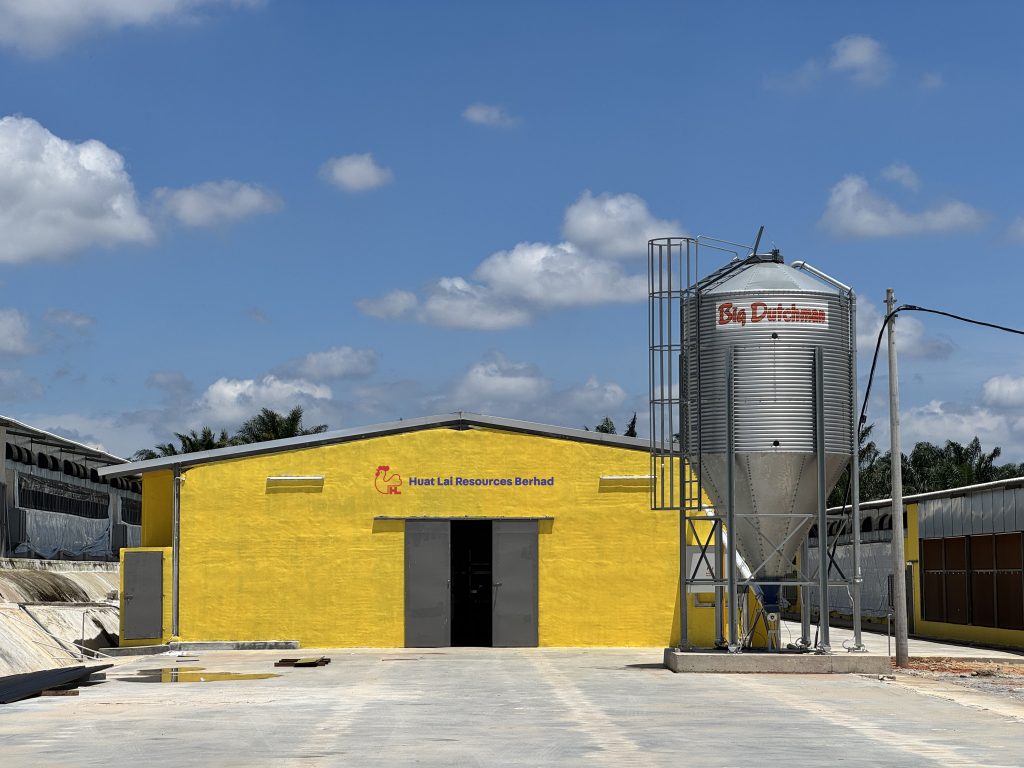
MALACCA: Huat Lai Resources Bhd, one of Malaysia’s largest egg and poultry producers, won praise today from international NGO Lever Foundation for its new plans to develop the country’s largest cage-free egg production facility. Set to launch in Q4 2025, the expansive Malacca operation will house 200,000 layers in a multi-tier aviary system, positioning the company at the forefront of sustainable egg production in Southeast Asia. The transformative project represents a significant expansion of Huat Lai’s cage-free operations, which began with its Singapore subsidiary Chew’s Agriculture Pte Ltd in 2012. From its humble beginnings over 30 years ago as a modest poultry farm, Huat Lai has grown into one of Malaysia’s leading poultry producers. Ten of its egg production barns, which together house 200,000 birds, will transition to cage-free systems over the next few months, creating what will be Malaysia’s largest cage-free egg operation. The new facility will more than quadruple the company’s current cage-free capacity of 60,000 hens, creating a more affordable and reliable cage-free egg supply chain for the Malaysian and overseas markets. “In the past two to three years we’ve seen a remarkable shift in corporate demand for cage-free eggs,” said Edvin Lim, Business Development Manager of Huat Lai Group. “While consumers have long shown interest in animal welfare and sustainable sourcing, the corporate sector—hotels and retailers in particular—have driven the recent surge in demand. Clients now expect 100% cage-free supply once they make the switch, including shell, liquid, and powder egg.” Dozens of food companies in the country have committed to sourcing only cage-free eggs, including retailers such as MYDIN, Jaya Grocer, AEON Malaysia and Village Grocer, hospitality groups such as Sunway Hotels & Resorts and Hatten Hotels, and restaurant brands such as Old Town White Coffee and O’Brien’s. “Huat Lai’s evolution from a small family business to becoming Malaysia’s pioneer in large-scale cage-free egg production demonstrates remarkable entrepreneurial vision,” said Bagas Kusuma Jati, Sustainable Supply Chain Manager at Lever Foundation, which worked with Huat Lai on its cage-free egg expansion. “Their commitment to maintaining core values while boldly investing in sustainable production systems is an excellent model for the industry. The courage to make such significant infrastructure investments ahead of market demand reflects the forward-thinking leadership needed throughout Southeast Asia’s food production sector.” “You need to take a bold move before your clients demand it. Our new facility in Malaysia will allow us to supply cage-free eggs at a larger scale, ensuring a consistent supply for our clients,” Edvin Lim explained. He further noted that corporate customers transitioning to cage-free sourcing “rarely return to traditional caged eggs.” Meanwhile, Daniel Lim, Sales Manager of Huat Lai said “We are going beyond providing steady and reliable food sources to the nation. With the cage-free initiative, we are setting meaningful standards for Malaysia’s poultry industry.” A survey conducted by leading Asian consumer research agency GMO Research found that 77% of Malaysian consumers believe eggs sourced by restaurants, retailers, packaged foods producers and similar businesses should come from cage-free hens. The survey also found that 62% of consumers are willing to pay more for cage-free eggs, with more than half accepting a cost premium of 10-25%. Cage-free egg production, in which hens are given the freedom to move in open environments, improves animal welfare and food quality. Exhaustive research by the European Food Safety Authority found that cage-free egg farms have up to a 25 times lower rates of contamination by key Salmonella strains. An increasing number of consumers have also been leaving eggs off their plates as the best way to help laying hens.

News

Thailand Urged to Build Innovation Ecosystem as Key Growth Engine

Senior business leaders and policy experts are calling for Thailand to accelerate the development of a robust innovation ecosystem capable of producing rapid, tangible results to revitalise economic growth.   Speaking at a recent Thailand Science Research and Innovation (TSRI) dinner talk under the theme “Igniting Thailand’s GDP through the STI Fund”, Kris Chantanotoke, Chairman of the TSRI Board and Chief Executive of Siam Commercial Bank, emphasised that innovation should not be reduced to mere technological advancement. Rather, it must be embedded within a cohesive innovation system underpinned by clear goals, strategic collaboration and economic relevance. “Innovation is not just about technology — it’s about creating an effective system that can drive economic transformation,” Mr Kris stated. He warned that Thailand’s economy remains vulnerable and is unlikely to achieve GDP growth beyond 2% annually in the foreseeable future. Strategic Reorientation Needed Mr Kris highlighted a critical misalignment in Thailand’s current research and development strategy, which focuses primarily on inputs such as publication volume and aims to raise R&D spending to 2% of GDP by 2027. In contrast, other nations like Canada are targeting economic impact directly, with plans to generate US$50 billion in value through leadership in artificial intelligence over a decade. “Research activity is booming like mushrooms, but the application of innovation to solve real-world problems remains limited,” he said. “We need to move from disbursing funds to designing systems that drive real economic results.” He advocated a sharper focus on high-potential sectors aligned with Thailand’s strengths in natural resources and skilled labour. These include medical tourism and wellness, automotive, electronics, and food and agriculture — each with its own value chain that can deliver measurable outcomes. Mr Kris also pointed to external headwinds, including trade tensions and falling tourism, which are undermining the country’s economic base. Thailand remains heavily reliant on exports to the United States, which account for 18% of total trade, while household debt levels remain elevated. In terms of innovation output, Mr Kris cited a stark contrast in patent activity: Thailand registered only 11 resident patent applications per million people in 2023, compared with 274 in Singapore, 1,079 in China, 1,839 in Japan and 3,696 in South Korea. Enhancing Investment and Talent Ecosystems Kobsak Pootrakool, Executive Vice-President of Bangkok Bank, echoed the call for structural reform, urging Thailand to leverage its geographical location, infrastructure, and integrated supply chains to attract greater investment flows into Southeast Asia. He called for the development of a new talent ecosystem geared towards emerging sectors, particularly semiconductors, while also attracting foreign experts. This should be accompanied by continued investment in physical and digital infrastructure, modernisation of supply chains, regulatory reform, and improved ease of doing business. Mr Kobsak also emphasised the importance of upgrading traditional sectors and creating new strategic industries, including fintech, agritech, and climate technology. Delivering Real-World Impact Somkiat Tangkitvanich, President of the Thailand Development Research Institute, cautioned that reliance on export-led growth is increasingly unsustainable amid global protectionism, citing shifts in U.S. trade policy. He stressed that innovation must now become the engine of economic opportunity. He urged researchers to pursue projects that are both economically and commercially viable, citing examples from Japanese universities that, while not globally top-ranked, produce impactful research such as genetic profiling for athletes, matcha green tea innovation, and marine biology breakthroughs. “To deliver impact, research must produce results in a timely manner,” Mr Somkiat said. He called for rigorous assessments of market potential, technological feasibility, and financial viability — including revenue and profitability forecasts. Sompong Klaiyananwasuang, Director of TSRI, reiterated the organisation’s commitment to serving as a national platform that bridges academic research with practical application, ensuring that innovation drives measurable, sustainable progress. -Bangkok Post


News

India’s Aviation Strategy Faces Crosswinds Amid Global and Domestic Constraints

Prime Minister Narendra Modi’s prominent presence at the International Air Transport Association (IATA) annual meeting this week highlights the central role aviation is expected to play in India’s broader development strategy. Yet, as India positions itself for global prominence in air travel, the sector faces mounting operational and regulatory headwinds. Despite ongoing global volatility in the aviation sector—fueled by trade uncertainties and weakened consumer sentiment—India’s major carriers remain bullish. Airlines continue to invest aggressively in fleet expansion, building on historic aircraft orders placed over the past two years. However, industry leaders caution that India’s impressive growth trajectory could stall without critical reforms and infrastructure upgrades. Participants at the IATA gathering in Delhi raised concerns about persistent issues, including aircraft shortages, underdeveloped maintenance capabilities, and high operating costs driven by fuel taxes and airspace restrictions. Hostilities with neighbouring Pakistan have forced Indian airlines into costly detours, increasing fuel consumption and adding to passenger management burdens. Airline executives are lobbying for policy relief, seeking tax exemptions and fee waivers, though the government’s willingness to intervene remains unclear. This comes in contrast to New Delhi’s stated ambition of transforming India into a job-generating global aviation hub, akin to Dubai, which currently channels a significant portion of India’s international traffic. “In the coming years, the aviation sector is expected to be at the centre of massive transformation and innovation, and India is ready to embrace these possibilities,” Prime Minister Modi told industry leaders on Monday. Realising this vision will require extensive capital investment—potentially running into billions of dollars—to modernise airport infrastructure and streamline regulatory frameworks. India Aims High, but Performance Lags India, already the world’s third-largest aviation market by seat capacity after the United States and China, is poised for exponential growth. According to IATA, passenger traffic in India is projected to triple over the next two decades. The government has set an ambitious target to increase the number of operational airports from 157 in 2024 to 400 by 2047. “We are fast emerging as a strategic connector country … India is a natural connector of the skies and aviation as well,” said Civil Aviation Minister Ram Mohan Naidu, addressing global airline executives in New Delhi. Yet, there remains a notable gap between potential and performance. India, the world’s most populous nation with 17.8% of the global population, accounts for just 4.2% of air passengers. In 2024, India registered a record 174 million domestic and international travellers—well behind China’s 730 million. “The outlook is potentially very positive for both the Indian economy and air transport industry. However, such outcomes are not guaranteed,” IATA noted in a recent assessment. Structural limitations continue to weigh down progress. Industry stakeholders argue that existing regulations require modernisation to support sustainable growth. “Even the regulators will agree that they need to update their regulation, because there is a reason why India is not punching above its weight. In fact, it is punching very much below its weight,” said Subhas Menon, Director General of the Association of Asia Pacific Airlines. Global competitors are also calling for India to liberalise its market. Emirates President Tim Clark pointed to demand outstripping available capacity, stating, “For every seat we offer, particularly in the peaks, we’ve got three to ten people trying to get it.” Maintenance capacity is another bottleneck. India lacks sufficient domestic maintenance, repair, and overhaul (MRO) infrastructure, leaving its fleet heavily reliant on overseas facilities amid global shortages. “Airframe maintenance is a huge opportunity for India because you require labour and skills—and that’s something India is investing in,” said IATA Director General Willie Walsh. Compounding these challenges are delays in the delivery of next-generation, fuel-efficient aircraft due to global supply chain disruptions. IndiGo, India’s largest airline, has turned to aircraft leasing to support its international expansion. It has also signed strategic partnerships with Air France-KLM, Virgin Atlantic and Delta to extend its global reach through shared networks. As India accelerates its push to become a global aviation powerhouse, the path forward will demand pragmatic policy reform, infrastructure enhancement, and a regulatory ecosystem conducive to international competitiveness. -Reuters

News

Japan Moves to Boost Domestic Bond Ownership to Stabilise Interest Rates

Japan’s government is expected to reinforce efforts to encourage greater domestic ownership of Japanese Government Bonds (JGBs) as part of a broader strategy to mitigate long-term interest rate volatility caused by supply-demand imbalances, according to a draft of the nation’s annual economic policy guidelines reviewed by Reuters. The draft document, which outlines key fiscal and economic targets for the coming years, maintains Japan’s longstanding objective of achieving a primary budget surplus. The government remains committed to realising this goal “as early as possible during fiscal years 2025 to 2026.” However, it also allows for potential reassessment of the timeline in response to evolving global conditions, notably the uncertain impact of United States trade and tariff policies on Japan’s economy and public finances. The policy draft, scheduled for finalisation later in June following consultations with ruling party lawmakers, signals the government’s intent to uphold fiscal discipline in the aftermath of recent turbulence in the bond market. While shorter-dated JGB yields have remained relatively stable—buoyed by fading expectations of imminent interest rate hikes—super-long bond yields surged to record highs in May, reflecting investor anxiety amid mounting political pressure for increased fiscal expenditure. In response, the Japanese government is reportedly weighing a reduction in the issuance of super-long JGBs, a move aimed at calming market concerns over the sustainability of public finances. The draft underlines the importance of fostering a stable environment for government bond issuance, recognising the crucial role of market confidence in sustaining fiscal operations. Japan’s fiscal strategy continues to hinge on achieving a primary budget surplus—defined as balancing spending without new debt issuance or additional borrowing to cover interest payments. This objective, in place since 2018, is viewed as a benchmark for the government’s ability to fund policy initiatives through existing revenue streams rather than accruing further debt. Nonetheless, a government forecast released earlier this year indicated that the 2025 surplus target might be deferred. Prime Minister Shigeru Ishiba’s administration, currently operating without a parliamentary majority, faces mounting fiscal pressures from opposition-led spending proposals, raising concerns over potential budgetary expansion. -Reuters

News

Lee Jae-myung Elected President of South Korea

SEOUL: Lee Jae-myung of the Democratic Party has been elected President of South Korea in a snap election triggered by the impeachment of former President Yoon Suk Yeol. The result, confirmed early Wednesday, showed an unassailable lead over his conservative rival, Kim Moon-soo, who subsequently conceded defeat and extended his congratulations. The outcome restores the Democratic Party to full control of South Korea’s government, with both the executive and legislative branches now under its leadership for the first time since 2022. Mr Lee, who refrained from formally declaring victory during a speech to supporters in Seoul, reiterated his administration’s priorities: economic revitalisation and national unity. “Let us move forward with hope and make a fresh start from this moment on,” he stated. “Though we may have clashed for some time, even those who did not support us are still our fellow citizens of the Republic of Korea.” Voter turnout reached a record high of 77.8%, the highest in the nation’s electoral history. South Korean media cited exit polls predicting a likely victory for Lee shortly after polling closed, a projection that materialised hours later. Kim Moon-soo, who previously served as Minister for Employment and Labour in Yoon’s Cabinet, acknowledged the result and told reporters he “humbly accepts the people’s choice”. Mr Yoon’s downfall stemmed from a controversial and abrupt declaration of martial law in December, which he claimed was necessary to preserve national security in the face of ideological threats. Initially pointing to North Korean infiltration, he later shifted his accusations towards Chinese influence. The move provoked mass protests, particularly among younger South Koreans, and culminated in a successful parliamentary impeachment. Despite holding considerable support from older and conservative voters, Mr Yoon’s refusal to step down voluntarily after impeachment is believed to have significantly swayed public sentiment in favour of Mr Lee and the Democratic Party. Mr Lee narrowly lost the 2022 presidential election to Yoon by just 247,077 votes, underscoring the political volatility that has gripped the nation in recent years. Given the extraordinary circumstances surrounding this election, no formal transition period is scheduled. Mr Lee will be inaugurated as the 21st President of South Korea on Wednesday, only hours after the final ballots were counted. -CBS News

Investment & Market Trends, News

Bursa Malaysia Rebounds as FBM KLCI Rises to 1,507.1 After Six-Day Slide

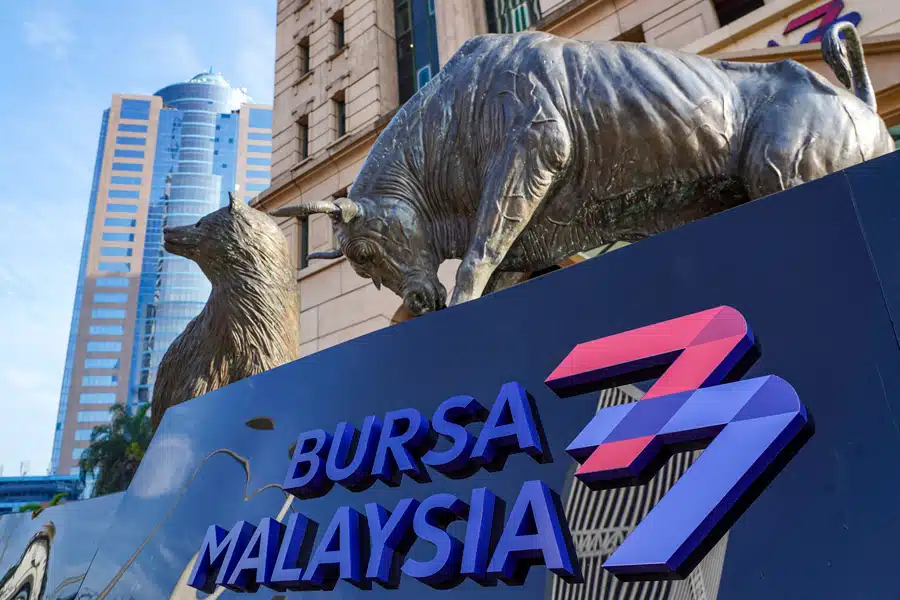
Bursa Malaysia opened on a firmer note on Wednesday, offering investors a degree of relief after enduring six consecutive sessions of decline. The FTSE Bursa Malaysia KLCI (FBM KLCI) advanced by 3.85 points to 1,507.10 at the opening bell, easing immediate concerns over a potential breach of the 1,500-point psychological threshold. The moderate rebound was seen as a response to pent-up bargain-hunting activity, with the index appearing oversold after an extended downtrend. Nonetheless, broader market sentiment remains cautious, weighed down by persistent net foreign outflows and a tepid corporate earnings outlook. TA Securities Research attributed the subdued investor mood to underwhelming first-quarter earnings from local corporates, compounded by weaker-than-expected manufacturing data from China—Malaysia’s largest trading partner. These developments have further clouded the market’s near-term direction and dampened risk appetite. “Immediate index support stays at 1,490, while stronger supports can be found at 1,465 and 1,444. Immediate resistance is kept at 1,564, with subsequent upside hurdles located at the recent high of 1,586, followed by 1,610,” the firm stated in its technical outlook. Wednesday’s early gains were supported by key blue-chip counters. Nestle (Malaysia) Bhd led the rebound, rising 30 sen to RM78.90. Kuala Lumpur Kepong Bhd added 10 sen to RM19.74, while Hong Leong Financial Group Bhd edged up eight sen to RM16.38. Among actively traded stocks, KNM Group Bhd slipped 0.5 sen to three sen, while Avangaad remained unchanged at 28 sen and Sunview Group Bhd held steady at 38 sen. Despite the technical rebound, analysts continue to caution against over-optimism, pointing to external headwinds and structural weaknesses within the domestic market as limiting factors for sustained recovery. -The Star

News

Petronas Maintains Strategic Presence in Canada

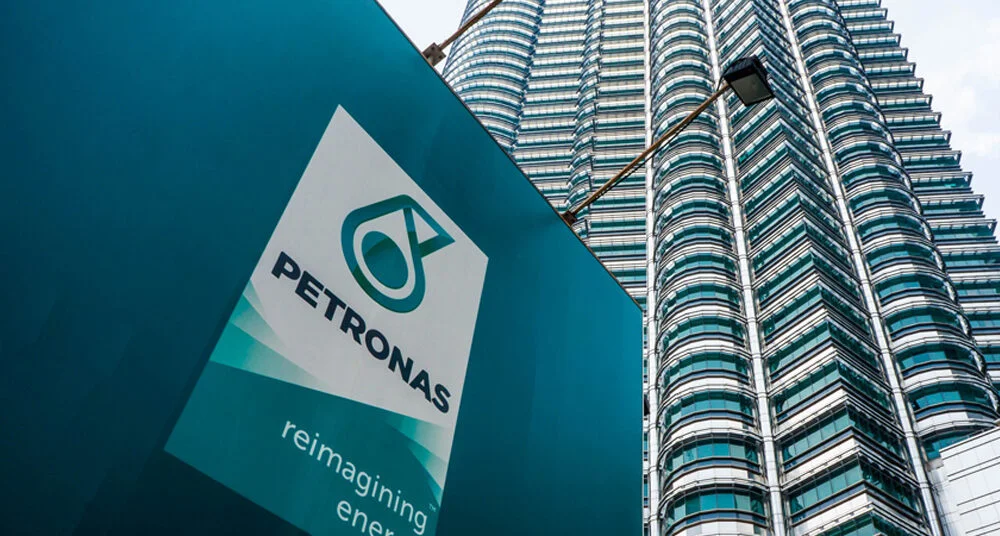
Petroliam Nasional Berhad (Petronas) has dismissed reports suggesting the Malaysian national oil company is exiting its operations in Canada, affirming its continued investment and strategic presence in the North American market. “Any reports that claim Petronas is leaving Canada are inaccurate,” the company stated in response to a query from Bernama. The clarification follows media speculation on Tuesday which indicated that Petronas was evaluating strategic options for its Canadian subsidiary, formerly known as Progress Energy Resources Corp. According to sources cited in those reports, these options may have included a potential sale. Petronas reaffirmed its commitment to ongoing projects in Canada, highlighting its upstream operations through the North Montney Joint Venture, as well as its significant role in the LNG Canada project based in Kitimat, British Columbia. “With LNG Canada preparing for its first cargo this year, Petronas is proud to be providing lower-carbon, reliable Canadian liquefied natural gas to support global energy markets for decades to come,” the company added. Petronas acquired Progress Energy in 2012 for approximately US$5.3 billion, marking a substantial expansion of its shale gas portfolio and reinforcing its global gas supply capabilities. Currently, Petronas holds a 25 per cent equity stake in the LNG Canada project—a major liquefied natural gas joint venture alongside industry leaders Shell plc, PetroChina Co Ltd, Mitsubishi Corporation, and Korea Gas Corporation. -Bernama

News

Tan Sri Muhammad Shahrul Ikram Appointed Malaysia’s Ambassador to the US

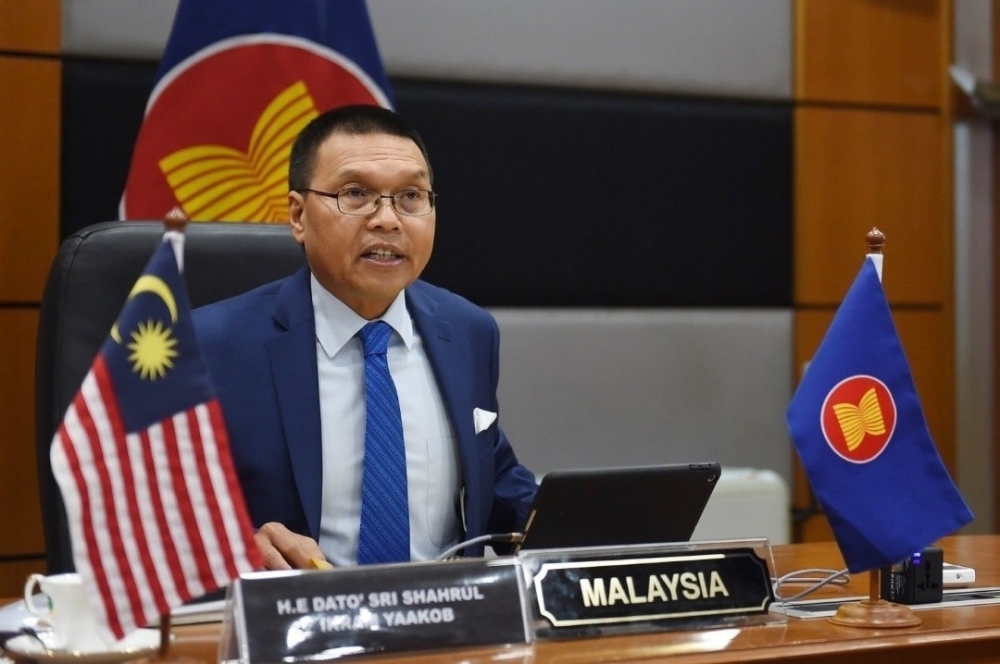
Malaysia has appointed Tan Sri Muhammad Shahrul Ikram Yaakob, former Secretary-General of the Ministry of Foreign Affairs, as its new Ambassador to the United States, according to an official statement from the Foreign Ministry. His Majesty Sultan Ibrahim, the King of Malaysia, presented the Letter of Credence to Tan Sri Muhammad Shahrul at a formal ceremony held at Istana Negara on Tuesday. The ceremony was also attended by Deputy Foreign Minister Datuk Mohamad Alamin and current Foreign Ministry Secretary-General Datuk Seri Amran Mohamed Zin. With a distinguished career spanning more than 35 years in diplomatic service, Tan Sri Muhammad Shahrul brings a wealth of experience to his new posting in Washington D.C. He served as Secretary-General of the Foreign Ministry from 6 January 2019 until 31 May 2022. A native of Pahang, Tan Sri Muhammad Shahrul holds a Bachelor of Science (Honours) in Ecology from Universiti Malaya. He also completed the Advanced Management Programme at Harvard Business School in 2009. He commenced his career in 1988 as an Administrative and Diplomatic Officer. Over the years, he has held numerous key roles, including Ambassador to Qatar and Austria, and Malaysia’s Permanent Representative to the United Nations in New York. His previous diplomatic assignments also included postings at Malaysia’s embassies in Vienna, Washington D.C., and Beijing. Domestically, he has served in several senior capacities, notably as Deputy Secretary-General (Bilateral Affairs), Director-General of the ASEAN-Malaysia National Secretariat during Malaysia’s ASEAN Chairmanship in 2015, and Undersecretary of the Multilateral Political Division. Tan Sri Muhammad Shahrul’s extensive international and bilateral experience is expected to enhance Malaysia’s diplomatic engagements with the United States, particularly in the areas of economic cooperation, regional security, and multilateral collaboration. -Bernama

Scroll to Top

Subscribe
FREE Newsletter