News

News

Muhibbah Engineering Eyes Earnings Upside from Cambodia Airport Deal

Muhibbah Engineering Bhd’s earnings outlook has received a significant boost following recent developments in its airport operations in Cambodia, alongside resilient demand in its construction and oil and gas segments. CIMB Research maintains a positive stance on the group’s prospects, citing both the strategic value of its marine and energy infrastructure exposure and the incremental earnings potential from a newly concluded airport-operating agreement. Muhibbah, through its 21% equity stake in Cambodia Airports, stands to benefit from a landmark settlement reached on 27 March between Cambodia Airports and the Cambodian government. Under the terms of the agreement, Cambodia Airports will receive US$140 million in compensation for its historical investments in Phnom Penh International Airport (PPIA), of which approximately US$56 million was disbursed in March. This agreement marks a pivotal transition for Muhibbah’s airport operations in Phnom Penh, with PPIA set to be replaced by the new Techo International Airport (TIA). Cambodia Airports has entered into a 15-year management services agreement with Cambodia Airport Investment Co to oversee operations at TIA, which is scheduled to commence service on 9 September. The contribution of this new concession to Muhibbah’s earnings is yet to be reflected in CIMB’s current valuation model, pending further updates on key operational and financial metrics. Beyond aviation, Muhibbah continues to demonstrate a strong construction pipeline, with a RM2.6 billion active bid book. Infrastructure projects account for 50% of this pipeline, while waste-heat energy initiatives represent 38%, and oil and gas projects make up the remaining 12%. This diversified order book supports the group’s earnings visibility amid near-term uncertainties, including those stemming from the ongoing PETRONAS–Petroleum Sarawak dispute. Meanwhile, Favelle Favco Bhd—Muhibbah’s 65%-owned subsidiary—is currently bidding for approximately RM3 billion in crane supply contracts. The Middle East remains a key growth region, contributing over RM100 million in prospective orders. Mega developments such as Saudi Arabia’s New Murabba mixed-use project and infrastructure requirements for the Neom 2029 Asian Winter Games are driving demand. CIMB Research has reiterated its “Buy” rating on Muhibbah Engineering, setting a target price of RM1.10 per share. The anticipated re-rating catalysts include incremental income from the Cambodian airport operations and growing crane orders from the Middle East. However, the research house also notes downside risks, particularly a potential slowdown in oil and gas sector activity, which could temper the group’s broader earnings trajectory. -The Star

News

KPJ Healthcare Eyes Stronger H2 FY2025 on Operational Efficiencies

KPJ Healthcare Bhd is poised for earnings momentum in the second half of 2025, driven by continued improvements in operational efficiency and cost-optimisation measures, according to analysts. Kenanga Research reported that the group’s management remains confident of narrowing losses at its newer hospitals, though the scale of improvement may be modest. In the first quarter of 2025 (1Q25), KPJ’s performance reflected mixed indicators compared to the same period last year. While core net profit and minority interests stood at RM630 million—meeting analysts’ expectations—other operational metrics revealed both strengths and weaknesses. Notably, average revenue per inpatient rose 10% year-on-year, accompanied by increases in outpatient throughput, surgeries, and operational beds. However, bed occupancy rates and inpatient numbers declined in the same period. Kenanga noted that first-quarter losses at KPJ’s new hospitals have narrowed by RM5 million to RM6 million compared to 1Q24. For the full year 2024 (FY24), estimated pre-tax losses at these facilities reduced to between RM90 million and RM99 million—an improvement of RM40 million to RM50 million. Looking ahead, KPJ aims to achieve 4,200 operational beds by the end of 2025. Beyond this, the group is targeting a total of over 6,000 beds within the next five years, primarily through brownfield expansion already incorporated into current forecasts. Further cost efficiency gains are expected as KPJ nears the completion of its central procurement implementation. With more than 85% of its hospitals now integrated into the central system, the group anticipates continued enhancement in cost control. Kenanga Research also provided a comparative view on KPJ’s valuation. The stock is currently trading at 36 times and 31 times forecast FY25 and FY26 earnings, respectively. In contrast, regional peers such as Thailand’s Bumrungrad Hospital and Bangkok Dusit Medical Services are trading at more modest FY26 PE ratios of 17 and 20 times, respectively. Both Thai operators also boast superior EBITDA margins, with Bumrungrad and Bangkok Dusit projected at 38% and 24% respectively for FY25—significantly higher than KPJ’s. Kenanga maintained its earnings forecast, a target price of RM2.50 per share, and an “underperform” rating on the stock. However, CGS International Research (CGSI Research) retained a more bullish view, reaffirming its “add” call with an unchanged target price of RM3.35 per share. The firm expects a recovery in patient volumes through the remainder of FY25. Management has also revealed ongoing internal initiatives aimed at enhancing operational insight. Since 2023, KPJ has been classifying its hospitals by case-mix, allowing for better standardisation of resource allocation and clearer understanding of cost structures across its network. Additionally, KPJ confirmed that none of its 30 hospitals had been removed from any insurance panels, despite ongoing discussions with insurers around controlling healthcare costs in Malaysia. Patient volume is reportedly picking up at its recently launched Kuala Selangor facility. -The Star

Investment & Market Trends, News

EPF Reports RM18.31 Billion in Q1 Investment Income as Global Risks Persist

The Employees Provident Fund (EPF) has reported a 13% year-on-year decline in investment income for the first quarter of 2025 (1Q25), recording RM18.31 billion compared to RM20.99 billion in the same period last year. The subdued performance reflects heightened geopolitical risks and economic uncertainty that have weighed heavily on global financial markets. This marks the fund’s weakest first-quarter return since 1Q22, when RM15.85 billion was generated, underscoring the volatility brought on by shifting global trade dynamics. EPF Chief Executive Officer Ahmad Zulqarnain Onn attributed the downturn to early-year disruptions in global markets driven by trade frictions and policy uncertainties, particularly surrounding the United States. “Although the US tariffs were formally announced on 2 April, markets were already pricing in volatility earlier in the quarter, leading to weakened sentiment,” he said in a statement. The timing and pace of monetary easing across regions have also diverged, further dampening investor appetite for risk. Dr Mohd Afzanizam Abdul Rashid, Chief Economist at Bank Muamalat Malaysia Bhd, noted that the pullback in global equity markets was expected, particularly as equity investments accounted for 59% of EPF’s total income during the quarter. “While the Q1 performance was soft, we have seen signs of a rebound in global equities in May, which may continue into June,” he remarked, suggesting a more optimistic outlook for the remainder of the year. Ahmad Zulqarnain emphasised that EPF’s globally diversified portfolio has helped cushion the impact of market volatility, preserving long-term value for members. Afzanizam echoed this, highlighting that 48% of EPF’s asset base remains in fixed income, providing stability and potential capital appreciation as global interest rates ease. Looking ahead, analysts expect improvement in EPF’s returns during the second half of 2025, though uncertainties remain. Afzanizam stressed the importance of US trade policy developments, particularly as the 90-day pause on tariffs concludes in July, noting that elevated geopolitical risks and fiscal concerns in the US may continue to weigh on market sentiment. Vincent Lau, Head of Equity Sales at Rakuten Trade, also anticipates a recovery in global markets as tariff tensions ease. “We expect statements from the White House soon that could provide the clarity markets need. That would bode well for Malaysia’s economic recovery,” he said. Despite some downward revisions in FBM KLCI valuations, Lau pointed to falling bond yields and strong risk appetite as encouraging signs. “Bitcoin reaching all-time highs also signals renewed investor confidence. EPF’s diversified portfolio and past dividend strength put it in a favourable position for a rebound.” Economist Geoffrey Williams noted that the FBM KLCI gained 13% in mid-May following the tariff pause, although these gains were not sustained due to profit-taking and lingering uncertainty. He cautioned that a domestic-centric investment approach may be limiting returns and advocated for more aggressive overseas diversification. In the first quarter, international investments generated RM8 billion, or 44% of EPF’s total investment income. Domestic investments, which make up 62% of total assets, continue to provide consistent income through dividends, interest, and sukuk profits. As of March 2025, EPF’s total investment assets stood at RM1.26 trillion, with 38% of this invested in international markets. Notably, the FBM KLCI has declined approximately 8% year-to-date and has contracted around 14% since its 2018 peak. In contrast, the Dow Jones has regained some ground after falling 16% earlier this year and is now up over 75% since 2018, reflecting the stronger long-term performance of foreign equities. With the International Monetary Fund lowering its global growth forecast for 2025 to 2.8%, and Malaysia’s GDP growth likely to come in below the earlier projection of 4.5%–5.5%, the outlook remains cautious. However, EPF maintains it is well-positioned. “In a more challenging and uncertain market environment, the EPF maintains a dynamic and well-diversified portfolio to help safeguard value and manage downside risks,” said Ahmad Zulqarnain. “We continue to explore opportunities across both domestic and international markets to support sustainable, long-term returns for our members.” Of the total Q1 investment income, RM15.87 billion was attributed to Simpanan Konvensional and RM2.44 billion to Simpanan Syariah. The EPF reaffirmed its commitment to allocating over 70% of its annual investments domestically, aligning with the government’s Ekonomi Madani framework. Additionally, through its GEAR-uP initiative, the fund is actively building investment opportunities in the healthcare sector, further reinforcing its role as a long-term institutional investor. -The Star

News

Fujitsu Launches Strategic Overhaul to Drive Digital Transformation in Financial Services

KAWASAKI: Fujitsu Limited has unveiled a newly systematised business strategy aimed at accelerating the digital transformation of financial institutions. This strategic pivot, underpinned by a move towards service-based offerings, positions Fujitsu to address pressing societal challenges and align more closely with the rapidly evolving financial services landscape. The financial sector is undergoing unprecedented transformation. As digitalisation reshapes operations—from the rise of cashless transactions to automation of back-end processes—non-financial businesses are increasingly embedding financial services into their platforms. This cross-sector integration presents fresh opportunities for innovation, particularly through strategic collaboration between traditional financial institutions and other industries. Fujitsu intends to drive this evolution through the deployment of advanced accounting systems and digital channel solutions that harness the full potential of data. Central to this approach is Fujitsu Uvance, a service framework that brings together the company’s deep operational expertise with cutting-edge technologies, including artificial intelligence and open architecture. The firm’s revamped financial services offering includes two core solutions that will be expanded incrementally: Fujitsu’s core banking solution is a cloud-native platform designed to overcome the sector’s need for greater flexibility and scalability. With open API integration, it offers seamless connectivity to external services and is expected to support future automation of system development via generative AI. In tandem, Fujitsu’s digital channel services present a holistic store solution that integrates both in-person and remote customer interactions. This service redefines the financial front office, transforming traditional bank branches into agile decision-making hubs powered by AI. By managing digital operations and cash-based functions within a unified system, it enables significant operational efficiencies. As part of its long-term strategic realignment, Fujitsu has also confirmed it will discontinue the production and provision of its proprietary ATMs and branch-specific hardware in Japan by the end of March 2028. The company has reached a basic agreement with OKI Electric Industry Co., Ltd. for hardware procurement, ensuring continuity in this area. Fujitsu will continue to offer tailored hardware solutions for convenience store ATMs nationwide. This transition underscores Fujitsu’s commitment to redefining financial infrastructure through innovation while contributing to the broader social agenda. The initiative is closely aligned with the company’s pledge to support the United Nations’ Sustainable Development Goals (SDGs), reinforcing its corporate purpose: to make the world more sustainable by building trust in society through innovation. -Fujitsu Limited

Investment & Market Trends, News

Gold Prices Rebound Amid US-China Trade Tensions and Weak Dollar

Gold prices remain subject to sharp fluctuations, with no definitive directional trend emerging as of early June 2025. Renewed geopolitical uncertainty and the escalating trade conflict between the United States and China are proving to be key catalysts for recent volatility in the precious metals market. As investors seek clarity in uncertain times, the outlook for gold remains complex and reactive to global macroeconomic and political developments. After posting a weekly decline of 2.02% for the period ending 30 May, spot gold prices have rebounded sharply at the start of this week, supported by renewed safe-haven demand. The immediate trigger appears to be rising tensions between the US and China, as well as ongoing instability in Eastern Europe. On Monday, Beijing accused Washington of violating the existing US-China trade truce following the imposition of additional US restrictions on chip-related technologies. These include tighter curbs on the export of critical jet engine parts to China, broader regulatory action targeting Chinese subsidiaries, and visa revocations for students linked to the Chinese Communist Party or studying sensitive disciplines. In response, China has reportedly delayed approvals for rare earth exports, a strategic countermeasure affecting US industry. In parallel, the global economic backdrop continues to send mixed signals. US manufacturing data released Monday showed contraction for a third consecutive month. The ISM manufacturing index printed at 48.5—below the forecasted 49.5—while its import component fell to a 16-year low. The export gauge also dropped to a five-year low. Furthermore, construction spending in April declined by 0.4%, defying expectations of a 0.2% increase. European data offered marginally more stability. The Eurozone’s final manufacturing PMI for May came in at 49.4, aligning with estimates. The UK manufacturing PMI surprised to the upside, registering 46.4 versus the projected 45.1. On the investment front, global gold ETF holdings stood at 88.508 million ounces as of 30 May. Significantly, this marked the first weekly inflow after five consecutive weeks of outflows, bringing year-to-date inflows to 6.82%. Market participants are now closely monitoring a series of pivotal economic indicators due later this week. These include the ECB’s monetary policy decision on 5 June, where the central bank is widely expected to implement a 25 basis point rate cut—its eighth reduction since initiating an easing cycle in June 2024. Key US data such as JOLTs job openings, ADP employment change, ISM Services, and non-farm payroll figures are also due. Meanwhile, investors are tracking China’s manufacturing and services PMIs and the Eurozone’s services data for broader global context. On the geopolitical front, developments in the Russia-Ukraine conflict continue to pose systemic risk. On 1 June, Ukraine’s Security Service launched a significant drone strike inside Russian territory, reportedly damaging 41 aircraft. Despite peace talks held in Istanbul on 2 June, the outlook for a lasting resolution remains bleak. Currency markets are responding accordingly. The US Dollar Index has slipped to 98.71, its lowest level since April 2022 excluding the tariff-induced dip in April 2024. Leading institutional investors have been scaling back their bullish forecasts on the greenback, adding further pressure. Concurrently, US 10-year and 30-year Treasury yields rose by 0.90% to 4.44% and 4.9781%, respectively. From a technical perspective, gold may gain further support if it closes above $3,372. Analysts advise adopting a buy-on-dips strategy with stop-loss levels set at $3,325 or $3,300. Should geopolitical risks escalate further and the dollar remain under pressure, gold could test key resistance at $3,400, followed by potential moves towards $3,414 and $3,435. Market watchers are advised to stay alert to ongoing US-China trade dynamics to better manage risk exposure. -Times of India

News

Vietnam to Secure $2 Billion U.S. Agricultural Imports Amid Trade Deal Talks

HANOI: Vietnamese enterprises are poised to sign memoranda of understanding (MoUs) with U.S. partners to purchase American agricultural products valued at $2 billion, the Ministry of Agriculture and Rural Development confirmed on Tuesday. The agreements form part of broader efforts to finalise a new trade arrangement between Vietnam and the United States. The MoUs are expected to be formalised during an official visit to the United States by a delegation of 50 Vietnamese companies, led by Agriculture Minister Do Duc Duy. Among the deals are five MoUs covering the purchase of $800 million worth of agricultural goods from the state of Iowa over a three-year period. These products include corn, wheat, dried distillers grains and soybean meal, the ministry stated. The negotiations come at a critical juncture as bilateral trade relations face potential strain. The Trump administration previously imposed 46% “reciprocal” tariffs on Vietnamese exports. Although implementation has been deferred until July, the threat of enforcement looms and could significantly disrupt Vietnam’s export-led growth model, particularly given the United States is its largest export market. Vietnam is seeking to address the growing trade imbalance with the U.S., which posted a trade deficit of $123 billion with the Southeast Asian nation in 2024. As part of its commitment to narrow the gap, Vietnam has agreed to expand imports of American goods and services. In 2024, Vietnam imported $3.4 billion worth of U.S. agricultural products, while exporting $13.68 billion in agricultural goods to the American market, according to Vietnam News Agency. The country has also pledged to increase purchases of other U.S. goods, including Boeing aircraft and liquefied natural gas, and to enhance its enforcement efforts against counterfeit goods and digital piracy following concerns raised by the U.S. government. -Reuters

News

China Says U.S. Breached Trade Agreement With New Sanctions and Visa Policies

Beijing has strongly condemned a series of recent U.S. policy moves that it claims undermine a fragile trade détente agreed between the two economic superpowers, stating these actions “seriously violate” the consensus previously reached. In a formal statement released on Monday, China’s Ministry of Commerce cited new U.S. restrictions as cause for concern, including tightened export guidelines for artificial intelligence chips, a ban on the sale of chip design software to Chinese firms, and proposed revocations of student visas for Chinese nationals. These measures, it asserted, run counter to the trade de-escalation agreement struck just last month between Washington and Beijing. “These practices seriously violate the consensus,” the Ministry said, referring to the bilateral commitment to reduce tariffs and revive suspended trade flows. The agreement, which aimed to pause the escalating trade conflict, was meant to last 90 days to allow time for more substantive negotiations. Despite this temporary truce, major structural differences remain unresolved. The U.S. Trade Representative, Jamieson Greer, announced at the time that Washington would reduce its steep 145% import tax to 30%, while China agreed to lower its tariff rate on American goods from 125% to 10%. Yet tensions have continued to simmer. According to Beijing, it has upheld its obligations under the agreement by suspending or withdrawing retaliatory tariffs and other restrictive measures. “The United States has unilaterally provoked new economic and trade frictions, exacerbating the uncertainty and instability of bilateral economic and trade relations,” the Ministry’s statement said, noting that China had consistently honoured its commitments. The Ministry further warned that China would implement “resolute and forceful measures” in response to what it described as unjustified American actions, aimed at protecting its legitimate interests. U.S. President Donald Trump escalated the rhetoric last Friday, declaring via social media that China had “totally violated” the agreement and that he would no longer act as a conciliatory partner in trade discussions. “So much for being Mr. NICE GUY!” he wrote, adding in a separate Oval Office address that he still hoped to speak directly with Chinese President Xi Jinping to resolve the issues. The war of words continued over the weekend. In a televised appearance, U.S. Commerce Secretary Howard Lutnick accused China of “slow rolling” the deal and said the U.S. was taking actions “to show them what it feels like on the other side of that equation.” One such action includes the planned revocation of visas for Chinese students currently studying in the United States—a population exceeding 275,000. This decision further strains relations between the two countries as they compete for supremacy in critical technologies, including artificial intelligence and semiconductor development. Beijing also views the U.S. tightening of high-tech export controls as an attempt to constrain its ambitions in the Asia-Pacific, particularly in relation to Taiwan, a key American ally and a global leader in advanced semiconductor production. In response to President Trump’s accusations, the Commerce Ministry said Washington was distorting the facts and failing to take responsibility for its actions. “Instead of reflecting on itself, it has turned the tables and unreasonably accused China of violating the consensus, which is seriously contrary to the facts,” the Ministry stated. -The Marietta Times

News

Philippines’ Top E-Wallet GCash Prepares for IPO with Strategic Share Split

Globe Fintech Innovations Inc, the operator of the Philippines’ leading mobile wallet platform GCash, has approved a stock split aimed at increasing its pool of common shares, signalling early-stage preparations for a potential initial public offering. The fintech company will lower the par value of its common shares from PHP1.00 to PHP0.03 per share, thereby expanding the number of authorised common shares to 71.7 billion from the current 2.15 billion. The total authorised capital stock will remain unchanged at PHP2.15 billion. This corporate action, disclosed by shareholders Ayala Corporation and Globe Telecom Inc, remains subject to regulatory approval. Ayala Corporation noted, “The company is future-proofing for capital-raising opportunities, which could include an IPO.” While Globe Fintech Innovations Inc—also known as Mynt—has yet to formally file for a public listing, the firm’s potential valuation could reach at least US$8 billion (approximately RM33.9 billion), according to market observers. The move comes as other Philippine companies are testing the capital markets despite current volatility. Notably, Maynilad Water Services Inc and Hann Holdings Inc, a casino operator, have both indicated intentions to proceed with IPOs as early as this year. -Bloomberg

News

Microsoft Confirms Additional Job Cuts Following 6,000 Layoffs in May

Microsoft Corporation has executed a further round of job cuts, affecting several hundred employees, just weeks after initiating its largest workforce reduction in years. The latest development underscores the ongoing recalibration within the technology sector, where companies are simultaneously pursuing aggressive investment in artificial intelligence (AI) while restructuring to improve cost efficiency. According to a regulatory notice filed in Washington state and reviewed by Bloomberg, more than 300 roles were eliminated on Monday. A spokesperson for Microsoft confirmed that the reduction forms part of the same broader restructuring strategy that led to approximately 6,000 redundancies last month. “We continue to implement organisational changes necessary to best position the company for success in a dynamic marketplace,” the spokesperson stated. The AI-driven transformation sweeping across the tech industry is reshaping workforce demands. Companies are increasingly reallocating resources to AI-focused roles while leveraging automation and AI capabilities to streamline operations and reduce headcount. Microsoft, alongside other technology leaders such as Meta Platforms, has been vocal in its endorsement of AI-powered software development tools. These tools, which support coding and operational efficiency, are being credited with accelerating development timelines and reducing labour needs. Just last week, Salesforce reported that its internal use of AI had enabled it to limit new hires. While Microsoft’s previous layoffs disproportionately impacted software engineering roles, the specific departments or functions affected by the most recent cuts have not been disclosed. As of June 2024, Microsoft employed approximately 228,000 full-time staff globally, with around 55% based in the United States. -South China Morning Post

ESG, News

PTP Expands Global Reach and Accelerates Green Port Strategy at 25-Year Milestone

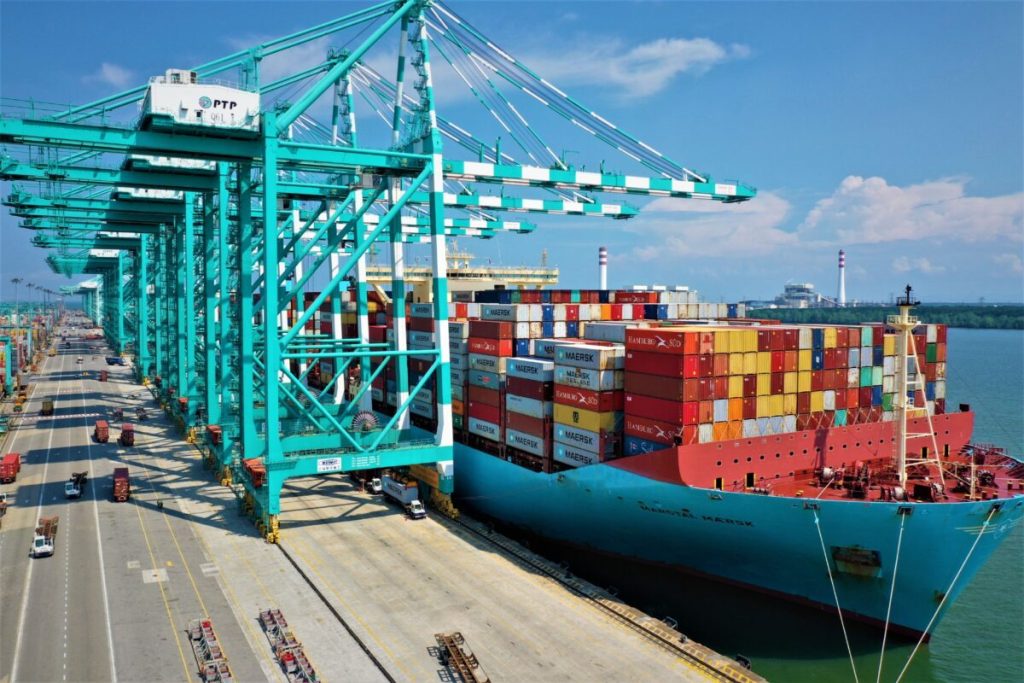
Tanjung Pelepas Port (PTP) is accelerating its green transformation and reinforcing international partnerships as it celebrates 25 years of operations. The Malaysian port has emerged as one of the world’s top five most efficient ports and continues to gain global recognition for its forward-looking approach to trade, sustainability, and innovation. Chief Executive Officer Mark Hardiman revealed that recent high-level dialogues with the Australian government have strengthened bilateral ties, catalysed in part by the Australia-Southeast Asia Business Exchange Trade Delegation’s visit in 2024. These engagements are expected to culminate in the signing of a memorandum of understanding (MoU) between PTP and the Port of Melbourne, formalising a strategic partnership focused on sustainable port operations and digital logistics integration. “PTP’s global outreach reflects our ambition to be not just a trade hub, but a responsible, future-ready port,” Hardiman told Business Times. PTP is intensifying its decarbonisation efforts through both land and sea-based innovations. Key initiatives include the implementation of asset digitalisation systems, a sophisticated Vessel Traffic Management System (VTMS), and a growing reliance on renewable energy sources such as rooftop solar, solar farms, and waste-to-energy technologies. The port has already achieved an 18 per cent reduction in carbon emissions intensity as of March 2025 and is targeting a 45 per cent reduction by 2030. This is complemented by the transition to electric prime movers (e-PMs), ongoing trials with biodiesel B20, and the exploration of green vessels aligned with the International Maritime Organisation’s Green Voyage 2050 initiative. PTP’s commitment to sustainability dates back to 2012, when it became one of the early adopters of a fully electric fleet of rubber-tyred gantry (e-RTG) cranes—well ahead of the United Nations’ introduction of the Sustainable Development Goals (SDGs). Social and governance imperatives also underpin PTP’s transformation. In alignment with Malaysia’s Ekonomi Madani, the port promotes gender diversity in its workforce, having pioneered the employment of the nation’s first female marine harbour pilot, RTG operator, and prime mover drivers. Women now make up 10 per cent of its operational fleet. “Our people-first culture is non-negotiable. We are committed to workplace safety, career development, and inclusive growth,” said Hardiman, noting that skills training, occupational safety, and Corporate Social Responsibility (CSR) initiatives remain foundational to its operations. On the governance front, PTP adheres to global best practices. It is a signatory to the United Nations Global Compact, works closely with the Malaysian Anti-Corruption Commission to ensure anti-bribery and corruption (ABAC) compliance, and maintains rigorous standards on labour and human rights protections. Since its inception in 2000, PTP has evolved from a bold vision into a major global logistics player. It is currently ranked among the world’s top 15 container ports by throughput. “We believe in transforming vision into reality. Our journey has not been easy, but it has made us more resilient. Our growth will continue to be guided by sustainability and innovation,” Hardiman concluded. -Business Times

Scroll to Top

Subscribe
FREE Newsletter