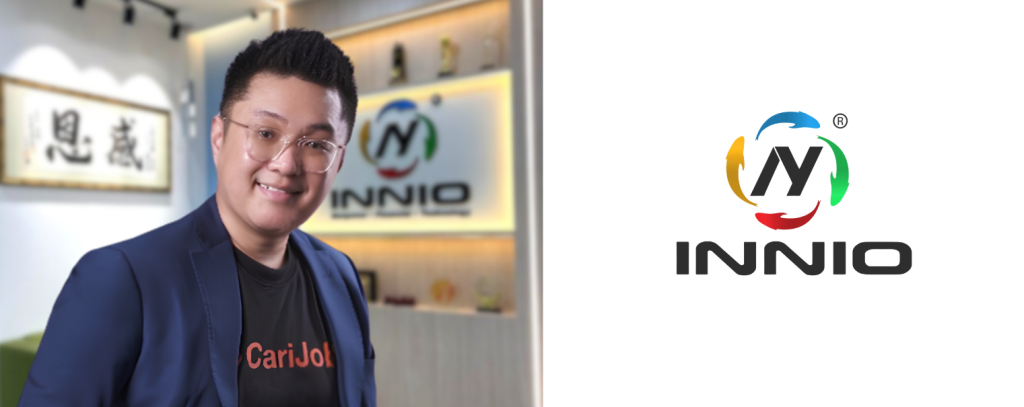
Every economy is built on a workforce. Yet while conversations around talent often focus on executives, professionals and knowledge workers, a far larger segment quietly keeps industries moving every day. Factory operators, warehouse staff, logistics crews, retail associates, kitchen teams and frontline service workers form the operational backbone of businesses across the country. Ironically, they have also been among the most overlooked. For decades, recruitment for the mass workforce has remained fragmented, heavily transactional and largely underserved by technology. Employers have struggled to secure reliable manpower, while job seekers have often found themselves navigating disconnected systems that prioritise placements over long-term opportunities. Founder of INNIO Group – Kong Chin Meng. For INNIO Group, this gap represents far more than a recruitment challenge. It is an opportunity to rethink how the workforce ecosystem should function. Rather than operating as a conventional manpower provider, the Malaysian company has built an integrated platform that connects workforce sourcing, recruitment, deployment and financial wellbeing into one connected ecosystem—bringing together manpower outsourcing, foreign worker recruitment, AI-powered hiring technology and earned wage access under a single operating model. Looking Beyond Recruitment The biggest workforce challenge facing employers today is not finding candidates. It is finding people who stay. For businesses operating in manufacturing, logistics, retail, food and beverage, and other labour-intensive industries, recruitment has become only one part of a much larger equation. Retention, workforce stability and operational continuity have become equally important. INNIO Group recognised this reality long before it became a widespread business conversation. Its founders had spent years working alongside employers facing recurring manpower shortages, high staff turnover and inconsistent recruitment standards. Time after time, businesses were presented with lists of candidates when what they actually needed were dependable employees capable of remaining with the organisation long after their first day of work. That observation fundamentally reshaped the company’s direction. Rather than focusing on recruitment as a one-off transaction, INNIO Group began building an integrated workforce infrastructure designed to support employers throughout the entire employment lifecycle. Building a Connected Workforce Platform The company’s operating model reflects that broader ambition. Its manpower outsourcing and licensed foreign worker recruitment business provide the operational foundation. Sitting alongside these services is CariJob, an AI-powered recruitment platform developed specifically for the mass workforce and fresh graduates—segments traditionally overlooked by mainstream job portals designed primarily for white-collar professionals. Completing the ecosystem is PaydayNow, an earned wage access platform that extends support beyond recruitment by improving financial flexibility and workforce engagement. Together, these businesses create an integrated platform where employers can source talent, deploy workers and strengthen retention through a single ecosystem rather than multiple disconnected service providers. It is a model designed not simply to fill vacancies, but to improve the overall experience for both employers and employees. Solving the Right Problem As Malaysia’s labour market continues to evolve, the questions employers are asking have changed. The conversation has shifted from: “Can you fill this position?” to: “Can you help us build a more stable workforce?” This distinction has become increasingly important. Recruitment alone no longer delivers competitive advantage. Businesses now require workforce intelligence, stronger compliance, improved employee experience and better long-term retention strategies. Recognising this transition, INNIO Group has continued investing in technology that moves beyond candidate matching. By integrating operational data, AI capabilities and workforce management into a connected platform, the company is creating solutions designed to improve hiring decisions while supporting employers long after recruitment has been completed. The result is a business focused not on transactions, but on workforce infrastructure. Growth Through Discipline Many fast-growing companies measure success by revenue or headcount. INNIO Group measures it differently. Its ambitions are defined through recurring employer relationships, platform engagement and sustainable profitability. By the end of 2026, the group aims to serve 2,000 active employer clients across its manpower outsourcing and CariJob businesses, establish a nationwide network of 100 distribution agents and support 10,000 workers through PaydayNow. Equally significant are the opportunities the company has consciously chosen not to pursue. Rather than expanding aggressively into new markets or chasing low-margin recruitment contracts, leadership has prioritised strengthening its Malaysian foundation first. Growth, in this context, is measured not by speed but by resilience—building a business capable of sustaining long-term value regardless of changing economic conditions. Scaling a Business, Strengthening Leadership As organisations expand, leadership inevitably changes. For INNIO Group, scaling has required a deliberate transition from founder-led decision making towards building a stronger organisational structure capable of supporting long-term growth. One of the defining developments has been the operational partnership between the company’s co-founders. While leadership responsibilities were once closely intertwined, responsibilities have evolved into clearly defined roles across finance, governance, recruitment operations and strategic development. This separation has allowed the organisation to move faster while strengthening accountability across the business. At the same time, dedicated teams have been established across product development, artificial intelligence, enterprise sales and operational delivery, reducing dependence on individual decision-makers and creating systems capable of supporting larger-scale growth. It reflects a reality shared by many scaling businesses: sustainable organisations are built through strong systems rather than individual effort alone. Building Beyond Malaysia While Malaysia remains the company’s immediate priority, the long-term vision extends considerably further. Many of the workforce challenges experienced domestically are shared by neighbouring economies across Southeast Asia, creating opportunities for technology-driven workforce platforms capable of addressing similar structural issues. INNIO Group sees its future in becoming more than a manpower company. Its ambition is to build a regional employer-and-workforce platform powered by technology, data and stronger governance, beginning with Malaysia before expanding into neighbouring markets such as Singapore and Indonesia. Alongside this expansion, the company continues strengthening its AI capabilities through CariJob, where proprietary AI modules are being developed to improve candidate matching, onboarding and long-term workforce retention. As industries become increasingly digital and labour markets continue to evolve, the companies creating lasting impact will not simply connect people with jobs. They will build the systems that allow businesses and workers to grow together. That is the future INNIO Group