The Executives

The Executives

Kristina Rai Appointed Director Of Bank Negara Malaysia’s FENNCO

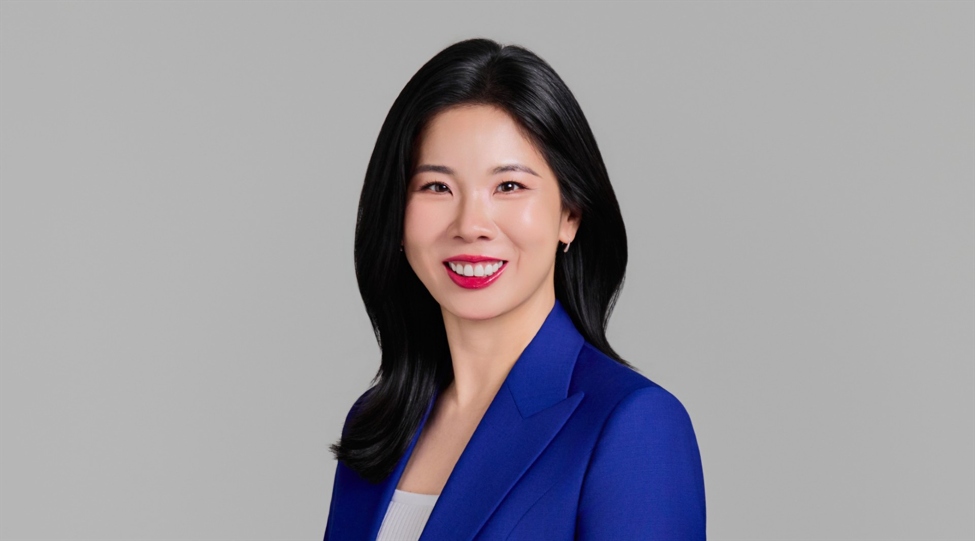
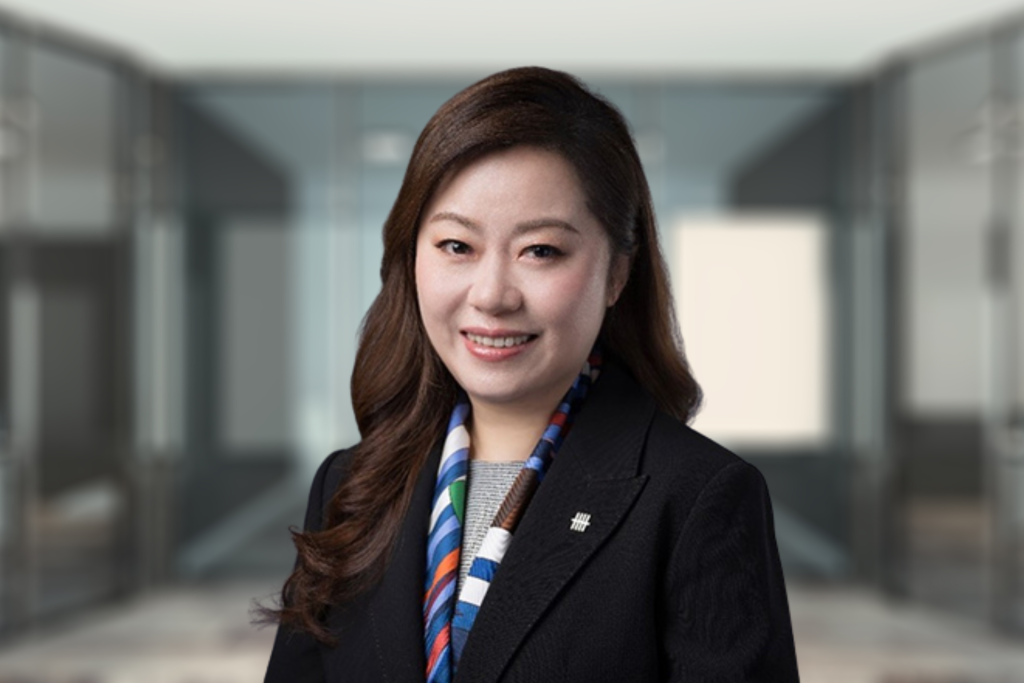
After more than four years as Chief Operating Officer (COO) of the Asia School of Business (ASB), Kristina Rai is returning to Bank Negara Malaysia to head the Financial Education Network National Coordination Office (FENNCO), where she will spearhead the implementation of the National Strategy for Financial Literacy 2026–2030 (NS2.0). Bank Negara Malaysia (FENNCO) Director, Kristina Rai. Her appointment marks a significant step in advancing Malaysia’s financial literacy agenda, aimed at strengthening financial resilience and inclusion among Malaysians. Kristina brings with her an accomplished career spanning three decades at Bank Negara Malaysia, having held leadership roles across Human Resource Development and Talent Management, Strategy Management and Corporate Planning, as well as International Relations Policy. She also played an instrumental role as a financial services negotiator in Malaysia’s Free Trade Agreement (FTA) discussions. Beyond her contributions within the central bank, Kristina has also served on the Board of Advisors of regional think tank IMAN Research, reflecting her commitment to policy development and thought leadership. During her tenure at ASB, Kristina was widely recognised for driving operational transformation and supporting key institutional milestones that strengthened the school’s position as a leading business education institution in the region. At FENNCO, she is expected to champion a collaborative, whole-of-nation approach by working closely with government agencies, industry players, educational institutions and community organisations to enhance financial literacy and empower Malaysians to make informed financial decisions. The National Strategy for Financial Literacy 2026–2030 seeks to build a financially capable society that is better equipped to navigate economic challenges, manage personal finances responsibly and participate meaningfully in the country’s growing digital economy. Kristina’s extensive experience in policymaking, talent development and strategic planning positions her well to lead FENNCO in delivering impactful initiatives that support Malaysia’s long-term financial well-being goals.

The Executives

BitGo Names Angela Ang As APAC And Singapore Head

BitGo has appointed Angela Ang as managing director for Asia-Pacific and president of BitGo Singapore, strengthening its leadership team in the region. Ang brings more than a decade of experience from the Monetary Authority of Singapore (MAS), where she played a key role in developing the country’s payments and cryptocurrency licensing framework. She later joined blockchain analytics firm TRM Labs as head of APAC public policy and strategic partnerships. Angela Ang, the Managing Director of BitGo APAC. BitGo said Ang assumed the role after fulfilling all regulatory and fit-and-proper requirements. At MAS, she led the implementation of the licensing regime under which BitGo Singapore now operates as a Major Payment Institution. In her new position, Ang will oversee BitGo’s business growth, market development and operations across Asia-Pacific. BitGo chief operating officer Jody Mettler said her appointment reinforces the company’s presence in one of the world’s most significant digital asset markets. The appointment comes as BitGo expands its global footprint following its public listing on the New York Stock Exchange under the ticker symbol BTGO. The company offers digital asset custody, trading, lending, settlement and stablecoin infrastructure services to institutional clients worldwide. Ang said the Asia-Pacific region is entering an important phase of institutional digital asset adoption and market development, presenting significant opportunities for growth.

The Executives

AKPK Names Azman Hasim As New CEO

Agensi Kaunseling dan Pengurusan Kredit (AKPK) has appointed Azman Hasim as its chief executive officer, effective June 18. Azman brings more than 30 years of experience in the financial services industry and has served AKPK for nearly two decades. He has been acting CEO since Jan 1, 2026, following the retirement of former CEO Azaddin Ngah Tasir. He holds a degree in Accounting and Finance from the University of Wales, Aberystwyth, and is a Fellow of the Association of Chartered Certified Accountants (ACCA), a member of the Malaysian Institute of Accountants, and a registered Shariah financial planner. As CEO, Azman will lead AKPK’s long-term strategy, focusing on enhancing financial literacy, expanding advisory and debt management services, and increasing outreach to underserved communities. AKPK chairman Fauziah Hisham said Azman’s extensive experience, strategic vision and deep understanding of the agency’s mission position him well to lead AKPK into its next phase of growth and impact.

The Executives

Asia School Of Business MBA 2025 Graduate Wei Han’s Homecoming Journey

From Massachusetts Back to Malaysia For Wei Han Lim, Asia School of Business (ASB) MBA Class of 2025, the MBA wasn’t a carefully plotted pivot. It was, in his own words, “a last-minute scramble.” Born and raised in Malaysia, Wei Han spent 12 years in Massachusetts, completing his Bachelor’s degree at Tufts University and his Master’s degree at MIT, both in chemical engineering, before building a career in process engineering and life sciences. When visa hurdles disrupted his plans in the United States, he discovered the Asia School of Business through MIT’s Assistant Dean of Admissions, who suggested the Malaysia-based sister school. “At first, ASB was supposed to be a bridge back to MIT through the MSMS,” Wei Han admits. “But as I settled in, I realized being here made personal and professional sense. Looking back, I’m glad it worked out this way.” Confidence, Community and Epiphanies When asked to describe his ASB journey in three words, Wei Han does not hesitate: community, vulnerability, epiphany. “Coming in, my ego had taken a battering,” he reflects. “I lacked confidence. But ASB became a safe space to explore, try new things, and be supported by classmates and faculty alike. This is a place where everybody knows each other – it seemed like a waste to not lean into that.” He credits the Career Development Office and ASB’s alumni network with helping him shape his personal brand around tackling sustainability challenges, while classmates provided both encouragement and what he jokingly describes as “regular doses of friendly insults.” Negotiation classes with Professor Alexander Eng also left a lasting impression. “Rejection therapy taught me the worst that can happen is hearing ‘no.’ That gave me the courage to ask for what I want and fight for the value that I deserve,” he says. Learning for Impact Wei Han’s passion for sustainability found fertile ground at ASB. Through electives with Professor Renato Lima de Oliveira and Dr. Pieter Stek, he deepened his understanding of how technology, business strategy and policy intersect to drive sustainable energy transitions. His Capstone project at Gentari, where he worked with peers on human resource challenges, proved both unexpected and transformative. “It was out of my comfort zone but incredibly rewarding,” he recalls. “We fought each other all the time, built on a deep sense of trust and respect for each other, working towards a shared goal. We felt truly validated when we learned that our work continues to be used by our host company, nearly a year later. It was one of the best team experiences of my life.” The MIT Connection and Beyond For Wei Han, ASB’s collaboration with MIT represented more than an academic partnership. It provided continuity with a place that had shaped much of his life. “Heading back for our MIT Immersion gave me closure in more ways than one,” he says. “My classmates finally understood where I came from, and I could reconcile my identity as a quasi-third culture kid.” Today, he continues to embrace both communities, serving as Secretary of the MIT Club of Malaysia while leading strategic finance research projects at ASB. Lessons in Vulnerability and Growth Some of Wei Han’s most meaningful experiences came outside the classroom through ASB’s Mindset Lab. “We learned to embrace vulnerability as we undertook personal growth mindset projects over the year,” he says. “We shared our final projects during a session in a week in which we were all focused on other projects, so it easily could have been something that we could have checked out of. But everyone came prepared to share how they had grown, and everyone was prepared to listen and support each other.” Lasting Bonds and Chaotic Fun Beyond academics, Wei Han values the friendships and connections formed throughout the MBA journey. From dinners with friends across Kuala Lumpur to board game nights with faculty and alumni, he cherishes the experiences that extended beyond the classroom. One memorable moment came during ASB’s 10th Anniversary celebration, where he found himself unexpectedly performing in a band alongside ASB President Joseph Cherian the day before graduation—with no rehearsal. “Chaotic unhinged fun,” he laughs, borrowing Professor Melati Nungsari’s description of the occasion. The performance saw him singing backing vocals before an audience that included Nobel Laureate Robert Merton and numerous distinguished guests. A Gem for Future Students Asked what advice he would offer future students, Wei Han is quick to reassure. “Don’t worry. You’re not the only one with impostor syndrome. Everyone’s dealing with their own version of it. Embrace that vulnerability, collaborate, and you’ll thrive.” For someone who initially viewed the Asia School of Business as a stepping stone, it ultimately became something much more significant—a launchpad combining rigorous learning, a vibrant community and a renewed sense of purpose. What began as a detour became direction. A last-minute decision that gave him more than a degree—it helped him rediscover himself. About Asia School of Business (ASB) The Asia School of Business (ASB), in collaboration with MIT Sloan School of Management, is dedicated to developing transformative and principled leaders through action learning and a global perspective rooted in Asia. Learn more about ASB: https://asb.edu.my/ Source / Credit: Asia School of Business (ASB)

The Executives

Derek Teh Wan Wei Named MRMA Chairman

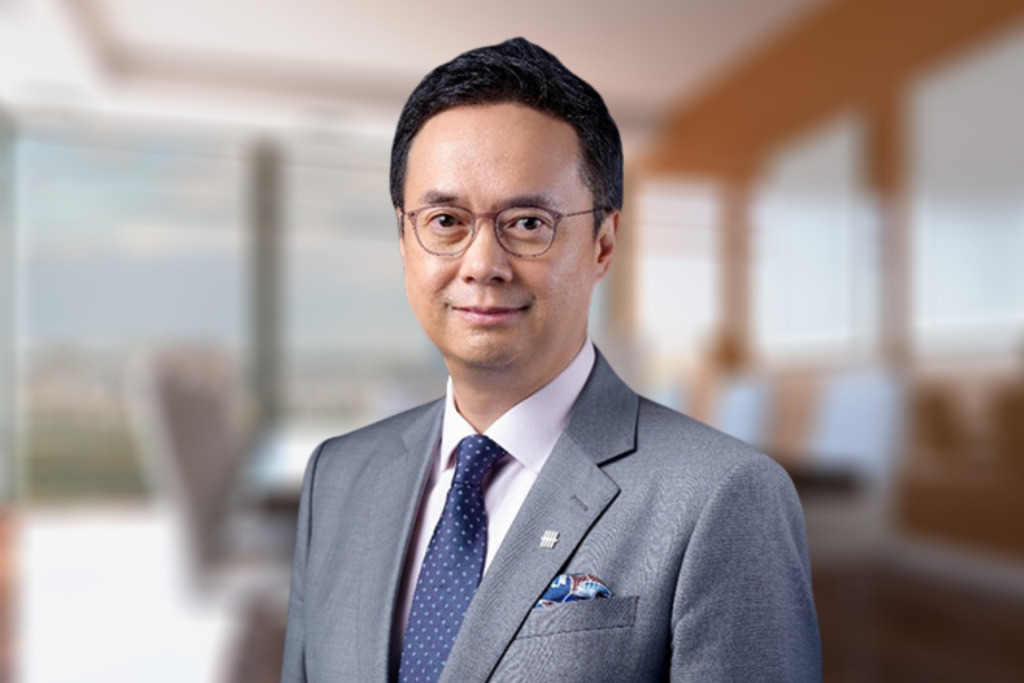
The Malaysian REIT Managers Association (MRMA) has appointed Derek Teh Wan Wei, chief executive officer and executive director of Sunway-REIT Management Sdn Bhd, as its new chairman. Teh’s appointment marks a leadership transition for the association, which represents the interests of Malaysia’s real estate investment trust (REIT) management industry and works to promote best practices, governance, and growth within the sector. At the same time, Zuhairy Md Isa of Am-REIT Managers Sdn Bhd was re-elected as vice-chairman, continuing his role in supporting the association’s strategic direction. Joining him as newly elected vice-chairman is Yong Su Lin of CapitaLand Malaysia-REIT Management Sdn Bhd. Meanwhile, Datuk Stewart Labrooy of Alpha-REIT Managers Sdn Bhd was re-elected as honorary secretary, continuing his responsibilities in overseeing the association’s administrative matters. Hafidz Atrash Kosai Mohd Zihim from Pelaburan Hartanah Nasional Bhd (PHNB) will also continue serving as honorary treasurer for a second term, overseeing the association’s financial affairs. In addition, Zainal Iskandar Ismail of Hektar Asset Management Sdn Bhd was elected as a committee member, further strengthening MRMA’s leadership team. The appointments reflect MRMA’s continued efforts to reinforce collaboration within Malaysia’s REIT industry while supporting the sector’s development amid evolving market conditions. MRMA plays a key role in representing REIT managers in Malaysia, advocating for industry growth and strengthening engagement among stakeholders in the country’s property investment landscape.

The Executives

Global Excellence, Local Relevance: ASB Convenes Presidential Dialogue At MIT Sloan

Three Presidents. One conversation. At MIT Sloan School of Management. What does it take for a business school to stay globally relevant — while remaining deeply rooted in its region — in an era shaped by AI and shifting geopolitical dynamics?’ At a recent dialogue, graciously hosted by MIT Sloan in Cambridge, Massachusetts, the Asia School of Business (ASB) brought together three generations of the School’s leadership — current CEO, President and Dean, Professor Joseph Cherian; former President, Professor Sanjay Sarma; and Founding President, Professor Charles Fine — for a timely discussion on the future of education, leadership, and global competitiveness. “We have a cross-disciplinary approach… a very engineering way of thinking about problems,” shared Professor Joseph, our current CEO, President and Dean, highlighting ASB’s evolving trajectory as a globally relevant institution anchored in Southeast Asia. For Professor Sanjay, the shift is even more fundamental: “AI is no longer just another technology — it’s a way of thinking required to navigate a complex world.” Reflecting on ASB’s founding philosophy, Professor Charles emphasized the importance of cultural and intellectual bridging: “We built a culture that could engage both the East and the West — and understand the challenges of both.” Moderated by Andrew Foley (Assistant Professor of Management and Organizations, NYU Stern, and MBA 2018 — ASB’s inaugural cohort), the session explored how institutions can translate global trends into meaningful impact for Malaysia, the wider Asian region, and beyond. As AI continues to reshape industries, the way we work and talent demands, the conversation reinforced a clear idea: The future of business education lies not just in global excellence — but in local relevance, contextual understanding, and the abilities to navigate and thrive across worlds. “Global Excellence, Local Relevance: Academic Leadership at the Intersection of AI and Global Fragmentation” held at MIT Sloan’s Wong Auditorium To learn more about the Asia School of Business (ASB), visit: https://asb.edu.my/
The Executives

Inari Amertron Appoints Phang Ah Tong As Chairman

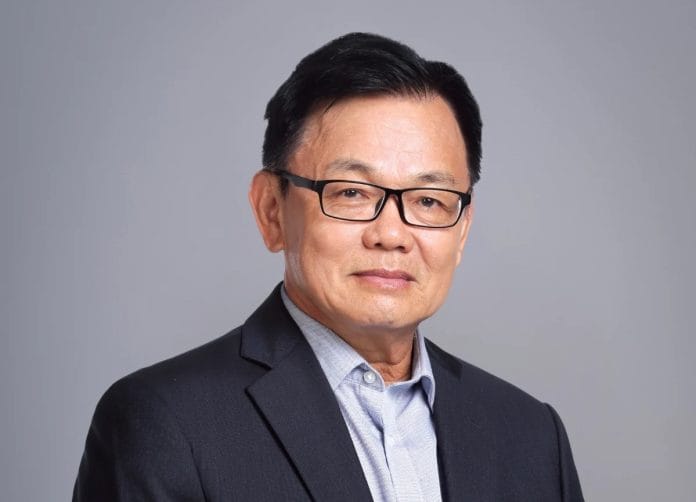
Inari Amertron Bhd has appointed its independent director Datuk Phang Ah Tong as the group’s new chairman, effective Tuesday, as part of a broader boardroom reshuffle within the semiconductor company. Phang, 69, succeeds Tengku Puteri Seri Kemala Tengku Aishah, who has been redesignated as a non-independent director, according to a filing with Bursa Malaysia. The group said Phang has served as an independent director since February 2018 and brings extensive experience in governance and industry oversight. He is also a board member of the Malaysian Investment Development Authority (Mida), a position he has held since January 2026. Tengku Puteri Seri Kemala, also 69, is the sister of the Sultan of Pahang, Al-Sultan Abdullah Ri’ayatuddin Al-Mustafa Billah Shah. She has been part of Inari’s board for nearly 16 years since joining the group in September 2010. In a separate announcement, Inari said Chong Poh Leng has been redesignated as an executive director in addition to her existing role as group chief financial officer, further strengthening the company’s executive leadership team. The group also noted that independent and non-executive director Dr Tunku Alina Raja Muhd Alias has resigned, citing time constraints. The board changes come amid active leadership adjustments within the group as it continues to strengthen governance and operational oversight in the semiconductor space. On the market front, Inari shares rose four sen or 1.8% to close at RM2.27 ahead of the announcements, giving the company a market capitalisation of approximately RM8.65 billion.

The Executives

George Tung Named CEO Of UOB Hong Kong Branch

UOB has appointed George Tung as the new Chief Executive Officer of its Hong Kong Branch, effective July 1, 2026, as part of the bank’s strategy to strengthen regional connectivity and support growing cross-border business between mainland China and ASEAN. Tung succeeds Adaline Zheng, who will assume the role of CEO of UOB China. UOB Deputy Chairman and Chief Executive Officer Wee Ee Cheong said Hong Kong plays an increasingly important role as a connector between mainland China and ASEAN, adding that the bank is sharpening its focus on enhancing its wholesale banking, private banking and wealth management capabilities. Tung brings more than three decades of banking experience spanning mainland China, Hong Kong, South Korea and ASEAN markets. He joined UOB in 2010 and spent a decade leading the Hong Kong Branch’s Wholesale Banking business, overseeing client coverage as well as investment banking, transaction banking, client fulfilment services and portfolio management. In 2021, he was appointed Country Manager of UOB South Korea, where he strengthened strategic partnerships with leading Korean and international institutions while expanding market connectivity between South Korea and ASEAN. As CEO of UOB Hong Kong Branch, Tung will be responsible for setting the branch’s strategic direction, driving business growth and reinforcing UOB’s position as a key banking partner connecting clients across Hong Kong, mainland China and ASEAN. He will also lead efforts to strengthen the bank’s wholesale and private banking businesses, deepen client relationships and enhance engagement with regulators and customers. Established in 1965, UOB Hong Kong Branch was the bank’s first overseas branch and remains a key part of its regional network supporting cross-border trade, investment and wealth management activities.

The Executives

UOB Appoints Adaline Zheng As CEO Of UOB China

UOB has appointed Adaline Zheng as the new Chief Executive Officer of UOB China, effective July 1, 2026, as the bank strengthens its cross-border banking capabilities and deepens connectivity between China and ASEAN. Zheng succeeds Peter Foo, who is retiring after 15 years with the bank, having played a key role in building UOB’s China-ASEAN connectivity business. UOB Deputy Chairman and Chief Executive Officer Wee Ee Cheong said China remains a major driver of trade, investment and cross-border flows with ASEAN, and the bank is committed to enhancing its capabilities to better support customers’ regional expansion plans. With more than 20 years of banking experience across mainland China and Hong Kong, Zheng joined UOB China in 2018 as Head of Wholesale Banking, overseeing Corporate Banking, Commercial Banking, Financial Institutions, Structured Trade and Commodity Finance, Transaction Banking and Investment Banking. In March 2024, she was appointed CEO of UOB Hong Kong Branch after holding various senior leadership roles in wholesale and investment banking at a multinational bank. As CEO of UOB China, Zheng will oversee the bank’s operations in mainland China, drive its strategic priorities and strengthen its cross-border banking capabilities to facilitate greater connectivity between China and ASEAN. Headquartered in Shanghai, UOB China was incorporated in 2007 and operates across key economic regions in mainland China, offering wholesale banking and global markets services while leveraging UOB’s regional network to support clients’ cross-border trade and investment activities. Wee said Zheng’s deep regional experience and strong capital markets background position her well to lead UOB China into its next phase of growth while further strengthening long-term customer relationships.

The Executives

Moomoo Singapore Appoints Jeyson Ng As CEO

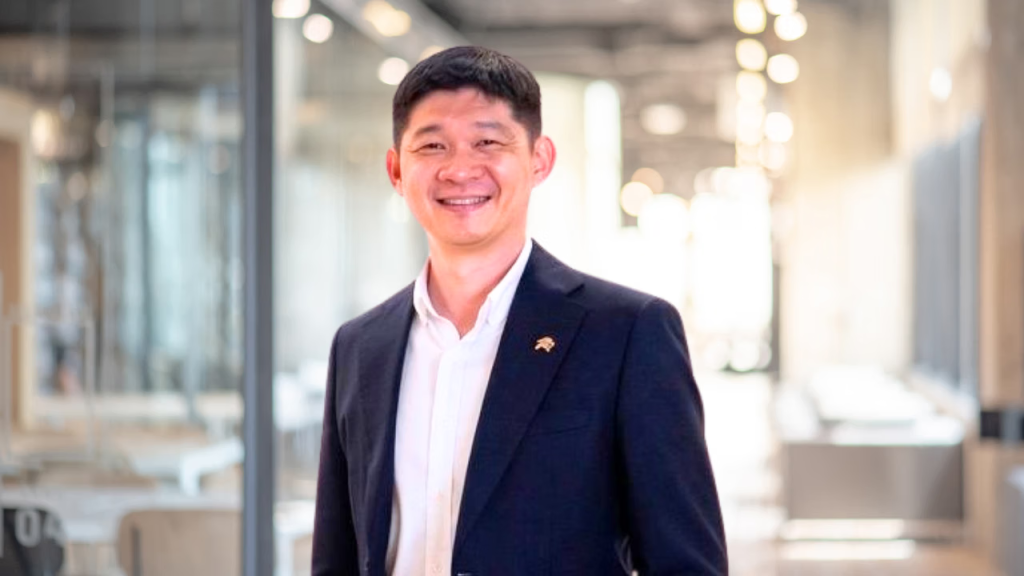
Moomoo Singapore has appointed Jeyson Ng as its Chief Executive Officer, marking a new phase of growth as the digital investment platform expands its presence within Singapore’s financial ecosystem and strengthens its position across the region. Before taking on the CEO role, Jeyson held senior leadership positions across the financial services and capital markets industry, bringing extensive experience in exchange development, market strategy, institutional engagement and ecosystem partnerships. Since joining Moomoo Singapore, he has played a key role in driving the company’s strategic expansion, strengthening industry collaborations and advancing its long-term vision of technology-enabled investing and investor empowerment. As CEO, Jeyson will focus on four strategic priorities: Deepening investor education and financial literacy programmes Accelerating the adoption of AI-driven investing tools and intelligent investment experiences Expanding access to global investment opportunities and institutional-grade capabilities Strengthening partnerships across Singapore’s financial and capital markets ecosystem Echo Zhao, Country Head of Moomoo Singapore, said Jeyson’s combination of capital markets expertise, industry relationships and strategic leadership experience will be instrumental as the company enters its next stage of development. He noted that Singapore continues to strengthen its position as a global financial hub and expressed confidence that Jeyson is well positioned to deepen the company’s local market presence, enhance industry partnerships and deliver greater value to investors. Advancing Technology and Investor Education Over the past year, Moomoo Singapore has expanded its market presence through a series of initiatives focused on investor education, ecosystem partnerships and technology innovation. Among these is the launch of Moo Academy, the company’s flagship investor education platform aimed at building a stronger and more connected financial ecosystem by bringing together financial institutions, listed companies, industry partners and retail investors. The company has also accelerated its artificial intelligence strategy through the introduction of innovations such as Moomoo AI and Moomoo API Skills, reinforcing its commitment to providing smarter, data-driven and intuitive investing experiences. These initiatives form part of Moomoo Singapore’s broader mission to empower investors through advanced technology, actionable insights and intelligent investment tools, while encouraging greater retail participation in Singapore’s capital markets through education, market intelligence and access to diversified global investment products. Jeyson said Singapore remains one of the world’s most trusted and resilient financial centres, adding that the future of investing will increasingly be shaped by digitalisation, global connectivity and artificial intelligence. He said investors today are seeking not only broader market access but also smarter tools that can help them analyse information, identify opportunities and make more informed investment decisions. According to Jeyson, artificial intelligence will play a transformative role in making sophisticated market insights, data and execution capabilities more accessible to everyday investors, and he looks forward to working closely with the company’s team, partners and regulators to continue building a trusted and intelligent investing platform for Singapore and the wider region.

Scroll to Top

Subscribe
FREE Newsletter