asia

Property

Rental Growth Accelerates in Key Asian Cities Despite Global Uncertainty

Southeast Asia’s office markets have displayed robust recovery in Q1 2025 amidst significant regional shifts, according to Knight Frank’s latest Asia-Pacific Prime Office Rental Index. Jakarta, reversing an 18-month decline, leads this resurgence, buoyed by reduced new supply entering the market, thereby stabilising rents and lowering vacancies. Meanwhile, Indian markets achieved a record-breaking leasing volume of 1.7 million square meters, driven by a surge in transactions in Bengaluru’s Global Capability Centers. Seoul marked its 17th consecutive quarter of rental growth, registering a 6.9% year-on-year increase, with minimal vacancy rates due to strong demand in the financial sector. The positive momentum extended across Southeast Asia, with average rents increasing by 1.3% quarter-on-quarter, driven notably by Jakarta, Kuala Lumpur, and Bangkok. These cities saw improved conditions amidst growing demand from tech firms and multinational corporations expanding their regional footprints. Looking ahead, Knight Frank’s global head of occupier strategy and solutions, Tim Armstrong, highlighted the evolving impact of trade dynamics, anticipating cautious optimism among occupiers as they navigate uncertainties. Despite challenges, India and emerging Southeast Asia are expected to maintain resilience, driven by diversification strategies in response to the evolving global economic landscape. Key highlights from the Q1 2025 report include stable or increasing rents in 17 of 23 monitored Asia-Pacific cities year-on-year, underscoring regional stability amid varied market performances. Vacancy rates remained steady despite new supply additions, with India and Southeast Asia offsetting these impacts through tightening availabilities. While broader Asia-Pacific prime rents saw a slight decline quarter-on-quarter, the region’s outlook remains positive, with markets like Brisbane showing signs of rental growth moderation. Singapore’s prime office rents remained stable as occupiers explored cost-neutral alternatives amidst evolving market conditions. Christine Li, Knight Frank’s head of research, Asia-Pacific, noted landlords’ focus on occupancy amidst economic uncertainty, maintaining flat vacancies but observing softer rental trends, particularly outside mainland China. As global trade tensions persist, the market faces ongoing unpredictability, influencing occupiers’ long-term real estate decisions and prompting landlords to adopt flexible leasing strategies. Overall, while challenges persist, Southeast Asia’s office markets show resilience and adaptability, poised to navigate future uncertainties with strategic real estate decisions.

News

Nvidia Faces US$5.5 Billion Hit as US Tightens Export Curbs on China

Nvidia Corp is staring down a multi-billion-dollar blow as new US export controls tighten the noose around its operations in China. The company revealed that it will take a US$5.5 billion writedown in its fiscal first quarter, following the US government’s decision to require an export licence for its H20 chip — a product Nvidia specifically designed to comply with earlier restrictions. The move signals a significant policy shift. In a regulatory filing on Tuesday, Nvidia said it was informed by US officials that the H20 will now fall under indefinite export licensing requirements, with authorities citing concerns that the chips may be used in or diverted to Chinese supercomputers. The market reacted swiftly. Nvidia’s shares dropped approximately 6% in after-hours trading, while shares of rival Advanced Micro Devices Inc — also exposed to the AI chip space — fell as well. The H20 chip had been Nvidia’s tailored solution for the Chinese market, balancing capability with compliance. Although less powerful than the models sold outside China, the chip supported AI inference tasks, making it a strategic offering in the world’s second-largest economy. But even this scaled-back solution is now considered a potential risk. With US-China tech tensions escalating, Washington’s latest clampdown underscores a broader strategy to limit Beijing’s access to advanced AI technologies. The impact is profound. Analysts at Bloomberg Intelligence estimate the new restrictions could cost Nvidia between US$14 billion and US$18 billion in annual revenue. If the controls persist, Nvidia’s China-related data centre revenue could drop back to low- to mid-single digits — levels not seen since early 2024, prior to the H20’s ramp-up. Nvidia has long warned that intensifying restrictions could backfire, accelerating China’s push for self-reliance and hurting US competitiveness in the process. “Further tightening of restrictions risks weakening American companies while strengthening China’s resolve to build domestic alternatives,” the company has argued. Adding to the political complexity, the new policy comes on the heels of a National Public Radio report suggesting that former President Donald Trump — now back in office — had been considering a softer stance on the H20 in exchange for Nvidia investing in US-based AI infrastructure. Nvidia has pledged up to US$500 billion in AI-related investments across the US over the next four years, though much of that was already in the pipeline. The latest development reflects the continuation of a years-long geopolitical battle over semiconductor dominance. Initial curbs began in October 2022, when the US first barred sales of Nvidia’s most advanced AI chips to China. Since then, the restrictions have expanded significantly, covering a broader range of chips, semiconductor manufacturing tools, and high-bandwidth memory — all vital components in AI development. The Biden administration extended these rules globally in its final weeks, aiming to close loopholes via third-party nations. The Trump administration now appears committed to maintaining, and potentially strengthening, that framework. With Nvidia’s China strategy increasingly under pressure, the global semiconductor industry is bracing for further volatility — and investors are watching closely.

News

South Korea Unveils US$23.25 Billion Support Package for Semiconductor Industry

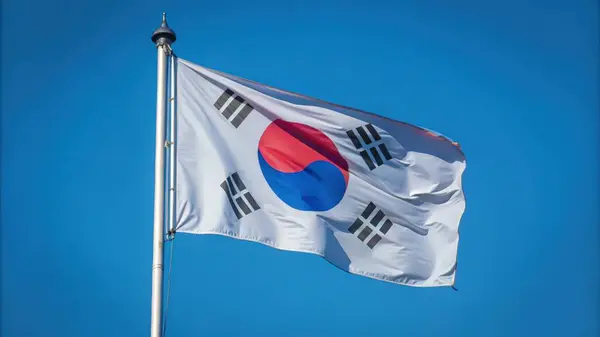
SEOUL: The South Korean government has announced a significant boost in support for its critical semiconductor sector, raising its industry package to 33 trillion won (US$23.25 billion or RM102.6 billion), up from 26 trillion won a year earlier. The increase comes as global chipmakers face mounting geopolitical and economic headwinds, including uncertainty over US trade policies and intensifying competition from China. In a joint statement issued on Tuesday by several ministries, including the Ministry of Trade, Industry and Energy, the government outlined its commitment to reinforcing the financial backbone of South Korea’s chipmakers. Notably, financial assistance under the programme will grow to 20 trillion won from the previously announced 17 trillion won, providing much-needed capital to an industry grappling with rising production costs and a shifting global landscape. This strategic move highlights Seoul’s intent to secure its position in the global semiconductor value chain. Although South Korea leads in memory chip production through major players such as Samsung Electronics and SK Hynix, the nation has lagged behind in areas like chip design and foundry services, where firms from the United States and Taiwan currently dominate. Semiconductors remain a cornerstone of South Korea’s economy. In 2024, chip exports totalled US$141.9 billion, representing 21% of total national exports. China and the United States remain the largest markets, with shipments valued at US$46.6 billion and US$10.7 billion respectively. The announcement also comes amid renewed trade tensions. US President Donald Trump stated over the weekend that his administration would soon reveal new tariff rates on imported semiconductors, with potential exemptions for select companies. This has prompted concerns across global supply chains and accelerated calls for stronger domestic industrial support in South Korea. The latest chip package follows a similar initiative targeting the automotive sector, which also faces tariff pressures from the US. Last week, Seoul revealed emergency measures to cushion the automotive industry, including financial aid, tax incentives, and subsidies to stimulate local demand. The government has also pledged to engage in active dialogue with Washington to mitigate the impact on key Korean exports. By reinforcing its high-tech sectors, South Korea is positioning itself to navigate a more protectionist global trade environment while maintaining its status as a key player in the semiconductor race.

News

Japanese Rubber Futures Climb on Thai Supply Woes, US Tariff Exemptions

SINGAPORE: Japanese rubber futures rose sharply on Monday, buoyed by growing supply concerns from Thailand and a global sigh of relief following the US government’s decision to exempt key electronics from fresh tariffs. The Osaka Exchange (OSE) rubber contract for September delivery jumped 5.9 yen, or 1.98%, to 303.5 yen (US$2.13) per kg by 2:22 a.m. GMT. Similarly, gains were seen in China’s futures markets: The Shanghai Futures Exchange (SHFE) rubber contract for May delivery rose 310 yuan, or 2.09%, to 15,135 yuan (US$2,072.35) per metric ton. The most active butadiene rubber contract for May delivery increased 130 yuan, or 1.12%, to 11,765 yuan (US$1,610.92) per ton. The upward pressure follows weather warnings from Thailand’s Meteorological Department, which forecast thunderstorms and heavy rain in the south from April 14 to 19. The adverse weather is expected to impact rubber output, tightening supply from the world’s largest producer. Boosting global sentiment, US President Donald Trump’s administration announced tariff exemptions on smartphones, computers, and other electronics—key products in global trade. This move helped Japan’s Nikkei Index climb 2% and supported broader optimism in Asian markets. The Japanese yen weakened 0.2% to 143.79 per US dollar, improving the attractiveness of yen-denominated commodities for foreign investors. Despite the temporary reprieve in tariffs, analysts remain cautious. China’s economy appears to be slowing, with growth projections for 2025 expected to fall below last year’s pace, according to a Reuters poll. Uncertainty over long-term US-China trade relations continues to weigh on market sentiment. On the Singapore Exchange (SICOM), the May rubber contract last traded at 171 US cents per kg, up 0.9%.

News

Singapore Eases Monetary Policy Again as Growth Outlook Weakens

Singapore’s central bank has eased monetary policy for the second consecutive time, citing growing risks to the global economy and a weaker outlook for domestic growth in 2025. The Monetary Authority of Singapore (MAS) announced on Monday that it would reduce the slope of its exchange rate policy band — its primary tool for managing monetary conditions — while keeping the band’s width and centre unchanged. The move was widely anticipated by economists and follows a similar policy adjustment in January, ending a long pause that began in 2023. In its statement, MAS warned of “significant ramifications” for Singapore’s economy if global trade continues to deteriorate. “There are downside risks to Singapore’s economic outlook stemming from episodes of financial market volatility and a sharper-than-expected fall in final demand abroad,” it said. The warning comes as global uncertainty mounts, particularly in response to US President Donald Trump’s planned wave of tariffs. Trump reaffirmed over the weekend that levies on electronics would go ahead, despite a short-term exemption, fuelling volatility in financial markets and concern among trade-dependent nations like Singapore. Reflecting these concerns, Singapore’s Ministry of Trade and Industry has downgraded its 2025 growth forecast to a range of 0% to 2%, down from 1% to 3%. The economy expanded 3.8% year-on-year in the first quarter, falling short of expectations for a 4.5% increase. The MAS highlighted Singapore’s vulnerability due to its high dependence on global trade and integration with global supply chains. “Slowing global and regional trade as well as heightened policy uncertainty will weigh on the external-facing sectors, which could spill over into the domestic-oriented sectors,” the central bank stated. While Singapore was hit with a 10% US tariff — less severe than China’s 125% — the impact remains significant for its export-driven economy. Prime Minister Lawrence Wong has cautioned that growth may be “significantly impacted” and the risk of recession cannot be ruled out. Following the MAS decision, the Singapore dollar edged slightly higher. It has risen about 3.7% against the US dollar so far this year, second only to the Japanese yen among Asian currencies, as investors respond to tariff uncertainties. Selena Ling, Head of Research and Strategy at Oversea-Chinese Banking Corp, noted that further policy easing could be on the horizon. “Reciprocal tariffs are currently still in play, with sectoral tariffs possibly to come. So a further downshift in growth and inflation could prompt further monetary policy easing, but fiscal policy will also come into play,” she said. “A technical recession is possible.” Singapore manages monetary policy through its currency, allowing the Singapore dollar to move within an undisclosed trading band. The MAS can adjust the slope, centre, or width of the band to influence the pace of the currency’s appreciation or depreciation. Inflation pressures have cooled markedly in recent months. Core inflation — which excludes accommodation and private road transport costs — slowed to 0.6% in February, the lowest since June 2021. It marked the fifth consecutive month of easing. Looking ahead, MAS expects core inflation to average between 0.5% and 1.5% in 2025, down from its earlier forecast of 1% to 2%. The next core inflation data is scheduled for release on April 23.

News

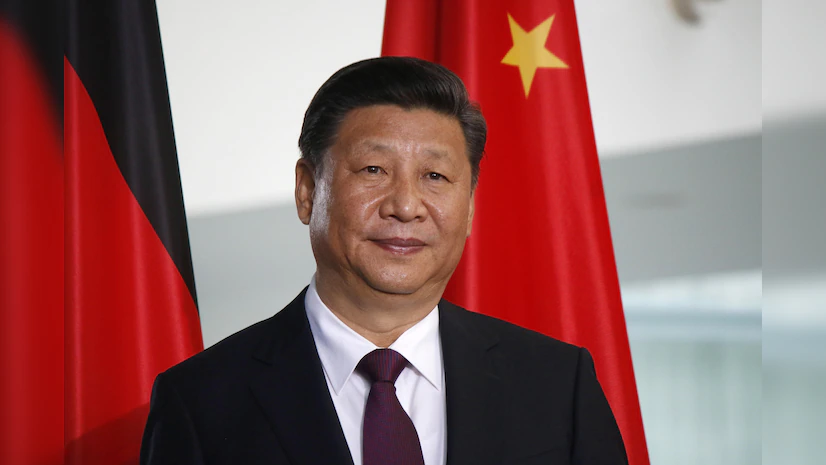
Xi Jinping Pledges to Strengthen Strategic Partnership with Indonesia in Call with Prabowo

SHANGHAI: Chinese President Xi Jinping has pledged to further strengthen China’s strategic partnership with Indonesia in a phone conversation with Indonesian President Prabowo Subianto on Sunday, as reported by China’s state-run Xinhua News Agency. During the call, Xi highlighted the global significance and strategic importance of the bilateral partnership. The two leaders also exchanged congratulations on the 75th anniversary of diplomatic relations between their countries. Xi’s remarks come as Beijing seeks to rally other nations against the US’s import tariffs, which were recently announced by former President Donald Trump. As part of a broader diplomatic push, Xi is scheduled to visit several Southeast Asian nations, including Vietnam, Malaysia, and Cambodia, starting Monday, April 14. His visit aims to solidify ties with key neighbours as trade tensions between China and the US continue to rise.–REUTERS

News

The impact of US tariffs on the cocoa market

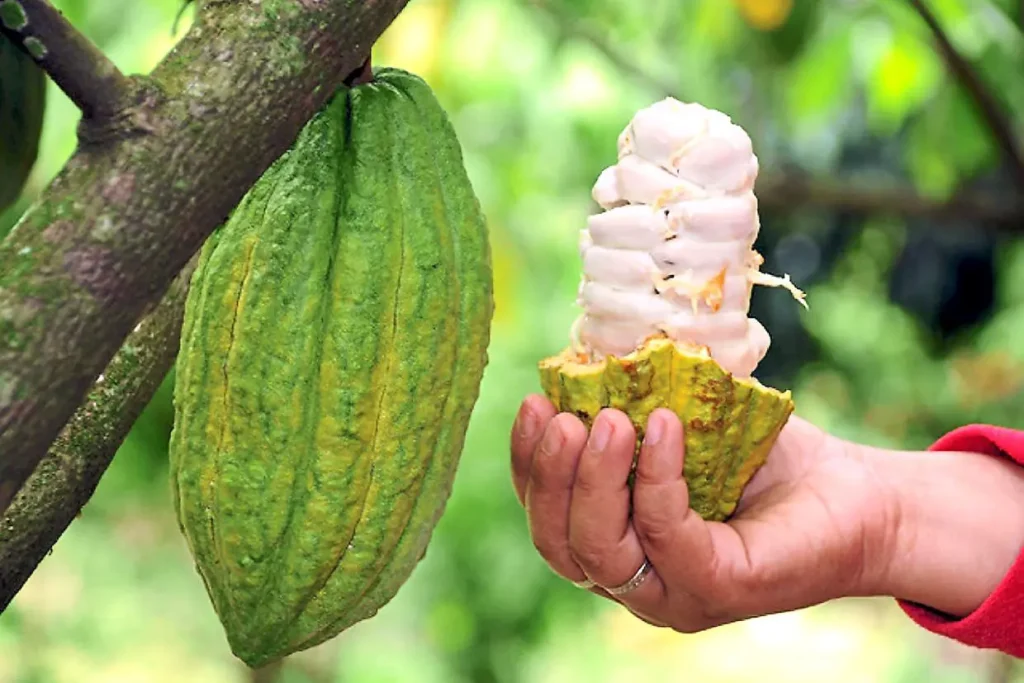
SINGAPORE: As of April, Hedgepoint Global Markets will be monitoring and developing regular market analyses on the global cocoa market, expanding its portfolio of sectoral analyses focused on risks, trends and economic impacts on the commodity chain.   This move comes at a time of high volatility in the sector. Last week, US President Donald Trump’s announcement of new trade tariffs provoked immediate reactions on global markets.  After recording a four-week high, the cocoa market began to feel the effects of the recent trade measures announced by the United States. Global cocoa prices began to retreat amid increased volatility, contributing to a scenario of uncertainty that had already been developing in recent months.  Last Tuesday, cocoa futures contracts maturing in May 2025 fell by 3.8% in London and 3.7% in New York, signaling a correction in the market after the significant rise. If the tariffs are maintained, changes in trade flows and processing routes are expected, with North American buyers looking for cheaper alternatives.  As a result, the market is already projecting a possible reduction in cocoa grinding in the United States, which could put pressure on the commodity’s domestic prices in the coming months. The movement also reinforces fears of a global recession, as the effects of trade barriers spread through various production chains.    If the announced tariffs are maintained, it is likely that there will be adjustments to the flow of trade and cocoa processing routes in the coming months, as US buyers look for more economical alternatives for their operations.   Among the possibilities evaluated by the market are redirecting beans to countries close to the United States that have lower tariffs and installed grinding capacity – such as Canada, Mexico, Brazil and Ghana. In this way, it would be possible to meet US demand for cocoa beans, butter, liquor and powder from processing in other origins.          Given this scenario, a reduction in cocoa grinding in the United States is expected and, consequently, a possible rise in domestic prices in the coming months – not only for cocoa, but also for other products in the confectionery chain. This intensifies fears of a recession in the US economy and reinforces the prospect of a drop in demand for the commodity, a topic that has been discussed since the beginning of 2024, when prices for the bean reached historically high levels.  The so-called “Liberation Day” adds another element of pressure on a market that has already been operating under strong volatility in recent years. The recent drop in prices came just after the market recorded its highest rise in four weeks, supported by the forecast reduction in the Ivory Coast’s intermediate crop (April to September 2025) and the negative revision of the expected production for the 2024/25 crop in Ghana – the two main global producers.   Even so, this information was already priced in, and the market continues to point to a downward trend in the medium term, driven by expectations of a slowdown in demand, normalization of cocoa arrivals at ports and improved weather conditions in West Africa, with an increase in rainfall in recent weeks. 

News

Indonesia Detains Top Judge in Bribery Probe Linked to Palm Oil Corruption Case Linked to Palm Oil Corruption Case

Indonesia has detained the chief judge of the South Jakarta District Court along with three others in connection with an alleged bribery scheme related to a high-profile 2022 palm oil export corruption case that involved a unit of Singapore-listed Wilmar International Ltd. In a statement on Saturday (April 12), the Attorney General’s Office (AGO) identified the judge by the initials MAN, along with a court employee (WG) and two lawyers (MS and AR), as suspects in the case. Prosecutors allege the lawyers paid the judge 60 billion rupiah (approximately US$3.57 million or RM15.79 million) in bribes to influence the outcome of the trial. The bribery was allegedly intended to secure a favourable ruling in a March 2025 verdict, where a panel of judges determined that Wilmar Group, Musim Mas Group, and Permata Hijau Group had not committed any criminal offence in the palm oil export scandal. AGO spokesperson Harli Siregar confirmed that the suspects would be detained for the next 20 days pending further investigation. As part of the probe, prosecutors raided five locations in Jakarta on Friday and seized large sums of cash in multiple currencies—including Chinese yuan, Singapore dollars, US dollars, Indonesian rupiah, and Malaysian ringgit. Authorities also confiscated luxury vehicles, including a Mercedes-Benz and a Ferrari, as part of the evidence haul. The original 2022 corruption case implicated officials from Indonesia’s trade ministry and centred around the issuance of export permits that did not meet regulatory requirements. The scandal was compounded by failures in meeting domestic palm oil distribution obligations, contributing to a surge in cooking oil prices and public outcry. The latest development signals a renewed commitment by Indonesian authorities to crack down on judicial corruption and ensure accountability in one of the country’s most lucrative industries.–BLOOMBERG

News

US Backs Off Tariffs on Phones, Chips, Displays

US President Donald Trump’s administration has temporarily exempted smartphones, computers, and other key electronics from its sweeping “reciprocal tariffs” — offering major relief not only to US tech giants like Apple Inc and Nvidia Corp, but also to critical players across Asia’s electronics supply chain, particularly in China, Taiwan, South Korea and Japan. The exclusions, published Friday by US Customs and Border Protection, carve out a significant list of consumer tech products — including smartphones, laptops, processors, and flat-panel displays — from the baseline 10% global tariff and the steep 125% levy targeting Chinese imports. This development, although possibly short-lived, marks the first notable easing in Washington’s intensifying trade confrontation with China. The exemptions are backdated to April 5 and cover approximately US$390 billion in US imports, including more than US$101 billion from China, according to US trade data analysed by Gerard DiPippo of the Rand China Research Center. Asia’s Supply Chains Still at Risk While the tariff reprieve is welcome news for global tech firms, Asian exporters remain wary. China alone accounts for over US$41 billion of the US’s smartphone imports and more than US$36 billion in computers — much of it produced through deeply intertwined regional supply networks involving Taiwan, South Korea, Japan, and Southeast Asia. “This is a large hole in the US tariff wall that will spare key firms like Apple and consumers of laptops and phones from sticker shock,” DiPippo said. “But many other Chinese-made consumer, intermediate, and capital goods remain exposed to prohibitively high US tariffs.” Although the move provides breathing room for firms like Foxconn, TSMC, Samsung, and Pegatron — which manufacture and assemble components across China, Taiwan and Southeast Asia — many analysts warn the exemptions may simply pave the way for new sector-specific tariffs, particularly targeting semiconductors. China: Both Target and Backbone While Trump’s administration says the US can no longer rely on China to produce “critical technologies,” the reality of Asia’s manufacturing dominance tells a different story. The exemptions notably include semiconductor manufacturing tools — essential for chip production — from firms like ASML (Netherlands) and Tokyo Electron (Japan). These tools support multibillion-dollar factory builds by TSMC, Samsung, and Intel under the 2022 Chips and Science Act. Also excluded are AI infrastructure products, such as GPUs and servers — largely assembled in Taiwan and Mexico — used by Nvidia and other firms. However, these firms still rely heavily on Chinese supply chains for key components and final assembly. While Apple and Nvidia may breathe easier for now, China remains central to global tech production, and the pressure on companies to “reshore” manufacturing to the US is already proving unrealistic. Industry sources note the deep-rooted nature of Asia’s electronics ecosystem, which cannot be replicated overnight. Uncertainty Lingers Despite resistance from within Trump’s White House, the tech sector’s lobbying power seems to have influenced the exemptions. Yet, this relief is widely seen as temporary — laying the groundwork for new targeted tariffs on semiconductors and high-tech components. A forthcoming investigation into semiconductor imports is expected to precede another round of sectoral tariffs. These could hit both chips and end-products containing them, raising stakes for companies across Asia and global supply chains. While the current exemptions do not extend to Trump’s separate 20% fentanyl-related tariff on Chinese goods, nor to legacy levies from his previous term, the message is clear: the US-China tech decoupling is accelerating, and Asia’s role in the global tech economy is under increasing scrutiny. Representatives from Nvidia and ASML declined to comment, while spokespeople from Tokyo Electron and the US Trade bodies did not immediately respond.

News

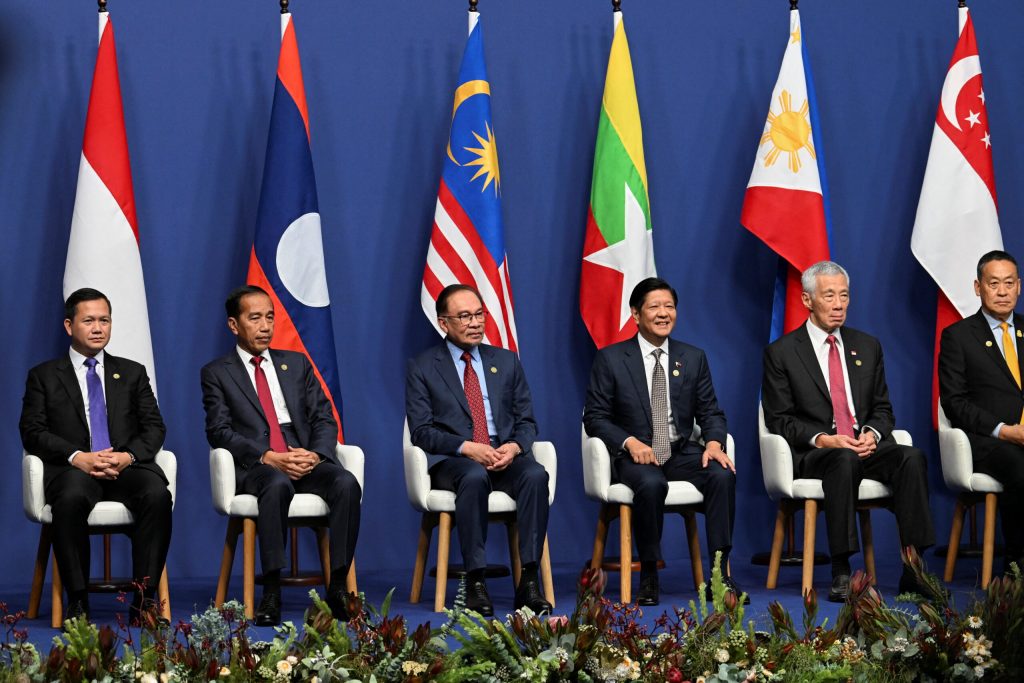
Asean to Act as One on US Tariffs — PM Anwar

BUTTERWORTH: Prime Minister Datuk Seri Anwar Ibrahim has reaffirmed Malaysia’s commitment to working with regional and global partners in response to the United States’ newly announced retaliatory import tariffs. Speaking at the Aidilfitri Madani 2025 celebration in Penang, Anwar said Malaysia would leverage its strong diplomatic and economic relationships with the US, Europe, China, and Asean to find a solution. He noted that Asean member states have agreed to take a collective approach to addressing the issue. “This is important because we are not acting solely as Malaysia, but as a united Asean bloc,” he said. “We hope that through discussions and negotiations, both on behalf of Malaysia and Asean, we can resolve the tariff issue as effectively as possible.” The event was held at the Picca Convention Centre @ Arena Butterworth and also attended by Penang Chief Minister Chow Kon Yeow, Education Minister Fadhlina Sidek, Human Resources Minister Steven Sim Chee Keong, and other state leaders. As Asean 2025 chair, Anwar stressed that the region would not merely complain or concede. Instead, it would mobilise efforts to navigate this challenge and emerge stronger. “The test of any crisis is whether we complain, give in, or mobilise our efforts to find a new path. According to Joseph Schumpeter’s theory, a desperate situation finds a way to rise again,” he remarked. Highlighting Malaysia’s export profile, Anwar pointed out that the country, particularly Penang, is a critical global player in semiconductor exports — with total exports reaching RM200 billion, 65% of which were shipped to the US. He called for internal reforms to improve Malaysia’s competitiveness, including eliminating inefficiencies, delays, and corruption, and promoting higher productivity. “We must eliminate bad practices, laziness, delays in approvals, and corruption,” he said. “A stable economy, clear policies, and a diligent populace are essential to our progress.” On April 2, US President Donald Trump announced a basic 10% import tariff across all countries, with higher duties of 24% on several nations, including Malaysia. However, on April 10, the US announced a 90-day pause on the higher tariff rates to allow room for negotiations. Penang-based companies contributed RM76 billion — or 17% — of Malaysia’s total RM161 billion in exports to the US in 2023, with the electrical and electronics sector being the primary driver.

Scroll to Top

Subscribe
FREE Newsletter