asia

ESG

Bhutan Bets on ‘Green’ Cryptocurrency to Power Its Economy and Retain Talent

New Delhi:  Bhutan is tapping into its abundant hydropower resources to mine “green” cryptocurrencies as part of a broader strategy to revitalise its economy, create jobs, and curb the growing brain drain among its youth.   Green cryptocurrencies are digital assets minedusing renewable energy sources such as hydro, wind, or solar power, in contrast to those created using fossil fuels. Bhutan’s efforts in this space are spearheaded by its sovereign wealth fund, Druk Holding and Investments Ltd (DHI), which also controls the country’s sole power generation utility. “We are a nation that runs 100 per cent on hydropower, and every digital coin we mine in Bhutan using hydropower offsets that coin which gets mined using fossil fuels,” said Ujjwal Deep Dahal, CEO of DHI. “So a coin mined in Bhutan will contribute to the green economy,” he told Reuters. Bhutan quietly began investing in cryptocurrencies in 2019, using earnings to fund government expenses, including salaries for two consecutive years. Now, the country is looking to scale up, exploring how its sustainably mined digital assets could attract ESG-conscious investors and corporations. Famed for its alternative development philosophy centred on Gross National Happiness (GNH), Bhutan sees crypto mining not only as an economic opportunity but also as a way to align financial gains with environmental stewardship. Dahal said Bhutan is also training its youth in blockchain and artificial intelligence to prepare them for future job markets. The move comes amid concerns over youth unemployment and migration. More than 10% of Bhutan’s young population left the country between 2022 and 2023, pushing the youth unemployment rate to 16.5% in 2024. To support its vision of becoming a global hub for green digital currency, Bhutan is targeting a hydropower capacity of 15 gigawatts over the next 10 to 15 years—up from its current output of around 3.5 gigawatts, and still far below its full potential of 33 gigawatts. “Bitcoin has not just given more value to hydropower energy, it has also increased access to liquidity in foreign currency,” Dahal noted, highlighting crypto’s potential to diversify Bhutan’s economic prospects.–REUTERS

Lifestyle

Penang Turf Club to Cease Operations After Final Race in May

GEORGETOWN: Penang Turf Club, Malaysia’s oldest horse racing institution, will officially close after hosting its final race meeting on 31 May 2025, marking the end of a 161-year legacy. The closure aims to reduce ongoing financial losses and follows a regional trend of waning interest in horse racing. Established in 1864, the Penang Turf Club occupies over 81 hectares of prime land in Batu Gantung. Currently, the club maintains just two trainers and eight horses, according to local media outlet The Star. At a second special general meeting held on 20 April, 318 out of 320 ordinary members voted in favour of dissolving the club, with two votes reportedly spoiled. A previous resolution to dissolve the club was first passed on 10 June 2024. General manager and secretary Leow Khin Ming confirmed that the dissolution process is expected to take between one and two years. “The club shall be notifying all relevant parties and authorities that it intends to cease racing activities on a date to be decided by the club committee,” Leow said, as quoted by the New Straits Times. The club’s closure mirrors similar developments across Asia. Singapore’s Turf Club, established in 1842, held its final race in October 2024, while the Macau Jockey Club ceased operations in April last year. With Penang Turf Club’s exit, Malaysia will be left with only two turf clubs: the Perak Turf Club (established in 1886) and the Selangor Turf Club (founded in 1896). In preparation for closure, Penang Turf Club has begun terminating contracts with suppliers and service providers. The club’s 150 employees will be offered a voluntary separation scheme or phased retrenchment packages.

News

Nomura to Acquire Macquarie’s US and European Asset Management Units for $1.8 Billion

Japanese investment bank Nomura Holdings has announced plans to acquire Macquarie Group’s public asset management operations in the United States and Europe for A$2.8 billion (US$1.8 billion), in a move aimed at strengthening its global asset management presence. The acquisition will include all public investment assets, operating platforms, and investment teams in both regions, while retaining the current management structure. The deal is expected to close by the end of 2025. Nomura President and Group CEO Kentaro Okuda said the acquisition would be “transformational” for the bank’s investment management division outside Japan. “It adds significant scale in the U.S., strengthens our platform, and provides opportunities to build our public and private capabilities,” he said. This move marks another major international acquisition by a Japanese firm, as the country’s corporations increasingly look abroad for expansion amid a shrinking domestic market. The asset management sector has become a key growth driver for Japanese financial institutions, offering more stable, fee-based income streams that are less sensitive to market volatility. Macquarie, Australia’s largest investment bank by assets, will retain its public investments business in its home market and continue operating a broad-based asset management platform that includes both public and private markets. As part of the agreement, Macquarie will collaborate with Nomura on product development and distribution. Following completion of the transaction, Nomura’s assets under management are expected to rise from US$590 billion to approximately US$770 billion.–REUTERS

News

Toyota and Daimler Near Merger of Truck Units, Eyes on 2026 Listing

Japanese automaker Toyota Motor’s truck unit Hino Motors and Mitsubishi Fuso Truck and Bus Corporation, a subsidiary of Germany’s Daimler Truck, are reportedly in the final stages of a long-anticipated merger, according to a report by Nikkei Asia. The two companies are expected to formalise a merger agreement as early as May 2025, following a delay announced in early 2024. If successful, the merger would establish a new holding company that will own both Hino Motors and Mitsubishi Fuso, with plans to list the entity on the Tokyo Stock Exchange’s Prime Market by April 2026. The original agreement to integrate the truck operations was announced in May 2023, with a target completion date by the end of 2024. However, the timeline was pushed back indefinitely in February 2024 due to undisclosed reasons. The Nikkei report noted that the merger is now gaining momentum, with the antitrust review by the Japan Fair Trade Commission nearing completion. The holding company structure is designed to strengthen the companies’ competitiveness in the commercial vehicle sector by pooling resources in technology, electrification, and global supply chains. Neither Toyota nor Daimler Truck have responded publicly to the latest reports as of press time. If finalised, the move would mark a significant shift in Japan’s truck manufacturing landscape, consolidating two of its major players in response to industry challenges including rising costs, decarbonisation targets, and growing competition from emerging markets.–REUTERS

News

Vietnam to Finalise Restructuring Plan for Troubled Lender SCB

HANOI: Vietnam’s central bank is finalising a report based on a restructuring plan to address the issues of Saigon Joint Stock Commercial Bank (SCB), which has been at the centre of the country’s largest financial fraud scandal. Local media reported that the bank’s restructuring plan is based on a proposal from an unnamed investor. Last month, Reuters revealed that the Sun Group, a prominent Vietnamese developer, had submitted a rescue plan to the central bank. This plan involves a full reimbursement of nearly US$26 billion that the central bank has injected into SCB since October 2022 after the bank experienced a run on its deposits. The proposed timeline for reimbursement spans 15 years. The finance ministry’s Dau Tu newspaper stated that the central bank has drafted the report based on the investor’s proposal, but changes are expected after reviews by relevant state bodies. No further details about the plan or a timeline for its final submission were disclosed. The central bank had appointed Sun Group to prepare the restructuring plan, although neither the central bank, SCB, nor Sun Group have responded to media requests for comment. SCB came under the supervision of the State Bank of Vietnam in October 2022 following the arrest of real estate mogul Truong My Lan. Lan, who was sentenced to death for her role in diverting billions of dollars in loans from SCB to shell companies she controlled, sparked a crisis at the bank. In a separate case involving money laundering and the illegal issuance of corporate bonds, Lan’s life sentence was later reduced to 30 years on appeal. Since the crisis began, SCB has been reliant on central bank cash injections to manage its liquidity and cover deposit withdrawals. Despite efforts to involve the private sector, including calls for foreign investments, the central bank faces limitations such as a 30% cap on foreign ownership in Vietnamese banks. The government and central bank are keen to resolve the crisis, but the restructuring process continues to unfold under tight scrutiny.

News

Japanese Omi Beef Chain STEAK SUDAKU Expands to Singapore

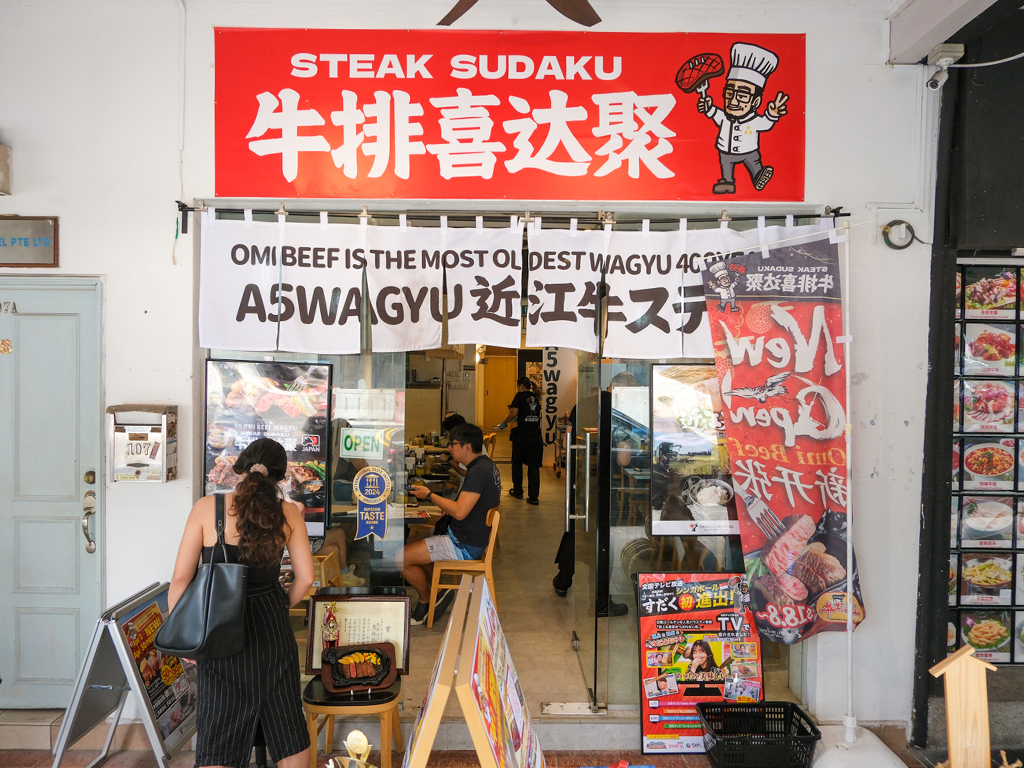
SINGAPORE: Singapore’s vibrant dining scene welcomes a new culinary gem as STEAK SUDAKU, a fast-casual restaurant specialising in premium Omi beef, opens its third outlet and first-ever franchise store in the city’s bustling Telok Ayer district. The outlet, located at 3 Boon Tat Street, marks a significant step in the brand’s expansion beyond Japan, introducing Singaporean diners to the rich heritage and quality of Omi beef, one of Japan’s oldest and most celebrated wagyu varieties. A Taste of Japan in the Heart of Singapore Owned and operated by OMIGYU TRADING SINGAPORE PTE. LTD., the Singapore subsidiary of General Omi Beef Trading Co., Ltd., the restaurant aims to elevate casual steak dining by offering high-quality Omi beef with efficient service in a relaxed, modern setting. STEAK SUDAKU is crafted as a fast-casual concept, making premium Japanese beef more accessible to busy professionals and food lovers in the Central Business District. The menu centres on grilled-to-order Omi beef steaks, complemented by a range of sides and quick-service options that cater to the city’s fast-paced lifestyle. The Meaning Behind “Sudaku” The restaurant’s unique name, “Sudaku,” is a coined term using simplified Chinese characters that align with the Japanese word “Sudaku” (to gather), blending joy, achievement, and togetherness: Xǐ (喜) – joy, enjoy Dá (达) – achieve Jù (聚) – gather Together, they reflect the brand’s mission to create “a place where people can gather and have fun” — a fitting concept for Singapore’s multicultural dining scene. Promoting Omi Beef Across Borders General Omi Beef Trading Co., headquartered in Moriyama City, Shiga Prefecture, has been actively exporting Omi beef to Singapore and is now furthering its mission to promote this premium product through local franchise operations. “We are proud to introduce our first franchise store in Singapore,” said Takaoki Nishino, CEO of General Omi Beef Trading Co., Ltd. “Our goal is to share the distinct flavour and heritage of Omi beef with the world, and Singapore is a strategic location for us to connect with a global audience.” With its Telok Ayer opening, STEAK SUDAKU aims to establish itself as a go-to destination for quality Japanese beef, whether for a quick weekday lunch or a casual gathering with friends. The launch signals broader plans for regional expansion as demand for authentic wagyu experiences continues to grow across Asia.

Energy & Technology

CSA Group Opens Cutting-Edge EMC Testing Facility in Singapore to Strengthen Regional Capabilities

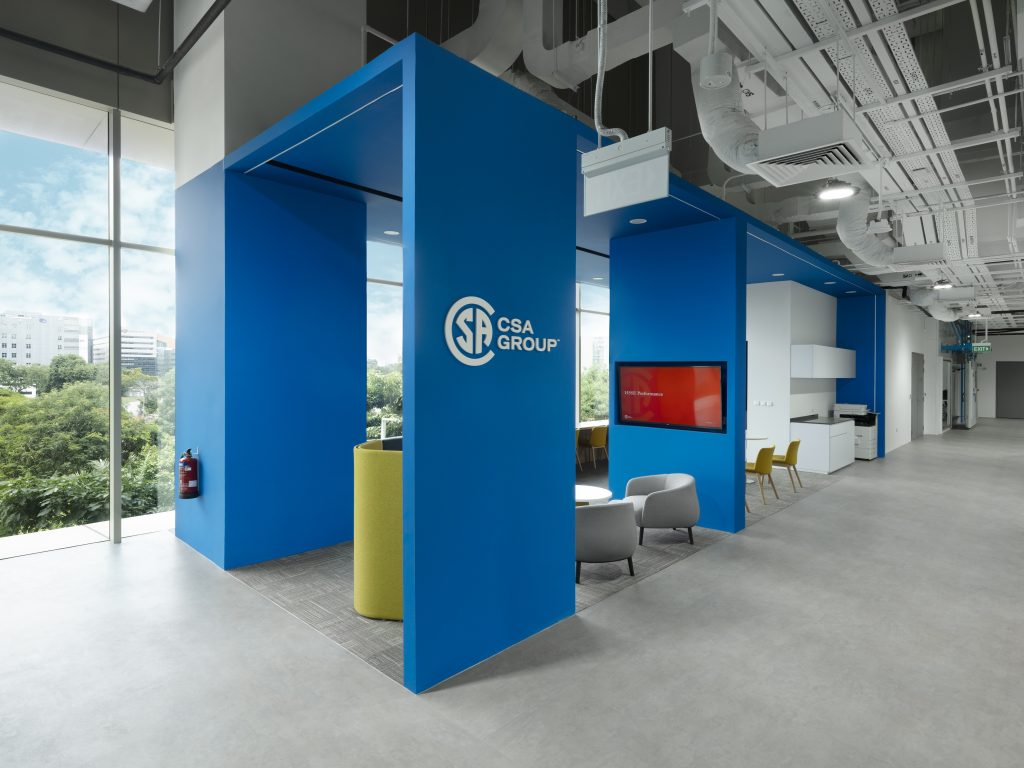
SINGAPORE: CSA Group has officially opened its state-of-the-art electromagnetic compatibility (EMC) laboratory in Singapore’s Science Park, marking a significant expansion of its testing, inspection, and certification services in Southeast Asia. The new facility, supported by the Singapore Economic Development Board (EDB), is positioned to help manufacturers meet global compliance standards and gain faster access to international markets. Boosting Compliance and Market Readiness with Advanced Capabilities Strategically located within a hub for research and innovation, the facility is equipped with cutting-edge technologies designed to support a wide range of industries, including ICT, artificial intelligence, industrial systems, and medical devices. The new laboratory features: Advanced EMC Testing: Two high-tech semi-anechoic chambers capable of testing products in complex electromagnetic environments up to 10 metres, ensuring accurate and compliant EMC performance. Wireless Performance Testing: Enhanced capabilities for 4G, 5G NR (FR1), IoT systems, automotive electronics, and medical devices to verify uninterrupted, interference-free functionality. Electrical Product Testing: An upgraded electrical lab provides efficient safety compliance testing services tailored to global standards, with a localised approach for Southeast Asia. Cybersecurity Assessments: Support for manufacturers of connected devices to achieve compliance with global cybersecurity standards, addressing the growing demand for secure digital infrastructure. The facility also serves as CSA Group’s ASEAN headquarters, reinforcing its commitment to long-term growth in the region. Leadership Voices and Regional Impact “Singapore has established itself as a global hub for research, development, and technological innovation,” said David Weinstein, President and CEO of CSA Group. “With this expansion, CSA Group is better positioned to help businesses in the region meet evolving regulatory demands and bring their products to market more quickly.” Frances Hung, Senior Vice President of East and South Asia, added, “We are excited to deliver advanced testing and certification services to our customers in Singapore and across ASEAN. Our new facility supports regional innovation and helps companies meet both local and international standards.” EDB Chairman Png Cheong Boon welcomed the move, stating, “CSA Group’s expansion will create new job opportunities in wireless communications, cybersecurity, and electrical testing. The new EMC lab further strengthens Singapore’s role in accelerating product development and commercialisation.” Commitment Beyond Business To commemorate the launch, CSA Group hosted a ribbon-cutting ceremony and announced a charitable donation to the Children’s Cancer Foundation, underscoring its commitment to the communities where it operates. With this expansion, CSA Group reaffirms its role as a trusted partner in compliance testing, supporting innovation and market growth across ASEAN and beyond.

News

Japan Stresses Fairness in Currency Talks with U.S., Says PM Ishiba

Japanese Prime Minister Shigeru Ishiba has underscored the importance of fairness in upcoming currency discussions with the United States, as tensions continue to simmer over tariffs and trade terms. Speaking during a talk show on national broadcaster NHK, Ishiba said Tokyo will approach any talks on exchange rates from the standpoint of fairness, particularly in light of Washington’s accusations that Japan has intentionally weakened the yen to benefit its exporters. The currency negotiations will be handled by Japan’s Finance Minister Katsunobu Kato and U.S. Treasury Secretary Scott Bessent. These discussions are expected to take place on the sidelines of the upcoming Group of 20 finance ministers’ meeting in Washington. Ishiba did not provide specific details on how Japan would respond if asked to support a stronger yen but reaffirmed that the country does not engage in currency manipulation. As part of broader trade talks, Ishiba indicated that Japan could increase imports of U.S. liquefied natural gas, noting that the United States currently ranks fourth among Japan’s energy suppliers. He said any increase would depend on Washington’s ability to provide a stable supply. The Prime Minister also signalled potential flexibility on U.S. complaints about non-tariff barriers, particularly in the automotive sector. Washington has long argued that Japan’s auto safety standards hinder U.S. car imports, while Japan maintains that American cars are not tailored to local roads and driving habits. On the issue of tariffs, Ishiba noted that President Donald Trump has imposed a 10 per cent universal tariff and a 25 per cent levy on Japanese cars. A proposed 24 per cent tariff hike has been paused until July. Amid speculation that Japan could use its holdings of over US$1 trillion in U.S. Treasury bonds as leverage in trade talks, Ishiba dismissed the idea, stressing that such financial instruments are based on mutual trust and global economic stability. Looking ahead, Japan may consider relaxing certain automotive regulations to ease U.S. concerns, but Ishiba was clear that any adjustments must not compromise domestic safety standards. At the same time, he expressed a willingness to increase Japanese investment in the U.S., particularly in energy-related sectors.–REUTERS

ESG, Lifestyle

ZALORA Highlights Climate, Circular Fashion Gains for Earth Day

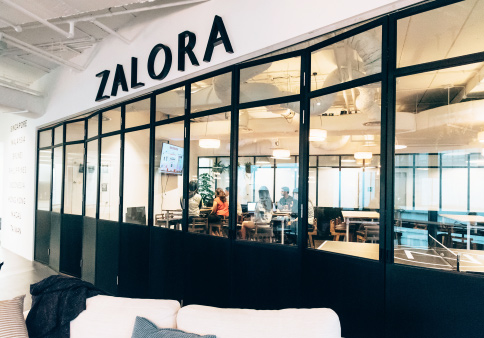
SINGAPORE:  ZALORA, Asia’s leading fashion and lifestyle e-commerce platform under Global Fashion Group (GFG), has reaffirmed its sustainability commitment by sharing key achievements in climate action and circular fashion, in conjunction with Earth Day. In its latest People and Planet Positive Report, ZALORA outlined significant strides in lowering its environmental impact across Southeast Asia. In 2024, the company enhanced its logistics strategy by partnering with third-party last-mile providers that use hybrid vehicles, electric bikes, bicycles, and walking deliveries — supporting GFG’s 2030 target to work with providers that operate at least 50% low or zero-emission fleets. In Malaysia, ZALORA collaborated with the Malaysian Green Technology and Climate Change Corporation (MGTC), UNIDO, and partners Blueshark and RydeEv to pilot electric motorcycle deliveries. The company also made notable progress in packaging sustainability by using 100% RCS-certified recycled polyethylene flyers, responsibly sourced paper fillers, and recycled-content boxes. ZALORA has begun trials with paper packaging and implemented automation to reduce excess material in its fulfilment processes. These efforts led to ZALORA’s inclusion in the Singapore Alliance for Action (AfA) on Packaging Waste Reduction, co-led by the Singapore Manufacturing Federation and SingPost. In waste management, ZALORA diverted over 34,630 kg of garments from landfills through partnerships with organisations such as The Salvation Army, Life Line Clothing, and Tukar Tambah Celana. The initiative supports second-life use or upcycling of textiles, contributing to a growing circular economy. ZALORA employees across the region also recorded nearly 1,300 volunteering hours in 2024, engaging in causes from forest replanting and food waste rescue to animal welfare and community kitchens. “Sustainability isn’t just a commitment for us at ZALORA, it’s a shared journey with our customers, partners, and communities,” said Christopher Daguimol, Corporate Communications Director at ZALORA Group. “From driving climate action to promoting circular fashion, we’re proving that small steps lead to meaningful change.” ZALORA plans to expand its sustainable practices further throughout 2025, strengthening community collaborations and scaling impact-led innovations across its operations.

Upcoming Events

CeMAT Southeast Asia 2025 Returns to Singapore

SINGAPORE: As global supply chains face increasing pressure from tariff volatility and geopolitical realignments, CeMAT Southeast Asia returns to Singapore EXPO from 19–21 May 2025 to offer strategic clarity and cutting-edge solutions for logistics leaders navigating this complexity. Organised by Hannover Fairs Asia Pacific, a subsidiary of Deutsche Messe, the three-day event will convene over 60 global and regional exhibitors, spotlighting transformative technologies in intralogistics, AI-driven automation, robotics, warehouse optimisation, and end-to-end supply chain intelligence. The event’s return to Singapore—Asia’s top logistics hub—comes at a time when companies across Southeast Asia are reassessing their infrastructure and digital readiness. “The global supply chain is being reshaped by protectionism, shifting trade routes, and rising customer expectations. CeMAT Southeast Asia is timely and strategic—it empowers businesses to future-proof operations and scale efficiently,” said Michael Rolfing, Managing Director Malaysia at Ferag. Driving Logistics Transformation in Southeast Asia Key exhibitors include SSI Schaefer, Daifuku, Honeywell, Körber Supply Chain, Interroll, Geek+, AutoStore, GreyOrange, and Hikrobot, showcasing solutions designed to boost warehouse agility and reduce dependency on manual processes. These offerings are of growing interest to Malaysian manufacturers and retailers, especially with the country’s New Industrial Master Plan 2030 aiming to position Malaysia as a regional logistics and automation hub. With trade digitisation and ESG compliance becoming priorities, CeMAT offers Malaysian businesses an essential platform to identify scalable solutions, explore cross-border partnerships, and accelerate adoption. A 2024 Gartner report revealed that 57% of organisations plan to increase investment in at least one supply chain function by more than 10% over the next three years—highlighting the urgency for transformation. Knowledge Exchange & Strategic Collaboration CeMAT Southeast Asia 2025 will also host the LogiSYM Asia Pacific Conference (20–21 May), known for drawing top decision-makers and innovation leaders. The dual-format event provides actionable insights through high-level panels, interactive case studies, and strategic networking. The Knowledge Theatre will feature sessions led by industry figures such as: Carsten Spiegelberg, Head of Logistics Solutions APAC & MEA, SSI Schaefer Alex Ch’ng, Business Development Manager, AutoStore Terrence Chan, Senior Sales Manager, Dematic Topics include AI-driven warehouse transformation, scalable automation models, and strategies to build secure, agile, and sustainable supply chains in uncertain times. Meanwhile, the Singapore Hour—a special segment within the event—will spotlight leading Singapore-based exhibitors presenting local innovations with regional scalability. “We’re seeing a surge in Malaysian interest—not just in attending but exhibiting—reflecting the country’s pivot to smarter logistics and digital-first manufacturing. CeMAT is more than a showcase; it’s a launchpad for strategic transformation,” Rolfing added. CeMAT Southeast Asia 2025 will take place from 19–21 May 2025 at Singapore EXPO.

Scroll to Top

Subscribe
FREE Newsletter