international

Energy & Technology, News

Foxconn Strengthens Indian Manufacturing with US$1.5 Billion Injection

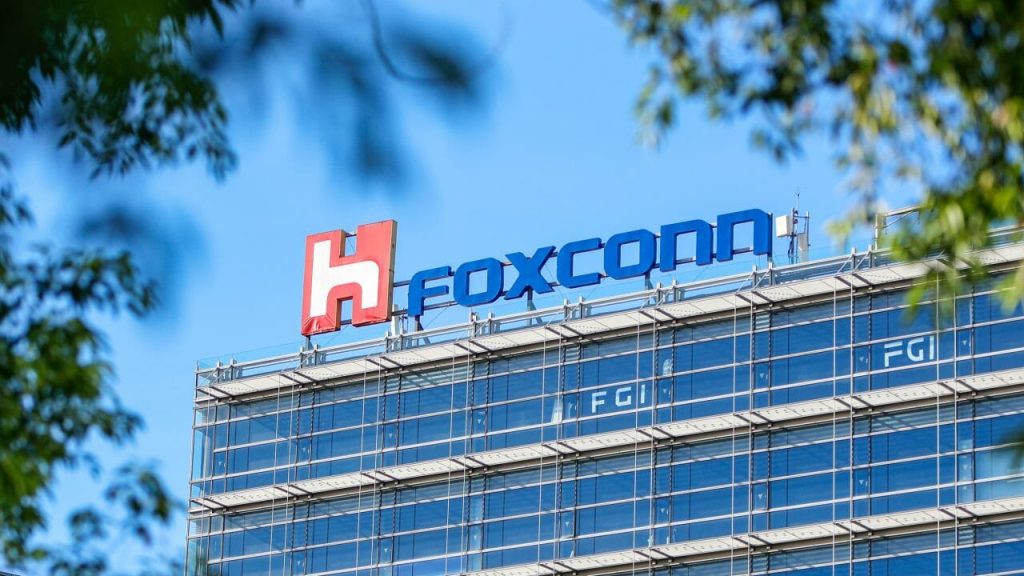
Hon Hai Precision Industry Co, widely known as Foxconn and the primary assembler of Apple Inc’s iPhones, has committed US$1.5 billion (RM6.4 billion) to its Indian subsidiary, reinforcing its strategic pivot away from China. The investment, made via Foxconn’s Singapore-based unit, was disclosed in a regulatory filing on Monday. The move is part of Foxconn’s broader initiative to expand its manufacturing footprint in southern India. The Taiwan-based electronics giant is actively developing new facilities and boosting production capacity in the region. The company has not issued an official statement in response to media inquiries regarding the investment. Apple is intensifying its efforts to diversify its supply chain by shifting a significant portion of its iPhone production to India. The company aims to source the majority of iPhones sold in the United States from India by the end of next year. The transition has drawn criticism from former US President Donald Trump, who recently disclosed that he urged Apple CEO Tim Cook to halt the development of production facilities outside the United States. This latest development underscores Apple’s ongoing efforts to reduce exposure to China amid rising geopolitical tensions and trade uncertainties. Although Apple has pledged to invest US$500 billion domestically over the next four years and hire more American workers, the company currently has no smartphone manufacturing operations within the United States. The majority of iPhone production remains concentrated in China. Foxconn is simultaneously scaling up its investments in the United States as part of its risk mitigation strategy in response to potential future tariffs and political pressures. India has emerged as a key manufacturing hub in Apple’s global supply chain. In the 12 months ending March, Apple assembled US$22 billion worth of iPhones in India, representing a nearly 60% increase in output year-on-year. Foxconn’s southern India facility serves as the central hub for the production of India-assembled iPhones. Tata Group, through its electronics manufacturing arm, has also become a significant partner in Apple’s India operations, following its acquisition of Wistron Corp’s local business and the management of Pegatron Corp’s Indian activities. -Bloomberg

Energy & Technology, News

Quantified Energy Secures Series A Funding Led by Vertex Ventures Southeast Asia & India

SINGAPORE: Quantified Energy (QE), a Singapore-based deep-tech company at the forefront of drone and AI-enabled solar inspection technology, announced its Series A fundraise led by Vertex Ventures Southeast Asia & India today. Founded in 2021 as a spin-off from the Solar Energy Research Institute of Singapore (SERIS) at the National University of Singapore, QE developed an autonomous drone electroluminescence (EL) mapping solution and provides inspection services for utility-scale and commercial solar systems. The global solar market is experiencing rapid growth, with BloombergNEF projecting up to 4.5 TW of new solar PV capacity to be installed between now and 2030. Large-scale systems remain the key driver of this expansion. By enabling precise and non-destructive in-situ diagnostics for solar power systems at unprecedented throughput, QE empowers solar asset owners and financiers to reduce the risk of premature degradation and improve safety. This, in turn, helps optimise asset performance throughout a solar PV system’s lifespan, leading to higher energy yield and improved return on investment. “Quantified Energy’s founders are solar researchers from Asia and Europe who came together in Singapore with a shared mission to make every PV module count throughout its lifetime”, said Dr. Yan Wang, CEO of Quantified Energy. “With this new round of funding, we will be rolling out our second-generation drone EL inspection solution globally. Any partner operating a DJI M300/M350 drone can plug in QE’s EL payload and subscribe to our ‘pay-per-use’ model—instantly unlocking the ability to perform high-throughput EL inspections for clients. Through this approach, we contribute to safeguarding the exponential growth of the solar PV industry.” The company has deployed its solutions across Asia, Europe, Oceania, and the Middle East. Last year, QE completed the world’s largest EL inspection, covering over one million PV modules at a single site within three weeks. Recently, QE signed a Memorandum of Understanding with TÜV Rheinland at Intersolar Europe 2025 in Munich, Germany, to drive the adoption of drone based EL mapping in key European markets such as Spain and Portugal. This follows multiple successful pilot projects between the two companies across the region. With this latest funding round, QE will accelerate its global business development efforts and double down on product innovations to cater to the needs of the fast-growing solar industry. “Solar power is a cornerstone of the global renewable energy transition. Quantified Energy’s unique capabilities are well-positioned to transform how solar assets are managed and financed. We are excited to work with Quantified Energy to bring their innovations to the global solar market,” said Puiyan Leung, Partner of Vertex Ventures Southeast Asia and India.

News

Qatar Airways Group Announces Strongest Financial Result in History

Qatar Airways Group has announced the strongest set of financial results in its history. Profits for the Group, which includes cargo, catering, and Qatar Duty Free, reached QAR7.85bn (US$2.15bn) in the 24/25 fiscal year – an increase of more than QAR1.7bn (US$0.5bn) on the year before. Qatar Airways Cargo, the world’s leading cargo carrier, has delivered a remarkable financial performance, recording a 17% growth in revenue and achieving the best financial results since the COVID period. This is attributed to its agility in adapting to shifting market conditions, a focus on investing in digitalisation, deeper data-driven analyses, and its best-in-class reliability. Qatar Airways Group Chief Executive Officer, Engr. Badr Mohammed Al-Meer, said: “These record-breaking results are a testament to the hard work, skill and dedication of teams across all of Qatar Airways Group. I know that none of the outstanding results we’re announcing today would be possible without our people – more than 55,000 of them across the globe – and it’s our focus on fostering that talent, which has been a core focus of our Qatar Airways 2.0 strategy. “We have also successfully implemented strategic partnerships throughout the industry, in order for the Group to remain agile in the face of ever-shifting world events, whether political, economic or environmental. “All of this means we continue to offer and develop exceptional service in the skies, whether it’s the award-winning Qsuite, fine dining, or super-fast complimentary Starlink internet connectivity for all passengers.” Key achievements of Qatar Airways Group over the last financial year include: Record-breaking 28% increase in profit in 24/25 financial year. Expansion of Hamad International Airport, enabling it to cater for 65m passengers annually. First global airline, and first in MENA region, to install Starlink super-fast WiFi on its Boeing 777 fleet. 25% minority stake in Virgin Australia. 25% acquisition of South African premier regional airline, Airlink. Introduction of conversational AI into its world-first digital cabin crew, Sama. A range of technical MoUs, future-proofing and diversifying the business across the sector, as well as working to fulfil the ambitions of the Qatar National Vision 2030. Looking ahead, Qatar Airways also recently made historic aircraft and engine orders, ensuring that its already modern and technologically-advanced fleet remains at the forefront of commercial aviation, providing world-leading service to passengers across the globe.

News

South Korea to Invest ₩182.4 Billion in Solid-State Battery Commercialisation

SEOUL: The South Korean government has announced a strategic investment of ₩182.4 billion (approximately US$130.4 million) to accelerate the development and commercialisation of next-generation solid-state battery technologies. This initiative is aimed at bolstering the country’s competitive position in the global battery market, particularly in the sectors of wearable mobile devices and electric vehicles (EVs), according to the Ministry of Trade, Industry and Energy. Under the programme, ₩35.8 billion will be allocated through to 2028 for the development of solid-state batteries tailored for small information technology (IT) devices, including smartwatches, virtual reality headsets, and wireless earphones. In parallel, ₩29.4 billion will be invested by 2026 in the advancement of ultra-compact multilayer ceramic solid-state batteries, which are intended for use in auxiliary power systems. The largest portion of the investment—₩117.2 billion—will be directed toward the development of next-generation rechargeable batteries for EVs. This includes support for solid-state, lithium-metal, and lithium-sulphur battery technologies, with funding scheduled through to 2028. Solid-state batteries are regarded as a cornerstone of future energy storage solutions. Unlike conventional lithium-ion batteries, which utilise liquid electrolytes, solid-state batteries employ solid electrolytes, offering enhanced fire safety and greater energy density—features that are increasingly in demand in both consumer electronics and automotive industries. A Ministry official stated, “Once these three promising solid-state battery technologies reach full development, they will play a pivotal role in securing South Korea’s technological leadership in the battery sector while expanding its industrial portfolio.” -Yonhap

News

Data Breach at SK Telecom Raises Alarm Over Potential IMSI Leak

SEOUL: A joint investigation by government and private sector authorities has revealed that a cyberattack targeting SK Telecom Co. may have resulted in the exposure of sensitive user information, including universal subscriber identity module (USIM) data. According to interim findings released Monday, the breach is believed to have originated on 15 June 2022, when unknown perpetrators infiltrated the company’s servers by installing malicious software. A total of 23 servers were affected, all of which store four types of USIM data, including international mobile subscriber identity (IMSI) details. The IMSI is a unique code used to identify individual users within a network and is considered critical due to its potential use in financial transactions. The possible compromise of such information has raised serious concerns among data security experts and financial institutions. Further investigation revealed that two of the 23 compromised servers had also been used as temporary storage for personal customer information, including names, dates of birth, mobile numbers and email addresses. Authorities are currently working to verify the exact nature and volume of personal data held on these two servers. SK Telecom only discovered the breach on 18 April, nearly two years after the initial intrusion. Investigations remain ongoing to assess the full extent of the damage and determine whether any data has been misused or leaked externally. -Yonhap

News

Stagwell (STGW) Appoints Connie Chan as Chief Growth Officer for Asia Pacific

SINGAPORE: Stagwell (STGW), the challenger network built to transform marketing, today announced the appointment of Connie Chan as Chief Growth Officer, Asia Pacific, effective July 2025. Based in Singapore, Chan will be responsible for leading Stagwell’s growth strategy and operations across APAC markets, with a focus on accelerating transformation, scaling integrated capabilities, and deepening relationships in local markets.   This appointment builds on Stagwell’s growth momentum across APAC on the heels of acquiring ADK GLOBAL earlier this year. Stagwell APAC now encompasses 2,500 employees across 34 APAC offices. Chan will report to Ryan Linder, EVP, Global Chief Marketing Officer. “As the global marketing landscape continues to shift, Asia Pacific stands out as a region of extraordinary opportunity. Connie’s leadership will be instrumental as we build a network that not only responds to the complexity of today, but sets the pace for what’s next,” said Linder. “Connie doesn’t just drive growth. She builds momentum that breaks the sound barrier,” said Randy Duax, Stagwell’s Managing Director, Asia Pacific. “We’ve spent the last three years building the kind of platform the holding companies said couldn’t be done—media, creative, strategy and PR moving as one, built for speed, wired for scale. Connie isn’t here to learn the playbook. She’s here to call the next play.” Chan brings a track record of transformative leadership spanning decades in media, marketing, and strategic communications. Most recently, she served as CEO of OMD China, where she oversaw the agency’s operations in Shanghai, Beijing, and Guangzhou, with a focus on driving growth and creativity, and inspiring teams with a strong focus on culture. Prior to that, Chan held leadership roles at WPP, including Executive Director of the Government & Public Sector Practice in Singapore, and Chief Client Officer for APAC at MEC (now Wavemaker), focusing on strategic client partnerships. Upon her appointment, Chan reflected, “I’ve always believed in the power of strategic clarity and bold ideas. At Stagwell, we have the talent, the ambition, and the platform to build work that matters – and impact that endures.” -Stagwell Inc.

News

ZUS Coffee Expands to Indonesia with Kapal Api & RM250 Mil Support

ZUS Coffee, the Malaysian specialty coffee chain backed by Indonesia’s Kapal Api Group, is accelerating its regional expansion strategy with plans to enter the Indonesian and Thai markets in 2025. In a recent interview with Bloomberg, Chief Operating Officer Venon Tiann outlined the brand’s next phase of international growth, which builds on its recent forays into Brunei, the Philippines, and Singapore. The move signals the company’s ambition to deepen its footprint across Southeast Asia. The expansion plans follow a substantial investment round in 2023, during which ZUS Coffee secured RM250 million (approximately IDR 970 billion) in funding. The round was led by KV Asia Capital and KWAP (Kumpulan Wang Persaraan), with strategic backing from the Kapal Api Group—Indonesia’s FMCG giant and parent of Excelso coffee shops. The brand aims to open at least 200 outlets across the region, capitalising on the rising demand for accessible, high-quality coffee experiences. In parallel with its expansion, ZUS Coffee recently unveiled ZUS Signature, a premium product line designed to position the brand in direct competition with high-end coffee retailers. With a focus on exclusivity and craftsmanship, ZUS Signature represents the company’s intent to capture market share in the premium segment while maintaining its mass appeal. -Bloomberg

News

FPT Expands Strategic Partnerships in Thailand

HANOI: Global IT firm FPT Corporation (FPT) has formed strategic partnerships with two of Thailand’s leading enterprises—Sunline and Buzzebees—underscoring the deepening technological and business collaboration between the two nations amid their shared momentum in digital economic growth. In terms of talent development, FPT also signed strategic partnership agreements with two of Thailand’s leading institutions in education and science & technology—Khon Kaen University and King Mongkut’s University of Technology. The partnership signing took place during the official visit of Thailand’s Prime Minister H.E. Paetongtarn Shinawatra – her first official visit to Vietnam since taking office in August 2004. On the sidelines of the Vietnam – Thailand Business Forum 2025, with both countries’ Prime Ministers and delegations in attendance, FPT signed a partnership agreement with Sunline – a global leading core banking solutions and services provider. FPT will support Sunline in system integration competencies across digital banking, digital lending, and core banking, drawing on more than two decades of experience delivering technology services and solutions to global banks, insurers, and financial institutions. FPT will help Sunline scale up the delivery capabilities of its Digital Core Banking Transformation Solution SunCBS to meet increasing market demands, especially as Thailand accelerates its shift toward a virtual banking future. Both sides aim to drive digital transformation for Thai financial institutions to improve customer experience, modernize legacy systems, and achieve operational resilience amid the country’s rapidly evolving banking landscape. Earlier at FPT’s headquarters in Hanoi, FPT also signed a strategic partnership agreement with Buzzebees—Thailand’s leading loyalty and digital engagement platform company. FPT and Buzzebees will deliver comprehensive, consumer-focused digital solutions to facilitate customer data exchange and cross-merchant loyalty programs for businesses, particularly in FMCG, retail, financial, and telecommunications sectors. Both sides will join forces to enhance customer engagement, modernize legacy systems, and boost operational efficiency. The partnership’s initial projects are expected to deliver tangible business results to clients within this year. In education, in the presence of the Prime Ministers of both countries, FPT University under FPT Corporation and King Mongkut’s University of Technology officially signed a memorandum of understanding to implement joint training programs and student exchange initiatives in Artificial Intelligence (AI), Robotics, and Automotive Automation. Additionally, FPT University and Khon Kaen University partner to jointly develop a semiconductor workforce training program for Thailand. This collaboration is part of the Thai Government’s Semiconductor Sandbox initiative, led by the Ministry of Higher Education, Science, Research and Innovation (MHESI). “Our future is digital, and businesses must embrace innovative solutions to stay ahead. Thailand is a dynamic market where consumers are actively experiencing new initiatives every day. “The partnership between FPT and Sunline will empower businesses with enhanced speed, quality, and scalability. Through the strategic partnerships with Sunline and Buzzebees, FPT aims to accelerate digital transformation for more enterprises across various sectors, such as banking, finance, FMCG, retail. Combining FPT’s technological expertise with our partners’ core competencies, we will empower businesses with enhanced speed, quality, and scalability. This provides a strong foundation for building future-ready, customer-centric business models”, said Levi Nguyen, Chief Executive Officer of FPT Thailand and FPT Taiwan, FPT Corporation. Thailand is among FPT’s key markets in the APAC region. The company has established its position as a trusted digital transformation partner for Thailand’s leading enterprises particularly in banking and finance, with renowned names like KBTG, SCB, KKP, TTB, Bangkok Bank, and other sectors including insurance, retail, automotive, manufacturing, healthcare, energy and utilities, consumer goods, and aviation. FPT currently boasts hundreds of local employees serving the Thai market, with a plan to double its workforce by 2027. As part of the Thai Prime Minister’s official visit to Vietnam this May, FPT Executive Vice President Pham Minh Tuan participated in a one-on-one meeting with the Prime Minister and Thai government delegation, during which the company reaffirmed its long-term commitment to forging potential tech collaboration across several industries, contributing high-quality technology talent, and providing comprehensive solutions for digital transformation. As a co-founder of the Vietnam–Thailand Chamber of Commerce (VietCham Thailand), FPT also plays an active role in strengthening bilateral cooperation. The company recently worked with the Thailand Board of Investment in Hanoi to promote trade and investment, as well as support Thailand with high-quality technology talents to meet the rising demand for digital transformation. In the first quarter of 2025, FPT reported robust results, with revenue increasing by 13.9% and profit before tax up 19.4% year-on-year. The technology sector continues to serve as a key growth driver, achieving a 15.3% year-on-year increase, underpinned by a 17% rise in revenue from global IT services.

News

Hong Kong Bank Probes Rare FPS Breach Following Client’s HK$20,000 Loss

A subsidiary of China Construction Bank in Hong Kong has launched an internal investigation into unauthorised transactions conducted via the Faster Payment System (FPS), following a complaint from a client who claims to have lost HK$20,000 despite never having used the platform. The affected client, a businesswoman identified as Ms Chen, reported that the funds were transferred on 1 April to an account under Ant Bank, registered in a mainland Chinese name. Although three subsequent transactions—totalling HK$30,000—were successfully intercepted, she expressed frustration with the bank’s initial handling of the case. According to Chen, the lender stated at first that no security irregularities had been detected. Chen was advised by the bank to file a police report. She was later informed by law enforcement that such breaches of the FPS are rare and that the bank bore responsibility for pursuing fund recovery from Ant Bank. Her case was reopened for review after she escalated the matter to the Hong Kong Monetary Authority (HKMA) on 2 May, in accordance with regulatory procedures. However, she noted that the HKMA made no assurances regarding any specific remediation steps by the bank. “There’s maybe some light in the tunnel,” Chen said. “But I’m still feeling somewhat helpless as the HKMA cannot guarantee the bank will be held accountable.” Cybersecurity experts described unauthorised FPS transactions as uncommon due to the platform’s robust encryption and authentication mechanisms. Francis Fong Po-kiu, honorary president of the Hong Kong Information Technology Federation, said successful FPS scams often involve the acquisition of one-time passwords and access to the victim’s device, potentially via malware. “Malware can hijack online banking if the user’s mobile phone or desktop is compromised,” said Fong, noting that Android devices are more vulnerable than Apple’s iOS ecosystem. Anthony Lai Cheuk-tung, director at cybersecurity firm VX Research, added that attackers could obtain banking credentials through phishing links or remote access enabled by malicious software. The FPS platform, introduced in 2018, has amassed more than 16 million registrations as of April 2025. A notable breach occurred in the launch year, prompting the HKMA to suspend the system temporarily after fraud losses exceeding HK$400,000 were reported. Responding to enquiries, a spokesperson for China Construction Bank (Asia) declined to comment on individual cases but confirmed the activation of standard fraud mitigation procedures, including instant suspension of digital banking, internal investigations, and fund recall requests. A representative from Ant Bank similarly refrained from commenting on the specifics of the case but reaffirmed the institution’s adherence to rigorous compliance and security protocols. Ant Bank is operated by Ant Group, an affiliate of Alibaba Group, which owns the South China Morning Post. Both banks stated that they are cooperating with local law enforcement, with China Construction Bank (Asia) participating in the police-operated 24/7 stop-payment mechanism and bank-to-bank information-sharing platforms, including the FPS suspicious transaction alert system. In a broader context, Hong Kong authorities are grappling with a sharp rise in digital fraud. Between January and February 2025, police handled 4,141 online scam cases, with total losses reaching HK$740 million. To strengthen preventive measures, the HKMA introduced an FPS warning mechanism in 2023, designed to alert users transferring funds to accounts linked to previous scams through the police-maintained “Scameter” database. In Q1 2025 alone, the HKMA received 203 fraud complaints, of which 165 involved unauthorised transactions. Last year, 828 complaints were filed with the authority, including 536 relating specifically to unauthorised transfers. -South China Morning Post

Scroll to Top

Subscribe
FREE Newsletter