international

Energy & Technology, News

LandSpace Expands Methane Rocket Programme with Launch of Zhuque-2E Y2

BEIJING: Chinese aerospace firm LandSpace Technology has achieved a significant milestone in the commercial space race with the successful launch of its enhanced methane-powered Zhuque-2E Y2 rocket, placing six satellites into orbit on Saturday from the Jiuquan Satellite Launch Centre in northwest China. The lift-off, which occurred at 12:12 p.m. local time (04:12 GMT), marked the fifth flight for the Zhuque-2 rocket series and the latest demonstration of China’s private sector capabilities in low-cost, cleaner launch solutions. Beijing-based LandSpace, founded in 2015, was the first globally to successfully deploy a methane-liquid oxygen (methalox) rocket in July 2023—outpacing US aerospace giants such as SpaceX and Blue Origin. The Zhuque-2E series reflects the firm’s growing emphasis on reusable technologies. Unlike traditional hydrocarbon-fuelled launch vehicles, methalox propulsion offers significant environmental and safety advantages, and is increasingly viewed as essential for next-generation, reusable rocket systems. LandSpace has steadily improved the Zhuque-2’s payload capacity to meet the rising demand of China’s commercial satellite sector. Saturday’s mission carried six satellites developed predominantly by Changsha-based Spacety (Changsha Tianyi Space Science and Technology Research Institute), a key player in China’s satellite manufacturing industry. Li Xiaoming, Vice-President of Spacety, outlined during a livestream hosted by LandSpace that the payload included a radar satellite, two multispectral satellites, and three scientific experiment satellites, ranging from 20kg to 300kg in mass. The radar satellite, capable of penetrating clouds and operating under all-weather conditions day or night, offers precision imaging at millimetre-level surface shifts. Such capabilities are essential for applications in urban development, transport infrastructure, and energy sector monitoring. The scientific satellites will contribute to China’s deep-space exploration programmes, while the multispectral satellites will support environmental monitoring and mineral resource identification. This latest launch also marked LandSpace’s first implementation of a propulsion enhancement involving the cryogenic chilling of both liquid oxygen and methane below their respective boiling points, resulting in greater thrust and performance. LandSpace is currently developing reusable rocket technologies, with founder and CEO Zhang Changwu confirming plans for a test launch in the second half of 2025. The company’s innovations align with industry trends established by SpaceX, whose reusable launch systems have drastically reduced costs and accelerated mission frequencies. The commercial space sector in China has expanded rapidly since 2014, following policy reforms that welcomed private capital. LandSpace has been one of the leading and best-funded players, having raised significant investment from notable backers including HongShan (formerly Sequoia Capital China), Country Garden’s investment arm, and the China SME Development Fund. In December 2023, LandSpace secured 900 million yuan (approximately USD 120 million) from a state-owned fund focused on advanced manufacturing, following an earlier 1.2 billion yuan round in 2020, according to Chinese corporate filings. While Spacety has previously faced scrutiny—sanctioned by the US Treasury in 2023 for alleged links to Russian military operations, allegations the company has denied—it continues to play a central role in China’s commercial satellite development landscape. With technical upgrades now in place and reusable technologies on the horizon, LandSpace is poised to strengthen its position in the competitive global launch services market. -Reuters
News

Chinese Firms Turn to Singapore for Listings Amid Rising US-China Trade Tensions

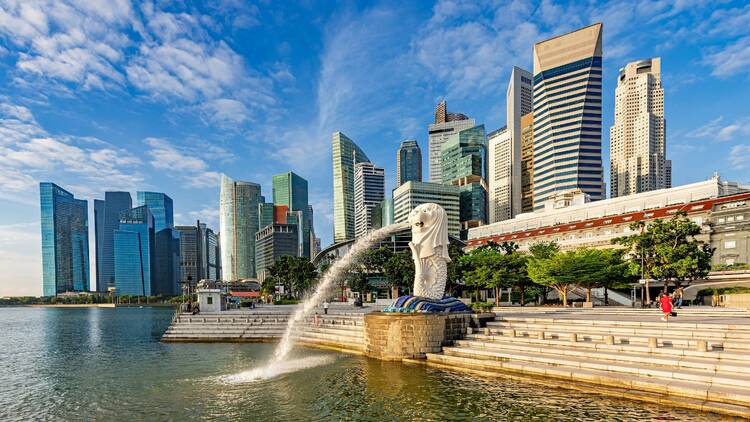
SINGAPORE: At least five companies based in mainland China or Hong Kong are considering initial public offerings, dual listings, or share placements on the Singapore Exchange (SGX) over the next 12 to 18 months, according to four individuals with direct knowledge of the matter. The move reflects a growing interest among Chinese firms in expanding their presence in Southeast Asia, as escalating geopolitical tensions with the United States drive a shift in strategic priorities. Among the potential listings are a Chinese energy firm, a healthcare group, and a Shanghai-based biotechnology company. While sources declined to disclose specific names as discussions remain preliminary, the developments mark a notable shift towards Singapore as a capital-raising hub. The planned activity would serve as a welcome catalyst for SGX, which has faced challenges in attracting large-scale listings and boosting trading volumes in recent years. In 2024, SGX hosted only four IPOs, significantly trailing Hong Kong Exchanges and Clearing Ltd, which recorded 71 new listings over the same period. According to Jason Saw, head of investment banking at CGS International Securities, Chinese interest in SGX surged following recent trade actions by the United States. “Enquiries about listings on SGX shot through the roof after Trump ramped up his trade actions against China,” he said. Former US President Donald Trump imposed tariffs of 145% on Chinese imports, prompting retaliatory duties from China of up to 125% on US goods. Although both sides recently agreed to a temporary 90-day pause, long-term uncertainty continues to influence strategic corporate decisions. CGS International, a subsidiary of China Galaxy Securities, is reportedly working with at least two China-based companies to debut on SGX within the year. Some of these firms could raise approximately US$100 million (RM429.6 million) through primary listings, one source noted. While SGX has historically not been the primary destination for Chinese offshore listings—Hong Kong remaining the preferred venue due to regulatory alignment and investor familiarity—recent geopolitical shifts and Beijing’s push to deepen ties with ASEAN markets are reshaping this outlook. “Singapore is an important gateway, whether it’s trade or business activity from China to the outside world,” said Pol de Win, Senior Managing Director and Head of Global Sales and Origination at SGX. “A listing in Singapore is an important component of that.” The Singaporean government has introduced measures to bolster its equities market, including a 20% corporate tax rebate for primary listings announced in February. Further initiatives are expected in the second half of 2025. According to Ringo Choi, Asia-Pacific IPO Leader at EY, these steps, combined with Singapore’s political stability and neutrality in global affairs, make the city-state an attractive proposition for companies seeking diversification outside of China. Despite growing interest, industry insiders caution that SGX is unlikely to rival Hong Kong in the near term, citing comparatively conservative investor behaviour and stricter listing criteria. “You need to make it easier for companies, especially technology companies, to list,” said the managing director of a Singapore-based multinational software firm, who spoke on condition of anonymity. Nonetheless, with many Southeast Asian startups headquartered in Singapore, the groundwork may already be in place for the city to evolve into a more prominent capital market hub for Chinese firms navigating an increasingly complex global trade environment. -Reuters

Energy & Technology, News

Nvidia to Establish R&D Centre in Shanghai Amid Export Challenges

US semiconductor giant Nvidia Corporation is reportedly moving ahead with plans to establish a research and development (R&D) centre in Shanghai, according to the Financial Times, as the company adapts to increasingly restrictive export controls imposed by Washington. The proposed R&D hub aims to support Nvidia’s efforts in navigating the growing complexities of the Chinese market, particularly in light of escalating US regulations that prevent the company from selling some of its most advanced artificial intelligence (AI) chips to China. These restrictions have opened the door for domestic competitors, most notably Huawei Technologies Co, to capture greater market share. Nvidia CEO Jensen Huang is said to have discussed the initiative with Shanghai’s mayor during a visit to the city last month, sources familiar with the matter told the Financial Times. The Shanghai-based facility would focus on “researching the specific demands of Chinese customers and the complex technical requirements needed to satisfy Washington’s curbs.” Core chip design and production activities would remain outside China to comply with US regulations concerning intellectual property and technology transfers. Nvidia and Shanghai authorities have not issued official comments in response to media queries. Huang also visited Beijing last month, where he met Chinese Vice Premier He Lifeng. According to state-run news agency Xinhua, Huang expressed optimism about China’s economic prospects and signalled Nvidia’s intent to deepen its engagement with the Chinese market. He reaffirmed the company’s willingness to play a constructive role in facilitating trade ties between the United States and China. This strategic move comes at a time of broader economic uncertainty in China. Domestic consumer confidence remains fragile, and a protracted crisis in the property sector continues to weigh heavily on overall economic growth. In response, Chinese President Xi Jinping has reiterated calls for technological self-reliance, emphasising the need to strengthen basic research and accelerate breakthroughs in critical technologies, including semiconductors and AI. The Biden administration has in recent years tightened export controls on high-end chip technologies to China, citing concerns that they could be used to bolster Beijing’s military capabilities and undermine the US’s leadership in AI. As geopolitical tensions persist and market conditions evolve, Nvidia’s decision to enhance its R&D footprint in Shanghai reflects a pragmatic approach to maintaining relevance and competitiveness in a market that remains central to the global tech landscape. -Taipei Times

News

Indonesia Postpones Salt Import Ban to 2027 Amid Industry Pressure

JAKARTA: The Indonesian government has officially reopened salt imports amid mounting pressure from domestic industries struggling with raw material shortages. The decision, announced by Chief Food Affairs Minister Zulkifli Hasan, comes as critical sectors including pharmaceuticals and food manufacturing report supply disruptions. Speaking at a press briefing following a national commodity coordination meeting in Central Jakarta, Zulkifli—popularly known as Zulhas—acknowledged that the administration had little choice but to ease import restrictions in light of surging demand from industrial consumers. “Industries have been crying out, from pharmaceuticals to food and beverage manufacturers. Even intravenous fluid production requires salt,” he stated. Initially, Presidential Regulation No. 126/2022 outlined a complete halt to salt imports by January 2025 as part of a broader initiative to achieve national self-sufficiency. However, due to the inadequate capacity of local salt production, this deadline has now been postponed by two years. “That’s the agreement. The full import ban will begin in 2027. In the meantime, we’re giving time to the Maritime and Fisheries Ministry to develop local salt processing plants,” Zulhas added. The new timeline gives the Maritime Affairs and Fisheries Ministry until the end of 2027 to build the infrastructure required to support domestic salt production, particularly for industrial-grade applications. The policy shift follows a cabinet-level meeting chaired by President Prabowo Subianto in early February to pre-empt supply bottlenecks ahead of the Ramadan season. Maritime Affairs Minister Sakti Wahyu Trenggono confirmed at the meeting that local production still falls significantly short of national demand, especially during peak periods. “We still need imports to meet food-related needs. We’re not yet self-sufficient,” Sakti stated at the State Palace on 5 February. Indonesia’s dependence on imported salt has remained relatively stable over the past five years. In 2020, imports totalled 2.61 million tonnes, valued at USD 94.56 million. This figure rose to 2.83 million tonnes in 2021 and remained above 2.7 million tonnes annually through 2024. In 2024 alone, Indonesia imported 2.75 million tonnes of salt, valued at USD 125.9 million. Australia remained the leading supplier, providing 2.02 million tonnes, followed by India with 723,900 tonnes. New Zealand and China accounted for smaller volumes at 2,490 and 1,840 tonnes, respectively. As part of its revised strategy, the government intends to gradually reduce reliance on salt imports while ramping up domestic output through targeted investment in production and processing facilities over the next two years. -Jakarta Globe

News

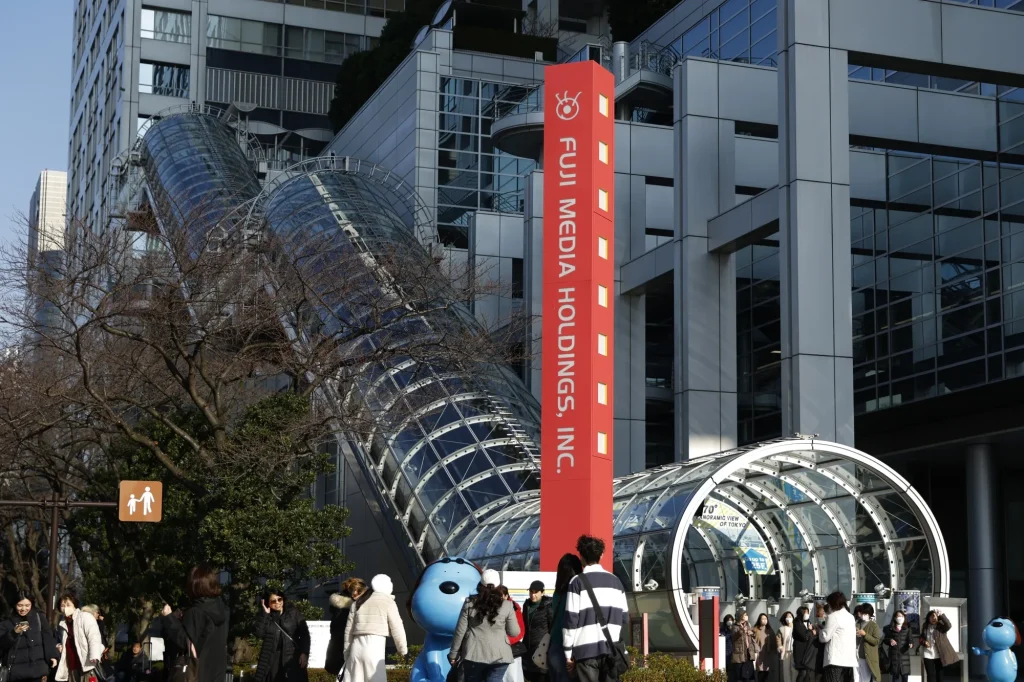
Fuji Media Holdings Reports ¥20.1 Billion First Net Loss Since Listing

Fuji Media Holdings Inc., the parent company of Fuji Television Network, has reported a net loss of ¥20.1 billion (approximately $138.5 million) for the fiscal year ending March 2025, marking the first time the media conglomerate has posted a loss since its public listing in 1997. The sharp downturn comes amid ongoing fallout from a series of high-profile scandals that have severely impacted the company’s corporate reputation and commercial relationships. The net loss stands in stark contrast to the previous year’s net profit of ¥37.08 billion, and diverges significantly from the company’s earlier projection of a ¥29 billion profit. Total sales for the fiscal year amounted to ¥550.7 billion, down 2.8% year-on-year, as advertisers pulled commercial spots from Fuji TV programming in response to the negative publicity. The reputational damage stems primarily from the controversy involving former TV personality Masahiro Nakai. Initially reported as “sexual trouble,” a third-party investigation later characterised the incident as “sexual violence,” prompting broader scrutiny of the company’s corporate governance and internal culture. The financial blow was compounded by the subsequent redirection of advertising budgets to rival networks. TV Asahi, for example, reported a 12.3% increase in commercial revenue for the January–March quarter compared to the same period last year. It also secured 24.7% of total advertisement block shares in Tokyo among the five major broadcasters for fiscal 2024, a record high for the station. Looking ahead, Fuji Media Holdings has forecast a net profit of ¥10 billion for the fiscal year ending March 2026. However, the company expects operating profit to decline sharply by 86.3% to ¥2.5 billion, even as sales are projected to grow slightly to ¥560 billion, a 1.9% increase. In an effort to regain public trust and stabilise its business operations, the company has announced an upcoming leadership overhaul as part of a wider reform agenda. At its general shareholders’ meeting in June, Fuji Media Holdings intends to appoint a new executive board, retaining only Kenji Shimizu, who is set to become the company’s new president, pending shareholder approval. The company had revealed its initial list of director candidates in March. However, major shareholder Dalton Investments opposed the slate and instead proposed its own list of 12 candidates, which included notable figures such as SBI Holdings CEO Yoshitaka Kitao. In response, Fuji Media Holdings rejected the proposal, citing concerns that a board composed entirely of external directors would lack the necessary internal insight for effective governance. The company also reaffirmed its commitment to maintaining a streamlined board structure. Among the additional candidates nominated by the company are Takashi Sawada, former president of Family Mart; Tsutomu Horiuchi, former CFO of Mori Building Co.; lawyer Saori Hanada; and Atsushi Yanagi, Fuji TV’s chief of finance. Commenting on the developments, Shimizu stated: “We have continued to move forward with our reform plan and we have deemed that this group of candidates is the most fit to carry it out.” Current President Osamu Kanemitsu and three other senior executives are scheduled to step down in June as part of the leadership transition. -The Japan Times

News

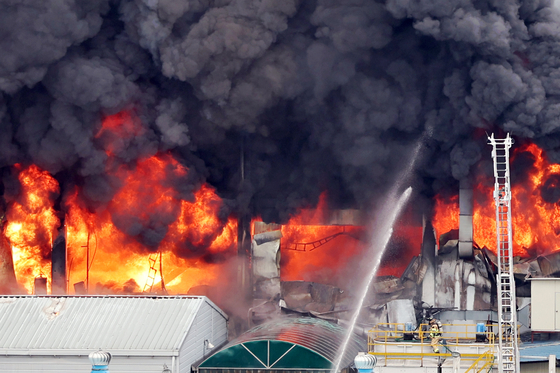
Kumho Tire Suspends Gwangju Plant Operations Following Fire Incident

SOUTH KOREA: Kumho Tire Co., South Korea’s second-largest tyre manufacturer, has halted operations at its Gwangju plant after a fire broke out at the facility early Saturday morning. The incident occurred at approximately 07:11 KST, prompting the immediate evacuation of around 400 employees who were on site at the time. The fire is believed to have originated from machinery used in the heating of raw rubber materials. As a precaution, the company has suspended all production activities at the site until the situation is fully stabilised. A company spokesperson confirmed to Yonhap News Agency that “All production will be suspended until the situation is brought under control.” Emergency response teams were quickly dispatched, with 167 personnel and 65 firefighting units deployed to the scene. One male employee in his 20s sustained injuries during the incident and has been transported to a nearby hospital. His condition is reported as non-life threatening. Authorities estimate that extinguishing the blaze may take several days due to the significant volume—approximately 20 tonnes—of raw rubber stored at the facility, which has made firefighting efforts more complex. Kumho Tire has not yet provided an estimate for when operations will resume, as emergency response remains the immediate priority. -Yonhap

News

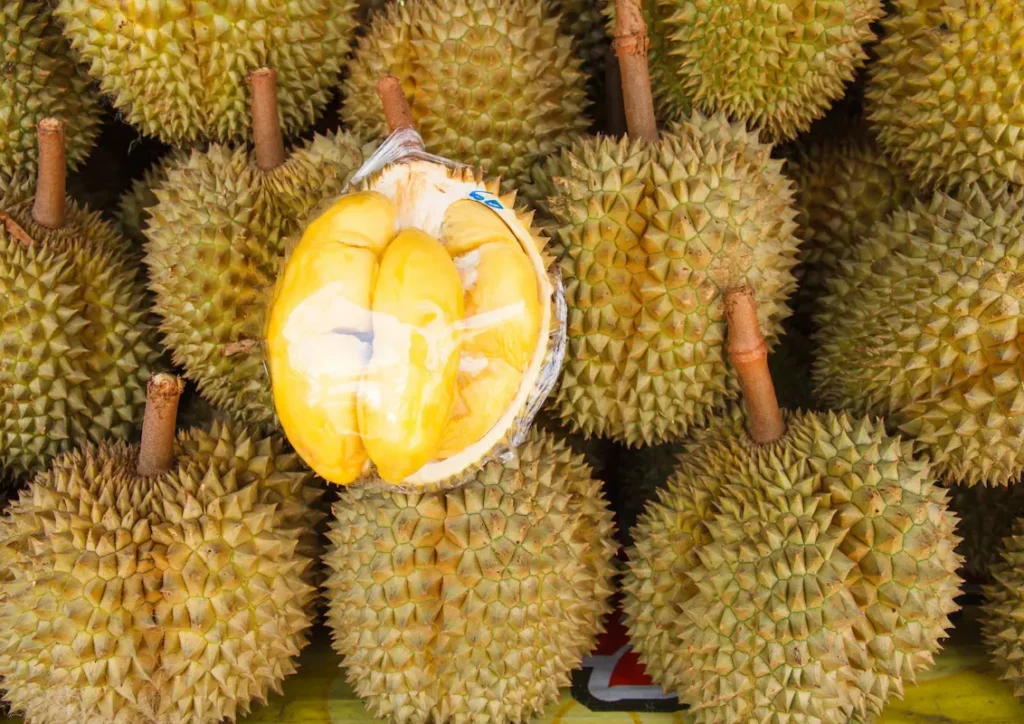
Cambodia Breaks into China’s US$7 Billion Durian Market

Cambodia has officially begun exporting fresh durians to China, joining the ranks of Southeast Asian producers vying for a share of the world’s largest durian market. The move follows Beijing’s approval in late April for Cambodian shipments that comply with China’s food safety regulations, part of a broader agreement signed earlier in the month between Chinese President Xi Jinping and Cambodian officials. The entry positions Cambodia against regional heavyweights Thailand, Vietnam, and Malaysia, which already enjoy established reputations in China for their premium durian varieties. Thailand alone accounted for 57% of China’s US$6.99 billion durian imports last year, with Vietnam supplying 38%. Malaysia and the Philippines, meanwhile, contributed a combined US$38.2 million, according to Chinese customs data. While Cambodia’s durians are gaining regulatory access, industry analysts caution that the country still has work to do to win over Chinese consumers. Lim Chin Khee, an adviser to Malaysia’s Durian Academy, noted that Cambodia lacks the brand equity enjoyed by Thailand’s Monthong or Malaysia’s Musang King. “Cambodia is still building its reputation in the international market,” Lim said. However, there is optimism. Some Chinese consumers are reportedly eager to sample Cambodia’s native Ah Khak durian variety. According to Rajiv Biswas, CEO of Asia-Pacific Economics in Singapore, rising numbers of ASEAN nations are meeting China’s phytosanitary standards, giving Chinese consumers a broader range of quality durian choices. Cambodian durians are said to rival Malaysian counterparts in quality, supported by increasing foreign investment and technical assistance—particularly from China. The country’s durians are also reported to have a high market value due to labour-intensive cultivation and limited suitable farmland, according to research published on the travel platform Adventures Cambodia. Durian consumption in China continues to surge, with individual fruits selling for up to 200 yuan (US$27.75). The fruit is often considered a premium delicacy and is even given as formal gifts. Cambodia’s durian exports are also expected to support broader trade goals between the two countries. China’s move to greenlight the shipments strengthens ties with a close Southeast Asian partner, while further diversifying trade relationships in light of ongoing tensions with the United States. Since 2018, the trade war initiated under former US President Donald Trump has accelerated Beijing’s shift towards ASEAN, which became China’s largest trading partner in Q1 2025, accounting for 16.6% of total trade. A joint statement issued on 18 April confirmed that Beijing and Phnom Penh plan to fast-track the negotiation and signing of quarantine protocols to facilitate additional agricultural exports from Cambodia to China. According to Carl Thayer, emeritus professor at the University of New South Wales, these developments offer a modest but meaningful way of addressing China’s US$12 billion trade surplus with Cambodia. -South China Morning Post

Energy & Technology, ESG

ChangAn Automobile Launches Smart, Low-Carbon Rayong Factory with 90% Automation

ChangAn Automobile (“ChangAn” ), an intelligent low-carbon mobility technology company, officially opened its first international new energy vehicle (NEV) manufacturing base in Rayong, Thailand, integrating sustainable, low-carbon, flexible manufacturing, and intelligent digital systems that focus on efficiency, cost, and quality. The launch marks a key milestone for ChangAn in its international manufacturing structure and injects advanced intelligent manufacturing power into Thailand’s automotive industry. The opening of ChangAn’s Rayong Factory marks a new phase of its Vast Ocean Plan, shifting from product exports to industrial globalisation. It showcases the Company’s potential in global expansion across products, smart manufacturing, branding, and green, digital innovation. As a key production hub, the plant features five intelligent workshops — including welding, painting, general and engine assembly, and battery — with 90% automation at key quality control stations, among the highest in Thailand’s auto industry. The factory incorporates energy-saving and eco-friendly features aligned with green development goals. A 14MW photovoltaic system will provide 45% of the plant’s electricity. Recirculating air towers, louvers, natural lighting, and rainwater recycling will cut energy use for lighting and ventilation, improve water efficiency, and lower energy costs by an estimated 5%. ChangAn has implemented an innovative and flexible production system to lower manufacturing costs and efficiently build high-value vehicles. The welding workshop features 39 robots and advanced material-joining methods, including FDS, EPS, and SPR, delivering strength beyond traditional connection techniques. The painting workshop uses 29 robots and advanced spraying to extend paint life to 15 years and reduce emissions by 40%, while the assembly line features 140 stations, including 18 fully and 125 semi-automated units. Technologies such as automated seal adjustment and AGV vehicles allow for multi-model and multi-power production. The power workshop supports engine and battery production, including ultra-precise engine tile-matching and visual guidance across 22 battery processes. Forty-five AGVs create a flexible, responsive manufacturing and transport system. As a digital-first factory, ChangAn employs a full-stack digital ecosystem with a microservice architecture for 100% online operations. The entire manufacturing process is scheduled in real time, improving supply chain coordination and reducing the order delivery cycle from 21 days to 15 days. The ChangAn Quality Operating System (CAQOS) ensures comprehensive quality management across supplier parts, vehicle production, and market services. During production, 77 surveillance cameras and 62 foolproof checkpoints are used, creating 71 quality containment processes to ensure end-to-end quality across parts, production, and market services. Looking forward, ChangAn aims to localise 80% of production at its Rayong Factory, create 30,000 jobs, and support low-carbon growth and talent development for Thailand’s green transition. Positioned as a hub for Southeast Asia, Australia and New Zealand, ChangAn plans to exceed 5 million global and 3 million new energy vehicle sales by 2030. Over the next three years, it will launch 12 new energy models and expand AI features. A new Rayong parts centre will support right-hand drive markets with 24-hour delivery. “After 556 days of dedication from over 2,000 employees and partners around the world, we have built a factory that is efficient, modern, and smart,” said Shen Xinghua, Managing Director of ChangAn Automobile Southeast Asia Business Unit. “We are here for the long run. Together, we will help shape a cleaner, smarter, and stronger automotive future — In Thailand, For Thailand, and For the world.” -GD Today

News

Japan Display Inc. to Cut 1,500 Jobs Amid Continued Losses

Japan Display Inc. (JDI) has announced plans to reduce its workforce by approximately 1,500 jobs in Japan, accounting for nearly 60% of its domestic employees. The move follows 11 consecutive years of financial losses, with the company reporting a consolidated net loss of ¥78.2 billion ($538.7 million) for the fiscal year 2024, significantly higher than the previous year’s loss of ¥44.3 billion. Chief Executive Officer Scott Callon is set to resign on 1 June, assuming responsibility for the ongoing financial challenges. He will continue to support his successor as non-executive chairman following approval at the general shareholders meeting on 21 June, though he will forgo compensation. Jun Akema, the current head of JDI’s procurement division, will succeed Callon, also taking on the role of president. During a news conference, Callon expressed regret over the company’s performance, offering apologies to shareholders, client companies and employees for the inconvenience caused by the deteriorating business results. The job cuts will primarily be managed through a voluntary redundancy programme running from 26 June to 25 August. This initiative aligns with JDI’s decision to cease liquid crystal display (LCD) panel production at its Mobara plant in Chiba Prefecture by March next year. The company also plans to implement job reductions at its overseas locations. JDI’s financial performance for the year ending March showed a 21.4% drop in sales compared to the previous year, totalling ¥188 billion. Its operating loss increased to ¥37.0 billion from ¥34.1 billion. Due to ongoing restructuring efforts, the company has not released an earnings forecast for fiscal year 2025. Formed in 2012 through the merger of LCD panel operations of Hitachi, Toshiba and Sony Corp., JDI’s domestic production will be consolidated at its remaining facility in Kawakita, Ishikawa Prefecture, once the Mobara plant ceases operations. -Japan Times

News

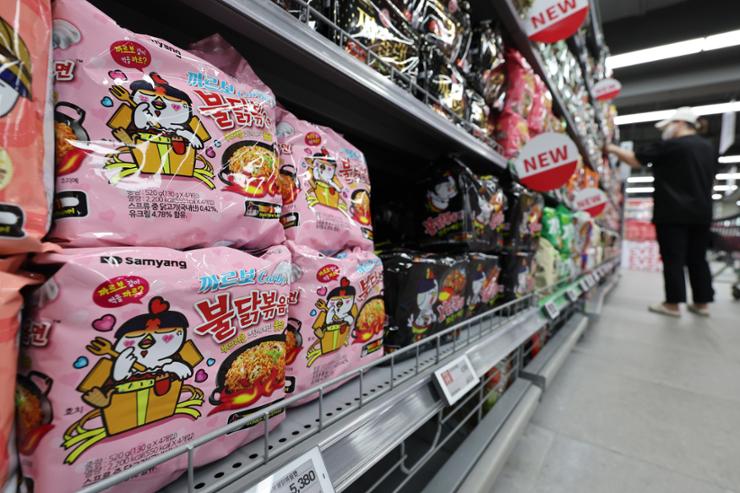
Buldak Ramyeon Maker Sees 20 Percent Surge in Share Price

Samyang Foods Inc., the South Korean company renowned for its globally popular Buldak spicy ramyeon, has experienced a significant rise in its share value following a robust first-quarter earnings report. As of 2:30 p.m. on May 16, the company’s shares were trading 20 percent higher at 1.19 million won (US$855), considerably outperforming the broader Korea Stock Price Index (KOSPI), which saw a modest increase of 0.2 percent. The surge in share value came after Samyang Foods reported a 49 percent year-on-year increase in net profit for the January to March period. Operating profit climbed 67 percent compared to the previous year, reaching an all-time high of 133.99 billion won. The company also recorded a 37 percent rise in sales, hitting a record high of 529.01 billion won. These financial results highlight the company’s strong performance in overseas markets, which accounted for more than 80 percent of its total revenue. The company’s export performance has been particularly impressive, with last year marking the first time exports exceeded the 1 trillion-won mark. This achievement was driven by robust sales of the Buldak ramyeon series, particularly in the United States and China. Looking ahead, Samyang Foods aims to surpass the 1 trillion-won mark in overseas sales again this year, supported by plans to expand its production capacity. To meet growing global demand, the company currently operates three domestic production plants and plans to open a fourth in the first half of this year. Additionally, Samyang Foods intends to construct its first overseas manufacturing facility in China, with work expected to commence in July. The company already has established business operations in China, Japan, Indonesia, the Netherlands, and the United States. Samyang Foods’ Buldak Bokkeummyeon, widely known as “fire ramyeon,” continues to be a significant driver of the company’s success. Since its launch in 2012, the hot chicken-flavored instant noodles have sold more than 7 billion units, generating over 4 trillion won in revenue. Approximately 1 billion units are sold annually across 100 countries. The product gained substantial international attention following a viral food-eating challenge in 2014, cementing its status as a global phenomenon. The company’s strategic expansion and sustained product popularity have positioned Samyang Foods as a prominent player in the global instant noodle market, as evidenced by its strong financial performance and positive market response. -Yonhap

Scroll to Top

Subscribe
FREE Newsletter