Malaysia

News

Carlsberg Malaysia Declares Record 100 Sen Dividend Amid Strong FY24 Performance

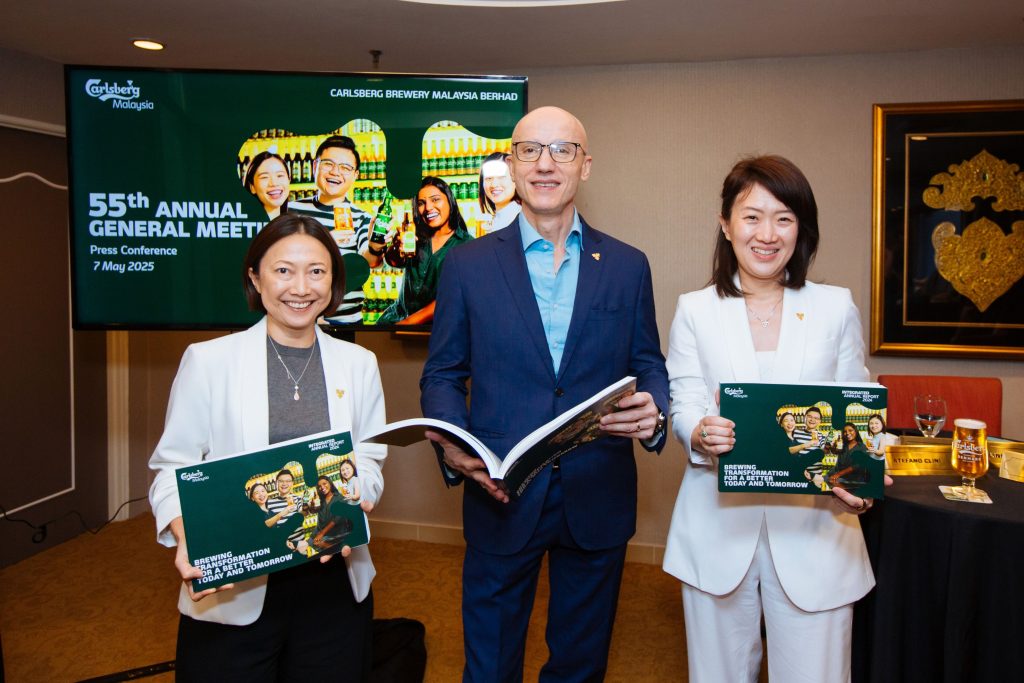
SUBANG JAYA: Carlsberg Brewery Malaysia Berhad (“the Group”) has declared a record-high total dividend of 100 sen per ordinary share for the financial year ended 31 December 2024 (FY24), marking a payout of 91% of its net profit. The announcement was made during its 55th Annual General Meeting (AGM), where all five proposed resolutions were duly approved by shareholders. The final single-tier dividend of 35 sen per share complements the previously declared interim dividends, underscoring the Group’s robust financial performance and commitment to delivering shareholder value. At the AGM, attended by approximately 1,393 shareholders and proxies, Independent Non-Executive Chairman Tan Sri Dato’ Seri Chor Chee Heung and Managing Director Stefano Clini led discussions on the Group’s strategic direction, achievements, and forward-looking priorities. Clini highlighted that the Group’s performance was anchored by two strategic pillars: a major RM200 million brewery transformation and a focused drive on premiumisation and innovation. These initiatives are part of Carlsberg Malaysia’s overarching Accelerate SAIL corporate strategy, designed to enhance resilience and competitiveness amid global geopolitical and macroeconomic challenges. “Our brewery transformation is not merely an infrastructure upgrade. It represents a strategic leap towards a more sustainable, agile, and innovation-driven future. With cutting-edge brewing technologies now in place, we are better positioned to scale, improve operational efficiency, and uphold our Brewing Excellence commitment,” Clini stated during the post-AGM press briefing. The Group’s FY24 Integrated Annual Report (IAR), published on 28 March 2025, marked a significant shift in sustainability reporting. Transitioning from the Task Force on Climate-related Financial Disclosures (TCFD) to the International Financial Reporting Standards (IFRS) S2 framework, the report provided enhanced disclosures on climate-related risks and opportunities, including their financial implications. The IAR also featured value creation narratives, clear sustainability metrics, and an internal assurance statement on non-financial performance. These reporting enhancements reflect Carlsberg Malaysia’s efforts to align with evolving global standards and investor expectations. Reflecting this progress, the Group’s MSCI ESG rating improved to 6.3/10 in December 2024, with notable gains in Corporate Governance scoring at 6.8/10. Additionally, Carlsberg Malaysia advanced its percentile rank within the FTSE4Good Index from 66 to 52 among peers in the Food and Beverage sector, while maintaining its FTSE4Good Bursa Malaysia score of 3.6/5. Looking ahead, Clini acknowledged the challenging macroeconomic environment, citing inflationary pressures, elevated interest rates, exchange rate volatility, and geopolitical uncertainties, including recent US trade tariffs. Domestically, he noted a shorter Chinese New Year trading period and intensifying pricing competition across retail channels. “To navigate these headwinds, we will continue our ‘Funding Our Journey’ initiatives by reinvesting efficiency gains into innovation, premiumisation, and digital transformation,” he said. “By remaining focused on our strategic priorities under the Accelerate SAIL framework, we are confident in our ability to deliver sustainable value for all stakeholders in 2025.”

News

Malaysia, South Korea Resume FTA Talks to Strengthen Bilateral Trade

SEOUL: Malaysia and South Korea have commenced the ninth round of negotiations for a bilateral free trade agreement (FTA), aimed at deepening economic cooperation and enhancing market access between the two countries. The three-day discussions, held in Kuala Lumpur, involve approximately 70 trade officials and focus on eight key areas, including trade in goods and services, investment, and broader economic collaboration, according to South Korea’s Ministry of Trade, Industry and Energy. Talks resumed in March 2024 following a five-year pause, as both countries work to accelerate progress towards a comprehensive trade deal. While South Korea currently benefits from a multilateral FTA with ASEAN, it is increasingly seeking bilateral arrangements with individual ASEAN members to tailor economic engagement and better address country-specific trade objectives. “A bilateral FTA with Malaysia, a key emerging market within ASEAN, will significantly enhance the global competitiveness of South Korean companies, especially amid rising global protectionism and ongoing trade tensions with the United States,” said Kwon Hye Jin, Director-General for FTA Negotiations at the ministry. She added that the South Korean government remains committed to concluding the agreement at the earliest opportunity and will continue to engage actively with Malaysian counterparts to achieve this objective. The prospective FTA is expected to open new channels for investment and trade in high-value sectors, strengthening bilateral economic resilience and delivering mutual benefits to both nations. -Bernama

Investment & Market Trends, News

Inari Amertron Shares Soar on Semiconductor Recovery, US Policy Optimism

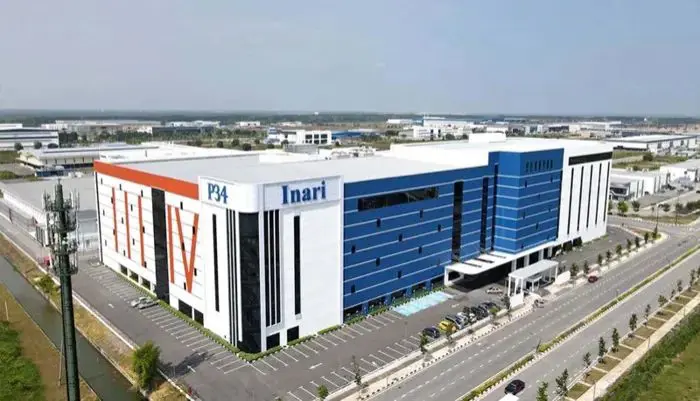
KUALA LUMPUR: Shares of Inari Amertron Bhd surged to their highest level in nearly three months in early trading on Tuesday, buoyed by optimism surrounding a continued global semiconductor recovery and the potential easing of US export controls on advanced chips — developments expected to benefit Malaysia’s tech sector. By 9:30am, the counter had soared 33 sen or 17% to RM2.27, lifting the group’s market capitalisation to approximately RM8.6 billion. Trading volume exceeded 22.2 million shares, more than double its average daily volume, making it the most actively traded stock on Bursa Malaysia in the morning session. Investor sentiment was supported by recent data from the Semiconductor Industry Association, which reported that global semiconductor sales reached US$55.9 billion (RM242.4 billion) in March 2025 — representing an 18.8% year-on-year increase and a 1.8% rise month-on-month. This marks the 17th consecutive month of annual growth for the sector. Additionally, industry body SEMI noted that global semiconductor materials revenue rose 3.8% year-on-year to US$67.5 billion in 2024, fuelled by strong demand for advanced materials driven by high-performance computing and AI-related applications. TA Securities reiterated its ‘overweight’ stance on the semiconductor sector in a research note issued Tuesday, citing positive tailwinds from both macroeconomic factors and policy developments. However, it cautioned that risks remain, particularly with regard to potential geopolitical and regulatory uncertainties stemming from US policy shifts. The research house views favourably reports that the Trump administration is considering revisions to the Biden-era restrictions on the export of advanced artificial intelligence (AI) chips. “Overall, we view this development positively, as it could provide Malaysia with greater access to advanced technologies, particularly in strategic industries such as data centres,” the note stated. “The potential relaxation of export controls may also stimulate foreign direct investment and collaborative opportunities, further enhancing Malaysia’s position in the global semiconductor supply chain.” TA Securities also welcomed the recent announcement by the Malaysian government outlining the eligibility criteria for local companies to participate in the advanced chip design initiative, in collaboration with UK-based Arm Holdings plc. “This development marks an important step forward in enabling Malaysian firms to move up the value chain within the global semiconductor ecosystem,” it added. Inari Amertron remains among TA Securities’ top picks in the sector, with a target price of RM3.10. Other ‘buy’ calls include Unisem (M) Bhd (TP: RM2.35), Malaysian Pacific Industries Bhd (TP: RM29.30), and Elsoft Research Bhd (TP: 52 sen). -The Edge Malaysia

Investment & Market Trends, News

Foreign Investors Maintain Buying Streak on Bursa Malaysia With RM422.6 Million Inflows

Kuala Lumpur: Foreign investors continued to demonstrate confidence in Malaysian equities, extending their net buying streak on Bursa Malaysia for a third consecutive week. Net inflows totalled RM422.6 million for the week ended 9 May, according to MIDF Amanah Investment Bank Bhd’s latest Fund Flow Report. While the inflow marked a slowdown from the RM853.3 million recorded the previous week, foreign investors remained net buyers on three out of five trading days. The largest net inflow occurred on Wednesday at RM364.8 million, followed by Friday with RM135.1 million. Net outflows were recorded on Monday and Thursday, at RM92.4 million and RM42.4 million, respectively. Sector-wise, utilities led with the highest foreign net inflow at RM253.3 million, followed by telecommunications and media (RM53.3 million), and financial services (RM51.1 million). In contrast, the energy and technology sectors experienced net outflows of RM57.5 million and RM56 million, respectively. Meanwhile, local institutional investors sustained their net selling trend for the third consecutive week, posting outflows of RM397.8 million. Local retail investors also continued to pare down holdings, although the pace of outflows moderated to RM24.8 million, compared to RM161.2 million in the preceding week. Market participation rose across all investor segments. Average daily trading volumes increased 8.6% for local institutions, 2.9% for retail investors, and 6.1% for foreign investors, signalling growing interest and momentum across Bursa Malaysia. -Bernama

News

HLIB Maintains ‘Neutral’ Outlook on Plantation Sector Amid Mixed Earnings Prospects

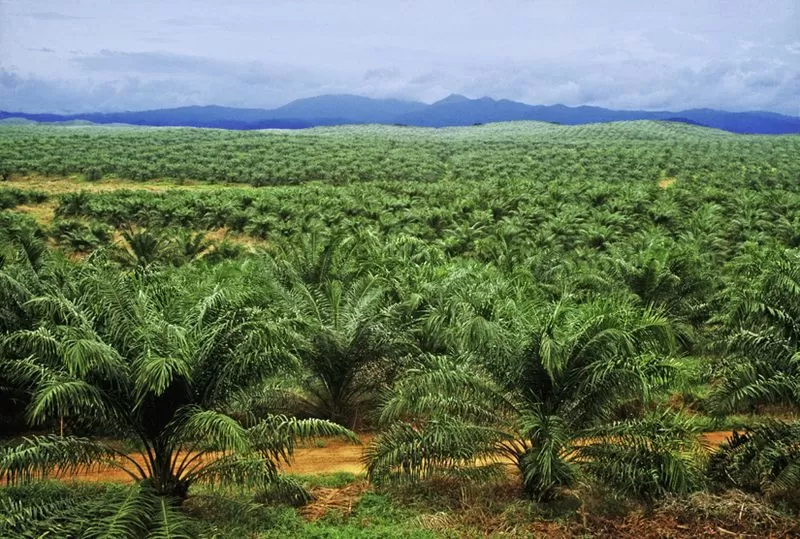
KUALA LUMPUR: Hong Leong Investment Bank (HLIB) has reiterated its ‘neutral’ outlook on Malaysia’s plantation sector, citing a lack of clear demand catalysts and uneven earnings prospects across both upstream and downstream segments. In a research note issued today, the bank observed that most plantation players are expected to post solid year-on-year (y-o-y) earnings growth for the first quarter of 2025 (1Q25), buoyed by firm palm product prices. However, quarter-on-quarter (q-o-q) performance is anticipated to soften, weighed down by lower production and moderating prices. “Production volumes were negatively impacted by seasonal cropping trends and heavy rainfall in parts of Malaysia,” HLIB said. “All planters under our coverage recorded negative fresh fruit bunch (FFB) output growth in the first quarter, ranging from -4.9% to -27.7%.” In contrast, plantation activities in Indonesia fared better, underpinned by different cropping cycles and fewer weather-related disruptions. On the downstream side, the research note highlighted continued earnings pressure due to Malaysia’s export tax regime, elevated input costs, and a narrowing price differential with Indonesian products, which has weakened export competitiveness. Among the companies analysed, TSH Resources Bhd recorded the smallest q-o-q decline in FFB output at -4.9%, a performance HLIB attributed to a recovery in yields driven by improved cropping patterns in Indonesia and the resolution of a localised social dispute. Hap Seng Plantations Bhd, meanwhile, experienced an 11.3% y-o-y drop in production, primarily due to flood-related disruptions in early 2025, though harvesting activities showed a recovery in March. HLIB maintained its crude palm oil (CPO) price forecasts at RM4,000 per tonne for 2025 and RM3,800 per tonne for 2026, citing steady demand and supply fundamentals. The bank’s top sector picks include SD Guthrie Bhd with a target price of RM5.17, Jaya Tiasa Holdings Bhd (RM1.35), and IOI Corporation Bhd (RM4.24). -Bernama

Lifestyle

Malaysia Midnight Sale Carnival Sets Record, Boosts Melaka Economy

MELAKA: The Malaysia Midnight Sale Carnival made a spectacular return over the long weekend, drawing record-breaking crowds to Mahkota Parade, Melaka, and significantly boosting both tourism and the local economy. The event, held in conjunction with Melaka Bila Larut Malam – May edition 2025, delivered a high-energy mix of shopping, entertainment, and cultural showcases that left a lasting impact on both locals and visitors, as well as on the state’s tourism and retail sectors. An influx of shoppers led to high hotel occupancy rates and brought significant benefits to local businesses – including vendors, performers, artisans, food & beverage outlets, ride-hailing drivers, and more. The carnival received an overwhelming response from domestic tourists as well as visitors from Singapore and Indonesia, many who took the opportunity to shop during their vacation. This successful event not only generates new income streams for the local business community but also further solidifies Melaka’s reputation as a premier shopping and tourism destination. Running from 10:00 AM to 12:00 midnight, the carnival offered an unforgettable shopping experience. A key highlight was the Special Sale Moment from 10:00 PM to 12:00 midnight on May 3rd, where shoppers with a minimum spend of RM250 stood a chance to win prizes worth over RM20,000. Adding to the excitement, the carnival featured a vibrant lineup of activities, including special appearance by Datuk Awie and Yasser Atak, raffles and giveaways, a balloon drop bonanza, “Lucky Pick” and “Spin & Win”, a mall treasure hunt, colouring and drawing contests, Labour Day outfit competition, traditional Melaka performances, flash mob, magic shows, balloon sculpting, face painting, sand art, giant Congkak and Connect 4 games, henna art, caricature, and a batik-making station. This event was proudly supported by Tourism Malaysia, Tourism Melaka, Mahkota Parade, Parkson, Grand Swiss-Belhotel Melaka, and Ojas Electronic. The organiser, Jalakx Sdn Bhd extends its heartfelt appreciation to all partners, sponsors, and supporters for making the event a resounding success. The Malaysia Midnight Sale Carnival is set to return next year, promising an even bigger and better shopping experience.

News

Bank Rakyat Raises RM1 Billion via Senior Sukuk Wakalah

KUALA LUMPUR: Bank Rakyat has successfully raised RM1 billion through the issuance of Islamic medium-term notes (IMTN) under its Senior Sukuk Wakalah programme, managed via special purpose vehicle Imtiaz Sukuk II Bhd. The sukuk was issued through a book-building process on 24 April 2025 as part of a larger programme valued up to RM10 billion. The programme has been rated AA2 by RAM Rating Services Bhd. According to the bank’s statement, the sukuk was offered in two tranches—RM120 million for a five-year note and RM880 million for a seven-year note. The issuance attracted strong investor interest, recording a final bid-to-cover ratio of 1.98 times. Proceeds from the sukuk will be used for shariah-compliant purposes, including working capital, capital expenditure, general investments, financing, and other corporate needs. Bank Muamalat Malaysia Bhd, CIMB Investment Bank Bhd, Maybank Investment Bank Bhd, and RHB Investment Bank Bhd acted as joint lead managers for the transaction.

News

MSM Aims to Revive Sugar Cane Plantations to Curb Import Reliance

KUALA LUMPUR: MSM Malaysia Holdings Bhd (MSM) is looking to restart domestic sugar cane cultivation as part of a broader strategy to reduce its full reliance on imported raw sugar and enhance supply chain resilience. Speaking on Bernama TV’s Bual Bisnes programme, MSM group CEO Syed Feizal Syed Mohammad said the move is in response to growing global risks, including climate change, geopolitical tensions, and supply chain disruptions. “MSM currently depends 100% on imported raw sugar, but we are studying the feasibility of reintroducing sugar cane agriculture in Malaysia,” he said. Potential sites for the revival include Sarawak and northern Peninsular Malaysia, both identified as suitable for large-scale plantations. Historically, MSM operated around 4,000 hectares of sugar cane fields in Chuping, Perlis, since the 1970s, though the initiative was eventually halted due to its lack of economic viability. In addition to sugar cane, the company is exploring alternative sweeteners such as palm sugar to diversify its raw material sources. Syed Feizal noted that this would help MSM cater to evolving consumer preferences in the Asia-Pacific region. “Sugar beet is widely used in Europe, but it doesn’t suit regional taste profiles. We are evaluating options like palm sugar derived from nipah coconut, which could meet local demand even if not produced at industrial scale,” he said. The exploration of alternative sources is part of MSM’s long-term vision to adapt to shifting market dynamics and ensure continuity in supply.–BERNAMA

Energy & Technology

Malaysia Eyes Semiconductor Upgrade as US Rescinds Chip Export Curbs

KUALA LUMPUR: Malaysia may gain greater access to high-performance semiconductor chips following Washington’s move to rescind export restrictions, positioning the country to move beyond its midstream strengths into higher-value segments like upstream chip design. Industry experts believe this shift could significantly bolster Malaysia’s standing as the world’s sixth-largest semiconductor exporter and catalyse its transition into advanced chip manufacturing and design. “Enhanced chip access will strengthen Malaysia’s role in data centre development, especially given its cost-effective and resource-efficient environment,” said Chris Tan, founder and managing partner of Chur Associates. Tan noted that the Trump administration’s revised stance on AI chip export restrictions — originally implemented by the Biden administration to curb China’s access — signals a preference for bilateral negotiations rather than a rules-based regime. “Like his previous tariff strategies, this approach seems aimed at drawing stakeholders to the table without clear global guidelines for sharing US AI technological advancements,” he added. Bank Muamalat Malaysia Bhd chief economist Dr Mohd Afzanizam Abdul Rashid said that while the intent to limit China’s access to US-made AI chips remains, the enforcement strategy under Trump is likely to be less cumbersome. He also pointed to Malaysia’s proactive stance, citing its collaboration with ARM Holdings Plc to gain semiconductor-related licenses and know-how as a critical step forward. “This partnership could accelerate local chip design capabilities, but the broader question is whether Malaysia is investing enough to reduce reliance on foreign technologies,” he said. Afzanizam noted that Malaysia’s deep-rooted role in outsourced semiconductor assembly and testing (OSAT) shows promise but underscores the need for further investment and policy support to help local firms move up the value chain. Malaysia Semiconductor Industry Association (MSIA) president Datuk Seri Wong Siew Hai added that while seizing new opportunities, companies must remain compliant with international restrictions. “Malaysia must be both competitive and compliant to maintain its global leadership as a trusted semiconductor hub,” he said.–BERNAMA

Energy & Technology

Malaysia to Highlight AI, Demographic Shifts and Open Trade at APEC Meeting in South Korea

KUALA LUMPUR: Malaysia will spotlight the role of artificial intelligence (AI), demographic challenges, and the importance of open trade at the 31st APEC Ministers Responsible for Trade (MRT) Meeting, to be held in Jeju, South Korea from May 15–16. Investment, Trade and Industry Minister Tengku Datuk Seri Zafrul Abdul Aziz will lead the Malaysian delegation to the regional summit, where member economies are expected to align on trade facilitation, digital innovation, and sustainable economic development. According to a statement from the Ministry of Investment, Trade and Industry (MITI), Malaysia will reaffirm its commitment to a transparent, rules-based multilateral trading system, with the World Trade Organisation (WTO) at its core. “Malaysia remains committed to working closely with APEC economies to ensure that sustainability, innovation, and open trade are reinforcing and beneficial to all as the region moves towards a more resilient, inclusive, and future-ready Asia-Pacific,” said Tengku Zafrul. The country’s stance aligns with the APEC Putrajaya Vision 2040, which emphasises inclusive and sustainable growth through fair and non-discriminatory trade and investment. MITI also underscored Malaysia’s support for AI as a catalyst for trade innovation, echoing APEC’s aspiration to shape a digitally powered regional economy. Tengku Zafrul is scheduled to hold bilateral meetings with key trade partners, including APEC-ASEAN trade ministers and WTO Director-General Dr. Ngozi Okonjo-Iweala. Additionally, he will attend the Informal Ministerial Meeting of the Comprehensive and Progressive Agreement for Trans-Pacific Partnership (CPTPP), held alongside the APEC discussions.

Scroll to Top

Subscribe
FREE Newsletter