Malaysia

News

Anwar: Flag Error ‘Not Trivial’, Legal Process Must Take Its Course

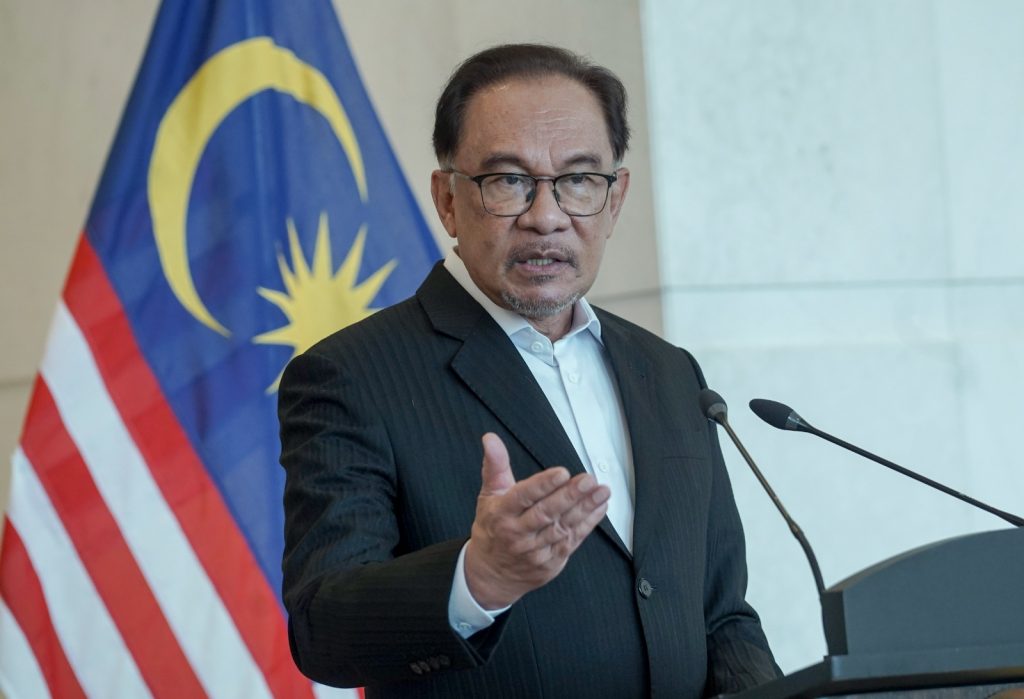
BANGKOK: Prime Minister Datuk Seri Anwar Ibrahim has cautioned against trivialising the recent error involving an incomplete image of the Jalur Gemilang published by a local newspaper, stating that the national flag represents the sovereignty and dignity of the country. Speaking to Malaysian reporters at the conclusion of his two-day working visit to Thailand on Friday, Anwar underscored the importance of respecting national symbols, particularly the flag. “This is not a trivial matter. For any country, the flag is a very important symbol,” he said. “Let the legal process take its course.” The incident in question involved the publication of a Jalur Gemilang image without the crescent moon on the front page of the Sin Chew Daily on Tuesday. The illustration accompanied the newspaper’s coverage of Chinese President Xi Jinping’s state visit to Malaysia. The incomplete image drew criticism from various parties, including His Majesty Sultan Ibrahim, King of Malaysia, who emphasised the importance of editorial diligence and responsibility. Anwar stated that while investigations should proceed, actions must be proportionate and in accordance with the law. “I’ve also said we must not appear excessive in our actions just to meet certain demands — it must follow due legal process,” he added. In response to the backlash, Sin Chew Daily issued a public apology, attributing the mistake to an unintentional technical error.

ESG, The Executives

The ESG Blind Spot That Could Cost Malaysian SMEs Their Edge

In an exclusive interview with Dr. Vimi, a leading expert in data analytics and market intelligence, we explored the evolving landscape of Environmental, Social, and Governance (ESG) practices among Malaysian SMEs and how they compare to their regional counterparts. Dr. Vimi Ramasamy, the Chief Executive Officer & Founder of STRAVIK, Adjunct Professor, and TalentCorp Fellow, shares insights on the challenges and opportunities for SMEs in Malaysia. She offers a roadmap for businesses to effectively integrate ESG principles, ensuring competitiveness in a global market increasingly focused on sustainability The State of ESG Preparedness in Malaysia According to Dr. Vimi, Malaysian SMEs’ adoption of ESG practices is largely influenced by their engagement with multinational corporations (MNCs). “SMEs that are part of MNC supply chains are generally more attuned to ESG practices due to the stringent requirements set by these corporations,” she explains. However, SMEs not directly connected to MNCs often lack the same urgency in adopting ESG principles, despite government incentives and awareness campaigns. Recent reports highlight a significant increase in ESG awareness among Malaysian SMEs, with figures rising from just 14% in 2022 to 80% in 2024. However, as Dr. Vimi points out, the gap between awareness and implementation remains substantial. “Only 38% of SMEs that have adopted sustainability practices report substantial revenue gains,” indicating that while awareness is growing, effective execution of ESG practices remains a challenge. Regionally, Malaysia is making strides in ESG adoption, but Dr. Vimi notes that countries like Singapore and Thailand have set a higher bar. “These countries have stricter sustainability standards, putting pressure on Malaysian SMEs to improve their ESG practices in order to stay competitive on the global stage,” she states. Sectoral Disparities in ESG Adoption Dr. Vimi identifies the Electrical and Electronics (E&E) and manufacturing sectors as the frontrunners in ESG adoption within Malaysia, primarily due to their integration into global supply chains that demand strict sustainability standards. According to the 2025 Alliance Bank Malaysia ESG Report, 60% of manufacturing SMEs have embraced ESG practices, a notable increase from previous years. In contrast, sectors such as services, construction, and agriculture lag behind, with adoption rates ranging from 37% to 41%. The Malaysian government is actively addressing these disparities with initiatives such as the National Industry Environmental, Social, and Governance (i-ESG) Framework, designed to assist sectors with lower ESG uptake. Dr. Vimi also highlights the allocation of RM300 million under the National Energy Transition Roadmap in Budget 2025, further emphasizing the government’s commitment to fostering ESG practices across all industries. The Role of Digital Transformation and Data Analytics As digital transformation becomes integral to business operations, Dr. Vimi emphasizes its role in enabling SMEs to integrate ESG principles effectively. “Digital transformation helps businesses optimize across the four domains—people, policy, process, and technology—creating a holistic approach to sustainability,” she explains. By leveraging digital tools and data analytics, SMEs can streamline operations, ensure compliance with ESG standards, and make better-informed decisions. This transformation also enables upskilling employees and improving workforce efficiency, creating a more sustainable and productive work culture. Overcoming Challenges in ESG Compliance One of the most significant challenges preventing Malaysian SMEs from embracing ESG compliance, according to Dr. Vimi, is the lack of understanding of what ESG truly entails. “Many businesses mistakenly believe that ESG compliance requires substantial financial investment and complex reporting processes,” she says. In reality, ESG is about aligning business practices with sustainability, optimizing operations, and ensuring long-term, incremental growth. “Unlike other forms of compliance, ESG is more about personal responsibility and continuous improvement,” Dr. Vimi adds. Cost-Effective ESG Implementation While concerns about the costs of sustainability are common among SMEs, Dr. Vimi argues that ESG strategies can lead to long-term savings and enhanced business performance. “By optimizing operations through ESG principles, businesses can reduce inefficiencies, lower energy consumption, and improve resource utilization, all of which contribute to cost reductions,” she states. She also encourages SMEs to start small by addressing the most material issues identified through a materiality assessment. “Several government grants and incentives are available to support SMEs in their ESG journey, including the Green Technology Financing Scheme (GTFS) and the Low Carbon Transition Facility (LCTF), which provide financial support for sustainability-focused projects,” Dr. Vimi notes. ESG as a Business Opportunity, Not a Burden A common misconception among SMEs is that ESG is a compliance burden. However, Dr. Vimi sees ESG as a strategic business opportunity. “Adopting ESG practices can directly attract investors, open doors to new growth opportunities, and enhance brand reputation,” she asserts. By viewing ESG as a growth strategy rather than a regulatory obligation, SMEs can tap into a growing market that increasingly values sustainability. Regional Policy Insights and Recommendations Drawing on her extensive experience in global markets, Dr. Vimi suggests several regional policies that could benefit Malaysia’s SME sector. For example, she advocates for a national sustainability certification system similar to Thailand’s Green Industry Standard (GIS), which incentivizes businesses to adopt green practices. She also proposes the creation of a one-stop platform for SMEs to access all ESG-related grants, tax incentives, and financial support, akin to the European Union’s Green Deal. Preparing for the Future: ESG Beyond 2050 Looking ahead to 2050, Dr. Vimi highlights the need for SMEs to make ESG a core component of their business strategy. “SMEs must integrate ESG into every aspect of their operations, from supply chains to energy efficiency, to remain competitive in an increasingly ESG-driven global market,” she advises. She also stresses the importance of investing in people and technology to ensure continuous improvement and long-term sustainability. Dr. Vimi concludes with a powerful message for Malaysian SMEs: “ESG is not just a responsibility; it’s a commitment to future generations. By taking purposeful, deliberate steps now, SMEs can shape a sustainable future and thrive in an increasingly sustainability-focused world.” In conclusion, while the road to comprehensive ESG adoption in Malaysia may still be challenging, it presents significant opportunities for SMEs that embrace sustainability. With government support, digital transformation, and a shift in mindset, Malaysian SMEs can position themselves

Investment & Market Trends

Ancom Nylex Posts RM18 Mil Profit in Q3

PETALING JAYA:  Ancom Nylex Bhd, Southeast Asia’s leading fully integrated chemical group, reported a resilient performance for the third quarter ended 28 February 2025 (3QFY25), supported by sustained demand in its agrichemical (Agrichem) segment despite continued macroeconomic challenges. The Group posted a revenue of RM449.0 million for the quarter, down from RM516.8 million a year ago, largely due to softer contributions from its Industrial Chemicals segment, impacted by lower selling prices and volume. Net profit attributable to shareholders stood at RM18.0 million, a slight decline from RM20.1 million a year earlier, primarily due to adverse US dollar fluctuations affecting both selling prices and import costs. Quarter-on-quarter, revenue held steady compared to RM450.7 million in 2QFY25. However, net profit saw a 19.1% increase from RM15.2 million, driven by stronger performance in the Agrichem segment. For the nine-month period (9MFY25), the Group reported cumulative revenue of RM1.42 billion and net profit of RM46.4 million, compared to RM1.51 billion and RM63.0 million respectively in the same period last year. Managing Director and Group CEO Datuk Lee Cheun Wei said the Group had remained resilient in the face of ongoing global uncertainties, including geopolitical tensions and forex volatility. He credited the stable demand in the Agrichem segment, particularly for MSMA-based products, as a key factor in cushioning broader impacts. “Our strategic positioning as one of the few global producers of key active ingredients has enabled us to fill market gaps. We are also expanding into larger hectarage crops with encouraging progress in label registration,” Datuk Lee said. The Group is preparing to commence commercial production of a new active ingredient (AI) following the completion of in-house intermediate production machinery. This new AI is expected to support expanded market reach and reinforce Ancom Nylex’s role in the global agrichem value chain. While remaining vigilant of rising trade barriers and local cost pressures—including a potential RM1 million annual impact from the recent minimum wage hike—Datuk Lee emphasised that the Group continues to identify and seize market opportunities. Financially, the Group’s position has strengthened with net gearing reduced to 0.20 times as of end-February 2025, down from 0.38 times at end-May 2024. Total borrowings decreased to RM287.9 million, with over 85% allocated to short-term working capital. In line with its performance, Ancom Nylex has proposed a second interim dividend in the form of treasury share distribution, offering one treasury share for every 100 shares held by shareholders.

News

Sarawak Premier Denies Report of Interest in AmBank-Affin Merger

KUALA LUMPUR:  Sarawak Premier Tan Sri Abang Johari Tun Openg has dismissed as speculation a report suggesting that the state is interested in acquiring a stake in AMMB Holdings Bhd (AmBank Group) for the purpose of merging it with its existing interest in Affin Bank Bhd. Speaking at the RECODA Raya Rindok event hosted by the Regional Corridor Development Authority (RECODA), Abang Johari clarified that the Sarawak government has not appointed any representative to initiate talks with AmBank. “If you want to propose, you should ask her father first… but in this context, the father doesn’t know about the matter, so how can you propose?” he quipped, addressing the rumour with a touch of humour. “Jokes aside, I was also surprised when I read the report… The report is just speculation. I have no comment because I don’t know about that.” Despite refuting the claim, Abang Johari noted that Sarawak remains open to discussions with any party interested in collaborating with the state government. The Edge Malaysia, in its April 14 edition, had reported that the Sarawak government was exploring the possibility of acquiring a stake in AmBank Group, with the intention of merging it with Affin Bank, in which the state holds a 31.25% interest via Sarawak-based entities. Citing unnamed sources, the report suggested that Sarawak aimed to eventually hold no more than a 20% stake in the merged entity, which would rank as the country’s fourth-largest banking group by assets. It further noted that informal approaches were made to AmBank’s substantial shareholder, Tan Sri Azman Hashim, who holds an 11.83% stake, although no formal negotiations had begun. In addition to AmBank, Sarawak is reportedly exploring other options in the banking sector, including DRB-Hicom Bhd’s 70%-owned Bank Muamalat Malaysia Bhd, and Kuwait Finance House (Malaysia) Bhd, which is said to be seeking buyers for its retail loan portfolio.–THE EDGE

News

Zafrul to Meet US Trade Officials in Washington Over Reciprocal Tariffs

KUALA LUMPUR:  Minister of Investment, Trade and Industry (MITI) Tengku Datuk Seri Zafrul Aziz will travel to Washington next week to engage with United States Trade Representative (USTR) Jamieson Greer and other US officials to discuss the reciprocal tariffs imposed on Malaysia and other ASEAN countries. The high-level meetings, scheduled for April 24, aim to convey Malaysia’s position on the ongoing tariff issue. “We will be meeting the USTR as well as other government officials from US President Donald Trump’s administration during my two-day visit,” Zafrul said during a recent media briefing. He stressed that the mission is not intended to initiate formal negotiations but to hold discussions on how Malaysia can contribute positively to the global supply chain, particularly in the semiconductor and electrical and electronics (E&E) sectors. “We need to go there to explain how Malaysia, as a neutral country, plays an important role in the semiconductor and E&E sectors. Our goal is to show that Malaysia can support industries in the US rather than posing a threat to them,” he added. Zafrul will be joined by MITI deputy secretary general (trade) Mastura Ahmad Mustafa, senior ministry officials, and representatives from Malaysia’s Embassy in Washington. The delegation also plans to meet with business chambers, companies, and industry groups to clarify Malaysia’s stance and address misconceptions. As the current chair of ASEAN, Zafrul will also take the opportunity to present the regional bloc’s unified position. “We believe in a rules-based global trading system and the principles of multilateralism,” he said, adding that ASEAN is not in favour of retaliatory actions and hopes to correct misperceptions around tariff issues. The visit comes amid heightened trade tensions, with ASEAN nations experiencing varying degrees of impact from the US-imposed tariffs. According to data from the recent special ASEAN Economic Ministers’ meeting, Cambodia, Laos, Vietnam, and Myanmar have been most affected, with combined tariffs reaching up to 49%. Malaysia and Brunei face a 24% rate, while Singapore sees a 10% baseline tariff. A 90-day pause on the reciprocal tariffs remains in effect for ASEAN countries, excluding China. ASEAN ministers, in a joint statement issued after their April 10 meeting, reaffirmed their commitment to constructive dialogue with the US while safeguarding the region’s economic interests.–BERNAMA

Investment & Market Trends

WTEC Group’s IPO Oversubscribed Ahead of ACE Market Listing

KUALA LUMPUR: WTEC Group Berhad, a manufacturer of foam and non-foam products, has seen its initial public offering (IPO) oversubscribed by 1.61 times ahead of its debut on the ACE Market of Bursa Malaysia on 29 April 2025. The IPO, which includes a public issue of 90.2 million new ordinary shares at RM0.25 per share, is expected to raise RM22.5 million. The company also offered 43.2 million existing shares via private placement to selected investors and Bumiputera investors approved by the Ministry of Investment, Trade and Industry (MITI). A total of 2,055 applications were received from the Malaysian public for 62.69 million shares valued at RM15.67 million, significantly exceeding the 24.0 million shares allocated. All 9.6 million shares set aside for eligible directors, employees, and contributors were fully subscribed, while private placements for the remaining shares were also fully taken up. Group Managing Director Mr. Tan Kok Kheng expressed optimism over the positive market reception. “The strong demand reflects investor confidence in our business fundamentals and growth trajectory,” he said. “Proceeds from the IPO will support the acquisition of a new manufacturing facility and additional machinery, enhancing our production capabilities and operational efficiency.” With more than 20 years of industry experience, WTEC Group serves a wide range of sectors including automotive, electrical and electronics, medical, personal protective equipment, and construction, with reach across Malaysia, Vietnam, Thailand, Australia and beyond. Upon listing, the company will have a market capitalisation of RM120 million, based on the issue price and an enlarged share capital of 480 million shares. Alliance Islamic Bank Berhad is acting as the Principal Adviser, Sponsor, Sole Underwriter, and Placement Agent for the IPO.

News

MAG Posts RM54 Million Net Profit for 2024

Malaysia Aviation Group Bhd (MAG) recorded a net profit of RM54 million for the financial year 2024, alongside an operating profit of RM113 million, despite facing significant operational challenges. The group reported a strong EBITDA of RM788 million, underscoring resilient performance amid headwinds such as supply chain disruptions that led to extended aircraft maintenance timelines and delays in new aircraft deliveries. These issues forced a reduction in capacity by 18% during the traditionally high-performing fourth quarter, ultimately weighing on full-year revenue, which slipped marginally by 1% year-on-year to RM13.68 billion. This came despite a 6% increase in available seat kilometre (ASK), reflecting improved efficiency. MAG Group Managing Director Datuk Captain Izham Ismail said the group remained profitable and forward-looking despite the disruptions. “We not only maintained profitability but ensured we were strategically positioned for the future while navigating operational challenges,” he said in a statement.

News, Property

Crewstone International and Vince Group Launch Groundbreaking RM150 Million Real Estate Investment Fund

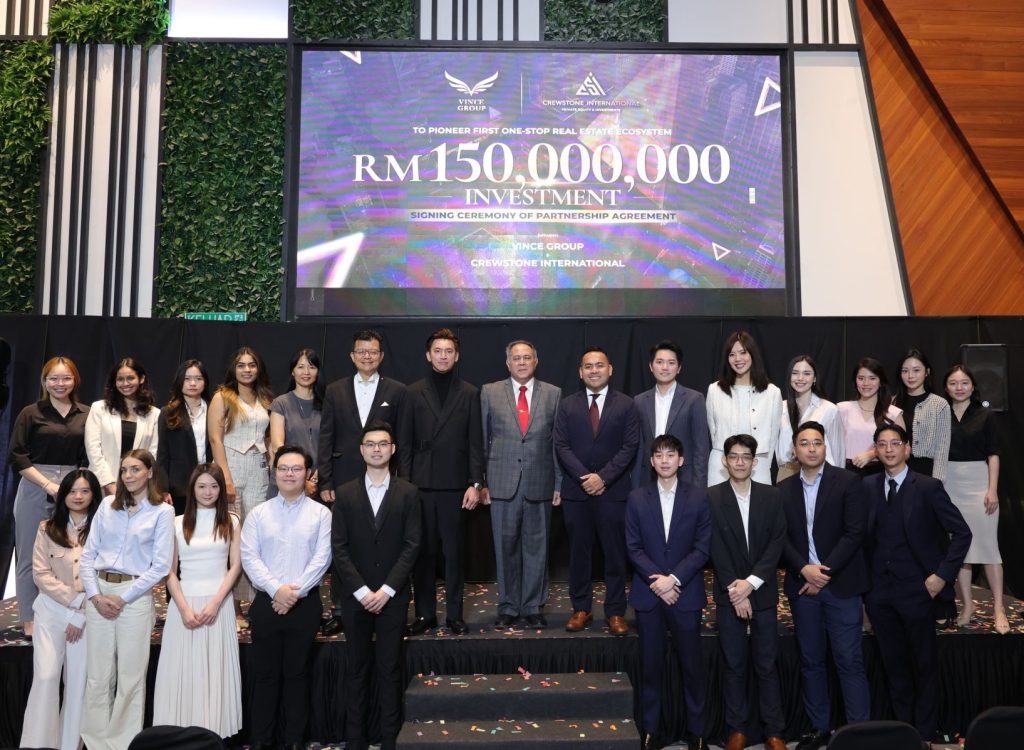
KUALA LUMPUR: In a significant move set to reshape Malaysia’s real estate and investment sectors, PEMC-licensed private equity firm Crewstone International Sdn Bhd has joined forces with Vince Group, a leading integrated real estate developer, to establish a RM150 million Real Estate Investment Fund. This landmark collaboration marks the creation of Malaysia’s first fully integrated real estate investment ecosystem — a seamless end-to-end platform designed to streamline the entire property investment journey, from acquisition and development to value creation and exit strategies. “This partnership sets a new benchmark for real estate investment in Malaysia,” said Ahmad Izmir, CEO of Crewstone International. “By combining our investment structuring capabilities with Vince Group’s robust property ecosystem, we are unlocking a future where real estate investing is smarter, scalable, and more accessible.” Targeting high-yield, risk-mitigated real estate opportunities across the country, the fund aims to deliver both capital preservation and attractive returns for institutional and qualified investors. Its strategic design reflects growing demand for innovation in alternative investment vehicles that blend stability with performance. Dato’ Vincent Nee, Group Managing Director of Vince Group, highlighted the transformative potential of the initiative: “We’re proud to collaborate with Crewstone to bring a bold vision to life, a one-stop, future-ready real estate platform designed to generate long-term value. This RM150 million fund is more than a financial vehicle, it’s a revolution in how real estate investment is approached in Southeast Asia.” The launch was formalised during a signing ceremony held in Kuala Lumpur, attended by key stakeholders and investors. The partnership is anticipated to drive innovation within Malaysia’s real estate landscape, while offering robust returns and strategic growth opportunities for aligned partners. As Malaysia continues to mature as a destination for institutional capital, this initiative is poised to set a precedent for how private equity and real estate development can collaborate to create scalable, investor-focused solutions.

News

HealthMetrics Eyes US$1Billion Milestone with Indonesia Launch

KUALA LUMPUR: HealthMetrics, Malaysia’s leading digital third-party administrator (TPA) and a regional healthtech pioneer, has officially launched its operations in Indonesia, marking a significant milestone in its Southeast Asian expansion strategy. The move follows the rebranding of Across Asia Assist Indonesia (AAA) to HealthMetrics Indonesia, a transition that integrates deep local market expertise with HealthMetrics’ cutting-edge digital capabilities. With the launch of HealthMetrics Indonesia, Malaysian healthcare providers stand to benefit from increased access to the regional market, reinforcing Malaysia’s position as a hub for cross-border medical services. The rebranding unites AAA’s decade-long experience in healthcare and insurance support—serving clients such as Allianz, AXA, and Tokio Marine—with HealthMetrics’ scalable digital infrastructure to deliver seamless, tech-enabled healthcare administration. Three Flagship Solutions Unveiled The announcement, made during HealthMetrics Spotlight 2025 in Jakarta, also included the unveiling of three flagship digital solutions: HealthMetrics Cloud Platform – a secure, ISO27001-certified system for insurers and corporates to manage policies and claims in real time. Global Member App – a user-friendly interface offering instant access to benefits, provider search, claims, and wellness features. International Assistance Hub – a cross-border care solution linking members to over 15,000 direct billing healthcare providers across the region. Dr. Madan Mohan Vasandani, CEO of HealthMetrics Indonesia, stated, “Our digital-first approach aligns with Southeast Asia’s broader vision for a connected healthcare ecosystem. The Indonesian market now benefits from the digital innovations pioneered in Malaysia, bringing smarter, faster, and more accessible care to all stakeholders.” A Strategic Boost for Malaysian Providers With over 7,000 Malaysian healthcare providers already in its network, HealthMetrics’ expansion is poised to drive inbound medical tourism and patient flows from Indonesia. Through the International Assistance Hub, Indonesian members can now access Malaysian healthcare providers more efficiently—with support for guarantee letters, claims processing, and post-care coordination. “This is a proud milestone for us as a homegrown Malaysian company,” said Alvin Yuan, Co-founder & Group CEO of HealthMetrics Group. “Our expansion into Indonesia not only unlocks new opportunities for local providers but also represents a unified commitment to building a truly borderless, digital healthcare ecosystem in Southeast Asia.” Driving Efficiency and Intelligence through Technology HealthMetrics’ Cloud Platform incorporates advanced features such as AI-driven claims management, fraud detection, cost containment tools, and real-time analytics—ensuring transparency, speed, and cost efficiency for insurers, corporates, and providers alike. The Global Member App further enhances the user experience by integrating multiple insurance policies and offering on-demand access to care and wellness services. According to Advent Phang, Co-founder & Group CTO, “We are focused not just on digitising healthcare administration, but on delivering intelligent solutions that provide measurable value and control for all involved in the healthcare journey.” Spotlight 2025: Catalysing Industry Collaboration Held in Jakarta, HealthMetrics Spotlight 2025 brought together over 100 key stakeholders from Indonesia’s healthcare, insurance, and corporate sectors to explore the future of digital health administration. The event underscored the need for collaborative, tech-driven approaches to improve healthcare accessibility and quality across the region. One of the event’s strategic partners, KPJ Healthcare Berhad, highlighted the potential of cross-border partnerships in elevating regional care standards and attracting international patients to Malaysian providers. A Growing Regional Footprint Since its founding in 2015, HealthMetrics has rapidly scaled across Malaysia, Singapore, and now Indonesia—serving over 100 insurers, 3,000 corporate clients, and 15,000 healthcare providers across Southeast Asia. The company is on track to surpass US$1 billion in cumulative medical treatments by the end of 2025. With its continued expansion, HealthMetrics invites more Malaysian healthcare providers and partners to join its digital ecosystem—driving innovation, improving access, and positioning Malaysia at the forefront of a connected regional healthcare future.

The Executives

Agility Over Scale: GTS’s Winning Formula in the Semiconductor Industry

In an industry long dominated by global heavyweights, Global TechSolutions (GTS) is carving out a competitive edge through speed, adaptability, and strategic localisation. The Southeast Asia-based SME is steadily reinforcing Malaysia’s position in the semiconductor value chain by offering integrated engineering solutions and a resilient, regionally mirrored supply model. “We mitigate risks through a diversified sourcing strategy and regional repair capabilities,” says Kenneth Lee Wee Ching, CEO of GTS. “In Malaysia, this gives our clients nearshore access to critical services, reducing dependency on single-source components and improving response time.” GTS’s operational footprint spans Singapore, Malaysia, Taiwan, and the United States, enabling business continuity even during geopolitical tensions or logistics disruptions. This redundancy model is central to how the company safeguards production timelines for its clients across the semiconductor landscape. Malaysia remains a strategic hub in GTS’s expansion plans due to its strengths in assembly, testing, and advanced packaging. According to the Economist Intelligence Unit, the country contributes approximately 13% to global semiconductor packaging and testing activities, underscoring its pivotal role in the industry. ​ “A strong local presence allows us to deliver faster turnaround, cost efficiency, and customised support—advantages that centralised global players often struggle to provide,” Kenneth explains. The company’s ability to deliver end-to-end equipment solutions, from parts and refurbishment to installation and field service, provides significant value for Malaysian fabs that require flexibility and responsiveness in a rapidly evolving sector. “GTS stands out because we are agile. We offer a full suite of semiconductor equipment services tailored to different customer needs, and we can qualify and deploy solutions quickly,” Kenneth says. “Our streamlined decision-making helps us outperform larger competitors burdened by slower internal processes.” Beyond its business operations, GTS is also playing an active role in supporting Malaysia’s broader semiconductor ambitions. The industry continues to face challenges such as increasing operational costs, limited access to advanced fabs, and talent outflow. Malaysia experiences an average annual brain drain of 15% in the semiconductor sector, highlighting the need for focused talent retention strategies. ​ “We’re investing in local partnerships, training, and process innovation to help bridge the gap between industry needs and technological advancement,” Kenneth says. As part of this commitment, GTS is exploring the establishment of an advanced semiconductor parts manufacturing and development site in Malaysia. This move aligns with the government’s National Semiconductor Strategy, which includes a RM25 billion (approximately $5.3 billion) investment to bolster the sector. Technology also plays a key role in GTS’s growth. The company is investing in predictive maintenance systems, AI-driven diagnostics, and automation tools designed to increase yield and reduce downtime. “Digital transformation underpins everything we do,” Kenneth notes. “Even as an SME, our data-driven approach allows us to scale faster and compete in a high-precision environment.”​ Looking ahead, GTS anticipates Southeast Asia will become an increasingly important player in the global semiconductor space, especially as supply chains shift and AI adoption accelerates. Malaysia’s semiconductor exports reached approximately RM575 billion (US$130 billion) in 2024, reflecting its growing significance in the global market. ​ “Malaysia is well-positioned to anchor regional supply chains due to its strategic location and strong manufacturing base,” Kenneth says. “With the right investments and partnerships, the country can play a leading role in assembly, testing, and advanced packaging.” For SMEs eyeing growth in this competitive sector, Kenneth offers clear advice. “It’s not about doing everything. It’s about knowing where you add value, moving quickly, and solving real customer pain points. Agility is a superpower.” By staying focused on its strengths and aligned with regional growth trends, GTS is showing that size is no limitation when backed by innovation, speed, and strategic clarity.

Scroll to Top

Subscribe
FREE Newsletter