Most people never think about the systems keeping a building alive.
The cooling runs. The electricity stays on. Fire protection sits quietly in the background. Servers continue processing data. Employees arrive, work and leave without giving much thought to the engineering infrastructure surrounding them.
Until something stops.
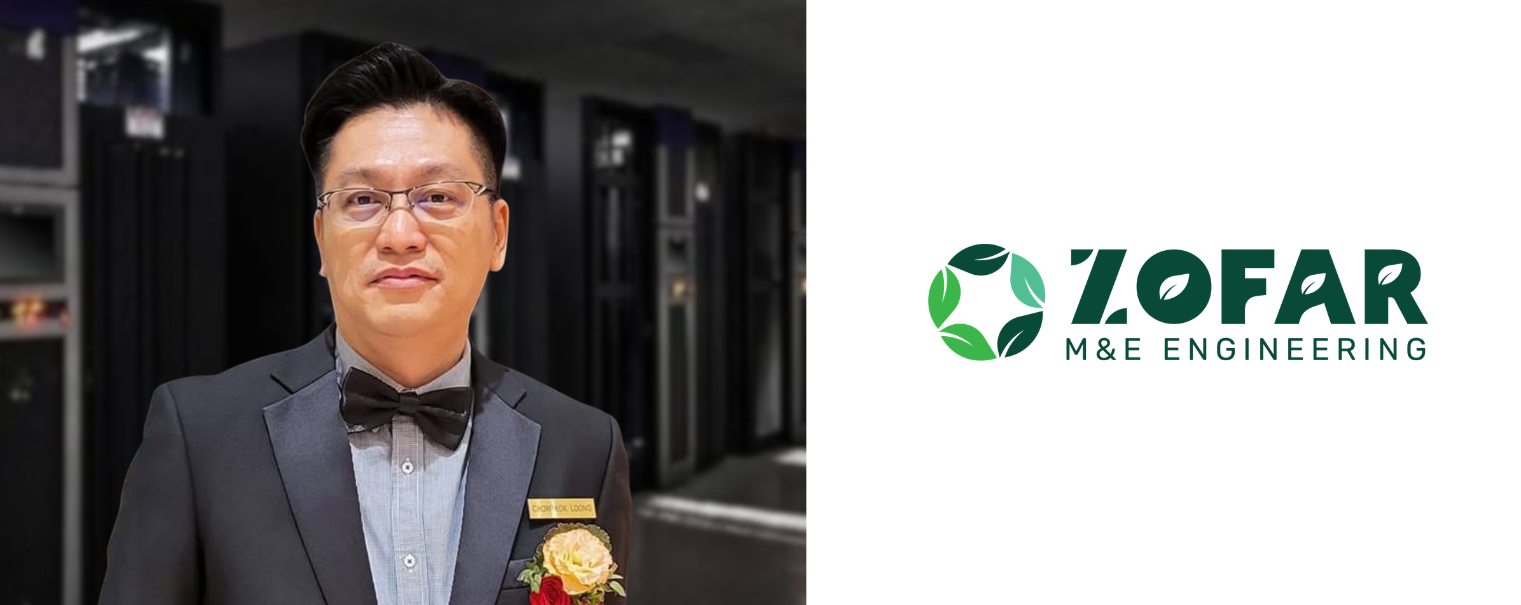
Managing Director of Zofar Mechanical & Electrical Engineering Sdn. Bhd – Chow Kok Loong.
For Zofar Mechanical & Electrical Engineering Sdn. Bhd., that invisible dependency has been the foundation of a business more than two decades in the making.
Established in 2002, the Malaysian company began in building maintenance before expanding into mechanical and electrical engineering, covering air-conditioning and mechanical ventilation, electrical systems, fire suppression, facility upgrading and, increasingly, data centre infrastructure.
Its job, stripped of the engineering terminology, is straightforward: keep its customers running.
When Downtime Becomes a Business Risk
That responsibility has become considerably more important since Zofar began.
Buildings are smarter and more technologically dependent. Commercial facilities are under pressure to consume energy more efficiently. And the rapid expansion of data infrastructure has created environments where reliability is no longer merely a facilities-management concern.
For a data centre, even a relatively small disruption can carry significant operational and financial consequences.
It changes the role of the engineering company maintaining the systems behind it.
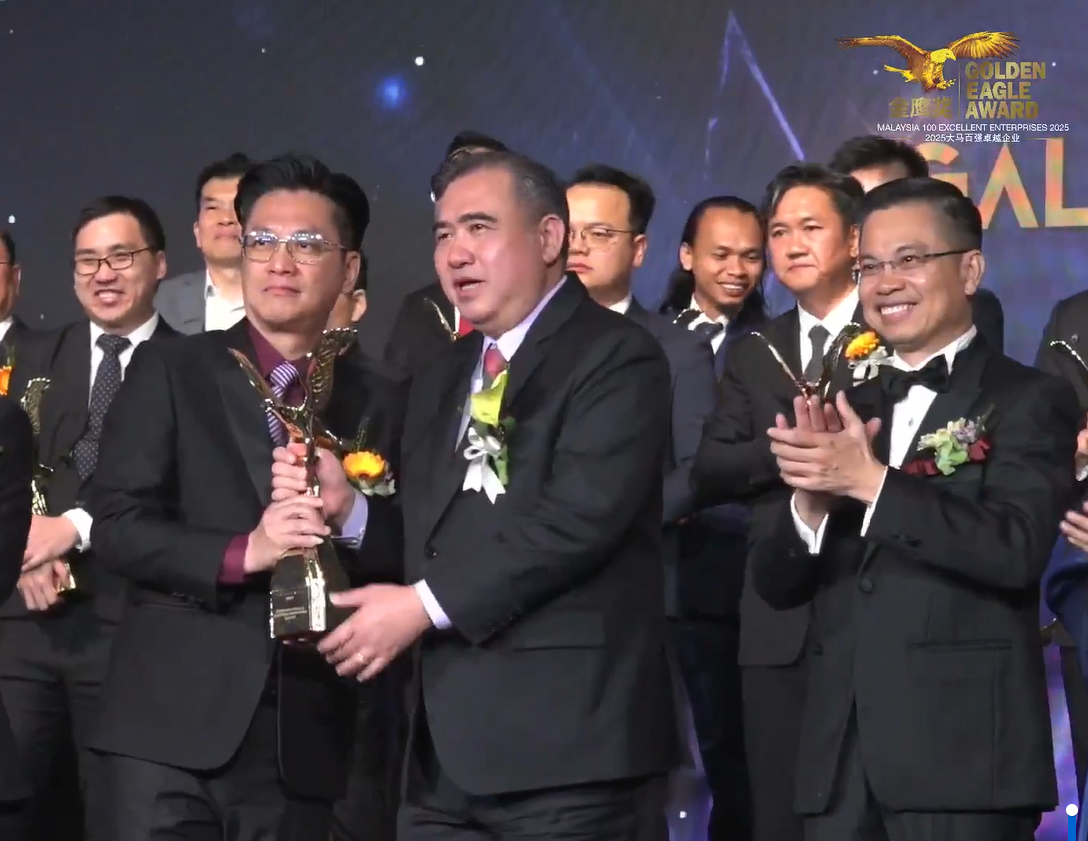
Zofar identified this issue early. Businesses could find contractors to install or repair equipment, but what they often needed was a technical partner that understood their facilities over time—one capable of responding when problems emerged and anticipating what would be required next.
The company consequently evolved from predominantly building maintenance into integrated engineering and lifecycle support, spanning system design and installation through testing, commissioning, preventive maintenance and upgrades.
The shift reflects a larger change in the industry: maintenance is increasingly less about fixing what has broken and more about preventing the interruption in the first place.
Building a Business That Can Take the Shock
Zofar is also applying the idea of resilience to itself.
Its “622 Business Strategy” divides its targeted revenue mix across three areas: 60% project execution, 20% spare-parts trading and 20% maintenance and facilities management.
The mathematics reveals the strategy.
Engineering projects can generate substantial revenue but remain exposed to construction and investment cycles. Maintenance contracts and spare-parts activities create a recurring layer around that project business, reducing dependence on any single source of income.
As the company grows, however, complexity grows with it.
More projects mean more sites, suppliers, customers and technical requirements—all of which have to be coordinated without sacrificing the responsiveness that helped build the company in the first place.
Zofar has established dedicated Coordination and Supplier Management teams to manage that pressure while strengthening relationships with global technology partners.
Its challenge now is familiar to many growing companies: becoming more structured without becoming slower.
The People Behind the Infrastructure
There is another part of Zofar’s business that is less visible than its engineering.
Its workforce is entirely local, reflecting a deliberate commitment to developing Malaysian technical talent. Women account for approximately 40% of its employees—significant in an industry traditionally associated with a predominantly male workforce.
For Zofar, developing technical capability is not separate from its growth strategy. The more critical the infrastructure it is trusted to manage, the more important the expertise of the people behind it becomes.

The company has similarly begun embedding sustainability into operational decisions. E-waste and project materials are channelled through licensed recovery partners for recycling where possible, while a Sustainable Purchasing Policy gives preference to recyclable materials and products with lower environmental impact.
These are relatively practical measures rather than grand environmental declarations—and that is largely the point.
Preparing for What Cannot Stop
Zofar’s next ambition is to move further from being regarded as an M&E service provider towards becoming an integrated engineering partner, particularly for data centres and other critical infrastructure.
Doing so will require deeper technical capabilities, stronger systems and partnerships, and an organisation capable of coordinating increasingly complex work at scale.
But the fundamental proposition has changed remarkably little since 2002.
Modern economies depend on an enormous amount of infrastructure that most of us rarely see. As buildings become more connected and businesses more dependent on uninterrupted technology, the cost of that infrastructure failing only increases.
Zofar operates in the space between everything working normally and everything suddenly not.
In that business, success is often almost invisible.
Nothing happens.
And everything keeps going.